An In-Depth Look at Dodecyl Mercaptan: History, Chemistry, Industry Impact, and the Road Ahead
Historical Development
Dodecyl mercaptan comes from a long line of sulfur-based chemicals that shaped 20th-century industrial chemistry. Chemists first explored thiols back when the demand for rubber and plastics exploded. As tire innovation pushed forward, researchers realized short-chain mercaptans worked well as chain transfer agents, but they also brought strong odors and higher toxicity. Folks at major chemical outfits in the US and Europe sought ways to stretch carbon chains—this led to the development and adoption of dodecyl mercaptan. Companies like Phillips Petroleum and BASF saw the value, so they invested in scaling up, smoothing out the early bumps in mass production, and finding smart methods for synthesizing large quantities. Over time, process improvements made dodecyl mercaptan more affordable and reliable, which opened doors for more specialized downstream chemistry.
Product Overview
Dodecyl mercaptan, known to chemists as 1-dodecanethiol, delivers a winning combination of manageable handling, high reactivity, and chain length that sits comfortably between volatility and processability. Its chemical formula, C12H25SH, tells part of the story, but its overall value shows up most clearly in polymerization reactions and surface treatments. Consistent structure and purity make it a go-to in industries ranging from rubber to specialty plastics. Many in the polymer field started with harsher or less predictable thiols, and once they tried dodecyl mercaptan, they didn’t look back. Big users include tire manufacturers, latex goods producers, and even specialty coatings labs trying to tweak surface properties one sulfur bond at a time.
Physical & Chemical Properties
Dodecyl mercaptan’s clear, pale-yellow liquid appearance can fool newcomers—it packs a pungent, sulfurous smell that even seasoned lab techs remember. With a boiling point around 273°C and a melting point near -7°C, it sides with stability over volatility. The molecular weight clocks in at 202.4 g/mol. Unlike shorter thiols—think ethanethiol or butanethiol—it evaporates less easily and clings less stubbornly to skin and glass. With a density of about 0.85 g/cm³, it floats on water but mixes well with organic solvents. The strong nucleophilic character of the thiol group leads to robust chemical reactivity without making the substance unmanageable during handling. Folks who work with it know to focus ventilation and use gloves, since skin contact lingers and the smell stays.
Technical Specifications & Labeling
Manufacturers selling large lots of dodecyl mercaptan tend to offer purity above 98%, with color indexes kept below 50 Hazen to reduce contamination impacts. Attention to water content (often cited as less than 0.1%) gives downstream users confidence the product reacts as expected, without pesky hydrolysis or off-path chemistry. Labels feature UN numbers (UN3334 for shipping), proper hazard pictograms showing acute toxicity hazard, and clear batch tracking codes. Shipping documents highlight its combustibility—classified as flammable liquid (Class 3 under UN Regs). In storage, drums or IBC totes need tight seals and cool, shaded conditions.
Preparation Method
Dodecyl mercaptan production today mostly leans on thiol-ene reaction techniques. Traditional methods used addition of hydrogen sulfide to 1-dodecene, ran with an acid catalyst under high pressure, but concerns about H2S handling shifted the field. Many plants now favor phase-transfer catalysis or photochemically driven methods. Industrial synthesis balances speed, conversion rate, and the challenge of scrubbing leftover sulfur compounds to reach technical-grade purity. The companies doing this best run robust gas management systems to control odor emissions and catch fugitive losses, recycling process gases whenever possible. Waste minimization and improved safety standards have changed the look of dodecyl mercaptan plants in the last 20 years.
Chemical Reactions & Modifications
Dodecyl mercaptan’s thiol head group enters reactions with gusto. In radical polymerizations, it caps growing polymer chains, taming molecular weights for specific product types—often rubber or PVC. It swaps hydrogens easily, and its role as a moderate nucleophile enables alkylation, oxidation to the corresponding sulfonic acid, or metal-thiol complex formation. Labs use it as a model compound to study sulfur uptake in catalysts and even biological systems. Surface chemists sometimes anchor dodecyl chains through the thiol end to form self-assembled monolayers for sensors or corrosion-resistant coatings. The carbon tail itself gets modified for even better solubility or specific reactivity, branching out its downstream influence.
Synonyms & Product Names
Common chemical catalogs list dodecyl mercaptan under names like 1-dodecanethiol, lauryl mercaptan, and n-dodecyl mercaptan. Some specialty product lines reference trade names from big chemical companies—Nuodex DDM, Percutol DDM, and DDMS, for example. International traders use CAS number 112-55-0 as a universal identifier, which helps control imports and standardize regulatory filings in different countries. Packaging sometimes still shows old-style names, but regulatory label audits have made nomenclature much more consistent in the past decade.
Safety & Operational Standards
Dealing with dodecyl mercaptan calls for no-nonsense workplace safety. Respiratory protection and local exhaust systems address the sharp, gassy odor and acute toxicity risks—the thiol group means skin and eye irritation come quick if splashes get ignored. Safety goggles, nitrile gloves, and flame-resistant aprons show up in every safety audit checklist. Plants testing and filling drums run continuous leak monitoring and alarm systems to quickly catch accidental releases and minimize worker exposure. Emergency response plans rely on quick neutralization—sodium hypochlorite neutralizes spills if handled by trained personnel. Venting and odor filtration keep neighboring communities safe from the lingering sulfur smell, which routinely draws complaints if overlooked. Training programs stress eye-wash readiness and clear walkways to avoid distraction during transfer or mixing operations.
Application Area
Dodecyl mercaptan became a fixture in emulsion and suspension polymerization. Tire makers control polymer chain lengths, boosting abrasion resistance and balancing process speed, crucial for meeting demanding performance specs. Specialty latex goods tap it to set viscosity and flow properties, improving everything from gloves to foam to adhesives. Some oil companies leverage its sulfur makeup to tweak lubricants or formulation additives. Students of chemistry learn about dodecyl mercaptan as a model compound, watching thiol chemistry in action long before they tackle trickier biological thiols like cysteine. Research labs see it as a surface modifier, laying down functional monolayers for electronics and biosensors. Its deep-rooted connections reach into paint, coatings, and even odor-masking formulations, where its own scent gets both weaponized and suppressed depending on end use.
Research & Development
Recent advances in dodecyl mercaptan focus on lowering emission risks and improving the environmental profile of its production. Academia has pushed greener catalytic cycles and tried enzyme-mimetic catalysts just to lower the process temperature and limit byproducts. Biodegradation studies reveal moderate persistence, pushing some research centers to tailor derivatives that degrade more quickly or bind less strongly to soils. Startups and bigger firms alike chase better polymerization outcomes, exploring surface-bound dodecyl systems for improved sensor sensitivity or water repellency. Life cycle analysis now weighs more heavily in market decisions, spurring investments in recycling waste thiols and better capturing escaped sulfur compounds. Some innovative teams even tinker with its structure to unlock new surfactant use or tweak reaction specificity, with computational chemistry driving smarter design choices.
Toxicity Research
Toxicologists rank dodecyl mercaptan as moderately toxic through inhalation and dermal routes. Acute exposure triggers headaches, nausea, or worse if ventilation flops. Birds and aquatic life show sensitivity to lower concentrations, partly due to water insolubility mixing with oily compounds in runoff. Multiple regulatory bodies—EPA in the US, ECHA in Europe—set workplace exposure limits, requiring air monitoring and periodic blood tests for heavy users. Chronic testing in rodent models doesn’t link dodecyl mercaptan directly with cancer, but research points to the need for further testing on breakdown products. Manufacturers face pressure to limit community exposure, especially after incidents involving storage tank leaks or mishandled drums that brought swift regulatory response and hefty fines. Clear communication on MSDS labels helps emergency responders, making quick action possible during spills or worker exposure.
Future Prospects
Industrial societies want better, safer, cleaner specialty chemicals. Companies see an opportunity in upgrading dodecyl mercaptan synthesis, using lower-impact feedstocks, cleaner energy, and smart emission controls. Ongoing research hints at using renewable dodecene sourced from plant oils—commodity markets and supply chains still need more reliability, but the drive to cut fossil roots pushes innovation. Advanced formulations in tire and latex industries demand even narrower molecular weight distributions and fewer odor-causing impurities. Sensor makers watch for new surface-bound derivatives to improve device sensitivity and corrosion protection. Regulatory pressure encourages green process certifications and safer substitutes, challenging both big-name manufacturers and smaller specialty suppliers to refine risk mitigation at all levels. Training, better PPE, and improved exposure monitoring ease fears for those working with dodecyl mercaptan, pointing toward a future where performance and safety walk hand-in-hand more often than ever before.
What is Dodecyl Mercaptan used for?
Powering the Plastics Industry
Dodecyl mercaptan comes up a lot in conversations with colleagues in plastics and rubber manufacturing. Most people don’t realize how much their lives rely on small molecules like this one. Every day, folks touch plastic products: pipes, food packaging, toys, car interiors. Each of these owes some of their performance and character to dodecyl mercaptan, which acts as a chain transfer agent during polymerization. That’s the step where it helps control the size and structure of polymer chains in the manufacturing process. Without it, plastics like PVC could end up far too rigid or brittle for everyday use. Think about the smooth edges and flexibility of a garden hose—chemicals like dodecyl mercaptan help achieve that balance.
Influence on Product Performance
I used to work alongside a team that made custom packaging — all designed to extend shelf life and resist tearing. Bringing a product to market means more than just shaping plastic. Surface finish, flexibility, and even printability get tweaked during production. Dodecyl mercaptan lets manufacturers fine-tune these qualities. Industries have discovered that using just the right amount can give a finished product the sparkle consumers expect or the durability a contractor counts on. If a firm pushes out pipes that crack, or bottles that don’t seal tight, someone answers for it down the production line. That’s why chemists keep dodecyl mercaptan on their shelves.
Environmental Concerns and Handling
It’s not all smooth sailing, though. Dodecyl mercaptan does bring environmental and health concerns. The strong odor is the first thing anyone notices when handling the pure chemical. Workers on-site need solid ventilation and protective gear, not just for comfort but for safety. Long-term exposure without protection has raised worries about skin and respiratory irritation. Factories work to keep emissions down and storage safe, partly because regulations demand it and partly because no company wants to deal with a chemical spill or an injured worker.
Disposal standards have gotten stricter over the past decade. Teams use scrubbers and filters in exhaust systems to trap fugitive emissions before they reach the air. These investments bring costs, sure, but they keep workers healthy and the public safe. Neighbors around manufacturing plants care about what drifts into the neighborhood, and ignoring these concerns spells trouble.
Room for Innovation
Any process relying on chemicals sits under the microscope these days. Researchers in both public and private labs work on safer alternatives and better containment systems. New types of chain transfer agents that work without the same strong odor or toxicity are under development, but scale-up remains a challenge. Sustainable chemistry isn’t just a buzzword; it’s the direction the industry moves when customers demand it.
As consumer preferences and environmental standards advance, chemical manufacturers face pressure to develop “greener” replacements and adopt better management practices. Being transparent about supply chains, usage, and hazard control earns trust from buyers and local communities alike. Dodecyl mercaptan probably won’t disappear soon, but its role will change. Supporting innovation while keeping safety front and center drives progress in both the plastics sector and beyond.
What are the safety precautions when handling Dodecyl Mercaptan?
What Makes Dodecyl Mercaptan Worth Caution?
Anyone who has opened a drum of dodecyl mercaptan knows its strong, distinct odor hits immediately. That scent isn't just unpleasant—it’s a sign this chemical means business. Strong-smelling chemicals like dodecyl mercaptan deserve close attention. The material sits on lists of substances that trigger health concerns for a reason. Those working in plastics or rubber have spent years in rooms with that smell in the air. Over time, stories spread about headaches, skin rashes, or breathing trouble brought on by spills or poor air movement.
Health Impacts Can't Be Ignored
Dodecyl mercaptan belongs to the class of thiols, which often irritate the nose, skin, and eyes. Its vapors, even at low levels, tend to stick around. A single splash or spill leaves a lasting impression. Long ago, I learned to treat even small leaks with respect. A whiff can bring on nausea or dizziness and, for anyone with sensitive lungs, the coughing lingers. Gloves and proper ventilation aren't optional. Safe handling separates years of good work and a single bad day—missteps can lead to burns or even hospitalization.
Precaution Starts with Proper Gear
Personal protective equipment can't be an afterthought. Workers go for chemical-grade gloves like nitrile or neoprene. These hold up against thiols in a way latex doesn't. Splash goggles stay on from the moment the drum opens. For bigger jobs or possible splashing, face shields and chemical suits cover exposed skin. I’ve seen colleagues walk out of the locker room, forgetting one piece—those were always the folks most likely to feel the sting.
You never see anyone pouring or mixing dodecyl mercaptan without nearby eyewash and safety showers. Getting this stuff on bare skin guarantees a burning sensation, sometimes blistering. An emergency rinse means a worker keeps their eyesight. No one I know skips this step, especially after seeing one unfortunate coworker spend weeks recovering from a careless spill.
Air Quality Takes Top Priority
Closed doors and open containers don't mix here. Fume hoods or strong local exhausts pull away those vapors before anyone breathes them in. Large facilities use air monitors to track exposure limits—set well below levels believed to cause harm. The goal is keeping readings so low that no one faces headaches, dizziness, or that infamous sulfur smell clinging to their clothes at the end of the day.
Handling Spills: Action, Not Panic
Spills demand calm focus. Loose absorbent pads, polyethylene scrapers, and full-face respirators stay close at hand. Training matters: workers know not to use their hands, not to rush, never to drag their feet through the mess. Disposal gets just as much care, since hazardous waste rules mean no shortcuts to the standard waste bin. It’s all routine—until someone skips a step. I've seen clear protocols prevent big headaches after small mistakes.
Tackling the Root of the Risks
Everyday safety comes down to clear rules, solid habits, and the right tools. Regular training keeps workers sharp, even the old-timers who think they’ve seen it all. Fresh air, the right gloves, and a healthy respect for that smell—that’s what lets people head home in one piece. A little care protects workers, the workspace, and the world outside.
Safe handling isn't just good practice—it's looking out for one another.What are the physical and chemical properties of Dodecyl Mercaptan?
Getting to Know a Sulfur-Heavy Worker
People who spend any time near industrial chemistry or the plastic manufacturing sector eventually hear the sharp scent of dodecyl mercaptan. That sulfur smell stands out. This stuff isn’t the type you find on a grocery store shelf. It’s a heavy-duty organic compound, loaded with a chain of 12 carbon atoms and capped with a big, reactive sulfur-hydrogen group—the mercaptan bit. This chemical structure makes it a prime player in polymer production, surfactant chemistry, and specialty solvent design.
Physical Properties: What You’ll See and Smell
Dodecyl mercaptan comes as a pale yellowish liquid. At room temperature, it flows smoothly and brings an unmistakable stench, often compared to rotting cabbage or burnt rubber. This smell, unmistakable even in tiny amounts, helps with leak detection and safety. On the numbers side, it has a boiling point near 273°C and a melting point dipping just below freezing. With a molecular weight of about 202, it’s heftier than many organic solvents, and its density runs around 0.85 g/cm³. Don’t expect it to dissolve easily in water—the long carbon tail wants nothing to do with it. Expect better luck mixing with oils, organic solvents, and other hydrophobic substances.
Chemical Behavior: Reactivity and Usefulness
The star feature in dodecyl mercaptan is that sulfur-hydrogen bond. Chemists call it a "thiol," and it’s a reactive site for free radical chemistry. In practical terms, that means it works well to control the growth of chains in plastic polymerization—especially for making PVC or rubber. A bit of dodecyl mercaptan thrown into a reaction vessel gives manufacturers more control over molecular weight, flexibility, and toughness in the final plastic product. It also works as a chain transfer agent, helping tailor polymers to target uses.
This same thiol group readily forms bonds with metals, which makes it valuable in specialty coatings and surface treatments. The long tail also brings surface-active qualities. That helps in some surfactant blends, where the greasy chain lines up on the oil side and the thiol binds to other chemicals or surfaces. The end result: stability, compatibility, and sometimes improved performance.
Risks and Safe Handling
Dodecyl mercaptan is no lightweight in the risk department. Breathing in a whiff or touching it with bare skin invites headaches, nausea, or skin irritation. Its low vapor pressure can still stink up a workspace without much help. Anyone dealing with this chemical needs good ventilation, protective gloves, and chemical goggles. Good safety culture always starts with people knowing what they’re handling. In my own experience, the “smell test” for mercaptans lingers in memory—one spill can haunt a lab for weeks unless it’s neutralized.
The Environmental Side
Dodecyl mercaptan, left uncontained, doesn’t break down quickly. Its persistence means that safe handling, storage, and disposal matter if industries want to avoid water or soil contamination. Every drum or vial needs to be tracked. Spills reach ground, water, or even just open air, and suddenly local wildlife and downstream water users face exposure.
Regulatory agencies like the EPA and OSHA keep an eye on mercaptan use for good reason. Responsible companies invest in leak detection, fume capture, and waste treatment. On the innovation side, researchers keep looking for greener, less volatile chain transfer agents—hoping to reduce occupational risk and environmental footprint without losing performance.
Pushing for Safer Chemistry
Managing the benefits and risks of dodecyl mercaptan calls for both expertise and vigilance. Training, personal protective gear, good labeling, and robust ventilation systems pay off. The best labs keep material safety data sheets handy and foster a culture where even a suspected leak gets fast attention. Meanwhile, process engineers and chemists share a responsibility: balance performance in plastics and rubbers without letting safety or the environment fall by the wayside.
How should Dodecyl Mercaptan be stored and transported?
Relying on Good Practice, Not Just Compliance
Walking through chemical manufacturing plants over the years highlights one reality: shortcuts in storing or moving hazardous materials catch up quick. Dodecyl mercaptan isn’t a household name, but factories use it widely, especially in making plastics and rubber. The pungent odor gives early warning of leaks, but by then the risk is already there. Responsible facilities give storage and transportation of this liquid more than a passing thought—good habits here save money, reputations, and, most important, people’s health.
Understanding the Hazards at Hand
Dodecyl mercaptan is flammable, with vapors heavier than air. On hot days, these vapors slide along the ground, seeking open flames, machinery sparks, or pilot lights. Touching skin or eyes brings pain and possible long-term effects. Every year, reports surface about spills or inhalation incidents, all preventable with better routines. Facts bear repeating: OSHA and NFPA list this chemical as a significant fire and health risk.
Proper Storage: Not Just a Warehouse Issue
Metal drums and ISO tanks built for flammable liquids fit the bill, but the story doesn’t stop at picking the right container. Facilities avoid stacking these drums in crowded corners. They pick well-ventilated spots far from potential ignition sources—no forklifts running on gasoline nearby, no open flames, no exposed wiring. A simple, closed, labeled space with temperature control and spill containment means workers don’t need to scramble during emergencies. Over the years, I’ve seen workers hurt simply because someone left drums near a steamy maintenance workshop. One spark—trouble starts.
Corrosion chips at weak points, so drums and tanks get checked for leaks, rust, or punctures before every transfer. Rags for cleaning up drips go straight to disposal, not in an open bin where vapors linger. Routine matters. Regular inspections, detailed logs, and straightforward signage help even seasoned staff remember what they're dealing with.
Smart Transportation Keeps Dangerous Materials on Track
Safe transportation borrows from the storage playbook. Operators go through documented protocols—tighten seals, double-check containers, clear documentation. Trucks sporting hazardous material placards avoid routes close to crowded neighborhoods or schools. If a truck tips over, action must follow quick: absorbents and foam to reduce vapor release, responders with the right gear, and clear communication. Federal rules say transport vehicles should not park under power lines, near busy roads, or in poorly ventilated tunnels.
It’s easy to see why so many drivers and warehouse techs I know double and triple check shipment manifests. Every missed detail—one drum with a bad lid, one wrong signature—carries risk. The right training matters as much as the right equipment. Annual refreshers and new-hire orientations can’t substitute for experience gained by doing, but they keep everyone alert.
Building Resilience by Taking Care
Companies with a good record of storing and transporting dodecyl mercaptan put people first. They pay close attention to physical controls, up-to-date safety data, and clear emergency plans. Even new workers learn fast: this isn’t just about following rules, it’s about understanding consequences. That vigilance, learned by paying attention to every drum, every handoff, keeps workers safe and makes for a workplace that respects both people and the chemicals they handle.
What is the CAS number and molecular formula of Dodecyl Mercaptan?
Getting to the Heart of Dodecyl Mercaptan
Dodecyl mercaptan moves quietly through chemical manufacturing, but it plays a role many ignore. Its CAS number, 112-55-0, acts as a unique ID that locks in its identity across global markets. Without this number, suppliers and users would struggle to talk about the same substance—leading to safety errors and a world of confusion. The molecular formula, C12H26S, tells us how the atoms connect: twelve carbons, twenty-six hydrogens, and a single sulfur. At a glance, you know it’s a sulfur-based compound sitting in the organosulfur family. Anyone in plastics knows this mercaptan makes the difference in polymerization reactions, acting almost like a traffic cop for free radicals.
Chemical Identification Isn’t Just for Scientists
I’ve watched teams on the factory floor call up a material's CAS number during audits. Without those digits, you risk mixing the wrong compound into a batch. There are so many similar-sounding names in industrial catalogs—one small error leads to ruined product or worse, an unsafe work environment. For the everyday person, CAS numbers might seem like trivia. In practice, those numbers keep skin safe in labs and help avoid toxic exposures at mixing stations. It’s about more than just a catalog entry; it’s health and compliance rolled into a few digits.
Why Formula Details Shape Industrial Choices
C12H26S might look simple, but that structure loud enough shapes why companies trust dodecyl mercaptan for specific jobs. The long carbon chain brings solid compatibility with hydrophobic polymer systems, especially in the making of plastics like PVC. That sulfur atom? It calls the shots inside radical chain transfer reactions, letting manufacturers tweak material properties. Try switching it out for a shorter mercaptan, and the resulting product won’t behave the way the market needs. There’s an art to picking molecular structures, and dodecyl mercaptan’s balance of length and sulfur function keeps it on loading docks worldwide.
Regulation, Transparency, and Safe Sourcing
CAS numbers and formulas aren’t just for paperwork—they stand between buyers and counterfeit chemicals. Suppliers provide certificates matched to these identifiers, and regulatory agencies back them up. In my experience, whenever regulators pop in for surprise checks, they zero in on containers and labels. Any mismatch or sloppy record-keeping becomes a violation. This focus has real results. Simplifying compliance reduces hazardous mix-ups not only during use but also through disposal or recycling streams. Solid traceability starts with the right digits and letters on the drums rolling off delivery trucks every day.
What Can Go Wrong Without Proper Identification
Those close to the industry can tell stories of minor mix-ups that snowball. Lose track of a CAS number and your plant could end up releasing a compound that doesn’t meet environmental limits. If the safety data sheet ties back to a totally different molecular formula, safety procedures could fall apart in a spill or leak. Hospitals, fire marshals, and waste sites each rely on these details to plan responses. Proper handling and accident reduction start at the beginning—knowing exactly what material stands in front of you every step of the way.
Building a Safer Industry, Step by Step
Manufacturers and distributors have to invest in education for their teams. Lab workers and transport staff should know how to look up CAS numbers and check molecular formulas. No fancy tech stands in for this kind of basic literacy. Simple barcode readers or QR-linked documentation bring the numbers and formulas right to handheld devices. Regular practice keeps teams sharp, which matters in emergency situations and routine production alike. These efforts make the system work, cut errors, and lay a foundation of trust for a safer chemical supply chain.
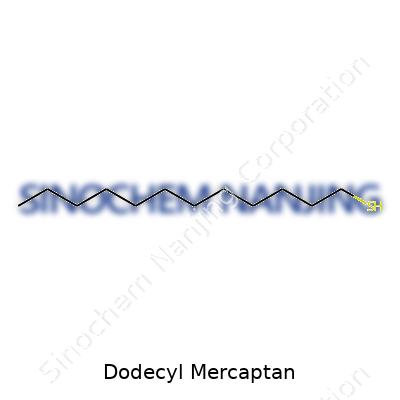
| Names | |
| Preferred IUPAC name | dodecane-1-thiol |
| Other names |
1-Dodecanethiol Lauryl mercaptan n-Dodecyl mercaptan Dodecanethiol n-Lauryl mercaptan |
| Pronunciation | /ˈdoʊ.də.sɪl mɜːrˈkæp.tæn/ |
| Identifiers | |
| CAS Number | 112-55-0 |
| Beilstein Reference | 1209246 |
| ChEBI | CHEBI:51987 |
| ChEMBL | CHEMBL3686535 |
| ChemSpider | 16021 |
| DrugBank | DB11377 |
| ECHA InfoCard | 03-2119980063-49-0000 |
| EC Number | 208-328-2 |
| Gmelin Reference | 8497 |
| KEGG | C02574 |
| MeSH | D002984 |
| PubChem CID | 11641 |
| RTECS number | MD6475000 |
| UNII | XN8Z32IN8F |
| UN number | UN3335 |
| CompTox Dashboard (EPA) | urn:epa:cmp:22008 |
| Properties | |
| Chemical formula | C12H26S |
| Molar mass | 206.41 g/mol |
| Appearance | Colorless liquid with a strong, unpleasant odor. |
| Odor | Unpleasant, skunk-like |
| Density | 0.845 g/cm³ |
| Solubility in water | insoluble |
| log P | 5.91 |
| Vapor pressure | 0.02 mmHg (25°C) |
| Acidity (pKa) | 10.7 |
| Basicity (pKb) | pKb: 3.98 |
| Magnetic susceptibility (χ) | -8.0×10⁻⁶ cm³/mol |
| Refractive index (nD) | 1.457 |
| Viscosity | 1.58 mPa·s (25 °C) |
| Dipole moment | 1.6 D |
| Thermochemistry | |
| Std molar entropy (S⦵298) | 557.78 J·mol⁻¹·K⁻¹ |
| Std enthalpy of formation (ΔfH⦵298) | -221.6 kJ/mol |
| Std enthalpy of combustion (ΔcH⦵298) | -7597 kJ·mol⁻¹ |
| Pharmacology | |
| ATC code | D25 |
| Hazards | |
| GHS labelling | GHS02, GHS05, GHS06, GHS08 |
| Pictograms | GHS06,GHS08,GHS09 |
| Signal word | Warning |
| Hazard statements | H302, H311, H331, H315, H319, H335, H400 |
| Precautionary statements | P210, P261, P273, P302+P352, P304+P340, P305+P351+P338, P310 |
| NFPA 704 (fire diamond) | 2-4-2-W |
| Flash point | > 146 °F (63 °C) |
| Autoignition temperature | 215 °C |
| Explosive limits | Explosive limits: 0.9–6.5% |
| Lethal dose or concentration | LD50 (oral, rat): 1620 mg/kg |
| LD50 (median dose) | LD50 (median dose): Oral rat LD50: 3380 mg/kg |
| NIOSH | PAK64600AQ |
| PEL (Permissible) | PEL: Not established |
| REL (Recommended) | ≤0.05 |
| IDLH (Immediate danger) | IDLH: 100 ppm |
| Related compounds | |
| Related compounds |
Octyl mercaptan Decyl mercaptan Tertiary-dodecyl mercaptan Lauryl alcohol |



