Dodecanoyl Chloride: A Commentary on Its Development and Place in Modern Chemistry
Historical Development
Dodecanoyl chloride stands as an example of how focused chemical innovations have rippled through science and industry. Early methods for preparing fatty acid chlorides came to life when organic synthesis pressed for more precise intermediates. Chemists realized that swapping out the carboxyl group’s hydroxyl for a chloride atom flipped the script on reactivity—especially in peptide synthesis and esterification. Throughout the twentieth century, as research around surfactants, lubricants, and specialty chemicals picked up speed, producers built better purification systems and cleaner chlorination methods. Dodecanoyl chloride sharpened its role as protocols matured and industries demanded higher consistency and quality control. The trail from arcane lab curiosity to a mainstream industrial tool maps onto broader shifts in how specialty chemicals shape production pipelines across pharma, flavors, and coatings.
Product Overview
Known to some professionals as lauroyl chloride, dodecanoyl chloride delivers a fatty acyl chain with a reactive acyl chloride group at the end. Its chain length sits at a sort of sweet spot for balancing hydrophobic bulk with chemical manageability. In practical use, this compound often comes in the form of a colorless to pale yellow liquid, sealed tightly to block out ambient moisture—the very thing that would nudge it into hydrolysis and foul it up for intended reactions. People in production circles keep it on hand not as an end-product, but because it serves as a stepping stone for durable coatings, high-performance surfactants, antimicrobial agents, and functionalized polymers.
Physical and Chemical Properties
At room temperature, dodecanoyl chloride takes the form of a clear, oily liquid. It has a strong, biting odor and a molecular formula of C12H23ClO. With a molecular weight just shy of 218 g/mol, it holds a boiling point around 277°C but might start smoking and decomposing earlier if left open to moist air. The density sits close to 0.94 g/cm3. Anyone handling this material learns quickly that its acyl chloride group reacts with water and alcohols in a snap, shooting out hydrogen chloride gas—enough to make you reach for the fume hood, not just fresh air. Thanks to its long backbone, it dissolves easily in organic solvents like dichloromethane, chloroform, and hexane, but not at all in water. Its reactivity makes it a versatile building block, yet that strength calls for streetwise storage and tight control on the job.
Technical Specifications and Labeling
Companies who deal in dodecanoyl chloride pay attention to purity—usually demanding at least 98% content for advanced applications. Specifications note the allowed percentages of lauric acid, related impurities, hydrolyzable chlorine, and residual solvents. Genuine suppliers ship it under a UN3265 classification: corrosive liquid, organic, n.o.s. The main hazard comes from its tendency to fume on contact with moist air, so bottles carry pictograms for corrosion and irritant hazards. Workers check for lot number traceability and look for testing data on acid value, color (often using Hazen units), and water content by Karl Fischer titration. Honest labeling goes beyond regulatory red tape—it underpins the trust and repeatability that every chemist expects.
Preparation Method
Commercial dodecanoyl chloride typically comes from treating lauric acid with thionyl chloride, phosphorus trichloride, or oxalyl chloride. The reaction takes place in a solvent, usually under a nitrogen blanket to keep air and water out. Excess thionyl chloride gets vacuumed off after the reaction, and leftovers are scrubbed carefully because they're hazardous in their own right. Old school processes might use chlorinating agents like phosphorus pentachloride, but today’s operators look for milder reaction conditions and better environmental outcomes, nudging the industry toward processes that generate fewer toxic gases and cut the rounds of post-reaction purification. As regulation grows tighter worldwide, producers pay sharper attention to waste capture and recovery—no one wants to shoulder the cost or risk of runaway byproducts.
Chemical Reactions and Modifications
Dodecanoyl chloride owes its value to the acyl chloride functional group, which acts like a chemical handshake, opening the door to countless transformations. In the presence of an alcohol, it quickly forms esters, a reaction vital for making synthetic flavors, fragrances, and specialty surfactants. Toss it into a mix with amines, and it yields amides—a backbone for peptide synthesis and pharmaceuticals. Sometimes, in polymer chemistry, chemists introduce dodecanoyl chloride to graft fat-loving chains onto cellulose or polyether backbones, giving materials new water-repellent or antimicrobial features. One challenge—its high reactivity—means equipment and handlers must stay on guard, protecting everything from accidental hydrolysis to unplanned HCl fumes. Handling protocols and containment solutions often evolve with each new application.
Synonyms and Product Names
Folk in the industry recognize dodecanoyl chloride under several titles: lauroyl chloride, lauric acid chloride, and dodecanoic acid chloride. The variety in names traces back to structural conventions—some stick to the fatty acid roots, others to the acyl nomenclature. Product catalogues append CAS numbers and international chemical names, but day-to-day communication among chemists leans on shorthand or the catchiest variant around the lab. Regardless, the chain always measures to twelve carbons, and the hallmark acyl chloride group sets it apart from less reactive derivatives like dodecanol or methyl dodecanoate.
Safety and Operational Standards
Few industrial chemicals demand more respect than dodecanoyl chloride, especially on the safety front. Its capacity to burn skin, eyes, and lungs is well-documented, thanks to rapid hydrolysis and release of hydrogen chloride. Standard practice calls for full personal protective equipment: nitrile gloves, chemical splash goggles, face shields, and full-coverage lab coats. Work stays under fume hoods, and storage rules specify dry, airtight containers in cool, segregated locations—never near water, strong bases, or oxidizing agents. Modern operations insist on robust spill response kits, emergency eyewash stations, and training in the event of accidental release. Documentation and handling align with OSHA, REACH, and GHS guidelines, with new systems always under review in light of accident reports and technological improvements. Keeping people safe never runs on autopilot; vigilance remains the rule.
Application Area
The reach of dodecanoyl chloride extends across several high-value sectors. In pharmaceuticals, it creates tailor-made prodrugs and surface-modified peptides that show improved stability or controlled absorption. In polymer science, it links up with backbones to produce materials that shed water and resist microbial growth—key for packaging, textiles, and specialty coatings. The surfactant industry draws on fatty acid chlorides to make anionic surfactants and emulsifiers vital for home care and cosmetic applications. Even the field of agrochemicals benefits, using dodecanoyl derivatives to tweak solubility and increase the safety profile of crop protection agents. What unites all these sectors is a need for specialty molecules that perform under stress—dodecanoyl chloride fits this bill.
Research and Development
Researchers keep digging for greener, safer, and more efficient uses for dodecanoyl chloride. In synthesis, they hunt for ways to cut down on waste and toxic byproducts, swapping hazardous reagents for milder alternatives or incorporating continuous flow reactors that manage exothermic reactions more safely. Scientists studying advanced drug delivery systems look to acyl chlorides like this for making lipid-based vesicles and nanoparticles that ferry drugs to where they work best. As high-value targets become more complex, dodecanoyl chloride’s role as a chemical building block continues to grow, pushed by insights from academic labs and corporate R&D alike.
Toxicity Research
Toxicological studies point out acute hazards of dodecanoyl chloride through direct exposure—skin burns, eye damage, and respiratory irritation top the list. The corrosive nature stems from immediate reaction with tissue-bound water, which unleashes hydrochloric acid locally and damages proteins and cell membranes. Inhalation risks climb if the substance volatilizes or reacts with humid air; symptoms include chest pain, coughing, and, in severe cases, pulmonary edema. Recent literature shows that, under good containment and PPE, workplace accidents remain rare, but regulators still track long-term exposure data to spot any subtle impacts missed in acute testing. Public databases house full records of animal studies, accidental exposures, and safety evaluations underpinning modern occupational limits.
Future Prospects
Looking forward, the future of dodecanoyl chloride depends on reforms in manufacturing efficiency and environmental stewardship. As demand grows from pharmaceutical, biotech, and advanced material sectors, industry players invest in cleaner, low-emission synthesis strategies and push for safer, recyclable packaging. Researchers experiment with alternative chlorinating agents and solvent-free protocols that trim waste streams and energy use. Applications set to expand include smart coatings, adaptive textiles, and next-generation surfactants tailored for tough regulatory environments. Persistent demand for high-function intermediates will keep this compound relevant, but only if the supply chain aligns with stricter chemical management rules and eco-friendly benchmarks. The next chapter promises tighter scrutiny and smarter use, built on a foundation of technical progress and real-world safety.
What is Dodecanoyl Chloride used for?
A Hidden Ingredient Behind the Scenes
Dodecanoyl chloride isn’t something folks run into at the grocery store. Most people don’t even know it exists. Still, this chemical sits quietly in the background, shaping everything from medicines on a pharmacy shelf to parts of simple plastics we touch each day. Walk into any modern lab that handles organic synthesis, and someone nearby probably unlocks a bottle of dodecanoyl chloride at least once a year. This colorless liquid carries a strong odor and can be tough on your hands, so careful handling becomes second nature pretty quick.
Building Blocks for Everyday Chemistry
This chemical finds a home with folks making surfactants—compounds that let oil and water mix so we can clean our clothes, our cars, and even our hands. You wouldn’t have the same smooth soaps and detergents on store shelves without it. The way it works has to do with its "acyl chloride" side; it latches onto other molecules, introducing a 12-carbon tail that brings water-fearing properties. I’ve chatted with chemists in cosmetics and they frequently talk about how this ingredient helps strike a balance between something that can break up grease and still rinse off with water.
Pharmaceuticals wouldn’t be where they are without chemicals like dodecanoyl chloride. In drug manufacturing, scientists use it to attach fatty chains to molecules, making it easier for our bodies to absorb medicines or target them where they’re needed. Without these tweaks in the lab, some drugs lose their punch or take too long to work. Since I’ve listened to researchers wrestle with drug delivery challenges, I know how critical this step becomes in getting life-saving compounds into the hands of real patients.
A Boost for Polymers and Plastics
Manufacturers in plastics and coatings lean on dodecanoyl chloride. If you’ve ever handled a sturdy plastic tool with a smooth finish, odds are surface treatments or functional coatings used fatty acyl chlorides somewhere down the production line. The chemical lets companies craft polymers with special qualities—like water resistance or a sleek feel—by controlling how chains of molecules snap together.
Safety and the Need for Respect
Although this chemical has brought innovation and better products, I’d be careless not to mention its risks. It reacts fiercely with water and gives off fumes that’ll leave even seasoned lab techs coughing if proper safety gear isn’t used. I remember my days working alongside industrial chemists—everyone knew to keep the fume hood on and face masks close. Accidents remain rare, but anyone working with dodecanoyl chloride needs steady training and sturdy protocols.
Balancing Progress and Precaution
Chemical industries are starting to push for greener methods. Researchers aim for new processes that use smaller amounts, recycle waste, or swap out harsh chemicals for safer cousins. Some labs experiment with enzymes or biocatalysts to nudge reactions along—hoping to sidestep the hazards of traditional acyl chlorides. Still, dodecanoyl chloride holds a spot as a practical tool in synthesis, and many teams haven’t found a reliable alternative that checks every box yet.
Moving Forward with Care
The story of dodecanoyl chloride runs deeper than a single chemical. It’s a window into the careful trade-offs in modern manufacturing and drug development. Progress can come at a cost, so industries keep searching for cleaner and safer routines. Until then, respect for the tools we use—and the training behind them—keeps both workers and consumers safe.
What is the chemical formula and structure of Dodecanoyl Chloride?
Chemistry That Matters: The Structure of Dodecanoyl Chloride
Many people hear about lab chemicals like dodecanoyl chloride and imagine a stuffy room full of scientists in goggles, but the science behind these compounds shows up far beyond the academic world. Chemically, dodecanoyl chloride carries the formula C12H23ClO. It wears a simple but effective structure—a long chain of twelve carbon atoms anchored at the end by a carbonyl group attached to a chlorine atom, not a hydroxyl group like its parent acid lauric acid. That single swap—hydroxyl for chlorine—turns a mild fatty acid into a reactive building block, ready for all kinds of transformations.
Picture its skeleton: the carbon chain acts like a backbone. Each carbon in this chain carries hydrogen atoms, except for the twelfth carbon at the end, where the swap happens. Instead of a -COOH group, you get -COCl. This structure, called an acyl chloride, wants to react. In organic chemistry, few groups are as eager, and this willingness pushes research and product development to new places.
Why the Formula and Structure Matter in Real Life
This formula isn’t just a string of letters and numbers—a lot rides on tiny differences in chemical structure. Dodecanoyl chloride finds its way into both industrial synthesis and specialty labs. People use it often to attach the twelve-carbon lauric chain onto other molecules. That single chain can influence the physical properties, solubility, and even safety of the final product. The reactive chlorine atom is like a master key, unlocking possibilities in custom synthesis.
It doesn’t show up in everyday kitchens or hardware stores, but it’s key in making surfactants, specialty pharmaceuticals, and advanced polymers. Its chlorine end wants to combine with alcohols or amines, knocking out a simple HCl molecule and leaving behind a new, often useful bond. I've seen graduate students in chemistry get both excited and nervous when a bottle of dodecanoyl chloride arrives to the bench: excited by the flexibility, nervous to avoid that corrosive splash.
Safety and Environmental Impacts
Some chemicals in the lab need careful handling, and dodecanoyl chloride makes that list. Its reactivity can lead to harmful byproducts, especially if it meets water or moisture—a little mistake, and you get hydrochloric acid gas. Many industrial protocols now focus on closed systems, strong ventilation, and extra training. Chemical companies work hard to reduce accidental releases or exposure, not just for worker safety, but because environmental responsibility means keeping reactive organochlorines out of the water and air.
I remember the sting of a whiff of HCl in the lab—nobody wants that experience twice. Personal protective gear—goggles, gloves, coats—becomes as essential as any flask or stir bar. Beyond the lab, it's good to know that strict guidelines and responsible protocols steer the whole lifecycle of chemicals like dodecanoyl chloride, from creation to disposal.
Moving Toward Safer and Smarter Chemistry
Folks in industry and academia push for better alternatives and greener chemistry every year. Substituting less hazardous reagents, using improved containment, and automating complex procedures create a safer space for everyone. Companies invest in employee education and monitoring, which pays off in both worker health and product quality. All this starts from close attention to the very structure and formula of chemicals used every day.
How should Dodecanoyl Chloride be safely handled and stored?
Looking the Facts in the Eye
Dodecanoyl chloride doesn’t come up much in everyday conversation, but in labs and some industries, it’s a regular guest. This chemical slices through fats and waxes and is a building block for other substances. The trouble is, it brings plenty of hazards. It throws off strong fumes, can burn skin in seconds, and tends to react fast with water. Once it gets in the air or on the skin, medical help becomes a top priority. Knowing its dangers helps me understand just how quickly things could go wrong without the right mindset and gear.
Protecting People First, Not Just Checking Boxes
I’ve had my fair share of experience with chemical handling. The training room lessons matter, but the real challenge starts the moment the seal breaks on a new bottle. Dodecanoyl chloride, for all its backbone value in organic chemistry, makes personal protective equipment a non-negotiable. Thick gloves, a face shield, goggles, and a sturdy lab coat stop accidents from turning into stories you don’t want to tell. Inhaling this chemical can irritate lungs, and the irritation gets worse the longer someone waits to seek medical help. Without gloves or a proper face covering, a single splash can cause lasting burns. Anyone working with this stuff should double check their gear, not just toss it on.
No Safe Shortcuts in Storage
Proper storage saves lives, not just supplies. Dodecanoyl chloride goes out of control when left near water, strong bases, or even alcohols. I’ve seen what happens with less careful handling—a room fills with choking fumes, alarms blare, and nobody sleeps well afterward. Chemicals like this demand airtight containers, stored far from the hustle of sinks or moisture. The shelf needs clear labeling with hazard warnings not hidden on the back. I’d never rely on a half-finished label or an old, duct-taped lid. Keeping the chemical in a cool, dry spot, ventilated but away from direct air currents, limits chances for reaction or air exposure.
Training Isn’t a One-Time Event
Reading a safety data sheet is just a start; a piece of paper won’t offer much if you’re juggling glassware. Regular training drills help teams stay alert. I’ve worked in spaces where these check-ins actually prevented disaster more than once. Teams run through spill scenarios, don’t skimp on buddy checks, and make sure newcomers know what signs of exposure look like. It’s not enough to know where the eyewash station sits—you have to know how to get there, eyes shut tight, if something splashes.
Clear Communication and Thoughtful Planning
Mistakes grow when there’s poor communication. Experience has taught me the best teams call out every step of their process. “Container clear? Check,” “Lid loose? Stop.” Factory floors and labs should keep logs, with every handler signing off. Anyone unsure about the chemical risks deserves honest answers, not just instructions barked down a chain of command. Good safety means planning for daily routines and worst-case events.
Practical Solutions for Big Risks
Fume hoods, spill kits, emergency showers—these tools might look dramatic, but they prove their worth on a tough day. Investing in proper storage cabinets pays off much faster than patching up an accident. Professionals who respect the stuff they work with, prioritize safety, and keep questioning their habits set a healthy culture. Regulators and employers can encourage this by giving staff more than the basics—up-to-date training, open lines for speaking out, and resources to upgrade any subpar set-ups.
Dodecanoyl chloride stands as a reminder that every bottle or drum brings responsibility. The steps taken before, during, and after use protect people just as much as they protect property. Experience, facts, and continual vigilance shape safer work for everyone.
What are the potential health hazards and first aid measures associated with Dodecanoyl Chloride?
Getting to Know Dodecanoyl Chloride
Dodecanoyl chloride sits on the shelf in many chemical labs and production areas, usually far from the public spotlight. It plays a big role in surfactant and lubricant manufacturing, and lab folks value its reactivity. Yet, a clear view of its risks matters because this compound doesn’t play nice with skin, eyes, or lungs.
The Hazards You Can’t Ignore
People who work around dodecanoyl chloride face some tough health challenges. Contact with skin or eyes causes sharp pain, redness, and in cases of splash, permanent injury. Workers handling this chemical often notice burning sensations almost immediately. Even the fumes irritate the airways. Reports from labs describe coughing, sore throats, and shortness of breath among exposed staff. This chemical reacts strongly with water, giving off hydrochloric acid fumes, so the risk of inhalation jumps up when spills happen.
Lab technicians and plant crew I’ve talked to take complaints of burning eyes and wheezing seriously, especially in places running small ventilation systems or working with poor personal protective equipment. In environments where multiple chemicals are present, confusion over what causes an injury sometimes delays the right response, and that just amplifies the damage.
What Science Shows
Clinical reports show dodecanoyl chloride poses an acute hazard, especially on contact. The CDC’s documentation recognizes corrosive injuries on skin. Breathing in the vapors means headaches, sore throats, and even fluid buildup in the lungs in the worst scenarios. A mistake handling this stuff can mean a trip to the ER. In cases I’ve seen reported, workers splashed during transfer operations needed decontamination showers and rapid emergency care, especially if they weren’t wearing chemical splash goggles and acid-resistant gloves.
Practical First Aid Measures
If you ever get dodecanoyl chloride on your skin, don’t waste any time. Get under running water and wash for at least 15 minutes, scrubbing gently and removing any contaminated clothes. Anyone splashed in the eyes needs to flush with water or saline continuously. Avoid waiting for a medic—fast washing makes a real difference in preventing burns or vision loss.
Breathing fumes calls for fresh air, so step outside or to a clean area as soon as possible. If coughing, throat tightness, or chest pain kick in, call for medical help right away. People exposed for longer periods may need supervised oxygen or even a hospital visit. If swallowed, don’t try to induce vomiting—call poison control and get to an emergency clinic. Chemical burns or inhalation injuries always warrant professional evaluation.
Prevention Is Better Than Any Cure
Strict bans on shortcuts keep people safe around dodecanoyl chloride. Real-world experience keeps showing that splash goggles, face shields, and acid-resistant gloves aren’t optional. Dripping taps and poor ventilation turn a manageable job into a hazard zone. Training makes a difference, too—workers who recognize the smell and symptoms spot problems before accidents snowball.
Spill kits, emergency showers, and eyewash stations should sit nearby. Every facility manager I trust checks these stations monthly, not just during inspections. Proper storage in cool, dry spots prevents leaks. Labels and safety sheets act as reminders, not paperwork in a drawer.
Dealing with dodecanoyl chloride means respecting its power. Quick action and the right gear protect people, and that’s the only way to keep this tool working for industry without turning into a health disaster.
What are the common applications of Dodecanoyl Chloride in industry or research?
Why Dodecanoyl Chloride Matters
Researchers and manufacturers don’t just pick chemicals at random. Each compound serves a purpose, often determined by the features it brings to the table. Dodecanoyl chloride isn’t some celebrity in the chemical world, but anyone working in organic synthesis, surfactant development, or certain plastics has probably encountered it. This compound stands out because its reactivity helps create structures that go straight into everyday products.
Sparking New Reactions in Synthesis
My first run-in with dodecanoyl chloride happened during a stint in a university lab. We used it to craft specialized esters and amides. Synthetic chemists and industry researchers look to it when they need to introduce a “dodecanoyl group” onto alcohols or amines. This reaction shapes the core of drugs, agrochemicals, and performance materials. Large pharmaceutical companies rely on these reactions to build more effective or bioavailable drug candidates. Many pesticides and herbicides also take advantage of these long carbon tails, offering better activity and occasional environmental benefits.
Making Surfactants for Consumer Goods
Think of the last time you washed your hair or cleaned your dishes. There’s a decent chance that somewhere in the ingredient chain, dodecanoyl chloride played a role. Surfactant producers tap the properties that dodecanoyl chloride brings to the table, letting them design molecules that mix oil and water. This chemical bonds with other building blocks, crafting surfactants found in detergents, shampoos, and cleaning agents. Chemists appreciate the flexibility—by mixing it with different alcohols or amines, the end products shift from gentle, skin-friendly cleansers to tough, grease-fighting solutions.
Tailoring Materials in Polymer and Plastics Industries
Walk into any plastics manufacturing floor and you might hear discussions about fatty acyl chlorides like dodecanoyl chloride. Adding it during the polymerization process brings a hydrophobic (water-repelling) edge to finished plastics. For example, specialty coatings, waterproof films, and packaging materials all benefit from this treatment. These tweaks mean less water reacts with the end product, translating to longer shelf life, better durability, and improved protective qualities.
Greasing the Wheels in Research and Testing
In research circles, you’ll find this chemical in biochemical experiments that study how enzymes work. Scientists attach the dodecanoyl group to amino acids, sugars, or drugs, making them more soluble or changing how they interact with other molecules. It plays a big part in studies related to enzyme specificity or how cells process foreign compounds. Back in my lab days, a test with dodecanoyl chloride landed us results that looked much cleaner, which sped up some long-standing chromatography challenges.
Sustainable Approaches and Safety Considerations
Wider adoption sometimes collides with safety concerns. Dodecanoyl chloride reacts aggressively with water, giving off hydrogen chloride gas. Proper ventilation and handling protocols are non-negotiable—nobody wants emergency showers put to the test. Green chemistry circles have started searching for alternatives or tweaking processes to limit exposure and waste. These moves improve worker safety and help keep operations in line with modern environmental standards.
Looking Beyond the Obvious
Dodecanoyl chloride rarely gets the fanfare, yet it keeps things running behind the scenes in labs and production plants. As innovators push for greener surfactants and more efficient drug molecules, its role could shift. Chemists who’ve seen both the potential and the pitfalls will keep nudging the field forward, looking for smarter, cleaner ways to use—or replace—these key intermediates.
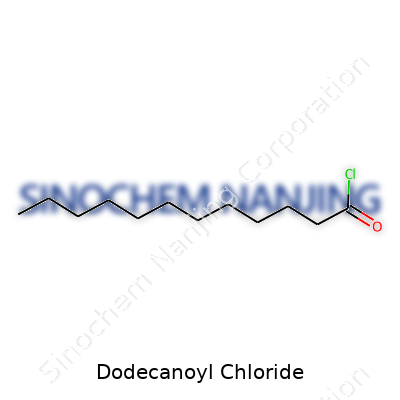
| Names | |
| Preferred IUPAC name | Dodecanoyl chloride |
| Other names |
Lauroyl chloride Dodecanoic acid chloride |
| Pronunciation | /ˌdoʊˌdɛkəˈnɔɪl ˈklɔːraɪd/ |
| Identifiers | |
| CAS Number | 112-13-0 |
| Beilstein Reference | 1206727 |
| ChEBI | CHEBI:38697 |
| ChEMBL | CHEMBL15461 |
| ChemSpider | 12249 |
| DrugBank | DB14236 |
| ECHA InfoCard | 100.188.137 |
| EC Number | 204-646-6 |
| Gmelin Reference | 52993 |
| KEGG | C14263 |
| MeSH | D002999 |
| PubChem CID | 8136 |
| RTECS number | MO8575000 |
| UNII | I41H8H5S1F |
| UN number | UN3265 |
| CompTox Dashboard (EPA) | DTXSID3024710 |
| Properties | |
| Chemical formula | C12H23ClO |
| Molar mass | 233.76 g/mol |
| Appearance | Colorless to light yellow liquid |
| Odor | Pungent |
| Density | 0.944 g/mL at 25 °C |
| Solubility in water | Reacts with water |
| log P | 4.9 |
| Vapor pressure | 0.14 mmHg (20 °C) |
| Acidity (pKa) | pKa ≈ -7 |
| Magnetic susceptibility (χ) | -6.5×10⁻⁶ cm³/mol |
| Refractive index (nD) | 1.447 |
| Viscosity | 1.38 mPa·s (25 °C) |
| Dipole moment | 2.0805 D |
| Thermochemistry | |
| Std molar entropy (S⦵298) | 448.8 J·mol⁻¹·K⁻¹ |
| Std enthalpy of formation (ΔfH⦵298) | -323.7 kJ/mol |
| Std enthalpy of combustion (ΔcH⦵298) | -7648.7 kJ/mol |
| Pharmacology | |
| ATC code | D10AX |
| Hazards | |
| Main hazards | Causes severe skin burns and eye damage. Harmful if inhaled. Reacts violently with water. |
| GHS labelling | GHS02, GHS05, GHS07 |
| Pictograms | GHS05,GHS06 |
| Signal word | Danger |
| Hazard statements | H314: Causes severe skin burns and eye damage. H302: Harmful if swallowed. H317: May cause an allergic skin reaction. H335: May cause respiratory irritation. |
| Precautionary statements | P261, P264, P271, P280, P301+P330+P331, P303+P361+P353, P304+P340, P305+P351+P338, P312, P321, P332+P313, P337+P313, P362+P364, P405, P501 |
| NFPA 704 (fire diamond) | 1-3-0-W |
| Flash point | 110 °F |
| Autoignition temperature | 201 °C (394 °F, 474 K) |
| Lethal dose or concentration | Lethal dose or concentration: **LD50 (oral, rat): 3300 mg/kg** |
| LD50 (median dose) | LD50 (median dose): Oral rat 1470 mg/kg |
| NIOSH | TTI7000000 |
| PEL (Permissible) | PEL (Permissible Exposure Limit) for Dodecanoyl Chloride: Not established |
| REL (Recommended) | 10 mg/m3 |
| IDLH (Immediate danger) | Unknown |
| Related compounds | |
| Related compounds |
Lauric acid Dodecanol Dodecanoic acid Lauroyl peroxide |



