Dl-Methionine: The Engine Behind Modern Animal Nutrition
Historical Development
Farmers and scientists started to pay close attention to methionine in the 20th century, after realizing animal growth rates and health improved when specific dietary amino acids were balanced. Early studies showed chickens and pigs grew better and stayed healthier when their feed contained methionine. Over time, Dl-Methionine—synthetic methionine created in a lab—became a game changer. During the post-war period, as agriculture became more science-driven, industrial synthesis of amino acids grew rapidly. By the mid-1900s, Dl-Methionine started showing up in commercial feeds across North America and Europe. The compound transformed livestock production, since natural protein sources weren’t always reliable or affordable. The pressure to feed the world’s growing population made nutrient efficiency crucial, and Dl-Methionine delivered that consistency. Feed companies could depend on a steady supply, and farmers no longer watched their animals lag behind during crop shortages.
Product Overview
Dl-Methionine stands out as a crystalline amino acid, made up of a racemic mixture of D- and L- isomers. Its main use has always been animal feed—a direct supplement in poultry, swine, and aquaculture rations. Providing this supplement doesn’t just ramp up animal growth. It influences fur quality and egg production, and even improves reproductive performance in farm animals. Feed manufacturers offer it as both powder and granule, based on customer preferences and machinery used on farms. The product comes carefully packaged with certified purity standards, so that blends are consistent from bag to bag—a key promise for feed mills managing tight production schedules and strict quality benchmarks.
Physical and Chemical Properties
Dl-Methionine forms white crystals or a white crystalline powder that’s almost odorless but sometimes carries a faint sulfur note. Its melting point sits at around 280°C, which points to strong molecular stability and resilience during pellet processing. It dissolves a bit in water—slightly more in warm temperatures—which matters for liquid feed applications. Chemically, it holds the structure C5H11NO2S, giving it a sulfur atom that makes this amino acid vital for growth and cellular health. Farm feed blenders often prefer it because it resists clumping and disperses well, even after long storage.
Technical Specifications & Labeling
Suppliers craft clear technical sheets for Dl-Methionine, noting purity (usually above 98.5% on a dry matter basis), moisture content (normally less than 0.3%), and minimum total sulfur amino acids guaranteed. The product often ships with full batch traceability codes. Labeling gets strict because livestock nutrition is regulated—bags carry not just net weight, but also supplier registration numbers, purity grade, country of origin, and storage recommendations. Such transparency ensures users know the facts and can track batches in case of feed recalls or quality concerns.
Preparation Method
Industry produces Dl-Methionine by a method called chemical synthesis. One major process uses acrolein, methyl mercaptan, and hydrogen cyanide—each playing a precise role in piecing together the structure of methionine. The process gets tightly controlled for temperature, pH, and pressure. Workers monitor by-products to limit waste and ensure purity. The resulting mixture offers both D- and L- isomers. Research scientists continue to refine green chemistry approaches, searching for pathways that use renewable resources or cut down on hazardous intermediates. This push matters as feed industries worldwide face mounting scrutiny on environmental impact.
Chemical Reactions & Modifications
Dl-Methionine shows interesting chemistry thanks to its sulfur-containing side chain. In feed science, it can react with minerals to make chelates, which sometimes boost absorption in the animal gut. During storage and feed processing, this amino acid resists heat damage better than some other amino acids, retaining nutritional value in pelleted feeds. Labs also modify methionine to create analogs or precursors—often trying to boost bioavailability or meet niche nutritional goals. Some researchers experiment with coating methods, protecting the molecule so it gets through the stomach and into the small intestine intact, especially in ruminants.
Synonyms & Product Names
Dl-Methionine appears under a variety of product names in the marketplace. Common synonyms include 2-Amino-4-(methylthio)butyric acid and Methionine racemate. Major suppliers roll out proprietary brands, each positioning their Dl-Methionine as the most consistent or easy to mix. Those trading across borders see names listed in multiple languages, which sometimes becomes a challenge for regulatory paperwork and international commerce. For feed formulation, no matter the brand, nutritionists look at the same key values: purity, bioavailability, and flowability.
Safety & Operational Standards
Handling Dl-Methionine means following strict rules—this keeps workers and animals out of harm's way. Dust from the powder can irritate the respiratory tract if inhaled, so production lines require dust extraction and personal protective equipment. Storage happens in cool, dry spaces, away from strong acids or oxidizers. Workers get trained to avoid static discharge since fine powders sometimes pose explosion risks if mishandled. Governments require documentation tracking from raw synthesis to delivery at the farm gate. Animal-health regulators set maximum legal inclusion rates for different species, reflecting both safety and optimal performance. The stakes for safe practice run high, as mistakes could mean not only losing product but facing tough recalls or health crises.
Application Area
Livestock farms and aquaculture operations rely on Dl-Methionine to bridge amino acid gaps found in natural feed ingredients. In poultry, methionine stands as the first limiting amino acid—without enough, chickens can't convert feed into muscle or produce high-quality eggs. Swine rations use it to control nitrogen output, boosting growth without dumping excess protein in the manure. Fish feed calls for methionine because plant-based feedstuffs used in aquaculture often come up short on sulfur-containing amino acids. Beyond animal nutrition, a handful of specialty food applications—like therapeutic diets or medical nutrition products—call on methionine to meet strict dietary guidelines. In some labs, methionine serves as a reference material for protein research, or as a reactant for synthesizing custom peptides.
Research & Development
Continuous research pushes the boundaries of how Dl-Methionine works inside animals. Scientists monitor absorption, look at how gut bacteria interact with methionine, and study genetic differences that influence how effective supplementation will be. Recent work in precision feeding aims at dialing in methionine levels by the gram, using automated feed mixing or sensors to watch animal performance in real time. Labs invest heavily in new encapsulation technologies, aiming to get more of the molecule past the rumen in cows or through the hostile environment of the pig stomach. Company-backed studies track environmental outcomes too, checking whether tighter methionine balancing could cut farm emissions and help meet climate targets. Growth in sustainable production methods brings bio-fermentation into the spotlight, as researchers hunt for strains of microbes that churn out methionine with less chemical waste.
Toxicity Research
While Dl-Methionine stands as an essential nutrient, its safety window sits underneath regular scrutiny. Too much methionine stresses animal metabolism, leading to lower feed intake, growth setbacks, and, in extreme cases, organ dysfunction. House studies in broilers and swine typically set safe use limits far below toxic levels. The regulatory agencies pile up decades of risk assessments, forming a deep knowledge base on how animals process and excrete excess amino acids. Analytical labs keep testing for potential contaminants—leftover solvents, heavy metals, or by-products from synthesis. Feed manufacturers build in strict checks, not just to comply with food safety laws, but to stay ahead in a marketplace rocked by any contamination scare.
Future Prospects
The road ahead for Dl-Methionine includes innovation in green chemistry, advances in targeted delivery, and tighter integration with digital agriculture. Companies invest in bio-based production to shrink carbon footprints and win over sustainability-minded customers. At the farm level, the rise of precision livestock farming ties real-time animal data to nutrient delivery, preventing waste and cutting feed bills. There’s excitement over emerging genetic tools—using genomics to map out how different breeds respond to methionine supplementation. Regulators and industry groups both push for transparency, with digital traceability from raw material up to finished feed. Resource efficiency and sustainability grow more important every year, and Dl-Methionine’s proven role in converting feed into food efficiently means demand will likely keep rising—helping farmers feed more people with less strain on the planet.
What is DL-Methionine used for?
The Role of DL-Methionine in Animal Nutrition
Life on the farm teaches you a lot about what animals really need to grow strong. Protein sits high on that list, but it gets a little more complicated than just tossing a scoop into the feed. DL-Methionine stands out, not just because it’s an amino acid, but because chickens, pigs, and even some fish need it for real growth and health. Without it, you’ll see chickens lose feathers or pigs with stunted weight. It’s the “limiting” amino acid for poultry—if you skip it, your feed turns inefficient and the flock won’t perform the way you expect.
Why Feed Producers Add DL-Methionine
Corn and soybean meal carry most of the protein in animal feed. But these ingredients come up short on methionine. That’s where DL-Methionine steps in. It fills the gap so animals can build muscle, support their immune system, and produce eggs at a steady clip. A laying hen, for example, needs all her body parts working together if she’s going to keep laying eggs every day. Methionine lets her do that. I’ve seen firsthand how eggshell quality drops off with methionine shortages—the difference in output and bird vigor can’t be ignored.
Healthier Animals, Less Waste
Meeting the real dietary needs of livestock keeps the animals healthy and cuts back on the nitrogen they release into the environment. Animals use what they eat more efficiently because every piece of the puzzle fits—including methionine. That means less ammonia in the litter or waste, making things easier for workers and reducing pressure on nearby water sources.
Supporting Sustainable Production
DL-Methionine gives farmers room to lower the overall protein levels in feed. This matters when you want to shave costs and protect the land. Lower protein means less feed expense and less environmental pollution. Research from the University of Arkansas shows that supplementing feeds with methionine can reduce nitrogen emissions by up to forty percent. That’s a game changer if you live near waterways or have tight runoff regulations breathing down your neck.
Questions Over Synthetics
Some folks still feel uneasy about synthetic amino acids. They picture “chemical” as something unnatural, but DL-Methionine mimics the methionine found in plants and animal tissue. Most commercial feed additives come from fermentation using bacteria, or from chemical reactions, but functionally, the result is the same. I trust the science here: livestock producers and veterinarians around the world rely on it daily.
Balancing Needs and Costs
Farmers try to keep margins healthy and animals healthier. DL-Methionine packs in value because it targets what’s missing. Producers don’t want to overshoot with protein—it costs more and ends up in the manure pit. Using synthetic methionine lets them fine tune every ration, hitting the right growth rates without overspending.
The Way Forward
As the world asks for more eggs, poultry, and pork without pushing natural systems past the breaking point, smart supplementation deserves a permanent spot at the table. You get healthier animals, better returns, and a farm operation built to last another generation. DL-Methionine proves that technology, when used thoughtfully, helps real people put better food on the table and care for the land at the same time.
Is DL-Methionine safe for pets and livestock?
Understanding DL-Methionine’s Role
Every living animal needs specific nutrients to grow, stay healthy, and thrive. DL-Methionine pops up as a popular supplement, especially for pets and livestock. Farmers and pet owners hear about it everywhere—marketing touts growth, shiny coats, better eggs, and lean muscle. It’s tempting to add anything that promises healthy animals, but the question that often comes up is whether it’s safe—or just another additive with risks under the surface.
What DL-Methionine Does
Methionine is an amino acid, something every dog, cat, pig, or chicken can’t go without. Some foods—mostly plant-based animal feeds—don’t offer enough, and this is where DL-Methionine steps in. It’s the synthetic version of naturally occurring methionine. Years back, I watched a neighbor’s laying hens perk up after their feed got a methionine boost—a quick improvement in energy and feather quality. It became clear methionine helps fill nutritional gaps.
The science backs up these small farm stories. Poultry can’t lay well or grow right without methionine. Cats process protein in a way that makes methionine especially crucial; too little can trigger liver and immune problems. Even dogs with kidney trouble occasionally benefit from precise methionine adjustments, according to veterinarians.
Safety Concerns—Separating Fact from Fear
No one wants to harm their animals, so understanding risks and what science says about safe levels is important. Over the years, researchers have studied what happens when animals get synthetic methionine in their feed. Their answer: standard inclusion rates don’t produce negative side effects. Reports say chickens grow steadier, cats’ urine stays less acidic, and swine absorb amino acids better. But loading up on any one supplement, methionine included, won’t give assets without risks. Large overdoses could create health problems, such as elevated levels in the blood, but this only happens when feeding far over recommended amounts.
Food regulators across the globe—like the U.S. FDA and European Food Safety Authority—look closely at methionine safety. They agree on inclusion levels for different species. These guidelines exist because animal nutrition is precise, and too much can flip benefits to hazards.
Responsible Use and Transparency
Pet food makers and farmers need trust in the products they choose. I’ve seen conversations between nutritionists, feed mill operators, and small-scale farmers at local ag fairs. The best outcomes always came when folks challenged each other, demanded transparent sourcing, and double-checked how formulas lined up with science.
Trust grows strongest when companies share clear ingredient lists and actual methionine content. Pet parents should feel free to ask questions and get straight answers. A strong relationship with a knowledgeable veterinarian or feed consultant means someone can tailor nutrition, not just throw in whatever additive happens to be trending.
Practical Solutions for Safer Feed
It’s easy to chase after the idea of more and better nutrition. A balanced diet—one rooted in research, watched by experts, and tweaked for the specific animal—gives far more value than blind supplementation. I encourage people to lean on science-backed recommendations. If methionine shows up in the feed or on labels, check how much is there and stay within suggested amounts. Bringing concerns to trusted animal health professionals never hurts. For those mixing their own feeds, careful measurement matters; for those buying ready-made, choosing companies that publish transparent formulas keeps animals safer and builds real confidence in what goes into bowls and troughs.
What is the recommended dosage of DL-Methionine?
Why DL-Methionine Matters
DL-Methionine brings more to the table than just a complicated name. It’s an amino acid, a key building block for protein, which animals and humans count on for growth and health. For those raising poultry or livestock, getting methionine levels right can make the difference between lively, healthy animals and those that struggle. Even in human nutrition, people with rare metabolic needs, or vegans trying to cover their bases, sometimes look toward methionine supplements. DL-Methionine often pops up in feed formulations because some plants and grains fall short on this amino acid.
Recommended Dosage in Animal Nutrition
On the farm, the use of DL-Methionine comes down to percentages, not hand-held scoops. Most poultry feeds call for methionine to make up about 0.35% to 0.5% of the total diet. Differences come down to age and species. Broilers (meat chickens) from hatching up to a month thrive with 0.45% of their feed as methionine; laying hens do better closer to 0.35%. Swine diets typically sit around 0.25% of the diet. Going above these numbers can lead to wasted dollars or disrupt balance with other amino acids, such as cysteine. That does not mean loading up on DL-Methionine promises faster growth or better eggs — the body stops making use after a certain point. Most reputable feed manufacturers build these amounts into their recipes, guided by research out of universities and animal health organizations.
DL-Methionine in Human Supplements
Fewer folks take DL-Methionine straight as a pill, but those who do often reach for it on the advice of a doctor or nutritionist. Common adult doses fall between 500 mg and 2,000 mg per day. Some doctors stick closer to the 500 mg line, letting diet cover the rest, because a typical Western diet already includes anywhere from 1.5 to 3 grams daily through meat, dairy, and nuts. Folks with liver disorders, certain metabolic errors, or problems breaking down other sulfur-based amino acids may need special guidance. Toxicity rarely happens, but doses above 3 grams daily, especially over weeks, can bring on nausea, vomiting, or blood pressure swings. Anyone with kidney disease should tread very carefully. No substitute exists for professional advice before starting any regimen; I have seen people guess at supplements and end up with more troubles than before.
The Risks of Getting It Wrong
Too little methionine slows animal growth and weakens immune systems in livestock. Eggs drop off, feather quality fades, and pigs slow their gains. In people, deficit rarely comes without a broader protein shortfall, outside of strict vegan diets. Too much methionine can trouble the liver or heart. That’s why folks in livestock production run feed tests regularly, and humans should talk with someone trained in nutrition science.
Finding Balance: Practical Steps
For anyone mixing animal feed at home, it pays to read up or use premixed diets. With humans, an annual checkup, including basic blood work, usually covers nutritional shortfalls. Labels on supplements give clear dosage guidance, but they’re meant to top up a shortfall, not to rewrite a balanced diet. The bottom line: moderation, regular monitoring, and honest-to-goodness professional advice trump guesswork every single time.
Are there any side effects of DL-Methionine?
DL-Methionine and Why People Use It
DL-Methionine holds a steady spot in the world of animal nutrition and, to a lesser extent, in special human dietary supplements. Folks turn to it to address methionine deficits in feed or for its ability to help balance protein intake. Chickens, pigs, cats, and dogs often get a sprinkle of it, and nutritionists keep an eye on amino acid levels to maintain growth and health. Some people amp up their diet with DL-Methionine hoping for better liver function or acid balance in their bodies.
What Can Go Wrong?
For most animals, regular use on diet formulas rarely causes big trouble. Side effects show up when dose shoots too high, or mixing mistakes slip past. Rations overloaded with DL-Methionine can push an animal’s system off-kilter. Too much acid in the blood, called metabolic acidosis, creeps in. Appetite takes a dive, growth stumbles, and kidney or liver stress piles up. Older stories from labs show that after prolonged overdosing, chickens develop poor feathering and drop body weight.
Cats react faster than most. Since this amino acid helps acidify urine, too much throws off their mineral balance and may trigger kidney strain. Cat foods sometimes get extra DL-Methionine for urinary health, but smart pet food brands keep amounts tight and watch for signs of stress.
Human Side Effects: What Science Says
People sometimes look at DL-Methionine as a tool for rare metabolic troubles. Research says that high doses in supplement form carry a risk of nausea, vomiting, or drowsiness. There are stories of rare allergic reactions, like hives or trouble breathing. People struggling with liver problems or metabolic disorders face greater risks, since methionine metabolism puts pressure on those organs.
A study published in “Amino Acids” (2016) took a close look at methionine’s role in oxidative stress. Long-term, high intake may raise homocysteine levels, which medical experts link to heart disease. Harvard’s Nutrition Source flags methionine as safe at nutritional levels, but cautions against mega-dose supplements, especially for folks with heart or kidney issues. Human studies remain limited, yet the best choice is sticking to recognized daily allowances.
Spotting Problems Early
In practice, most commercial feeds and supplements use industry-set levels backed by years of safety data. Symptoms like poor weight gain in animals or digestive upset in people suggest something’s off. Responsible manufacturers keep batch testing tight, and veterinarians monitor animals on fortified diets. Pet owners and health enthusiasts can make a big difference by choosing established brands and reading label instructions with care.
Ways to Lower Risk
Doctors and animal nutritionists say keeping DL-Methionine dosage in a safe range matters more than anything. Blending it into a diet only makes sense after checking what’s truly needed. For cat owners, aim for food that’s made by trusted names and watch for changes in drinking, eating, or litter box habits. In animal farming, routine health checks and regular feed analysis remove most of the guessing.
Anyone thinking about methionine supplements for themselves should check in with a healthcare provider and steer clear of heavy doses. People with a history of liver or kidney problems do best by skipping methionine add-ons unless their doctor gives a clear green light.
Final Thoughts
DL-Methionine helps fill gaps in diets and provides benefits when handled right. Real trouble starts when folks lose track of safe amounts or ignore early warning signs. With good advice, clear labeling, and honest communication between buyers and professionals, most of the hazards linked to DL-Methionine fall off the map.
How should DL-Methionine be stored?
Making Storage Count
DL-Methionine gives livestock and poultry a solid dose of nutrition, but all that value means little if the product turns bad before it reaches its destination. I’ve spent enough time in feed mills and warehouses to see what happens when someone stores this amino acid carelessly. Clumps, moisture damage, even a dusty mess—these problems eat into both product quality and profits. Getting storage right means protecting your investment and, more importantly, your animals’ health.
What Drives Storage Choices
Moisture causes most of the headaches with DL-Methionine. This fine crystalline material absorbs water from the air and starts to cake, which brings uneven blending and dosing headaches in feed rations. Farmers I know want consistency in every bag, so the answer starts with keeping things bone dry. Humidity gets into everything in storage rooms, so tight seals on containers and bags matter more than fancy equipment.
Heat also plays a role. While DL-Methionine can handle regular room temperatures, prolonged heat exposure speeds up breakdown that leads to less effectiveness. I’ve seen supply runs where summer sun turned bags lumpy, depriving the last half of the shipment from the same nutrition found at the start. Choosing a cool, shaded storage place—out of direct sunlight, away from walls that heat up—makes more difference than people often realize.
Pests, Odors, and Cleanliness
I don’t need a chemistry book to tell me: animals can smell trouble before we do. If the storage area smells like chemicals, fuel, or stale grain, odds are DL-Methionine ends up picking up that odor. The same goes for pests. Mice and bugs love to nibble through even tough sacks, ruining the feed additive. Using pest traps, sweeping regularly, and rotating stock push the odds in your favor that nothing makes its way into your supply. My experience shows simple cleanliness habits cost little but pay off time after time.
Packaging Makes a Difference
I always tell folks to trust the original packaging. Those multi-layer bags and pails have a reason for being heavy-duty—they keep out moisture and keep the product stable far longer than repackaged alternatives. Once someone opens a bag, closing it up tightly becomes the next battle. I’ve seen feed rooms rigged with big plastic drums and tight screw lids, which help a lot. Tossing an opened bag in a corner and walking away only leads to waste. Labeling every package with the open date helps everyone know when it’s time to finish up a batch or move it to the front of the line.
Training and Responsibility
Having a tidy storage plan is only half the struggle. People on site need reminders about what’s at stake. One farm manager I know prints out quick guidelines for handling and storing DL-Methionine, taping them right near the storage bins. Proper gloves, keeping dry powder away from faces, and regular checks for moisture damage all add up. Sometimes all it takes is a refresh at the next team meeting to keep everyone on track.
Looking toward Improvement
DL-Methionine forms the foundation for productive livestock nutrition, but the storage story doesn’t end after the truck unloads. Each bag represents a promise to the animals and to the farm’s bottom line—a promise kept only through attention to detail in storage habits. A little extra care each day means better health, better productivity, and less worry in the long run.
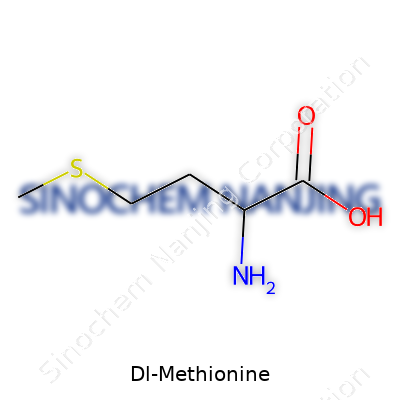
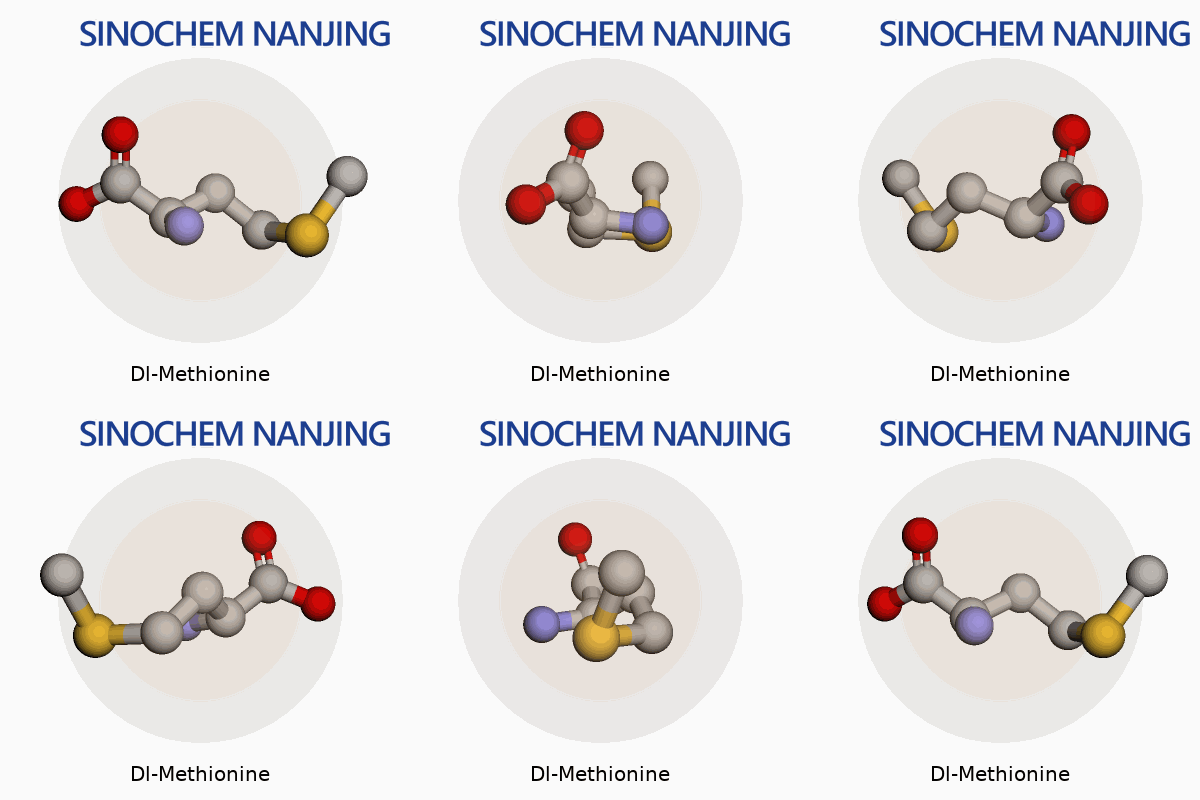
| Names | |
| Preferred IUPAC name | 2-Amino-4-(methylsulfanyl)butanoic acid |
| Other names |
2-Amino-4-(methylthio)butyric acid DL-2-Amino-4-(methylthio)butyric acid Racemethionine DL-Met |
| Pronunciation | /ˌdiːˌɛl.məˈθaɪ.ə.niːn/ |
| Identifiers | |
| CAS Number | 59-51-8 |
| Beilstein Reference | 17198 |
| ChEBI | CHEBI:16811 |
| ChEMBL | CHEMBL123 |
| ChemSpider | 608 |
| DrugBank | DB00132 |
| ECHA InfoCard | 100.005.379 |
| EC Number | 2.3.1.13 |
| Gmelin Reference | 63512 |
| KEGG | C00073 |
| MeSH | D008745 |
| PubChem CID | 6137 |
| RTECS number | OP0895000 |
| UNII | 6RH7R9D1AA |
| UN number | NO UN number |
| Properties | |
| Chemical formula | C5H11NO2S |
| Molar mass | 149.21 g/mol |
| Appearance | White or pale gray crystalline powder |
| Odor | Characteristic |
| Density | 0.6-0.7 g/cm3 |
| Solubility in water | slightly soluble |
| log P | -2.14 |
| Vapor pressure | Negligible |
| Acidity (pKa) | pKa = 2.28 (carboxyl), 9.21 (amino) |
| Basicity (pKb) | 9.13 |
| Magnetic susceptibility (χ) | -9.6×10⁻⁹ |
| Refractive index (nD) | 1.521 |
| Dipole moment | 3.18 D |
| Thermochemistry | |
| Std molar entropy (S⦵298) | 127.7 J·mol⁻¹·K⁻¹ |
| Std enthalpy of formation (ΔfH⦵298) | -566.5 kJ/mol |
| Std enthalpy of combustion (ΔcH⦵298) | -3221 kJ/mol |
| Pharmacology | |
| ATC code | A16AA02 |
| Hazards | |
| GHS labelling | GHS07, GHS09 |
| Pictograms | GHS07, GHS09 |
| Signal word | Warning |
| Hazard statements | Hazard statements: Not a hazardous substance or mixture according to Regulation (EC) No. 1272/2008. |
| Precautionary statements | P264, P270, P273, P301+P312, P330, P501 |
| NFPA 704 (fire diamond) | NFPA 704: 1-1-0 |
| Flash point | 230 °C |
| Autoignition temperature | > 470°C |
| Explosive limits | Not explosive |
| Lethal dose or concentration | LD50 oral rat 2,500 mg/kg |
| LD50 (median dose) | LD50 (median dose): Rat oral 2,900 mg/kg |
| NIOSH | MA175 |
| PEL (Permissible) | 10 mg/m³ |
| REL (Recommended) | 3 – 5 kg/ton |
| Related compounds | |
| Related compounds |
Methionine sulfoximine Methionine sulfone S-Adenosyl methionine |



