Disodium 1,2-Ethylenebisdithiocarbamate: A Grounded Look
Historical Development
Disodium 1,2-ethylenebisdithiocarbamate, better known in the trade as nabam, stepped onto the chemical scene in the late 1930s. Researchers back then saw huge potential in carbamate chemistry, hunting for a way to keep farms productive and safeguard food supplies that were threatened by fungal pests. This compound ended up marking a real shift in agricultural disease control, particularly for potatoes, tomatoes, and apples. By the 1950s, agricultural manuals from the United States and Europe often listed nabam as a staple among multi-ingredient disease-control blends, which reflects not just the compound’s effectiveness, but also the farming community’s readiness to experiment with new science. These days, its story gets recounted in discussions about legacy pesticides and how pest management has evolved along with stricter regulations and better understanding of toxicity.
Product Overview
Nabam usually shows up as a yellowish crystalline powder or comes in the form of concentrated aqueous solutions. For decades, its main job involved fighting fungal diseases, alone or mixed with other disease-resistant chemicals like zinc sulfate. A quick glance through any agricultural supply catalog reveals nabam’s importance to moderate-scale growers, especially those who don’t always have access to newer and pricier fungicides. Yet, over time, the conversation around this product has shifted. Calls for more environmentally friendly solutions have challenged the widespread use of nabam. Still, it keeps a foothold in some markets, mostly where growers lack alternatives or where resistant fungal strains put pressure on pesticide rotation.
Physical & Chemical Properties
Talking about nabam’s physical characteristics—its yellow powder form and high solubility in water—reminds me how important ease of application can be for actual field work. It doesn’t clump up, so it dissolves quickly in sprayer systems, letting users cover crops consistently. Chemically speaking, nabam belongs to the family of dithiocarbamates, carrying the C4H6N2Na2S4 molecular formula. Its aqueous stability and breakdown under acidic or strong oxidizing conditions sometimes create headaches for storage or mixture with other farm chemicals. Shelf life matters when temperature swings happen in farm sheds and nobody wants wastage from product decomposition.
Technical Specifications & Labeling
Manufacturers print strength and usage rates on nabam containers in big, bold lettering, and I’ve seen regulators tighten rules on what else must appear—signal words, risk statements, batch codes, and advice on proper disposal. You’ll usually spot recommendations for gloves, masks, and long sleeves, reflecting the compound’s toxicity concerns. Labels often give mixing charts for tank blends, especially combinations with copper or zinc, since these can extend nabam’s disease control action. As new EU and US requirements come into force, suppliers have revamped label layouts, adding pictograms and instruction tables for growers whose first language isn’t English.
Preparation Method
Labs and commercial producers synthesize nabam through the reaction of ethylenediamine with carbon disulfide under basic conditions, using sodium hydroxide as the alkali catalyst. The process runs smoothly at moderate temperatures, bubbling carbon disulfide into a stirred aqueous solution, releasing heat and some odorous fumes. For industrial batches, closed reactors and carefully controlled pH prevent worker exposure and ensure batch-to-batch consistency. Older literature sometimes mentions small-scale prep in glassware, but today, safety guidelines demand full containment and air filtration, since both carbon disulfide vapors and the byproducts can present hazards that nobody in the plant wants to experience firsthand.
Chemical Reactions & Modifications
Nabam itself breaks down under acidic condition to regenerate carbon disulfide, and that instability has driven a lot of research into reactivity. Zinc or manganese salts often get mixed in to tweak both efficacy and persistence. These modifications generate new dithiocarbamate complexes, which sometimes open up new modes of action or help deal with resistance in field strains. In soil, nabam breaks down into ethylenediamine and further oxidized forms, raising ongoing debate about long-term ecological consequences. From a reaction standpoint, it shows high affinity for transition metals, making it an interesting ligand for technical chemistry and a candidate for chelation studies.
Synonyms & Product Names
Anyone hunting through the literature finds a tangle of names: nabam, disodium ethylenebisdithiocarbamate, and even product aliases like Dithane D-14 on older packaging. That patchwork of terminology reflects mergers, rebranding, and every company’s push to stand out in a crowded marketplace. Old patent filings sometimes refer to sodium ethylene bisdithiocarbamate, and the fragmentation in trade names often complicates transparency. Modern regulatory push has nudged suppliers toward standardized nomenclature, but it’s still common to find old stock under legacy names in farm stores well outside city centers.
Safety & Operational Standards
Long before anyone talked about PPE on small farms, safety warnings for nabam turned up in extension bulletins and training handouts. Direct contact and inhalation produce skin, eye, and respiratory irritation, sometimes leading to more serious effects with long exposure. Spraying nabam without gloves or masks, something not uncommon during busy planting seasons, can cause rashes or make field hands nauseous. Now, modern rules require handlers to wear rubber gloves, splash goggles, and sometimes even respirators during mixing. Clean-up procedures stress the use of water for spills but warn against washing nabam runoff into sewage or streams. Worker safety audits focus on training, spill response, and locked storage away from children or animals.
Application Area
Row crops, orchards, and nurseries once relied on nabam mainly to control downy mildew, apple scab, and a range of blights that attacked vegetables and ornamentals. Growers rely on it both as a standalone spray and in mix-tank applications during humid spring and fall outbreaks. Even greenhouse managers keep nabam on hand for disease-prone seedlings since it gets absorbed through foliage without visible residue. Outside agriculture, I’ve watched nabam pop up in water treatment as a chelating agent and in industrial setups to mop up traces of heavy metals. That secondary use has started to fade, though, pushed out by newer, purpose-designed water treatment chemicals.
Research & Development
Ongoing studies continue to chase the elusive goal of high activity with lower toxicity. Researchers focus on new blending partners, alternative application technologies, and smarter timing to cut total chemical load per acre. Environmental scientists dig into breakdown products, soil mobility, and off-target effects, hoping to develop risk maps or new best practices. Universities and government labs keep re-examining nabam’s place in integrated pest management plans, balancing threat reduction with practical field realities that still exist for mid-scale and developing world growers. The push for greener, biodegradable alternatives remains a hot topic at every industry conference, but older products like nabam keep their seat because growers value experience and know-how.
Toxicity Research
Health and environmental agencies have long reviewed toxicity data on nabam, setting exposure limits and enforcing buffer zones around application areas. Chronic exposure raises concern for potential liver and thyroid effects, with key studies showing increased risk in workers with inadequate protection. Aquatic toxicity stands out as a major sticking point, since nabam runoff can affect the health of streams and ponds near treated fields. Training sessions for pesticide handlers increasingly put heavy focus on proper clean-up, drift management, and medical monitoring, and new research pushes for biomarkers that allow early detection of overexposure. Debate continues over the implications of low-level residues in food crops, which keeps toxicology teams busy with multi-season feeding studies.
Future Prospects
A lot rides on whether the crop protection industry can deliver replacements with lower risk and equal effectiveness. New regulations on maximum residue levels and environmental discharge have already squeezed nabam’s market share in developed countries. Looking ahead, I see a future where nabam could become a case study for how old chemistry forces innovation in both regulatory oversight and field-level disease management. There’s real opportunity for green chemistry startups and public agencies to pilot safer dithiocarbamate derivatives, advance molecular tracking of breakdown products, and roll out education campaigns for better personal protection. The transition won’t happen overnight, though. Rural economies with limited access to alternatives may lean on nabam for seasons to come, and I wouldn’t be surprised to see continued calls for better stewardship, smarter application, and open reporting on outcomes as the industry moves forward.
What is Disodium 1,2-Ethylenebisdithiocarbamate used for?
What Is It and Where Does It Show Up?
Disodium 1,2-Ethylenebisdithiocarbamate goes by the catchier name of nabam among chemists and growers. It shows up in the world mostly as a fungicide. In my twenties, I spent a few muggy summers picking apples and squash on a family farm that relied on crop protectants to keep produce healthy, so nabam sounds familiar to me. It belongs to a group of chemicals called dithiocarbamates, and they help keep mold and fungal diseases from ruining fields of goods like potatoes, tomatoes, lettuce, and fruit.
Nabam is sold as a water-soluble powder or liquid concentrate. Spraying or dusting it onto plants builds a shield over leaves and stems. Fungi trying to land don’t find an easy target. It’s found use not just in farming but sometimes in turf management, such as golf courses and parks. Most days, farmers want simple, reliable tools that can keep their plants healthy and their business afloat. Nabam seems to fit those needs with its broad action and reputation for low cost.
Why Should People Care?
A fungicide might seem like a detail buried deep in science, but it matters in the food people eat each day. A single outbreak of blight in potatoes or mildew in cucumbers can wipe out a harvest—no potatoes, no fries, no food on tables. Tools like nabam give farmers a fighting chance against weather, pests, and disease. Reliable crop protectants help keep grocery shelves stocked and prices stable. It’s not just about convenience or profit, either—it’s about food security for communities.
On the other hand, these chemicals don’t just vanish when it rains. They can end up in nearby waterways if not managed properly. Years ago, I watched heavy rainfall wash runoff into a stream near the orchard, worrying about the impact downstream. Some fish and amphibians don’t handle those residues well. The EPA and many scientists keep a close eye on how nabam and other dithiocarbamates hang around in water and soil.
Looking at Health and Safety
People working on farms and in manufacturing need to take safety seriously with nabam. Getting it on bare skin or breathing it in too often isn’t healthy. Over time, small amounts can irritate the skin or eyes and mess with the nervous system if you don’t wear gloves or a mask. The EPA and international health agencies regulate how much of the chemical can show up on food, making sure levels stay as low as possible. Farmers have to follow rules about application rates, waiting periods before harvest, and handling protocols to keep food and workers safe.
What Could Help the Situation?
One way forward involves smarter application and better education. There are tools now—soil sensors, satellite maps, targeted sprayers—that put pesticides and fungicides only where they’re needed. My own experience tells me that folks are more likely to do things safely if they know the risks and see real results from practices that cost less money and time. Training workers, using protective gear, and exploring alternatives like crop rotation or resistant seed varieties can reduce over-reliance on chemicals like nabam.
Consumers can play a role too by supporting local farms that invest in sustainable methods and by keeping the conversation going about responsibility in agriculture. Ultimately, using chemicals wisely protects not just the fields, but also the food supply, the people who tend those crops, and the waterways that run through all our lives.
Is Disodium 1,2-Ethylenebisdithiocarbamate safe for humans and the environment?
Everyday Chemicals, Real Questions
Disodium 1,2-ethylenebisdithiocarbamate probably sounds like it belongs in a lab, far away from kitchen tables or backyard gardens. For me, the surprise came during a simple chat with a farmer who relies on fungicides to protect crops. This compound, often labeled as nabam, pops up in agriculture worldwide. Anyone shopping for produce or enjoying a weekend hike through sprayed fields ends up sharing space with such chemicals, often without knowing.
Human Health: The Facts Unearthed
Experience working in vineyards opened my eyes to the realities of modern farming. On hot days, workers carried masks and gloves, not just for dust, but for the discards of sprays like nabam. Scientists have pointed out, through multiple studies, that disodium 1,2-ethylenebisdithiocarbamate can irritate skin and airways. Chronic exposure, especially for workers out in the fields every day, ties back to headaches and breathing trouble. The World Health Organization notes that nabam breaks down into ethylenethiourea (ETU), a chemical that worries toxicologists. ETU links up with thyroid changes, and lab tests in animals point to reproductive and cancer risks when exposure grows over time.
Eating food with nabam residues isn’t uncommon, though legal limits exist. Regulators in the US and EU have set maximum residue limits, hoping to protect shoppers. Authorities also call for workers to wear protective gear and avoid re-entering treated fields for set periods. Despite these steps, low-level traces show up on spinach, potatoes, and grapes. Eating small amounts does not spark overnight illness, but who really calculates their total exposure every week?
An Eye on the Land and Water
I remember fishing in creeks near orchards and noticing the change in water clarity after spray season. Runoff matters. Disodium 1,2-ethylenebisdithiocarbamate slips into soil and water, where it can harm aquatic insects and fish. Environmental Protection Agency records warn of toxicity to freshwater life, which means this isn’t a chemical that vanishes quietly. Wildlife eating plants or bugs from treated areas take in chemical residues, leading to possible long-term health effects.
Soil microbes, the invisible workforce for any farmer, also struggle with repeated sprayings. The breakdown products, especially ETU, tend to linger and disrupt healthy soil cycles. Overuse paints a grim picture for biodiversity and soil resilience, things we often take for granted until they disappear.
Finding a Safer Path
Having seen organic orchards side by side with conventional ones, it’s clear the story is more about balance than total banishment. Crop rotation and better disease monitoring help reduce reliance on strong fungicides. Some growers shift to biopesticides or adopt new breeds of resistant crops. Training and gear remain crucial for worker health, and simple, tested strategies like buffer zones around waterways keep runoff in check.
Stronger tracking of residue, plus honest labeling, would give shoppers real choices. Funding unbiased research into long-term impacts—paid for by chemical manufacturers and farmers’ groups—can keep the facts front and center. With more transparency and less routine spraying, everyone gets a fairer shot at health and cleaner land, from farm families to city folks unpacking their groceries.
What are the storage and handling precautions for Disodium 1,2-Ethylenebisdithiocarbamate?
Why Paying Attention Matters
I’ve worked in labs and facilities where chemical safety rules matter. Disodium 1,2-Ethylenebisdithiocarbamate, often known among people in agriculture or industry as a fungicide, can mean trouble if ignored. A busy storage room or sloppy workbench doesn’t stack up well against chemicals with strong health and environmental concerns. From what I’ve seen, small mistakes lead to bigger problems pretty quickly.
Actual Hazard Profile
This chemical doesn’t belong on just any shelf. It irritates skin, eyes, and can trigger respiratory woes. The Environmental Protection Agency lists it as a restricted use pesticide for a reason. It doesn’t matter how big the container is — exposure risks stay high for both workers and the environment. Yet, not everyone in charge of supplies reads that fine print on the label or material safety data sheet. Cutting corners by ignoring storage or personal protection gear tempts fate, both for people and for waterways downstream.
How Storage Space Makes a Difference
A lot of toxic mishaps have one thing in common: chemicals stacked in overheated garages or forgotten sheds. Disodium 1,2-Ethylenebisdithiocarbamate needs a dry, well-ventilated spot, away from sunlight and away from acids or oxidizers. I’ve seen drums corrode from moisture, leading to leaks and powder caking everywhere. Once a chemical like this gets damp, its stability can slip out of grasp. And forget about stacking it near food, fertilizers, or animal feed. Cross-contamination doesn’t make the evening news until it’s too late, but anyone who’s seen a regulatory inspection knows the risks don’t hide forever.
Personal Protection: A Non-Negotiable
Some workers think gloves are enough, but not all gloves keep out organosulfur compounds. Chemical splash goggles, proper respirators, and sealed protective clothing matter just as much as labels. In one plant, I saw a seasoned technician get lax on his routine. One busy morning, he wiped his brow and caught a bit of dust in the process. The reaction was immediate — treatment required. People underestimate these risks, or they count on luck, but skin absorption or inhalation adds up over time.
Cleaning Spills and Waste Disposal
I’ll never forget mopping up a spill with the wrong materials. The dust stuck around, impossible to gather, making a bigger mess. Only trained staff using HEPA vacuums and chemical-appropriate cleaners keep the threat in check. Out back, hazardous waste bins stand ready. Compliance isn’t just checking off boxes; local regulations lay out strict rules for disposal. Pouring remnants down drains or dumping containers in regular trash lines up as reckless and illegal — traces of this pesticide persist in soil and water, impacting farms and wildlife for years.
Better Habits, Fewer Headaches
Training pays off more than any equipment order. Teaching teams how to read hazard labels, interpret safety data, and maintain their personal protection build safety into the daily routine. Written procedures that sit in a drawer collect dust, but regular hands-on drills make sure people stick to safe habits. Every time we rethink chemical storage or force a double-check on handling steps, we keep ourselves, our coworkers, and the environment a little safer.
References:- U.S. Environmental Protection Agency. Disodium ethylene-bis-dithiocarbamate pesticide fact sheet.
- Centers for Disease Control and Prevention (CDC) NIOSH Pocket Guide to Chemical Hazards: Disodium ethylene bisdithiocarbamate.
What industries commonly use Disodium 1,2-Ethylenebisdithiocarbamate?
Standing Out in Agriculture
Walking through any large farm, it becomes clear how farmers battle relentless threats to their crops. Fungal diseases sweep through fields, sometimes wiping out an entire season’s hope in a matter of weeks. In this tough balance, many turn to a group of compounds that help keep their plants healthy and their livelihoods secure. Disodium 1,2-ethylenebisdithiocarbamate, once just a mouthful of chemical jargon, now plays a familiar role here. This compound forms the core of several broad-spectrum fungicides used across farms worldwide. It finds its way into the sprayers that shield potatoes, tomatoes, apples, and a list of other staple crops from fungi like blight and scab.
My own time working with a local apple orchard taught me how essential these disease controls can feel during wet, warm months, especially when rain brings both relief and the threat of mildew. It isn’t about chemicals for chemicals’ sake—without these protections, a small disease outbreak can spell ruin. Decades of university research and long-term field trials show just how powerful this compound is for stopping fungal growth before it ever takes root, saving entire food supplies from some of the world’s worst crop threats.
Supporting Rubber Production
Stepping into a tire manufacturing plant or the side of a busy highway reveals another story for this compound. Rubber, as tough as it looks in finished goods, begins life pretty soft and sticky. Factories rely on a process called vulcanization, which creates stronger, more durable products. Disodium 1,2-ethylenebisdithiocarbamate serves as part of the chemical team that turns raw rubber into car tires, conveyor belts, and waterproof boots. I watched this process firsthand in a family-owned shoe factory, where the quality of the finished soles depended on every step. Chemicals like this one help prevent defects and keep goods strong, standing up to daily wear for years.
Research from the International Rubber Study Group points to hundreds of thousands of tons of rubber goods shipped each year, and much of it owes its resilience to a handful of reliable chemicals working behind the scenes. For those depending on a steady flow of strong materials—from automakers to commuters—this compound enables daily routines and important infrastructure.
Shielding Wood for Construction
Walk into a new home and glance at the beams holding it together. Wood faces its own set of troubles, including rot, mold, and termites. Many building supply companies use preservative treatments containing disodium 1,2-ethylenebisdithiocarbamate to protect lumber before it leaves the sawmill. This isn’t just for show. Carpentry losses from untreated decay cost millions each year. Making sure wood gets a solid layer of protection means porches, framing, and floorboards can stand up to moisture and pests for decades. From my time helping to rebuild after a flood, I saw how treated lumber outlasted unprotected beams, holding steady where nature pushed hardest.
Balancing Safety and Use
No discussion about any industrial chemical escapes the need for smart, safe use. While disodium 1,2-ethylenebisdithiocarbamate supports essential work, its powerful antifungal and chemical properties mean it demands strict handling. Having watched local farmworkers suit up in heavy gloves and masks, it becomes obvious how much training matters. Regulatory agencies set batch limits, worker safety guidelines, and residue testing requirements, all aiming to keep people protected from exposure while letting crops, rubber, and homes benefit from these tools. Getting this balance right stays as important as the benefits themselves.
Exploring Safer Approaches and Alternatives
Innovation never stands still in industries that count on these compounds. Research teams, product developers, and environmental groups keep evaluating how to make such chemicals safer or find new ways to fight pests, pathogens, and decay. Investment in biological treatments, smarter application methods, and regular monitoring helps cut down unnecessary runoff and risk. From my own work with sustainable growers, I’ve seen that interest in safer, more targeted products keeps climbing—because health and the environment matter just as much as productivity.
Are there any known health risks or side effects associated with Disodium 1,2-Ethylenebisdithiocarbamate exposure?
Everyday Exposure: What Is Disodium 1,2-Ethylenebisdithiocarbamate?
Disodium 1,2-Ethylenebisdithiocarbamate doesn’t roll off the tongue, but many people know it as a fungicide used in agriculture. Some might find traces on produce or in soils where fruits, vegetables, or ornamental plants grow. My own introduction came from reading warnings at a golf course, posted near the maintenance sheds that hold pesticides. Since then, I’ve dug into the health questions that keep cropping up around these chemicals, especially for those working with or near such substances.
The Known Hazards
Disodium 1,2-Ethylenebisdithiocarbamate carries several well-documented toxic effects, especially after repeated or high-level exposure. Animal studies and workplace incidents reveal some risks worth taking seriously. Workers coating seeds, spraying crops, or cleaning up runoff may face irritation of the eyes and skin. In some cases, just breathing dust for a while leads to headaches or upset stomach. Factory workers sometimes complain of sore throats and coughs, and this isn’t to be dismissed as a mild inconvenience.
Much of the real concern, though, comes from how this chemical breaks down. When disodium 1,2-ethylenebisdithiocarbamate decomposes, it forms ethylenethiourea (ETU)—a compound scientists have pegged as a probable carcinogen. The US Environmental Protection Agency and the World Health Organization both point out that long-term ETU exposure in animals increases thyroid tumors. ETU also disrupts the thyroid itself, according to peer-reviewed studies, affecting hormone levels that help regulate metabolism, growth, and energy in humans as well as animals. For pregnant women, the stakes are even higher. Studies link high ETU doses to birth defects in animal tests.
What Real-World Cases Show
The dry facts found their way into my life during work with community health groups in farm towns. Growers described rashes, dizziness, and mysterious sick days that lined up with spraying season. Local doctors pointed to the lack of solid studies on long-term low-dose exposure, especially among children or workers handling these chemicals regularly. Researchers can trace heavy exposure back to kidney and liver damage—less common, but far more serious.
What Makes This Important?
Disodium 1,2-Ethylenebisdithiocarbamate use ties directly to food safety and public health. Beyond farms, runoff pollutes water supplies downstream. Communities with heavy pesticide use see higher traces of breakdown compounds in soils and even playgrounds. It means parents, teachers, and farmhands must weigh invisible risks that don’t always show up on shoppers’ radar but leave a lifelong impact if ignored. Transparency from manufacturers helps everyone make informed decisions and advocate for safer practices.
Practical Protection and Smarter Choice
To reduce harm, regulators in Europe and North America restrict use and set residue limits on food. Simple steps make a big difference: workers wear the right gloves and masks, handle chemicals in well-ventilated spaces, and wash hands and tools after use. For families, scrubbing produce and checking where food comes from offers some measure of control. Researchers push for better monitoring and stronger independent studies, especially on long-term exposure at low doses.
The ultimate solution comes from safer alternatives and ongoing education. By supporting organic farming, integrated pest management, or other low-toxicity options, communities steer agriculture away from chemicals with a risky track record. For those who must work with these fungicides today, honest conversations and access to medical monitoring can prevent many worst-case outcomes. My own hope is that with clearer science and open reporting, regulators, farmers, and consumers can put safety first—in the field and at the table.
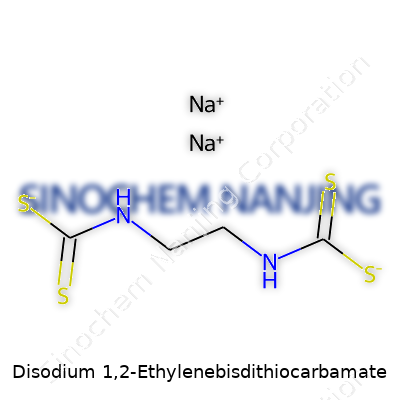
| Names | |
| Preferred IUPAC name | Disodium N,N′-ethane-1,2-diylbis(dithiocarbamate) |
| Other names |
Ethylenebisdithiocarbamic acid disodium salt Disodium ethylenebisdithiocarbamate Nabam Disodium ethylene-1,2-bis(dithiocarbamate) |
| Pronunciation | /daɪˈsoʊdiəm ˌɛθəˈliːnˌbɪzˌdaɪθioʊˈkɑːrbəˌmeɪt/ |
| Identifiers | |
| CAS Number | 142-59-6 |
| Beilstein Reference | 3524884 |
| ChEBI | CHEBI:34757 |
| ChEMBL | CHEMBL54479 |
| ChemSpider | 20813 |
| DrugBank | DB04521 |
| ECHA InfoCard | 03b1b18b-45ea-4de0-b732-c0fdcbb5efd5 |
| EC Number | 205-286-2 |
| Gmelin Reference | 7897 |
| KEGG | C19120 |
| MeSH | D004958 |
| PubChem CID | 20839 |
| RTECS number | JO6475000 |
| UNII | 2VL913279S |
| UN number | UN3077 |
| CompTox Dashboard (EPA) | DTXSID4033036 |
| Properties | |
| Chemical formula | C4H6N2Na2S4 |
| Molar mass | 224.3 g/mol |
| Appearance | Light yellow powder |
| Odor | Odorless |
| Density | Density: 0.46 g/cm³ |
| Solubility in water | soluble |
| log P | 0.52 |
| Vapor pressure | Negligible |
| Acidity (pKa) | 10.42 |
| Basicity (pKb) | pKb 3.5 |
| Magnetic susceptibility (χ) | Paramagnetic |
| Viscosity | Viscous liquid |
| Dipole moment | 6.66 D |
| Thermochemistry | |
| Std molar entropy (S⦵298) | 362.5 J/mol·K |
| Std enthalpy of formation (ΔfH⦵298) | -324.7 kJ·mol⁻¹ |
| Pharmacology | |
| ATC code | S02AA03 |
| Hazards | |
| Main hazards | May cause an allergic skin reaction. Causes serious eye irritation. May cause respiratory irritation. Toxic to aquatic life with long lasting effects. |
| GHS labelling | GHS05, GHS07, GHS09 |
| Pictograms | GHS07,GHS09 |
| Signal word | Danger |
| Hazard statements | H410: Very toxic to aquatic life with long lasting effects. |
| Precautionary statements | P261, P280, P302+P352, P304+P340, P312, P305+P351+P338, P332+P313, P337+P313, P362+P364 |
| NFPA 704 (fire diamond) | 2-1-1 |
| Lethal dose or concentration | LD50 oral rat 175 mg/kg |
| LD50 (median dose) | LD50 (median dose): 860 mg/kg (oral, rat) |
| NIOSH | SK4450000 |
| PEL (Permissible) | PEL (Permissible): 5 mg/m³ |
| REL (Recommended) | 0.002 mg/m³ |
| IDLH (Immediate danger) | Not established |
| Related compounds | |
| Related compounds |
Zineb Maneb Metiram Nabam Thiram Ferbam |



