Dipropyl Sulfide: More Than Just a Smelly Chemical
Historical Development
Dipropyl sulfide didn’t spring up overnight in a high-tech lab. Its story rolls back to the early days of organic chemistry, right alongside the first systematic efforts to map out sulfur compounds. Scientists hunting for new flavors and pungencies in food stumbled on it before the Second World War, though its smell made it more memorable than its taste. Most folks outside the lab don’t realize it, but the backbone of its history runs through the food and petrochemical worlds, where sulfur compounds have always played double duty as both flavor agents and warning markers for gas leaks. Researchers pegged its formula early: C6H14S, two propyl groups bookending a sulfur atom. After that, it entered the chemical lexicon for anyone studying thioethers or looking for a solid building block in industrial organic synthesis. Its infamy in the “stinky sulfur” crowd stuck, and this reputation overshadows just how important it can be in specialized applications.
Product Overview
Sure, dipropyl sulfide has a reputation for its strong odor, but that's only the tip of things. The world has found a wide spectrum of uses, thanks to its reliable structure. Industrial chemical production, agricultural agents, and even flavor science find value in this compound. At a time when the market cries out for compounds with predictable behaviors, dipropyl sulfide delivers, lending itself to synthesis and modification projects. Its oily character and sharp scent give it a practical identity. If you've worked in a lab, you know exactly when this material moves through the air. This obvious odor isn’t always an annoyance—sometimes it’s the most useful feature, especially for those who need a tracer or a clear marker for leaks or contamination checks.
Physical & Chemical Properties
Dipropyl sulfide doesn’t just float by unnoticed. As a clear, colorless to pale yellow liquid, it makes its physical presence known. It brings a low boiling point, somewhere just over 140°C, meaning it evaporates pretty fast under standard room conditions. Its density rests comfortably below water, so spills like to spread across lab surfaces and water bodies alike. The big talking point always becomes the smell: one sharp hit and you'll never forget it. Chemically, it stands apart as a thioether. The sulfur atom nestled between propyl groups means its resistance to oxidation isn’t great—exposure to air, acids, or strong oxidizers gives rise to nasty-smelling sulfoxides and sulfones. It doesn’t mix well with water, holding close to non-polar solvents or oils in any mixture.
Technical Specifications & Labeling
Years working with chemicals teaches you that labeling becomes more critical as a compound’s hazards accumulate. Dipropyl sulfide earns the full package: chemical name, structure, warning icons for flammability and skin irritation, and clear handling instructions. Storage containers get vented for volatile fumes, and certifications for purity lean heavily on industrial targets—over 95% pure for general use, up to higher benchmarks if food or pharma applications hover in the background. Material Safety Data Sheets underline the facts: avoid ignition sources, use splash-proof goggles, work in a fume hood if you can. Nobody wants to explain a leak of this odorous liquid on a Monday morning lab round.
Preparation Method
Making dipropyl sulfide isn’t a trick for amateurs. In industry, it often begins with a synthesis using sodium sulfide and n-propyl halides under controlled conditions. This straightforward substitution kicks out a halide ion, allowing two propyl chains to link up with a single sulfur. Careful control over moisture and temperature matters, since side products like propanethiol can create extra headaches on the clean-up end. Once formed, purification calls for distillation—sulfur compounds have a bad habit of carrying impurities that love to hang around, so extra steps may be needed to get a product up to spec.
Chemical Reactions & Modifications
Working with dipropyl sulfide opens doors to chemistry that focuses on thioethers. One of its best-known features is the way it reacts with strong oxidizers. Put it in the right solution, and it transforms into dipropyl sulfoxide, and with further push, into dipropyl sulfone. These oxygenated derivatives have their own uses, particularly where researchers want to test the limits of organic reaction mechanisms. Under halogenation, the sulfur can act as a nucleophile, opening the door for further modification. Such versatility in reactivity plays a key role when scientists want to build more complex sulfur-containing structures for drugs or materials science projects.
Synonyms & Product Names
Dipropyl sulfide shows up by many names—this is how global chemistry works. You’ll sometimes see it labeled as 1-propylsulfanylpropane, or n-propyl sulfide, especially in European or Asian supply catalogs. In the flavor industry, trade names keep popping up, though the substance inside stays the same. This confusion can reach dangerous levels if those handling the chemical miss a critical warning or mistake a synonym for a harmless substance. For this reason, scientists and workers always double-check CAS numbers, as these stay constant across borders.
Safety & Operational Standards
Anyone who handles dipropyl sulfide quickly learns to respect its hazards. That sharp smell warns you first, but the real risks include flammability and the potential for skin and eye irritation. In factories and labs, safety means real ventilation and—not to be dramatic—a full set of gloves, goggles, and sometimes a respirator. Regulatory groups set limits for workplace exposure, based on studies that track irritation and health complaints from chemical workers. Proper waste disposal keeps the unpleasant odor from lingering in the air or soaking into soil and water. People learn the hard way that spills mean thorough cleaning, and sometimes, nearby rooms find themselves evacuated till the fumes clear out. The worst health problems crop up if fumes build up in small spaces—short-term, that leads to headaches and nausea, and with heavier exposures, the risks get more serious.
Application Area
Despite being known for its tough odor, dipropyl sulfide punches above its weight in practical uses. The chemical industry values it as an intermediate for synthesizing other sulfur compounds and as a solvent in select reactions. Sometimes, it ends up in flavor creation—strange as that seems, tiny quantities can recreate “cooked” or “cabbage” notes in food products, echoing aromas found in cooked onions or the sweet tang of roasted meat. It serves as a chemical marker in leak detection for natural gas pipelines, while agriculture looks to its derivatives for pest control applications. This spread across industries underlines its versatility; it’s not just a chemical with a bad smell but a compound with roots in real-world uses.
Research & Development
Research teams dig into dipropyl sulfide’s chemistry from several angles. They look for greener synthesis methods, seeking ways to cut down waste and reduce environmental damage during production. Some of the latest work investigates catalytic systems that swap traditional toxic reagents for safer, recyclable options—solid acid catalysts, for example, which promise less contamination and easier clean-up. Analytical chemists push for better detection techniques because track-and-trace work relies on identifying small traces in big systems, like food safety checks or environmental monitoring. Biochemists poke at its metabolic effects in living organisms, hoping to unravel how sulfur compounds interact at the cellular level, especially after exposure through food or lab environments. The insights gained then circle back to applied chemistry, where the knowledge supports safer handling, improved industrial hygiene, and stronger environmental protection.
Toxicity Research
Toxicology labs run focused studies to nail down the risks of dipropyl sulfide exposure. Exposure data tells us that, in high concentrations, this compound stresses out mucous membranes, irritates the skin, and kicks up headaches or nausea. Animal tests show that acute toxicity usually stays low, but chronic exposure risks aren’t fully mapped, prompting further study on its metabolic pathways. Recent efforts try to parse what happens if small amounts persist in food or air—will this lead to bioaccumulation, or cause subtle long-term effects? There’s also a push to figure out if its breakdown products, especially through oxidation in the body, pose more harm than the parent compound. The industry takes this data seriously—regulations adapt whenever real health impacts surface, shaping exposure limits in the workplace and guiding how products containing dipropyl sulfide go to market.
Future Prospects
Looking ahead, the story of dipropyl sulfide appears far from over. The push for sustainable chemistry means old processes get revisited, and green synthesis rides high on the priority list. Biotechnologists and chemists work together to swap traditional feedstocks for renewable ones, possibly harnessing bioengineered microbes or plant-based systems for a cleaner source of thioethers. At the same time, digital monitoring and advanced sensor networks mean better detection and safer control in the field. As more industries get serious about trace chemicals in food, water, and air, demand for precision analytical tools goes up. Dipropyl sulfide keeps a seat on the table for flavor chemists, environmental engineers, and synthetic chemists, so innovation clusters around making its uses safer and less polluting. Efforts to expand knowledge in its toxicological profile and metabolic fate also matter, feeding into stronger regulations and smarter product designs. This all means that dipropyl sulfide won’t stay just a problem to contain—it becomes an opportunity for smarter, cleaner chemistry down the road.
What is Dipropyl Sulfide used for?
What Exactly Is Dipropyl Sulfide?
Dipropyl sulfide catches attention because of its strong, distinct odor. Often paraded as the culprit behind the scent of garlic or onions, this sulfur compound does a lot of behind-the-scenes work in several industries. Despite the off-putting smell, people in chemistry labs and various manufacturing plants regularly encounter dipropyl sulfide and rely on its chemical properties to get things done.
Role in Flavors and Fragrance
Food manufacturers know this compound for the depth it brings to artificial flavors. Even in trace amounts, it gets added to processed foods to give the impression of authentic garlic or onion—without actually chopping a bulb. The human brain connects certain smells and flavors so closely to freshness and heartiness that adding a molecule like dipropyl sulfide can make a frozen meal taste like something just cooked on a stovetop. As an avid cook who has spent hours peeling garlic, it's almost odd how the faintest touch of a synthetic can capture that earthy kitchen aroma. The key here is balance. Too much, and you wind up with a dish that tastes spoiled; just enough, and you create something genuinely appetizing.
Industrial Applications Beyond the Kitchen
Outside of food and fragrance, chemical plants use dipropyl sulfide as a solvent and sometimes as a starting material in synthesis processes. Solvents don’t get much limelight, but every chemistry student knows how essential they are. They dissolve, mix, transport, and separate substances. Every major chemical reaction depends on the right environment—and for some reactions, dipropyl sulfide fits the bill.
In the process of extracting minerals, sulfur-containing solvents like dipropyl sulfide help separate valuable stuff from rocks. Mining work isn’t glamorous, but these methods keep modern technology running—lithium for batteries, gold for circuit boards, and rare metals for solar panels all come from labor-intensive extraction methods. Without clever chemicals to streamline things, costs spike, and availability plummets. Anyone keeping an eye on sustainability knows extraction industries often carry a heavy environmental burden. It’s important for chemists and engineers to keep re-evaluating which solvents offer the least harm—with low toxicity and better recyclability.
Safety and Environmental Concerns
Having handled dipropyl sulfide a few times, a mask and some solid ventilation become a must. Exposure in large doses leads to headaches, throat irritation, or worse if left unchecked. Regular users in laboratories know to treat it with respect. Strong regulations guide its use, from workplace exposure limits to disposal rules. This attention to safety isn’t just bureaucracy; it’s vital for health. Workers in the food industry or who work near extraction facilities need regular checkups and equipment that filters vapor.
Spills or improper disposal threaten groundwater and soil. Regulatory agencies track the movement of industrial chemicals closely. Local governments stay vigilant to ensure companies are not dumping waste in ways that hurt nearby communities. It’s not uncommon for neighborhood groups to demand more transparency about what chemicals factories keep on-site, especially after incidents with other volatile compounds.
Room for Safer Alternatives
Demand for eco-friendlier solvents grows every year. Companies now search for greener options, evaluating lifetime impacts — from production to disposal. Some firms have started looking at plant-based or enzymatic solutions for flavor enhancement or industrial tasks. Support for these alternatives grows, fueled partly by public awareness and partly by the realities of tighter global regulation.
Real progress rides on making the shift practical and affordable. Policymakers and researchers need to keep pushing for better public health protections and for incentives that help green chemistry catch up with older, dirtier methods.
What are the safety precautions when handling Dipropyl Sulfide?
Understanding the Risks
Dipropyl sulfide rarely catches the spotlight outside industrial and research labs, but folks who work with it tend to remember its stubborn, strong odor and unpredictability. The compound can irritate skin and eyes, create headaches from strong vapors, and pose a fire hazard. Over time, I’ve seen people underestimate these risks—assuming gloves and goggles are enough. With this stuff, it helps to think a step ahead.
Personal Protective Equipment
One important step involves tackling exposure at the source. Standard lab gloves like nitrile help block direct skin contact, but the trick is making sure there are no rips or weak points—Dipropyl sulfide takes any shortcut it can. I’ve learned a lot from coworkers who skipped double-gloving during messy transfers and ended up with burns or persistent smells lingering on their skin. Eye protection seems obvious but forgetting a face shield has sent more than a few folks rinsing in the eyewash station.
Respirators make a difference when handling larger amounts or working without good airflow. Relying on natural ventilation or an open window just doesn’t cut it with these vapors. Fume hoods remain the gold standard—every research job I worked, the best techs never transfer solvents outside the hood, no matter how quick the task seems.
Managing Spills and Storage
Accidents happen, and Dipropyl sulfide’s quick evaporation means small spills can escalate fast. One old-timer in my first lab always kept spill kits right next to our bench and made everyone practice cleanup drills, which proved smarter than waiting for an actual spill. Vermiculite, sand, or special absorbent pads usually make the job easier—paper towels might spread the mess or miss the vapors completely.
Storing Dipropyl sulfide demands real attention. Flammable cabinets built for volatile chemicals offer the most security. Ordinary plastic or wooden shelves can’t prevent leaks or control vapors. From what I’ve seen, workers who ignore proper labeling or misplace bottles run the biggest risks. The cost of organizing the chemical shelf is a fraction of cleaning up a fire or inhaling fumes.
Disposal and Environmental Impact
Proper chemical disposal keeps everyone downwind safe. Pitching Dipropyl sulfide down a sink or drain never ends well. Most sites collect waste in well-marked, ventilated containers picked up by certified handlers. The environmental cost of shortcuts—like vapor drift or contamination—harms other workers and nearby neighborhoods. Once, a careless disposal led to evacuation at a place I worked, and the aftermath took weeks to resolve.
Training, Supervision, and Culture
Solid safety doesn’t happen by accident. Training new staff on the hazards and response plans pays off, something a good manager pushes from day one. Even experienced people make mistakes when rushing or distracted, so reminders and checks help. Safety sheets give the facts, but real awareness grows with practice and consistent habits.
Building a workplace culture that favors caution keeps people protected—not just from fines and injuries, but from making the kind of mistakes that haunt careers. Treating safety precautions as an everyday part of the routine does more than check a box: it keeps everyone going home in the same shape they arrived.
What is the chemical structure of Dipropyl Sulfide?
Digging into the Basics
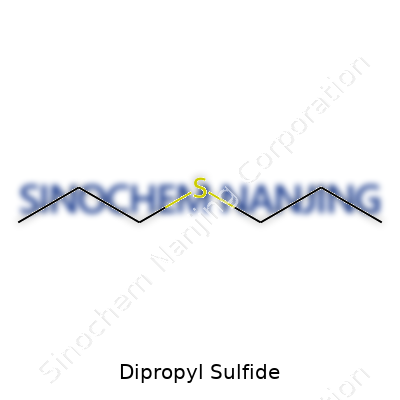
Dipropyl sulfide shows up in discussions about industrial chemicals, gasoline odorants, even in the subtle flavors of some foods. Its chemical formula is C6H14S. To really see how this molecule works, break it down to the core: two straight propyl (three-carbon) groups tethered to a single sulfur atom. That formula tells you the building blocks, but doesn’t quite show how everything fits together.
Looking at Its Shape
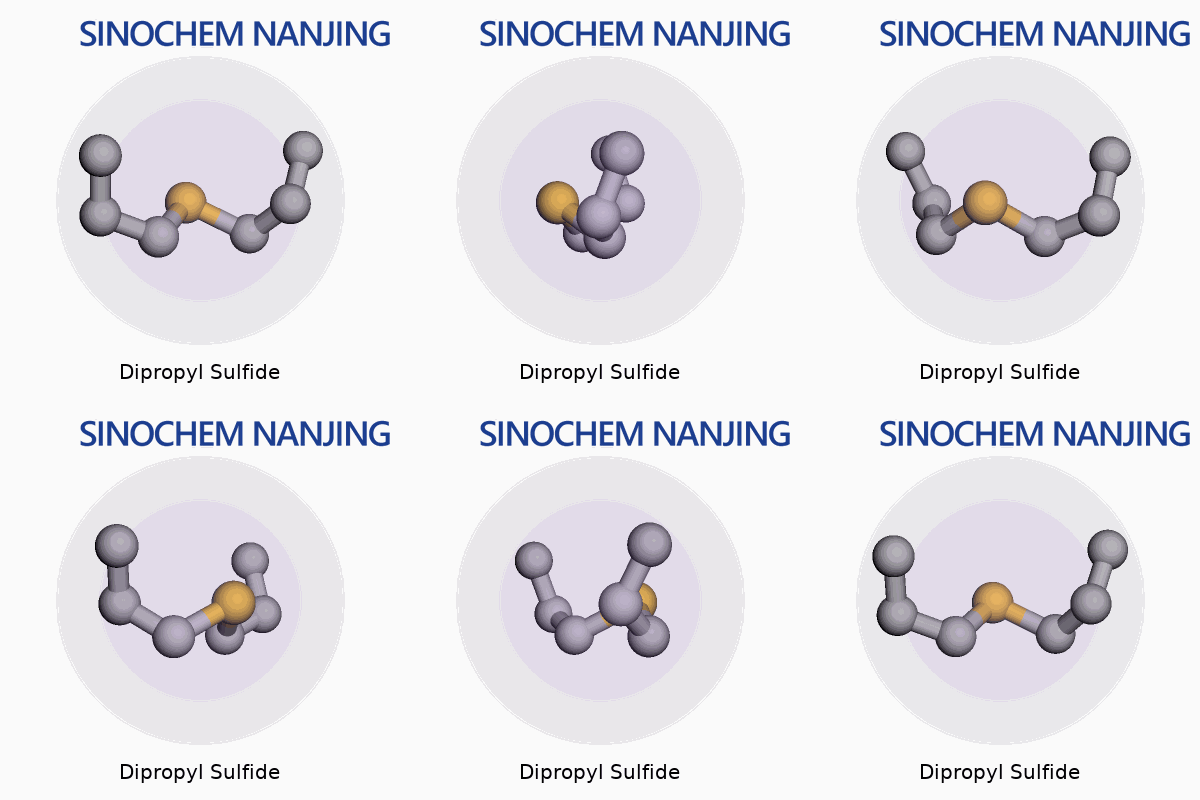
On paper, dipropyl sulfide uses a sulfur atom as a bridge. To the left, one propyl group—that’s three carbons in a chain, with hydrogens taking up the available bonds—and to the right, another propyl group. The molecule stretches out in a shape that looks like this: CH3CH2CH2–S–CH2CH2CH3. The dash just shows that both sides meet at the sulfur atom. The structure feels simple, no fancy rings or complex branching, which gets reflected in its physical behavior: clear, flammable, with a distinct, sometimes overpowering, odor.
Why Structure Matters
This particular layout, with two propyl groups attached to sulfur, gives dipropyl sulfide its unique set of properties. Most people familiar with it recognize the distinct smell—sulfur doesn’t hide under the radar. Sulfides like this trap aroma molecules, and in industries, that matters a lot. Just a few molecules of size can give off enough odor to warn people of gas leaks, or add flavor when needed in food chemistry.
From a chemist’s point of view, the chain length of the propyl groups, combined with the sulfur’s position, creates a balance. The molecule remains fairly non-polar, which means it dissolves better in oils and organic solvents than water. That helps when extracting or purifying it during production. The sulfur bridge also affects how the molecule reacts—less reactive than thiols (which have SH groups), but still responsive when mixed with strong acids or oxidizers.
Safety and Environmental Questions
Anyone handling dipropyl sulfide knows about its hazards. The smell can overwhelm small spaces quickly, so nobody wants a leak in the lab. According to the National Institute for Occupational Safety and Health (NIOSH), exposure in confined spaces can cause discomfort and, in high concentrations, health risks. The flammability adds another layer of caution. Storage and transport depend on protocols designed for volatile organic compounds with sulfur.
From an environmental standpoint, this class of sulfides can end up in wastewater from refineries or chemical plants. Regulations require treatment to keep emissions low because, in larger quantities, these molecules contribute to the “rotten egg” odor that lingers around some industrial sites. Over time, better filters and catalytic processes have reduced these emissions, but watching for leaks and monitoring air quality play major roles in keeping communities safe.
What Can Be Improved?
Workers benefit from clear training and engineered controls—proper ventilation, leak detection devices, and personal respiratory protection. Factories now install scrubbers and filters to catch releases at the source. Those simple moves save money, reduce complaints, and most importantly, protect health. Researchers search for greener alternatives that mimic the properties of dipropyl sulfide but break down more easily after use. The right chemistry often finds a sweet spot: enough utility without too much risk or lingering pollution.
Takeaway
Dipropyl sulfide might look simple, but its structure powers everything from its smell to its use in industry. Understanding the way it’s built—from the single sulfur atom as a connector to the three-carbon chains—shapes how chemists, engineers, and environmental regulators approach safety, production, and innovation.
How should Dipropyl Sulfide be stored?
Understanding the Risks
Most folks don’t spend time thinking about chemicals like dipropyl sulfide, but the stuff has a way of making people pay attention after even a small mishap. Anyone who’s ever gotten a whiff of a leaking container of it knows the stink doesn’t just cling to clothes, it seeps into the walls and floors. That rotten odor alone should signal: this compound demands real respect.
If dipropyl sulfide hangs around outside a proper container, it tends to create headaches, literally and figuratively. At enough concentration, vapors irritate the eyes, nose, and throat. Safety data sheets from chemical manufacturers always mention flammability and a strong warning on its volatility. For those reasons, storage is a serious matter, and basic good sense can stop real trouble.
Practical Storage Steps
A cool, well-ventilated area ranked high on the safety list for every worksite I’ve ever dealt with. Sunlight heats up stored chemicals, sometimes enough to make pressure inside containers spike. Suddenly, a screw-top gives way, and the fumes start trouble. Real storage always happens in places where sun and temperature swings don’t intrude—think locked facilities or internal storerooms, not a shed out back.
Keeping chemicals in their original, clearly labeled containers matters more than getting fancy shelving. Factory packaging isn’t about looks. It’s designed to hold up against leaks and limit vapor escape. Pouring leftovers into any old bottle risks mixing with other substances. The wrong combination, even from dried residues, can trigger dangerous reactions.
No storage plan works without proper ventilation. I’ve walked into too many rooms where airflow was an afterthought, and the difference between a safe environment and a stinking hazard couldn’t be clearer. Fans and exhaust systems push vapors out before they turn into health hazards or fire risks. In some labs and factories, they use negative pressure rooms for an added margin of safety, drawing fumes out instead of letting them drift where workers breathe.
Checking Inventory and Maintenance
Even when a facility gets it right on day one, nobody gets to coast afterward. Containers age, seals fail, and labels fade. Regular checks make the difference between catching a small leak early or facing a crisis later. I’ve seen companies benefit from digital tracking logs, making it easy to spot expired stock or empty containers that need to go.
Spill kits need to be easy to reach. Fast cleanup with the right supplies can prevent everything from environmental fines to evacuation. People should know not to mop up dipropyl sulfide with the same rags used elsewhere; cross-contamination amplifies both safety and smell issues. Gloves and goggles remain straightforward, but they make a huge impact on worker health. Respirators stand ready for bigger mishaps.
Community Responsibility
Proper chemical storage doesn’t just keep workers out of harm’s way—it protects neighbors and the public, too. Even just a few ounces of dipropyl sulfide mishandled can turn into a neighborhood-wide problem if fumes or runoff escape. For residential areas and shared buildings, building managers should post clear signage and teach staff what to do during spills or fires.
Local and national safety standards exist because people paid a price for ignoring basic storage in the past. The goal now is simple: follow those requirements and show regular diligence. When in doubt, consult updated guidelines from organizations like OSHA or the EPA—they know what works. A good storage system costs far less than the fallout from a bad day with dipropyl sulfide.
What are the physical and chemical properties of Dipropyl Sulfide?
Understanding Its Physical Traits
You might not stumble across dipropyl sulfide at the grocery store, but this clear, oily liquid plays a role behind the scenes in some industrial settings and scientific labs. The first thing you notice about it is the smell—a strong, unmistakable odor that brings rotten eggs or overripe vegetables to mind. That sort of pungency often signals sulfur compounds at work. Dipropyl sulfide stands out for its low boiling point, clocking in around 142 °C, putting it well below many similar compounds. In my experience handling chemical samples, this kind of volatility means storage matters. You won’t keep it in just any bottle; you want tight lids and cool storage away from ignition sources.
The liquid itself shows up colorless and transparent. On a cold day, you might see wisps of vapor escaping as you open a container. With a density near 0.85 g/cm³, it floats on water instead of mixing in. If you’ve ever spilled oil and tried to mop it up, you get the idea: dipropyl sulfide forms stubborn layers and refuses to dissolve.
Chemical Behavior on Display
Everything about this compound points back to that sulfur atom. It bridges two straight propyl chains, creating a structure (C6H14S) that brings certain chemical behaviors. Flammability jumps out first. Flammable liquids in the lab demand extra care, and dipropyl sulfide burns with a blue flame, giving off sulfur dioxide—a toxic gas. As someone who’s spent years around lab burners, that risk keeps you double-checking the airflow and the fire extinguisher’s charge.
Dipropyl sulfide shows little interest in water. It slips away rather than dissolves, but in organic solvents—think ether or chloroform—it blends easily. This property shapes how researchers choose solvents for chemical reactions or extractions. Non-polar solvents are the go-to in these cases, since dipropyl sulfide finds a comfortable fit there.
Another thing you notice is its stability at room temperature. It doesn’t break down, but push it harder—high heat, open flames, or strong oxidizers—and problems show up. Sulfides don’t always play nice with oxidizing agents. Instead, you get sulfoxides or sulfones, both of which can carry stronger odors and very different behaviors. Storage and transport must account for this—mix-ups with oxidizers spell problems no one wants to handle.
Why These Properties Matter
Safety and handling rules spring straight from these facts. Laboratories and factories don’t keep dipropyl sulfide around unless there’s a plan in place. Its flammability, strong odor, and vapor hazards call for solid training, good ventilation, and the right protective gear. Direct air monitoring matters—nobody wants a leak to drift into a workspace and cause headaches or worse.
Industrially, some companies use dipropyl sulfide in organic synthesis and as a flavoring component at very low concentrations—though it takes a delicate hand, since the odor overwhelms quickly. In my consulting, I’ve also seen it flagged on shipping manifests as a hazardous material.
Looking Toward Safer Use
The path to safer handling lies in better ventilation, sealed containers, and proper training. I remember colleagues emphasizing regular monitoring of air quality and keeping spill kits nearby. Substituting less volatile or less odorous alternatives, when possible, also keeps labs and plants safer. For those who routinely work with such sulfur compounds, experience and solid safety culture keep accidents from turning a normal workday into a nightmare.
Knowing these properties isn’t just textbook knowledge—it shapes how people use dipropyl sulfide safely and responsibly across work settings.
| Names | |
| Preferred IUPAC name | dipropylsulfane |
| Other names |
Di-n-propyl sulfide n-Propyl sulfide n-Propyl thioether Thiodipropane Dipropyl thioether 1-(Propylthio)propane |
| Pronunciation | /daɪˈproʊpəl ˈsʌlfaɪd/ |
| Identifiers | |
| CAS Number | 111-47-7 |
| Beilstein Reference | 0083886 |
| ChEBI | CHEBI:35792 |
| ChEMBL | CHEMBL439327 |
| ChemSpider | 47112 |
| DrugBank | DB11459 |
| ECHA InfoCard | 100.009.033 |
| EC Number | 203-733-4 |
| Gmelin Reference | 49813 |
| KEGG | C02541 |
| MeSH | D008955 |
| PubChem CID | 7951 |
| RTECS number | YD6475000 |
| UNII | N09E3W3W4K |
| UN number | UN2384 |
| Properties | |
| Chemical formula | C6H14S |
| Molar mass | 146.28 g/mol |
| Appearance | Colorless to pale yellow liquid |
| Odor | Unpleasant, garlic-like |
| Density | 0.845 g/mL at 25 °C |
| Solubility in water | Insoluble |
| log P | 2.98 |
| Vapor pressure | 2.7 mmHg (at 25 °C) |
| Acidity (pKa) | 7.2 |
| Basicity (pKb) | 4.82 |
| Magnetic susceptibility (χ) | -67.8·10⁻⁶ cm³/mol |
| Refractive index (nD) | 1.463 |
| Viscosity | 0.750 mPa·s (20 °C) |
| Dipole moment | 0.60 D |
| Thermochemistry | |
| Std molar entropy (S⦵298) | 204.6 J·mol⁻¹·K⁻¹ |
| Std enthalpy of formation (ΔfH⦵298) | -117.2 kJ/mol |
| Std enthalpy of combustion (ΔcH⦵298) | -4113.8 kJ/mol |
| Hazards | |
| GHS labelling | GHS02, GHS07 |
| Pictograms | GHS02,GHS07 |
| Signal word | Warning |
| Precautionary statements | P210, P261, P264, P271, P273, P301+P312, P303+P361+P353, P305+P351+P338, P370+P378, P403+P235, P501 |
| Flash point | 40 °C (104 °F; 313 K) - closed cup |
| Autoignition temperature | 215 °C |
| Explosive limits | 0.7–5.5% |
| Lethal dose or concentration | LD50 oral rat 260 mg/kg |
| LD50 (median dose) | LD50 (median dose): Oral rat LD50 = 3.6 g/kg |
| NIOSH | RQ7225000 |
| PEL (Permissible) | PEL (Permissible) of Dipropyl Sulfide: 10 ppm (40 mg/m3) (as recommended by OSHA) |
| REL (Recommended) | 100 ppm |
| IDLH (Immediate danger) | 250 ppm |
| Related compounds | |
| Related compounds |
Diethyl sulfide Dibutyl sulfide Dimethyl sulfide Diisopropyl sulfide Diphenyl sulfide |



