Digging Into Diisooctyl Phosphate: A Straightforward Look at an Underappreciated Chemical
Historical Development
Some chemicals fly under the radar for decades until curiosity or necessity puts them back in the spotlight. Diisooctyl phosphate sits in this category. Chemists started to tinker with organophosphates in the middle of the last century, seeing how tweaks in the alkyl groups attached to the phosphate backbone could nudge properties in interesting directions. Diisooctyl phosphate didn’t become a household name, but its unique mix of balance between hydrophobic and hydrophilic tendencies pushed it into the toolkit of plenty of industries over time. A lot of what made it attractive came out of the postwar boom in plastics and lubricant technologies, as companies searched for ingredients that could keep up with fast-changing performance standards.
Product Overview and Synonyms
Ask a dozen chemists about diisooctyl phosphate, and the answers might vary based on which field they work in. Sometimes, it appears under names like 2-Ethylhexyl phosphate or bis(2-ethylhexyl) phosphate—both nodding to its branched alkyl group structure. Despite not being flashy, what the chemical lacks in drama, it makes up for in reliability. Companies use it mostly as a plasticizer, a lubricant additive, or a surfactant, often in mixtures where its name gets lost in a crowd of similar-sounding cousins. That’s probably the only reason its history remained low-key, compared to some of its more notorious phosphate relatives.
Physical and Chemical Properties
Anyone who’s handled diisooctyl phosphate knows it as a clear, oily liquid. The structure gives it a noticeable heft, and the branched chains help it stay stable and flexible at a wide range of temperatures. Unlike its shorter-chain cousins, this compound rarely crystallizes at standard storage conditions and doesn’t vaporize easily. The phosphorus-oxygen backbone stands up well to acids and bases, only showing signs of wear after extended, concentrated assaults. This stability became gold in applications that cycle through heat and pressure over and over, like automotive fluids. Its low solubility in water comes in handy by helping it do its job at oil-water interfaces without dissolving away into oblivion.
Technical Specifications & Labeling
Regulations covering diisooctyl phosphate focus on purity levels, residual reactants, and breakdown products that might pose safety risks to workers or end users. Technical literature might talk about acid values or specific gravity, but in practice, qualities like storage stability and compatibility with other additives matter far more. Product labels for industrial use highlight proper handling—especially around skin, eyes, and ventilation—since phosphates can be stubborn and persistent, clinging to surfaces long after a spill. Most handlers store it in tightly sealed drums, away from strong oxidizers, since even a wiggle-room tolerance for reactivity can mean trouble in large batches.
Preparation and Chemical Reactions
Making diisooctyl phosphate boils down to reacting phosphorus oxychloride or similar phosphorylating agents with isooctanol under careful temperature control. The process isn’t flashy but getting it right requires patience, since impurities can gum up later uses. Tweaking the alkyl alcohol source or purification steps creates grades for specific applications, like higher-purity surfactants or technical-grade lubricant additives. On the reaction side, its ester groups react as expected to hydrolysis and can undergo transesterification, but it generally resists breakdown unless specifically targeted in a lab. This toughness gives peace of mind where chemical drift or product instability could set off headaches.
Safety Standards and Operational Realities
Anybody working with diisooctyl phosphate in bulk has stories about the importance of good ventilation and basic protective gear. Even with its track record of being less hazardous than the most notorious organophosphates, repeated skin exposure and inhalation of vapors over a work shift can bring out low-level irritation. Especially in older plants, hand-washing stations and fume hoods make the difference between a routine day and a call to occupational health. Fire risk runs lower than with solvents or lighter plasticizers, but operators keep a sharp eye out for mix-ups that might bring more reactive agents into the picture. Waste handling also draws concern, with established routines aimed at catching leaks before they hit wastewater streams.
Application Area
The biggest chunk of diisooctyl phosphate’s life goes into plastics, especially PVC and other flexible polymers that need a softening touch without losing their grip on performance. Automotive oils and hydraulic fluids also lean on its friction-reducing skills, rolling out benefits that matter from big assembly plants down to the local garage. Some pesticide and detergent recipes count on its surfactant powers to get active ingredients to wrap around particles, dirt, or pests more effectively. Labs experimenting with metal extraction or separation know it as an extractant, especially for rare earth or transition metals, opening doors in fields ranging from mining to electronics recycling. Each of those areas demands a different purity or blend, so flexibility in grade options keeps the chemical moving through supply chains, even as regulations shift and old applications fade out.
Research and R&D Trends
Scientists studying diisooctyl phosphate find themselves pulled into two camps. One group looks for greener, less persistent organophosphates, driven by environmental pressure and tighter rules. The other explores chemical tweaks or blends that push performance without raising toxicity flags. More than a few peer-reviewed papers chase new methods for recycling or breaking down this compound safely at end-of-life, reflecting wider advances in circular chemical processes. Recent advances in analytical chemistry make it possible to spot even trace contamination in finished goods, pushing manufacturers to tighten up both process control and quality assurance. The pace of innovation here stays steady, not spectacular, but meaningful progress comes as each hurdle gets cleared.
Toxicity Research and Environmental Impact
Years back, the main focus in toxicity studies aimed at acute exposure. The results showed diisooctyl phosphate doesn’t share the high toxicity of other phosphate esters, especially those used as nerve agents or fire retardants. Even so, chronic studies in animals point at skin and eye irritation, plus possible liver or reproductive impacts at very high doses. Regulatory bodies in Europe and North America keep it on lists for monitoring, especially given its persistence in soil and water. Cleanup and waste management guidelines built on this science stress containment and controlled incineration instead of dumping or dilution. The lessons learned from other organophosphates—most famously, the legacy pollutants found in groundwater near agricultural zones—shape how current best practices get enforced.
Future Prospects
Anyone reading the chemical trade press knows that diisooctyl phosphate’s next big challenge will come from two directions: environmental compliance and performance competition. Plasticizer and surfactant demand keeps growing worldwide, but newer regulations around the globe require lower toxicity and faster breakdown in the environment. This has some firms investing in modified alkyl groups or blends that deliver similar properties, with cheaper or safer sourcing. At the same time, emerging green chemistry trends inspire startups and big manufacturers alike to tinker with bio-based alternatives. The upshot: while diisooctyl phosphate should stay on the market for the foreseeable future, it probably won’t keep its dominant share unless producers prove they can deliver the goods with less baggage.
What is Diisooctyl Phosphate used for?
What Actually Happens with Diisooctyl Phosphate?
Diisooctyl phosphate looks like a technical mouthful, but it plays a clear role behind the scenes in a lot of places you might not expect. Companies rely on it as a surfactant, which means it changes the surface tension between two liquids, or between a liquid and a solid. That simple trick opens the door to plenty of uses, from cleaning products to industrial fluids.
Big Role in Metal Processing
The metal industry keeps a bottle of diisooctyl phosphate handy. During extraction or processing, companies need certain chemicals to help separate valuable metals from the stuff that tags along in the ore. Diisooctyl phosphate steps up as a reagent for solvent extraction. It grabs hold of specific metal ions, helping them split off from less desirable materials. Plants chasing high purity copper, nickel, or rare earth elements benefit from this selective grab. This makes more efficient mining operations and means fewer wasted resources. My family worked in copper mining towns in Arizona, and I’ve seen firsthand how finding even small improvements in efficiency can make or break a local economy.
Powerful Ingredient in Cleaners
Soap can only do so much when chasing dirt, oil, or tough stains. Diisooctyl phosphate helps in household and industrial cleaning products. It breaks up greasy build-ups, making it easier for water to wash the mess away. Thanks to this function, it finds its way into all-purpose sprays and sometimes even heavy-duty degreasers. For workers in garages or anyone deep into DIY auto work, this matters. Dirty surfaces become a safety hazard. Quick, reliable cleaning has a real impact where work gets messy and fast-paced.
Key Part in Pesticides and Crop Treatments
Farmers rely on active ingredients so pesticides and herbicides do their job, but these ingredients may not spread well or stick to crops on their own. Diisooctyl phosphate acts as a wetting agent or emulsifier, helping the pesticide coat leaves evenly and stay there through wind or slight rain. My uncle grows soybeans, and he has talked about how certain spray mixes stick better and do their work longer—results tied to additives like this one. More consistent application leads to less waste and fewer repeated sprays, which means lower costs and less impact on the local environment.
Supporting Electronics and Plastics
Modern electronics demand exacting conditions. In producing circuit boards, companies use diisooctyl phosphate to help manage the flow of chemicals used in etching and plating processes. These steps must be clean and consistent, or else the product fails. You’ll also find the compound in some plastic products as an additive to improve the way the material pours and sets, important for everything from medical tubing to consumer packaging. Garbage bins and storage tubs produced with smoother, more consistent plastics thanks to this additive last longer and handle wear better, which means fewer resources wasted and a longer lifespan for goods in day-to-day use.
The Safety Conversation and Finding Better Choices
Like many industrial chemicals, diisooctyl phosphate brings safety questions. You want to avoid touching or breathing in concentrated forms, and spills can present risks to water and soil. This has pushed makers to look for alternatives or to design processes that recover or reuse spent chemicals instead of throwing them away. Regulations push for safer workplaces and tighter environmental controls. The chemical remains in play because it proves effective, but the push for cleaner and safer chemistry keeps gathering steam. Companies who get ahead by offering safer, just-as-powerful replacements are going to draw more attention from green-minded consumers and government agencies alike.
Is Diisooctyl Phosphate safe to handle?
Understanding Diisooctyl Phosphate
Diisooctyl phosphate, often used as a plasticizer and surfactant, finds its way into many industrial settings. I’ve come across it in labs and workshops where its purpose revolves mostly around helping mix or coat materials. Many folks I’ve worked with wonder if it’s safe to be around. The chemical has a slick, oily texture, and unlike some harsher acids or solvents, it doesn’t give off eye-watering fumes. That might trick some into thinking it’s harmless. But being odorless or non-volatile on the surface doesn’t always mean safe.
Health Hazards in Real-Life Contexts
After years of handling various lab chemicals and paying attention to safety sheets, I learned that ignoring skin and inhalation warnings leads to plenty of trouble. For diisooctyl phosphate, the usual risks center on skin and eye irritation. Accidentally getting it on your skin or in your eyes can cause redness, and sometimes a burning feeling that ruins your day. There’s not much research pointing to cancer or reproductive harm, at least compared to bigger industrial toxins like benzene. But repeated or careless contact over time can spark skin sensitization or worsen allergies.
Some colleagues brushed off gloves in the past, thinking this compound felt ‘mild’ compared to nitric acid and ammonia. Within a few weeks, those same folks started complaining about dry, cracked hands. Industrial Safety and Hygiene News highlights how chronic chemical exposure sneaks up on people who ignore gloves or eye protection. Even if you’ve handled tougher stuff before, every chemical sets off its own set of health situations.
Environmental Risks and Workplace Considerations
If diisooctyl phosphate spills onto the ground or into water drains, it sticks around far longer than people realize. It does not break down quickly. Studies published by the European Chemicals Agency say aquatic threats come into play if it reaches waterways, impacting fish and plants. In the waste disposal business, folks stress the importance of never dumping surplus chemicals in regular trash or down the sink. All it takes is one lazy habit across a few jobs to start seeing buildup in soil or water.
Ventilation matters even if this compound barely evaporates. Dust or mist from manufacturing lines lingers in the air. Without a good exhaust fan or proper respiratory protection, you end up with throat or lung irritation. That’s a lesson learned on shop floors that no training video can quite capture until you’ve coughed through a double shift.
Practical Ways to Stay Safe
Safety culture comes from more than just rules on paper. Teams that keep gloves, goggles, and protective aprons handy avoid the most trouble. At the plant, we labeled every tank and bottle, kept Material Safety Data Sheets out where everyone could see, and ran regular safety briefings. Those small steps cut down on accidents and helped people think twice before taking shortcuts.
Diisooctyl phosphate requires respect, not fear. Safe handling works best when everyone treats even ‘mild’ chemicals as unpredictable. Read the labels. Wear the right protection. Store it away from food, open flames, or direct sunlight. Follow the disposal guidelines set by your local waste authorities. If something splashes or spills, clean it properly and document the incident so others can learn.
Final Reflections
Ask questions. Share concerns if something feels off while handling chemicals. Real safety doesn’t come from ignoring discomfort or guessing based on past experience. It comes from staying informed and having the right gear and routines in place, no matter how routine the job or how familiar the substance feels.
What are the storage requirements for Diisooctyl Phosphate?
A Closer Look at Chemical Storage Challenges
Diisooctyl Phosphate shows up in plenty of industrial environments. Anyone who handles it at scale knows careful storage matters. The wrong move turns a routine day into an emergency. The liquid’s strong reactivity and potential health risks have forced many in manufacturing and lab work to rethink how they use and store chemicals. Let’s break down exactly what’s needed in a real-world setting.
Fire Hazards Demand Respect
Even if Diisooctyl Phosphate isn’t the most flammable material on your chemical rack, it still poses a combustion hazard. I learned that lesson after seeing the aftermath of a small fire caused by a minor leak mixing with a hot surface. Keep this chemical in a cool, shaded spot, far away from heat sources or direct sunlight. Fire can also kick up toxic smoke, so it’s worth investing in flame-retardant storage rooms or cabinets. Facilities with good ventilation and chemical-rated exhaust fans prevent vapor buildup that sometimes flies under the radar until it’s too late.
Material Compatibility Saves Lives
No one wants to deal with corrosion or spontaneous reactions that threaten a work crew. Use containers made from materials resistant to strong acids and most organic solvents, like stainless steel or high-grade plastics. I’ve seen cheaper metal containers rust through in less than a year when stored with the wrong chemicals. That’s a recipe for disaster. Check that all seals resist chemical attacks. Weak seals leak vapors, and leaks spark big safety reviews in any responsible shop.
Separation and Labeling: The Low-Stress Approach
Accidents in chemical storage rooms almost always trace back to overcrowded shelving or confusing labeling. Keep Diisooctyl Phosphate separated from oxidizers, strong alkalis, or incompatible substances. OSHA and local regulations call for the kind of lockdown you’d want around household cleaners when kids are around. Always use clear, strong labeling in multiple languages if needed. You don’t want anyone grabbing the wrong drum or struggling to understand what’s inside.
Temperature and Humidity Control
Most training programs repeat a simple mantra: stable temperature, dry environment. Diisooctyl Phosphate’s shelf life holds up best at moderate temperatures, usually below 30°C (86°F). High temperatures can speed up decomposition or shift the chemical’s properties, sometimes unpredictably. High humidity adds another risk: corrosion and label peeling. Without the right storage room set-up, that stench you notice after a rainy week could signal much bigger problems.
Inventory Control and Emergency Response
Record-keeping sounds boring until a spill or theft sparks a scramble for answers. Track every container’s age, batch, and movement. Regular inventory checks keep surprises off the agenda. I remember one factory scene where a forgotten, half-full barrel sat for years. After opening it, fumes sent two people to medical observation. Safety data sheets must always be nearby, and spill kits should never be locked away. If a spill hits, workers need gloves, goggles, and neutralizing agents close at hand, not three rooms away.
Training Brings it All Together
Many storage requirements seem over the top until you see what can go wrong. Ongoing safety briefings put best practices top-of-mind. In my experience, the teams who rehearse emergency situations and know their site’s quirks tend to avoid trouble. Whether in research or manufacturing, keeping everyone informed turns complicated storage rules into useful habits—and avoids the kind of accidents that still make headlines.
What is the chemical structure of Diisooctyl Phosphate?
Digging Into the Basics
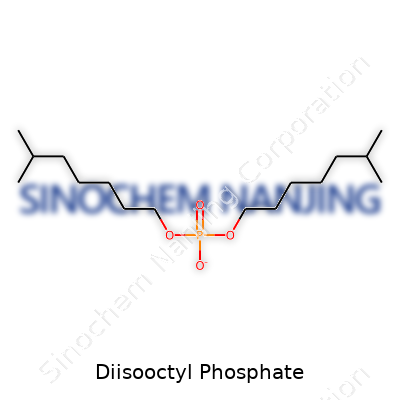
Diisooctyl phosphate isn’t the kind of name that rolls easily off the tongue, and the molecule behind it doesn’t pop up in everyday conversations. For those who have worked in industrial chemistry or manufacturing, it’s a name worth knowing about, since the compound fits into several processes where specific solvent properties matter. The structure brings together a phosphate backbone with two isooctyl side chains, resulting in something that isn’t water-loving at all.
From the Lab: Building Blocks of Diisooctyl Phosphate
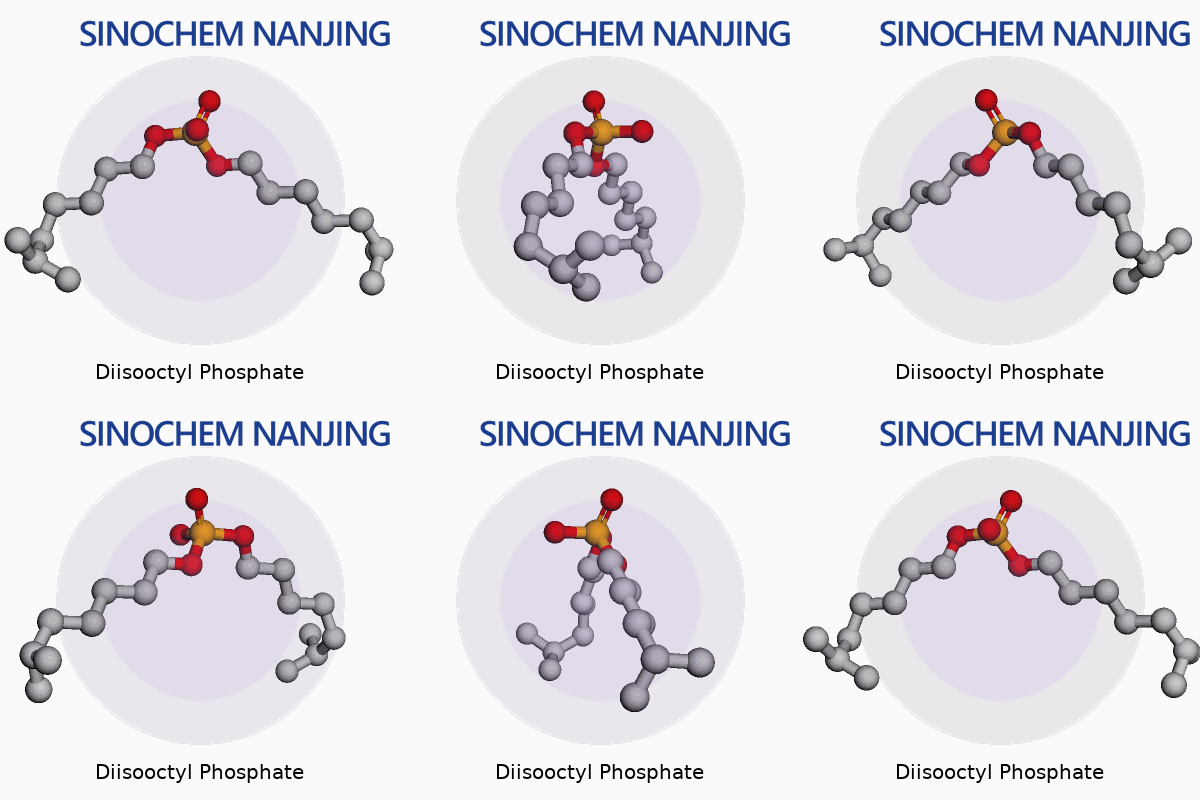
The backbone of diisooctyl phosphate, as with all organophosphates, is phosphorus surrounded by oxygen atoms. The main difference here comes from the “diisooctyl” part. In everyday terms, picture two branches—each formed by an isooctyl group—attached to the main phosphate center. These isooctyl branches are simply eight-carbon chains twisted around a bit, not just running in a straight line like in n-octyl or similar groups. This twist in the carbon chain actually tunes the properties of the molecule, making it handy in applications needing good staying power in non-polar environments.
The chemical shorthand for this compound: C16H35O4P. Put another way, you’re looking at a phosphorus atom in the center, bonded to four oxygen atoms, one of which forms a double bond, and two others are linked to separate isooctyl chains through oxygen. As a result, the chemical forms what people in the lab call a diester.
Why Structure Matters in Real-World Use
In my own time spent around blending labs and industrial mixers, the real value of a molecule like diisooctyl phosphate becomes clear—flexibility without falling apart. Most users lean on its oily, stubbornly non-polar nature, all thanks to those bulky isooctyl groups hanging off the phosphorus. It won’t dissolve in water, which is exactly what you need in specific flame retardant additives, lubricants, or even some types of plasticizers used in wire coatings or films.
Science backs this up—research cited in journals like Journal of Applied Polymer Science highlights how phosphate esters with these branched chains improve both fire resistance and plastic flexibility. Diisooctyl phosphate fits right into these mixes due to its chemical shape, offering a sweet spot between flexibility and stability. When ingredients refuse to mix, this compound often acts as a helping hand, letting different chemicals come together without turning into useless sludge.
Potential Concerns and Smarter Handling
Curiosity about organophosphates shouldn’t just stop at the lab bench. Focus sometimes shifts to environmental impact and personal safety. These types of chemicals have a reputation—some are neurotoxic at certain exposures, or they stick around longer than you’d want once released into the soil or water. According to the Environmental Protection Agency, controlling runoff and careful waste disposal play outsized roles in keeping both people and ecosystems safe. Regulations about handling and using phosphate-based chemicals have shifted in response to detailed studies about health risks.
Smarter choices come from knowing exactly how these molecules behave outside the controlled lab. Options like closed-loop manufacturing or new, greener alternatives spring up in response to those worries. Real solutions tap into a deep understanding of why those isooctyl branches work the way they do and how chemists can tweak them for better safety in the future.
Looking Ahead
Learning about the structure of diisooctyl phosphate isn’t just an exercise in memorizing chemical diagrams. For people who work with plastics, coatings, or flame retardant systems, getting the science right means picking the right tools—or pressing for safer, better ones as new evidence comes in.
How should Diisooctyl Phosphate be disposed of?
What Makes Diisooctyl Phosphate a Unique Disposal Challenge
Diisooctyl phosphate shows up in a surprising number of industrial uses, from plasticizers to flame-retardant additives. Its chemical structure gives it a certain stubbornness, making it persistent in the environment. Tossing it down the drain or letting it mingle with regular trash isn't just careless; it brings legitimate hazards. Health risks, groundwater contamination, and damage to wildlife become real threats. Though I’ve seen various chemicals handled over the years, this one calls for double attention because it doesn’t break down easily.
The Messy Reality of Improper Disposal
Ignoring safe disposal has real consequences. A leaking barrel near a storage site can contaminate soil for decades. One misstep during a waste pickup, and you could end up with a groundwater problem that’s almost impossible to reverse. I remember stories from industrial towns where toxic run-off from lax chemical handling chased families from their homes and forced costly cleanup operations. Even in trace amounts, certain organic phosphates like this linger, risking bioaccumulation in fish and waterfowl, then cycling back to people.
Engineered Solutions for Safe Disposal
Dealing with chemicals like diisooctyl phosphate calls for planning. The first step starts right at the storage site, where labeling and careful inventory reduce the odds of confusion. Next, the journey continues through a licensed hazardous waste handler. Facilities experienced with organic phosphates can chemically neutralize or incinerate waste at the right temperature—destroying toxic molecules before they escape into the atmosphere.
Transport plays just as big a role. Trucks used for chemical transport follow strict Department of Transportation rules. Drivers receive special training on spill response and emergency protocols. These hard-won rules come from decades of incidents where minor errors turned into headline disasters.
The Role of Regulation and Community Education
It never pays to rely only on individual companies to act responsibly. The Environmental Protection Agency requires listing and tracking of hazardous chemicals, right from production to disposal. That’s not just bureaucracy—it’s oversight that keeps companies accountable. If someone violates the Resource Conservation and Recovery Act, they face stiff legal penalties. Having spent time working near regulated sites, I’ve seen how routine audits and surprise inspections force everyone to treat the process seriously.
Training makes a difference here too. Workers handling diisooctyl phosphate benefit from regular updates on safe handling and emergency plans. When staff understand the dangers and feel empowered, they’re less likely to take shortcuts.
Innovation and Community Pressure: New Ways Forward
The issue doesn’t end with just following the law. New advances in waste treatment offer hope. Some research labs now experiment with advanced oxidation methods, aiming to break down stubborn chemicals more completely. Zero-discharge initiatives, popular in parts of Europe, tackle pollution at the source by encouraging reuse or on-site treatment. These solutions require investment but promise cleaner rivers and safer neighborhoods.
Community voices matter too. Neighbors near industrial plants often serve as watchdogs, partnering with local governments to hold polluters to account. Without this pressure, it becomes too easy for bad actors to cut corners.
Accountability Is the Way Forward
Anyone dealing with diisooctyl phosphate must think beyond convenience. Choices about disposal shape health, the environment, and trust in industry. Responsible disposal combines sharp regulation, tough enforcement, and a sense of shared responsibility. Safe habits and new technology will keep accidents down and protect future generations from toxic legacies.
| Names | |
| Preferred IUPAC name | Bis(6-methyloctyl) hydrogen phosphate |
| Other names |
Bis(2-ethylhexyl) phosphate Di(2-ethylhexyl) phosphate DEHPA Phosphoric acid, bis(2-ethylhexyl) ester |
| Pronunciation | /ˌdaɪ.aɪ.soʊˈktɪl fəˈsfeɪt/ |
| Identifiers | |
| CAS Number | 2979-38-6 |
| Beilstein Reference | 1462227 |
| ChEBI | CHEBI:52012 |
| ChEMBL | CHEMBL2111392 |
| ChemSpider | 15479 |
| DrugBank | DB14070 |
| ECHA InfoCard | 10e649de-6cfe-43c1-bb16-641a35d3cb12 |
| EC Number | 246-361-3 |
| Gmelin Reference | 40181 |
| KEGG | C02523 |
| MeSH | D04.210.500.347.500 |
| PubChem CID | 15412 |
| RTECS number | TM3675000 |
| UNII | 26S0820D89 |
| UN number | UN2834 |
| Properties | |
| Chemical formula | C16H35O4P |
| Molar mass | 450.6 g/mol |
| Appearance | Colorless to light yellow transparent liquid |
| Odor | slight characteristic odor |
| Density | 0.92 g/cm³ |
| Solubility in water | Insoluble |
| log P | 2.7 |
| Vapor pressure | 1 mmHg (at 20 °C) |
| Acidity (pKa) | 1.5 |
| Basicity (pKb) | 1.8 |
| Magnetic susceptibility (χ) | -7.83 × 10⁻⁶ cm³/mol |
| Refractive index (nD) | 1.4400 |
| Viscosity | 18-25 mPas (at 20°C) |
| Dipole moment | 1.63 D |
| Thermochemistry | |
| Std molar entropy (S⦵298) | 783.5 J·mol⁻¹·K⁻¹ |
| Std enthalpy of formation (ΔfH⦵298) | -1204.9 kJ/mol |
| Std enthalpy of combustion (ΔcH⦵298) | -10835 kJ/mol |
| Pharmacology | |
| ATC code | A09AB11 |
| Hazards | |
| Main hazards | Harmful if swallowed. Causes skin and serious eye irritation. May cause respiratory irritation. |
| GHS labelling | GHS02, GHS07 |
| Pictograms | GHS05, GHS07 |
| Signal word | Danger |
| Hazard statements | H302: Harmful if swallowed. |
| Precautionary statements | P264, P270, P280, P301+P312, P330, P501 |
| NFPA 704 (fire diamond) | 1-2-0-交流群userHere's another one: Tell me the 'NFPA 704 (fire diamond)' of product 'n-Butanol', show me as 'string', only 'string' text is returned |
| Flash point | Flash point: 204°C (399°F) |
| Autoignition temperature | 438 °C (820 °F; 711 K) |
| Lethal dose or concentration | LD50 oral, rat: > 6,400 mg/kg |
| LD50 (median dose) | LD50 (median dose) of Diisooctyl Phosphate: "3.2 g/kg (oral, rat) |
| NIOSH | DNK22000 |
| PEL (Permissible) | PEL (Permissible Exposure Limit) for Diisooctyl Phosphate: Not established |
| REL (Recommended) | 200 mg/L |
| Related compounds | |
| Related compounds |
Dioctyl phosphate Trioctyl phosphate Diisopropyl phosphate Dibutyl phosphate Triphenyl phosphate Dibutyl hydrogen phosphate Diethyl phosphate Phosphoric acid |



