Diethylzinc: Science, Hazards, and Potential Unfolded
Historical Development of Diethylzinc
Chemistry history packs a few surprises, and diethylzinc counts as one of its earlier milestones. Dating back to the mid-19th century, Edward Frankland pioneered the synthesis in 1848. The lab notes from those days looked nothing like today’s audit trails—risk management didn’t steer the ship. Frankland heated zinc with ethyl iodide, and out came a colorless, highly volatile liquid. Diethylzinc rapidly drew attention across Europe, long before anyone considered industrial safety or environmental sustainability. It holds a spot in what some call “organometallic chemistry's birth certificate”—its discovery proved metal atoms could form direct bonds to carbon, challenging conventions. Some of early research even led to blowouts and fires, since diethylzinc reacts wickedly fast with air. Today, the story still leaves a mark on students and professionals, showing how breakthroughs can walk hand in hand with serious risk.
Product Overview and Importance
In the world of chemicals, diethylzinc is practically infamous for its pyrophoric behavior: it bursts into flames in air. Despite its reputation, modern industries still depend on it, mainly for complex organic synthesis and semiconductors. Take compound semiconductors—LED lighting, solar panels, and high-efficiency electronics all lean on materials made with metalorganics like diethylzinc. Scientists rely on it as a key precursor when laying down super-thin films of zinc compounds using methods such as metal-organic chemical vapor deposition. Its value to industry lies in the clean, targeted chemistry it brings to advanced manufacturing. Traces of diethylzinc never end up in the gadgets sitting in your pocket or atop a streetlight, but the process depends on this niche, risky liquid.
Physical and Chemical Properties
A discussion about diethylzinc must include how quickly it reacts. The colorless liquid has a boiling point around 118°C, but handling it casually can spark wild consequences—exposure to air causes instant ignition. The dense, garlic-like odor chases even seasoned chemists out of the lab, a warning sign if ever there was one. Unlike many metal-organic compounds, diethylzinc dissolves in typical organic solvents but keeps its touchy nature. Its high vapor pressure underscores another threat: vapors don’t wait for an open flame, they will light up on contact with oxygen. Storage jars can show corrosion or cloudiness at the lid, and drips result in fires. This is not a chemical to handle solo or in a lab corner; every movement needs coordination and planning.
Technical Standards and Product Labeling
Labeling for diethylzinc leaves no room for ambiguity. Every drum or ampoule carries warnings for pyrophoric hazard, acute toxicity, flammability, and strict storage requirements. Even minor residues threaten safety, so transfer and disposal receive special attention in protocols. Guidelines call for inert atmospheres, often nitrogen or argon, even during routine sampling. Regulations demand that the chain of custody be tight and well-documented, with full training for every handler. The bar for safety here sits higher than most organic solvents or acids. International standards treat it as “special case” material; that means safety data sheets and product information are more exhaustive, even compared to other zinc reagents.
Making Diethylzinc: Synthesis Approaches
Classic methods for making diethylzinc haven’t changed much since its discovery. Zinc metal reacts with ethyl halides, often ethyl iodide, under controlled heat. The process releases ethyl zinc vapors, which get condensed and purified for lab or plant use. This sounds simple, but the trick is excluding water, air, and even trace impurities—any of these can spark runaway reactions or reduce yields. Scale-up from bench to pilot plant required a complete rethink; reactors now get constructed from inert alloys or lined glass, and transfer lines must stay sealed. Advances in distillation and real-time monitoring came about from generations of incident reviews. Each batch carries not just a material load, but a legacy of every close call and process tweak.
Chemical Reactions and Modifications
Chemists respect diethylzinc as a true workhorse in organic synthesis. It donates its ethyl groups cleanly, building carbon chains and modifying complex molecules with few byproducts. The reagent enables reactions like alkylation of carbonyl compounds, and its precise delivery shapes some types of specialty polymers and pharmaceuticals. Another field, organometallic vapor phase epitaxy, sees it take center stage as a zinc source for delicate crystal growth. Modifications to the molecule itself rarely last, as the ethylzinc bond holds little patience for fancy maneuvers. Where creativity shows is in the hands of the synthetic chemists or engineers who redesign entire setups to control the reaction environment. Results drive progress in light-emitting devices and high-speed transistors, cementing diethylzinc as crucial despite the risks.
Alternative Names and Synonyms
Institutions around the world refer to diethylzinc in their own shorthand. The most direct alternate names include “zinc ethyl,” “ethylzinc,” and the systematic “diethylzinc.” In research or industry, “Et2Zn” shows up on whiteboards and in journal articles. Though names differ, all point to the same reactive liquid, and none suggest a milder hazard profile. Every variant on the label should trigger careful handling and due respect for the inherent danger.
Safety and Operational Standards
Every person working with diethylzinc understands the stakes: direct exposure to moisture, especially in the lungs or eyes, brings dire consequences. Pyrophoric reactions can blossom from the faintest contact with air. Handling routines center on air-tight syringes, glove boxes, and rigorous operator training. Labs and industrial facilities enforce double-verification, and safety drills unfold just to keep everyone sharp. Emergency response kicks in instantly at the slightest whiff of smoke or chemical vapor. Failures can—and have—cost lives, with burns and fires among the most common injuries. One takeaway from decades of handling: treat diethylzinc like an unpredictable animal—controlled not by habit, but by full, unbroken concentration each day.
Applications and Impact
Few compounds demonstrate such a sharp contrast between value and hazard as diethylzinc. In the production of high-performance electronics, its role extends from developing gallium zinc oxide layers for transparent electrodes to serving as a doping agent in blue laser diodes and optoelectronic components. Pure research theories on catalysis or new carbon-zinc coupling reactions rely on it for key steps. A single miscalculation in the processing temperature or pressure, though, can dismantle entire lines of work, making the chemistry as much about discipline as about inspiration. Clean energy pushes and global digitization both pull demand upwards, even as engineers square off against the limitations of traditional techniques. New developments in quantum dots and advanced nanomaterials hint that diethylzinc’s reach might grow further, assuming safe containment can keep pace.
Research & Development Directions
Research keeps circling back to two challenges: greater chemical selectivity and safer handling from synthesis to application. Teams focus on closed transfer systems and improved catalyst supports that reduce volatility. Digital monitoring and robotics now join the frontline against accidental release and operator error. Facilitating greener chemistry with diethylzinc involves route innovation, using milder conditions or swapped-out precursors that lessen overall risk. Academic groups continually publish tweaks for more sustainable processing or expanded utility, blending the push for scientific discovery with renewed awareness surrounding environmental and occupational health.
Toxicity and Human Health Studies
The toxicity of diethylzinc centers on immediate, acute physical harm: it burns on skin, inflames mucous membranes, and can unleash a deadly fire before absorption even occurs. Chronic toxicity receives less attention, as exposures rarely come without warning injuries. Animal studies reveal respiratory and systemic toxicity, with pronounced damage at exposure sites. Personal protective equipment, fail-safe ventilation, and medical readiness minimize direct contact. What stands out in occupational history is the drive to eliminate single-person operations, putting human safety ahead of processing speed or profit margin.
Outlook and Future Prospects
Looking forward, diethylzinc faces pressures from two sides. Demands for cleaner, smarter manufacturing keep its place secure in the roadmap for advanced semiconductors and specialty materials. At the same time, stricter safety rules and the rise of alternative reagents challenge its hold. Advances will likely come from improved engineering controls, digitalized safety protocols, and perhaps the emergence of more stable analogues that carry lower fire and health risks. If industries can reduce the toll of handling, the chemistry wins; if not, expect researchers to seek out safer, possibly more expensive, ways to achieve the same results. Few chemicals provoke such respect in both laboratory and plant; the lesson from decades of use is clear—innovation has to walk together with responsibility, every single step.
What are the main uses of Diethylzinc?
Not Just Another Chemical: How Diethylzinc Powers Innovation
Diethylzinc once caught my attention during a late-night research session, as I scrolled through stories about high-tech manufacturing. The stories all shared one thing: new materials that fueled cleaner energy, faster chips, and fresh medical discoveries rarely came together without a few key helpers. Diethylzinc stands out in that group. I’ve always thought that people undervalue chemicals that do their work behind the scenes—never making the headlines but always moving things forward.
Building Tomorrow’s Electronics
A big chunk of diethylzinc’s importance comes from its central role in growing thin films for electronics. I remember watching a video about the inside of a chip factory. Workers in clean suits managed machines that layered atoms onto a surface, one after the other, until a complex structure emerged. Diethylzinc, with its zinc base and reactive personality, goes into these machines as a vapor. Engineers use it for Metalorganic Chemical Vapor Deposition (MOCVD), which creates the semiconductors for LEDs, laser diodes, and high-efficiency solar panels.
Without it, making zinc-based transparent conductors would feel like trying to bake bread without yeast. The zinc films made this way cut down costs and boost the efficiency of solar cells, helping give renewable energy a real shot at competing with oil and gas. Data from the International Energy Agency shows that deep cuts in costs and carbon emissions have only happened in tech where precision tools like diethylzinc are available.
Transforming Organic Synthesis
Anyone who remembers a messy chemistry lab at school can imagine the challenge scientists face finding clean, reliable building blocks for new molecules. Research professionals reach for diethylzinc because of its sharp reactivity. Instead of causing side reactions, it gives a controlled push to create carbon–carbon bonds. This helps researchers synthesize pharmaceuticals, fragrances, and agricultural tools that keep crops healthy.
Personal experience tells me that new drugs take years to move from theory to pharmacy shelves. Chemists prize reagents that work efficiently and stay predictable because it knocks months off project timelines. Diethylzinc fits that bill. The American Chemical Society shows a steady rise in published experiments using diethylzinc in advanced organic transformations. Even small tweaks to a drug’s structure matter—diethylzinc opens doors to ideas that were impossible with older methods.
Industry Challenges and Solutions
Diethylzinc doesn’t travel alone. It catches fire easily and releases toxic fumes if mishandled. Factory accidents in the past have taught hard lessons. Anyone storing or transporting this chemical runs a tight ship: leak-proof containers, trained crews, and remote sensors to detect trouble before it grows.
Regulations have tightened for good reason. The Occupational Safety and Health Administration (OSHA) demands systems that track every ounce in a plant. Investments in better safety training and remote handling robots have paid off. When looking for a path ahead, industry leaders point to collaborative guidelines and stricter audits as the best way to keep diethylzinc useful—and out of the headlines for the wrong reasons.
Moving Forward
Innovation doesn’t stop at the chemical plant. Companies continue to make safer versions of production equipment, cut down waste, and recycle solvents. Eco-friendly alternatives get research funding, but for now diethylzinc holds its ground as a rare enabler of progress across technology, medicine, and agriculture. The next time a smartphone lights up brighter or a solar farm cuts a city’s power bill, remember a quiet chemical making all that possible.
What are the safety precautions for handling Diethylzinc?
Understanding the Hazards
Diethylzinc grabs attention in any lab that handles organometallics. It’s not because of how often it’s used, but because of the memories anyone gets after their first safety briefing. Liquid fire isn’t an exaggeration. The compound reacts fast with oxygen and water, igniting or exploding on contact. Its low flash point and high volatility mean a mistake may not give a second chance. You can’t risk “just being careful”—method and training become the foundation for handling.
Preparation Matters More Than Speed
Most spills and accidents come from shortcuts or trying to multitask. I’ve worked alongside people who tried to fill time, but with diethylzinc you clear distractions. Preparations start with a detailed check of the workspace and every piece of gear. Only trained staff should have the task. The right PPE includes flame-resistant lab coats, goggles, face shields, and heavy gloves—no substitutes. Lab supervisors need to enforce this so the lesson doesn’t come too late.
Tools and Transfer Techniques
Diethylzinc reacts with air, so exposure control calls for exclusive use of gloveboxes or Schlenk lines under inert atmosphere. I watched one transfer with a freshly trained researcher—she hesitated about a connection, so we started over. The group agreed: if anything doesn’t feel secure, back up. Glassware needs to be absolutely dry; water triggers a violent reaction. Syringes, cannulas, and bottles carrying the compound can’t show flaws. We taped signs to every connection and reminded each other: “Double-check, then check again.”
Ventilation and Fire Response
Good ventilation shapes the backbone of every operation involving this chemical. Fume hoods remove traces that could accumulate, and every colleague keeps the fire blanket nearby, hoping never to use it. Class D extinguishers, the yellow cans, stand within arm’s reach. No water—ever. Water escalation leads to uncontrollable fires and explosions. Every drill we practiced ended with the team reviewing each other’s steps. If someone missed protocol, we paused until everyone understood.
Storage and Waste Handling
I remember labeling the secondary containment trays one by one. Storage sits apart from other chemicals, locked away from incompatible reagents, especially oxidizers or acids. The containers stay tightly sealed in inert atmosphere, away from temperature extremes. For waste, we use steel drums under nitrogen—no improvising. Disposal of contaminated materials goes in a dedicated bin, and a specialist picks up the waste for proper destruction.
Emergency Situations
The first encounter with a spill makes people freeze. Training that covers burns, inhalation, or eye exposure is the difference between panic and action. We place safety showers close to all work tables. If an accident happens, washing with copious amounts of water helps, but only after you know no further fire risk exists. After any incident, a review follows so the mistake doesn’t repeat.
Building a Culture of Respect
Working with hazards like diethylzinc leaves no space for complacency. Open conversations about mistakes, refreshers before every operation, and a support system between lab mates make the difference. Products in the lab give great results, but the price for shortcuts is too high. In my experience, reminding each other why we respect the dangers—real stories, near misses, never just theory—keeps everyone alert. That's what keeps people safe, day after day.
How should Diethylzinc be stored and transported?
Understanding the Risks of Diethylzinc
Diethylzinc belongs on the shortlist of chemicals that demand respect—not anxiety, but real respect for their quirks and hazards. The danger comes straight from the chemistry: diethylzinc, on contact with air or moisture, bursts into flame and releases toxic fumes. I’ve seen footage of a single drop sparking up after being spilled from a poorly sealed container. That sticks with you. Fire departments and chemical handlers don’t think about this compound in “standard” terms; this is a material you treat with the same thoroughness you give corrosive acids and pressurized gasses. Mistakes can cost more than just dollars—they take safety off the table.
Straightforward Rules for Storage
Every bottle or drum of diethylzinc demands a dry, cool, and stable spot, away from sunlight and any hint of moisture in the air. Seals matter as much as the walls around them. Glass and metal containers made with tight, inert seals—a polytetrafluoroethylene (PTFE) liner stands as a reliable choice—keep vapors from slipping out and water from seeping in. I’ve talked to folks who’ve seen pyrophoric metals stored next to acids. That’s a nightmare scenario in the making, so clear labeling and complete segregation from oxidizers, acids, and any reactive materials keep accidents from happening in crowded storerooms.
Temperature control is not a luxury here—it’s vital. Diethylzinc boils at surface temperatures barely above room temperature. Vapors build pressure, which, unchecked, can split a canister. Dedicated chemical refrigerators—spark-proof—keep things cool and help control the evaporation hazard. Trusting a home fridge or regular deep freezer is playing with fire, literally. And building managers need to vent these storage areas. Even a tiny leak needs to be swept up by proper fume hoods or special exhaust fans to keep the workspace from turning into a hazardous zone. Sensors for volatile organic compounds add one more guardrail, providing fast warnings if something sneaks out.
Transportation: Precaution, Not Just Procedure
Trucks, planes, and ships carry diethylzinc under the UN number 1366, marking the load as a Class 4.2 dangerous good (spontaneously combustible). This stuff must travel in approved drum or cylinder designs, pressure-tested for leaks. Anyone moving it by road, rail, or sea shows proof of extra training for hazardous materials. In practice, shipping diethylzinc always means checking federal laws—the U.S. Department of Transportation requires documented risk assessment, emergency contacts, and placarding the vehicle. Spot checks by highway patrols include verifying the condition of the containers, not just the paperwork. One chemical transporter told me how a tiny ding in the drum rim meant the load got flagged and re-routed, to prevent a spill from ever reaching the public.
Solutions That Make the Difference
Safe storage and shipping depend on more than rules and paperwork—it takes culture and attention. Regular drills, a reliable spill response kit, and constant review of container condition hold back disaster. For companies, supporting safety means making sure everyone from the dockworker to the lab tech has enough training to spot the early warning signs: hissing, odd smells, visible corrosion, or unexplained temperature changes. Building a work culture that supports “stop and check” behavior pays off in lower insurance costs, and stronger health records for workers, and shields the neighborhood around the facility from preventable risk.
No one can afford shortcuts with diethylzinc. Keeping moisture out, pressure low, and eyes sharp gives communities a better shot at safety and shows the industry’s commitment to real stewardship of dangerous chemicals.
What is the chemical formula and molecular weight of Diethylzinc?
Diethylzinc’s Formula and Weight
People in chemistry and industry circles know a few organozinc compounds, and Diethylzinc stands out because of its unique properties. If you look at the chemical formula, it’s written as C4H10Zn. This means the molecule includes four carbon atoms, ten hydrogen atoms, and one zinc atom. If you dig into the numbers, the molecular weight adds up to about 123.5 grams per mole. Each element has its specific atomic weight—carbon at about 12, hydrogen nearly 1, and zinc just over 65—so the sum speaks for itself.
Why Chemists Care About Diethylzinc
You won’t see Diethylzinc on a supermarket shelf or next to your daily household items. This stuff matters in labs and manufacturing settings. Chemists use it in highly sensitive synthesis processes, often to start reactions no other compound can trigger. Its reactivity with oxygen and water stands out—contact with air sparks a visible, even hazardous reaction. Through personal experience working in a university laboratory, handling Diethylzinc required real care, real safety measures, and respect for the risks. One small spill doesn’t just stain the bench—it turns into a danger. This sharp reactivity factor helps chemists create special materials for electronics, pharmaceuticals, and coatings.
Hazards: Reactive, Flammable, Demanding Respect
Anyone using Diethylzinc must prepare for its notorious flammability. It catches fire on contact with air, meaning storage and transport use sealed, inert containers, often under nitrogen or argon. In one of my first encounters with the compound, even the bottle itself looked ominous, with extra labeling and reinforced glass. It’s not only a fire risk; contact with skin or eyes causes severe burns. Inhalation of its vapor can send someone straight to the emergency room. Such risks have prompted strict regulations and deep training for those who work with it.
Industry Needs: Not Just for the Big Players
Tech startups and research groups see Diethylzinc as a pathway to developing OLED displays, advanced solar panels, and even semiconductor parts. Its ability to act as a zinc donor in chemical vapor deposition helps make very pure, very specific layers of material. Universities with research programs in organic electronics rely on Diethylzinc for pilot projects because alternatives often lack the same precision. I remember the extra paperwork just to order a few milliliters, all because so many innovators count on its performance.
Solutions and Safety: Smart Approaches for Handling
For safer handling, people increasingly use microdosing—adding tiny measured amounts with computer-controlled equipment. Automated systems cut down on spills and exposure, keeping everyone safer. Labs design their workspaces with tailored fume hoods and blast shields. Regular training ensures no shortcuts, regardless of experience level. Waste disposal teams follow strict rules to keep any leftover Diethylzinc from ending up in the water supply or landfill. These steps combine knowledge, technology, and discipline—a clear response to real risks, not abstract fears.
Bottom Line: Importance Goes Beyond the Formula
Anyone learning about Diethylzinc quickly sees it’s not just its formula or molecular weight that matter. Its real-world impact grows from its role in research and tech breakthroughs, balanced by a constant push for improved safety. Those who use it shape the future of technology, but their work depends on solid science and strict, practical safety habits.
What are the hazards and first aid measures for Diethylzinc exposure?
This chemical isn’t one for the faint of heart
Diethylzinc earned its reputation in the lab for a reason. This colorless liquid bursts into flame when it touches air. Some people call it a “pyrophoric” chemical, but those who use it say that means don’t even open the bottle unless you really know your stuff. Even the best chemists buckle down and double-check their setup before handling it. Once, I watched a colleague prep a glovebox while repeating out loud every step as if his life depended on it—because, truthfully, it did.
Where things go wrong
Breathing in vapor causes instant issues. Irritation, coughing, tightness in the chest, feelings of disorientation—all signs that the lungs don’t like this visitor. It can flame up when it touches moisture, even skin or sweat. If the liquid or its products land on skin, they can destroy tissue, eating away at flesh before you realize what’s happened. Eye contact? Expect instant pain and possible permanent damage.
Why it’s so risky
One drop escaping the vial meets with air and can burst into flames. Gloves and goggles help, but accidents happen even in tight routines. The National Institute for Occupational Safety and Health warns that diethylzinc also releases corrosive and toxic fumes when it burns. These fumes can include zinc oxide, a lung irritant, and ethylene, which displaces oxygen. Wearing a lab coat means little if a fireball flashes past your sleeve.
First aid measures that matter
Fast decisions save lives. If someone breathes the vapor, move them outside to fresh air, fast. Get the person to a doctor as quickly as possible because symptoms escalate. Eye splashes? Hold the eyelids open and flush with gentle running water for 15 minutes—no shortcuts. Call emergency medical help at the same time.
If the liquid lands on skin or clothes, do not try to brush it off with bare hands; it reacts violently with moisture. Rip off contaminated clothing and rinse affected skin thoroughly with lots of water. It’s not a gentle rinse. At the hospital, doctors keep rinsing and may address chemical burns quickly. If the person stops breathing or if you can’t find a pulse, start CPR and keep it up until an ambulance arrives.
Solutions rely on discipline and training
Good training tops the list of solutions. Labs using diethylzinc need real plans for fire and spills, not just dusty binders of protocols. Every chemist should practice with fire blankets, emergency showers, and eye wash stations—regularly, not just at orientation. Good ventilation pulls away dangerous fumes before they hit the breathing zone. Automatic fire suppression systems make a difference if the material combusts unexpectedly. Even with all safeguards, double-checking valves, seals, and containers keeps things safer than any clever workaround.
Safety matters more than speed
Some chemicals wait patiently in a drawer. Diethylzinc demands respect every time. I’ve seen experienced researchers pause, recalibrate, and make sure backup safety gear is close before opening a bottle. Emergency plans only work if people take them seriously and practice them together, no matter how long it takes. Cutting corners with this material isn’t an option. If you work in a lab, stay ready and remember that being careful counts more than getting fast results. Lives really depend on it.
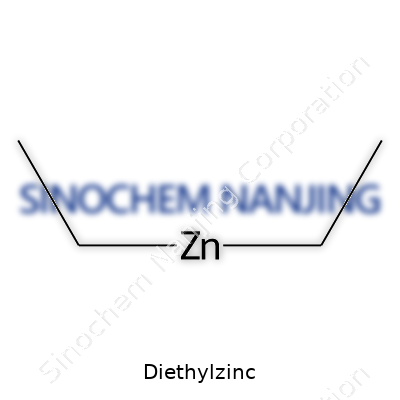
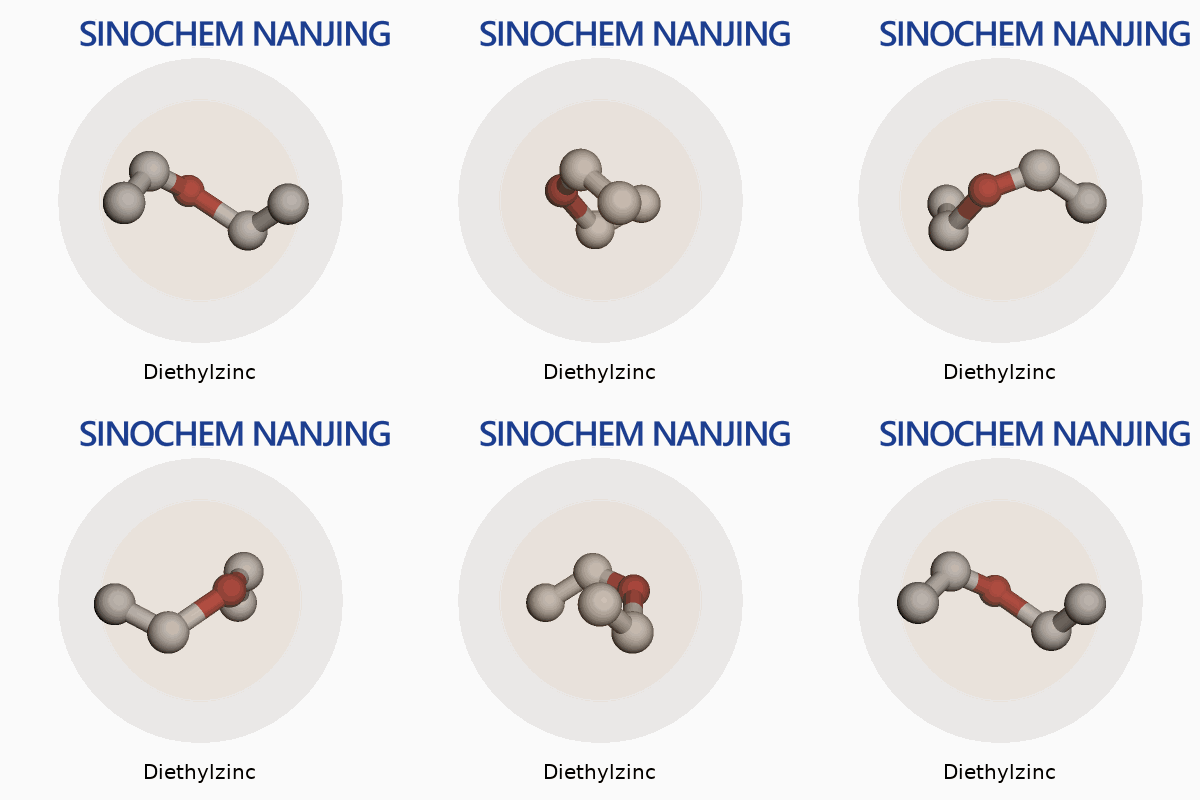
| Names | |
| Preferred IUPAC name | Diethylzinc |
| Other names |
Diethylzinc Zinc ethyl Diethyl-zinc Diethanylzinc |
| Pronunciation | /daɪˈɛθaɪlˌzɪŋk/ |
| Identifiers | |
| CAS Number | 557-20-0 |
| Beilstein Reference | 1360433 |
| ChEBI | CHEBI:33189 |
| ChEMBL | CHEMBL137619 |
| ChemSpider | 7408 |
| DrugBank | DB01862 |
| ECHA InfoCard | 100.004.863 |
| EC Number | 1.1.1.1 |
| Gmelin Reference | 1251 |
| KEGG | C06428 |
| MeSH | D017730 |
| PubChem CID | 11174 |
| RTECS number | ZG7300000 |
| UNII | W72T25E8CH |
| UN number | 1366 |
| CompTox Dashboard (EPA) | urn:C365124 |
| Properties | |
| Chemical formula | C4H10Zn |
| Molar mass | 123.53 g/mol |
| Appearance | Colorless liquid |
| Odor | garlic-like |
| Density | 1.2 g/mL at 25 °C (lit.) |
| Solubility in water | Reacts violently |
| log P | 0.77 |
| Vapor pressure | 40 mmHg (20 °C) |
| Acidity (pKa) | 11.0 |
| Basicity (pKb) | pKb ≈ 7.7 |
| Magnetic susceptibility (χ) | -24.0e-6 cm³/mol |
| Refractive index (nD) | 1.527 |
| Viscosity | 0.59 mPa·s (20 °C) |
| Dipole moment | 0.90 D |
| Thermochemistry | |
| Std molar entropy (S⦵298) | 289.6 J·mol⁻¹·K⁻¹ |
| Std enthalpy of formation (ΔfH⦵298) | -75.1 kJ/mol |
| Std enthalpy of combustion (ΔcH⦵298) | -1622 kJ·mol⁻¹ |
| Hazards | |
| GHS labelling | GHS02, GHS06, GHS08 |
| Pictograms | GHS02,GHS06 |
| Signal word | Danger |
| Hazard statements | H260, H250, H314 |
| Precautionary statements | P210, P222, P231+P232, P261, P280, P302+P334+P312, P305+P351+P338, P335+P334, P370+P378, P403+P233, P422 |
| NFPA 704 (fire diamond) | 4-4-2-W |
| Flash point | -28°C |
| Autoignition temperature | 30 °C (86 °F; 303 K) |
| Explosive limits | 5.0–43% |
| Lethal dose or concentration | LD50 (oral, rat): 72 mg/kg |
| LD50 (median dose) | LD50 (median dose): Oral, rat: 180 mg/kg |
| NIOSH | NZ4375000 |
| PEL (Permissible) | PEL: 0.1 mg/m³ |
| REL (Recommended) | REL: Ca (NIOSH) |
| IDLH (Immediate danger) | 50 ppm |
| Related compounds | |
| Related compounds |
Dimethylzinc Diphenylzinc Diethylmercury Zinc oxide Zinc sulfate |



