Diethyl Sulfate: More than Chemistry in a Bottle
Historical Development
The history of diethyl sulfate goes hand-in-hand with the rise of industrial chemistry in the last century. Long before digital databases, early research chemists relied on trial and error to extract new chemicals from basic feedstocks. By the early 1900s, the potential of diethyl sulfate as an alkylating agent became hard to overlook. Its synthesis joined the roster of advanced lab exercises at a time when safer practices still lagged behind inventive ambition. Old chemical catalogs and government reports capture its slow march from niche curiosity to industrial workhorse, even as its toxicity raised plenty of eyebrows among public health advocates. Production ramped up during the chemical industry’s postwar boom, supplying everything from pharmaceuticals to textiles. The development story isn’t just about better yields or lower costs; it’s closely linked to society learning, sometimes the hard way, that progress always brings new risks to manage.
Product Overview and Application Area
Diethyl sulfate stands out in the lab and on the factory floor as a strong ethylating agent. Its structure—a simple sulfate backbone with two ethyl groups—makes it the molecule of choice when chemists need to add an ethyl group to other compounds. I’ve seen colleagues use it in organic synthesis, dye production, and even the manufacture of certain pharmaceuticals. Its ability to transfer ethyl groups efficiently means it pops up in a range of chemical reactions that produce everyday products, like colorants for plastics or drugs that need chemical tweaking to improve their function. That broad usefulness doesn’t hide the fact that the industry has to wrestle with its safety challenges at every step.
Physical & Chemical Properties
Nobody mistakes diethyl sulfate for a benign chemical once they work with it. It’s a clear, oily liquid that doesn’t mix with water but dissolves in most organic solvents. Its high boiling point and faint odor make lab work both technical and tense—accidents involving vapor exposure can have serious consequences. Chemically, its reactivity towards nucleophiles turns simple starting materials into more complex molecules, turning it into an almost indispensable part of the synthetic toolkit. This very reactivity invites trouble if storage conditions slip or if workers let down their guard.
Technical Specifications & Labeling
Industry regulation forces thorough labeling on diethyl sulfate containers. Labels don’t mince words—danger, toxic, carcinogenic—making sure the risks stay front and center. Specifications like purity levels and allowed contaminants guide chemists choosing the right batch for their processes. The standards set by organizations like OSHA and the European Chemicals Agency reflect decades of research linking exposure to adverse health effects, so they don’t leave much to interpretation. It’s not an overreaction: the smallest error in handling can lead to big trouble.
Preparation Method
Manufacturing diethyl sulfate relies on reacting ethanol with concentrated sulfuric acid or oleum, sometimes with a bit of heat to drive things along. The reaction produces both the desired product and side products, so proper separation and purification safeguard the quality. The process releases heat and noxious fumes, highlighting the constant tradeoff between synthesis efficiency and safe operations. Factories run closed systems with robust ventilation and monitoring to keep workers out of harm’s way—these aren’t just recommendations, they’re the only way to keep production running without incident.
Chemical Reactions & Modifications
Diethyl sulfate’s lasting value traces to its ability to transfer an ethyl group to a variety of nucleophilic partners. That reaction opens up a world of possibilities, from modifying pharmaceuticals to creating specialty chemicals for agriculture and dyes. Chemists often debate the merits of diethyl sulfate against less toxic alternatives, but it’s tough to beat the efficiency it brings to many reactions. Its byproducts and waste streams force companies to invest in proper treatment and disposal—no shortcuts allowed.
Synonyms & Product Names
Ask a textbook or a chemical supplier for diethyl sulfate and you might hear other names: sulfuric acid diethyl ester or ethyl sulfate ester, for instance. Some laboratories still call it simply DES, a shorthand that can trip up anyone unused to chemical jargon. The underlying chemical structure remains the same: two ethyl groups on a central sulfate. These synonyms can sow confusion on global supply chains, especially when regulations vary by region, making clear labeling more than just a bureaucratic exercise.
Safety & Operational Standards
Working with diethyl sulfate feels a bit like handling dynamite: everyone needs to understand the risks and follow strict protocols, no matter how routine the task. It’s not hyperbole—direct exposure can burn skin, blind eyes, and damage lungs, even at modest concentrations. I’ve watched labs and factories institute real-time vapor monitoring, acid-resistant protective gear, and rigorous emergency training. Spill response teams drill for leaks, storage areas deploy blast-proof cabinets, and engineers keep spill containment front-of-mind when redesigning workspaces. These efforts aren’t just to satisfy regulators—they’re about sending workers home in the same health they started their shift.
Research & Development
The past few decades have seen an interesting shift: research on diethyl sulfate now spends as much energy looking for safer alternatives as it does squeezing out new uses. Green chemistry gets headlines for a reason. Universities and industry labs investigate other ethylating agents with lower toxicity or improved environmental fate. There’s also been notable work on biosynthetic routes, though nothing can yet replace diethyl sulfate at scale for some industrial applications. Research groups run toxicity screens and environmental assays in parallel with synthesis efforts, reflecting a more holistic approach to chemical development. This trend fits with broader efforts across disciplines to weigh human and planetary health alongside process yields and bottom-line figures.
Toxicity Research
Nobody working in a chemistry lab forgets the safety briefings about diethyl sulfate’s toxicity. Decades of studies have pinned down its risks: the chemical can mutate DNA, cause cancer with chronic exposure, and wreak havoc on the nervous system. Animal tests and cell-culture studies confirm the dangers. Epidemiological evidence from workplaces with poor controls traces higher rates of illness and death. Regulators put diethyl sulfate in the same risk category as some of the most notorious industrial chemicals, mandating occupational exposure limits and strict reporting for spills and incidents. Toxicology work also fuels better detection methods, so labs quickly spot problems and track long-term exposure.
Future Prospects
Chemists love a challenge, and the drive to find safer alkylating agents never really eases off. Even with all the regulatory headwinds, diethyl sulfate keeps a foothold in the most demanding industrial syntheses. Some new research explores how process automation and next-generation safety controls might make working with this chemical safer, not just less hazardous. Advocates for green chemistry push for smarter molecular design—finding ways to either eliminate diethyl sulfate or render it less harmful. Stories from industry veteran scientists teach that true progress comes in fits and starts. Safety standards take time to catch up with science, but ongoing attention to both efficiency and worker protection gives hope that tough chemicals like diethyl sulfate will someday become relics of a less cautious era. Until then, anyone working with or around it knows to treat every drop with the respect it has earned.
What is Diethyl Sulfate used for?
A Look at Diethyl Sulfate in Modern Industry
Diethyl sulfate carries a reputation in chemical circles. It gets a lot of attention, and not all of it is positive. This liquid, colorless and with a faint odor, has a strong niche in manufacturing and science labs. Its biggest claim to fame comes from its power as an ethylating agent. Adding ethyl groups to molecules helps chemists tweak substances and make new ones. Diethyl sulfate makes these adjustments possible. I remember in my college lab, the red labels shouting “Danger” warned us to treat this one with respect.
Why Does Anyone Still Use Diethyl Sulfate?
Companies use diethyl sulfate for good reason: it works fast, and it works well. Laboratory teams and industrial plants use it to manufacture dyes, perfumes, and medicines. When making colors for paints and textiles, this compound helps give products the lasting shades people want. In pharmaceuticals, researchers turn to it for producing certain medicines that other ingredients just can't create. The world rarely sees these steps, but without them, some of today’s treatments wouldn’t exist.
Teachers drill safety rules into students' heads for a reason—this stuff is toxic. Government agencies like OSHA and the World Health Organization keep diethyl sulfate on their watchlists. People who handle it need thick gloves, goggles, and plenty of ventilation. Even one accident can cause burns, breathing problems, or worse. Studies link long-term exposure to cancer. That sobering fact shapes how labs and factories store and use this chemical.
Undeniable Risks and Room for Better Safety
Most people never see diethyl sulfate in daily life, but those who work around it take big risks. I spent a summer cleaning glassware near where it was used, and the anxiety stayed with me. One spill, one absent-minded reach, and health could change forever. Workers need clear training on emergencies, spills, and protective measures. Good companies run drills, stock eye wash stations, and check equipment before letting anyone near the bottles.
The chemical industry faces growing pressure to swap out dangerous substances for safer ones. Alternatives exist for some tasks, though often at higher costs or slower speeds. Researchers keep hunting for replacements—molecules that deliver the same punch without the threat. Switching takes investment and time, two things some factories hesitate to spare. Regulators and watchdogs continue warning about cutting corners, driving companies to rethink safety practices.
Ways Forward
Factories could reduce risk by updating ventilation, securing training programs, and choosing substitutes when possible. Old habits, especially in industries chasing profit and efficiency, don’t change overnight. Responsible behavior means treating chemicals like diethyl sulfate with the utmost care, never settling for “good enough.” Transparency and reporting matter most. Workers, regulators, and the public deserve to know about the substances moving behind closed doors. Staying informed sparks action, and action keeps people safe.
Knowledge and vigilance offer the best defense. Training, strong rules, investment in research, and open communication shape a safer future. Diethyl sulfate’s power comes with real consequences—using it responsibly demands constant effort from everyone on the line.
Is Diethyl Sulfate hazardous to health?
Experience in Chemical Settings
Picture a small chemical plant, with workers suiting up before a shift. Rubber gloves, goggles, thick work coats—the gear isn’t just for show. Chemicals like diethyl sulfate call for this level of protection. I’ve spent time around labs and plants, watching how teams handle harsh substances. Diethyl sulfate stands out on the list, not only for its use but for the harm it can deliver if mishandled.
Understanding the Risks
Diethyl sulfate exists as a colorless, oily liquid. Without a sharp smell or color, there’s no clear warning from the senses when this compound drifts through the air. Exposure happens almost before people realize. Touching it can mean burns on the skin, and a splash in the eyes quickly turns into lasting damage. Breathing it in brings headaches, dizziness, nausea—and worse if exposure continues.
On top of immediate symptoms, long-term risks track back decades. Studies have shown diethyl sulfate acting as a strong alkylating agent. In plain terms, it reacts with DNA, changing cell instructions in ways that can trigger cancer. The International Agency for Research on Cancer puts it in their "possibly carcinogenic" group based on solid animal data. Workers in factories using this chemical carry extra weight on their shoulders, knowing even careful routines can’t erase every threat.
Facts and Data
Chemical safety boards tell a sobering story. In the United States, the Occupational Safety and Health Administration (OSHA) draws a hard line on how much can hover in workplace air—just 0.1 parts per million. This isn’t an arbitrary number. That figure comes out of real-world reporting, showing health problems crop up even with what looks like small exposure. Europe echoes the same protections, showing how global the risk runs.
Accidental exposures get tracked in hospitals and with poison control. One slip, one broken seal on a vat or barrel, sends emergency workers racing to contain spills. Cleanup requires full suits, vaccuum hoses, and trained responders. Mixing up handling steps costs a lot more than a ruined batch—it costs health and safety.
Solutions and Protection
Improving safety comes down to more than paperwork. Training drives home the danger and proper response—shortcuts only end in regret. Labs install powerful venting systems to catch fumes. Good labels on every container push urgency. Even small-scale users, like university researchers, keep safety stock nearby in case of an accident.
Every workplace can run drills. Practice puts muscle memory in place, so real stress doesn’t trip up a team. Leaders set an example by suiting up and following their own rules, not just pointing at the safety poster.
Industry groups could push for safer alternatives where possible. Some processes substitute chemicals with lower toxicity, shutting down one source of risk. In places where switch-outs make no sense, attention turns to small-scale containment and automated handling, keeping skin and lungs away from the substance as much as possible.
The Big Takeaway
Living with diethyl sulfate means respecting its power. Stories from those who work with it show a clear lesson—there’s no taking health for granted around strong chemicals. Protection comes from action, preparation, and real awareness of what’s at stake every day.
What safety precautions are needed when handling Diethyl Sulfate?
Hazards Everyone Ought to Take Seriously
Diethyl sulfate doesn’t leave much room for mistakes. Just inhaling its vapor or getting even a few drops on your skin causes serious injury. Years ago, I watched a chemist rush to rinse out his eyes after a splash. He recovered, but the fear in his voice made an impression. The chemical burns, causes cancer, inflames airways, and, at worst, leads to painful deaths. Long-term effects sneak up: routine exposure increases cancer risks for workers over time. Lab stories keep adding up, but so do the ways to dodge disaster.
Barriers That Work: Right Gear and Spaces
Nothing does the job of a full set of personal protective equipment quite like…a full set. Gloves (nitrile works better than latex), goggles, and a tight-fitting lab coat form a shield. Forget open shoes and short sleeves—bare skin gives chemicals a way in. Standard glasses don’t block the vapor or splashes that dodge around the sides. Respirators rated for organic vapors protect from invisible threats in the air, too.
Chemicals stay safer in a proper fume hood—never in open air, never at the side of a cluttered bench. Fume hoods mean the air you breathe doesn’t serve as a carrier for airborne diethyl sulfate. Even a single spill amplifies risk, so spill kits (with plenty of absorbent material and neutralizers) should never just serve as window dressing.
Training Isn’t Just a Tick Box
People think once a safety video is watched, the job’s done. But muscle memory kicks in only after hands-on practice. Splashes and fumes don’t wait for a refresher course. Demos showing what to do when a flask breaks or vapor alarm sounds mean the steps stick. Labs that drill these emergencies see fewer lost hours and smaller medical bills.
Storage Sets the Tone
Diethyl sulfate needs more respect than just a label on a bottle. Store it away from anything that burns, in well-ventilated rooms, with clear signage. Not all scientists bother to double-check chemical incompatibilities—mix it with water or bases, and you get heat, fumes, and violence in a bottle. Segregate it and keep detailed logs. Audits sound boring, but the paperwork has saved more than one lab from a near-miss becoming a headline.
Disposal Needs Real Plans
A bench drain isn’t a slot for chemicals known for their nastiness. Dumping it even in a dilute form violates rules for a reason. Specialized waste services can handle old stock or waste, with full containment and trained teams. If you see a bottle past its expiry, report it. Surprises in the back of a cabinet have led to catastrophic leaks across workplaces. Treat every container—new or old—like it could still do damage.
Culture: The Real Solution
Safe handling comes down to the habits in the room. A strong safety culture grows from speaking up every time, sharing near misses, and creating an environment where nobody shrugs at risk. The labs I trust most have mentors who tell stories about past accidents—not to scare, but to remind everyone what’s at stake.
With diethyl sulfate, protecting yourself means protecting every coworker, and with stakes this high, there’s never room for shortcuts or silence. Smart planning, proper gear, honest conversations, and strict protocols form the only line between routine work and real tragedy.
How should Diethyl Sulfate be stored?
Toxic Hazards Lurk in Plain Sight
A laboratory shelf is not the place to let down one’s guard, especially with chemicals like diethyl sulfate. This chemical, used for making dyes and detergents, shows no mercy when it comes to health risks. Inhaling just a little can trigger coughing and trouble breathing. Skin contact? Immediate burns, and it lingers under fingernails or in the creases of gloves. That’s why the storage method has a big say in whether the worst happens, or never does.
Cutting Corners Invites Disaster
I've seen what happens when chemicals are left out in the open or stuck in flimsy containers. A leaky bottle, a little sunlight, or a rush of humid air can set off a chain reaction. Diethyl sulfate has a knack for breaking down in the heat or light, making stronger fumes and more pressure in its container. One small crack, and the room fills with poison. The evaporation isn’t an obvious plume either—one breath, and someone is going home with chest pain or corneal burns.
Secure Storage: Solid Steps, No Shortcuts
Dark, cool, and dry: that's the mantra. Glass containers with sealed, chemical-resistant caps work far better than cheap plastic or metal that might corrode from the inside out. Each bottle sits in a secondary container, often a sturdy tray. If a spill happens, the liquid stays put until someone in proper gear can clean it up.
The storage spot isn’t near acids, bases, or open windows. Diethyl sulfate’s chemistry means it reacts with moisture and alkalis—getting those next to each other in a fire or leak turns a mess into an emergency. Strong ventilation, separate cabinets, and explosion-proof lights are not overkill. They make sense the way a seatbelt does.
Regulation Isn’t Just Red Tape
To people outside the lab, rules sometimes sound like paperwork. But for diethyl sulfate, regulations give structure to common sense. The Occupational Safety and Health Administration (OSHA) calls for specific signage on cabinets and spill kits close by. The European Chemicals Agency labels this compound as carcinogenic and gives guidance that matches what should already be best practice: air-tight containers, storage far from food or drinks, and well-documented tracking.
Local fire marshals and environmental health teams don’t just fill quotas when they check these cabinets. The rare accidents make headlines for good reason: a small mistake has the power to clear an entire building.
Training: The Overlooked Piece
Knowledge saves lives, but only if everyone from the veteran chemist to the new technician knows how to act. In my own work, I watched new hires fumble the basics—bare hands on glass, lids left loose—until someone stepped in and showed the right way. Practice with spill cleanups, lessons about skin exposure, and frequent drills turn abstract warnings into muscle memory.
Electronic Tracking Helps Too
Gone are the days of scribbled notebook logs. Digital inventory cuts through confusion. It tracks what comes in, what goes out, and alerts staff before a container sits too long and deteriorates. Combined with secured locks and badge access, the right tech makes it easier to spot problems early and cut down theft or error.
Protecting People, Not Just Product
In every lab or warehouse storing diethyl sulfate, protecting health comes before convenience. It isn't about fussing with tape or forms. Each safeguard means fewer emergency showers in use and fewer families getting tough phone calls at night. That’s worth every extra step.
What is the chemical formula and structure of Diethyl Sulfate?
Chemical Formula of Diethyl Sulfate
Diethyl sulfate carries the chemical formula C4H10O4S. If you break it down, each molecule contains four carbon atoms, ten hydrogen atoms, four oxygen atoms, and one sulfur atom. The formula itself can sound just like another string of letters and numbers in a textbook, but understanding what it stands for matters quite a bit, especially because of how dangerous this substance can be in practice.
Peering at the Structure
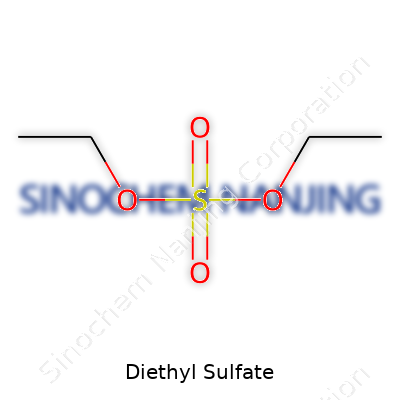
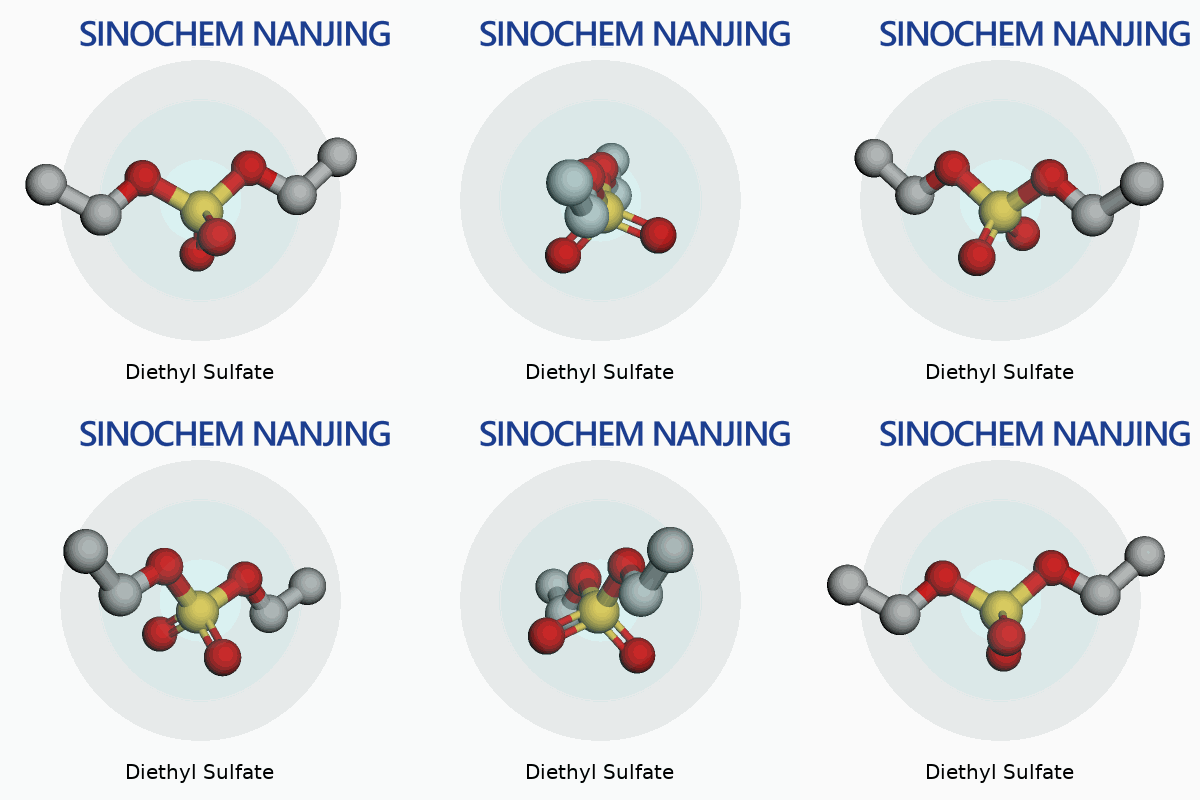
In simple terms, the structure of diethyl sulfate features a central sulfur atom, bonded to four oxygen atoms. Two of those oxygen atoms form double bonds to the sulfur, giving the core its stability and function. The other two oxygen atoms each link out to an ethyl group, which is a chain containing two carbon atoms and five hydrogens (C2H5). Laid out visually, these two chains hang off the sulfur center almost like arms, each supporting different chemical reactions.
Drawing the full structural formula looks like this:
C2H5–O–SO2–O–C2H5
This means a pair of ethyl groups is joined through oxygen bridges to a single sulfur that sits in the middle with two double bonds also linking to oxygen. This arrangement grants diethyl sulfate its potent reactivity—something manufacturers of dyes, pharmaceuticals, and detergents count on when they need an ethylating agent.
Why the Chemistry Matters in Real Life
Knowing the structure goes way beyond memorizing for an exam. The double-bonded oxygens and the two ethyl branches make diethyl sulfate extremely effective at transferring ethyl groups to other chemicals. This makes it valuable in chemical synthesis, speeding up reactions that would otherwise drag on slowly or require much more energy.
As someone who has worked near industrial labs, I’ve seen both the utility and the severe risks tied to these kinds of chemicals. Diethyl sulfate can burn skin, irritate eyes, and cause severe respiratory damage—all because that same chemical structure responsible for its practical value also makes it so reactive with living tissues. The reactivity lets it cross-link with DNA, which is why regulators label it as a probable human carcinogen. Long sleeves, goggles, and strong ventilation aren’t just nice ideas—they’re essential every time a bottle comes off the chemical shelf.
Putting Safety Up Front
Facts drive home just how important it is to treat diethyl sulfate with caution. Studies from occupational hazard reports tie even small exposures to lasting harm, and spills can travel fast through drains into bigger water systems. That leaves everyone down the line at risk, not just those who handle it directly.
Strong policies on storage, monitoring of air quality, and strict disposal practices all help, but education makes the biggest difference. People tend to make fewer mistakes when they fully grasp both the chemical design and the real consequences of a misstep. Cities have seen disasters when safety slips, whether from lack of training, shortcuts, or simple oversight.
Working Toward Safer Solutions
Some research teams are pushing ahead on less toxic alternatives for use as ethylating agents, especially in greener pharmaceutical production where worker and environmental safety both matter. Until safer substitutes become mainstream, respecting the chemical’s reactivity and following rigorous safety protocols remain the best defense.
| Names | |
| Preferred IUPAC name | Diethyl sulfate |
| Other names |
Sulfuric acid diethyl ester Ethyloxyethyl sulfate Diethyl sulphate Sulfuric acid, diethyl ester DES Diethylsulfat |
| Pronunciation | /daɪˌiːθəl ˈsʌlfeɪt/ |
| Identifiers | |
| CAS Number | 64-67-5 |
| Beilstein Reference | 1718731 |
| ChEBI | CHEBI:4446 |
| ChEMBL | CHEMBL14540 |
| ChemSpider | 5873 |
| DrugBank | DB08308 |
| ECHA InfoCard | 100.003.178 |
| EC Number | 200-589-6 |
| Gmelin Reference | 821 |
| KEGG | C19194 |
| MeSH | D004032 |
| PubChem CID | 11540 |
| RTECS number | WS8225000 |
| UNII | SEY24YX503 |
| UN number | UN1594 |
| Properties | |
| Chemical formula | C4H10O4S |
| Molar mass | 154.184 g/mol |
| Appearance | Colorless, oily liquid |
| Odor | Faint peppermint odor |
| Density | 1.183 g/cm³ |
| Solubility in water | 8.75 g/100 mL (20 °C) |
| log P | 0.89 |
| Vapor pressure | 0.5 mmHg (20 °C) |
| Acidity (pKa) | 1.53 |
| Basicity (pKb) | pKb = 5.51 |
| Magnetic susceptibility (χ) | -7.9 × 10⁻⁶ cm³/mol |
| Refractive index (nD) | 1.394 |
| Viscosity | 2.45 mPa·s (at 25 °C) |
| Dipole moment | 2.99 D |
| Thermochemistry | |
| Std molar entropy (S⦵298) | 270.0 J·mol⁻¹·K⁻¹ |
| Std enthalpy of formation (ΔfH⦵298) | -860.6 kJ/mol |
| Std enthalpy of combustion (ΔcH⦵298) | -7564.7 kJ/mol |
| Hazards | |
| Main hazards | Toxic if swallowed, in contact with skin or if inhaled; causes severe skin burns and eye damage; may cause cancer. |
| GHS labelling | GHS02, GHS06, GHS08 |
| Pictograms | GHS02,GHS06,GHS08 |
| Signal word | Danger |
| Hazard statements | H225, H301, H311, H314, H331, H341, H350 |
| Precautionary statements | P201, P202, P210, P260, P264, P270, P273, P280, P301+P310, P304+P340, P308+P311, P320, P330, P391, P403+P233, P405, P501 |
| NFPA 704 (fire diamond) | 3-2-2-W |
| Flash point | 77 °C (closed cup) |
| Autoignition temperature | 430 °C |
| Explosive limits | Explosive limits: 1.7–10% |
| Lethal dose or concentration | LD50 oral rat 180 mg/kg |
| LD50 (median dose) | 650 mg/kg (rat, oral) |
| NIOSH | WW6475000 |
| PEL (Permissible) | PEL (Permissible Exposure Limit) for Diethyl Sulfate is "1 mg/m³ (0.2 ppm) TWA". |
| REL (Recommended) | 1 mg/m³ |
| IDLH (Immediate danger) | 40 ppm |
| Related compounds | |
| Related compounds |
Dimethyl sulfate Sulfuric acid Ethanol Ethyl sulfate Methyl sulfate Triethyl phosphate |



