A Closer Look at Dibutyltin Oxide: Its Journey, Features, and Tomorrow’s Stakes
The Story Behind Dibutyltin Oxide
Chemical ingredients rarely draw headlines, yet dibutyltin oxide has built a history worth noting. Born out of twentieth-century advances in organotin chemistry, this compound arrived during a time of industrial optimism. Chemists of that era saw organotin groups as keys to unlocking plastics that shaped post-war growth. This one, a white to off-white powder, stood out for its stable properties and promise in both manufacturing and research. Today, many who work in coatings, pharmaceuticals, and technology wouldn’t recognize a beaker of pure dibutyltin oxide, but they’d see its fingerprints in their finished goods.
What Sets Dibutyltin Oxide Apart
Talking about dibutyltin oxide means taking stock of a solid with distinctive characteristics. Boiling near 180°C at reduced pressure, melting above 100°C, it resists water but dissolves in strong acids and organic solvents. Reactivity comes from its tin-oxygen framework, letting it catalyze chemical reactions, especially those joining siloxane or urethane. Colorless and nearly odorless, it can add invisible utility to processes ranging from PVC stabilization to drug development. My experience in polymer labs confirms: even at low concentrations, its strength as a stabilizer and catalyst gives manufacturers critical control over end-product performance.
Decoding Labels and Standards
Regulation matters in a world where chemicals touch food, homes, and bodies. Anyone handling dibutyltin oxide sees standards shaped by decades of toxicology studies. Global frameworks such as REACH and the Toxic Substances Control Act spell out labeling based on hazards—like acute toxicity to aquatic life. Labels call for gloves, eye protection, and ventilation; spills mean swift cleanup to keep nanoparticles out of drains. One lesson I have seen firsthand: shortcuts in labeling or standards catch up during audits or, worse, incidents in the workplace.
From Laboratory to Factory: How Dibutyltin Oxide Comes to Be
If you’ve mixed anything in a lab reactor, the steps to make dibutyltin oxide look familiar, if a bit touchier. Technicians start by reacting dibutyltin dichloride with sodium hydroxide, washing out salts, then isolating the oxide—often filtering, washing, and drying under controlled temperatures. The right process ensures purity and keeps impurity levels below regulatory cut-offs. Efficiency in these steps makes a difference, not just in cost but also in downstream applications—impure reagents invite real headaches, from failed polymer chains to unwanted side-products.
Reactivity and New Twists: Chemistry in Action
Dibutyltin oxide pulls its weight by teaming up with other chemicals. Chemists lean on it to catalyze reactions like transesterification or to assemble siloxane chains in silicone rubbers. It adapts to forming complexes with carboxylic acids, which allows for tailored reactivity in drug synthesis. A catalyst’s versatility matters: shifting production from one batch to another requires reliability, and dibutyltin oxide brings a track record that allows R&D teams to push boundaries in custom molecules or smart coatings.
Synonyms and Marketplace Names
Throughout the world, buyers and sellers know dibutyltin oxide under an array of names: DBTO, stannoxane, and dibutylstannanediol. On trade lists, these terms turn up alongside esoteric codes rooted in CAS registry numbers. For someone ordering on behalf of a factory or lab, navigating the synonyms isn’t merely academic—it’s the difference between receiving the right drum or facing costly delays. Over time, recognition of synonyms becomes an unexpected skill for anyone handling specialty chemicals.
Staying Safe and Getting the Job Done Right
Safety takes the highest priority with organotin compounds, owing to longstanding concerns about acute and chronic toxicity. Workers get briefings before opening a container or charging a reactor. Built-in ventilation, proper storage, and skin contact barriers aren’t just protocol—they save health and avoid environmental spills. I recall a production run where a slight misstep brought headaches and confusion, underscoring why meticulous compliance is essential. Many countries now require ongoing training and audits, a testament to evolving knowledge about the risks of chronic exposure to organotins.
Where Dibutyltin Oxide Shows Up
PVC processing plants eat up much of the world’s dibutyltin oxide. Its stabilizing properties fend off heat damage that plagues unmodified plastic. Medical manufacturers use it as a catalyst when building up pharmaceutical intermediates. The coatings industry sees value in its ability to construct resilient siloxane networks for weatherproof paints and sealants. The footprint is broad, touching everything from automotive hoses to solar panels. Even in areas where safer alternatives arrive, dibutyltin oxide’s blend of effectiveness and cost-efficiency keeps it on buying lists across industries.
What Research Teaches—and Where It’s Headed
Research on dibutyltin oxide keeps exploring two main tracks. One asks: Can this compound be used more safely and cleanly? Another seeks untapped potential—whether in biodegradation-resistant plastics or in catalysts for tomorrow’s medicines. Advances in nanoscience press scientists to look at the material’s properties on ever-smaller scales. I’ve seen funding flow into studies testing its ability to support green chemistry, like more efficient cross-linking in environmentally friendlier coatings. The research culture has shifted with greater attention to life-cycle impact, meaning any new application is run through rigorous environmental and health tests before moving forward.
Health Hazards—and The Push for Better Understanding
Toxicity hangs over dibutyltin oxide’s reputation. Studies show organotin compounds disrupt hormones in aquatic life and can harm workers’ nervous systems with repeated exposure. Long-term studies point to links between certain tin-based chemicals and immune suppression or reproductive risks. The chemical’s journey through water and soil raises wider questions about environmental persistence. Calls to limit or phase out organotins from consumer products have grown louder. Regulatory agencies keep reviewing safety data, refining danger thresholds, and updating worker exposure limits. In my own circles, conversations about dibutyltin oxide never skirt the fact that safe handling still leaves open-ended questions about long-range environmental legacy.
Eyes on Tomorrow: The Future of Dibutyltin Oxide
The future of dibutyltin oxide sits at a crossroads. On one hand, global demand for high-performance PVC and specialty silicones keeps interest alive. On the other, moves to cut hazardous substances position this compound as a possible target for tighter regulation. Research races to design alternative catalysts and stabilizers with less toxicity. Transparency in reporting environmental and health risks earns public trust. Long-run, the story of dibutyltin oxide will likely follow the same script as countless legacy chemicals: find responsible uses, discover ways to minimize harm, and prepare for a slow shift toward sustainable, safer replacements. The work continues—motivated by the lessons of the past and shaped by the needs of modern industry.
What is Dibutyltin Oxide used for?
Everyday Uses and Real-World Impact
Dibutyltin oxide doesn't catch headlines, but its fingerprints turn up across industries. Walk through a vinyl flooring installation or examine the plastic wrap around fresh food at the market — somewhere along the line, dibutyltin oxide played a part. My background in materials science has shown me just how much chemistry shapes daily life, and this compound is a prime example.
The Role in Plastics and PVC Production
One major role for dibutyltin oxide lies in rigid and flexible PVC manufacturing. Factories rely on it as a catalyst, speeding up the process that transforms raw vinyl chloride into something tough enough for pipes and soft enough for raincoats. The compound helps control the reaction time and the material's texture. Without it, getting the same clarity and durability from PVC would mean higher costs and inconsistent quality.
I've noticed a particular focus on producing window frames that don't yellow over time, and stabilizers like dibutyltin oxide deliver on that need. Consistent quality in these products translates to longer life cycles and less frequent replacements for homeowners, which keeps waste out of landfills.
Textile Processing and Beyond
Dibutyltin oxide shows up in textile treatments, too. Textile factories use it to help attach dye evenly to synthetic fabrics. The vivid colors you see in sportswear and swimsuits often benefit from the presence of this chemical. Dyes bind better, last longer, and show less fading after many washes. Reliable color performance means fewer rejected batches and less water wasted rinsing out undyed residues.
The Chemistry Behind Its Cleaning Power
Some cleaning products draw on dibutyltin oxide as a catalyst for making detergents. It helps build up the surfactants — the stuff that lets soap lift grease and dirt off your pots and pans. On a larger scale, manufacturers count on this reaction being both efficient and predictable. Small differences in formulas can swing costs by thousands of dollars, so predictability matters. In my own kitchen, I've seen the difference between a detergent that works in one wash and one that leaves streaks behind.
Considerations for Safety and Pollution
The presence of organotin compounds, including dibutyltin oxide, does raise environmental and health concerns. Toxicity can become an issue if it enters waterways or isn’t handled properly in a factory setting. Workers in processing plants deserve strong protections — gloves, ventilation, and training are mandatory, not optional. Regulators in countries like the United States and Germany watch over its use, setting limits for both worker exposure and environmental discharge.
Some companies now seek out alternatives to organotin compounds because of these concerns. For scientists, this means developing catalysts with similar power but a friendlier track record. Innovation doesn’t happen overnight, but a shift toward greener chemistry looks inevitable as environmental standards tighten and consumers ask tougher questions about where their products come from.
Looking Forward
Products like dibutyltin oxide play a behind-the-scenes role in shaping familiar goods. Every link in this chain, from the lab bench to the recycling bin, builds on choices about safety, efficiency, and planetary health. The challenge is to keep improving the chemistry so the benefits stick around — and the downsides don’t.
Is Dibutyltin Oxide toxic or hazardous?
Getting a Handle on Dibutyltin Oxide
Dibutyltin oxide shows up everywhere in manufacturing – from PVC pipes and glass coatings to catalysts for making silicone. The question about its safety gets raised a lot, probably for good reason. Chemicals with tin at the center can stay in the spotlight because of what they can do to people and the environment. No factory manager or scientist wants bad press—or a health crisis—because of shortcuts or just plain ignorance.
Looking at the Science
If you take a look at the Material Safety Data Sheet for dibutyltin oxide, the first flag is clear: this stuff irritates skin, eyes, and lungs. Churning out dust or fumes during production ramps up the danger. Long-term or high exposure can stiffen the risk: studies link some tin compounds to problems in immune and reproductive systems. I’ve seen warnings on respirator gear around mixing tanks, and that’s no hollow safety theater. The American Conference of Governmental Industrial Hygienists says workers should avoid breathing more than 0.1 mg per cubic meter of the stuff. That’s already a tiny number. Exposing lungs to more—over months or years—brings health risks home.
I remember talking to a few engineers who worked on PVC pipe lines. They said sore throats and headaches hit on the days overseers skipped ventilation checks. Many metals cause these symptoms after repeated contact, and dibutyltin oxide doesn’t break away from that family pattern. The European Chemicals Agency lists it as hazardous if swallowed or inhaled for a reason.
Real Stakes: Human and Environmental
Hazard labels aren’t just formalities. Dibutyltin compounds got attention in a 2011 World Health Organization review, noting their ability to disrupt hormone balance and immune systems in lab animals. Some studies even hint at links to reproductive damage. No one wants to take a gamble with something that can linger in the body and potentially tip the balance of critical systems. Add to that, runoff from poorly managed industrial sites can bring dibutyltin compounds into rivers, with negative effects on aquatic life.
My own experience with chemical audits in factories taught me a simple lesson: ignoring risk multiplies harm in the long run. Plants sometimes push hard to hit quotas, but shortcuts with personal protective equipment or ventilation can turn a bad day into a disaster. Poor labeling or storage turns a containment slip into a spill that stays in the soil—and sometimes in the news headlines—for years.
Solutions Rely on Accountability
Practical solutions exist. Proper ventilation cuts the dust. Consistent personal protective gear—goggles, gloves, fitted masks—makes a difference, especially for workers on the front lines. Regular air monitoring isn’t a regulatory checkbox but a real tool for keeping everyone honest and safe. At many sites, swapping open bags for sealed, automated feeding has lowered exposure tremendously; upfront investment in safety systems pays off tenfold by avoiding sick days and lawsuits.
Outside the factory fence, companies with strong sustainability policies take steps to treat waste, limit runoff, and honestly report emissions. They know their social license—the trust built up with the people living nearby—counts for more than a clever PR campaign when something goes wrong. Training workers and supervisors on proper handling shows respect for their health and keeps incidents rare. Good neighbors in industry don’t wait for a letter from regulators or an uptick in illness before acting.
In the end, dibutyltin oxide doesn’t have to bring risk home. Accountability, good engineering, and transparency bring the safety margin everyone deserves.
What are the safety precautions for handling Dibutyltin Oxide?
Understanding the Risks
Dibutyltin oxide shows up in a range of manufacturing processes, especially in plastics and catalysts. This white crystalline powder doesn’t look all that threatening, but experience in the lab has taught plenty of folks not to underestimate it. Trouble shows up fast enough—runny eyes, irritated skin, even breathing problems—if you miss a step on safety. People working with chemicals like this need to make careful choices, not just follow checklists. Staying safe means keeping a sharp eye, every time.
Protecting Yourself on the Job
A good pair of chemical-resistant gloves goes a long way. Nitrile or neoprene types stand up better against dibutyltin oxide, which can work its way through latex. Goggles should seal snug against your face, not just perch on your nose. Full-face shields aren't overkill for dusty or splash-prone jobs—they mean fewer accidental exposures and less worrying about what could happen if you rub your eyes. I’ve kept my own vision clear by changing gloves before eating or touching my phone, because you can’t always see where the powder lands.
Dust and fine powders leave no room for guessing, so lab coats and respiratory protection matter. Working in a fume hood cuts down the chance of breathing in particles, but half-face respirators with P100 filters offer extra peace of mind if the powder might go airborne. Keeping separate work clothing, washing hands after every break, and showering before heading home mean those who work with dibutyltin oxide don’t take the risk home to their families.
Keeping the Space Safe
Spills should never become testing grounds for improvisation. Each time I’ve cleaned up chemicals, I reached for a spill kit with dedicated absorbents that don’t react with tin compounds. Dry sweeping stirs up clouds you’d rather avoid. Damp cloths or HEPA vacuums trap material instead. Labeling containers with clear hazard symbols helps every new worker understand what’s inside. These aren’t just guidelines—they keep everybody alert, which matters more than any warning label once people settle into routines.
Storage makes a huge impact. Containers should close tightly and stay in cool, dry cabinets. Dibutyltin oxide reacts sharply with acids and strong oxidizers; separating incompatible chemicals avoids fires and toxic fumes. Routine inspections give you confidence the material hasn’t degraded, and spills don’t sneak up on you months after storage begins.
Training and Culture Matter
Nobody stays safe by themselves. Safety drifts unless everyone looks out for each other. Regular refresher training keeps the protocols sharp in memory, not hidden behind layers of paperwork. Sharing close calls helps everyone learn—not just the person involved. Supervisors who pay attention to concerns and suggestions strengthen the team’s commitment to careful work.
What Helps the Most
Simple habits become the backbone of safety. Wearing the right personal protective equipment means less risk, and proper housekeeping slows down accidents before they escalate. Good storage, clear labeling, and updated training keep everyone moving in the same direction. Putting health and vigilance first has carried workers and communities past many risky moments with chemicals like dibutyltin oxide—common sense in steady practice saves more discomfort, downtime, and regret than any technical rulebook could.
What is the chemical formula of Dibutyltin Oxide?
Getting Straight to the Formula
You don’t need a chemistry degree to realize that every compound has a unique blueprint—a formula that reveals the elements and how many of each type it contains. For Dibutyltin Oxide, that formula is C8H18OSn. This tells us there are eight carbons, eighteen hydrogens, one oxygen, and a single tin atom working together at the molecular level.
Real-World Impact of C8H18OSn
Dibutyltin Oxide isn’t just a jumble of letters and numbers. This compound performs a pivotal role in the production of plastics, glass coatings, and even PVC stabilizers. Most folks aren’t thinking about organotin compounds during their day, but many household goods wouldn’t exist without them. I’ve come across a lot of skepticism about chemicals in industry, often from people worried about safety and environmental harm. Those concerns deserve respect and honest answers.
Dibutyltin compounds emerged in the 20th century as chemists pushed to make plastics sturdier and last longer. The tin atom at the heart of this formula makes Dibutyltin Oxide an effective catalyst. It jumpstarts chemical reactions in a way few other molecules can. As someone whose relatives have worked in manufacturing, I’ve seen these upgrades trickle down to better insulation, safer wiring, and lower energy use in buildings—all due to a specialized formula like C8H18OSn.
Safety and Environmental Balance
Of course, it’s not all progress with organotin chemistry. The same features that make Dibutyltin Oxide useful can pose risks if handled carelessly. Studies from agencies like the EPA and the European Chemicals Agency show it impacts aquatic life at certain concentrations. Factory workers handling the powder must take extra care, wearing gloves and respirators to avoid harm. Someone living near a plastics plant or landfill might wonder how to keep the water and soil clean. Scientific findings play a crucial part in making safety decisions, both in the lab and at the regulatory level.
Rethinking Industrial Chemistry
Society faces a tricky situation: we want the convenience of modern materials, but we also want clean air and safe neighborhoods. Industries continue to look for safer alternatives and improved containment methods. A practical step involves using closed systems to keep DBTO (as it’s sometimes called) from leaking. Researchers explore greener options every year, yet for now, C8H18OSn remains difficult to replace due to its efficiency and reliability.
Learning and Accountability
Staying informed about chemicals used in everyday products has changed the way consumers, workers, and lawmakers interact. Transparent chemical databases, stronger workplace training, and independent testing all help keep everyone on the same page. I’ve seen firsthand how public knowledge and practical science combine to hold powerful companies accountable, leading to safer practices. Dibutyltin Oxide makes for a simple example, but the lesson goes much further: knowing what’s behind a chemical formula—especially something like C8H18OSn—lets people ask smarter questions and demand better results.
How should Dibutyltin Oxide be stored and disposed of?
Understanding Why Dibutyltin Oxide Deserves Careful Handling
Dibutyltin oxide shows up in a range of industrial processes, especially in the making of plastics, catalysts, and some specialty coatings. Most people outside the chemical field rarely hear about it, but in the lab or the factory, handling this compound brings real responsibility. My own background in a university chemistry lab taught me that even familiar materials can bite you if you let your guard down — especially with chemicals containing tin. These compounds can irritate your skin, eyes, and airways, and if they end up in the groundwater, the consequences last for years. Many folks working with hazardous materials grow casual over time, but repeated headlines about spills and workers seeking medical care highlight how important proper storage and disposal are.
The Realities of Storing Dibutyltin Oxide
Storage decisions matter for health as well as environmental safety. Cleanliness of the storage area, and separation from other chemicals, make a difference on a practical level. Isolation from acids, strong oxidizers, and moisture-rich environments reduces risk. Containers built from glass, high-density polyethylene, or other chemical-resistant materials work best. Simple things — well-fitted lids, clear labeling with hazard symbols, and dated purchase logs — form the backbone of a responsible storage approach.
Temperature also matters. Keep the material in a dry, cool location, away from direct sunlight and sources of heat. I learned early on that a temperature swing can sometimes push a chemical past its safe operating limit. Even if dibutyltin oxide looks stable at room temperature, a hot storage closet or an uncapped jar sitting in a sunny window ledge can turn things risky fast. Chemical compatibility charts and Safety Data Sheets (SDS) aren’t just paperwork; I’ve always checked them before introducing any new storage routine.
Disposal Isn’t Garbage Collection
Flushing chemicals down the drain or tossing them in the regular trash never works for substances like dibutyltin oxide. Waste containing organotin compounds stands out as hazardous under nearly all local and international environmental laws. Municipal incinerators and landfill sites are not set up to handle products that leach out and linger in soil and water. From experience, small spills on benches or lab floors can leave a trace odor or visible residue for weeks. Multiply that by tons of industrial waste and it’s clear why regulations exist.
Facilities with trained personnel handle spent dibutyltin oxide. Partnering with licensed hazardous waste contractors remains the gold standard. They send chemicals for either high-temperature incineration or secure burial in lined, controlled sites. Each barrel or jar typically features a manifest tracking its journey, tracked by government agencies to guard against illegal dumping. Some regions even require companies to submit waste reduction plans, tracking how much solvent and metal byproduct gets pumped back into the process rather than discarded.
Building a Culture of Safety and Responsibility
Education in chemical safety needs regular reinforcement. New hires and established workers both benefit from ongoing training focused on new regulations and facility best practices. On a larger scale, sharing lessons learned from workplace incidents and unexpected reactions keeps everyone honest. There’s no shortcut here; even after years of education and experience, I double-check storage shelves and waste drums every time I see something unfamiliar show up. Personal protective gear — gloves, goggles, and respiratory protection — stays within arm’s reach in any area where dibutyltin oxide is used.
Efforts to minimize waste at the source, whether by improved process efficiency or recycling, slow the build-up of hazardous materials in storage. Cutting corners rarely saves money or time in the long run. With more scrutiny from regulators and the public, companies and labs do well to cultivate a mindset where doing things right comes before doing things quickly.
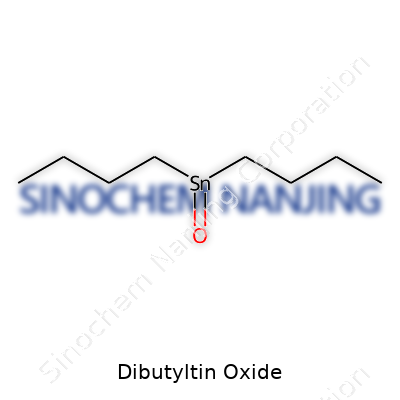
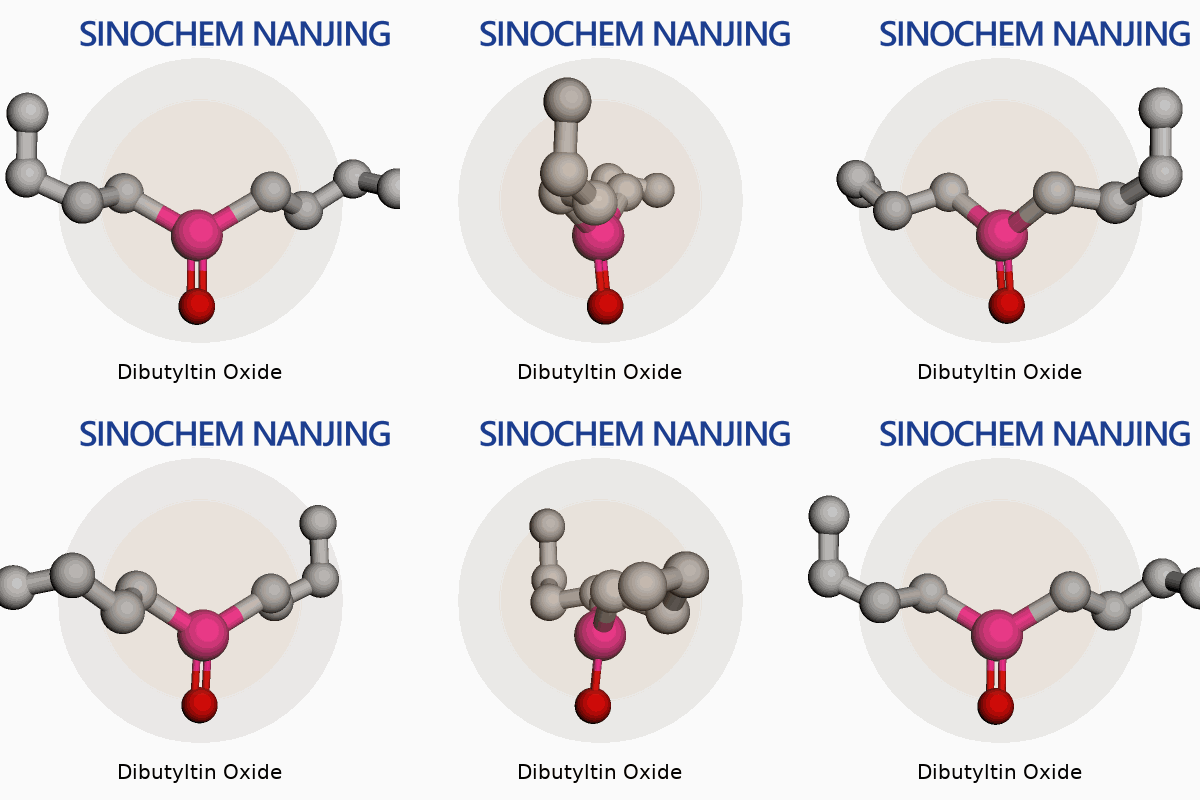
| Names | |
| Preferred IUPAC name | bis(butyl)oxotin |
| Other names |
Dibutyl tin oxide DBTO Tin, dibutylbis(oxy)- Stannoxane, dibutyl- Bis(dibutylstannylene) oxide |
| Pronunciation | /daɪˈbjuːtɪl.tɪn ˈɒksaɪd/ |
| Identifiers | |
| CAS Number | 818-08-6 |
| Beilstein Reference | 381873 |
| ChEBI | CHEBI:132802 |
| ChEMBL | CHEMBL1229874 |
| ChemSpider | 13318 |
| DrugBank | DB13926 |
| ECHA InfoCard | 100.030.124 |
| EC Number | 215-467-8 |
| Gmelin Reference | 56374 |
| KEGG | C13890 |
| MeSH | D008276 |
| PubChem CID | 3034618 |
| RTECS number | XB6476000 |
| UNII | K5A4X535CW |
| UN number | UN2922 |
| CompTox Dashboard (EPA) | `DTXSID0022722` |
| Properties | |
| Chemical formula | C8H18OSn |
| Molar mass | 367.11 g/mol |
| Appearance | White to off-white powder |
| Odor | Odorless |
| Density | 1.66 g/cm3 |
| Solubility in water | Insoluble |
| log P | 1.6 |
| Vapor pressure | 0.00017 mmHg at 25°C |
| Acidity (pKa) | 13.0 |
| Basicity (pKb) | 4.6 |
| Magnetic susceptibility (χ) | -48.0e-6 cm³/mol |
| Refractive index (nD) | 1.541 |
| Viscosity | Viscous liquid |
| Dipole moment | 2.66 D |
| Thermochemistry | |
| Std molar entropy (S⦵298) | 389.3 J·mol⁻¹·K⁻¹ |
| Std enthalpy of formation (ΔfH⦵298) | -580.7 kJ/mol |
| Std enthalpy of combustion (ΔcH⦵298) | -3858.7 kJ/mol |
| Pharmacology | |
| ATC code | D08AX11 |
| Hazards | |
| Main hazards | Harmful if swallowed. Causes skin and serious eye irritation. May damage fertility or the unborn child. Toxic to aquatic life with long lasting effects. |
| GHS labelling | GHS02, GHS05, GHS06, GHS08 |
| Pictograms | GHS06,GHS08 |
| Signal word | Danger |
| Hazard statements | H302, H315, H319, H332, H335 |
| Precautionary statements | Precautionary statements: P261, P264, P271, P280, P302+P352, P304+P340, P305+P351+P338, P312, P321, P332+P313, P337+P313, P362+P364, P403+P233, P405, P501. |
| NFPA 704 (fire diamond) | 2-2-2-W |
| Flash point | 113°C (235°F) |
| Autoignition temperature | 250°C (482°F) |
| Lethal dose or concentration | LD50 oral rat 207 mg/kg |
| LD50 (median dose) | LD50 (median dose): Oral rat 207 mg/kg |
| NIOSH | WH2625000 |
| PEL (Permissible) | PEL: 0.1 mg/m³ |
| REL (Recommended) | 1 mg/m3 |
| IDLH (Immediate danger) | **25 mg/m3** |
| Related compounds | |
| Related compounds |
1,2-Dibutyldichlorostannane Dibutyltin diacetate Dibutyltin dilaurate Dibutyltin maleate |



