Decalin: A Closer Look at Its Role and Relevance
Historical Development
Back in the early 1900s, chemists started to pay attention to decalin as they explored hydrocarbon structures in natural petroleum. The unique bicyclic shape drew interest because it mimicked the cyclohexane rings that form the backbone of many organic molecules. Early research teams in Germany and the US isolated and characterized decalin, and it quickly found its way into solvent blends and research labs. By the 1950s, it had moved beyond the research bench into commercial use, mainly as a solvent for resins and paints. This history reveals how necessity pushed scientists to unlock the potential of seemingly simple molecules in petroleum, and decalin, with its two fused rings, captured attention both for its chemical curiosity and practical value.
Product Overview
Decalin’s structure consists of two cyclohexane rings joined together, giving it stability and a balanced boiling point. The commercial product comes as a clear, colorless liquid with little to no odor and a faint oily feel, much like mineral oils but with a lower viscosity. Both cis and trans isomers exist, yet industrial applications tend to favor the trans form due to its slightly higher stability. You can find decalin packaged in drums or smaller containers, handled much like other hydrocarbon solvents in warehouses and production lines. Manufacturers usually mention “Decahydronaphthalene” or “perhydronaphthalene” on labels for clarity, reflecting its saturated naphthalene backbone.
Physical & Chemical Properties
Decalin has a molecular formula of C10H18 and weighs in at about 138 g/mol. Its boiling point hovers around 190°C, and it freezes near -43°C, which makes it stable for use in both summer and winter—no risk of sudden phase changes during transport or storage. Its viscosity and low surface tension mean it spreads and dissolves well, which has made it a pillar in the world of industrial solvents. Chemically, decalin resists attack by strong bases, and acids don’t bother it much either, unless you ramp up temperature and pressure. It won’t mix with water, so it’s often chosen when water exclusion is key. Its refractive index, density, and vapor pressure are all documented, and safety data sheets rarely list surprises, which offers reassurance to anyone handling it.
Technical Specifications & Labeling
On labels, decalin is usually rated by purity—typically upwards of 98%. Producers provide certificates of analysis that list isomer content, water level (measured in ppm), color (APHA scale), and any potential byproducts left over from hydrogenation. Most facilities follow OSHA’s hazard communication standards, so what you see is spelled out plainly: flammable liquid, possible health effects if inhaled in high concentration, and directions for safe handling. Packaging features clear labeling for transportation, with UN numbers and GHS pictograms that warn of fire risk, even though it ignites less readily than lighter solvents. Analytical labs in the materials or chemical industry value these details, since slight impurities can spoil a whole experiment.
Preparation Method
Refiners make decalin by catalytic hydrogenation of naphthalene. A stream of hydrogen and naphthalene vapor runs over a supported nickel, platinum, or palladium catalyst at elevated temperature and moderate pressure. Purification relies on fractional distillation since unreacted naphthalene and partially hydrogenated intermediates can stick around if conditions aren’t tuned just right. Some chemists try variations with pressure or pick acid-resistant catalysts to stretch equipment life or bump up yield. Spent catalysts, process off-gas, and incidental spills mean waste management must run tight to keep both lands and lungs safe. The underlying industrial method dates back over half a century, but minor tweaks in reactor design or process insulation changes can bump efficiency just enough to matter when scaling up.
Chemical Reactions & Modifications
Decalin survives most mild chemical treatments but opens up under harsher conditions—for example, it can crack under high heat to lighter hydrocarbons, contributing to the feedstock flexibility in refineries. Exposing it to strong oxidizers eventually produces naphthoic acids or even breaks the rings, though this route seldom makes economic sense unless the co-products matter. Some labs use decalin in hydrogen transfer reactions, as its stability lets it serve as a hydrogen donor. The bicyclic structure can host substitutions or isomerization, and in synthetic organic chemistry, decalin sometimes acts as a scaffold for building larger molecules by anchoring functional groups. Still, the need for specialty catalysts or high-energy reagents can push up costs, so chemists weigh these pros and cons carefully before picking decalin as the starting point.
Synonyms & Product Names
Walk through a chemical catalog and you’ll see decalin listed under several names: decahydronaphthalene, perhydronaphthalene, and 1,2,3,4,4a,5,6,7-octahydronaphthalene. Industry gets creative, using trade names like Hydralin, Hydranaphthalene, or Dehydran to reach distinct market niches. These names all point to the same bicyclic backbone, though product grades and purity can shift from one supplier to the next. Checking the exact chemical identifier (CAS: 91-17-8) helps to avoid confusion between decalin and its isomeric cousins or unsaturated relatives.
Safety & Operational Standards
Decalin moves through the supply chain much like other volatile organics. Factory managers and lab staff use local exhaust ventilation and splash-proof goggles to guard against exposures. Material safety data sheets (MSDS) flag decalin as irritating to eyes and skin, and people with respiratory sensitivities take extra care. While it doesn’t pack the acute punch of some industrial reagents, repeated overexposure can carry risks to liver and kidney tissues, so workplace exposure limits are set by most jurisdictions. Site audits look for proactive spill containment, and waste decalin—often contaminated with other organics—falls under hazardous disposal rules. The chemistry world doesn’t take these rules lightly, since enforcement can get strict where water tables or sensitive habitats sit nearby.
Application Area
Decalin’s biggest claim to fame has been its use as a high-boiling solvent for resins, lacquers, paints, and specialty adhesives that demand strong dissolution power but slow evaporation. Resin manufacturers count on decalin to open up polymer chains, letting additives and pigments disperse evenly and with the least waste. Motor, rail, and shipping industries have used it as a heat transfer fluid in closed systems because it doesn’t oxidize easily and won’t gum up pipes—an edge over some other hydrocarbons. Analytical scientists rely on decalin to dissolve stubborn samples or act as an inert medium during high-precision chromatographic analyses. Modern battery and electronics industries keep an eye on decalin because its thermal and dielectric stability earn it a spot on candidate lists for specialty process fluids. Even some intrepid synthetic chemists add it to their arsenal of solvents, especially for hydrogenation reactions. Each of these uses sidesteps water, values thermal stability, and bets on the reliability that decades of experience have built up around the molecule.
Research & Development
Academic labs continue to probe the structure, reactivity, and physical properties of decalin, using it both as a model system and a practical solvent. Computer modeling of decalin, especially for its cis and trans forms, sheds light on conformational dynamics and helps refine molecular mechanics force fields in computational chemistry. Analytical chemists design fresh experiments that take advantage of decalin’s benign background in spectra and chromatograms. In chemical engineering, pilot projects explore advanced recycling or conversion routes, hoping to use waste hydrocarbons or renewable naphthalenes as starting materials. Multinational firms explore next-generation solvent blends, adjusting decalin’s balance with greener alternatives without sacrificing the reliable performance users have grown to trust. These developments, shaped by ongoing collaborations between academia and industry, keep decalin relevant even as regulatory and market winds shift.
Toxicity Research
Toxicologists have studied decalin for over sixty years. Acute exposures in animal models rarely produce severe systemic effects at typical workplace levels, though high doses by mouth or repeated, unprotected inhalation over months cause liver enlargement and mild kidney damage. Human contact tends to lead to skin and eye irritation rather than permanent toxicity, but chronic exposures raise concerns about cumulative organ effects. Regulatory agencies—including the EPA and ECHA—review available data to set exposure limits that reflect current studies. Wastewater analysis in industrial areas sometimes picks up decalin traces, spurring additional investigation into chronic low-level environmental effects. Recent studies look for metabolic byproducts or possible carcinogenic risks, but no link stands confirmed as of 2024. Companies serious about safety run regular air monitoring and provide staff with full PPE, making sure exposures stay well below stated limits.
Future Prospects
Looking ahead, decalin’s outlook ties closely to trends in green chemistry, regulatory shifts, and the persistent demand for stable, high-boiling solvents that carry minimal reactivity. The industry’s push for better recycling practices could open up recovery and purification schemes, especially since decalin’s other life—as a reaction medium—gives it a shot at reuse. Emerging fields like lithium battery manufacturing track the search for dielectric fluids, where decalin’s non-polar nature and resistance to breakdown may lead to niche adoption. As petroleum refining shifts and tighter controls on VOCs arrive, R&D teams keep screening for new blends that promise both safety and sustainability, yet even the most progressive green solvent pipelines keep decalin as a benchmark for performance. It will take significant innovation or regulatory overhauls to shake decalin free from its core roles in industry and science, so those working in solvents, specialty resins, or applied chemistry will keep seeing the molecule on safety sheets and shelf labels for the foreseeable future.
What is Decalin used for?
The Everyday Role of Decalin in Manufacturing
Decalin brings a hard-working attitude to the industrial world far away from household recognition. Companies that deal with heavy-duty processes turn to Decalin—short for decahydronaphthalene—because it can handle jobs many other chemicals cannot. Its main role shows up in the chemical industry as a solvent, stripping away the hassle that comes with substances refusing to mix or dissolve. If you’ve ever tried to dissolve something stubborn in water (think sugar in an overloaded cup of tea), you’ve brushed up against the same basic challenge.
Putting It to Work: Why Decalin Wins
Most of us don’t bump into Decalin directly, but people who manufacture plastics, adhesives, resins, and coatings rely on it. I remember my years working in a small plastics plant—when machines gummed up, management reached for solvents to keep things moving. Decalin’s ability to dissolve both polar and nonpolar materials helps prevent costly shutdowns. Chemical engineers know that its stable nature at higher temperatures means fewer scary surprises or chemical breakdowns in the middle of a batch run.
Decalin doesn’t just work alone. Paint factories, for example, appreciate Decalin for thinning all sorts of thick resins during mixing. I’ve spoken to paint technicians who said it’s much easier to achieve a smooth pour with Decalin in the mix. Beyond smoothness, it helps stop sediments from settling too quickly, which keeps batches consistent from start to finish. This level of reliability in a solvent saves companies huge money over mistakes and wasted raw material.
The Tricky Side: Health and Environment
Its usefulness comes with a price. Decalin carries toxic fumes—not something you want to breathe without strong ventilation. Workers in chemical plants wear respirators and gloves when handling it. Chronic exposure may cause headaches or even affect the nervous system, which means workplace training around chemicals like these can’t take a back seat.
There’s another side—the environment. Decalin doesn’t break down easily once it finds its way into soil or water. That sticks with me from a conversation with an environmental safety manager; spill management and disposal routines around this solvent are strict for a reason. Regulatory bodies like the EPA in the US keep a close eye on disposal methods, and violations carry heavy penalties.
Better Handling and Alternatives
Factories benefit from tighter rules around storage, regular safety audits, and personal protective equipment (PPE). I’ve seen firsthand how swapping metal drums for double-walled containers makes a difference in leak prevention. Automation helps take people out of the most dangerous steps, reducing the risk of direct exposure. Management often looks at greener alternatives, but for some jobs, the market hasn’t quite matched Decalin’s ability to dissolve tricky compounds without causing new problems like fire risk or excessive cost. Researchers aim for “greener” solvents, and while some progress shows up in labs, wide adoption takes time.
Why This All Matters
A solvent like Decalin might stay behind the scenes, but it underpins products we use every day, from car parts to glues. Its power comes with responsibility—protecting workers, neighbors, and local environments. Manufacturers who respect the risks and invest in safer operations help make sure we all benefit from chemical innovation without paying an unfair price down the line.
Is Decalin safe to use?
What Decalin Does in Real Life
Plenty of folks in chemical labs and industry have run across Decalin at some point. It’s a clear liquid, smells a bit like fuel, and shows up wherever strong, stable solvents are needed. I’ve watched technicians use it to clean residue off glass, and engineers pour it into process tanks without much hesitation. Some even rely on Decalin for synthesizing tricky hydrocarbons. For all its muscle as a solvent, safety concerns often sit in the back seat until an accident or a health scare makes everyone snap to attention.
What Scientists and Regulations Say
To understand whether Decalin is actually safe, it helps to see what the science and workplace safety rules lay out. OSHA lists Decalin as a hazardous chemical for good reason. Short-term exposure can make your eyes or skin burn or itch, enough to send anyone to the eye wash station. Breathing in the vapors can bring on headaches, dizziness, and sometimes nausea. Go beyond that and you risk effects on the nervous system. Its cousin, naphthalene, has a long rap sheet when it comes to toxicity and environmental damage, so Decalin gets extra scrutiny. The EPA and NIOSH track it along with other solvents tied to air and water pollution.
Regular Exposure: The Real Problem
The thing is, in my own work, people rarely pay strict attention day in and day out. Gloves come off for a second. Spills go unwiped. Vent fans collect dust. It’s easy to think that small exposures don’t matter, but research pushes back. Over weeks or months, skin absorbs enough of these chemicals to make a difference, especially if cuts or scrapes offer them a shortcut. Decalin can build up in fat tissue, and that’s not easy to clear out. Chronic exposure has been shown to affect liver function and the kidneys in some animal studies. Scientists haven’t tied Decalin to cancer the way they have for other solvents, though it still counts as a risk factor that nobody would want in their garage or lab more than necessary.
How to Use Decalin Without Trouble
If you want to avoid regrets, treat Decalin with respect. I always grab nitrile gloves, never latex, since Decalin eats through cheaper materials fast. Goggles get a prime spot on the bench, and any open bottle calls for a fume hood. Splash-resistant lab coats prevent soaked sleeves from wrecking your day. Proper storage matters too. Keep it away from sparks, direct sunlight, and don’t leave lids loose. MSDS sheets are loaded with real stories of fires caused by someone forgetting how flammable Decalin gets around an open flame.
Cleaner Alternatives and Smarter Workflows
The best safety measure is honest evaluation—do you really need Decalin every time? Over the years, people have shifted from stronger, more hazardous solvents to less toxic options where possible. Cyclohexane or mineral spirits sometimes do the same job for cleaning, without the same baggage. Labs finding themselves stuck with Decalin because of a specific reaction should work to keep runs small and spills contained. Ventilation upgrades or downdraft tables cut exposure in clever ways. For environmental health, collecting waste and sending it to chemical recovery outfits—rather than down the drain—makes a measurable impact.
Learning from Experience
No chemical is 100% safe. Still, applying real-world lessons and respecting the facts turns Decalin into just another tool rather than an accident waiting to happen. Better habits, up-to-date gear, and honest appraisals set the tone for safety—and after watching a few close calls, that’s where the biggest difference begins.
How should Decalin be stored?
Understanding Decalin's Challenges
Decalin, also known as decahydronaphthalene, isn't some ordinary solvent you ignore on a shelf. It’s a strong hydrocarbon, flammable, and produces vapors that don’t blend well with health or safety. Years spent around labs and workshops show that folks often treat it like paint thinner or gasoline—big mistake. Its flashpoint hovers around 58°C (136°F), which means just a bit of warmth in a workshop or warehouse can push containers close to trouble. Even people who consider themselves careful can overlook how easily Decalin can catch fire if handled with a “good enough” attitude.
Keeping It Safe Starts with the Right Container
You don’t pour Decalin into ordinary plastic jugs or glass bottles from the supermarket. Corrosion-resistant metal drums or cans—properly sealed—are my go-to for larger batches. For smaller volumes, thick-walled glass with robust lids works, but keep them away from light. Manufacturers stick clear hazard labels on these, not just to check a box, but because a misplaced or unmarked solvent bottle can turn a minor spill into a full-scale emergency.
Location Matters: Out of Sight, Not Out of Mind
Leaving Decalin on an open shelf or under a workbench is like hoping bad weather won’t find your tools left outside. It’s better to lock it up inside a dedicated flammable storage cabinet—metal, self-closing, grounded. Don’t stack it next to acids or oxidizers. I once saw two chemicals stored a handshake apart, and a careless mix-up led to an evacuation—luckily, no one was hurt, but it could have been much worse.
Temperature, Ventilation, and the Real World
Owning a storage room with steady cool temperatures and strong ventilation isn’t a luxury in most labs, it’s a basic expectation. Even in my makeshift home lab, a small fan and window do wonders to keep vapors from building up. Since Decalin vapor can irritate lungs and eyes, a well-ventilated spot means workers or hobbyists aren’t gambling with their health. Some folks install simple vapor detectors as backup, giving extra peace of mind.
Storing for People, Not Just for Paperwork
Everyone who handles Decalin, from students to professionals, deserves clear guidance. Miscommunication, or worse—no training at all—puts people at risk. I always run down the essentials before someone new gets near a Decalin container: no open flames, no sparks, don’t eat or drink where you work with solvents, and wash your hands like you're scrubbing off superglue. From pals working in industry, I've heard that regular safety talks and drills turn what sounds like burdensome rules into habits. One plant switched from “read it once” to hands-on refreshers and saw accidents drop fast.
Responding to Leaks and Wear-and-Tear
Bottles and drums get old. Seals crack or warp, slow leaks develop, and unnoticed puddles spell danger for floors and people. I keep a schedule for checking every Decalin container, tossing out anything questionable. Absorbent pads, spill kits, and fire extinguishers need to sit close by. Quick response comes from being prepared—a lesson won by learning from near misses, not waiting for a disaster to drive the point home.
Looking Past the Rules to Real Safety
Rules and data sheets do most of the heavy lifting, but personal experience seals the deal. Flammable solvents like Decalin demand respect. Getting lazy—or trusting your luck—ends badly. Every workplace or home lab should take its cues from chemical safety pros: smart storage, honest training, and a healthy dose of routine caution keep accidents out of the headlines and people safe on the job.
What are the main applications of Decalin?
A Closer Look at Decalin’s Real-World Value
Decalin, also known as decahydronaphthalene, sounds like the sort of chemical that maybe only a scientist keeps under the lab bench. In my own experience working on material safety reviews, it actually pops up in more places than most people realize. Decalin carries a reputation in specialty circles, but its practical footprint lies much wider.
The Mighty Solvent for Tough Jobs
One of the standout uses of Decalin comes from its strength as a solvent. Chemists, industrial engineers, and laboratory technicians lean on it for dissolving a range of substances that don’t play nicely with water. In my time around chemical storage suites, Decalin has a reputation for tackling natural and synthetic rubbers, resins, oils, and certain hydrocarbons. Labs preparing specialty polymers or rigorously testing materials often reach for this liquid when they need to break things down or carry out reactions where other solvents fall flat.
In real-world settings, especially where paint and lacquer removal comes into play, Decalin demonstrates its utility. It helps strip surfaces effectively without causing harsh etching or damaging the underlying material. For people working with restoration of industrial machinery, this can mean a safer approach with less risk compared to harsher alternatives. Performance aside, its broader hydrocarbon compatibility gives it an edge in many cleaning and degreasing operations, though its strong odor and flammability demand proper ventilation and safety gear.
The Backbone for Some High-Tech Fluids
Beyond cleaning, Decalin has turned into a crucial blending agent in fuels and lubricants. Cycloalkane-based compounds feed the research needs of synthetic fuel development, especially where engine knock resistance carries weight. As the transport sector keeps hunting for ways to push engines harder and cleaner, Decalin enables fuel developers to simulate real-world conditions. Because its structure mirrors that of some jet fuel components, it finds a home in aviation research, where the smallest changes in performance ripple out into real consequences. This same logic follows for specialty lubricants, where Decalin helps base oils deliver stability and viscosity under load.
Essential Role in Chemical Synthesis
In organic chemistry, Decalin works well as both a reaction medium and a carrier. Synthesis routes targeting high-purity cyclic hydrocarbons or complex organic molecules tap into its thermal stability and capacity to host elevated-temperature reactions. During my collaboration with process development teams, Decalin’s predictability—low toxicity compared to more volatile options—makes it popular not only for analytics but also for large-batch processing.
Keeping Railcars Moving and Rust at Bay
There’s a niche but vital role for Decalin as a rust inhibitor and as a flushing fluid for hydraulic systems. Rail and heavy equipment operators use it for its low-corrosivity and compatibility with rubber gaskets. By keeping machinery free of build-up, downtime shrinks, and costly overhauls become less common. This focus on prevention has always made sense to me over reactive maintenance: losing a day to replace a seal beats losing a week to system failure.
Weighing Health and Environmental Considerations
Any discussion on Decalin needs to face up to risk. Though it lands lower on toxicity than some hydrocarbons, exposure brings headaches, dizziness, and irritated lungs. My forays into workplace safety evaluations revealed the importance of strict storage guidelines, gloves, goggles, and fume extraction. Chemical spills also raise alarms for groundwater; cleanup demands specialized absorbents and careful disposal. Regulatory groups know Decalin’s reach, and responsible companies don’t skip regular audits.
Moving Toward Safer, Premium Solutions
While Decalin’s role across sectors stands firm, there’s increasing push for greener alternatives. Bio-based solvents are gathering steam, especially in consumer products. Industry holds tight to Decalin’s unique properties for now, but ongoing research and stricter global rules may nudge companies toward choices that care for worker safety and the broader environment. From my own time on the manufacturing side, the answer often lands between tradition and innovation—driven not just by cost, but by responsibility for people and planet.
Is Decalin hazardous to health or the environment?
Getting to Know Decalin
Decalin shows up a lot in labs and factories. It comes as a clear, often strong-smelling liquid that's used to dissolve all kinds of stubborn stuff, from resins to oils, and plays a big role in chemical manufacturing. Some of us have handled it in small, careful batches; others have seen drums rolling through industrial settings. Like a lot of solvents, it’s easy to ignore its impact until things go sideways.
Health Risks Aren’t Just On Paper
Breathing in Decalin vapors or getting it on your skin doesn't leave you with a warm feeling. Short exposures bring headaches, dizziness, and throat irritation. Bring up the Material Safety Data Sheet at your workplace and you’ll see plenty of hazard warnings. In my early days, even with gloves and a mask, a brief splash felt hot and left skin red. Repeated exposure raises the risk. Workers in factories deal with full-body contact gear not because it looks cool, but because Decalin soaks into skin and lungs, building up over time. Chronic exposure means central nervous system problems and, in some rare cases, long-term liver and kidney issues.
There’s little room for error, and stories about careless handling don’t end well. You don’t see instant toxic horror like with some heavy metals, but silent, slow buildup isn’t much comfort either. Reports from older plants show connections to worker illness, and union bulletins don’t sugarcoat the risks. Anyone cutting corners with ventilation or protective equipment is gambling with their health.
Environmental Fallout
Decalin doesn’t just vanish once the barrel’s empty. Spilled or improperly disposed solvent leaks through the soil, contaminating groundwater. Municipal treatment plants aren’t designed to nab every last slippery hydrocarbon molecule, so leaks make their way into streams, and fish and amphibians suffer. Studies published in environmental journals confirm that even low concentrations cause chronic toxicity to aquatic life. Decalin sticks around, resisting breakdown. That means cleanup takes real focus, not just a few fans running overnight.
I saw firsthand during a site assessment how a single leak in a storage tank soaks years-worth of chemical into the ground. Cleanup cost hundreds of thousands, and local well owners lost trust for good. Rural areas see more impact—it’s rarely just a “contained incident.” Regulators keep a close eye out, but old facilities and fly-by-night operators slip between the cracks.
What Actually Helps?
Safer substitutions exist for certain tasks, like cyclohexane or even water-based options in paint stripping and cleaning applications. Sometimes change comes slow, often because old habits die hard and switching chemicals means new training and more expense. The workplace can’t just swap out a solvent overnight without losing money or efficiency.
Facilities that rely on Decalin owe coworkers and neighbors clear information and strict protocols. Good ventilation, real-time air quality monitoring, and solid spill plans aren’t extras—they’re baseline safety. Regular training and easy access to personal protective gear make a difference. Labs and factories that share test results build trust, avoid lawsuits, and show respect for the communities that surround them.
Environmental regulators need teeth, and whistleblower hotlines stay busy for a reason. Proper storage, strict limits on discharge, and thorough cleanup requirements keep most of the worst out of rivers and fields. Local activism around contaminated sites brought real policy changes in some towns. Safer chemical management isn’t imaginary or distant—it’s a daily grind, shaped by everyone from warehouse workers to environmental scientists.
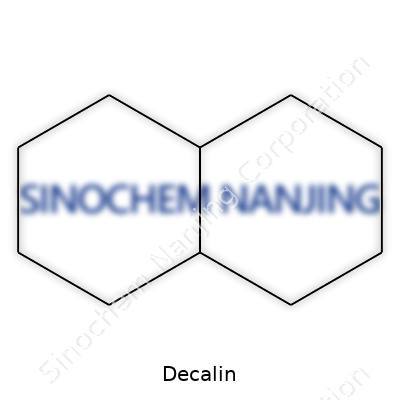
| Names | |
| Preferred IUPAC name | bicyclo[4.4.0]decane |
| Other names |
Cis-decahydronaphthalene Trans-decahydronaphthalene Perhydronaphthalene Decahydronaphthalene |
| Pronunciation | /ˈdɛk.ə.lɪn/ |
| Identifiers | |
| CAS Number | 91-17-8 |
| Beilstein Reference | 1723780 |
| ChEBI | CHEBI:29011 |
| ChEMBL | CHEMBL14222 |
| ChemSpider | 54604 |
| DrugBank | DB03780 |
| ECHA InfoCard | String: 01a6de55-1db3-43e3-82ba-21aaf34d8abd |
| EC Number | EC 209-777-7 |
| Gmelin Reference | 55043 |
| KEGG | C06538 |
| MeSH | D003662 |
| PubChem CID | 9261 |
| RTECS number | HD4100000 |
| UNII | QTL370VN6T |
| UN number | UN1920 |
| Properties | |
| Chemical formula | C10H18 |
| Molar mass | 138.25 g/mol |
| Appearance | Colorless liquid |
| Odor | Odorless |
| Density | 0.896 g/cm³ |
| Solubility in water | slightly soluble |
| log P | 3.82 |
| Vapor pressure | 1.5 mmHg (20°C) |
| Acidity (pKa) | 15.5 |
| Basicity (pKb) | > 12.85 |
| Magnetic susceptibility (χ) | -7.56E-6 |
| Refractive index (nD) | 1.475–1.480 |
| Viscosity | 2.23 mPa·s (25 °C) |
| Dipole moment | 0.21 D |
| Thermochemistry | |
| Std molar entropy (S⦵298) | 191.0 J·mol⁻¹·K⁻¹ |
| Std enthalpy of formation (ΔfH⦵298) | -279.9 kJ/mol |
| Std enthalpy of combustion (ΔcH⦵298) | -6106 kJ·mol⁻¹ |
| Pharmacology | |
| ATC code | J01FA10 |
| Hazards | |
| GHS labelling | GHS02, GHS07, GHS08 |
| Pictograms | GHS02,GHS07 |
| Signal word | Danger |
| Hazard statements | H226, H304, H315, H336, H411 |
| Precautionary statements | P210, P233, P240, P241, P242, P243, P261, P271, P301+P310, P303+P361+P353, P304+P340, P305+P351+P338, P331, P370+P378, P403+P233, P403+P235, P405, P501 |
| NFPA 704 (fire diamond) | 1-2-0 |
| Flash point | 46°C (115°F) |
| Autoignition temperature | 224 °C |
| Explosive limits | 0.7–6.0% |
| Lethal dose or concentration | LD50 oral rat 5290 mg/kg |
| LD50 (median dose) | LD50 (median dose): 5,290 mg/kg (oral, rat) |
| NIOSH | NIOSH: SE1225000 |
| PEL (Permissible) | 50 ppm |
| REL (Recommended) | 200 ppm |
| IDLH (Immediate danger) | 50 ppm |
| Related compounds | |
| Related compounds |
Naphthalene Tetralin Hydronaphthalenes |



