Cyclopropylmethanol: Unpacking the Past, Present, and Future
Historical Development
The journey of cyclopropylmethanol traces back to a fascinating chapter in organic chemistry that reflects both the creativity and persistence of researchers over the years. This molecule crops up in textbooks, as it throws us into the world of small, strained rings and the chemical possibilities they unlock. Early work in the mid-20th century looked at cyclopropane frameworks, not because they were easy to prepare, but because once you cracked the synthetic challenge, the payoff was immense. Cyclopropylmethanol demanded a toolkit of fresh synthetic tricks; the ring strain alone makes it an interesting test subject. Each step from early investigations to contemporary applications tells a broader story about learning to tame reactive and unusual molecular motifs, pushing both research and industry to wrestle control from nature’s more stable forms.
Product Overview
Cyclopropylmethanol steps into the spotlight thanks to its three-membered ring connected to a primary alcohol group. You wouldn’t find it in your medicine cabinet, but head into a synthetic chemistry lab and you’ll probably spot a bottle on a researcher’s bench, waiting to be converted into something bigger and bolder. Its structure reads simple on paper, yet the high ring strain adds a twist—literally and figuratively. This lets cyclopropylmethanol serve as a neat building block, especially when chemists reach for modern pharmaceuticals or specialty agrochemicals. The balance between reactivity and control makes it a go-to for small-scale innovation rather than mass-market commodities, so it rarely finds itself manufactured by the tanker-load. People tend to work with it in modest amounts, taking advantage of its potential to bridge biological curiosity and industrial ambition.
Physical & Chemical Properties
Cyclopropylmethanol appears as a colorless liquid at room temperature, giving off an odor that’s hard to forget once you’ve caught a whiff in a lab. The boiling point falls low compared to longer-chain alcohols, thanks to the strain in that three-membered ring. Chemically, it brings reactive possibilities common to alcohols—think oxidations, substitutions, and the occasional rearrangement—but that cyclopropyl core resists many of the oil-and-water splits familiar in less rigid frameworks. Water solubility stems from the alcohol group, while the dense, spunky ring resists attack from base or acid unless you really push the limits. This idiosyncratic blend of chemical stubbornness and selective reactivity is what makes cyclopropylmethanol a lab darling: tough where it counts, flexible when nudged the right way.
Technical Specifications & Labeling
Bottles of cyclopropylmethanol sport clear chemical names, hazard statements, and purity values. Purity often hovers above 98% for most purposes, as lower grades risk contaminating sensitive transformations. Labels reflect necessary safety warnings—flammability, acute toxicity, the risk of vapor exposure. Labs tracking best practices will document each batch, noting batch numbers and supplier details, but in the real world researchers spend more time thinking about how to transform it than what’s printed on the barcode.
Preparation Method
The synthesis of cyclopropylmethanol isn’t a topic for casual kitchen science. Early routes made clever use of the Simmons–Smith reaction, coaxing diiodomethane and metallic zinc through a web of steps to close that ring where most molecules would break apart. Research progressed, and now methods rely on well-established ring-forming reactions: halomethyl-cyclopropane starting materials, followed by hydrolysis to bring in the alcohol, deliver higher yields and cleaner products. Each step requires careful control of temperature and pH, not least because the strained ring likes to spring open under harsh conditions. Researchers in the field keep tweaking old recipes, searching for catalytic systems or greener conditions that let them scale up without bringing down the fire alarm.
Chemical Reactions & Modifications
Cyclopropylmethanol acts as more than a shelf-stable curiosity. Its alcohol group gets involved in standard transformations: oxidation to the corresponding aldehyde or carboxylic acid, substitution to swap the hydroxyl for halides, esters, or other groups. The ring itself is less eager to play along, but given strong enough acid or base, it opens up through ring expansion or fragmentation—sometimes useful, sometimes disastrous, depending on the goal. This subtle dance of stability and controlled chaos lies at the core of cyclopropylmethanol’s chemistry. Many of today’s innovative reactions borrow from these foundational reactions, exploring selective functionalization while sidestepping unwanted ring opening. Industrial chemists working on pharmaceuticals or specialty materials are always on the lookout for new ways to tweak this skeleton, hoping for transformations that go quickly, cleanly, and under gentle conditions.
Synonyms & Product Names
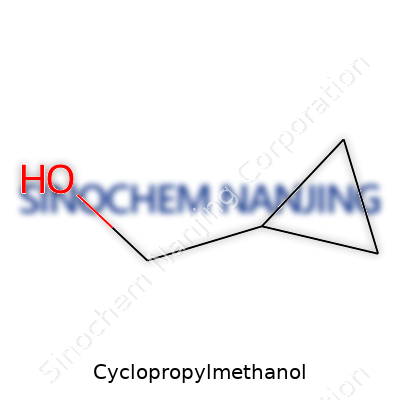
Read enough chemical literature and you’ll notice cyclopropylmethanol moonlights under other names. Sometimes it’s called cyclopropanemethanol; occasionally you’ll see 1-cyclopropyl-1-methanol crop up in older reference books. These synonyms help researchers scour catalogs and patents, but no matter the title, it’s the same basic molecule—three carbons locked in a triangle with a hydroxymethyl group on one corner.
Safety & Operational Standards
Workplace safety deserves more than lip service, especially with energetic molecules like cyclopropylmethanol. Flammability sits at the top of the list—labs handling decent quantities make sure solvents and potential ignition sources stay far apart. Inhalation risks push people toward good ventilation, and personal protective gear like gloves and goggles isn’t negotiable. Skin and eye exposure can sting or worse, with the alcohol group giving entry to systemic circulation under sustained contact. Emergency protocols address both spills and accidental exposure, since the small size and volatility of the compound help it move around in the lab environment. Any institution serious about chemical safety reviews these standards often, creating safe habits rather than one-off inspections.
Application Area
Most outside the chemistry world have little reason to cross paths with cyclopropylmethanol. Scientists involved in the design of pharmaceuticals see it differently. The cyclopropyl motif helps drugs resist metabolic breakdown, sometimes improving how long a treatment lasts in the body. Medicinal chemists build small libraries of analogs using this building block, searching for winning combinations of stability, potency, and safety. Beyond pharma, the fingerprint left by cyclopropylmethanol appears in insecticides and specialty materials, though in these fields it competes with a host of rival molecules offering similar benefits with easier handling. Custom synthesis labs treat it like a Swiss army knife—available when other, more docile alcohols just won’t cut it.
Research & Development
Chemists find real creative freedom with cyclopropylmethanol. Modern research stretches into territory such as asymmetric catalysis, selective functionalization, and the search for eco-friendly synthetic routes. Researchers publish work on new catalysts that selectively modify the alcohol without breaking open the fragile ring. Investment in green chemistry fuels the hunt for lower-waste, higher-yield routes to both cyclopropylmethanol itself and its more complex derivatives. Collaboration across academia and industry speeds up the feedback loop—each challenge tackled in the lab opens avenues for safer, smarter, and more effective transformations in the industrial world. This kind of bench-to-market pipeline reinforces the real-world importance of getting even small molecules right.
Toxicity Research
Exposure studies on cyclopropylmethanol suggest the story parallels that of similar small-chain alcohols, with risks tied to flammability, ingestion, and vapor exposure. Short-term effects range from mild skin or eye irritation up to respiratory discomfort if inhaled in quantity. Chronic toxicity research remains an ongoing concern, particularly where repeated low-level exposure could lead to cumulative organ stress or allergic response. Regulatory agencies set workplace exposure limits and advise on mitigation, yet gaps still exist. More research across cell culture and animal models would help benchmark cyclopropylmethanol’s risk profile against related materials, ensuring the safety margin remains real and not just theoretical.
Future Prospects
The future for cyclopropylmethanol sits at the intersection of careful optimism and technical challenge. The cyclopropyl group, once a curiosity, now earns respect for its ability to tweak the biological activity of drugs and crop protection agents. Research will likely dive deeper into greener, more sustainable routes for both its creation and downstream modification. Growing interest in using strained rings to modulate physical and chemical properties could move cyclopropylmethanol toward a spot in the toolkit for advanced materials, even if those applications feel distant today. The constant churn of discovery, need for safer processes, and demand for molecules that do more with less ensure this once-niche compound keeps earning its place on the chemist’s shelf.
What is Cyclopropylmethanol used for?
What Cyclopropylmethanol Brings to the Lab Bench
Chemists know that small tweaks in a molecule can open new doors. Cyclopropylmethanol, with its three-ringed backbone and a methanol sidearm, holds a special place in organic research and pharmaceutical development. This compound may not grab headlines, but it works quietly behind the scenes, shaping reactions that reach far across science and medicine. Owning to its peculiar ring structure, it gives researchers a tool for exploring how rings influence molecular function, especially in drug design.
A Key Step in Pharmaceutical Synthesis
Many drugs begin life in a glass flask with starting materials like cyclopropylmethanol. Chemists turn to it when they need to add a cyclopropyl group—those three tightly bound carbon atoms—to the backbone of a drug molecule. Cyclopropyl rings can change how a medicine behaves inside the body. In some cases, attaching this group makes a drug more stable, or it can help a medicine slip into its target enzyme more snugly.
One example crops up in antiviral and anti-inflammatory research. Scientists modifying nucleoside analogs—compounds that mimic DNA’s building blocks—often use cyclopropylmethanol as a starting piece. The cyclopropyl group interferes with enzymes that viruses rely on, allowing the compound to derail a virus’s life cycle. There’s ongoing work in cancer research as well, as the cyclopropyl unit sometimes boosts potency against cancer cells by reshaping the way drug candidates fit their molecular targets.
Building Specialty Chemicals and Advanced Materials
Cyclopropylmethanol turns up in the development of specialty chemicals, including agrochemicals. Pesticide designers use features of the cyclopropyl group to target insect nervous systems specifically. There’s value here: by adjusting structure, chemists work toward pesticides that are more effective at low doses, reducing impact on non-target organisms and the broader ecosystem.
The alcohol group in cyclopropylmethanol acts as a convenient handle. Chemists use it to link the cyclopropyl ring to other molecules, setting up reactions that would stumble with bulkier or less stable components. The goal remains the same: build new materials or active agents more efficiently, often with fewer steps and less waste.
Pushing Green Chemistry Forward
The lab world keeps chasing safer, smarter ways to run reactions. Cyclopropylmethanol answers some of those calls. Its compact size means lower solvent use and sometimes fewer hazardous byproducts than alternatives with bigger, more complicated rings. Research is pushing these advantages. By choosing small alcohols like cyclopropylmethanol for ring expansions, oxidations, or substitutions, chemists can streamline workflows. Fewer steps translate to less environmental burden and lower costs, both key pushes in green chemistry.
Challenges and Room for Improvement
No chemical comes without trade-offs. Cyclopropyl rings carry strain, making storage and handling trickier than some open-chain alcohols. Costs run higher for cyclopropylmethanol than for basic alcohols like ethanol or propanol. Here's where the industry faces a call to action: investing in more efficient production routes, exploring biocatalytic pathways, and ensuring safe handling practices for workers. Stronger safety protocols and better training pay off, both for workplace safety and for the reliability of scientific results.
Making Practical Advances
In my time working with research labs, cyclopropylmethanol demanded both respect and curiosity. It often sharpened the focus on the details: how ring strain makes those reactions quick and lively, how one smart choice at the start saves hours down the line. Partners in science—manufacturers, researchers, regulators—stand to benefit from sharing best practices. By moving toward sustainable methods, we protect both workers and the environment while realizing the full potential of clever molecules like cyclopropylmethanol.
What is the chemical formula of Cyclopropylmethanol?
Getting a Handle on the Structure
Chemistry lessons from school stuck with me because they took the mystery out of formulas by connecting them to real shapes and uses. Cyclopropylmethanol holds onto that same hands-on spirit. Its formula, C4H8O, captures a lot about how atoms fit together. You have a cyclopropyl group—a three-carbon ring, tight as a drum—tacked onto a single-carbon methanol chain with an -OH group. This mix gives it qualities that chemists and industrial folks both find useful. I like to picture the structure as something practical: a tight triangle on one end, a sprig of classic alcohol on the other.
Why This Formula Matters in Practice
Putting structure into context, this molecule isn’t just chemical trivia. That compact, three-carbon ring makes it more reactive than your typical open-chain alcohol. This matters for reactions where speed and yield get attention. The formula C4H8O leads to possibilities in drug creation, specialty solvents, and even fragrance development. People behind the bench and the beaker—including graduate students sweating out synthesis steps—care about these details. Mistaking the order of carbons, or missing the ring entirely, throws off both theoretical predictions and real-world results.
The Safety Conversation
Chemicals with compact ring systems, like cyclopropylmethanol, tend to carry a little more punch. Safety data for this compound points to irritation risks if handled carelessly. I remember a research day when a spill of a similar alcohol set off the building’s alarms. Once you recognize the formula, risks stand out more clearly, so gloves, goggles, and steady hands don’t just seem like legal window-dressing. Knowing the difference between cyclopropylmethanol and another four-carbon alcohol isn’t trivia—it decides what’s in your lab’s emergency protocol.
Training and Transparency
One thing I learned teaching undergraduates: asking them to draw and name molecules fixes the formula in mind better than any memorized list. C4H8O doesn’t just pop up off the page for everyone, so reviewing its structure and applications brings relevance. If safety and handling rules stick, mistakes drop. In industry, calling compounds by the right name and formula—stamped on every label—prevents expensive errors and keeps teams in sync across borders and disciplines. Transparency in labeling and education brings real returns, not just peace of mind.
Moving Toward Safer and Smarter Use
Some challenges remain. Disposal and environmental effects need more attention. Organic chemicals, including cyclopropylmethanol, should go through tested waste handling—not poured down drains or tossed with regular trash. On the process side, manufacturers and academic labs work better with clear protocols based on accurate formula and hazard info. Audits and routine training refreshers go a long way. My own experience shows that hands-on walk-throughs of procedures stick much better than endless written rules. By building correct chemical literacy from the formula upward, unpredictable outcomes lose their punch.
Is Cyclopropylmethanol hazardous or toxic?
Understanding the Chemical
Cyclopropylmethanol looks straightforward on a chemical structure chart. Yet the three-membered ring in its backbone makes it anything but a simple alcohol. Many labs use it as an intermediate for pharmaceutical compounds or specialty chemicals, and I have seen it show up on chemical order forms in research settings more than once. With new substances, the question always comes up: does it present a genuine health risk, or will basic lab safety measures cover all the bases?
Physical Dangers That Don’t Always Get Attention
I’ve dealt with plenty of volatile organic compounds, and cyclopropylmethanol definitely stands out. It gives off vapors at room temperature. You catch even the faintest scent, and you know evaporation happens faster than with typical alcohols. Spills aren’t just slippery—they fill the workbench with an invisible risk. Being flammable, it can ignite from something as minor as a static spark. Fire safety becomes absolutely non-negotiable. Fume hoods and tightly sealed storage go hand-in-hand with this compound, since no one wants a tiny accident turning into a warehouse emergency.
Potential Toxic Effects: What Does the Science Say?
Regulations paint cyclopropylmethanol as hazardous—not just a mild skin irritant like ethanol, but something more insidious. Data from animal studies suggest serious consequences from ingesting or inhaling even moderate amounts. Exposure can inflame the respiratory system and has shown liver and kidney impacts in controlled laboratory conditions. People handling it without gloves often report redness and burning on contact, so standard nitrile gloves aren’t optional.
The thing that makes it riskier than many other small alcohols lies in how the human body breaks it down. The cyclopropyl ring isn’t easily handled by standard metabolic enzymes. Unusual metabolic byproducts, according to published toxicology research, can linger and may damage vital organs. Researchers suspect that the stubborn ring doesn’t open easily, resulting in toxic buildup if exposure is repeated.
Acute symptoms—headaches, dizziness, nausea—usually show up after vapor inhalation or skin contact. From my time working with industrial hygienists, rapid onset like that always stirs up concern, since it means workers might not have much warning before feeling the effects. Chronic exposure raises even more flags. Chemical safety officers tend to keep cyclopropylmethanol under lock and key for good reason.
Solutions and Practical Steps
Keeping risk in check takes more than reading the material safety data sheet. Facilities can install local exhaust ventilation where the chemical sees regular use. I’ve seen well-organized labs run drills to handle spills and fires because insurance demands it, but also because one oversight puts everyone in danger. Chemical-resistant gloves, face shields, and lab coats offer personal protection, but only if worn every time.
Early education plays a big role, too. Before I ever uncapped a bottle of cyclopropylmethanol, an older supervisor walked me through every possible scenario, from eye splashes to storage mistakes. That hands-on training stuck with me longer than any written policy. Anyone working with this compound has to treat it with the same seriousness as more infamous lab chemicals. Proper labeling, locked cabinets, and immediate cleanup for spills make a real difference.
Disposal is yet another concern. Direct pouring down the drain means risking consequences, both for wastewater and anyone who works on plumbing downstream. Professional chemical waste services should take custody of any remnants or solutions.
Why Respecting Cyclopropylmethanol Matters
Safety lapses rarely announce themselves in advance, and cyclopropylmethanol isn’t forgiving. Balancing the promise of new research with the real risks makes it essential to stay informed. In my experience, respect and strict discipline with hazardous chemicals never slows progress—it makes true innovation possible.
What are safe storage conditions for Cyclopropylmethanol?
Why People Should Care About Chemical Storage
Most folks don't think twice about how labs or warehouses keep chemicals safe. But it's more than just tidiness or checking off a regulatory box. Cyclopropylmethanol, a liquid with a low flash point and some fire risk, gives solid reasons to stay vigilant. One time early in my chemistry career, a storage mishap turned a peaceful afternoon into an evacuation drill. A cracked container, leaking unknown fumes, convinced me that safe storage isn’t just a rule – it’s a lifesaver.
The Risks With Cyclopropylmethanol
This colorless liquid burns pretty easily, and its vapors may irritate the airways. Containers left in warm, sunlight-filled spots can build dangerous pressure. In labs where flammable vapors linger, sparks or open flames spell trouble fast. Cyclopropylmethanol itself smells sharp and can escape poorly sealed bottles. Even a minor spill can spread fumes through a workspace, and that’s not the sort of thing anyone wants.
What Safe Storage Looks Like
Experience shows the basics matter most. Flammables like cyclopropylmethanol deserve a proper flammable safety cabinet. Forget regular wooden shelves or anywhere near a heat source. Metal cabinets with strong self-closing doors help limit exposure if something goes wrong. Keeping containers sealed right after use stops vapor leaks and keeps air in the storage area cleaner.
Temperature builds up fast in closed rooms, especially behind windows. Storing cyclopropylmethanol somewhere cool and shaded keeps vapor pressure down. It really pays off in the summer. I once watched a colleague open a bottle too quickly from a warm shelf—spray hissed out and left him coughing. The label’s not kidding about "store under 25°C."
Careful labeling and date checks matter, too. Expired cyclopropylmethanol breaks down, and who knows how unpredictable old chemicals could act? Good practice goes beyond tidy shelves. A written log—who took what, when, and why—ensures nobody’s guessing what’s on hand or how old it is.
Building Safer Habits
Shifting workplace culture takes more than a list of storage rules. Anyone working with cyclopropylmethanol should get hands-on training, not just a safety poster on the door. I remember a mentor insisting everyone hold mock drills before we handled anything flammable. After the first real scare, every team member saw why it mattered. Those drills helped us react faster and stopped countless minor spills from turning into disasters.
Spill kits and fire extinguishers belong close to storage areas. It may seem like overkill—until that single time someone drops a bottle, and foam extinguishers save both people and property. Routine storage checks help catch dents, leaks, or rusty caps before trouble brews.
Cyclopropylmethanol highlights a bigger lesson: good chemical storage grows from daily habits, not compliance checklists. Seeing coworkers take safety seriously raises the bar for everyone. Setting up safe, well-labeled, cool storage supports everyone coming home healthy. The difference between a safe shift and a disaster comes down to paying attention to these everyday details.
What are the physical properties of Cyclopropylmethanol?
Getting Acquainted with Cyclopropylmethanol
Cyclopropylmethanol steps onto the scene as a small molecule with one of those ring systems chemists love to test in the lab. With a formula of C4H8O, it brings together a three-carbon cyclopropane ring linked to a methanol group. Unlike straight-chain alcohols, its bent structure changes how it behaves in a flask or a bottle, influencing everything from its boiling point to its solubility.
Appearance and Odor
You won’t find Cyclopropylmethanol drawing attention in a lineup of chemicals. The liquid looks clear and colorless, with an aroma that’s subtle but tinged with that familiar bite that comes with small alcohols. In my own runs in the lab, handling this material feels much like dealing with ethanol or isopropanol, just with the extra curiosity sparked by its uncommon ring structure.
Melting and Boiling Points
Cyclopropylmethanol melts at temperatures just below the freezing point of water. To be more specific, the number lands near -88°C. Its boiling point, on the other hand, hovers around 117°C, putting it in the same neighborhood as propanol. The ring system tugs the boiling point a bit higher than expected for an alcohol with four carbons, thanks to the strain and compactness locking the atoms tightly together. This altered volatility means storage needs some attention. Those working with Cyclopropylmethanol know that it won’t evaporate as easily as diethyl ether but also shouldn’t be left uncapped on a benchtop.
Density and Solubility
The density of Cyclopropylmethanol comes out slightly lighter than water, close to 0.96 g/cm3 at 25°C. Its cyclopropane ring doesn’t stop it from dissolving in water; the alcohol group pulls plenty of weight, so the molecule mixes freely with water, methanol, and many organic solvents. In applied work—from synthetic routes to analytical experiments—this solubility often matters more than chemical curiosity. If you’re prepping a solution or running a reaction, you can count on Cyclopropylmethanol to dissolve without drama.
Viscosity and Surface Tension
Cyclopropylmethanol pours easily, showing a viscosity not far above that of water. There’s no syrupy drag, even at room temperature. Small molecules like this often keep things flowing smoothly. Surface tension sits close to other small alcohols, so one drop spreads out quickly on glass or metal.
Stability and Reactivity
Handling Cyclopropylmethanol, safety goggles are a must. Alcohol groups can form peroxides after long exposure to air, and cyclopropane rings pack a lot of tension. In day-to-day lab use, this tension generally stays locked up, but strong acids, bases, or heat can sometimes pop the ring open, making for unexpected byproducts. Avoiding long storage times and keeping samples capped helps keep it reliable for the next run.
Practical Considerations
Cyclopropylmethanol’s set of properties—low boiling point, high water solubility, and easy pourability—shape its use in research and industry. Specialized synthesis sometimes calls for its unique structure, but its volatility and tendency to form peroxides make careful storage critical. The substance won’t draw unnecessary attention in a chemical storeroom, but its small cyclopropane ring keeps it interesting for anyone looking to build novel organic molecules.
| Names | |
| Preferred IUPAC name | Cyclopropylmethanol |
| Other names |
Hydroxymethylcyclopropane Cyclopropylcarbinol |
| Pronunciation | /saɪ.kloʊˌproʊ.pɪlˈmɛθ.ə.nɒl/ |
| Identifiers | |
| CAS Number | 2516-33-8 |
| Beilstein Reference | 77052 |
| ChEBI | CHEBI:51941 |
| ChEMBL | CHEMBL510358 |
| ChemSpider | 14344 |
| DrugBank | DB04241 |
| ECHA InfoCard | 100.061.272 |
| EC Number | 202-506-8 |
| Gmelin Reference | 7540 |
| KEGG | C02452 |
| MeSH | D003458 |
| PubChem CID | 75141 |
| RTECS number | GV7875000 |
| UNII | 32R02D312R |
| UN number | UN2366 |
| Properties | |
| Chemical formula | C4H8O |
| Molar mass | **86.13 g/mol** |
| Appearance | Colorless liquid |
| Odor | Sweet |
| Density | 0.963 g/mL |
| Solubility in water | miscible |
| log P | 0.35 |
| Vapor pressure | 0.8 mmHg (20 °C) |
| Acidity (pKa) | 15.5 |
| Basicity (pKb) | 15.53 |
| Magnetic susceptibility (χ) | -63.3·10⁻⁶ cm³/mol |
| Refractive index (nD) | 1.418 |
| Viscosity | 0.865 cP (20 °C) |
| Dipole moment | 1.7007 D |
| Thermochemistry | |
| Std molar entropy (S⦵298) | 322.6 J·mol⁻¹·K⁻¹ |
| Std enthalpy of formation (ΔfH⦵298) | -107.0 kJ/mol |
| Std enthalpy of combustion (ΔcH⦵298) | -2041 kJ·mol⁻¹ |
| Hazards | |
| GHS labelling | GHS02, GHS07 |
| Pictograms | GHS02,GHS07 |
| Signal word | Danger |
| Hazard statements | H226, H302, H312, H315, H319, H332 |
| Precautionary statements | P210, P233, P240, P241, P242, P243, P261, P264, P271, P280, P303+P361+P353, P304+P340, P305+P351+P338, P312, P337+P313, P370+P378, P403+P235, P501 |
| NFPA 704 (fire diamond) | 1-3-0 |
| Flash point | 39 °C |
| Autoignition temperature | 215 °C |
| Explosive limits | 3.6–15.5% |
| Lethal dose or concentration | LD50 (oral, rat): 800 mg/kg |
| LD50 (median dose) | LD50 (median dose): Oral rat 320 mg/kg |
| NIOSH | GNF |
| PEL (Permissible) | PEL for Cyclopropylmethanol: Not established |
| REL (Recommended) | 100 mg/L |
| IDLH (Immediate danger) | IDLH: Not established |
| Related compounds | |
| Related compounds |
Methallyl alcohol Crotyl alcohol Benzyl alcohol |



