Cyclopentanol: More Than Just a Simple Alcohol
A Look Back: The Path to Cyclopentanol
Chemists in the early twentieth century labored over methods for producing cyclopentanol, chasing pure samples to support everything from synthetic rubber to flavor compounds. Interest picked up around the 1930s as researchers searched for versatile building blocks. Over time, processes improved, yield grew, and cyclopentanol shifted from a laboratory curiosity to a commercial chemical with real-world roles. Today, the story of cyclopentanol’s rise underscores the way industrial chemistry responds to the world’s shifting demands; from fuel shortages and wartime rationing to booms in synthetic polymers, chemists found value in this overlooked five-membered ring.
Getting Acquainted: What Cyclopentanol Offers
Cyclopentanol looks like a clear, colorless liquid, with a faint odor hovering somewhere between alcohol and a soft, sweet scent. Its molecular formula, C5H10O, leaves plenty of room for derivatization and custom application. In my experience, this compound marks a crossroads between straightforward alcohols like ethanol and more complex structures used in specialty synthesis. Labs rely on its high purity and reliable physical traits, such as its melting point near 30°C, which makes it interesting to handle—a solid in a cool room, a liquid in your hand. Its boiling point, sitting close to 141°C, opens the door for distillation and purification steps that drive home just how practical this substance can be.
The Underlying Science: Properties and Specifications
Looking at cyclopentanol’s chemical properties, the cyclopentane ring offers good stability, while the hydroxyl group makes it reactive enough for varied chemistry. The hydroxyl makes it polar and mixable in water and ethanol, yet it maintains enough nonpolarity for compatibility with organic phases. Densities hover close to 0.95 g/cm³, and standard technical grades usually offer high purity, though contaminants like cyclopentanone or trace water can pop up if storage gets sloppy. Product labeling needs to detail purity, main contaminants, and handling requirements for buyers looking to do reliable science or manufacture quality goods. The label isn’t just policing—any unnoticed impurity risks snowballing into bigger headaches during downstream applications.
How It’s Made: Preparation and Beyond
Cyclopentanol gets produced on scale most commonly by hydrogenating cyclopentanone using nickel or other transition metal catalysts. Trickier lab routes pop up in textbooks, but the industrial approach values reliability and cost effectiveness. Some older organics texts detail other syntheses, including the hydration of cyclopentene. Modern plants optimize hydrogenation, keeping an eye on catalyst life and minimizing waste, as environmental restrictions on emissions and resource use draw more attention each year. My time in industry taught me that small improvements in these steps—higher recycling rates, lower catalyst loss—add up over years and make a serious impact on profitability and safety, while also reducing headaches with regulators.
The Chemistry Toolbox: Reactions and Customization
Cyclopentanol serves as a starting material in many transformations. Oxidizing it delivers cyclopentanone, a solvent and precursor to agrochemicals, fragrances, and more. Esterification with carboxylic acids leads to cyclopentyl esters, found in perfumes or specialty solvents. By deploying substitution or ring-opening reactions, chemists build up more complex molecules that underpin pharmaceutical and agrochemical pipelines. The reliable reactivity of the hydroxyl group simplifies planning, because the chemistry follows classic patterns—just as it does in better-known alcohols. Researchers with experience in functional group manipulation can take cyclopentanol in dozens of directions without expensive or exotic reagents.
What’s in a Name: Synonyms and Identifiers
Cyclopentanol sometimes hides behind alternative names: hydroxymethylcyclobutane shows up in the literature, though that’s less common; 1-cyclopentanol is the more systematic label, while chemists in Europe may call it cyclopentan-1-ol. These synonyms can lead to mix-ups in cross-disciplinary research, so a quick double check on CAS numbers and supplier technical sheets saves time and confusion down the line. Standard identifiers offer consistency for ordering and regulatory compliance, but for the working chemist, the ring structure and functional group offer the real clues to behavior and risk.
Keeping It Safe: Doing Things by the Book
Cyclopentanol doesn’t jump out as a major hazard, but that doesn’t give anyone a pass on good practice. The liquid shows moderate toxicity if swallowed and can irritate skin and eyes, so gloves and goggles matter. In a warm lab, the vapors can accumulate, so a working fume hood keeps headaches and light-headedness out of the equation. Flammability deserves attention: any alcohol with a low flash point, like cyclopentanol, will catch fire if a mistake is made. From my own lab time, a slip with an unsealed bottle—combined with a nearby Bunsen burner—reinforces the lesson that basic chemical hygiene is a daily job, not a one-time box to check off.
Why Bother: Where Cyclopentanol Ends Up
The footprint of cyclopentanol spreads across diverse sectors. Fragrance makers draw on its mild, woody scent to round off perfume notes without overwhelming the nose. Polymer chemists combine it with acrylic or methacrylic derivatives to tune plasticizers or resins. Pharmaceutical R&D picks up cyclopentanol as an intermediate, building toward more complex, bioactive targets. Coatings, adhesives, and even specialty solvents depend on its combination of polarity and volatility to achieve specific technical outcomes. In agricultural chemistry, its derivatives find their way into pesticides or herbicide formulations, providing a critical link between basic feedstocks and active ingredients. The unassuming ring holds a web of downstream consequences for products that shape daily experience.
Innovation and Unanswered Questions
There’s still room to grow in the world of cyclopentanol. New catalytic systems for hydrogenation continue to lower costs and cut environmental footprints, making greener production more than just a talking point. Polymer scientists push boundaries by blending cyclopentanol-based compounds into next-generation materials, seeking attributes like greater flexibility, weather resistance, or biodegradability. Synthetic chemists investigate new ways to tweak the cyclopentane ring, searching for leads in drug discovery or materials science. It’s a lively field for those who enjoy the mix of hands-on lab work and the big-picture goal of cleaner, better-functioning chemicals.
The Other Side: Hazards and Toxicity
Safety data paint a measured picture. Cyclopentanol absorbs through the skin, causes moderate eye and respiratory irritation, and higher doses depress the central nervous system. Long-term data on carcinogenicity or chronic toxicity are limited, but prudent handling and tight engineering controls keep exposure below workplace limits. Disposal by incineration or special waste management makes sense, so it doesn’t end up in local water. Updates in occupational health recommend shorter exposures and stricter air monitoring, especially as understanding of long-term, low-level exposure evolves. In my experience, a repeat review of hazardous substance training keeps the entire team safer and more aware of the unexpected.
The Road Ahead: What Could Be Next?
The growing focus on sustainable chemistry hints at new roles for cyclopentanol in the future. Renewable feedstocks might replace traditional petrochemical starting points, as the drive for low-carbon production picks up pace. Biotechnologists explore fermentation routes that could deliver cyclopentanol from plant-based sugars, offering drop-in replacements with a smaller environmental record. Research partnerships between universities and chemical manufacturers continue to chase safer, cleaner, and more efficient production pathways. As pressure grows to limit environmental impact, cyclopentanol’s mix of versatility, moderate toxicity, and proven track record may help carve out even better applications in coming years.
What is Cyclopentanol used for?
Real-World Uses of Cyclopentanol
Cyclopentanol doesn’t turn many heads outside of a chemistry classroom, but it finds its way into some quieter corners of industry and manufacturing. This five-carbon alcohol carries a sweet, camphor-like scent that hints at its role in the world of fragrance creation. Long before it lands in anything you’d recognize, it typically comes out of a chemical process involving cyclopentene and a bit of catalytic trickery.
Out on the production floor, cyclopentanol earns its keep as a building block. Companies rely on it to produce cyclopentanone, a compound with a reputation among flavorists and perfumers. Cyclopentanone opens up doors into a world of synthetic musks, especially those targeting that clean "soapy" note found in many detergents and beauty products. A whiff of those subtle undertones in cleaning supplies owes something to the chemistry that starts with cyclopentanol.
Manufacturing and Materials
Most of the demand for cyclopentanol ties back to its ability to react in predictable, reliable ways. Take rubber manufacturing, for example. Manufacturers use cyclopentanol derivatives to drive vulcanization or fine-tuning elastic properties. The tire and industrial rubber sectors keep an eye out for better chemical agents, and cyclopentanol often finds a place in research for improved formulations that handle heat, pressure, or aging.
Industrial coatings and adhesives also draw on the features of cyclopentanol. Specialty resins made from this compound can offer a tweak in durability, flexibility, or even weather resistance in products like paints or sealants. My own time shadowing at a small manufacturer taught me how little changes in chemical makeup often lead to products surviving real-world abuse—from baking sun to automotive oil. Every resin or glue on a shelf has a team behind it searching for just a bit more reliability, and cyclopentanol’s reactivity comes into play.
Pharmaceutical and Research Applications
Scientists need molecules with unusual backbones to build new drugs, and cyclopentanol delivers. Its five-membered ring is a handy tool in organic synthesis, which can lead to intermediate compounds for pharmaceuticals. Each synthetic pathway researchers follow depends on ready access to stable, affordable starting materials. The reliability of cyclopentanol lends to high yields and repeatable results—something critical when moving from experiment to large-scale medicine manufacturing.
In labs, cyclopentanol works as a solvent or reagent. Its chemical structure makes it valuable for experimentation where the reaction environment matters almost as much as the starting components. Lab techs often prefer it because it boasts less toxicity than many of its chemical cousins, which makes routine handling safer.
The Safety Question and Industry Responsibility
Cyclopentanol isn’t something you’ll find under your kitchen sink. Handling and storage demand respect due to its flammability and the risks it poses with rough exposure. Plant workers and chemists follow clear safety protocols, including careful ventilation and protective clothing. Growing up in a town that housed its share of chemical warehouses, I watched companies change after stricter occupational safety rules started hitting headlines. Accidents involving flammable chemicals often lead to long-term regulations and better practices.
Sustainability continues to shape the future for chemicals like cyclopentanol. More companies investigate how they can reduce environmental impact, seeking out greener pathways for producing and disposing of industrial alcohols. Focusing on better containment, smarter recycling, and transparency remains key to maintaining both public trust and regulatory compliance. Every advance in process efficiency, recycling, or biobased alternatives helps shrink the carbon footprint for these chemicals.
What are the safety precautions when handling Cyclopentanol?
Why Cyclopentanol Isn’t Just Another Lab Chemical
Cyclopentanol has a sweet, slightly sharp scent and shows up in chemical syntheses, fragrance blends, and research work. Looking at its clear, oily liquid and manageable boiling point, some might think it’s a low-risk substance. I learned early in my lab days that overlooking small molecules can bite back. Cyclopentanol proves the point, since it can irritate skin, eyes, and lungs, and vapors packed into an enclosed spot make for a cocktail that no one wants to breathe. Anyone calling the shots in a lab should treat this chemical with a respect based on fact, not habit.
Basic Precautions People Should Actually Use
Safety goggles shouldn’t spend their life collecting dust. Cyclopentanol splashes leave eyes stinging and blurred, so wrapping up behind ANSI-approved safety glasses pays off every time. Thin gloves don’t cut it. Nitrile or neoprene choices form a proper barrier, and I once saw a pair of cheap latex gloves dissolve mid-experiment from solvents like this. A sturdy coat and covered skin keep small spills from soaking in. Open shoes and short sleeves have no business around this compound.
Nobody controls outgassing or accidental splashes with an office fan. Fume hoods keep vapors and droplets out of your lungs. I worked with someone who learned this the hard way—no hood, all windows closed, and a persistent cough that hung around for days. Always check your hood before pouring, pipetting, or even opening a fresh bottle.
Storing This Stuff Right Matters
Leaving Cyclopentanol on a crowded shelf opens up risks you just don’t see until they strike. The bottle belongs in a flammables cabinet, clearly labeled, with tight-fitting caps. This chemical won’t explode on its own, but if it leaks near heat or ignition sources, you’re asking for trouble. The fire risk comes up every year in basic safety training, and for good reason. Room temperature works; refrigeration in a spark-proof fridge is better in busy labs.
Accidents and Spills—Learning from Close Calls
Not every lab spill makes the news, but even a teaspoon of Cyclopentanol on concrete stinks up the place and creates a slipping hazard. Absorbent pads or sand pick it up fast. Lab mates wearing basic rubber gloves usually hurt themselves by skimping on cleanup. Disposal requires a proper chemical waste container, sealed and marked for pickup.
For skin contact, get to a faucet and wash plenty. Eye splashes mean heading to the eyewash and flushing nonstop for at least fifteen minutes. I once stood next to a student in that bind—15 minutes feels like a lifetime but can keep vision intact. Inhalation trouble means stepping outside for fresh air and adult supervision, since dizziness or headache might mean the dose was bigger than you think.
Realistic Solutions and Best Practices
Safety isn’t about fancy signs or abstract rules. It’s about forming habits: checking PPE before every use, working with chemicals only in ventilated spaces, labeling and tracking your stores, and knowing the spill kit by heart. Investing in proper gloves, replacing goggles when scratched, and doing the boring safety walk-throughs before starting up pays back in avoided incidents. Never feel embarrassed to ask for a safety refresher, and make those around you accountable too. Everyone has stories of shortcuts gone wrong—learning from them, not repeating them, keeps Cyclopentanol just a tool, not a hazard.
What is the chemical formula of Cyclopentanol?
Digging Deep into Cyclopentanol
Chemicals do a strange thing — they come with names and stories, not just formulas. Cyclopentanol, for example, might sound like a tongue-twister, but its formula is straight to the point: C5H10O. It’s a simple alcohol sitting on a five-membered ring of carbon, made unique by its tight little circle and a single oxygen tucked in as a functional group. In labs and industrial plants, this structure shapes how it reacts and where it finds use.
Why Should We Care About C5H10O?
Most folks never pause to wonder about molecules like cyclopentanol. Maybe that’s fine — until you realize that the background actors in chemistry open up the stage for everything from medicines to fresh-smelling products. The single oxygen in this ring brings a layer of reactivity, unlike its close cousin, cyclopentane, which contains only hydrogen and carbon. This alcohol group gives it its distinct personality: more soluble in water than you’d expect from a ring, with a higher boiling point. In the world of organic chemistry, these little details set the rules for how substances interact or break down.
Touchpoints in Industry and Everyday Life
Chemists lean on cyclopentanol not just for its direct uses, but also for what it can turn into. You can turn it into cyclopentanone by gentle oxidation, or use it as a building block for fragrances and pharmaceuticals. I’ve watched researchers get excited about how minor tweaks on rings like these lead to new drugs or smart materials. C5H10O isn’t found on grocery shelves but its influence sneaks into products in surprising ways — masking odors or acting as a solvent behind the scenes.
Health and Environmental Concerns
No one sits at a bar and orders a shot of cyclopentanol. There’s a reason for that — it can be toxic at moderate doses, like so many industrial chemicals. Breathing it in or getting it on your skin isn’t great news. Everyday workers in chemical plants should get protection and training, not only because regulations say so, but because accidents leave lasting marks. Proper storage and labeling matter — just a bit missing or spilled can cause headaches, respiratory problems, or worse.
From my experience teaching chemistry to undergraduates, it’s eye-opening for students to see how molecules that look simple on paper can have outsized impacts.
Moving Toward Safer Practices
Any plant dealing with cyclopentanol faces a choice: quick shortcuts or thoughtful safety routines. Training employees, using fume hoods, and providing decent gloves mean fewer accidents and better long-term health. Following disposal regulations keeps this alcohol out of waterways, where it can hurt aquatic life. It’s not just about one plant or one worker — small efforts compound. Clear protocols and access to accurate chemical data go a long way.
Fact-Driven Solutions
Every time industry works with chemicals like C5H10O, transparent reporting gives everyone — workers, local residents, regulators — a fighting chance to spot problems early. Safety data sheets written in everyday language, open training sessions, and active community engagement keep incidents from turning into disasters. Progress often means fewer shortcuts and more open conversations about risk.
What is the storage condition for Cyclopentanol?
The Realities of Storing Cyclopentanol
A lot of lab workers and plant managers see Cyclopentanol as just another chemical with rules pasted on the drum, but the details matter. Cyclopentanol gives off a mild odor, shows off its volatility, and reacts if left ignored. It counts as a Class 3 flammable liquid, according to internationally recognized GHS standards. This means it catches fire quickly, even at ordinary room temperatures. From my own time in industrial environments, it is always safest to treat every bottle like it’s waiting for a spark.
Where and How to Keep It
Every storage spot for Cyclopentanol really should be dry and cool, far away from any heat source or open flame. I’ve worked in a research lab where carelessness with storage temperature led to evaporation losses—the smell alone gives it away. Flammable storage cabinets, grounded and with good ventilation, help keep vapors contained so they do not sneak up on anyone working nearby. Large quantities should never stay in workrooms; they belong in dedicated chemical storage areas, away from oxidizers, acids, and strong bases. Cyclopentanol vapor can form explosive mixtures with air, so a closed, tightly sealed container is the basic line of defense.
Cyclopentanol’s flash point hovers around 42°C (107°F), far below the summer heat inside a sunbaked warehouse. On days like those, I’ve seen cooling fans bring down the risk but never remove it entirely. The right answer, always, comes from keeping temperatures below that flash point, making common spaces safer for everyone. Humidity brings its own problems, sometimes corroding caps or leaking into the drum if seals wear thin. Silica gel packs or simple humidity control help a lot, especially in older buildings.
Why Labeling and Inventory Are Not Just Paperwork
Sloppy labeling creates accidents. Cyclopentanol looks a lot like a host of other clear liquids on a shelf. A bold label, the date received and the hazard diamond keep confusion out of the picture. Trust doesn’t work with chemicals—audits do. Every month, a quick count and a look for bad seals prevents both loss of product and legal headaches. I once caught a drum with a hairline crack during a slow walk through the storage bay, and only a routine check caught it before it leaked on the floor.
What to Do in Case of Spills or Leaks
Spills can happen, and quick action matters. Absorbent pads, gloves, goggles, and a well-practiced crew keep minor problems small. Cyclopentanol’s vapors hit hard if they build up, irritating eyes and skin and causing headaches. For anyone handling cleanup, fresh air, reliable gear, and proper training make a world of difference. That personal experience sticks with me; the safest storeroom is one where everyone feels ready for the small stuff before it ever becomes an emergency. Getting rid of waste through approved channels, never down a drain, respects both the team and the law.
Taking Responsibility, Keeping Everyone Safe
Making storage safer starts with understanding not just chemical data sheets, but the realities of everyday work. Reliable ventilation, spill control materials in easy reach, and regular training sessions all work together. Each step taken reflects respect—both for the health of workers and the trust placed in whoever runs the storeroom. In the end, Cyclopentanol is just another chemical, but safe storage takes real expertise, constant vigilance, and a willingness to speak up anytime a corner gets cut.
Is Cyclopentanol toxic or hazardous to health?
The Real Risks with Cyclopentanol
Cyclopentanol doesn’t usually grab headlines, but anyone who works around chemicals, whether in a lab, factory, or classroom, comes across names like this. Cyclopentanol is a colorless liquid with a mild smell, used mostly as an industrial solvent or in chemical synthesis. People ask whether it poses a hazard to their health—and that’s a fair question, especially for workers and students who handle it.
Exposure usually happens through breathing in vapors, swallowing small amounts by accident, or spilling some on unprotected skin. My own time in a chemistry lab taught me that most folks underestimate how much vapor a solvent produces, so air quality and skin contact can’t be taken lightly.
Immediate Effects and Long-Term Concerns
If you breathe in cyclopentanol, you’ll probably cough or feel dizzy. Headaches and nausea aren’t rare. Stronger exposure can bring irritation to your nose and throat, and in higher concentrations, it can leave you lightheaded or struggling to think clearly. Workers dealing with solvents every day sometimes get skin rashes or dryness, especially without gloves.
The real concern is what happens when safety goes out the window: swallowing a medium-sized gulp can upset your stomach and, in large doses, press on the nervous system and affect breathing. Luckily, accidental poisonings are rare, but that doesn’t mean it’s safe to cut corners. Not everyone has the same tolerance, and folks with asthma or sensitive skin notice symptoms earlier than others.
Research from the European Chemicals Agency and U.S. National Institute for Occupational Safety and Health classifies cyclopentanol as a substance with moderate acute toxicity. Its vapor isn’t as dangerous as something like acetone or toluene, but lab studies show repeated overexposure stresses organs like the kidneys and liver in animals. Until better human studies become available, it’s smart to assume the same can happen in people.
How to Work with Cyclopentanol Safely
Out in the field and in teaching labs, I’ve found that splash goggles and nitrile gloves are non-negotiable. Solvent-resistant aprons or coats also help—cotton soaks up chemicals a little too well. Ventilation matters most: open windows don’t cut it, so workspaces with chemical hoods make a real difference in keeping air clear.
Every bottle of cyclopentanol comes with a Safety Data Sheet (SDS), which spells out hazards and gives numbers for safe limits in the air. Following those guidelines isn’t just about ticking boxes for regulators. Folks who take short-cuts sometimes skip cleanup or act casual with spills, but even a couple of drops on bare skin can sting after a while. Emptying bottles straight down the drain also puts people lower down the water line at risk, since this chemical can hang around in wastewater. Safe disposal goes hand-in-hand with personal protection.
Teaching new lab staff or students, I stress that questions about label warnings aren’t just for beginners. Everyone forgets details now and then, and a quick double-check prevents mistakes. Using cyclopentanol isn’t about fear—it’s about respect.
Keeping Hazards in Perspective
Chemicals like cyclopentanol have earned their place in labs and industry for good reasons; the risks don’t mean avoidance, just mindfulness. Following simple habits—proper gear, ventilation, careful disposal—cuts danger to almost zero. Evidence supports caution, not panic. Pay attention, stay informed, and chemical work stays safe.
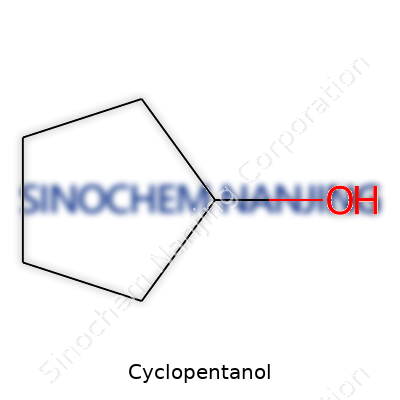
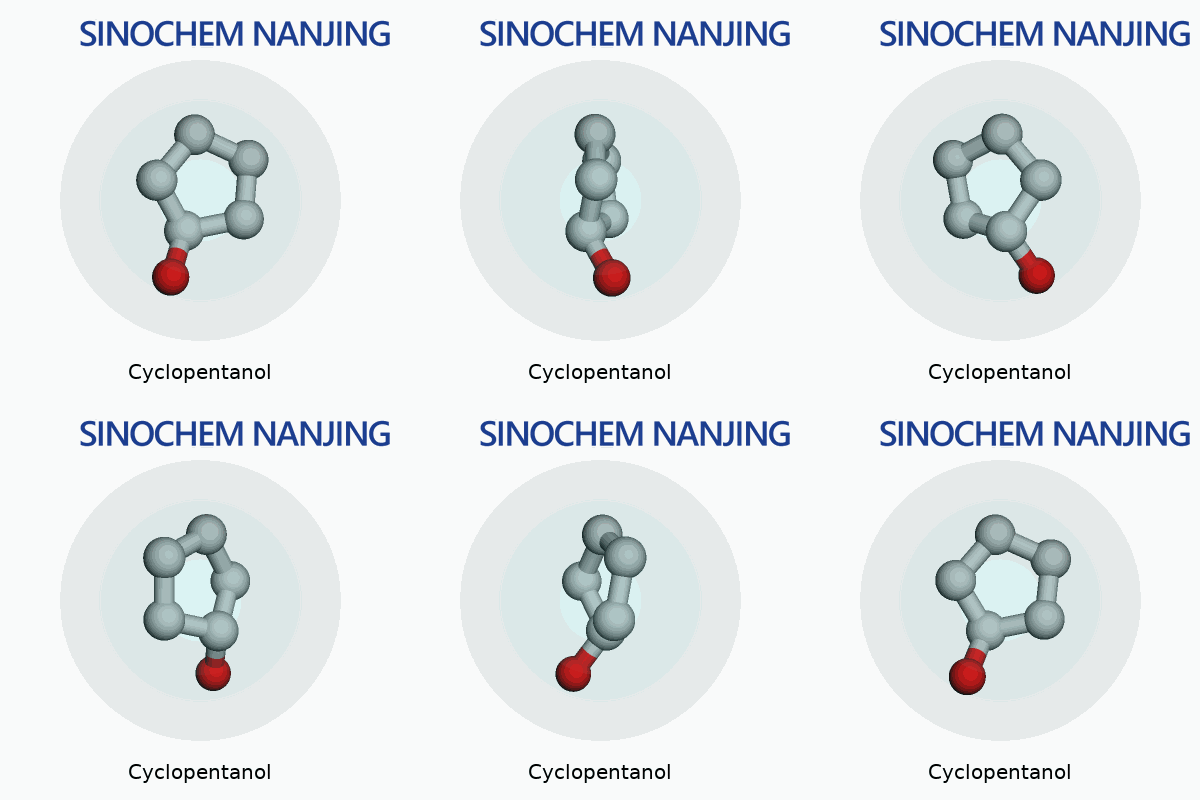
| Names | |
| Preferred IUPAC name | cyclopentan-1-ol |
| Other names |
Cyclopentyl alcohol Cyclic hexanol |
| Pronunciation | /ˌsaɪ.kloʊˈpɛnt.ə.nɒl/ |
| Identifiers | |
| CAS Number | 96-41-3 |
| Beilstein Reference | 1209243 |
| ChEBI | CHEBI:17571 |
| ChEMBL | CHEMBL16324 |
| ChemSpider | 68286 |
| DrugBank | DB03237 |
| ECHA InfoCard | 100.007.617 |
| EC Number | 201-942-9 |
| Gmelin Reference | 60554 |
| KEGG | C02547 |
| MeSH | D003465 |
| PubChem CID | 7997 |
| RTECS number | GV7875000 |
| UNII | F47NCH6P8P |
| UN number | UN2246 |
| Properties | |
| Chemical formula | C5H10O |
| Molar mass | 86.13 g/mol |
| Appearance | Colorless liquid |
| Odor | characteristic odor |
| Density | 0.948 g/mL at 25 °C |
| Solubility in water | miscible |
| log P | 1.23 |
| Vapor pressure | 0.98 mmHg (at 25 °C) |
| Acidity (pKa) | 16.0 |
| Basicity (pKb) | 16.0 |
| Magnetic susceptibility (χ) | -62.5·10⁻⁶ cm³/mol |
| Refractive index (nD) | 1.464 |
| Viscosity | 8.47 mPa·s (at 20 °C) |
| Dipole moment | 2.33 D |
| Thermochemistry | |
| Std molar entropy (S⦵298) | 260.5 J·mol⁻¹·K⁻¹ |
| Std enthalpy of formation (ΔfH⦵298) | -295.6 kJ/mol |
| Std enthalpy of combustion (ΔcH⦵298) | -2959 kJ/mol |
| Hazards | |
| GHS labelling | GHS02, GHS07 |
| Pictograms | GHS02,GHS07 |
| Signal word | Warning |
| Hazard statements | H226, H302, H315, H319 |
| Precautionary statements | P210, P233, P240, P241, P242, P243, P264, P271, P280, P303+P361+P353, P304+P340, P305+P351+P338, P312, P337+P313, P370+P378, P403+P235, P501 |
| NFPA 704 (fire diamond) | 1-2-0 |
| Flash point | 67 °C |
| Autoignition temperature | 300 °C |
| Explosive limits | 1.1–9.5% |
| Lethal dose or concentration | LD50 (oral, rat): 2060 mg/kg |
| LD50 (median dose) | LD50 (median dose): Oral rat 2060 mg/kg |
| NIOSH | GP5950000 |
| PEL (Permissible) | PEL: 50 ppm (parts per million) |
| REL (Recommended) | 5 ppm |
| IDLH (Immediate danger) | 700 ppm |



