Cyclooctene: Evolution, Value, and the Road Ahead
Historical Development
Chemistry moves forward most energetically through problem-solving, and cyclooctene landed on this map thanks to the curiosity and frustration of mid-20th-century scientists. Researchers searching for stable, medium-sized ring structures came across cyclooctene, a molecule with a personality that refuses to behave like its smaller cyclic cousins. Before plane geometry and ring strain had fully been mapped out, chemists had to battle with unpredictable yields and the challenges of scaling up eight-membered rings. Cyclooctene’s earliest syntheses pressed the boundaries of classical organic methodology—headlines back then credited ring closure hurdles as the central challenge. Teams in Europe and America reevaluated catalytic and pyrolytic routes, sometimes thinking outside inherited models. Modern synthesis methods owe much to this early period of stubborn, hands-on experiment, and the expansion of industrial-scale production in the late 1960s was no accident. Demand snowballed as more applications became clear, setting off a wider search for new ring-based molecules in both laboratories and factory floors.
Product Overview
Cyclooctene looks unassuming at first glance, presenting itself as a colorless liquid at room temperature. Yet this unsaturated hydrocarbon, with formula C8H14, packs an energetic double bond within an eight-carbon ring. Its unique structure pushes it out of the same category as cyclohexene or cyclopentene. Unlike small rings, the strain in cyclooctene results in higher reactivity, making it attractive for selective oxidation, metathesis, and cis-based functionalization. On the shelf, cyclooctene does not release strong odors or toxic fumes, giving it a safety edge over many other volatile chemicals. While not flashy, its performance in targeted reactions speaks to its value in research, polymer science, fragrance intermediates, and advanced specialty coatings. Decades of practical use have shown how one molecule can spur innovation across multiple scientific fields.
Physical & Chemical Properties
Chemists see cyclooctene as a compound of balanced contradictions. Its boiling point sits conveniently above room temperature, making for stable handling, yet it evaporates much more slowly compared to lighter cycloalkenes. The liquid’s density and viscosity offer advantages in process control and solvent compatibility. The cis-configuration dominates naturally, providing a platform for sterically driven selectivity in olefin metathesis. Cyclooctene easily undergoes epoxidation, a reaction well-loved for its efficiency in introducing oxygen. The ring, though flexible, stores enough strain to keep the double bond highly reactive, letting scientists steer modifications toward diols, epoxides, or halogenated products. This flexibility has made it a favorite for both small bench reactions and scale-up.
Technical Specifications & Labeling
Industrial bottles of cyclooctene often boast purity levels above 97 percent, with moisture, peroxides, and residual starting materials kept to low ppm. Regulations around accurate labeling direct users to health warnings and storage guidelines. Packages highlight the flammability risk and call for tightly sealed storage away from ignition sources. Out-of-spec material rarely enters the research market. Instead, suppliers respond quickly to purity issues, sometimes working directly with clients to dial in process-specific needs. The evolution of purity standards reflects broader health, safety, and performance expectations from both industrial and academic customers.
Preparation Method
Making cyclooctene in sizable quantities challenges even seasoned chemists. The classic routes rely on elimination reactions or catalytic hydrogenation. One early process starts from cyclooctanol, where strong acids strip away water, yielding cyclooctene through controlled dehydration. Another method makes use of ring-closing metathesis, using ruthenium or molybdenum catalysts. These processes need tightly managed temperatures, careful monitoring of side reactions, and advanced purification techniques like fractional distillation or chromatography. The trend in recent years favors green chemistry-inspired approaches, substituting harsher reagents for milder ones and reclaiming solvents where economically feasible. These efforts speak to a practical reality: chemical production today puts a premium on resource efficiency and reduced environmental impact.
Chemical Reactions & Modifications
Cyclooctene serves as more than a static starting point—it acts as a springboard for tailored molecules. Laboratories often use it to produce cyclooctene oxide through epoxidation, offering a pathway to ring-opening and diverse downstream products. The double bond offers an open target for dihydroxylation, delivering high yields of the corresponding diol. Cyclooctene participates in many organometallic reactions—metathesis, halogenation, or hydroboration. Notably, its ability to undergo living polymerization has propelled the development of specialty materials in both industrial and medical-grade applications. Some reactions, especially those based on environmental catalysis, use cyclooctene as a test substrate, making it indirectly responsible for pushing forward catalyst design as a field.
Synonyms & Product Names
Cyclooctene appears in catalogs under a handful of names, mostly based on its structure or conformation. “1,2,3,4,5,6,7,8-octahydro-1,2-cyclooctene” shows up in older texts, though most manufacturers and chemists stick with “cyclooctene” for clarity’s sake. Its cis-form enjoys wide use, as stereochemistry in this molecule matters to almost every end reaction. When working across languages or regulatory documentation, the CAS number 931-88-4 remains a key piece for clear communication.
Safety & Operational Standards
Safe handling practice in chemistry developed out of hard-won lessons, and cyclooctene benefits from this tradition. Although it's not particularly toxic by inhalation or skin contact, cyclooctene’s combustibility and ability to irritate eyes demand respect in the laboratory. Protective goggles, gloves, and well-ventilated spaces have become non-negotiable parts of daily operations. Containers remain tightly closed to avoid off-gassing, and any spills call for prompt, careful cleanup. Safety data sheets encourage preparation for ignition risks and warn against casual mixing with strong oxidizers or acids. Research groups now routinely train newcomers in these protocols, focusing on mutual responsibility and a culture of vigilance.
Application Area
Cyclooctene’s main claim to fame rests with its role in ring-opening metathesis polymerization, where its balanced strain and clean reactivity help guide the construction of specialty polymers. Performance coatings, elastomers, and adhesives draw directly from these custom materials, offering resilience or flexibility matched to end-user specifications. In academic labs, cyclooctene acts as both a substrate and a test molecule for evaluating catalyst performance, especially in the development of selective oxidation processes. Some producers of fine fragrances and flavorings include cyclooctene derivatives in their ingredient toolkit, where a subtle tweak at the molecular level yields outsized changes in end-product scent or lasting power. Research into biomedical materials also leans on cyclooctene as a way to craft biocompatible surfaces. Its reach continues to expand, shaped by the growing demand for specialized, high-purity building blocks in advanced chemistry.
Research & Development
Scientists recognize cyclooctene as more than a textbook example—it provides a proving ground for new ideas. Innovation in homogenous and heterogeneous catalysis turns to cyclooctene as a standard, trustworthy test for activity and selectivity. Funding agencies and journals have tracked an uptick in research papers focusing on cyclooctene epoxidation or its deployment in green chemical applications. Recent advances probe the interface of cyclooctene with functionalized surfaces, suggesting possible breakthroughs in sensor design or targeted drug delivery. Researchers also study the ring’s inherent strain to understand structure-reactivity relationships, feeding knowledge back into broader questions in organic and polymer chemistry. Collaboration among industrial, governmental, and academic labs reflects the molecule’s broad relevance and ongoing potential.
Toxicity Research
Although cyclooctene has served researchers for decades, data on its chronic health effects remain comparatively limited. Acute studies categorize it as a mild irritant, with headaches or eye discomfort possible after direct, concentrated exposure. Animal studies rarely flag severe risks at standard laboratory concentrations, yet cross-disciplinary review urges continued caution. Toxicologists push for long-term studies, especially as new polymer materials place cyclooctene derivatives in medical devices or consumer products. Some calls for expanded research focus on the breakdown products of cyclooctene under heat or catalytic transformation, arguing that safety assessment should look at the whole chemical life cycle. Regulatory bodies have started to fold these lessons into broader chemical safety reviews, moving steadily toward comprehensive risk assessment.
Future Prospects
For cyclooctene, the next decade looks full of both challenge and opportunity. The push for more sustainable, less hazardous chemistry drives ongoing development of greener synthesis methods and improved catalysis options. Startups and established chemical manufacturers compete to reduce energy consumption and lower waste, using cyclooctene-based processes as test cases for broader production reform. As custom polymers and smart materials edge closer to everyday life, demand for tailored cyclooctene derivatives seems set to keep rising. At the same time, pressure mounts to ensure that new applications don’t come at the expense of worker safety or long-term environmental health. Achieving this balance remains one of the big questions for chemists and policymakers alike—trust built up through transparency, robust safety research, and a willingness to adapt.
What is Cyclooctene used for?
A Closer Look at a Simple-Looking Molecule with Real Impact
Most folks don’t come across cyclooctene unless they’re spending time in a chemistry lab. I’ll admit, the word by itself can sound sterile and a bit mysterious. Under the surface, cyclooctene ends up making a bigger difference in daily life than many realize. Digging into its uses gives us a better picture of why research around this compound doesn’t slow down.
The Backbone of Oxidation Studies
Chemistry classrooms and industrial labs both lean on cyclooctene as a starting point for understanding how oxidation reactions work. The compound’s double bond makes it tough but also catchy for catalysts—think of it as a practice partner for scientists fine-tuning how to add oxygen to things cleanly and safely. Researchers across the globe rely on it for testing new catalysts, especially for reactions that produce epoxides. Strong work in this area helps move green chemistry further along, by revealing new ways to make essential building blocks with fewer toxic byproducts.
Building Epoxides for Bigger Industry Needs
Cyclooctene becomes a springboard for cyclooctene oxide, a compound used as a middle step in making resins, coatings, and adhesives. Cyclooctene oxide brings more flexibility and strength into these materials. Industries working with plastics and specialty coatings value this route—if a garage floor or new product packaging claims to be tougher and longer-lasting, odds are research started with reactions using cyclooctene as the test case.
Growing Polymers with Special Properties
Walk into a sporting goods store or check out high-end bicycle gear and you’ll see plenty of things called “advanced polymers.” Cyclooctene feeds the development of some of these high-performance materials. Researchers focus on using cyclooctene to build long, repeating chains—polymers—that resist heat, can handle rough conditions, and last longer without breaking down. People working in sports, construction, and even medicine benefit when those polymers translate into lighter protective equipment, longer-lasting seals, and safer packaging for medication.
Helping Green Chemistry Goals
Green chemistry matters if we want to keep manufacturing up while cutting back on waste and dangerous byproducts. Cyclooctene serves as a crucial tool for chemists searching for ways to use less energy and safer chemicals in major reactions. Testing new catalysts with cyclooctene gives direct feedback on whether these “greener” processes stand up to real-world demands. More eco-friendly processes often come down to what happens in these test tubes—if cyclooctene delivers reliable results in the lab, factories worldwide can swap risky old formulas for new, safer ones.
Keeping Ethics and Safety in Mind
It’s easy to see a list of uses and overlook the bigger responsibility that comes with any chemical. Cyclooctene, like most industrial chemicals, demands respect in how it’s handled and manufactured. Exposure standards, environmental impact checks, and solid training ground safety in everything from research to transport. Major chemical suppliers meet strict safety standards since both worker health and surrounding communities rely on good stewardship. Transparency from companies and regulatory oversight helps keep things on track, so cyclooctene keeps serving its purpose without leading to unnecessary risks.
Looking Ahead
I see cyclooctene as a prime example of how basic chemical science ends up shaping fields way beyond academia. From cleaner reactions to stronger plastics, its influence keeps growing. Supporting this kind of research—while laying down careful safety rules—pushes industries to be both more effective and responsible. As the need for safer, more sustainable materials grows, what happens with a simple molecule like cyclooctene matters much more than it might seem at first glance.
What is the chemical formula of Cyclooctene?
Chemistry Beyond the Formula
The chemical formula for cyclooctene looks simple on paper: C8H14. One ring, eight carbon atoms forming a cycle, with hydrogen atoms filling in the gaps and a double bond adding character. I’ve come across molecular structures like this in both textbooks and lab reactions, and they show up much more often in real life than you’d expect. That formula, C8H14, packs a story within every bond and shape. Beyond memorization for science class, this structure crops up in plastics, research labs, and even industrial production lines.
A Closer Look at Cyclooctene’s Structure
Cyclooctene doesn’t just have carbons and hydrogens randomly thrown together. Each carbon atom connects to two others, creating a loop. Layer a double bond on top, and you get the “ene” part of the name: unsaturation, or an alkene. This lets cyclooctene behave differently from other hydrocarbons. Engineers and chemists love this sort of arrangement because double bonds offer more pathways for chemical reactions. I remember struggling to draw the correct ring on paper but appreciating how, in a flask, its flexibility allows for real transformations.
Why Chemists Value the Double Bond
Double bonds change everything. They invite addition reactions, open up hydrogenation, and let researchers create new compounds. Pharmaceutical teams use backbone structures like cyclooctene’s to build drug candidates, testing configurations while tweaking functionality. Polymer scientists add cyclooctene to create specialty plastics, making tougher, more flexible materials. If you’ve ever tried to stretch a tough piece of plastic wrap or handled a flexible lab glove, you’ve already touched the results of such chemistry.
A Real-World Connection
The importance of cyclooctene extends past theory. Take olefin metathesis, a process that’s revolutionized how chemists swap parts of molecules. Cyclooctene’s double bond and eight-membered ring make it a go-to starting point for these reactions. The procedure helps simplify production of specialty chemicals, fuels, and novel materials, all of which support industries from clean energy to manufacturing. Modern innovators owe a lot to this C8H14 molecule that quietly boosts production efficiency.
Environmental and Health Considerations
Working with organic rings like cyclooctene requires responsibility. Mishandling can expose lab workers to volatile organic compounds, affecting air quality and health. Regulations guide the use of substances like cyclooctene, and green chemistry pushes for better ways to harness its properties while reducing waste and exposure. In the lab, I’ve always watched for proper ventilation, clean glassware, and correct disposal protocols. These small steps protect people and the environment while letting scientific progress keep rolling.
Supporting Safer, More Effective Chemistry
Tools like cyclooctene help drive breakthroughs, but safe use and thoughtful research practices turn them into a force for good. Continuous education, better lab policies, and investment in sustainable alternatives offer paths forward. These approaches respect both the promise behind that formula—C8H14—and the people making chemistry work for everyone.
Is Cyclooctene hazardous or toxic?
Breaking Down What Cyclooctene Is
Cyclooctene often comes up in labs and chemical factories. This compound, shaped like a ring with a double bond, helps synthesize other chemicals, especially when folks need specialty plastics or certain medicines. Its profile sounds harmless compared to the notorious toxins out there, but that doesn’t mean people should toss caution aside.
Looking At Exposure—What’s Really at Stake?
Plenty of solvents and organic chemicals make their way into workplaces and, sometimes, the wider environment. Cyclooctene on its own doesn’t carry the same concerns as, say, benzene or chloroform. You won’t see it popping up on most “most hazardous” lists from the EPA or WHO. Still, every chemical deserves a hard look, especially when workers handle barrels or open containers daily.
I once worked next to an industrial lab that ran nightly shifts mixing various rings, including cyclooctene. The scent wafted over on humid evenings, which reminded me how chemicals don’t always respect boundaries drawn by walls and doors. Checking data, it turns out cyclooctene vapors irritate the eyes, throat, and breathing passages. Longer exposure in high concentrations causes headaches and, in rarer cases, dizziness. Safety sheets always recommend goggles, gloves and good ventilation for a reason.
How Hazardous Is It, Really?
No story of cyclooctene poisoning has ever made national headlines. Most health records and accident reports show minor irritations, mainly from slips in everyday safety routines. Cyclooctene won’t cause cancer, mess up your DNA, or linger in organs like the worst industry pollutants. If it spills, standard containment and cleanup steps prevent bigger problems.
But a lack of extreme consequences shouldn’t mean workers or handlers shrug it off. The National Institute for Occupational Safety and Health (NIOSH) hasn’t slapped a firm limit or TLV (threshold limit value) on airborne cyclooctene yet, but similar hydrocarbons usually range from 50 to 300 ppm for short-term exposure. Chasing profit or output by skipping masks, open barrels, or poor ventilation will always turn small risks into bigger ones. Lab accidents never announce themselves in advance.
Fire Hazards and Environmental Impact
Like most ring compounds with double bonds, cyclooctene catches fire quickly if there’s an ignition source nearby. Its vapors travel and can flare up in surprising places, much like gasoline does in poorly ventilated garages. Facilities storing it need simple precautions—fire-resistant cabinets, spill kits, and clear safety training. Cyclooctene doesn’t stick around in water or soil for long, but nobody wants contaminated run-off draining from a plant site, even in low doses.
Getting Safer—Solutions That Work
It’s easy to make things safer with common sense habits. Insist on using gloves, splash goggles, and masks even if the risk of acute toxicity feels low. Build good habits for container handling—keep lids tight, use fume hoods, and store barrels away from heat. Safety officers ought to keep up with the latest safety data, update guides, and run regular drills. Transparent communication and access to printed safety info shift knowledge out of dusty binders and into everyday routines.
In a perfect world, new green chemistry alternatives could swap out older chemicals for safer ones, but until that’s the norm across industry, handling cyclooctene responsibly makes all the difference.
What are the storage conditions for Cyclooctene?
Looking After Cyclooctene in Real-World Conditions
Cyclooctene pops up in many synthesis projects. Its double bond supports a pile of organic reactions, from epoxidation to polymer precursors. Plenty of chemistry students see it as just another bottle on a shelf, but Cyclooctene stores a lot of energy in its strained ring. Dry air and good bottles go a long way, though a chemical like this deserves extra respect.
Temperature and Light: Keep It Cool
Cyclooctene in a warm stockroom will eventually disappoint you. Its boiling point hovers around 145°C, yet the real trouble often shows up at room temperature due to slow formation of peroxides and degradation products. In my lab days, we never left these supplies on the benchtop; a closed, well-labeled amber bottle tucked in a refrigerator or at least away from sunlight cuts down the chances of nasty surprises like sticky residues or off-odors. Sunlight can trigger slow, unwanted chemistry. That’s not something you want contaminating your next reaction.
Containers: Simple Choices, Big Differences
Cyclooctene does not usually corrode glass, though it will slowly react if left open to the air. Avoiding contact with metals, especially iron and copper, was a rule in my undergrad work; these can catalyze side reactions and even produce colored impurities over time. This means an airtight glass bottle, capped securely, does the trick. We always wiped down bottles and checked caps for cracks, as vapor penetration isn’t rare after months on a shelf.
Avoiding Oxidation and Spills
The real risk with Cyclooctene lies in air and moisture exposure. Oxygen finds its way into weak seals, eventually leading to peroxides – a class of compounds famous for their danger, even in trace amounts. Storing Cyclooctene under a gentle blanket of nitrogen or argon reduces this risk. Many suppliers ship it in bottles flushed with inert gas for exactly this reason. It’s a simple extra step, but it can save you from headaches or worse. These precautions line up with guidelines from bodies like OSHA and the American Chemical Society.
Fire Hazards and Housekeeping
Fire risks stay top of mind with organic liquids. Cyclooctene flashes at about 23°C. I’ve seen more than a few chemical fires start from poorly stored bottles of flammable solvents. Fire-resistant cabinets make sense for this category. No one wants to play catch-up with a small blaze in a crowded stockroom. Always label bottles clearly with the date received and track shelf life, since older stocks sometimes build up unstable impurities.
Action Steps for Any Lab
It doesn’t take a six-figure chemical plant to get storage right. Secure your Cyclooctene in tightly sealed, labeled glass bottles, keep it cool and out of the light, use an inert gas if practical, and don’t let unknowns pile up. Regular checks, good air control, and an eye for fire risk cut out most problems. That’s how you protect both your results and your team down the hall.
What is the molecular weight of Cyclooctene?
Understanding Cyclooctene: More Than Just Atoms Stuck Together
Chemistry has a way of making simple things seem complicated. Take cyclooctene for example. It looks like a tongue-twister and probably got overlooked in high school labs compared to flashy molecules like caffeine or glucose. Cyclooctene consists of eight carbon atoms arranged in a ring, double bond included, and packs a molecular formula of C8H14. The molecular weight clocks in at 110.19 grams per mole, which sometimes gets rounded to 110.2 depending on the textbooks or the accuracy of your balance.
Textbooks might make molecular weight look like trivia, a detail for nerds, but anyone who’s ever spilled chemicals in a lab knows it matters. If you mess up calculations, you can end up with reactions fizzling out, wasted time, and money down the drain. Students everywhere quickly realize that a difference of a decimal here or there can turn a smooth lab into chaos. Accuracy in calculating molecular weights also keeps large production runs from turning into expensive chemical soup, a lesson manufacturers remember every day.
Why Cyclooctene Stands Out in Organic Reactions
Most folks learning organic chemistry soon find that cyclooctene isn’t just another weird molecule. Its particular ring structure gives it some useful features. Its double bond isn’t buried inside a rigid flat shape like benzene. Instead, cyclooctene keeps a certain flexibility, so in the lab, it reacts with things like bromine or ozone. Knowing the molecular weight helps researchers measure the right amount, especially during synthesis. If you’re working on creating new drugs, advanced coatings, or clever materials, these kinds of details stack up fast. It’s not just about nailing a test—it’s about making sure a new process doesn’t go off track in the real world.
Real Impacts of Getting Molecular Weights Right
Working in a research group a few years back, measuring out cyclooctene got routine. One tech down the bench loved estimating, skipping the calculator when it seemed “close enough.” Everyone’s experiments turned out fine except his—yields tanked. The professor finally traced the issue to overlooked decimal places. It’s easy to laugh about after the fact, but a mistake scaling up from grams to kilograms can mean real waste. In industrial settings, millions are at stake—not just grades or minor costs.
Pharmaceutical plants and chemical plants stress this point. Automated systems depend on precise molecular weights to calculate flows, ingredient ratios, and purity levels. Even environmental regulations factor these numbers in, since safety data for storage and transport use molecular weights to work out the risk profiles and containment requirements. It’s all interconnected, right down to those digits after the decimal point.
Staying Accurate and Avoiding Labs Gone Wrong
Lots of students would like to hack together their calculations, but the pros know to check and double-check figures. Reputable sources such as the CRC Handbook or PubChem keep these reference numbers accessible. Sure, the difference between 110.1 and 110.19 grams per mole seems small on paper, but practical science shows those decimals are decisive.
In daily life, we trust that the products we use come from reliable numbers. Paints, plastics, and even medications rely on these chemical calculations behind the scenes. Knowing the right molecular weight isn’t just about science—it's about making sure small mistakes don’t snowball into bigger problems later down the line. That’s why digging a little deeper into the numbers, especially for something like cyclooctene, goes way beyond a textbook answer.
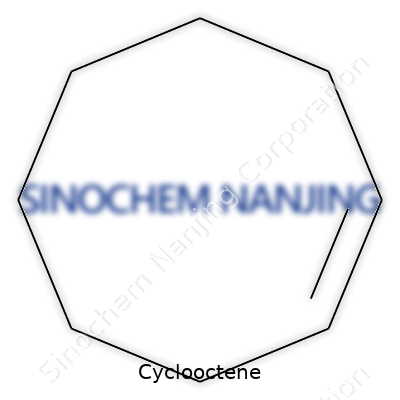
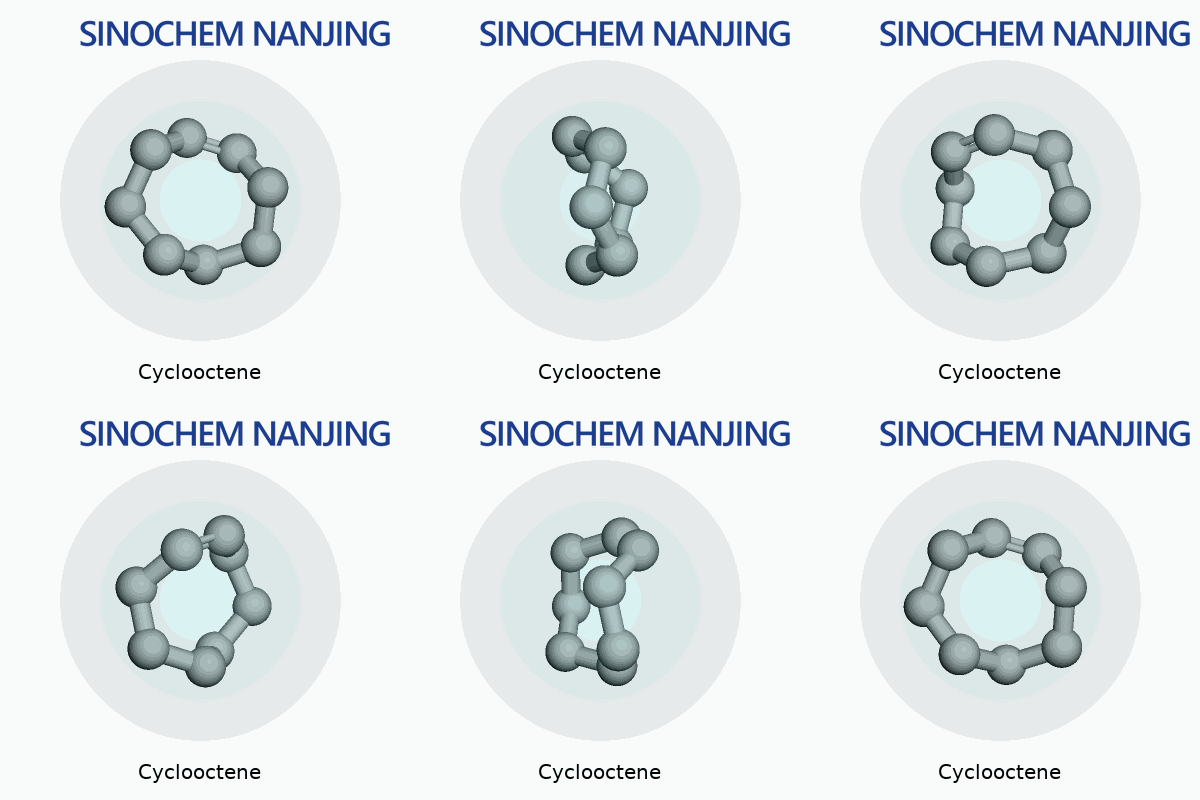
| Names | |
| Preferred IUPAC name | cyclooctene |
| Other names |
1,2,3,4,5,6,7,8-octahydro-1,2,3,4,5,6,7,8-octahydrocyclooctene octylene |
| Pronunciation | /ˌsaɪ.kloʊˈɒk.tiːn/ |
| Identifiers | |
| CAS Number | 931-88-4 |
| Beilstein Reference | 1460719 |
| ChEBI | CHEBI:36584 |
| ChEMBL | CHEMBL13460 |
| ChemSpider | 5288 |
| DrugBank | DB02259 |
| ECHA InfoCard | 05b3243b-36e7-4a3e-82dd-30258e39bcd1 |
| EC Number | 207-437-7 |
| Gmelin Reference | 100092 |
| KEGG | C08295 |
| MeSH | D003458 |
| PubChem CID | 8447 |
| RTECS number | RQ8225000 |
| UNII | T3989U8F38 |
| UN number | UN2291 |
| CompTox Dashboard (EPA) | DTXSID2020896 |
| Properties | |
| Chemical formula | C8H14 |
| Molar mass | 110.20 g/mol |
| Appearance | Colorless liquid |
| Odor | mild aromatic |
| Density | 0.857 g/mL at 25 °C |
| Solubility in water | Insoluble |
| log P | 1.94 |
| Vapor pressure | 1.15 mmHg (25°C) |
| Acidity (pKa) | 15.6 |
| Basicity (pKb) | Cyclooctene does not have a significant pKb value as it is not a basic compound. |
| Magnetic susceptibility (χ) | -78.3·10⁻⁶ cm³/mol |
| Refractive index (nD) | 1.448 |
| Viscosity | 3.3 mPa·s (25 °C) |
| Dipole moment | Cyclooctene: 0.50 D |
| Thermochemistry | |
| Std molar entropy (S⦵298) | 348.0 J/mol·K |
| Std enthalpy of formation (ΔfH⦵298) | +24.5 kJ/mol |
| Std enthalpy of combustion (ΔcH⦵298) | -4418.8 kJ/mol |
| Hazards | |
| GHS labelling | GHS02, GHS07 |
| Pictograms | GHS07, GHS09 |
| Signal word | Warning |
| Hazard statements | H226, H315, H319, H335 |
| Precautionary statements | P210, P233, P240, P241, P242, P243, P280, P303+P361+P353, P370+P378 |
| NFPA 704 (fire diamond) | 1-2-2-REATED |
| Flash point | 41 °C |
| Autoignition temperature | 440 °C |
| Explosive limits | Explosive limits: 1.2–6.8% |
| Lethal dose or concentration | LD50 (oral, rat): >5000 mg/kg |
| LD50 (median dose) | LD50 (median dose): Oral rat LD50 > 2500 mg/kg |
| NIOSH | GU8575000 |
| PEL (Permissible) | PEL (Permissible Exposure Limit) for Cyclooctene: Not established |
| REL (Recommended) | string: 5 ppm |
| IDLH (Immediate danger) | No IDLH established. |



