Cyclohexyltrichlorosilane: Navigating Chemistry, Safety, and Progress
Historical Development
Cyclohexyltrichlorosilane traces its story back to the post-war expansion of organosilicon chemistry, a time when industrial growth met creative lab work. Chemists wanted materials that would blend organic groups with the unique traits of silicon. Trichlorosilanes arrived as crucial building blocks—producing them wasn’t just about technical progress, but also about addressing skyrocketing demand for new polymers and functional fluids. My own early days in a research lab involved working with these compounds, and I remember the sense of awe: liquid reagents, sharp odors, glassware frosting over as fumes appeared. Finding ways to tack cyclohexyl groups onto silicon helped create frameworks for modified resins, coatings, and even specialty silicones. This opened doors for more adaptable and robust materials in plastics, automotive parts, and advanced electronics.
Product Overview
Ask anyone in a chemical lab about cyclohexyltrichlorosilane: it’s a reactive, clear to yellowish liquid that demands respect. This molecule wears its purpose openly—three reactive chlorine atoms anchored to a silicon, topped by a bulky cyclohexyl group. Such a structure hints at versatility and points directly at why it caught the attention of industry. The organic group offers a big, hydrophobic handle that stands out in reactions where you want to switch properties or introduce a defined structure into polymers or glass surfaces. This is not a chemical for casual experimentation—it packs a punch, ready to shift from synthesis to surface treatment in expert hands.
Physical & Chemical Properties
Cyclohexyltrichlorosilane presents as an oily, colorless to pale yellow liquid with a piercing, acrid smell that leaves no doubt about its volatility. It boils around 235–242°C, but don’t let the relatively high boiling point lull you. In the presence of moisture, it hydrolyzes rapidly, spitting out dense clouds of hydrogen chloride—something I’ve learned to always respect in the lab. Those three Si-Cl bonds like to get involved in reactions; splash some water anywhere near it, and you’ll see a violent response. Storing this compound requires tight seals and absolutely no leaks. Its density sits above many organics, and you’ll find it heavier than water, which means spills settle to the bottom—never a good day for cleanup or safety.
Technical Specifications & Labeling
Bottles of cyclohexyltrichlorosilane leave no room for confusion. Anyone handling or transporting such bottles gets a stark warning from the “Corrosive” label, the ominous black-and-white pictogram. These containers show details like chemical formula C6H11SiCl3, molecular weight near 219, and purity typically exceeding 97%. Specific gravity and boiling range round out the technical sheet, because any deviation from those could spell danger. Even seasoned chemists—ones who know every corner of their fume hoods—keep SDS sheets taped nearby. Labels serve more than compliance purposes; they help save eyes, lungs, and sometimes lives.
Preparation Method
Most of the cyclohexyltrichlorosilane out there starts with a Grignard reaction—classic organic chemistry at its most direct. Cyclohexylmagnesium bromide meets silicon tetrachloride in chilled, dry ether. One slip in temperature or a bit of stray moisture, and you lose your yield to unwanted side products. Once the main reaction finishes, the work shifts to separation and careful purification. I recall long hours at the rotary evaporator, coaxing out every drop of volatile impurity under vacuum. Sometimes, this means distilling under inert gas because oxygen and water remain the uninvited troublemakers. The joys and miseries of organosilane synthesis usually come down to how well you exclude air and quench all side reactions.
Chemical Reactions & Modifications
Cyclohexyltrichlorosilane throws itself into hydrolysis, alcoholysis, and a variety of nucleophilic substitution reactions. Expose it to any water and you get a rush of hydrochloric acid and silanols or siloxanes. It reacts quickly with alcohols or even weak bases, breaking the Si-Cl bonds and building up modified polymers, gels, or glassy coatings. For anyone hoping to anchor silanes onto surfaces—say, to make glass hydrophobic—it works well as a reactive intermediate that leaves a robust cyclohexyl layer behind, limiting transmission of water or enhancing adhesion to resins. You don’t just get a protective layer; you get a tailored property that matters in long-term wear and tear. Think specialty electronics or automotive seals where standard silicones can’t quite meet performance marks.
Synonyms & Product Names
In catalogs and scientific publications, cyclohexyltrichlorosilane often shows up under names like Trichloro(cyclohexyl)silane or Cyclohexylsilicon trichloride. Old trade literature might even call it Silicic acid, trichlorocyclohexyl ester. Such synonyms stem from a time before digital reporting, when every supplier put their own spin on nomenclature. Today, sticking to IUPAC standards helps with database searches and regulatory paperwork, but anyone old enough to remember paper catalogs will have seen the variety that once led to confusion and, on rare occasions, costly ordering mistakes.
Safety & Operational Standards
Safety demands respect here; cyclohexyltrichlorosilane doesn’t forgive carelessness. Direct skin or eye contact will cause intense burns, and the gas cloud after hydrolysis can knock you out of a lab for hours—if not cause worse injury. Chemical-resistant gloves, full goggles, and lab coats are standard issue in facilities using this silane. Engineering teams install advanced ventilation, not only fume hoods but negative pressure rooms. Any storage container stays in dry, cool areas, double-sealed and far from incompatible chemicals like water or strong oxidizers. Regular training, emergency showers, and eyewash stations form part of the basic operational playbook. Over the years, I’ve noticed improvements in automated systems and better monitoring; these limit personal exposure even further, removing much of the risk linked to old-school manual handling.
Application Area
Industries utilize cyclohexyltrichlorosilane for its ability to graft robust organosilicon chains onto glass, ceramics, and polymers. In surface modification, this reagent brings out weather resistance and hydrophobicity, helping protect electronic components or high-wear surfaces. In the world of specialty resins and adhesives, it enables new levels of durability, bridging material interfaces where traditional silanes fall short. My experience in manufacturing has shown that using these advanced silanes matters for the reliability of products—windshields, optoelectronics, and even medical devices gain extended life and reduce maintenance needs. Few compounds offer the same blend of tailored reactivity and structural stability, which is why it continues to see broad adoption across chemical and materials engineering sectors.
Research & Development
Scientists keep digging into new uses for cyclohexyltrichlorosilane in advanced polymer synthesis, supramolecular chemistry, and nanomaterial production. In research circles, this compound acts as a starting point for new organosilicon architectures—crosslinked networks, dendritic molecules, and hybrid metal-organic frameworks. Emerging interest in green chemistry pushes the search for less hazardous synthesis pathways, greener solvents, and safer downstream processing. My time spent collaborating with academic labs showed how small improvements in silane availability or purity often unlocked new application areas—thermally stable coatings for flexible electronics, high-performance lubricants, or even responsive hydrogels. The future holds promise for lower-toxicity analogs, recyclable materials, and smart surfaces that actively respond to environmental cues—all rooted in today’s work on related silanes.
Toxicity Research
Toxicology keeps pace with industrial expansion, and cyclohexyltrichlorosilane lands on many hazard lists. Inhalation or contact brings serious risk; lungs and skin suffer quickly, but so do the broader environment and water systems when spills occur. Environmental health researchers trace breakdown products, especially the hydrochloric acid and organosilicon residues, noting their impact on aquatic life and wastewater treatment. Regulatory bodies tightened limits on workplace concentrations, and monitoring systems now flag incidents in real time. Long-term exposure studies remain limited, but acute effects—irritation, chemical burns, respiratory distress—keep pushing firms to automate, contain, and neutralize waste streams. Innovations in personal protective equipment and leak detection give real-world benefits to people working with this compound daily.
Future Prospects
The coming years will likely see a shift toward more sustainable cyclohexyltrichlorosilane production and safer chemical handling in all phases, from manufacturing to disposal. Advanced automation means less direct human exposure, and smart reactors can dial in optimal conditions to minimize dangerous byproducts. Industry and academia keep investing in alternative feedstocks, aiming for non-toxic precursors and closed-loop recycling. There’s also a growing interest in developing silane compounds that balance high performance with lower risk, opening up entirely new areas in biocompatible coatings and next-generation flexible electronics. As more data emerges on safe exposure levels and ecological impact, regulations will correspondingly tighten, pushing chemical producers to innovate further. For researchers and industrial chemists, these challenges present an ongoing invitation—not just to meet standards, but to redefine what’s possible in organosilicon science.
What is Cyclohexyltrichlorosilane used for?
Understanding the Compound
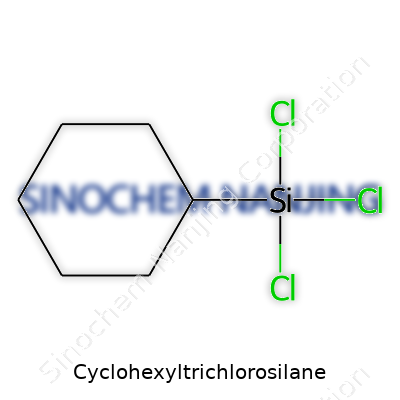
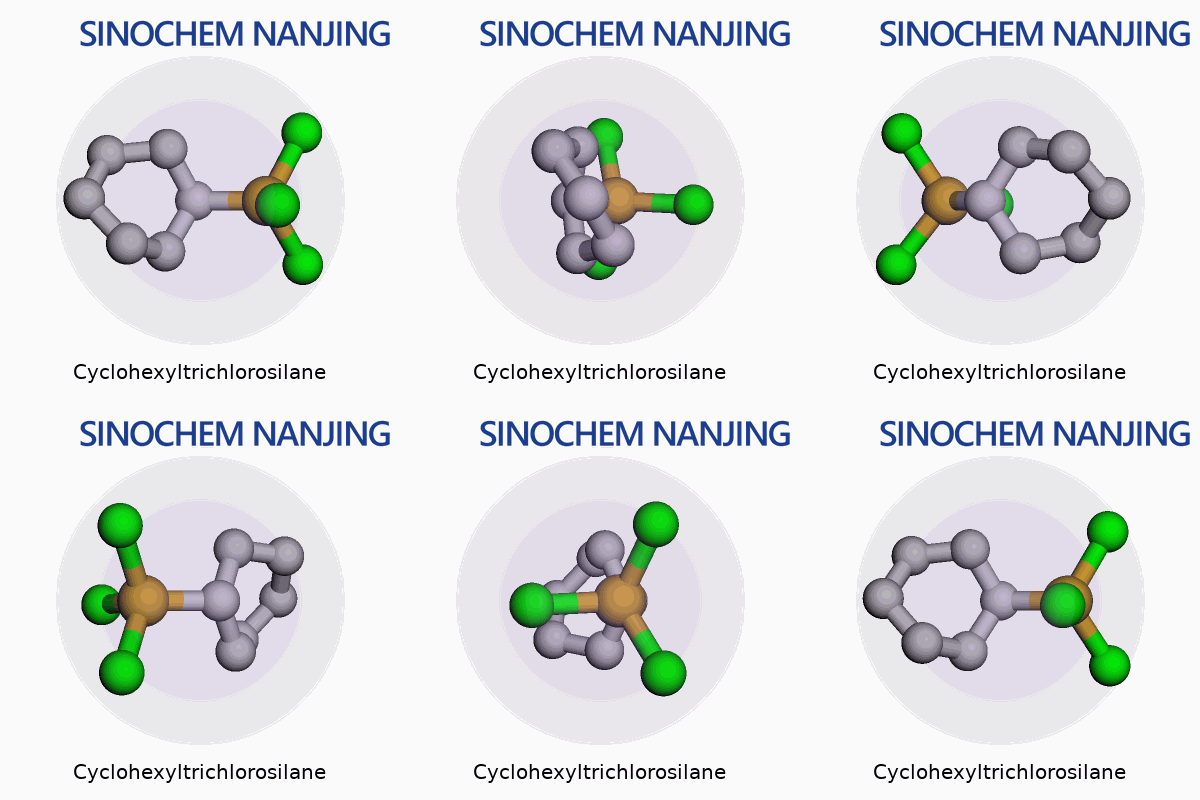
Cyclohexyltrichlorosilane sounds complicated, but it forms part of a group of chemicals called organosilicon compounds. It brings together a cyclohexyl group—which is a ring of carbon atoms—and a silicon atom bonded to three chlorine atoms. This stuff doesn't make headlines, but it quietly supports many industries that shape modern life.
Making Everyday Items Stronger
One of its core uses comes in silicone production. Silicone rubber keeps appliances sealed, protects electronics from water, and even covers oven mitts. The chemical starts its journey as a building block for siloxane polymers. It reacts with water in a process called hydrolysis, transforming into silanols, and eventually connects into longer chains. These chains—crosslinked together—produce the stretchy, durable material found in everything from spatulas to medical tubing.
Specialty Coatings and Surface Protection
It's easy to overlook how many surfaces need protection from scratching, moisture, or chemicals. Cyclohexyltrichlorosilane creates thin, invisible layers on metals and glass. After chemical treatment, these coatings shield car windshields, extend the life of electronic touchscreens, and give solar panels a fighting chance against dust and rain. My friend who works at an industrial lab once showed how the treated glass stays smoother even after repeated scrubbing, cutting down on maintenance time.
Electronics and the Push for Miniaturization
Every year, electronics get smaller and more powerful. Achieving this isn't just a matter of shrinking the chips; it also means finding better ways to keep sensitive parts protected and isolated. Cyclohexyltrichlorosilane steps in as part of the process to make thin, insulating films called dielectrics. These coatings separate different circuit layers within microchips. Even a pinprick of unwanted moisture can ruin performance, so robust and reliable barriers make a difference.
Supporting Medical Technology
A lot of people count on medical implants, tubing, and lab equipment working exactly as expected. Cyclohexyltrichlorosilane appears during the design of biocompatible surfaces. Its derivatives help make medical devices cling less to bacteria or proteins, which lowers the risk of infection. Medical scientists point to coatings based on organosilanes as one reason catheter infections have dropped in some hospitals.
Addressing Environmental and Safety Concerns
Anytime chemicals get used at scale, questions about safety deserve close attention. Cyclohexyltrichlorosilane is highly reactive, especially with water. During handling, workers wear gloves and goggles and store it with strict containment protocols. Accidental releases can generate corrosive fumes. Environmental stewards in the chemical industry advocate for better training and improved engineering controls—steps that can sharply cut workplace injuries. Encouraging oversight from agencies like the EPA and OSHA shields both people and nearby ecosystems.
Looking Ahead to Greener Chemistry
The demand for safer materials and less toxic by-products only grows. Green chemistry researchers try to develop alternatives that avoid chlorine atoms in the molecule, aiming for similar performance with fewer disposal headaches. Investing in cleaner production routes pays off over time: it brings regulatory peace of mind and helps companies stand out with eco-friendlier products.
What are the storage requirements for Cyclohexyltrichlorosilane?
Understanding Why Safety Matters
I’ve spent years in research labs lined with odd-smelling bottles, and one thing you quickly pick up: storing chemicals the right way is never just a box on a checklist. Cyclohexyltrichlorosilane, with its sharp odor and volatile nature, signals right from the cap that mistakes can carry a big price. This is a strong alkylchlorosilane—reactive to moisture and able to release toxic hydrogen chloride if handled carelessly. Simple missteps like a wet glove or careless storage near a water line can set off a chain of reactions, putting both people and expensive gear at risk.
What Safe Storage Looks Like
Glass or high-quality polyethylene bottles work best. Steel or iron containers aren’t a good match since this compound can corrode metal over time, making leaks more likely. Anyone who’s mopped up a sticky spill from corroded shelving knows how fast things can go wrong. The container should carry a clear, intact label and tight-fitting lid. In busy labs, you sometimes see missing or torn hazard symbols—never trust a faded label, especially with chemicals like this.
Storing cyclohexyltrichlorosilane means picking a dry, cool, and well-ventilated place—preferably in a dedicated chemical storeroom with proper exhaust fans. I once worked in a university lab where the vents failed for a few hours in the middle of July; the sharp fumes from a single poorly sealed bottle crept into the hallway and sent people home with headaches. Regular ventilation checks are not a nuisance; they’re basic respect for everyone’s health.
Keep It Away From Water and Bases
Water starts a reaction that strips hydrogen chloride gas from the silane almost instantly. This gas burns lungs and eyes, so storage spaces must be completely dry. Open beakers of water, wet sponges, even damp lab coats in nearby lockers have set off minor accidents. Shelve it away from acids, bases, strong oxidizers, and anything flammable. I’ve seen too many “convenient” storage ideas end up as cleanup stories in the break room—the best habit is one chemical per compatible cabinet, with regular audits by trained staff.
Training and Accountability
Working with chemicals that could leave lasting damage deserves more than a general safety talk at orientation. People should know how these substances react, understand the warning signs, and get practice with emergency response. Everyone needs to know where eyewash stations and spill kits live—and that it’s better to overreact than underreact when storing compounds as touchy as cyclohexyltrichlorosilane. Promoting a culture where people feel comfortable flagging poor storage goes further than any handbook rule.
Routine Checks and Effective Labeling
I remember how a well-run lab handled their chemical inventory: a monthly walk-through with a list, double-checking seals and label clarity, with bins for immediate disposal of anything sketchy. Even with all precautions, chemicals age—hydrolysis sneaks in, especially with older stock. Keeping storage areas strictly organized, away from sunlight and daily foot traffic, reduces the odds of an accident, and drives a sense of shared responsibility for everyone on the floor.
Every storage choice speaks directly to the value you put on safety—not just for regulations, but for the well-being of colleagues and anyone walking through your doors.
Is Cyclohexyltrichlorosilane hazardous or toxic?
Chemicals We Ought to Know By Name
Cyclohexyltrichlorosilane is one of those names that shows up in lists of starting materials for coatings, plastics, or even adhesives. In my years working around labs and factories, I picked up a bit of an instinct for treating anything with "trichloro" in its name with healthy respect. That instinct isn’t paranoia; it comes from real experience — and more than one chemical safety seminar where people shared stories about what really happens if you let your guard down.
What the Data Actually Shows
If you dig into the technical sheets and consult resources like the National Institute for Occupational Safety and Health (NIOSH) or Sigma-Aldrich, Cyclohexyltrichlorosilane poses genuine hazards. Breathing in its vapors can irritate or even corrode airways and lungs. Liquid exposure burns skin and eyes. I recall stories from industrial chemists who brushed a few drops off a glove and developed raw, blistering skin in hours.
Government databases list the substance with Precautionary Statements like “Causes severe skin burns and eye damage.” It reacts with water, giving off hydrochloric acid fumes. An accidental spill indoors can turn a quiet afternoon into a scramble for fresh air and emergency eyewash. Anyone working with this chemical has to use splash goggles, gloves, chemical-resistant aprons, and work in a fume hood or under proper ventilation.
Why It Matters Beyond the Lab
People often imagine industrial chemicals as something far away, tucked behind triple-locked doors. That’s not the whole truth. Factories, packaging plants, and intermediate storage facilities all use and move chemicals like Cyclohexyltrichlorosilane. Even university researchers and startup companies work with it. A spill or leak doesn’t only stay behind closed doors; small accidents have ripple effects. Fumes can aggravate neighbors’ asthma. Poorly stored drums can leak into groundwater, hurting wildlife and putting people at risk down the line. Firefighters responding to chemical alarms have direct experience with surprises these chlorinated silanes throw at them, especially if water hits the spill and turns it into a cloud of acid vapor.
Responsible Chemical Use Looks Like This
I’ve seen best practices save people real harm. Simple steps make a difference: employee training with hands-on drills, not just online PowerPoints; using flexible, sealed transfer lines instead of buckets and open pours; monitoring equipment for leaks; keeping plenty of spill kits on site. Emergency plans should not gather dust in a file cabinet. One place where tight control helped included a university lab, where they stored all chlorinated silanes, including Cyclohexyltrichlorosilane, inside ventilated cabinets with built-in acid scrubbers — a decision made after a minor splash burnt a lab tech’s forearm.
Transport law in the US and EU already restricts moving these chemicals without correct labeling and packaging. Facility managers need to check for up-to-date building ventilation and give regular safety refreshers. Disposal matters, too: pouring unused chemicals down the sink turns a bad idea into a regulatory headache and a public health risk.
Pushing for Safer Alternatives
There’s growing pushback against using chlorinated silanes in some sectors due to their hazards. Green chemistry teams are tweaking formulas, hunting for substitutes or mixing additives that simplify handling or reduce toxic byproducts. That’s a long-term project, and the wheels move slowly. Until those options land on the shelf, everyone shares responsibility for using Cyclohexyltrichlorosilane with eyes wide open and respect for its risks.
If you find yourself near this chemical or any in its family, stay clear about what protection actually looks like, and do not take shortcuts. No product line or experiment is important enough to cut corners with your health or your coworkers’ safety.
What is the chemical formula and molecular weight of Cyclohexyltrichlorosilane?
The Essentials: Formula and Numbers
Chemical research calls for precision. No shortcut digs up truth from guesswork—every element, atom, and bond matters. Cyclohexyltrichlorosilane carries the formula C6H11SiCl3. That formula doesn’t exist because of a random arrangement. The cyclohexyl group binds to silicon, surrounded by three chlorine atoms, each ready to react, take part in synthesis, or impact processes in the lab and industry. People using this compound need clear numbers for safe handling and reliable results: its molecular weight clocks in at 233.61 g/mol.
Why These Details Matter
Imagine a chemist miscalculating, throwing off a synthesis batch. Even a small weight error becomes costly, sometimes dangerous. I learned this during my early days in chemical supply—precision both saves money and protects people. C6H11SiCl3 looks simple, but its structure brings together the reactive spirit of silicon-chlorine bonds with the bulky cyclohexyl ring. Anytime you plan a chemical reaction, molarity calculations ride on the correct molecular weight. A difference of even one unit? That changes the product, purity, and even the waste profile.
Industrial and Laboratory Uses
The uses of cyclohexyltrichlorosilane span surface science, polymer synthesis, and specialty coatings. Chlorosilanes, in general, bring life to silicone polymers and create hydrophobic surfaces. I recall watching engineers in a semiconductor facility handle every droplet as if it were gold—wrong proportions kill chip yields. The three chlorine atoms are reactive: they get swapped out, creating silicon-oxygen or silicon-carbon networks. Safety teams stress glove and goggle use, since trichlorosilane groups react fast with water and release hydrochloric acid. Those extra precautions stick with me from an incident where a single spill led to an evacuation. It only takes one slip to remind everyone that lab safety isn't an afterthought.
Health and Environmental Impacts
Nobody drops chemicals into the waste stream without concern today. I’ve watched regulations grow much tighter around silane compounds, especially those carrying chlorines. Chronic exposure risks irritation, and accidental water contact releases dangerous gases. Proper handling doesn’t just protect workers—it keeps waste treatment manageable and local water clean. Tight data on molecular weight means waste processors dose neutralizers accurately. If the formula or weight went wrong, plants could dump acidic runoff or leave toxic byproducts untreated. Responsible labs flag this compound for special disposal, always segregating it from water or reactive agents.
Stepping Up Solutions
Transparency makes all the difference. Clear chemical data lets end-users handle storage and transport sensibly. Big firms post up-to-date Safety Data Sheets, calling out molecular weight and formula on every drum and smaller bottle. Startups invest in digital inventory tools, minimizing mix-ups. Some labs look toward greener alternatives, like silanes with less reactive leaving groups, especially in applications where those three chlorines aren’t essential. Down the road, advancing chemical recycling could turn spent chlorosilanes into innocuous byproducts or useful feedstock. Until then, knowledge and careful practice do most of the heavy lifting.
Final Details for Working Chemists
Chemists and engineers who know that C6H11SiCl3 has a molecular weight of 233.61 g/mol start reactions with confidence. They calculate doses precisely, protect themselves against the risks chlorine brings, and keep their operations in line with tough environmental standards. Precise data supports not just the science, but also the safety and stewardship of everyone handling hazardous materials.
How should Cyclohexyltrichlorosilane be handled and disposed of safely?
The Real Dangers: Why Care Matters
Getting your hands on Cyclohexyltrichlorosilane means you’re handling a substance that can kick up a fuss if you don’t show respect. Breathing the fumes or getting it on your skin can bring on burns, irritation, or sometimes bad lung problems. This chemical reacts pretty wildly with water and air moisture. Mix-ups or short cuts raise the risks for everyone in the room—not just the person with the beaker.
Even one mistake can throw dangerous hydrogen chloride vapors in the air. These fumes don’t care how tough you are; you’ll feel them right away in your nose, throat, and eyes. So, the stakes stay high if you think you can go light on safety measures.
Hands-On Habits: Protecting Yourself and Others
Years of working with chemicals hammered in the reality: simple gear saves lives. Splash goggles and thick gloves go on before opening a bottle. Long sleeves, lab coats, and a good pair of chemical-resistant boots make the difference when something splashes. I never reach for this compound outside a fume hood—relying on a fan or cracked window is a gamble nobody wants to lose.
Spills don’t offer do-overs. I’ve seen a tiny splash cause a nasty reaction; the skin burns take weeks to heal. Spill kits for acids and organosilanes stay within arm’s reach, never stashed away. Tending to a spill quickly—using neutralizers like soda ash while keeping your face out of the fumes—stops a headache from turning into a disaster.
Storing It Right: Thinking Ahead
Storage shows how seriously a shop takes safety. Cyclohexyltrichlorosilane should sit behind a tight-sealing lid in a spot that stays cool, dry, and perfectly ventilated. Stacking it next to acids or bases risks chemical crossfire—separation rules aren’t suggestions. Glass bottles work best, and I learned to double-check every label before sliding anything on a shelf. Leaking containers often come from small cracks or weakened seals ignored too long.
Smart Disposal: Avoiding a Bigger Mess
Cutting corners during disposal puts a whole workplace at risk. Never send leftovers straight down the drain or into general trash. Waste like this begs for professional handling—licensed hazardous waste contractors know the right incineration and neutralization steps. In my experience, tracking waste with clear labels and keeping disposal logs prevent slip-ups. Everybody on the team deserves a refresher now and then on what waste goes in what drum or bucket.
Diluting or neutralizing the waste yourself—like mixing with lots of water—risks unexpected reactions. I’ve learned to follow company protocols and reach out to environmental, health, and safety teams rather than improvise. Meeting these regulations isn’t red tape; it’s real-world protection against fines, injuries, or worse.
Training and Team Mindset
Chemical handling isn’t a solo sport. New hires watch videos and handle mock spills before they ever touch a jar like this. I’ve sat in plenty of sessions where old hands share the small things—checking for glass etching, cleaning up drops right away, not trusting your memory over the label. Emergencies move fast, so everyone needs to know where the safety shower and eyewash stations live.
Company leaders must keep safety data sheets up to date and make them easy to find. Every team member should feel free to speak up if something doesn’t look right, no matter how much experience they’ve logged. Speaking from my own career, building a team that supports each other makes those long days in the lab a whole lot safer—and a lot less stressful.
| Names | |
| Preferred IUPAC name | Cyclohexyltrichlorosilane |
| Other names |
Trichlorocyclohexylsilane Silane, trichlorocyclohexyl- Cyclohexyltrichlorosilane Cyclohexylsilicon trichloride |
| Pronunciation | /ˌsaɪ.kloʊˌhɛk.sɪlˌtraɪˌklɔːr.oʊˈsaɪ.leɪn/ |
| Identifiers | |
| CAS Number | 13406-02-5 |
| Beilstein Reference | 1207554 |
| ChEBI | CHEBI:51760 |
| ChEMBL | CHEMBL1906986 |
| ChemSpider | 21233818 |
| DrugBank | DB16645 |
| ECHA InfoCard | 03b5cf63-d30b-4360-b9c8-0f3a1e51e810 |
| EC Number | 203-678-1 |
| Gmelin Reference | 88583 |
| KEGG | C18707 |
| MeSH | D017181 |
| PubChem CID | 66201 |
| RTECS number | GV3150000 |
| UNII | E0N72BB5LC |
| UN number | UN2987 |
| Properties | |
| Chemical formula | C6H11Cl3Si |
| Molar mass | 232.56 g/mol |
| Appearance | Colorless to pale yellow liquid |
| Odor | Pungent |
| Density | 1.22 g/mL at 25 °C |
| Solubility in water | Reacts |
| log P | 3.8 |
| Vapor pressure | 14 mmHg (25 °C) |
| Acidity (pKa) | 13.4 |
| Basicity (pKb) | pKb: -6.1 |
| Magnetic susceptibility (χ) | -62.0×10⁻⁶ cm³/mol |
| Refractive index (nD) | 1.518 |
| Viscosity | 3.22 cP (25°C) |
| Dipole moment | 2.17 D |
| Thermochemistry | |
| Std molar entropy (S⦵298) | 289.6 J·mol⁻¹·K⁻¹ |
| Std enthalpy of formation (ΔfH⦵298) | -589.6 kJ/mol |
| Std enthalpy of combustion (ΔcH⦵298) | -3800.6 kJ/mol |
| Hazards | |
| GHS labelling | GHS02, GHS05, GHS06 |
| Pictograms | GHS05,GHS06 |
| Signal word | Danger |
| Hazard statements | H314, H331, H335 |
| Precautionary statements | P210, P260, P264, P271, P280, P301+P330+P331, P303+P361+P353, P304+P340, P305+P351+P338, P312, P321, P362+P364, P405, P501 |
| NFPA 704 (fire diamond) | 3-2-1-W |
| Flash point | 77 °C (171 °F; 350 K) |
| Lethal dose or concentration | LD50 oral rat 2060 mg/kg |
| LD50 (median dose) | LD50 (median dose) of Cyclohexyltrichlorosilane: "1800 mg/kg (oral, rat) |
| NIOSH | WS4250000 |
| REL (Recommended) | REL (Recommended): 1 ppm (7 mg/m3) |
| IDLH (Immediate danger) | IDLH: 10 ppm |
| Related compounds | |
| Related compounds |
Trimethylcyclohexylammonium chloride Organochlorosilanes Chlorosilanes |



