Cycloheptane: Past, Present, and Future in Chemistry and Industry
Looking Back on the Origins
People who work in organic chemistry have long come across ring-shaped molecules, but Cycloheptane’s seven-carbon ring stands out. In older chemistry texts, traces of Cycloheptane’s recognition appear as chemists move beyond simple cyclohexanes in the late nineteenth century. Early researchers grappled with how these rings folded and what that meant for chemical reactions. The breakthrough in understanding ring strain and molecular flexibility didn’t just widen textbook knowledge; it unlocked practical routes for synthesizing larger and more complex ring structures. Over decades, better distillation and purification methods transformed Cycloheptane from a rare lab novelty into a chemical regularly produced in ton-scale quantities.
Understanding What Cycloheptane Brings to the Table
Cycloheptane represents more than just another hydrocarbon. It gives chemists a non-aromatic ring, free of double bonds, packed with moderate strain and significant flexibility compared to its more famous cousin, cyclohexane. That flexibility affects how it behaves in reactions and why some chemists choose it over other cycloalkanes when studying reaction mechanisms or building molecular frameworks. Most folks would recognize Cycloheptane as a clear, colorless liquid with a pleasant smell not unlike lighter gasoline, but its significance stretches much farther than a simple sniff test. The chemical brings a boiling point high enough to avoid hazards common to smaller cycloalkanes, making storage and handling less stressful for lab technicians and plant operators.
Properties That Affect the World Beyond the Lab
Cycloheptane holds a molecular formula of C7H14. Its physical properties echo those of similar compounds but with some quirks—melting near -13°C and boiling at about 118°C. Low water solubility forces the issue of storage with hydrocarbons or organic solvents, shaping where and how industries can deploy it. Chemical properties hinge on its saturated carbon ring, giving it resistance to gentle oxidation but making it a workable target for halogenation, cracking, or polymerization under the right conditions. Because it lacks double bonds, it skips a lot of the hazardous reactions cycloalkenes succumb to, but its size and flexibility mean specialists look for different interactions in research and industry.
Clear Labels and Technical Specs Matter
A bottle of Cycloheptane on a shelf must be easily identified and come with data—density, purity, boiling point, melting point, flash point—without a fuss. Chemists rely on these numbers to troubleshoot experiments, keep projects safe, and avoid costly errors in scale-up. Purity often runs above 98%, sometimes reaching for “reagent” grade if the downstream processes pinch pennies or demand cleaner starting materials. That level of detail on a technical sheet isn’t just bureaucracy—it often spells the difference between a successful reaction and an expensive dead end. Labels today follow international chemical safety codes, including hazard pictograms and straightforward instructions on safe use, taking some weight off the shoulders of newer workers or trainees learning the ropes.
Getting Cycloheptane: Making and Modifying
Synthetic routes dominate most of the world’s supply. Standard preparation taps into petrochemical streams. Crude oil distillates give naphthenes—rings of five to seven carbons—and expert distillers pull Cycloheptane fractions with careful control of temperature and pressure. Chemical synthesis sometimes starts with linear heptanes, folding them into a ring with catalysts and clever conditions, but that method typically stays inside the research lab, not the refinery. Another approach uses cracking or isomerization of larger naphthenic compounds. Once in hand, Cycloheptane undergoes a range of reactions: halogenation yields useful intermediates, oxidation carves out new functional groups, and further ring-opening brings entirely new molecular families. Each modification opens up applications in flavors, materials, or pharmaceutical intermediates.
A Few Names, Plenty of Uses
Ask a few chemists and they’ll swap the name Cycloheptane for terms like Hexamethylene ethane or Heptamethylene cycloalkane. These synonyms show up in patents and research papers and can easily trip up non-specialists trying to source the right material. In industry catalogs, you may spot these alternative identities, especially in older or regionally focused publications. Regardless of name, they refer to the same seven-membered hydrocarbon.
Safety: The Overlooked Foundation
Cycloheptane might not rank among the most dangerous solvents, but it comes with its own set of risks. It's volatile and easily flammable. Long-term exposure to fumes can cause dizziness, headaches, or more pronounced symptoms if safety measures slip. Chemical handling guidelines lean on properly vented storage, explosion-proof equipment near sources of ignition, and personal protective gear—especially gloves and eye protection. Industry standards, shaped by OSHA in the US or REACH in Europe, require that users stay aware of the risk of fire and manage disposal carefully, given its persistence in the environment and potential to contaminate soil or water if left unchecked. Spill response plans and regular safety drills help minimize the chance of accidents. Training keeps seasoned veterans and new hires alike on the same page so mistakes don't snowball.
Applications That Touch Many Fields
The world doesn’t often hear about Cycloheptane once it leaves the factory, but its uses range across multiple industries. In flavor and fragrance, it turns up as a blending agent or as a backbone for more complex aromatic compounds. Material scientists feed it into studies of ring strain and structural flexibility, hoping to design polymers or specialty plastics with unique mechanical properties. Pharmaceutical researchers sometimes use it as a backbone for building biologically active ingredients, investigating how the increased ring size changes drug activity or metabolism. Gasoline companies study Cycloheptane’s combustion properties to tweak fuel blends and improve knock resistance. Environmental chemists trace it in soil or air samples, mapping pollution and looking for better cleanup methods in case of spills.
Research: A Window Into the Unknown
Academic labs dig into Cycloheptane as a case study in the behavior of medium-ring systems—something neither too rigid nor too floppy. It gives insights into reaction mechanism, molecular orbital theory, and how to push or pull electrons to do chemists’ bidding. Experimental and computational work on Cycloheptane continues to influence pedagogy and industrial practice, often uncovering practical improvements for ring-closure methods or introducing entirely new transformations. Publications over the past few decades reveal a steady stream of interest, not just for curiosity’s sake but because understanding molecules like Cycloheptane means unlocking new ways to build medicines, materials, and fuels.
Toxicity and Health: Why Vigilance Matters
Research on Cycloheptane’s toxicity remains limited compared to the focus on aromatic hydrocarbons. Inhalation can cause short-term central nervous system depression, but chronic long-term effects need more study. Unlike benzene, Cycloheptane doesn’t show strong carcinogenic potential in the core animal toxicity tests that have been published, yet heightened intake—especially in confined or poorly ventilated areas—brings predictable health risks shared by other volatile organics. Regulatory agencies call for proper ventilation, respiratory protection in bulk handling, and monitoring of workplace air. Environmental studies check its persistence and breakdown as small leaks might otherwise go unnoticed. More research will clarify these health and environmental questions, but until then, most choose to err on the side of caution in both lab and field settings.
What Lies Ahead
Emerging trends in the chemical industry may boost interest in Cycloheptane. Pushes for greener, less reactive solvents open opportunities for medium-ring cycloalkanes as safer alternatives to aromatics. Innovations in synthetic chemistry favor flexible, ring-based molecules for drug discovery, especially as medicinal chemists search for “privileged scaffolds” that combine three-dimensional shape with stability. Material science could adopt Cycloheptane derivatives as softeners or as functional components in designer plastics. Ongoing research in toxicity, environmental fate, and low-impact production methods holds the key for larger-scale adoption. Continued improvements in catalyst design and recycling methods will make Cycloheptane production both cleaner and more cost-efficient. As industry’s aims shift, so does the position of Cycloheptane, from quiet byproduct to a potential staple of safer, more sustainable chemistry.
What is Cycloheptane used for?
Chemistry’s Quiet Achiever
Chemists work with a lot of mysterious-sounding substances, and cycloheptane easily qualifies as one. It’s a colorless liquid with a particular smell, and it’s built from a seven-membered ring of carbon atoms. This structure makes cycloheptane an example of a so-called “cycloalkane,” which simply means the carbon atoms have formed a closed shape instead of a chain. Plain in appearance, its uses tell a much richer story, and it slips into more places than most people realize.
Solvent for Precision Work
For starters, cycloheptane often pops up where chemists or manufacturers need a high-purity, stable solvent. In the lab, it can dissolve plenty of organic substances, helping researchers purify or separate things in a pinch. Cycloheptane doesn’t react with most other chemicals under normal conditions, which keeps experiments clean and reliable. Businesses producing specialty resins or adhesives sometimes turn to it, since cycloheptane stays calm under pressure and heat, offering a safe medium for specific reactions.
Reference Standard in Fuel Research
Many people don’t realize the meticulous work behind the fuels that run our cars or generators. In engine testing, cycloheptane comes into play as part of “octane rating” research. Scientists compare how different fuels resist knocking (unwanted engine noise and damage) by testing them against a scale involving cycloheptane and iso-octane. Fuel won’t perform well if it detonates too early inside an engine cylinder; cycloheptane helps experts draw a clear line in these standardized tests. Without solid research and reliable benchmarks, engines would break down faster, and people would feel it in their wallets.
Pathway in Chemical Synthesis
In the world of synthesis, cycloheptane often pulls double duty. It doesn’t just carry other stuff as a solvent—it also slips into chemical reactions and transforms into building blocks for pharmaceuticals, agricultural products, or flavors and fragrances. Sometimes a small change to cycloheptane’s ring opens the door to new molecules with properties that can fight disease or add a scent to a product. Behind every familiar pill or commercial aroma, there’s often a whole family of unusual chemicals helping out. Cycloheptane is one of those quiet helpers, making a difference behind the scenes.
Health, Safety, and the Environment
People working with cycloheptane need to treat it with respect. Breathing in too much can irritate the nose and throat or worse, affect the nervous system. Labs and factories use good ventilation and gear to keep everyone safe. On the environmental side, cycloheptane doesn’t stick around in water or soil for long; it tends to evaporate quickly if spilled. Still, spills and leaks need to be prevented, since high concentrations could harm wildlife. Safety rules and clear labeling reduce risks for both workers and the environment.
Looking Ahead: Greener Paths?
Chemical production always faces the same tough questions—how can we get needed chemicals without harming health or the planet? Cycloheptane, like many substances, keeps researchers thinking about alternatives. People want processes that use less energy, less waste, and safer raw materials. Some companies are already exploring biodegradable solvents and smarter recycling systems for solvents like cycloheptane. Innovators from leading research universities focus on these greener approaches, and future generations will expect no less from the chemical supply chain.
Is Cycloheptane hazardous or toxic?
Getting to Know Cycloheptane
Cycloheptane isn’t a chemical you bump into every day, but you find it behind the scenes in labs and industry. Used as a solvent or in chemical synthesis, it comes as a colorless liquid with a gasoline-like smell. With all those tongue-twisting chemical names floating around, you start wondering if substances like cycloheptane are as harmless as they look. The question is fair—especially if you work near this stuff or spot it on a material safety data sheet.
The Real Hazards: Flammability and Exposure
First thing that jumps out when you read about cycloheptane: it’s highly flammable. It can ignite easily in the air, which means storage has to stay far from sparks or open flames. Getting careless with ventilation raises the risk of vapor buildup. Accidents happen most often in places where people underestimate those invisible dangers. Growing up in a community with a refinery nearby, I learned to take fire risks seriously after a single oily rag turned a garage into a fireball.
Next, we come to the health effects. Skin contact with cycloheptane can cause irritation, even redness or dryness. Breathing in the vapors can trigger dizziness, headaches, or drowsiness. I remember helping out at a paint shop once; headaches became the norm if someone spilled solvents and didn’t mop up right away. Cycloheptane shares some of those properties. Short-term exposure in a closed space brings on discomfort. Long-term exposure, especially at higher concentrations, could be even worse, easing into the territory of liver and nervous system damage, although human data remain limited.
Regulation and Worker Protection
Agencies like OSHA and the European Chemicals Agency classify cycloheptane as a hazardous substance. They put occupational exposure limits in place and stress the need for good ventilation, chemical-resistant gloves, goggles, and proper storage. I’ve watched chemical rep demos where the rep sprayed a mist into the air under a vent hood; outside the vent, one whiff spoke louder than slideshows on hazard prevention. The point—without the right gear and habits, chemical hazards outpace you fast.
Simple steps help cut down risk. Storing cycloheptane in tightly closed containers, far from heat or sparks, lowers fire danger. Using it in well-ventilated spaces drives off vapor that might collect and cause trouble later. Training turns out to matter just as much as gear. A coworker once ignored glove advice, thinking a “quick job” didn’t need protection. Within days, skin irritation turned from a minor inconvenience to the reason he missed a week of work.
Bigger Picture: Taking Hazards Seriously
Plenty of chemicals promise useful roles without making the workplace dangerous, but ignoring cycloheptane’s hazards would be careless. The most basic lesson chemicals like this have taught me: respect the risk, and you keep the benefits. Dismissing fire risk, brushing off vent fans, or skipping gloves always hands safety to luck, never skill. When people turn routine exposures into a habit, trouble never feels far away.
Cycloheptane deserves its spot on the hazardous list. Flammability leads the pack, and overexposure comes with health warnings. Companies that work with it can do plenty to cut down the risks—good storage, ventilation, protective gear, and attitude all add up. In the real world, preparation and attention pay off far more than taking chances.
What is the chemical formula of Cycloheptane?
Getting to the Root of Cycloheptane
Cycloheptane might sound like a tongue-twister from high school chemistry, but it belongs in conversations about real-world substances. Its chemical formula, C7H14, isn’t something an average person uses daily, yet the story behind this hydrocarbon connects deeply with how we make and use chemicals in daily life.
What Cycloheptane Really Means
Seven carbon atoms link hands, closing into a ring and forming a stable circle. Each carbon grabs hold of exactly two hydrogen atoms. That arrangement keeps the total at fourteen hydrogens. This cyclic structure makes cycloheptane different from straight-chain alkanes, which you find running up and down in gasoline or kerosene. In cycloheptane, the atoms bend in on themselves, forming a loop—a choice that impacts everything from its boiling point to how people handle it in laboratories or in industry.
Why Bother Learning About C7H14
Kids in chemistry class often ask the point of memorizing these formulas. The answer shows up every time someone designs new drugs or tries to predict how a solvent will behave under pressure. Cycloheptane finds a home in the world of calibration standards and research. Gas chromatography relies on substances like this one to get perfect readings, and without such hydrocarbons, quality in those labs starts to slip.
I remember working in a lab with glass vials labeled with intimidating names, but getting my hands on cycloheptane for a calibration run meant trusting the purity and understanding the risks. Even small oversights in chemical knowledge could throw off results. Knowing the formula wasn’t an abstract mental exercise—it protected data and sometimes protected health. Cycloheptane gives off fumes, so proper ventilation means more than ticking a safety checklist; it keeps real people in the room breathing easy.
Industry and Environmental Impact
Companies don’t use cycloheptane on the same scale as crude oil, but its presence in specialty solvents and analytical methods shapes results across sectors. As an example, the environmental footprint of cycloheptane—the way it volatilizes and interacts with air—raises concern. Laboratory techs take care to capture and contain any emissions because letting them loose would spell out poor air quality for anyone nearby.
What Next for Safer Chemical Management?
Despite its regular role in labs, people could benefit from safer practices. Training workers in ventilation and proper storage reduces accidental exposure. Research institutions keep refining substitute chemicals with lower toxicity or improved environmental profiles. The chemical industry leans toward green chemistry: cuts waste, designs safer molecules, and keeps communities healthier. Even as a modest player, cycloheptane’s role in these shifts speaks to broader efforts to prioritize safety and sustainability.
Understanding the Formula, Understanding Chemistry
Recognizing C7H14 sheds light on more than cycloheptane alone—it’s a key step towards understanding the building blocks of organic chemistry. Each formula you learn unlocks another piece of the world’s complicated and connected systems, from medical breakthroughs to everyday materials.
How should Cycloheptane be stored?
Understanding Cycloheptane’s Risks
Working in a lab, plenty of solvents and chemicals pass through my hands, and cycloheptane sticks out because it’s both flammable and volatile. The clear, colorless liquid has a faint, gasoline-like scent that’s never a good sign, and even brief exposure can irritate skin and eyes. If the vapors build up, anyone nearby could feel dizzy or lightheaded. Safety Data Sheets make it clear: storage and handling aren’t afterthoughts.
Proper Containers and Seals
I’ve seen solvents turn disastrous fast if someone cares less about the container. Cycloheptane is a prime candidate for tightly-sealed glass or metal bottles, ideally with PTFE-lined caps. Plastics don’t always hold up to organic solvents—cracking, leaking, or softening is not unusual, which spreads fumes or causes spills. Residents and workers should stick with labeled, purpose-built containers and avoid anything repurposed from water or other chemicals.
Location: Away from Heat, Flames, and Sparks
Cycloheptane vapors can ignite at surprisingly low energy. The only safe location sits far from open flames, hot surfaces, or electrical panels that could throw a spark. I’ve seen too many storage rooms treat this like an afterthought. The right approach puts these bottles in a flammable-storage cabinet, preferably vented and grounded, at eye-level or below. Don’t stack them high—one slip and there goes containment.
Ventilation and Air Flow Matter
Anything volatile demands good airflow. Fume hoods aren’t only for experiments. Storage rooms for chemicals like cycloheptane need steady ventilation to keep vapor concentrations low, so one cracked bottle or accidental spill doesn’t turn into a health hazard. I always check that vents aren’t blocked, and I encourage coworkers not to pile boxes near air intakes or exhausts.
Segregation from Incompatible Chemicals
Cycloheptane isn’t explosive by itself, yet mixing it with strong oxidizers—think nitric acid or permanganates—can quickly set off trouble. Too many near-misses happen because folks shelve organics right beside acids, peroxide formers, or bases. Separate storage cabinets provide real peace of mind; I’ve seen a few institutions paint their flammables cabinets a different color, helping keep finger-pointing to a minimum if something gets misfiled.
Accident Preparedness
Spills are a question of when, not if. Absorbent pads, non-sparking tools, and a working eye-wash are necessities near any lab or chemical storage area holding cycloheptane. Fire extinguishers rated for chemical fires (Class B) should always sit within reach. Training doesn’t stop after orientation—regular drills and reminders set up the staff to act fast before a leak turns into an emergency.
Labeling and Inventory
There’s always an urge to rush things, but cutting corners on labels ruins accountability. Every container must have visible, up-to-date warning labels—no faded tape or illegible handwriting. Tracking expiration dates also matters, as stored solvents degrade or evaporate. A solid digital inventory helps everyone know exactly what’s on-site, trimming down the risk of forgotten bottles on a back shelf.
Why All This Matters
People tend to underestimate the risks until something happens. I remember walking into a storeroom years ago—overstuffed, bad lighting, no venting—and realizing the odds weren’t on anyone’s side. Now, every time I see smart storage practices, well-stocked safety gear, and clear protocols, I know people on the ground actually stand a chance. For all its utility in synthesis and industry, cycloheptane can cause more harm than good if folks pay less attention than the risks demand.
What are the physical properties of Cycloheptane?
Chemists and Cycloheptane: What We Notice
Mention cycloheptane, and a lot of folks picture glassware, labs, and maybe a faint, odd-smelling vapor. Those years I spent prepping organic labs left me with a real-world taste for how simple alkanes play out under fluorescent lights. Cycloheptane belongs to the class of cycloalkanes—rings built from single-bonded carbons, often overshadowed by their more famous cousins, like cyclohexane. Still, cycloheptane brings its own flavor to chemistry and manufacturing.
Pointing Out Real Properties
The first thing that comes to mind: cycloheptane pours as a colorless liquid, sometimes mistaken for water until the odor gives it away. Anyone who’s capped a bottle of it knows it smells sweet, even a little disagreeable if you’re stuck in a small room. Not every liquid that seems this plain is flammable, but cycloheptane is; it catches fire pretty easily, with a flash point around -4°C. If you’ve ever transported or stored it, that low flash point sticks in your mind. You treat it with the same caution you give to other volatile solvents—keep it away from heat, no open flames, watch those static sparks.
On the bench, cycloheptane shows a boiling point around 118°C. That’s lower than water, though a bit higher compared to hexane or cyclohexane. That means you can boil it off without much special equipment, but losing it to evaporation is a real headache if you’re trying to concentrate or recover it. Its melting point sits near -13°C. Cycloheptane stays liquid well below room temperature—handy if you need a liquid medium for reactions inside a chilly cold room or even freezer.
Density gives another clue to its behavior. Cycloheptane feels lighter when compared to water, coming in at about 0.81 grams per cubic centimeter at room temperature. Drop some in a beaker of water, and it will float right to the top. Watching this play out in a basic separation funnel always stuck with undergrads in my labs. It’s that moment you see chemistry—liquids sorting themselves out, not just numbers in handbooks.
Solubility and Interactions
Cycloheptane doesn’t mix well with water. This lack of solubility means it finds use as a nonpolar solvent in organic reactions. Scientists and students alike turn to it when they need to coax out other nonpolar compounds—oils, greasy molecules, or certain pharmaceuticals. Its nonpolarity remains key for labs in industries focused on extraction or purification.
Vapor pressure plays a part in safety and storage. At 20°C, the vapor pressure reaches about 50 mmHg. Don’t underestimate this—lock a bottle tight or you’ll lose it fast, not to mention the headaches from inhaling too much. Exposure guidelines recommend good ventilation for anyone using cycloheptane, and I’ve seen the difference firsthand between safe practice and carelessness.
What’s at Stake
Properties like flash point, boiling temperature, and solubility don't just exist on data sheets. They drive real choices in safe storage, equipment setup, and emergency planning. Cycloheptane’s flammability can cause accidents in careless environments, while its volatility means tighter caps and better air systems matter every day. Industry relies on these details to shape protocols and training, but nothing drives respect for a chemical more than seeing its properties play out in real life.
Better Solutions for Safer Chemistry
To keep handlers safe, stocking good ventilation and fire prevention measures goes a long way. Training students and staff to recognize the hazards and use the right personal protective equipment makes a real difference. Updating storage customarily—avoiding sunlight, heat, or spark risks—brings its own peace of mind. The story of cycloheptane, like most chemicals, lives in these simple, physical details that touch health and safety as much as research outcomes or manufacturing profits.
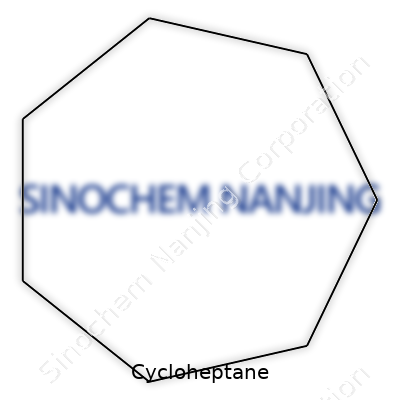
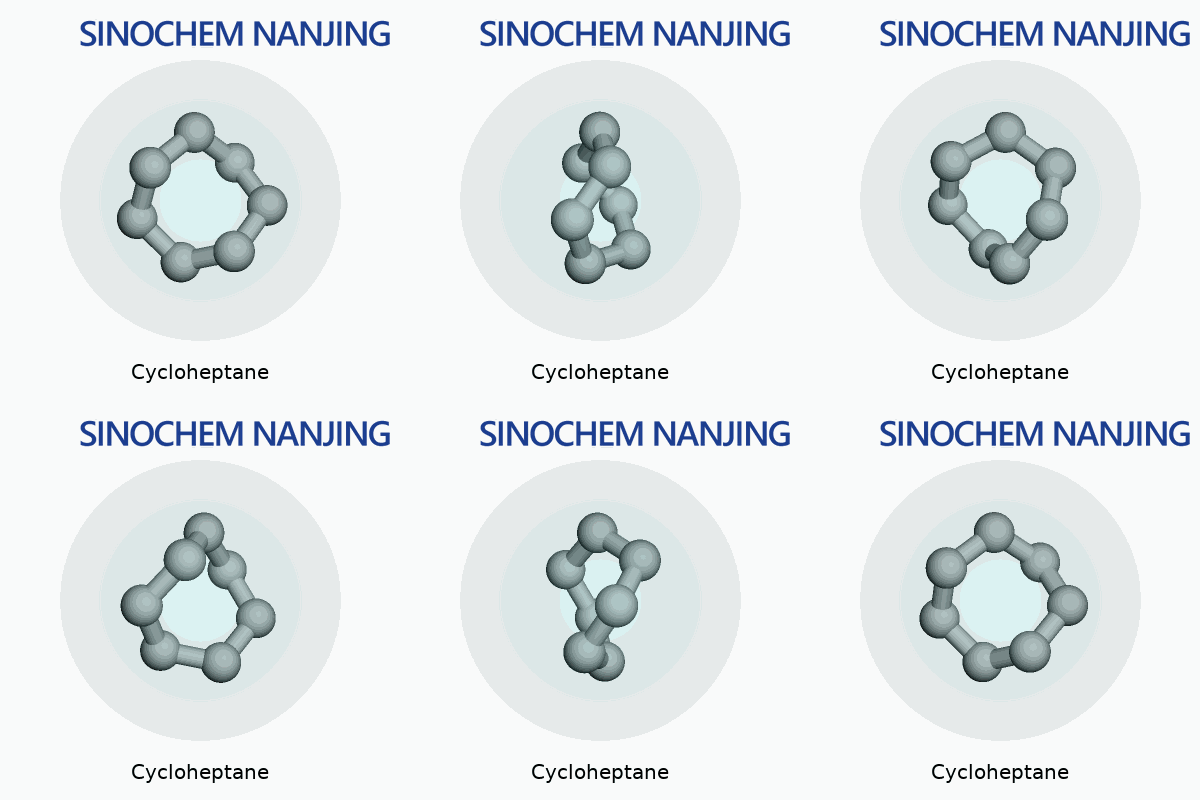
| Names | |
| Preferred IUPAC name | Cycloheptane |
| Other names |
Heptamethylene Hexamethylene methane |
| Pronunciation | /ˌsaɪ.kloʊˈhɛp.teɪn/ |
| Identifiers | |
| CAS Number | 291-64-5 |
| Beilstein Reference | 1690823 |
| ChEBI | CHEBI:35838 |
| ChEMBL | CHEMBL132365 |
| ChemSpider | 8079 |
| DrugBank | DB03237 |
| ECHA InfoCard | 100.013.606 |
| EC Number | 203-782-3 |
| Gmelin Reference | 10734 |
| KEGG | C06588 |
| MeSH | D003470 |
| PubChem CID | 9253 |
| RTECS number | GY2625000 |
| UNII | G6YC7M3T3P |
| UN number | UN1146 |
| Properties | |
| Chemical formula | C7H14 |
| Molar mass | 98.19 g/mol |
| Appearance | Colorless liquid |
| Odor | Petroleum-like |
| Density | Density: 0.811 g/mL at 25 °C(lit.) |
| Solubility in water | insoluble |
| log P | 2.92 |
| Vapor pressure | 3.33 kPa (at 25 °C) |
| Acidity (pKa) | ~51 |
| Basicity (pKb) | 14.24 |
| Magnetic susceptibility (χ) | -70.5e-6 cm³/mol |
| Refractive index (nD) | 1.426 |
| Viscosity | 0.98 mPa·s (25 °C) |
| Dipole moment | 0.00 D |
| Thermochemistry | |
| Std molar entropy (S⦵298) | 199.2 J·mol⁻¹·K⁻¹ |
| Std enthalpy of formation (ΔfH⦵298) | −156.0 kJ/mol |
| Std enthalpy of combustion (ΔcH⦵298) | –4323.7 kJ/mol |
| Hazards | |
| GHS labelling | GHS02, GHS07 |
| Pictograms | GHS02,GHS07 |
| Signal word | Warning |
| Hazard statements | H226, H304, H315, H336, H411 |
| Precautionary statements | P210, P233, P240, P241, P242, P243, P261, P271, P280, P303+P361+P353, P304+P340, P312, P331, P370+P378, P403+P235, P405, P501 |
| NFPA 704 (fire diamond) | 1-3-0 |
| Flash point | -4 °C |
| Autoignition temperature | 220 °C (428 °F; 493 K) |
| Explosive limits | 1.1–6.0% |
| Lethal dose or concentration | LD50 Oral Rat 2050 mg/kg |
| LD50 (median dose) | LD50 (median dose): Oral (rat) 5000 mg/kg |
| NIOSH | GU8575000 |
| PEL (Permissible) | C: 300 ppm |
| REL (Recommended) | 200 ppm |
| IDLH (Immediate danger) | 1000 ppm |
| Related compounds | |
| Related compounds |
Cyclohexane Cyclooctane Cyclopentane Cyclodecane Methylcyclohexane |



