Copper Selenate: A Practical Look from History to Future Uses
Historical Development
Copper selenate entered the scene after scientists started exploring selenium chemistry in the 19th century. For generations, researchers focused mostly on simpler selenium salts. Factories in Germany and Russia worked with early selenium compounds for glass coloring and electronics before anyone cared about copper pairing. By the mid-20th century, chemical industries looking to boost semiconductor efficiency and catalysis took a fresh look at copper selenate. Today, the compound has moved from a laboratory curiosity to a specialist product for industrial chemistry and research thanks to work in both Europe and North America, reflecting a pattern where demand rises each time electronic, agricultural, or medical applications evolve.
Product Overview
You can recognize copper selenate as a blue-green crystal or powder. Labs and factories alike value its strong solubility in water. In most cases, it shows up in technical grade for research, or as a concentrate for specialty tasks. It rarely lands in consumer products but often finds a place in intermediate chemical reactions, such as laboratory synthesis and material science. Chemical supply houses run quality controls on each batch, keeping track of unusual impurities, since product grade strongly impacts safety for further use.
Physical & Chemical Properties
This salt looks striking with its deep blue hue, which stems from copper’s d-to-d electron transitions. Copper selenate’s melting point stands around 59°C for the hydrated form; the anhydrous salt has different characteristics and forms at higher temperatures. Its chemical formula is CuSeO4, and it dissolves in water with ease, letting researchers manipulate it in solution more easily than many copper compounds. The hydrated form often appears as triclinic crystals. Its oxidation states and reactivity with acids or bases provide a roadmap for advanced uses in catalysis, electrochemistry, or precursor synthesis.
Technical Specifications & Labeling
Companies selling copper selenate must stick to strict specs. Typical technical sheets list copper (II) at 18-20% and selenium at 27-30%. Reputable suppliers mark each container with grades such as “analytical reagent,” “technical,” or “high purity.” Labels always display batch number, date, net weight, handling precautions, and relevant hazard icons. A clear, readable label reporting copper, selenium, and sulfate content proves critical in labs and factories, because mistakes can bring real risks if workers confuse similar-looking copper salts.
Preparation Method
Most copper selenate comes from treating copper oxide or copper carbonate with selenic acid. Chemists dissolve copper precursor in hot selenic acid solution, then let the selenate crystallize out as it cools. Each step needs careful temperature and pH control to prevent by-product formation like copper selenite or elemental selenium. Large producers rely on glass or Teflon reactors for clean reactions. Some labs start from copper sulfate with a selenic acid exchange—a trick I’ve found helpful when certain reagents go out of stock.
Chemical Reactions & Modifications
Copper selenate shows diverse reactivity. It works as a strong oxidizer when mixed with certain organic molecules or reduced metal ions. Standard tests reveal copper selenate can hydrolyze to copper oxide and selenium dioxide if heated, or yield elemental selenium if exposed to strong acid and reducing agents. Some research teams exploit these reactions to create nanomaterials or composites for advanced electronics. Studying these secondary reactions, you find that exact control over temperature, pH, and reagent order matters more than familiar reactions with simpler salts.
Synonyms & Product Names
Apart from “copper selenate,” chemical catalogs sometimes list this substance as “cupric selenate,” “selenic acid copper (II) salt,” or under CAS Number 15604-89-8. European suppliers call it “Selenate de cuivre,” while older US patents may list “selenate of copper.” Rare technical references mention “copper(II) selenate” but common academic papers stick to copper selenate to reduce confusion, especially in multi-lingual studies.
Safety & Operational Standards
Copper selenate combines hazards from both the copper and selenium atoms. Exposure by inhalation or through the skin must be avoided, so full PPE becomes standard procedure. Industrial sites using copper selenate install ventilation, emergency showers, and spill kits at every station where open handling happens. NIOSH and OSHA have placed firm exposure limits for selenium compounds, since both acute and chronic exposure cause severe toxicity in people and animals. All waste handling sticks to regulations—no shortcuts possible here, since copper selenate runoff can poison aquatic life. In local labs, I’ve seen training and secondary checks reduce accidents related to improper storage or disposal. Fire safety standards warn against letting copper selenate come into contact with combustibles or acids due to the risk of toxic fumes.
Application Area
Field experience points to copper selenate as an unusual but useful specialty salt. Material scientists often rely on it for precursor solutions in thin film deposition, such as growing selenide semiconductor layers for solar cells. Some agrochemical researchers explore copper selenate salts as micronutrient additives—but toxicity limits field use compared to copper sulfate. Analytical chemists use it for redox titrations involving selenium assays. In catalysis and pigment synthesis, its strong oxidative power controls color and reaction speed. Researchers in toxicology also employ copper selenate as a control or comparison salt for selenium metabolism, tracing how organisms handle selenium in oxidized form.
Research & Development
Lab notebooks fill up quickly as new applications emerge. Today’s R&D groups study copper selenate for battery components—blending selenium’s conductivity with copper’s charge transfer capabilities. Electronic device fabrication benefits from copper selenate in micro-patterning, where it lays down precise layers or traces on semiconductor wafers. Materials teams investigate composites that combine copper selenate with organic polymers or nanostructures. Funding from green tech sectors has brought extra resources to push selenium chemistry toward safer, more sustainable applications. Chemical engineers design new processes for recycling selenium wastes, hoping to reclaim usable salts like copper selenate from spent catalysts.
Toxicity Research
Toxicologists devote real energy to understanding copper selenate’s risks. Mice and rat studies reveal that ingestion or inhalation, even at low doses, brings acute toxicity, marked by gastrointestinal, neurological, and cardiovascular symptoms. Chronic exposure studies document copper and selenium buildup in organs, which disrupts enzyme systems and triggers oxidative stress. The US National Institutes of Health highlight a narrow window between essential selenium and toxic doses; copper selenate sits above this threshold, so strict regulation applies throughout the world. Medical journals link selenium poisoning (selenosis) with symptoms from hair loss to severe liver injury—solid evidence for tight limits in soil, water, and animal feed. Researchers have turned to nonlinear dose-response models and biomarker tracking to estimate risks for workers and wildlife.
Future Prospects
Copper selenate faces a challenging but promising future. Next-generation energy storage and electronics could spark renewed demand, as technologists look for materials with unique electrical and catalytic properties. Environmental chemists scout for safer, less persistent selenium carriers, aiming to curb pollution linked to copper and selenium. Advances in hazard mitigation, especially with sealed processing and closed-loop waste recovery, might open up larger-scale applications. Toxicity concerns will always limit broad use, but focused R&D may turn copper selenate into a cornerstone for new catalysts and solar materials. As long as producers and regulators keep an eye on safety and environmental impact, copper selenate stands ready to play a role in tomorrow’s laboratories and clean-tech industries.
What is Copper Selenate used for?
Looking Beyond the Lab: Where Copper Selenate Shows Up
Anyone who’s dug into chemical compounds will run across names like copper selenate. At first glance, it doesn’t seem like a household staple—few people keep a vial of this blue salt beside their sugar and flour. Even so, copper selenate finds work in places where science and industry overlap, and its uses give a lesson in both opportunity and caution.
Specialty Chemistry: Why Copper Selenate Gets Attention
The story of copper selenate usually starts in the lab. Selenate comes from selenium, a trace mineral that matters for living things in small doses but turns toxic fast. Combine selenium with copper, and you get a compound researchers lean on for precise experiments or to synthesize other, more complex chemicals.
Lab researchers use copper selenate to study how selenium behaves in different forms. They can look at reactions, measure toxicity, or test methods for recovering valuable metals. This work hasn’t stayed locked behind university doors; it influences how mining, waste disposal, and even animal nutrition unfold in real life.
Agricultural Footprints and Livestock Health
Selenium deficiency strikes in some soils, and copper shows up as a necessary micronutrient too. Together, these two elements matter for livestock health. In certain regions, researchers tested copper selenate in feeds to correct deficiencies. This solution saw more traction in the past than today—risk follows with selenium compounds, since the difference between effective dose and toxic dose stays razor thin. Decisions in this area draw from science, animal health records, and a commitment to food safety.
Risks Worth Respecting
Using copper selenate involves real hazards. Inhaling or ingesting it can poison people or animals. Spills and improper disposal mean selenium builds up in the environment, which causes its own chain of trouble: think of water contamination, fish deaths, and crop losses. I remember reading case studies from the American West, where selenate compounds from irrigation runoff caused deformities in local wildlife. It doesn’t take much—this isn’t something to handle carelessly or ignore in policy talks.
Regulation: The Importance of Guardrails
Countries around the world label copper selenate as hazardous. Rules limit where and how it’s used. In the United States, handling or transporting it falls under workplace safety agencies and environmental regulators. They publish limits—in milligrams per cubic meter—for exposure, while advising on spills and storage. Real enforcement, though, comes down to everyday choices on the ground. Places that treat chemicals with respect avoid disaster. Skipping steps costs health, money, and reputation.
Moving Forward
The safest route with copper selenate combines careful handling, strict adherence to regulations, and ongoing education for everyone involved—from researchers to workers in the field. Substitute less hazardous substances when possible, and invest in research that shrinks the environmental footprint. Science may someday offer safer, more effective alternatives for industry and agriculture. Until then, knowing both the promise and the peril of copper selenate lets us protect people, animals, and the world we depend on.
What is the chemical formula of Copper Selenate?
Understanding Copper Selenate
Copper selenate stands out as a less common but interesting compound in the world of inorganic chemistry. Its chemical formula is CuSeO4, which tells a story about the elements involved: copper, selenium, and oxygen. This combination forms a crystalline salt, adding another notch to copper’s long résumé of oxides, sulfates, and chlorides.
Real-World Significance
Many trace minerals like copper selenate don’t get the spotlight, yet they deserve some attention. Sitting on a shelf in a classroom or lab, the formula CuSeO4 might look unremarkable. Working in environmental analysis exposed the pivotal role of copper and selenium, both vital in trace doses yet potentially hazardous if mishandled. Chemists and environmental scientists keep an eye on these compounds because their presence, or their absence, can mean life or death for plants, especially in soils where micronutrients are already scarce.
Features and Hazards
Pure copper selenate appears as a blue-green crystalline solid. While its appearance might draw attention, its chemical properties pull even more weight. Copper itself supports electron transfer in living cells, but selenium’s dual nature means it helps prevent cell damage—while excess turns toxic. Every batch I worked with came with warning labels for a good reason. The danger isn’t theoretical; both copper and selenium compounds have been linked to poisoning in animals and humans. Too little means trouble for enzymes and immune function; too much translates into major health or environmental crises.
Industrial and Agricultural Use
CuSeO4 occasionally finds its way into specialty fertilizers, animal feed mixes, and certain chemical syntheses. Farmers care about long-term soil health, and copper selenate sometimes gets tested for correcting soil deficiencies. Responsible sourcing and handling add to the cost, but experience in agricultural labs showed the benefit of proper micronutrient balancing. Miscalculating copper or selenium levels led to stunted crops, or worse, livestock poisoning. Professionals in these fields talk often about getting concentrations just right.
Pathways to Safer Use
Accidents and contamination crop up in places least expected. After seeing runoff from copper-rich soils, monitoring protocols became standard practice in many regions. Getting rigorous about labelling and storage prevented spills and blistered hands more than once. Using personal protective equipment stopped short-term exposure, yet strong policies for education and waste management did more to curb long-term risk.
Moving Forward with Knowledge
Nobody will ever call copper selenate a household word, but the formula – CuSeO4 – stands behind many scientific and industrial processes. From chemistry classrooms to commercial farms, understanding the balance of such compounds keeps people and ecosystems healthier. Twenty years working around both the lab table and the field convinced me the best policy stays grounded in information, transparency, and common sense. Chemistry, like farming, works best with a little respect—and a close eye on the details.
Is Copper Selenate hazardous to health?
What Is Copper Selenate?
Copper selenate, a chemical compound with both copper and selenium, sometimes shows up in laboratories and industry. Both copper and selenium sit on the periodic table as essential trace elements for human and animal health. Too much, though, flips the benefit into the risk column. My first memory of a copper compound was helping my dad scrape a corroded battery terminal, feeling the green-blue residue stick to my fingers. That mess was a reminder—these minerals are in the world around us, but that doesn't always make them safe in every form.
Health Hazards: What the Science Says
Working with copper selenate means handling a double-edged sword. Copper and selenium both play important roles in the body, but excess exposure tips the balance toward danger. Studies show too much copper can irritate skin and eyes, cause headaches, and even lead to stomach cramps or vomiting. Selenium in high doses raises the risk of hair loss, nerve damage, and garlic breath you can’t wash away. Now, combine these elements, and you’re dealing with a substance that carries real risks, even at lower concentrations.
Inhaling copper selenate dust brings quick consequences: throat irritation, coughing, and shortness of breath show up fast—I’ve been around plenty of compounds in a lab that forced me to step outside for a gasp of fresh air. Even a little in contact with skin leaves rashes, and the eyes react painfully. Chronic exposure paints a darker picture: copper can harm the liver and kidneys, while too much selenium targets the nervous system.
Real-World Exposure
Most people never encounter copper selenate in everyday life; this is a compound for industry and the lab. Factory workers, researchers, and folks handling specialized pesticides or chemicals land in the highest risk group. I’ve learned that the level of hazard always comes down to how, and how much, you’re exposed. Accidents—leaking containers, spills, even careless storage—multiply the danger.
Staying Safe With Copper Selenate
Regulations in Europe, the United States, and other places demand strict controls. Proper storage matters—locked cabinets, clear labels, and keeping incompatible chemicals far apart. In my own lab days, personal protective equipment—goggles, gloves, long sleeves—felt less like overkill and more like common sense. It’s not just about bureaucracy; respirators and eye protection reduce a real risk.
Cleaning up spills calls for careful steps; specialized disposal keeps copper and selenium compounds out of the soil and waterways. Local communities shouldn’t bear the cost of chemical carelessness. Keeping records of copper selenate movement within a site helps track any losses or leaks before they create a crisis.
Mitigating the Risks
A strong safety culture grows from honest training and supervisors who lead by example. If someone doesn’t know how to clean a spill, or skips the gloves to save time, risk rises. Even good air handling systems need regular checks to prevent accidental inhalation. On top of that, workplaces benefit from regular audits, third-party inspections, and transparent health monitoring for anyone routinely around copper selenate.
Accurate knowledge about copper selenate’s hazards steers good decisions. I’ve found that accepting the risks and acting thoughtfully helps protect health—both yours and your coworkers’. Using less hazardous alternatives, wherever possible, also deserves real consideration. Staying educated, practicing safe handling, and keeping an eye on new research all work together to lower the chance of harm.
How should Copper Selenate be stored?
Understanding the Risks Behind the Label
Copper selenate isn't something you come across casually. Labs and industries rely on it for very specific chemical processes. Its hazards aren’t just about the stigma of toxic metals; the facts show that its selenium content poses real risks. Inhaling its dust or letting it leach into water can cause trouble—for both human health and the wider environment.
Looking at Real Storage Conditions
In my early lab days, mistakes with chemical storage caused headaches that stretched well beyond the lab bench. I remember opening a storage cabinet where someone kept a jar of copper selenate close to acids. Within days, crystals showed signs of corrosion. Over time, vapors from aggressive chemicals tended to attack everything nearby, raising the odds of an incident. Real-life lessons show that storage means more than sticking a jar on a dry shelf and hoping for the best.
So, copper selenate goes somewhere far from acids, bases, combustible materials, and moisture. Airtight glass or high-density plastic bottles carry the lowest risk of reaction or leaking. Every label should stay visible, updated, and written in permanent ink—skipped steps here guarantee confusion down the line.
Isolation from Water and Food Sources
Selenium compounds can find their way into soil and streams quickly. Once, a fellow technician left a selenium solution near a sink and we later found traces in the trap. Downstream tests flagged it right away. Even tiny leaks contaminate water faster than you’d expect.
Store the jar in a dedicated poison cabinet or a well-ventilated chemical storage room, away from sink drains, food prep areas, and anything traffic-heavy. Keep a secondary containment tray underneath the bottle to catch spills before they reach the shelf. In older buildings where chemical storage gets lumped in with janitor supplies or breakrooms, there’s no room for shortcuts.
Physical and Regulatory Safeguards
Temperature swings often get ignored unless someone has dealt with containers caked in condensation or sitting in sunlight. I’ve seen labels curl and adhesive fail just from extreme storage or from bottles going from cold to warm rooms too quickly. A steady, cool, and dry spot away from direct sunlight dodges half the problems before they start.
Regulations back this up, too. The Occupational Safety and Health Administration (OSHA) demands that hazardous chemicals appear on detailed inventories, with each container checked regularly. Even a small lapse could bring both legal trouble and health emergencies.
Spill control plans make a huge difference. Anyone handling copper selenate needs goggles, gloves, and a dust mask, even during storage checks. Spill kits—absorbent pads, pH test strips, neutralizers—belong within arm’s reach, not locked away where no one remembers them.
Better Storage, Lower Risk
Storing copper selenate safe and sound means thinking months ahead, not minutes. Keep it away from the wrong chemicals, light, heat, and anything edible. Every step in storage isn’t just about following a rule—it’s about leaving fewer chances for disaster, both for people inside the building and for anyone downstream.
What are the safety precautions when handling Copper Selenate?
Understanding the Risks
Copper selenate isn’t something you find on a grocery shelf. It falls among those industrial chemicals that demand a fair bit of respect. Both copper and selenium have critical uses in electronics and agriculture, but together, this compound deserves particular caution. Years in science labs and industrial environments have taught me one thing: don’t take shortcuts with chemicals you aren’t familiar with. Skin contact, inhalation, or even accidental ingestion can bring on trouble fast—selenium compounds can be toxic at low doses, and copper, while essential for health in tiny amounts, turns harmful in excess.
Personal Protective Equipment (PPE) Comes First
No seasoned worker goes near copper selenate without suiting up. Lab coats, chemical-resistant gloves (nitrile or neoprene outperform latex here), and splash-proof goggles form the basics. Add a face shield in any scenario that risks splashing. Dust isn’t always visible, but it poses just as much risk to lungs as to skin—so a well-fitted respirator with the correct cartridge makes sense. Proper PPE isn’t about comfort; it’s about lowering the odds of an accident turning ugly.
Working Environment Matters
Tinkering with copper selenate inside a fume hood or a well-ventilated area makes a world of difference. I’ve seen folks let their guard down in cramped spaces, only to face dizziness or worse. Good engineering controls, like local exhausts or ducted fume hoods, help limit air contamination. A clean and tidy working space reduces the chance of mixing up chemicals or brushing against a spill. Keeping only what you need on the bench minimizes distractions and mistakes.
Handling and Storage
Clear labeling and careful storage help prevent expensive and dangerous mix-ups. Storing copper selenate away from strong acids, reducing agents, and anything flammable keeps the risk of unwanted reactions low. Containers should be airtight and corrosion-resistant. From long years carrying out inventory checks, I can tell you that regular inspections catch leaks early and protect not only workers but also the wider environment. Storing spill cleanup kits—not just any sand, but material designed for hazardous chemical spills—within arm’s reach can save precious time.
Emergency Preparedness
Accidents rarely give warning. A direct splash calls for a fifteen-minute rinse at the emergency eyewash or shower station. Quick action and having everything ready beats having to think twice. Spills, even small ones, need careful containment using absorbents that keep the powder from spreading. Proper disposal into a clearly marked hazardous waste container keeps the chain of safety intact. Emergency contacts and safety data sheets should hang on the wall, not buried in a drawer.
Training and Culture
Good intentions only go so far; strong habits close the gap. Training must include not just protocols, but also real-life case studies—news of an incident or a field example always hits home. New team members learn best through demonstrations rather than lectures. Reviewing near misses during team meetings makes everyone more vigilant. Management sets the tone by investing in regular refresher courses and updating safety protocols as new research emerges.
Toward Safer Practices
Technology keeps advancing, bringing safer alternatives and better PPE. Substituting less toxic compounds, redesigning workspaces, or automating routine handling helps. Regular check-ups with occupational health professionals catch problems early. At the end of the day, everyone wants to clock out in the same health as they clocked in. Safety isn’t paperwork; it’s the practices we keep every day.
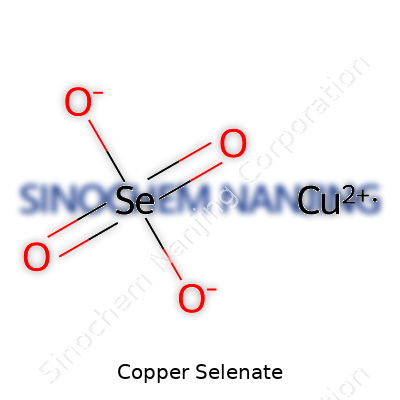
| Names | |
| Preferred IUPAC name | Copper(2+) selenate |
| Other names |
Copper(II) selenate Cupric selenate |
| Pronunciation | /ˈkɒpər ˈselɪneɪt/ |
| Identifiers | |
| CAS Number | 10720-13-9 |
| Beilstein Reference | 1900663 |
| ChEBI | CHEBI:86460 |
| ChEMBL | CHEMBL3300443 |
| ChemSpider | 20568729 |
| DrugBank | DB11184 |
| ECHA InfoCard | ECHA InfoCard: 100.033.965 |
| EC Number | 232-632-1 |
| Gmelin Reference | 67620 |
| KEGG | C18725 |
| MeSH | D003823 |
| PubChem CID | 24549 |
| RTECS number | GL8750000 |
| UNII | UJQ8S2P724 |
| UN number | UN3289 |
| Properties | |
| Chemical formula | CuSeO4 |
| Molar mass | 221.51 g/mol |
| Appearance | Blue crystals |
| Odor | Odorless |
| Density | 4.48 g/cm³ |
| Solubility in water | Soluble |
| log P | -4.79 |
| Vapor pressure | Decomposes |
| Acidity (pKa) | > 2.34 |
| Basicity (pKb) | -6.1 |
| Magnetic susceptibility (χ) | -22.0e-6 |
| Refractive index (nD) | 1.744 |
| Dipole moment | 0 D |
| Thermochemistry | |
| Std molar entropy (S⦵298) | 164.6 J·mol⁻¹·K⁻¹ |
| Std enthalpy of formation (ΔfH⦵298) | -661.8 kJ/mol |
| Pharmacology | |
| ATC code | A12CX Copper Selenate |
| Hazards | |
| Main hazards | Toxic if swallowed, inhaled, or in contact with skin; causes severe skin burns and eye damage; may cause damage to organs; very toxic to aquatic life. |
| GHS labelling | GHS07, GHS09 |
| Pictograms | GHS06,GHS09 |
| Signal word | Danger |
| Hazard statements | H302, H332, H410 |
| Precautionary statements | P264, P270, P273, P301+P312, P330, P391, P501 |
| Explosive limits | Non-explosive |
| Lethal dose or concentration | LD50 oral rat 4 mg/kg |
| LD50 (median dose) | LD50 (median dose): 5.2 mg/kg (oral, rat) |
| PEL (Permissible) | PEL = "0.1 mg/m³ |
| REL (Recommended) | 0.05 mg/kg |
| IDLH (Immediate danger) | 1 mg/m3 |
| Related compounds | |
| Related compounds |
Copper(II) sulfate Copper(II) selenite Sodium selenate Selenium dioxide |



