Copper Arsenite: From Historical Pigments to Modern Caution
Historical Development
Copper arsenite began attracting attention back in the 19th century under the pigment name “Scheele’s Green.” Painters and wallpaper makers sought out this bright, vivid green, not knowing the risks it posed. Discovery soared with European industrial growth. Manufacturers churned it out for everything from fabrics to candles. Napoleon’s death chamber had wallpaper colored by copper arsenite, causing endless debate among historians about whether this green truly played a villain’s role in toxic arsenic exposure. It sits as a reminder of chemistry’s double-edged sword, a story of ingenuity entangled with public health hazards.
Product Overview
Copper arsenite shows up as a green, crystalline powder. Its color stands out, making it appealing to early artists and decorators. Industrial chemists once marketed it under names like mineral green, King’s green, and Vienna green. The demand surged for its striking appearance. Before anyone realized the danger, factories produced tons for everyday products. Its ease of use in paints and dyes tempted users to overlook its darker side. Even garden pest control manufacturers blended it into insecticides, setting the stage for later regulatory crackdowns.
Physical & Chemical Properties
Copper arsenite appears in shades of vibrant green, but there’s more lurking beneath the surface. The powder hardly dissolves in water, yet it breaks down a bit in acids or alkalis, releasing copper and arsenic ions. Exposing it to strong heat converts it to copper oxide and toxic arsenic compounds. Its molecular structure can change depending on preparation details, shifting from CuHAsO3 to more complex variants. These differences matter not just to chemists but to anyone tasked with handling or disposing of old art supplies or industrial remnants. Knowing copper arsenite's tendency to degrade under moisture or UV light taught pigment makers some hard lessons.
Technical Specifications & Labeling
Most regulatory authorities require chemicals like copper arsenite to feature bold hazard warnings. Labels include details on chemical composition, batch number, manufacturing date, toxicity statements, and safety precautions. Technical data sheets spell out melting points, densities, and recommended handling methods, but even today, confusion over naming—with different synonyms used by various suppliers—leads to trouble. Those tasked with monitoring health and safety lean heavily on labeling. Without clear guidance, users may miss acute risks from inhalation or long-term cancer hazards. Robust documentation serves not just regulatory compliance, it also keeps workers out of harm’s way.
Preparation Method
Copper arsenite forms by reacting copper sulfate with sodium arsenite or arsenic trioxide under controlled conditions. The process usually involves dissolving both salts in hot water, then mixing solutions to trigger precipitation. Crystals filter out, sometimes washed and dried for purity. Small changes to conditions—temperature, concentrations, stirring rates—affect crystal size and shape. The process looks simple on paper, but improper mixing or poor ventilation once spelled disaster for workers of older factories. These days, robust containment and airflow systems have become the norm whenever anyone prepares this compound for research or controlled uses.
Chemical Reactions & Modifications
Copper arsenite does not stay inert under many laboratory conditions. Exposing it to acids causes breakdown and release of copper and arsenic ions. In strong alkaline environments, different copper arsenite complexes can form, with shifts in solubility. Combining it with reducing agents like hydrogen or sulfur compounds often triggers chemical reduction, forming copper(I) compounds and elemental arsenic. In industrial history, attempts to modify the structure with phosphate or carbonate additives produced green pigments with slightly different hues but with little thought for long-term stability or leaching risks. Such tweaks highlight chemistry’s creativity, even as modern safety standards now limit this area of experimentation.
Synonyms & Product Names
Copper arsenite ends up in records under many names. Scheele’s Green is the most famous, but mineral green, King’s green, and Vienna green all refer to closely related formulations. Chemists catalog it as copper(II) arsenite or cupric arsenite, and sometimes just as arsenious acid, copper(II) salt. Older safety documents and pigment supply lists included masthead names to attract artists. This patchwork of synonyms can confuse archivists, toxicologists, and safety officers searching for hazardous materials in stockrooms or museums. Careful scrutiny of all aliases helps to identify legacy materials left in old containers long after public sales stopped.
Safety & Operational Standards
Few chemicals command more caution in modern labs than copper arsenite. OSHA and the European Union both impose strict exposure limits for arsenic and copper dusts. Standard operating procedures call for full PPE, local exhaust ventilation, and secure fume enclosures. Many countries ban its use outside of controlled research or restoration settings. Facilities must keep emergency spill and decontamination kits nearby. Workers need regular medical checks for arsenic exposure. Years ago, disregard for these standards triggered clusters of poisonings among pigment makers. Today, compliance depends on clear training, robust enforcement, and regular audits, all aimed at keeping teams healthy and facilities free of contamination.
Application Area
Historically, copper arsenite dominated as a pigment in wallpaper, textiles, paintings, and even children’s toys. Toxicity concerns forced it out of consumer products by the early 20th century. Some niche applications hung on in research laboratories, teaching collections, or art restoration shops dealing with old works. Soil scientists occasionally study it to track heavy metal movement in contaminated plots; environmental chemists examine its breakdown products in waste sites. The art world still debates how best to preserve original pieces colored with this pigment, knowing the health trade-offs. Its history stands as a lesson in unintended consequences for material scientists refining new chemicals today.
Research & Development
Innovators once poured resources into refining colorfastness, crystal size, and blending properties of copper arsenite. Later, research shifted to examining its toxicological impact and environmental fate. Contemporary studies focus on identifying breakdown products and tracking legacy contamination in artifacts and soil. Analytical chemists use high-precision methods like X-ray fluorescence or mass spectrometry to quantify every trace left in old samples. Some R&D programs center on remediating sites polluted with arsenic-laden pigments, using methods like phytoremediation or chemical stabilization. The new frontier looks less at applications, more at cleanup and safe stewardship.
Toxicity Research
Copper arsenite poses threat mainly through inhalation or ingestion. Chronic exposure brings on symptoms from headaches to skin lesions and increased cancer risk. Animal studies show clear evidence of carcinogenicity and systemic toxicity. Arsenic components cross populations: museum staff, restoration artists, and residents exposed to old wallpaper all face real risks. Years of public health records tie copper arsenite to outbreaks of poisoning in homes, workshops, and factories. Toxicologists map its movement through the body and the environment, constantly reassessing safe exposure levels as science advances.
Future Prospects
Nobody expects copper arsenite to stage a comeback in consumer goods. The future leans toward safer pigment technologies and deeper study of past mistakes. Some research teams push to develop better methods for detecting and remediating old arsenic-based pigments in homes, museums, and waste sites. Art conservation experts seek preservation techniques that safely stabilize original works without endangering staff or visitors. Sustainability experts draw lessons from its story for regulating new chemical introductions. The tale of copper arsenite remains both a landmark in pigment innovation and a cautionary chapter in environmental health, guiding industry, researchers, and policymakers to prioritize both creativity and caution.
What are the primary uses of Copper Arsenite?
Pigments in Paints and Fabrics
Copper arsenite isn’t a chemical you find on a grocery store shelf, yet its fingerprints stretch back across history, especially in pigments. The vibrant green of Scheele’s Green, made from copper arsenite, brought dramatic color to wallpapers and paint in the 19th century. Artisans turned to this color for its brightness, price, and resistance to fading. Victorian homes—maybe even your great-great-grandparents’ living rooms—glowed with these green hues. The punchline: many didn’t realize the danger right in their wallpaper. The arsenic slowly released into the air, sometimes making folks sick. This tragic chapter reminds us to stop and check: today’s pigments now lean away from such toxic metals in favor of safer formulas.
Preservation in Wood Treatment
Dig up stories about old rail ties, fence posts, or telephone poles, and you’ll find copper arsenite in the mix. It soaked into wood to hold back rot, insects, and mold. Nature works fast on the things we build; preservatives like these helped timber hold strong through bitter winters and soggy summers. But the consequences run deep. Copper arsenite doesn’t just stay where you put it. Rain and time can move it into nearby soil and water, which gets concerning near gardens or playgrounds. Many countries have now barred arsenic-treated lumber for homes or play spaces, replacing it with safer compounds such as copper azole or alkaline copper quaternary. Anyone using or removing treated wood today wears gloves and a mask, and considers where the shavings and sawdust end up.
Insecticides and Agricultural Challenges
For generations, copper arsenite offered farmers a way to chase off insects and fungal blights. There’s no denying its punch—fields of potatoes, cotton, and apples grew that much better after spraying with these compounds. Farms fought off locusts, beetles, and moths without the modern arsenal of targeted chemistries. But toxic residues stubbornly persist: soils, water runoff, and food crops can all absorb the chemical cocktail. The result brings regulatory headaches and a real risk to food safety and farmworker health. These days, most agricultural experts point growers to safer pest control solutions, like integrated pest management or biological controls, which keep residue far below danger levels.
Health Risks and Shifting Regulation
Stories about copper arsenite wouldn’t run far without talk of arsenic itself. Long-term exposure damages skin, lungs, and nerves; it can lead to cancer in those who touch or breathe too much of it. My own work with environmental labs showed traces of arsenic still hiding in garden soil many blocks from old painted fences. Families deserve better protection, which is why health regulations now treat these chemicals with real caution. Regular soil screenings and safe disposal guidelines make a difference, but anyone restoring old homes or farming near historic fields faces tough challenges cleaning up the past.
Safer Solutions Moving Forward
Today, scientists channel their efforts into replacements. Pigment chemists invent non-toxic dyes that don’t leach into the home environment; builders and farmers choose less persistent preservatives and pesticides. Education works as much as enforcement—alerting people about what’s in their homes or fields clears the path for healthier choices. Even as copper arsenite fades out of daily life, lessons from its story shape our current decisions about chemicals and the environment. Sometimes history’s brightest colors have the darkest warnings, and that’s worth remembering every time we reach for a brush or step into the backyard.
Is Copper Arsenite toxic to humans or animals?
Copper Arsenite: More Than Just a Chemical Formula
Many folks run across copper arsenite in conversations about pesticides, pigments, or wood preservatives, and the first question is often about its safety for people and animals. Copper arsenite has a history tied to its bright green pigment called “Scheele’s Green.” Artists and wallpaper manufacturers in the 19th century loved this shade, but stories about mysterious illnesses soon followed. Turns out, there was a good reason for concern.
Toxicity and Real-World Harm
Copper arsenite contains both copper and arsenic. Both are toxic in different ways, but it’s really the arsenic that should set off alarm bells. The CDC says arsenic is a known carcinogen and exposure can lead to cancers of the lungs, skin, bladder, and more. Acute poisoning—through eating, inhaling, or skin contact—can cause nausea, vomiting, stomach pain, diarrhea, confusion, and even death. The Harvard School of Public Health reminds us that chronic exposure, even at low doses over time, builds up in the body. Kids and pets are even more at risk because they play close to contaminated dust, dirt, or old green paint.
In the animal world, the story runs along similar lines. Dogs and cats are curious and don’t always stay away from things they shouldn’t sniff or lick. Livestock can pick up contaminated feed or water, leading to poisoning that hits the nervous system, kidneys, and liver. Vets see symptoms like drooling, weakness, staggering, and in bad cases, organ failure or sudden death. Farm animals can drop dead from arsenic poisoning after drinking from a contaminated trough. That’s not just bad luck; it’s a problem with real consequences for food safety and farmers’ livelihoods.
Legacy and Lingering Threats
Old houses built before the rules changed may still hold copper arsenite in paint or wallpaper. Anyone breathing in dust during renovations can easily get exposed. According to the Agency for Toxic Substances and Disease Registry, even touching these surfaces long-term increases cancer risk. In some places, copper arsenite-treated wood from decades ago still shows up as garden boxes, benches, and fences. Rain and weather can leach arsenic into nearby soil, getting into vegetables or yard soil where kids or pets play.
Water supplies are another hidden route. Arsenic compounds move easily in groundwater, and wells in some rural areas have tested above safe limits set by the EPA. Because arsenic has no taste or smell, victims rarely know they're at risk until health problems kick in.
What Can Be Done?
The best answer is to keep copper arsenite far away from living spaces, gardens, and animal enclosures. If you run into vivid green paint or suspect treated wood, don’t start sanding or burning it. Both activities send arsenic particles into the air. For any old materials, hire a professional with the right gear for removal and disposal. Simple gloves and masks from a hardware store won’t block out arsenic dust.
People with private wells should test water regularly, especially in areas known for arsenic in soil or where old treated lumber was used. Farmers and gardeners can turn to safer, modern preservatives for new lumber and stick to well-labeled, regulated fertilizers and pesticides. Pets deserve clean spaces too: keep them away from old wood and painted objects during yard work or remodeling. Laws now strictly limit arsenic levels in products and workplaces. Still, vigilance and awareness can make sure history’s mistakes don’t become tomorrow’s emergency room visits.
What is the chemical formula of Copper Arsenite?
Understanding Copper Arsenite
Copper arsenite grabs attention because of its striking green color and its checkered history in pigments and pesticides. Its chemical formula, CuAsO2, stems from a combination of copper, arsenic, and oxygen atoms. People might’ve seen this substance listed as "Scheele’s Green" in old texts or museum catalogs. Despite its appealing appearance, the story of copper arsenite speaks to a complicated intersection of art, health, and environmental science.
Historical Use and the Risks
Looking back, copper arsenite found its way into paints and wallpapers across Victorian homes, offering a vibrant shade no other pigment matched. Artists and manufacturers loved its intensity; children’s toys, household items, and clothing sometimes carried this color. The popularity overshadowed a harsh reality—exposure put people at risk for arsenic poisoning. Even breathing in dust or touching painted surfaces caused harm. People began to notice symptoms like skin irritation, stomach troubles, and, in worst cases, death. It reminds me of old homes where fresh paint smell hung in the air—a scent loaded with hidden dangers when chemicals slip past regulations.
Current Relevance and Environmental Considerations
Copper arsenite doesn’t turn up in daily life as much these days, yet the compound illustrates the need for responsibility in chemical manufacturing. Studies from the World Health Organization confirm the toxicity of arsenic compounds, stressing the importance of safe disposal and clear labeling. Many countries pulled these pigments off the market long ago, but old antiques and building materials containing copper arsenite still linger, presenting risks today. Applying these lessons, communities now demand tighter regulations and testing for consumer goods—even for art materials designed for adults or children.
Health Safety and Practical Solutions
People documenting chemical exposure often point to copper arsenite as a worst-case scenario. Personal protective gear, strict workplace safety protocols, and broader public awareness empower workers and consumers. I’ve walked past renovation sites and seen the men in white suits, masks tight over their faces. Modern safety rules, such as those reinforced by OSHA, help prevent tragedy when dealing with historic pigments or contaminated soil. School curriculums can introduce chemical safety without scaring children but arming them with knowledge.
Green Chemistry: Moving Forward
Safer alternatives to copper arsenite now color products and artworks. The shift to non-toxic pigments reflects a broader adoption of green chemistry practices worldwide. Regulatory agencies, like the EPA, encourage development and use of substances that protect health without sacrificing performance. Manufacturers seek out approvals and consciously stay away from known hazards such as arsenic compounds. Communities voice concerns when discovering legacy waste, leading to cleanups and better living environments.
The presence of CuAsO2 in history and its decline in modern manufacturing show how science, public policy, and daily life intertwine. Recognizing these patterns, staying informed, and sharing knowledge reduces threats and creates safer spaces for generations to come.
How should Copper Arsenite be stored safely?
Why Copper Arsenite Calls for Serious Attention
Copper arsenite gets plenty of attention in industrial circles for its role in pigments and wood preservatives, but its hazards should never be brushed aside. This compound holds both copper and arsenic—two elements with long histories of sickening and harming those who underestimate them. Inhaling copper arsenite powder, or even coming into repeated skin contact, can invite real trouble. I learned during a training at a chemical facility that just a brief handshake with arsenic-laden dust can leave its mark for years. Peer-reviewed research has tied copper arsenite exposure to persistent skin problems, lung irritation, and chronic poisoning if things get out of hand. It’s the kind of material that believes in long-term consequences.
Choosing the Right Location
Safe storage starts with location. Keep copper arsenite well away from food, drink, and personal items—and make sure the space is only ever entered by folks who understand the rules. I’ve walked into cramped, stuffy chemical storerooms before, and it always unsettles me to see chemicals like this squeezed alongside paper towels or office supplies. Pick a spot with plenty of ventilation, so any stray dust or vapors have a way out and can’t build up in the air.
What the Container Looks Like Matters
Pick containers that don’t give up when the going gets tough. Glass, high-grade plastic, or sealed metal drums all stand up well under scrutiny. Tight-fitting lids block spills and keep fumes from escaping. I once watched a small leak from a damaged container stain an entire storeroom shelf green and send the air quality reading right off the charts. Labels prove their worth in moments like that. Mark every container with the full name, hazard warnings, and dates. If a spill happens, nobody wants to be scrambling to work out what they’re dealing with.
Temperature and Humidity Make a Difference
Keep the room cool and dry. Humidity turns copper arsenite powder clumpy and boosts the risk of chemical reactions that can release toxic arsenic vapors into the air. Solutions like silica gel desiccant or a simple dehumidifier cut this risk down to size. A friend told me how his team found corrosion and odd smells in one storeroom after a rainy spring. Only by drying everything out did they keep things under control.
Personal Safety Gear Should Never Be Optional
People moving or handling copper arsenite need gloves, goggles, and masks that stand up to fine particulates. I’ve felt the sting in my throat after once working without a mask during a cleanup. No shortcut saves time if it leads to a cough that lingers for weeks. Keep spill kits and emergency eyewash stations nearby, too.
Training Turns Theory into Practice
Training takes all these rules off the page and puts them into practice. I’ve seen experienced teams fall into bad habits—rushing, skipping checklists—when nobody reminds them of the risks. Regular drills make safe storage a reflex and make sure problems get spotted before they turn serious.
Regular Checks Keep Risks in Check
Walk through the storeroom on a schedule. Look for leaks, check expiry dates, and measure air quality. Audit storage practices to fix little mistakes before they snowball into bigger ones.
Smart Disposal Protects People and Places
Never dump copper arsenite with ordinary trash. Get a licensed hazardous waste disposal team involved—these people know how to neutralize arsenic compounds and stop them from making their way into soil and water. I’ve watched a disposal contractor in action—it takes time and costs money, but it protects everyone downstream.
What precautions should be taken when handling Copper Arsenite?
Understanding Why Copper Arsenite Demands Respect
Copper arsenite turns up in some paints, pesticides, and lab settings, though its popularity has faded for good reason. The green hue of Scheele’s Green comes with baggage. Both arsenic and copper pack a punch—arsenic, especially, gets its reputation from a long history of poisonings, factory accidents, and even murder mysteries.
The Risks Are Real
Breathing in dust or fumes, swallowing small amounts, or getting particles on the skin carry serious risks. Arsenic doesn’t play by anyone’s rules—it isn’t forgiving. You aren’t just talking a sore throat or a small rash. Arsenic exposure warps internal organs, damages nerves, and, after enough time, may trigger cancer. Even copper, which bodies need a bit of, becomes harmful at high doses. Go into any safety training, and they’ll tell stories of chemical burn incidents, persistent coughs, and the quiet cancers that catch up after years of contact.
Personal Stories and a Real-World Approach
Several years ago, I spent days working in a lab next to a shelf of old mineral pigments. Dust still collected on the jars, one labeled with that chilling name. I learned that safety isn’t only about reading labels—it’s about the habits we form. I never forgot the feeling of turning a bottle and seeing powder streak across my gloves. Scrubbing hands only goes so far if ventilation is poor or protective gear gets skipped.
Simple Precautions Aren’t Optional
Any work with copper arsenite demands a clean, fresh-air environment. A working fume hood isn't a luxury—it’s the barrier that stands between you and lungfuls of danger. Wearing gloves rated for chemicals makes a big difference, not just any old pair. Eye protection stops accidents from getting worse, and a good lab coat stays on from start to finish.
Handwashing sounds basic. It’s not. Soap and water right after any handling—before lunch, before your phone—shuts down the risk of bringing arsenic into places it doesn’t belong. Eating or drinking where chemicals are handled brings contamination home in ways that go unnoticed until much later.
No Shortcuts in Storage and Cleanup
Copper arsenite deserves a clear label locked away from food, drink, or regular foot traffic. Leak-proof containers cut down on accidental spills. Spills, even small ones, turn into emergencies: a proper spill kit, including disposable towels and safe disposal bags, keeps the problem from spreading.
Waste isn’t just tossed in the bin. Chemical waste rules exist for a reason—getting arsenic in the ground or water means trouble long after people forget where it came from. I worked with people who kept a separate notebook for hazardous waste. Every entry tracked who touched what, and where it went. This step keeps people accountable and neighborhoods safer.
Calling Out for Training and Oversight
Training doesn’t just tick a box. Without it, mistakes pile up fast. Anyone handling toxic chemicals—students, technicians, even seasoned researchers—benefit from hands-on, repeated safety drills. When supervisors build safety checks into every project, accidents drop and people worry less.
On a larger scale, tighter rules, regular audits, and honest reporting catch problems early. It only takes one oversight to spark lifelong consequences in someone’s health.
Focusing on Solutions
Technology offers fixes—safer substitutes, automated mixing, remote handling tools. Switching to less hazardous pigments or pesticides, whenever possible, pays off. Sometimes the old tricks, like double gloves and clear signage, stay unbeaten.
Staying safe with copper arsenite isn’t just about obeying rules. It’s about respecting your own health, your neighbors, and future generations. Each person in contact with these metals shares responsibility for not letting a dangerous past repeat itself.
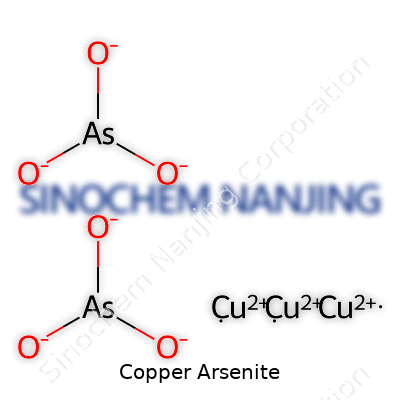
| Names | |
| Preferred IUPAC name | tricupric arsenite |
| Other names |
Scheele’s Green Acid copper arsenite Copper(II) arsenite |
| Pronunciation | /ˈkɒpər ɑːˈsɛnaɪt/ |
| Identifiers | |
| CAS Number | 12007-66-2 |
| Beilstein Reference | 35829 |
| ChEBI | CHEBI:141584 |
| ChEMBL | CHEMBL1201646 |
| ChemSpider | 86698208 |
| DrugBank | DB14090 |
| ECHA InfoCard | 100.012.228 |
| EC Number | 12038-55-4 |
| Gmelin Reference | 169831 |
| KEGG | C01845 |
| MeSH | D003825 |
| PubChem CID | 166829 |
| RTECS number | GZ6300000 |
| UNII | Q2P7A1IP2I |
| UN number | UN1585 |
| Properties | |
| Chemical formula | CuHAsO3 |
| Molar mass | 221.47 g/mol |
| Appearance | Apple green crystalline solid |
| Odor | Odorless |
| Density | D = 5.64 g/cm³ |
| Solubility in water | Insoluble |
| log P | -2.93 |
| Vapor pressure | Negligible |
| Acidity (pKa) | 8.5 |
| Basicity (pKb) | 9.76 |
| Magnetic susceptibility (χ) | Paramagnetic |
| Refractive index (nD) | 2.07 |
| Dipole moment | 0 D |
| Thermochemistry | |
| Std molar entropy (S⦵298) | 155.6 J·mol⁻¹·K⁻¹ |
| Std enthalpy of formation (ΔfH⦵298) | -717.4 kJ/mol |
| Pharmacology | |
| ATC code | V03AW04 |
| Hazards | |
| Main hazards | Toxic if swallowed, inhaled or in contact with skin; causes skin and eye irritation; may cause cancer; very toxic to aquatic life. |
| GHS labelling | GHS06, GHS08 |
| Pictograms | GHS06,GHS09 |
| Signal word | Danger |
| Hazard statements | H301 + H331: Toxic if swallowed or if inhaled. H410: Very toxic to aquatic life with long lasting effects. |
| Precautionary statements | P261, P264, P270, P271, P272, P273, P280, P301+P310, P302+P352, P304+P340, P305+P351+P338, P308+P313, P310, P314, P320, P330, P391, P403+P233, P405, P501 |
| NFPA 704 (fire diamond) | 1-2-0-💀 |
| Lethal dose or concentration | LD50 oral (rat): 20 mg/kg |
| LD50 (median dose) | LD50 (oral, rat): 20 mg/kg |
| NIOSH | GB6125000 |
| PEL (Permissible) | 0.01 mg/m3 |
| REL (Recommended) | 0.01 mg/m3 |
| IDLH (Immediate danger) | IDLH: 1 mg As/m³ |
| Related compounds | |
| Related compounds |
Copper arsenate Copper arsenide Copper(II) oxide Copper(II) carbonate |



