Cobalt Sulfate: Beyond the Blue Powder
Historical Development and Context
Cobalt sulfate’s journey started long before rechargeable batteries and electric cars pushed demand for battery metals into the spotlight. Chemists in the eighteenth and nineteenth centuries pulled cobalt out of minerals like erythrite, hunting mostly for its color—for the deep cool blue it brings to glass and ceramics. Industrial labs soon found it useful in everything from metal plating to pigments, growing production alongside scientific revolutions in mining and extraction. By the turn of the twentieth century, cobalt sulfate already carried a market presence, feeding industries hungry for new colors, corrosion resistance, and complex synthesis. These historical roots explain the chemical’s persistent role in dozens of sectors, but batteries gave it a new purpose; rechargeable lithium-ion technologies placed new value on cobalt compounds, with sulfate leading the charge because it blends easily into battery precursors.
Product Overview and Application
Ask anyone working in battery manufacturing or agriculture about cobalt sulfate, and you’ll smile at the range of opinions. This pinkish salt isn’t just a chemical curiosity—it’s a linchpin for making cathode materials that fill up batteries, run gadgets, and store solar or wind power for the grid. Agriculture leans on it too, since cobalt is an essential trace nutrient in animal feed. In water treatment, metal finishing, pigment manufacturing, and even electroplating, engineers want cobalt sulfate because it’s soluble, simple to handle, and pure enough for demanding industrial processes. China and Africa have become central players, serving up cobalt compounds to a planet scrambling for stable and responsible supply chains. As professionals debate sources and ethics, cobalt sulfate sellers work to keep product up to spec and cater to evolving regulations.
Physical and Chemical Properties
Cobalt sulfate usually enters warehouses as a red or pink crystalline powder or granule. The hexahydrate (CoSO4·6H2O) is the most often seen, thanks to its high solubility in water and relative ease of storage. There’s no mistaking the salt’s strong color; anyone handling it comes away with a little pink dust clinging to gloves and tools. Chemically, it acts as a source of Co2+ ions—reactive, but reliable for many synthesis needs. It melts near 736°C (for the anhydrous salt), breaks down into oxides and sulfur oxides at high temperatures, and dissolves rapidly to provide cobalt ions in solution. The substance picks up moisture from the air, giving it a habit of caking or clumping if left exposed, and while stable under ordinary conditions, direct heat or acidic environments can produce gases that carry acute risks—especially for large-scale handlers who manage tons at a time.
Technical Specifications & Labeling
All chemicals need tight technical specs to keep industries honest, and cobalt sulfate fits this mold. Buyers demand clarity on purity levels—generally, above 98% for industrial uses and tighter controls for battery-grade material. Specifications document the levels of related metals like nickel, iron, and copper, since these can affect downstream processes. Current systems for labeling must line up with international standards (like the UN’s Globally Harmonized System for hazard communication), which means clear warnings, hazard pictograms, and handling advice right on the container. Faulty or vague labeling isn’t just unprofessional—it opens the door to accidents, trade disputes, and regulatory headaches. Battery and feed producers in particular scrutinize their labels and test against the claims. Reliable data beats marketing lingo every single time, particularly since the end-users—battery companies, farmers, recyclers—shouldn’t gamble their reputation or safety on guesswork.
Preparation Method
Commercial production relies heavily on either direct reaction between cobalt-containing ores and sulfuric acid or refining byproducts from copper and nickel mining. Ores like cobaltite and erythrite get roasted to oxidize and free up cobalt, which is then dissolved in sulfuric acid to form cobalt sulfate. Years working with mining engineers taught me how variable the yields and purity can be, depending on both source geology and refining steps. Once in solution, cobalt sulfate gets concentrated and crystallized, sorted (and sometimes redissolved) to meet the end-market’s needs. Battery-grade material often demands extra purification, using solvents or ion-exchange processes to strip out unwanted metals. This back-and-forth—dissolve, filter, precipitate, filter again—requires real attention to waste management, as leftover acid and trace metals can cause headaches if they escape the plant or contaminate water supplies. Any shortcut in the prep stage haunts the process all the way downstream, leading to rejections and higher costs.
Chemical Reactions & Modifications
Chemists and engineers look to cobalt sulfate as a convenient point of entry for making other cobalt compounds—oxides, hydroxides, and battery precursors like cobaltous hydroxide or carbonate. A basic reaction with sodium carbonate or hydroxide pulls cobalt out of solution, letting operators adjust pH, temperature, and contaminants to refine product specs. In the battery world, mixing cobalt sulfate with nickel and manganese compounds (under precisely controlled conditions) spits out the complex precursors needed for lithium-ion cathodes. All this chemistry happens fast—sloppy control leads to off-spec batches, poor yields, and wasted raw material. I’ve seen entire reactors dumped because the feed solution drifted out of tolerance. Other industries, like pigment makers, use cobalt sulfate in firing processes to produce brilliant blue colors. Modifications also come in packaging and handling: smaller particle sizes for faster dissolution, granular forms for easier measuring—direct responses to specific industrial bottlenecks.
Synonyms & Product Names
Cobalt sulfate wears several labels depending on industry and market. Chemists know it as cobalt(II) sulfate, or CoSO4. The pink salt is often sold as cobaltous sulfate or simply cobalt pink salt. In some European trade circles, “cobalt vitriol” or “red cobalt” carries traditional weight, a nod to its color. These names can trip up purchasing agents, especially when secondary suppliers or international shippers cut corners with nomenclature. I’ve heard of companies buying “cobalt salt” by mistake, only to receive the wrong hydration state or a product laced with nickel or iron. Accurate, standardized naming isn’t just an academic point—it keeps supply chains moving smoothly, documents traceability, and limits risk for both major buyers and small operations.
Safety & Operational Standards
Cobalt sulfate carries substantial safety baggage, which any honest discussion must acknowledge. Chronic exposure, even at low levels, links to respiratory, cardiac, and thyroid problems, and international health bodies classify it as a possible carcinogen. Inhalation of dust or direct skin exposure can trigger irritation or more serious disorders—factory workers need serious protection: exhaust ventilation, gloves, and strict hygiene rules. I remember a site visit in the early 2010s where a powder silo leaked, coating surfaces and equipment with sticky pink dust. Only tight operational discipline and swift chemical cleanup kept the site from being out of commission. Modern standards demand regular workplace air monitoring, training on spill protocols, and medical screening for employees. Despite these measures, older facilities—especially in the developing world—continue to lag, sometimes sacrificing worker health for output. There’s no shortcut to robust operational standards, as hidden costs end up far greater than investments in safety gear and training.
Application Areas & Research Initiatives
Battery manufacturing chews through the lion’s share of global production, tying cobalt sulfate to electric vehicles, smartphones, and grid-storage systems. Agricultural suppliers still depend on it for livestock feed supplements, especially in regions with cobalt-poor soil. In pigment and glass industries, cobalt sulfate delivers consistent results for ceramics, enamels, and high-end glassware. Research labs dig deeper into its potential for catalysis, medical isotopes, or fuel cell membranes. In my time consulting for start-ups, the most rapid progress has centered on refining purification and recycling routes, aiming to push down costs and environmental impact. Application areas expand with every year, but their success depends on a steady, ethically-sourced raw material supply—one still deeply tied to controversial mining practices in several countries.
Toxicity and Environmental Impact Research
There’s heavy scrutiny on the toxicity of cobalt sulfate, both for workers and for ecosystems exposed through effluents. Animal studies and long-term workplace data show links between chronic cobalt exposure and systemic health effects: the kidneys, liver, heart, and lungs all come under threat. Bioaccumulation poses special risks in aquatic environments. Several regulatory regimes now limit occupational and environmental releases, and waste management protocols must lock up cobalt-bearing residuals to prevent contamination. Ongoing research tries to pin down mechanisms of toxicity and to establish better exposure limits for both humans and wildlife. For communities near cobalt operations, soil and water testing has become part of life, and environmental groups carry a strong voice in pushing for transparency and cleaner processing technologies.
Future Prospects and Industry Shifts
Cobalt sulfate faces a crossroads as battery makers push for lower-cobalt or cobalt-free chemistries and governments tighten sourcing requirements. Demand projections fluctuate as new chemistries—like lithium iron phosphate (LFP) or solid-state cells—try to grab market share, but energy density requirements and performance in cold or demanding applications keep cobalt in the conversation for now. Recycling stands out as both a business opportunity and an environmental necessity. Engineering teams are ramping up processes that reclaim cobalt sulfate from spent batteries, using hydrometallurgical and pyrometallurgical innovations to close the loop. Prospective shifts around blockchain and digital tracking of cobalt supplies could eventually weed out problem sources. The plain truth is: cobalt sulfate isn’t disappearing anytime soon, but its story is entering a new phase marked by accountability, technological innovation, and fierce debate over ethics and sustainability.
What is Cobalt Sulfate used for?
From Pigments to Power
Cobalt sulfate doesn’t pop up on the average person’s radar, but much of our day-to-day life relies on it behind the scenes. A big chunk of this material lands in rechargeable batteries—especially the lithium-ion ones found in electric vehicles and smartphones. Cobalt brings stability to the battery’s chemical mix, helping charge devices faster and last longer. Without cobalt sulfate showing up in mining trucks and factories, the shift to electric cars would stall, and the tech industry might slow to a crawl.
Digging into the numbers, electric vehicle sales hit 14 million worldwide in 2023, with battery makers swallowing up roughly 70% of global cobalt. Most of this gets processed into cobalt sulfate before getting shipped into gigantic battery cell factories. The hunt for lighter, longer-lasting gadgets and transport keeps driving up demand, almost faster than mining companies can keep up.
Agriculture and Color
Cobalt sulfate also finds a role in farming. Dairy and beef farmers rely on it as a supplement for livestock. Cows need trace amounts of cobalt in their diets; it helps them make vitamin B12, which keeps them healthy and producing milk efficiently. The numbers may sound odd—mere milligrams per day per animal—but a shortage can bring herds down fast.
Paints and ceramics wouldn’t look the same without the blue shades made possible by cobalt salts. Ceramics makers and artists have reached for cobalt pigments for centuries. Even today, mugs, tiles, and glass jars often shimmer with cobalt sulfate’s touch. The pigment trade may not soak up as much material as battery factories, but art and industry often cross paths.
Toxicity and Tough Decisions
Cobalt sulfate isn’t as friendly as table salt. Factory workers must take care—its dust and powder pose health risks if inhaled or swallowed. There’s hard evidence linking long-term exposure to lung problems and skin rashes. It’s up to local authorities, companies, and workers to build airtight safety standards in plants that handle this stuff. The right gear and training can keep crews healthy, but cracks in safety systems lead to real trouble.
Supply and Sustainability
Most cobalt sulfate travels to market from mines in Congo. The mining scene there has earned criticism for unsafe conditions and labor abuses. This has sparked a push for better traceability and sourcing. Some automakers now demand checks on every step, from mine to battery, before they’ll sign a contract. A growing number of companies are working on recycling batteries instead of relying solely on fresh metal from the ground.
New approaches might include battery chemistries that don’t lean so hard on cobalt. Researchers have put a lot of effort into nickel-rich or iron-based cathodes. Some designs skip cobalt entirely, but so far these products haven’t matched the staying power of cobalt-heavy cells. Many believe ongoing research and honest sourcing can nudge us toward safer and more ethical use.
Looking Forward
Cobalt sulfate isn’t leaving the spotlight any time soon, at least not while our lives revolve around connected gadgets and electric transport. Setting real standards on safety and ethics while pushing for better recycling and new materials could help shrink the negative side of this valuable chemical.
Is Cobalt Sulfate hazardous to health?
Cobalt Sulfate: More Than Just a Chemical
I’ve worked near battery manufacturing plants that use a lot of cobalt compounds, sometimes in powder, sometimes dissolved in water. Cobalt sulfate often lands on lists of crucial ingredients for lithium-ion batteries, fertilizers, and even some animal feeds. But there’s a reason why chemical plants handling this stuff require staff to gear up in respirators, gloves, and often full protective suits. Cobalt sulfate can cause real harm, and it doesn’t always give a warning before problems start.
Health Risks Go Beyond Simple Allergy
Doctors and toxicologists don’t treat cobalt compounds lightly. The powdered form can irritate the lungs when inhaled. Workers exposed to the dust over weeks or months can develop what’s known as “hard metal lung disease”—an illness marked by shortness of breath, cough, and scarring inside the lungs. Medical research links cobalt ions to airway inflammation and, in some situations, asthma-like symptoms.
It’s not just the lungs that take a hit. Skin contact, even without cuts or scrapes, can trigger rashes or eczema for some people. I knew a lab technician who developed serious dermatitis after a few days around cobalt sulfate. Blood tests found traces of cobalt in her system, even though she always wore gloves. Turns out, this compound sometimes creeps through even small breaks in protective gear or after accidental handling of contaminated surfaces.
Heavy Exposure Impacts Heart and Thyroid
Beyond skin and lungs, high doses in accidental spills or contaminated workplaces have been tied to problems with the heart and thyroid. Studies found that cobalt can disrupt the normal rhythm of the heart and interfere with thyroid hormone production, which messes with metabolism and energy. Cobalt toxicity isn’t common from ordinary environmental levels, but workers and people living near mining or recycling operations can be at higher risk if safety rules slip.
Global Demand, Local Risk
The world’s hunger for batteries, especially for electric vehicles and renewable energy storage, drives a big uptick in cobalt sulfate production. Smelting and refining often happens in countries where safety enforcement can be patchy. Reports from Central Africa to Southeast Asia describe people living near processing sites with breathing problems or unexplained illness, often linked to chemical exposure through water, soil, and dust. Local streams pick up run-off, so nearby residents, including children, sometimes show elevated cobalt in blood or urine.
Managing Hazards, Reducing Harm
Workers in the cobalt chain deserve better protection. Respirators, full-body suits, and rigorous air quality monitoring help, but real safety depends on strong enforcement and clear management standards. Factories should seal off powder handling areas, install powerful ventilation systems, and give workers time away from risk. Health check-ups for people exposed on the job can reveal early signs of trouble, so workers get the care they need before problems escalate.
Regulators in Europe, North America, and parts of Asia have set occupational exposure limits. These give a solid starting point, but enforcement remains spotty, especially where cobalt mining or recycling is new or growing fast. Downstream companies, including battery buyers, need to inspect supply chains and demand transparency, making sure the cost of clean energy doesn’t land on the health of those who provide its raw materials.
What is the chemical formula of Cobalt Sulfate?
Understanding the Chemistry Behind Cobalt Sulfate
Cobalt sulfate bears the chemical formula CoSO4. This may seem simple at first glance—a cobalt ion paired with a sulfate group—but there’s a rich story behind those letters and numbers. Cobalt sulfate pops up in all sorts of places, from batteries to pigments to livestock feed supplements. Working with chemicals like this, I’ve seen how easily a basic formula can anchor whole fields of technology and agriculture.
Why Cobalt Sulfate Matters in Industry and Everyday Life
Cobalt sulfate isn’t just a lab curiosity. In battery manufacturing, it serves as a key ingredient in lithium-ion battery cathodes. These batteries power electric cars, smartphones, and laptops. Without cobalt sulfate, the energy density and resilience that folks expect from modern devices would fall short. The electrification of transportation keeps chugging forward—partly on the back of compounds like this.
In agriculture, a tiny bit of CoSO4 helps prevent cobalt deficiency in livestock. Cows and sheep need cobalt to produce vitamin B12. Farmers who add it to feed help guarantee healthy herds and safe food. One year, I watched a regional shortage force prices up; local ranchers scrambled to secure enough cobalt sulfate to protect their animals, reminding me how much chemistry shapes food security.
Sourcing and Ethical Questions
The story turns complex once you look deeper into supply chains. Cobalt, as a metal, gets mined under tough conditions, with a lot coming from the Democratic Republic of Congo. Workers sometimes handle the mineral in dangerous environments, and headlines about child labor make it clear that the world can’t just ignore where these chemicals come from.
Growing demand for electric vehicles puts even more pressure on sourcing. Tech companies have started setting standards, but solutions don’t arrive overnight. Some researchers look for alternatives or ways to recycle used batteries to capture cobalt. One promising approach I’ve seen: urban mining—recovering metals from e-waste—can offset some raw extraction. Manufacturers and big buyers have the means to push for cleaner practices, but everyone using electronics or driving modern cars sits downstream of these choices.
Handling and Environmental Impact
Cobalt sulfate demands respect in the workplace. It’s water-soluble, so spills can travel fast, and workers face health risks if inhaled or handled carelessly. Regulations keep risks down, but shortcuts—like poor ventilation or lax disposal—invite trouble. Once, at a factory site inspection, I noted that clear labeling and spill protocols cut down on accidents and reduced long-term liabilities. Everyone remembers the cost of doing it right after a mishap.
Improper disposal can release cobalt ions into waterways, threatening aquatic life. Plants can absorb it, entering the food chain. Environmental scientists track these pathways, trying to lower the damage. Responsible manufacturers treat cobalt sulfate waste through neutralization or recovery methods, reclaiming the metal when practical. Strict adherence to these steps shows commitment to both sustainability and safety.
Looking Forward
People rely on cobalt sulfate’s formula in more ways than they realize—from clean tech to farm fields. The question isn’t just what the formula is, but how we manage its life cycle. Harnessing its benefits without overlooking the social or environmental costs calls for constant attention, creative solutions, and shared responsibility across industries and communities.
How should Cobalt Sulfate be stored?
Why Care About Cobalt Sulfate Storage?
Cobalt sulfate plays a key role in making batteries, pigments, and animal feed. Plenty of factories and labs count on it. Too many people shrug off storage until they see a corroded drum or a spill that just won’t mop up. Once you handle this stuff, you remember it’s more than a blue powder; it’s a chemical with bite. Spilled cobalt sulfate can cause skin and breathing trouble, and it doesn’t do waterways any favors.
Getting the Basics Right: Keep It Dry, Cool, and Labeled
Moisture spells trouble for cobalt sulfate. Humid days or leaky roofs let water sneak in, clumping the powder and rusting the packaging. In my own experience around chemical stores, keeping the product away from plumbing and windows cuts down on headaches. Dry, well-ventilated areas prevent most issues. Overhead leaks? Fix them right away.
This chemical doesn’t need heat to stay stable, but if you leave it near boilers and sunlight, you invite degradation. Room temperature works, but close it up in cabinets away from heat sources.
Sharp labels save lives. Use labels with the full name and hazard info, even on small jars. Colored stickers and bold fonts help staff find the right container quickly — no one wants to grab the wrong chemical in a hurry.
Sealed Containers Make All the Difference
Cobalt sulfate reacts with air and water, so leave no room for error with containers. Screw-top jars or tight-lidded bins keep out moisture. I’ve seen folks try makeshift fixes with plastic wrap or bags, only to discover blue dust creeping out. Metal drums line up well for bulk quantities, but these need rust inspection every few months.
If you store leftovers, avoid transferring powder between random jars. One mix-up can start a chain of dangerous reactions or contamination. Use containers rated for chemicals, always with clean, dry scoops to avoid introducing water or other compounds.
Protect People: Shields, Training, and Emergency Plans
Cobalt sulfate can irritate lungs and skin, so keep personal protective equipment close. Gloves and safety goggles belong next to the storage shelf, not across the room. I’ve seen how quickly people ignore safety steps when gear feels inconvenient. Make it accessible and do short, regular training sessions. Refreshers go a long way toward avoiding careless spills.
No one expects a spill until it happens. Post emergency contacts and spill response guides where people see them. Don’t bury them under paperwork. Absorbent pads, masks, and disposal bags should sit where you can grab them in a rush.
Disposal and Environmental Considerations
Old or degraded cobalt sulfate should never go down the regular drain or trash. Local hazardous waste programs can handle the disposal. It’s shocking how fast one careless dump can contaminate groundwater; cobalt sticks around and causes real harm. Double-check local regulations, since disposal rules differ everywhere.
Constant Vigilance Pays Off
Cobalt sulfate storage isn’t glamorous, but accidents don’t discriminate. Regular checks, basic gear, and clear instructions keep staff and the environment safer. Good storage reflects respect not only for regulations, but for every person sharing a workspace.
What industries commonly use Cobalt Sulfate?
Rechargeable Batteries and Electric Vehicles
Cobalt sulfate keeps turning up in headlines because battery demand keeps rising, and with good reason. Lithium-ion batteries need stable and high-energy materials. Cobalt sulfate delivers that stability. Car makers doubling down on electric vehicles bank on it to extend battery life and improve safety. Reports showed that the battery sector accounted for over half the global cobalt demand in recent years. This isn’t just about tech giants and automakers chasing profits; there’s a global push toward cleaner transportation, and cobalt sulfate is riding in the front seat.
Ceramics and Pigments
Not every tile or piece of glassware has cobalt fingerprints on it, but artisans and manufacturers value cobalt sulfate for the rich blues it produces. This isn't a niche tradition. The ceramics industry, from decorative pottery to mass-produced tiles, has leaned on cobalt compounds for centuries. Cobalt gives stability to pigments under high temperatures. That reliability opened doors for designers to get bolder with color, whether in small studios or large-scale factories.
Electronics and Circuit Boards
Mobile phones and computers change hands in the millions every year. Underneath sleek screens, circuit boards keep everything running, and cobalt sulfate plays a part in producing those layers. Electroplating with cobalt enhances durability and electrical conductivity in connectors and hard disks. While silicon grabs most headlines, the support roles played by smaller-volume metals like cobalt keep the digital world humming.
Electroplating and Surface Treatments
Electroplating sounds industrial, but it shows up everywhere—on bathroom fixtures, automobile parts, even small decorative items. Cobalt sulfate helps give a hard, corrosion-resistant finish when companies want metals to resist wear and tear. Silver finishes seem glitzy, but often a layer of cobalt is buried underneath to toughen up the product. Smaller shops and major manufacturers both look for this dependability, which keeps repair bills lower and products longer-lasting.
Medicine and Animal Nutrition
Most people don’t imagine cobalt belongs in medicine or feed, but its sulfate salt helps make vitamin B12. That’s an essential nutrient, not just for humans but for livestock. Farmers rely on B12 supplements to keep dairy yields up and maintain healthy herds, especially where soil or water lack cobalt naturally. In medicine, small doses find their way into specialty drugs. Public health links trace the improvement in nutrition outcomes back to reliable feed additives.
Mining, Ethics, and the Bigger Picture
Every time demand for cobalt sulfate jumps, so do concerns about mining impact. A lot of cobalt comes from areas with fragile ecosystems or troubling labor conditions, particularly the Democratic Republic of the Congo. Headlines about unsafe mines show real costs behind every battery and pigment shipment. Buying recycled sources and pushing for transparent supply chains form some parts of the answer, though change moves slowly. For any industry counting on cobalt sulfate, knowing the backstory means more than just checking a price sheet—it’s about weighing environmental and social responsibilities in the race for greener technology.
Looking Ahead
Cobalt sulfate fuels industries ranging from massive automotive factories to rural feed mills. Each field uses it a little differently, but the common thread is a reliance on reliable, adaptable chemistry. Zip past the technical jargon, and it comes down to this—whole sectors of the modern world depend on small, steady doses of cobalt sulfate, threaded through technology, art, and agriculture. Getting its use right, and addressing its side effects, means better tools for everyone from city commuters to dairy farmers.
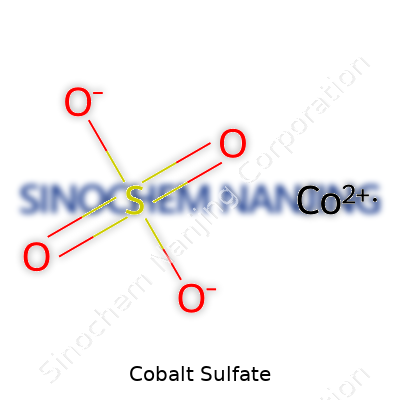
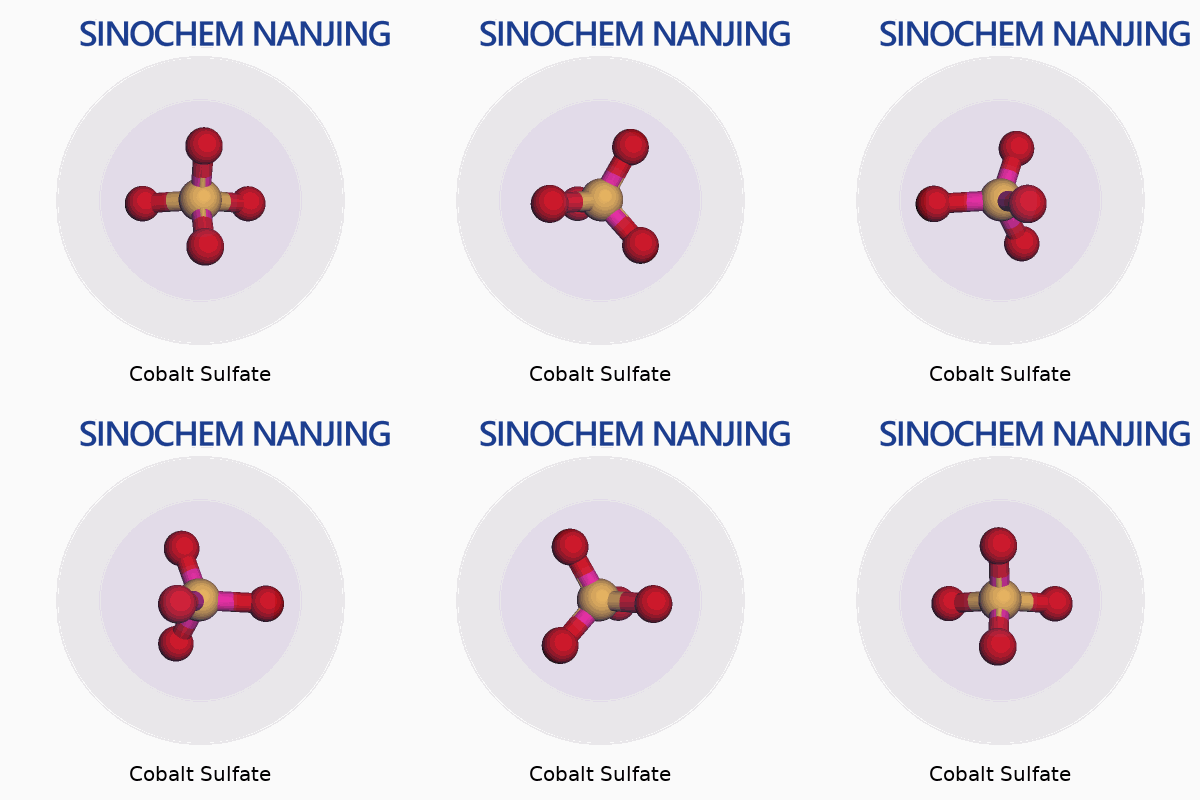
| Names | |
| Preferred IUPAC name | cobalt(2+) sulfate |
| Other names |
Sulfuric acid cobalt(2+) salt Cobalt(II) sulfate Cobaltous sulfate Cobalt monosulfate Cobalt sulfate heptahydrate |
| Pronunciation | /ˈkoʊ.bɒlt ˈsʌl.feɪt/ |
| Identifiers | |
| CAS Number | 10124-43-3 |
| Beilstein Reference | 1690736 |
| ChEBI | CHEBI:30186 |
| ChEMBL | CHEMBL1201644 |
| ChemSpider | 84670 |
| DrugBank | DB11095 |
| ECHA InfoCard | 100.028.763 |
| EC Number | 233-334-2 |
| Gmelin Reference | 58973 |
| KEGG | C00635 |
| MeSH | D003058 |
| PubChem CID | 24598 |
| RTECS number | GF9590000 |
| UNII | WFN312BF6P |
| UN number | UN3077 |
| Properties | |
| Chemical formula | CoSO4 |
| Molar mass | 155.00 g/mol |
| Appearance | Pink to reddish crystalline solid |
| Odor | Odorless |
| Density | Density: 2.71 g/cm³ |
| Solubility in water | Very soluble |
| log P | -2.26 |
| Vapor pressure | Negligible |
| Acidity (pKa) | 2.0 |
| Basicity (pKb) | 8.22 |
| Magnetic susceptibility (χ) | 'Magnetic susceptibility (χ) = +2220.0e-6 cm³/mol' |
| Refractive index (nD) | 1.63 |
| Dipole moment | 0 D |
| Thermochemistry | |
| Std molar entropy (S⦵298) | 96.2 J·mol⁻¹·K⁻¹ |
| Std enthalpy of formation (ΔfH⦵298) | -766.4 kJ/mol |
| Pharmacology | |
| ATC code | V03AB32 |
| Hazards | |
| Main hazards | Toxic if swallowed, causes skin and eye irritation, may cause allergic skin reaction, suspected of causing cancer, may damage fertility or the unborn child, very toxic to aquatic life with long lasting effects. |
| GHS labelling | GHS05, GHS07, GHS08 |
| Pictograms | GHS07,GHS09 |
| Signal word | Danger |
| Hazard statements | H302, H315, H317, H319, H332, H334, H341, H350, H360F, H372, H410 |
| Precautionary statements | Precautionary statements: P202, P264, P270, P272, P273, P280, P302+P352, P304+P340, P308+P313, P312, P314, P362+P364, P391, P405, P501 |
| NFPA 704 (fire diamond) | 2-2-3-Acid |
| Lethal dose or concentration | LD50 oral rat 424 mg/kg |
| LD50 (median dose) | 440 mg/kg (oral, rat) |
| NIOSH | WI2275000 |
| PEL (Permissible) | 0.1 mg/m3 |
| REL (Recommended) | 1 mg/L |
| IDLH (Immediate danger) | IDLH: 20 mg/m³ |
| Related compounds | |
| Related compounds |
Cobalt(II) chloride Cobalt(II) nitrate Cobalt(II) acetate Cobalt(II) carbonate Cobalt(II) oxide |



