Chromium Sulfuric Acid: A Chemical at the Crossroads of Progress and Caution
Digging Into the Background
Chromium sulfuric acid popped up in labs and factories during a time when chemistry was reshaping industry. Throughout the 19th and 20th centuries, the demand for tough yet reactive chemicals led scientists to experiment with everything their libraries and glassware allowed. Chromium, with its range of oxidation states, loves to play in complex reactions, and when paired with sulfuric acid, the blend turns into a reagent with a reputation for power and risk. I've seen older reference books that describe its use in cleaning glassware before better, less dangerous alternatives came along. Tales from veteran technicians remind me that working with it wasn't just about chemistry, but about learning to respect the material—an accident was never far away for those who got careless. Looking back, it’s clear that chemistry was about more than formulas; it shaped industries, but also shaped expectations about safety and responsibility.
What Sets It Apart
Chemists who work with chromium sulfuric acid notice right away its bright color and biting scent. This is a mixture made by adding chromium trioxide or another chromium(VI) compound to concentrated sulfuric acid. The result is a deep-red solution that stains everything, etches organic matter in seconds, and aggressively attacks contaminants on laboratory glass. The solution delivers both strong oxidizing power and the ability to break down complex residues, making it popular wherever only the most persistent dirt needs removal. I remember using it during my early lab days to clean glass cuvettes so the next reading wouldn’t be thrown off by the tiniest fingerprint. The reaction could leave one in awe—and sometimes a bit nervous that your gloves might not be thick enough. Most modern labs have moved away from it, relying on safer, greener options, but its effectiveness remains legendary to those who have seen it in action.
Putting Numbers and Labels in the Right Place
Keeping track of what’s actually in this solution matters a lot. Standard mixes usually call for chromium trioxide and concentrated sulfuric acid. Mix them in the wrong proportions and the result could be unpredictable, even explosive if done carelessly. Chemists have learned to measure, label, and document every bottle, not just because of legal requirements, but because underground reactions don’t give second chances. Most labels warn about severe burns, carcinogenic risk, and environmental impact, which makes it much more than just another cleaning tool. During my time in regulated labs, inspectors would stop by to check not just the label, but the logbook entries and every tiny scrap of paperwork. They knew that mistakes with chromium solutions didn’t just stay inside the fume hood.
The Craft of Mixing and Reactions That Matter
The method for making chromium sulfuric acid isn’t fancy, but it demands respect. Add chromium(VI) compounds to sulfuric acid slowly and under thoroughly controlled conditions. Ventilation is non-negotiable. Once made, its oxidizing power kicks in; you can watch organic stains sizzle away as the red-orange solution does its job faster than bleach. In those moments, chemistry feels almost magical. Chemists value these reactions for oxidizing alcohols completely or breaking down proteins. Beyond cleaning, some tried it in organic syntheses. But with great power comes real danger: accidental splashes threaten both user and workspace. Acid eats through clothing, skin, and lungs with little hesitation. Reading through decades of accident reports has convinced many safety officers, myself included, that there’s no such thing as being overcautious when handling this mixture.
Other Names to Watch For
In papers and catalogs, this blend goes by several names: chromic acid cleaning solution, chromosulfuric acid, and simply chromosulfuric. Make no mistake: no matter the label, the same risks ride along. If someone’s working in an older workshop or academic lab, the chance of running into this mixture is higher. Those who grew up with it tell stories about stubborn stains disappearing in minutes. Younger chemists usually shake their heads at these tales—and with good reason, since safer options have become standard nearly everywhere.
Staying Safe When Power Comes with Cost
Mistakes with chromium sulfuric acid do not end well. The danger comes not only from its corrosive, burning nature but because chromium(VI) compounds are confirmed carcinogens. Studies on workers have linked regular chromium exposure to lung cancer and chronic kidney problems. Environmental teams have documented contaminated waterways and soil at sites where chromium spills happened decades ago. Unsafe handling and disposal practices have left scars that public health experts and local residents still wrestle with. This lesson, hammered home in safety training and grim statistics, means safety standards have stopped being suggestions and become hard rules. Full-body protection, specialized containment, and regular medical checkups for those who use it are now basic requirements. Environmental agencies enforce strict regulations on its purchase, storage, and disposal.
Where It Has Been Used—and What Comes Next
Chromium sulfuric acid became a cleaning legend in labs, glass factories, and a handful of niche industrial processes. Its main job was to strip organic junk from scientific glassware so precisely that even trace contamination barely stood a chance. A few older protocols also called for it in oxidizing reactions within organic synthesis, taking advantage of its ability to attack stubborn carbon bonds that other reagents refused to touch. Now, most academic and industrial users have switched to milder oxidizers, specialty detergents, and ultrasonic baths—choices that are both safer and just as effective. Environmental health data made it impossible to ignore the costs of sticking with traditional chromic acid solutions. I’ve seen old facilities turn in their stockpiles and retrofit their cleaning lines just to put some environmental distance between staff and chromium’s shadow.
Questions for Research and Toxicity That Refuse to Go Away
Ongoing research on chromium sulfuric acid focuses on safer ways to detect and neutralize chromium(VI) residues in water and soil. Scientists publish papers on remediation tactics that pull these compounds out of the environment and render them less toxic. At the same time, medical researchers track the long-term health issues faced by exposed workers. Large studies have linked repeated exposure to cancers and genetic damage, triggering a push for deeper studies on even minimal contact. Universities train students to identify, quantify, and deal with chromium contamination as part of environmental coursework. Knowing how to detect trace levels of chromium compounds becomes a skill set valued by municipal water teams and hazardous material response crews alike.
Prospects Down the Road
Newer generations of chemists rarely see chromium sulfuric acid outside of textbooks and safety lectures. Industry continues to phase out chromium(VI)-based cleaning and oxidation systems in favor of less hazardous alternatives. Laws now push industries to find greener solutions, and a mix of liability, ethics, and common sense has changed how companies look at legacy chemicals. Despite all this, the substance still appears in some research labs and specialty applications. Its utility stands as a reminder that progress sometimes means letting go of what worked for decades but doesn’t fit the future’s health and sustainability goals. For the curious, stories about chromium sulfuric acid illustrate chemistry’s power and responsibility—teaching lessons that extend well beyond glass beakers and lab coats.
What is Chromium Sulfuric Acid used for?
What Drives Demand for Chromium Sulfuric Acid?
Ask anyone who works in metal finishing or glass production, and you’ll hear stories about potent chemicals that change the game for precision cleaning and surface treatment. Chromium sulfuric acid stands out in these circles for the tough jobs involving rust, oxidation, and complex glasswork. Its combination of strong acidity and oxidizing power means it cuts through residues regular cleaners leave behind.
In the workshops where intricate glassware and scientific instruments take shape, this acid brings the shine. I’ve watched experienced glassblowers reach for a chromium sulfuric acid solution to scrub their pieces, removing stains and giving that spotless, almost new look. Staining and fingerprints left untouched can ruin delicate work, making this acid a backstage essential. There are risks involved, no question — splash a little on your skin, and it’ll bite — but with the right gloves and goggles, its benefits carry real weight.
Metal Finishing and Laboratory Cleaning
Old labware rarely looks brand new, but a proper chromium sulfuric dip can help. I’ve seen beakers covered in burnt residue emerge almost spotless after a careful soak and rinse. Reusing glass safely not only saves money but cuts back on waste. Labs with tight budgets depend on this acid for routine cleaning, especially when traces of organic material threaten to skew results.
The acid acts as a stubborn cleaner. It oxidizes residues that most soaps or detergents won’t touch. Industries working with precious metals or testing equipment have learned to rely on it. When a thorough clean matters more than saving time, this chemical solution delivers.
Environmental and Health Risks
No one should take chromium or sulfuric acid lightly. Accidents involving them have sent people to emergency rooms. Chromic acid solutions, in particular, bring heavy toxicity and environmental impact. Spills around drains or water sources set off alarms — chromium compounds can contaminate drinking water and harm aquatic life.
Regulations have grown stricter with every decade. Companies now train workers not just with safety gear but with proper disposal practices. Waste management and spill response plans matter more than ever, and regulators can make or break a business. Cleaning up after a leak costs much more than getting things right in the first place.
Can We Find Safer Alternatives?
Green chemistry engineers and environmental experts have searched for replacements. Some labs switched over to hydrogen peroxide mixed with sulfuric acid — less toxic, but the results don’t always match what chromium provides. Sometimes stubborn residues demand the real deal, and so scientists keep looking for additives or new blends that clean well without the risks.
Personal experience tells me the toughest, most dangerous tools stick around as long as nothing else matches their power. Training, respect for the material, and constant review of safety procedures play a bigger role than any single chemical. With time and research, labs and factories weigh the pros and cons of each option before making changes.
Room for Improvement
The story of chromium sulfuric acid isn’t just about technology or tradition; it’s about people managing risk and reward in a world with rising safety and environmental expectations. From my own work and the stories I hear from colleagues, I see both the necessity and the price we pay for working with powerful chemicals. As science moves forward, teams on the ground keep searching for cleaner, safer ways to get their jobs done without losing performance.
Is Chromium Sulfuric Acid hazardous?
What Chromium Sulfuric Acid Does in the Real World
Chromium sulfuric acid comes up in industrial cleaning, metal finishing, and labs where strong chemical reactions get pushed to their limits. Workers handling it use it to strip away organic residues from glassware or to etch metals. That mix of chromium oxide and sulfuric acid packs a punch. Just standing nearby without protection can sting your nose and eyes—the fumes attack soft tissues fast.
Why the Danger Feels Personal
Years back, in a university lab, I remember a bottle of this mixture breaking. The sharp chemical smell raced out, students scattered, and I watched the lab tech scramble for the chemical spill kit. The anxiety that hits once you learn chromium (VI) compounds strongly connect to cancer, lung conditions, skin ulcers, and eye damage never fades away. Even minor spills call for gloves, goggles, and fume hoods. Sloppy work leaves stains on the skin that itch or burn for days.
What Science Says about the Risks
The Occupational Safety and Health Administration (OSHA) puts strict limits around hexavalent chromium. The World Health Organization has linked exposure to lung cancer and DNA mutations. Sulfuric acid alone strips moisture out of tissues and leaves deep chemical burns. Mixed with chromium, it eats through human flesh and mucus membranes cruelly fast. Inhalation, even for short periods, can scar lungs or cause asthma.
Real Problems in the Field
Accidents still happen. Reports tell of factory workers hospitalized from splashes or fumes, sometimes losing their vision or battling scars years later. Disposal, too, haunts people. This stuff cannot go down any drain. Improper dumping lets chromium leach into groundwater, poisoning streams and lakes. Towns downstream have dealt with soaring cancer cases tied to chemical plants sending untreated waste into rivers.
Solutions that Work
Strict protocols protect people. Well-run labs demand fume hoods, full gear from splash-resistant aprons to thick gloves, face shields, and training refreshers. Clean-up teams wear respirators and use neutralizing agents to break down the acid and chromium after spills. Closed-loop waste handling means every drop gets filtered or chemically neutralized before disposal.
Some companies move toward greener chemistry—enzymatic cleaners, less toxic acids, or new processes that skip chromium altogether. High school labs drop it from their cleaning stations to spare students and teachers the risk. Government bans and tight fines for improper disposal force industries to rethink their old habits.
Looking Ahead
We live in a time where shortcuts bring real costs. Every statistic on workplace injuries or poisoned water comes from moments of carelessness. You can build a lab or factory with the right tools and the right mindset. Teaching new techs how to read safety labels and respect the brutal power of chromium sulfuric acid matters as much as every new advance in science. Responsibility goes beyond compliance. It’s about recognizing that health, water, and trust in science depend on the choices made with every bottle.
What are the safety precautions for handling Chromium Sulfuric Acid?
Why Respect for Chromium Sulfuric Acid Matters
Chromium sulfuric acid isn’t just another lab chemical you can shrug off. It’s known for its toughness on organic matter and its ability to corrode skin, eyes, metal, and almost anything it touches. Exposure can damage your lungs, eyes, and skin in minutes. In my experience, the sharp, metallic smell alone is enough to give pause, but the risks go far deeper. Long-term effects from even a single careless move can last a lifetime. Local stories in chemistry circles underline what happens when anybody gets casual – and none of them end well.
Personal Protective Equipment – Not Just a Suggestion
Dealing with chromium sulfuric acid requires more than a lab coat. Face shields, splash goggles, heavy-duty nitrile gloves, and chemical-resistant aprons all play their role. I saw a friend land in the ER wearing thin gloves once, and nobody forgot that lesson. The gloves need to stay intact and have zero holes or tears. I always recommend testing gloves by stretching a fresh pair and keeping extras within arm’s reach. Eyes, face, arms, and even legs—every inch of skin should be covered.
Ventilation is Non-Negotiable
Strong fumes shoot straight to your nose and throat, and without real venting, they stick around. A fume hood should always eat up those vapors. Never work on an open bench or downwind of an air current. Small fan isn’t going to cut it. Powerful local exhaust hoods with consistent airflow ratings make a difference. I suggest monitoring air quality with a portable sensor if there’s any doubt.
Safe Chemical Handling
Transferring or diluting chromium sulfuric acid should always move slowly, carefully, and never involve guesswork. It’s easy to underestimate splash risk or forget how much heat can build up during mixing. Always add acid to water, not the other way around, to stop boiling or splattering. I keep all my containers clearly labeled in bold letters—no exceptions. Keeping incompatible substances far apart keeps everyone safer.
Storage That Prevents Nightmares
Chromium sulfuric acid deserves strong containers, ideally made of glass or specialized plastic. All lids must fit tightly. Store it far from organic chemicals, bases, metals, and especially flammable liquids. Spill containment trays under the bottles catch drips that would otherwise go unnoticed. I never trust shelves over eye level and always double-check secondary containment. Emergency labels with hazard signs should be easy to see in case someone else enters the space.
Emergency Response – Every Second Counts
Spills and splashes call for action, not hesitation. Wash skin with water right away—at least 15 minutes under a safety shower. Remove all clothing and shoes drenched by the stuff. Eyes need a rinse with a continuous eyewash, never less than the recommended time. If inhaled, move out to fresh air and call medical help even if you feel okay because symptoms can sneak up later. Absorb spills using inert materials like vermiculite and seal waste in sturdy, labeled containers. Every lab or workshop should hang a list of contact numbers and clear instructions near the entrance. In my workplace, everyone drills response routines until nobody forgets the steps.
Training and Respect Build Safety Culture
New people entering any setting where chromium sulfuric acid is present need hands-on training, not just sign-off forms. I’ve seen accidents only when someone skipped steps, misread a label, or thought rules didn’t apply. Shared reminders, open conversations about risks, and visible commitment from supervisors make a huge difference. Trust builds from knowing the team looks out for each other. Every safety step matters because sometimes, there’s no second chance.
What is the chemical composition of Chromium Sulfuric Acid?
Understanding What’s Inside
Chromium sulfuric acid brings two tough-nosed chemicals together: chromium compounds and strong sulfuric acid. People usually call this mixture chromic acid, and it’s built from a blend of sodium or potassium dichromate and concentrated sulfuric acid. In the lab, stirring these together gives a deep red or orange liquid. The major ingredients include H2SO4 (sulfuric acid) and chromium in the form of CrO3 (chromium trioxide), which comes from the reaction between dichromate and acid. This stuff goes by many names, but anybody working with metal finishing or analytical chemistry has probably seen it up close.
Why Chrome Contaminates the Conversation
Chromium trioxide holds a central spot in this mixture. It brings a punch in terms of oxidizing strength. That’s why it eats through organic muck fast, which makes it useful for cleaning glassware or etching metal. But chromium, especially hexavalent chromium (Cr6+), creates a real safety concern. I’ve come across warnings and training sessions about this compound, and for good reason. Inhaling or even just handling it without careful protection can bring serious health risks like cancer or lung problems. Agencies like OSHA and the EPA call extra attention to Cr6+ for its toxicity.
Sulfuric acid, the other backbone of this blend, deserves its own respect. It burns skin instantly and its fumes can scar lungs. Mix those properties with the environmental risks of chromium compounds, and the stakes get higher. I remember hearing about old industrial waste ponds, stained yellow and orange from poorly managed chromium sulfuric acid. Tightening up disposal rules helped, but dangers don’t disappear overnight.
Why This Blend Matters in Industry
Chromium sulfuric acid serves as a rough but reliable tool in specific jobs. In electroplating, it lays down that familiar chrome finish on car parts, taps, and bike frames. The mixture scrubs rust or organic layers off metals, giving a fresh base for coating. In chemical analysis, it acts as a strong oxidizing agent breaking down tough samples for study. In everything I’ve read and seen, handling it requires full gear: gloves, goggles, proper ventilation.
The challenge sits with the waste. Hexavalent chromium lingers, pollutes water, accumulates in food chains, and sparks lawsuits. The EPA classifies this compound as hazardous, and there’s a reason people living near industrial plants care about every drop. Factories must treat wastewater and monitor air, but cost and habit can lead to shortcuts. Watching how communities and industry partner—or clash—over cleanup paints a picture that’s anything but simple.
Finding Smarter Solutions
Finding safer alternatives keeps scientists busy. New plating solutions swap Cr6+ for trivalent chromium, which doesn’t pack the same health punch. Plant-based or salt-based cleaners edge in slowly, chipping away at the market share of harsher chemicals. Strong regulation and better training help, but the real change comes when businesses see that safer substitutes work reliably and cost-effectively. I’ve noticed that younger chemists raise more questions and demand accountability, and that’s pushing a cultural shift forward.
In the end, the chemistry behind chromium sulfuric acid explains its appeal—a fierce blend, unforgiving yet effective. Understanding exactly what goes into that red-orange liquid keeps both users and communities watching closely and asking tough questions.
How should Chromium Sulfuric Acid be stored and disposed of?
Understanding the Risks
Chromium sulfuric acid combines two hazardous elements. Sulfuric acid burns skin, corrodes metals, and eats through clothes. Chromium, in its hexavalent form, brings the added threats of toxicity and cancer risk. Anyone who has spent time in a lab or on a factory floor knows that getting careless around either one can hurt. The combination asks for respect and discipline at every step.
Storing Chromium Sulfuric Acid
Cracked plastic jugs and rusty cabinet hinges spell trouble. Personal experience taught me early on: acids corrode more than just beakers. High-grade polyethylene or glass containers, with tight, chemical-resistant lids, cut down on leaks. Large chemical drums offer safety only if in top form, fully labeled, and checked for damage.
Don’t throw the container in with a dozen others. Put it in a dedicated acid storage cabinet—vented and locked, far from sunlight and moisture. Metal shelves? They only last so long before acid does its work. Poly-coated racks hold up. Store these acids low to the floor, not perched overhead. If something spills, you don’t want it raining down.
No food or drinks near the acid, even at the back of a shared storage space. Not even coffee mugs. The warning labels aren’t just show. Inhalation, splashes, and contact accidents rise every year in workplaces without strict segregation between chemicals and staff areas. A quick review of OSHA's reports shows more accidents in mixed-used spaces than in labs with clear policies.
Ventilation helps, too. The fumes will get you before the spill sometimes. Fans, hoods, or even basic duct systems move fumes away from people and into neutralization systems. At home or in a small shop, that’s hard to manage, so using a designated chemical locker outside can lower risk.
Safe Disposal: More Than Just a Drain
Dumping chromium sulfuric acid down the drain turns a tough chemical problem into an environmental nightmare. Chromium pollutes water. Sulfuric acid ruins plumbing and wildlife habitats. A 2023 EPA review points to dozens of contaminated water tables traced back to neglectful disposal of industrial acids.
Contact a certified hazardous waste handler—don’t take shortcuts. In my early years, I watched a workplace save pennies by mixing acids and pouring them out. The cleanup fines nearly closed them down. Licensed disposal teams arrive with proper gear, transfer acids to corrosion-proof transport drums, and handle final destruction at specialized facilities. They don’t ask for excuses—just facts, volume, and concentration.
Schools, small clinics, or amateur chemists often ask about neutralizers or recipes for home disposal. For chromium sulfuric acid, that’s a no-go. Hexavalent chromium stays dangerous, no matter how much baking soda or lime goes in. Professional waste companies treat both the chromium and the sulfuric acid separately, transforming toxins into stable compounds with rigorous tracking and documentation.
Reporting spills fast helps limit the fallout. Sprinkling sand or special absorbents works for small spots, but never water or sawdust—those cause splattering or explosive reactions. Emergency kits stocked with neutralizers, absorbents, and chemical suits give anyone handling acids a fighting chance in an accident.
Building a Safer Future
You can’t keep dangerous chemicals completely out of modern life, but you can set strict rules. Rigid training makes difference—one lab tech or manager who knows the ropes can prevent mishaps. Stocking the correct containers, demanding clear labeling, ventilating storage, and working with licensed waste handlers keeps people, pipes, and groundwater safe.
Chromium sulfuric acid’s dangers are clear, but careful storage and responsible disposal keep its risks in check. The knowledge to handle it well spreads, one safe workplace at a time.
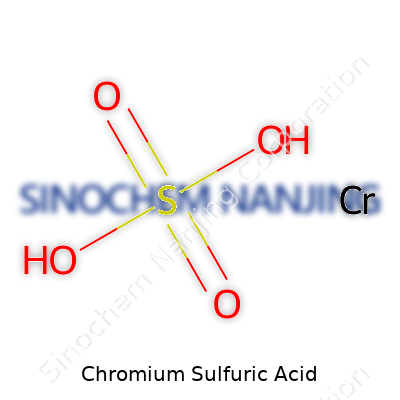
| Names | |
| Preferred IUPAC name | chromium(III) sulfate |
| Other names |
Chromosulfuric acid Chromium-VI sulfuric acid mixture |
| Pronunciation | /ˈkroʊ.mi.əm ˌsʌl.fjʊr.ɪk ˈæs.ɪd/ |
| Identifiers | |
| CAS Number | [39339-05-6] |
| Beilstein Reference | '3900720' |
| ChEBI | CHEBI:53473 |
| ChEMBL | CHEMBL1201797 |
| ChemSpider | 2243968 |
| DrugBank | DB14545 |
| ECHA InfoCard | 10bfb2ec-9f4e-4341-8aaa-e832db98b05c |
| EC Number | 232-340-6 |
| Gmelin Reference | 823 |
| KEGG | C19151 |
| MeSH | D002910 |
| PubChem CID | 15919773 |
| RTECS number | GB6300000 |
| UNII | 1N1XQN53D7 |
| UN number | UN2803 |
| CompTox Dashboard (EPA) | CompTox Dashboard (EPA) of product 'Chromium Sulfuric Acid': **DTXSID5044226** |
| Properties | |
| Chemical formula | CrSO4 |
| Molar mass | 316.17 g/mol |
| Appearance | Dark green to black solid |
| Odor | Odorless |
| Density | 1.520 g/cm³ |
| Solubility in water | Soluble |
| log P | 0.17 |
| Vapor pressure | Negligible |
| Acidity (pKa) | -3.0 |
| Basicity (pKb) | 13.40 |
| Magnetic susceptibility (χ) | 'Magnetic susceptibility (χ) of Chromium Sulfuric Acid: +2.9×10⁻⁴ cm³/mol' |
| Refractive index (nD) | 1.415 |
| Viscosity | 1.65 cP |
| Dipole moment | 0 D |
| Thermochemistry | |
| Std molar entropy (S⦵298) | 143 J/(mol·K) |
| Pharmacology | |
| ATC code | A12CB |
| Hazards | |
| Main hazards | Strong oxidizer, corrosive, causes severe burns, toxic if inhaled or ingested, may cause cancer. |
| GHS labelling | GHS05, GHS06, GHS08 |
| Pictograms | GHS05,GHS07 |
| Signal word | Danger |
| Hazard statements | H290, H314, H341, H350 |
| Precautionary statements | P201, P202, P221, P234, P260, P262, P264, P270, P271, P273, P280, P301+P330+P331, P303+P361+P353, P304+P340, P305+P351+P338, P310, P314, P321, P363, P390, P403+P233, P405, P406, P501 |
| NFPA 704 (fire diamond) | 3-0-2-W |
| Explosive limits | Non-explosive |
| Lethal dose or concentration | LD50 oral rat 214 mg/kg |
| LD50 (median dose) | LC50 inhalation (rat) = 51 mg/m3 (Chromium(VI) in sulfuric acid) |
| NIOSH | GB6475 |
| PEL (Permissible) | PEL: 0.5 mg/m³ |
| REL (Recommended) | REL: 0.001 mg Cr(VI)/m³ |
| IDLH (Immediate danger) | 15 mg Cr(VI)/m³ |
| Related compounds | |
| Related compounds |
Chromium(III) sulfate Chromic acid Sulfuric acid Chromium trioxide |



