Cetyltrichlorosilane: Insights from Past to Future
Historical Development
Cetyltrichlorosilane carries a story that echoes the broader journey of silane chemistry in the last century. Chemists in the post-war boom needed ways to modify glass and silicon surfaces, driving the creation of organosilanes like this one. Laboratories in Europe and North America buzzed with trial and error, sometimes with less-than-perfect protective equipment, as researchers noticed how these compounds could turn ordinary glass hydrophobic. Their discoveries improved electronics, optics, and material sciences. Tinkering with long chain alkyltrichlorosilanes, they found that cetyl’s straight carbon tail gave durable water-repellent surfaces, outlasting others. Industrial adoption followed, backed by real-world experience that stretched the limits of what surface chemistry could deliver.
Product Overview
Cetyltrichlorosilane stands out in a narrow field—few chemicals do such a direct job so effectively. The product offers a single function: take any surface with hydroxyl groups, and give it a new skin that resists water and contaminants. Its long cetyl chain—sixteen carbons—means treated surfaces do not just push water away, they stay cleaner under tough conditions. Most shipments come as clear-to-light yellow liquids, often packed in airtight glass or Teflon containers. The volatility and sensitivity to moisture make precautions a core part of the product experience, from loading docks to lab benches.
Physical & Chemical Properties
Opening a bottle of cetyltrichlorosilane gives off a sharp, acrid odor—familiar to those who work with chlorosilanes. The substance sits as a clear liquid at room temperature, boiling just over 300°C, with a density around 0.9 g/cm³. It reacts fiercely with water, breaking down to hydrochloric acid and silanols, which can bond to surfaces or polymerize further. Strong reactivity marks every handling moment: glassware must stay bone-dry, and even humid air starts the hydrolysis reaction. Experience has shown that once you sense even the faintest layer of moisture, you get sticky gels and clouds of choking fumes, so routine never feels casual with this one.
Technical Specifications & Labeling
Supply catalogs list cetyltrichlorosilane at typical purities upwards of 95%. Labels give the full IUPAC name—trichloro(hexadecyl)silane—and list synonmys like hexadecyltrichlorosilane. Each drum or bottle comes with hazard warnings: corrosive, reacts violently with water, causes burns. UN shipping codes and hazard classes dominate the paperwork, mostly echoing the lessons learned by unlucky techs who underestimated the substance in pre-lab safety eras. Accurate labeling protects everyone who moves or touches this chemical—including those far from the lab, like cleanup crews.
Preparation Method
Synthesis starts with cetyl alcohol and silicon tetrachloride under strictly anhydrous conditions. The process releases hydrochloric acid, and every drop of water spells disaster for the integrity of the product. Vendors use dry, inert atmospheres in sealed reactors, then distill under vacuum to separate pure cetyltrichlorosilane from heavier side products. Every step borrows tricks from experienced glassblowers and distillers who have handled chlorosilanes safely for decades. Small-batch labs sometimes cut corners, leading to impure material that hydrolyzes unpredictably; quality control, not just raw materials, turns out to decide the end result.
Chemical Reactions & Modifications
The most important reaction in practical use starts as soon as cetyltrichlorosilane hits a surface with available –OH groups. It lays down a monolayer, with the chlorine atoms replaced by silicon-oxygen bonds, while hydrochloric acid forms and needs to vent or be neutralized. This reaction essentially locks a hydrophobic coating in place, giving everything from microscope slides to ceramic tiles a clean, water-shedding edge. In research, some experimenters swap the cetyl group or play with mixed-silane cocktails to get different property blends—though cetyltrichlorosilane’s long tail still delivers top hydrophobic power for all but a few specialty applications.
Synonyms & Product Names
You might spot cetyltrichlorosilane under names like hexadecyltrichlorosilane, or by catalog abbreviations such as HDS or CTCS. Material Safety Data Sheets always spell these out, reducing confusion across borders and groups. Researchers trading stories use the shorthand when discussing protocols, but regulatory paperwork never skips the complete identification for clarity and safety reasons.
Safety & Operational Standards
Working with cetyltrichlorosilane brings a no-nonsense attitude to the lab. Old stories abound about techs caught off-guard by the hydrochloric acid clouds, or by sudden polymerization. Proper labs run everything in fume hoods, with goggles, gloves, and sometimes full-face protection. Spills get treated as emergencies, since both the acid and partially reacted silanols cling to skin and equipment, eating through organic material, pitting glass, and leaving a stubborn film that resists ordinary cleaning. Regular safety drills and strict inventory controls cut down on incidents, and experienced users check for leaks before and after each session.
Application Area
The reach of cetyltrichlorosilane goes way beyond just specialist uses in research. Most people benefit from surfaces treated with this compound in ways they may not recognize: radar dishes, architectural glass, labware, marine equipment, and medical devices all use the product to stay water-repellent and easier to sterilize. In electronics, microfluidic devices rely on controlled surface properties, and biosensors turn to this material for consistency. Coating manufacturers count on repeatable changes to the surface chemistry, reducing contamination and wear. Each sector puts specific demands on application methods—from vapor deposition to dip coating—and field experience helps fine-tune outcomes, balancing cost and performance without risking material failure.
Research & Development
Scientists keep searching for ways to improve how cetyltrichlorosilane gets applied, used, and integrated into new materials. Recent work looks at patterned coatings for lab-on-a-chip devices and seeks greener preparation methods that cut back on hazardous byproducts. Academic labs sometimes find new combinations by mixing silanes, or by altering the length or branching of the organo group to optimize biocompatibility or improve thermal stability. Some research teams use advanced surface analysis tools—like X-ray photoelectron spectroscopy—to get atomic-level insight. Open collaboration between industry and academia means data on failure modes, degradation rates, and user experience feeds right back into better protocols and troubleshooting guides.
Toxicity Research
Toxicologists focus on two fronts: direct harm from handling, and environmental fate. Skin and eye burns get most of the immediate attention, since hydrolysis produces hydrochloric acid and sticky residues that damage tissue. Long-term exposure stories are rare, since most incidents call for prompt medical treatment, and material seldom lingers in the body. Studies on aquatic environments raise concerns about chlorosilane breakdown, as resulting silicic acids and chlorides can shift water chemistry. Comprehensive exposure studies weigh data from real-world incidents as well as animal and cellular models, emphasizing that good ventilation, protective equipment, and responsible disposal protect more than just lab staff—they shield communities downstream, too.
Future Prospects
Cetyltrichlorosilane likely stays in the toolkit for years, even as cleaner surface treatments get developed. Upcoming work could bring less toxic analogues or bio-based versions that replicate the long-chain effect without harsh byproducts, borrowing ideas from green chemistry. Big shifts in microelectronics and lab diagnostics might hinge on smarter or self-healing coatings, and established data from decades of cetyltrichlorosilane use will guide those efforts. Each leap relies on hard-won practical knowledge—documenting both successes and failures—so new solutions keep people as safe and surfaces as effective as possible, without losing sight of the lessons learned across generations.
What is Cetyltrichlorosilane used for?
Surface Science Done Right
Walk into any modern laboratory and glassware shines like new, water drops bead up and roll away, and stains do not stick. That’s not just elbow grease; the chemistry behind these easy-to-clean surfaces owes a lot to chemicals like cetyltrichlorosilane. Folks working in surface science and materials research know this compound as a real workhorse. It bonds to glass and other oxide surfaces, giving them water-resistant, or hydrophobic, properties.
Laboratories Get Cleaner, Data Gets Better
Anyone who’s ever tried to run chemical analyses with dirty or wet glass knows the headaches it brings. Unmodified glass surfaces attract water and all sorts of stuff you don’t want. Cetyltrichlorosilane helps there. When applied to glass, it leaves a layer that turns the glass into something more like a nonstick pan. That keeps samples pure and reactions controlled. Even a tiny bit of impurity can ruin an experiment. Surface coatings with cetyltrichlorosilane give much more repeatable results.
Electronics Take Advantage
Making electronics gets easier and more reliable through this chemistry. In semiconductor fabrication, engineers deposit thin films of the compound to protect delicate patterns—the “wires” and “roads” etched on computer chips—from humidity and dirt. That coating helps stop short-circuits and extends the life of electronic parts. It’s not just for huge factories. Even hobbyists tinkering with sensors at home can improve their results by applying a simple surface treatment.
Materials Science and Real Results
Materials scientists use cetyltrichlorosilane to prep surfaces for specialized jobs. Take self-assembled monolayers—these ultra-thin films change what sticks and what slides off a surface. By customizing what covers a material, researchers control how strong adhesives grip, or how paints and dyes spread. This control matters for developing new medical implants and drug delivery devices. Some tissue samples, for instance, need hydrophobic slides to stick around for staining procedures. That little chemical tweak leads to clearer images and better diagnoses later on.
Beyond the Lab—Practical Uses at Home
Waterproof sprays, stain-proof textiles, even some specialized shoe treatments draw on the silane chemistry found in compounds like cetyltrichlorosilane. The science that protects an analytical beaker in the lab helps keep your hiking boots dry. I remember volunteering for a cleanup crew where we sprayed glass panels to keep graffiti at bay. The panels shrugged off paint and were much easier to wipe clean afterward. That experience made the value of surface treatments obvious to me.
Safety and Environmental Considerations
Of course, no useful chemical skips safety concerns. The trichlorosilane group can produce toxic fumes on contact with water. Responsible labs use fume hoods and train their people to keep hands and airways safe. Waste disposal depends on local guidelines. Industry leaders and government agencies take a close look at these treatments, aiming to balance performance with safety. Better methods for recycling glass and controlled application help lower the footprint, too.
Innovation Moving Forward
We depend on reliable coatings in more places each year, from phone screens to medical gear. Research teams now look for new ways to tweak the formula—sometimes combining hydrophobic and antimicrobial properties, sometimes making coatings that last longer on outdoor surfaces. That drive for improvement comes from everyday needs for durable, clean gear in homes, labs, and industries.
References- American Chemical Society. “Applications of Silane Coupling Agents in Surface Modification.”
- National Institute for Occupational Safety and Health. “Chemical Safety Card: Silanes.”
- Nature Materials. “Self-Assembled Monolayers: Surface Science Building Blocks.”
Is Cetyltrichlorosilane hazardous to health?
Understanding the Chemistry
Cetyltrichlorosilane is a chemical often used for making surfaces water-repellent. This compound gets a lot of attention, especially in laboratories and some specialized industrial settings. It bonds with glass, ceramics, and other materials, creating a shield against moisture and grime. At first glance, it doesn't seem like something you'd run into unless you're in a high-tech lab. Still, any chemical with “trichloro” in the name deserves a closer look.
Direct Risks to Human Health
What stands out most is how harsh this compound can be if you don’t respect it. Cetyltrichlorosilane reacts strongly with water—even the moisture in your eyes, lungs, or on your skin. That kind of reaction releases hydrochloric acid fumes, which burn tissue and make breathing miserable. The safety data sheets don’t pull any punches: breathing in the vapors or letting even a little bit touch your skin can cause significant irritation or even burns. I’ve seen what a careless splash can do, and nobody wants to end up in an emergency room for a chemistry experiment gone wrong.
Health authorities describe this substance as corrosive. It damages mucous membranes quickly and causes intense pain on contact. Eyes, nose, and throat feel that sting almost instantly. In high enough concentrations, respiratory distress and burns can lead to long-term problems. Sometimes people think a fume hood is just for really nasty stuff, but any use of cetyltrichlorosilane without good ventilation courts disaster. I remember instructors hammering this lesson home—safety gear and good airflow kept us from learning this the hard way.
Environmental Safety and Indirect Exposure
The impact doesn’t end with direct contact. Runoff or accidental spills mean acid and chlorinated compounds might reach water sources. These byproducts can hurt aquatic life and even contaminate soil. Any chemical that produces strong acids as soon as it hits moisture probably doesn’t belong down the drain. I’ve seen research labs spend a fortune on proper waste handling because no one wants the cleanup or legal mess from improper disposal.
Protecting Yourself and Others
Working safely means more than gloves and goggles. Appropriate labs build in containment, strong air-handling systems, and tightly controlled storage. Even packaging should seal tightly, since small leaks cause fumes to spread. Occupational health rules from OSHA and the European Chemicals Agency both stress that staff must use strong personal protection and work under strict controls.
Health experts recommend having safety showers and eyewash stations within reach, and teams never work alone around these chemicals. Only trained personnel handle cetyltrichlorosilane, and regular training keeps everyone sharp if something goes sideways. Training drills in my own experience saved someone from a nasty chemical splash—the right response made all the difference.
Moving Toward Safer Alternatives
Industries that use cetyltrichlorosilane keep looking for safer substitutes. Some companies now experiment with coatings that don’t react so violently with water or produce toxic gases. Researchers work to design molecules with similar water-repelling properties but milder hazard profiles. This kind of innovation means fewer health scares and less chance for contamination.
Takeaway
Cetyltrichlorosilane does exactly what it’s supposed to do, but safety can’t take a back seat. Strong protocols and responsible handling remain the best way to keep people and the environment safe. It's not a bad idea to keep searching for safer options that still get the job done.
How should Cetyltrichlorosilane be stored?
Why Storing This Chemical Takes Foresight
Years in a lab taught me that simple mistakes with chemicals sneak up and bite you later. Cetyltrichlorosilane—a mouthful, for sure—offers no room for shortcuts. This compound reacts quickly with moisture, producing hydrochloric acid gas. It's not just an inconvenience, it's a real safety hazard for lungs and skin, both for workers and for nearby groups. That gas drifts and causes problems you won’t see until much later.
The National Fire Protection Association (NFPA) lists cetyltrichlorosilane as both reactive and a fire risk when in contact with water. The Globally Harmonized System (GHS) labels it as corrosive. OSHA inspection records show injuries most often trace back to storage mistakes—someone missed a cracked lid, or left a cap loose during a shift change. The result: gas release, eroded containers, or chemical burns.
Solid Rules Make it Safer for Everyone
Good practice kicks off with figuring out what works for the specific site, but the basics won't steer you wrong. Dry, tightly sealed glass bottles beat out plastic, since many plastics turn brittle or degrade. Silicon-based glass shows solid resistance. A cool, well-ventilated storage room, away from direct sunlight, gives this chemical a longer, safer shelf life. Humidity control in the storage area puts a brake on those accidental reactions.
Personal experience taught me that labeling every bottle—clear, bold, not left to chance—saved more headaches than any spreadsheet. The moment confusion sets in, someone grabs the wrong container, and the emergency shower gets a workout. Separate cetyltrichlorosilane from acids, bases, oxidizers, and especially water sources like sinks or pipes that might sweat in the heat. Physical barriers like plastic tubs or spill trays under the glass bottles stopped many near-misses.
The Role of Training and Review
In every lab worth its safety rating, the regular training counts as much as the labels. Walk newcomers through the risks, show them what an intact seal looks like, and review emergency steps not just during orientation but spaced throughout the year. Shared stories of small leaks or near-misses stuck better than diagrams or charts ever did. If workers don’t feel comfortable raising a concern about storage, the system fails.
How Problems Sneak In: Real World Stories
A friend in industrial R&D once told me their emergency plan sat unused until one Monday morning, a cleaner mopped water under a small bottle with a loose lid. It never even crossed anyone’s mind to check under that lower shelf. The vapor triggered headaches and forced an evacuation. The lesson stuck: check every inch, don’t trust that a clean bottle means a safe bottle.
What Still Needs Fixing
Suppliers and site managers could help by supplying moisture-indicating labels that turn color if water sneaks in. It’s a simple check for workers and cuts down on guesswork. Aging stock should leave storage areas with tight controls on date tracking, because decomposition risks grow over time. In a lean operation, it's tempting to skip some safety steps to hit deadlines, but every gap left open because of hurry or habit creates risk for everyone else down the road.
Stepping Up: A Human Responsibility
The key message: the way cetyltrichlorosilane gets stored makes or breaks the safety of a workplace. The folks who handle it every day deserve systems and checks that protect, not just compliance paperwork. A culture that expects mistakes but plans ahead leaves room for the human side of working with tough chemicals.
What is the chemical formula of Cetyltrichlorosilane?
Understanding Cetyltrichlorosilane
Cetyltrichlorosilane has the chemical formula C16H33SiCl3. To most people outside chemistry, that just looks like a scramble of numbers and letters. For those working in materials science, surface chemistry, or industrial labs, knowing what sits behind each symbol can’t be skipped. Let’s break it down: this molecule holds sixteen carbon atoms, thirty-three hydrogens, a silicon atom, and three chlorine atoms. The name “cetyl” refers to the sixteen-carbon straight chain, directly attached to a silicon atom, and that silicon bonds to three chlorine atoms. That unique structure shapes what Cetyltrichlorosilane does in the real world.
What Makes This Compound Significant?
Many of us have seen glass fog up on a rainy day, or water stubbornly clinging to car windshields. In labs and factories, such nuisances cause all sorts of headaches. Cetyltrichlorosilane forms a water-repelling (hydrophobic) layer on glass, silicon, metal, and many other surfaces. The long carbon chain brings the “water-shy” character, while the silicon-chlorine part provides strong anchoring to mineral surfaces. In my own time researching surface coatings, the difference before and after treating a sheet of glass with this molecule stood out immediately. Water beads and rolls clean off. Dust, fingerprints, and grime don’t stick as easily.
Handling and Safety: No Room for Mistakes
Trichlorosilanes, as a class, should never be underestimated. Cetyltrichlorosilane releases hydrochloric acid on contact with moisture, making it imperative to use gloves, goggles, and proper ventilation. This isn’t a compound for a casual experiment at home. I remember my first training session with chlorosilanes: the air stung a bit when someone opened a bottle carelessly. Lessons like that taught me respect for proper storage—dry cabinets, sealed containers, and always measuring inside a fume hood.
Uses Shaping Modern Material Science
Thanks to its hydrophobic punch, Cetyltrichlorosilane finds its way into microelectronics, solar cells, and biomedical research. It creates self-assembled monolayers (SAMs), which let engineers and scientists fine-tune how devices interact with liquids or biological material. Whether you’re fixing a DNA microarray or building next-generation sensors, controlling surface properties matters. The chemistry behind this molecule links clean lab work to end products we rely on every day, from medical diagnostics to water-resistant coatings.
Toward Safer and Greener Alternatives
Every chemist feels the tension between innovation and safety. Trichlorosilanes like this one require careful handling and create chemical waste that shouldn’t end in the environment. Researchers now pursue less hazardous organosilanes, solvent-free application techniques, and closed-loop systems to trap and neutralize byproducts. Process improvements and better training go hand in hand in keeping labs safe and efficient.
Final Word on Responsible Use
In my work, chemicals like Cetyltrichlorosilane spark a blend of excitement and respect. These molecules unlock real advances in science and tech. It takes hands-on experience, discipline, and ongoing education to make sure their benefits go hand in hand with care for people and the environment. Familiarity with a compound’s formula is only the start; how we manage risks and drive improvements will shape the next chapter for surface chemistry.
What precautions should be taken when handling Cetyltrichlorosilane?
Understanding the Risks
Working around Cetyltrichlorosilane brings up memories from my years in the lab, where chemical burns and coughs weren’t just stories but real consequences of relaxing around reactive compounds. This chemical earns its reputation as a significant hazard, not simply because of its strong reactions with water, but because too many people underestimate how quickly those reactions turn risky. Put it near moisture, and it lets off hydrochloric acid gas—something that stings the skin, patience, and especially the lungs.
Personal Protective Equipment: Not Just a Formaility
No matter how confident someone feels after years of handling silanes, gloves, face shields, and chemical splash goggles matter every single time. I’ve seen what happens when nitrile gloves fail—skin blisters, and it isn’t pleasant. Always inspect gloves for tears and change them often. Stick to a full-length lab coat. Face shields offer better coverage than simple safety glasses, and that extra protection goes far when dealing with splashing hazards.
Work in the Right Space
Ventilation often gets overlooked, but it shouldn’t. Fume hoods draw away dangerous vapors, preventing them from building up in the breathing zone. I’ve stood in rooms where a single spill of this silane set off the fire alarms and forced an evacuation. Reliable hoods and local exhaust always give a safer environment. If you don’t have those options, then you should not be storing or transferring this chemical nearby.
Safer Storage and Handling Practices
Keep Cetyltrichlorosilane sealed tightly in compatible containers. Metal or glass with good seals work best. I’ve come back on Monday mornings to find containers sweating, just because they weren’t tightened properly before the weekend. Always store it in a designated cabinet away from water sources, acids, or bases. Secondary containment, like a plastic tray, catches accidental leaks and keeps cleanup manageable.
Dealing with Spills and Disposal
If a spill happens, the wrong move can turn a small event into an emergency. Don’t touch the liquid. Cover it (carefully) with a neutralizing agent such as dry sand or an inert absorbent designed for moisture-reactive chemicals. Only trained staff with right gear should handle disposal. I’ve always used spill kits with step-by-step instructions and kept emergency showers and eyewash stations within six steps of the workbench. This chemical doesn’t forgive carelessness.
Continuous Training and Preparedness
Annual training once seemed like a hassle, but a real incident drove home its value. Safety data sheets are more than just regulatory paperwork; they have lifesaving details. Make sure everyone on site reviews these sheets and knows emergency numbers. Fire extinguishers meant for chemical fires and proper evacuation routes round out a solid safety plan. Cleanup teams and first aiders need regular drills—no one reads instructions during a panic.
Finding Solutions for a Safer Lab
Automation reduced my own exposure to hazardous liquids over the years. Remotely actuated valves, better leak sensors, and smart building controls now keep both chemicals and people safer than ever. For teams that handle larger quantities, engineering controls matter as much as personal gear. Don’t place faith in experience alone; review protocols, upgrade storage systems, and maintain honest discussion about what works—health and safety rely on it.
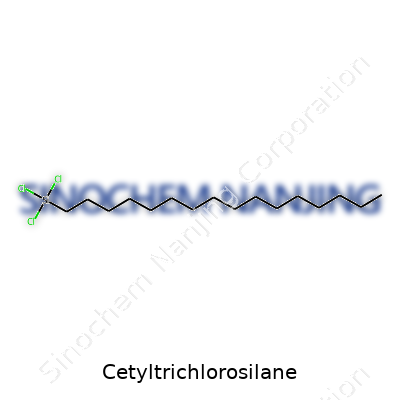
| Names | |
| Preferred IUPAC name | hexadecyl(trichloro)silane |
| Other names |
Trichlorooctadecylsilane n-Octadecyltrichlorosilane Octadecyltrichlorosilane OTS |
| Pronunciation | /ˌsiː.tɪlˌtrɪ.klɔːr.əˈsɪ.leɪn/ |
| Identifiers | |
| CAS Number | 3555-55-3 |
| Beilstein Reference | 1698734 |
| ChEBI | CHEBI:52403 |
| ChEMBL | CHEMBL4296951 |
| ChemSpider | 20412 |
| DrugBank | DB11291 |
| ECHA InfoCard | 03-2119956940-49-0000 |
| EC Number | 203-926-6 |
| Gmelin Reference | 89818 |
| KEGG | C05715 |
| MeSH | D002577 |
| PubChem CID | 68512 |
| RTECS number | XN8575000 |
| UNII | CGO4ESF02F |
| UN number | UN2987 |
| Properties | |
| Chemical formula | C18H37Cl3Si |
| Molar mass | 379.92 g/mol |
| Appearance | Colorless to pale yellow liquid |
| Odor | sharp |
| Density | 0.905 g/mL at 25 °C (lit.) |
| Solubility in water | Reacts |
| log P | 7.7 |
| Vapor pressure | 0.04 hPa (20 °C) |
| Acidity (pKa) | Acidity (pKa): "non-aqueous |
| Basicity (pKb) | 12.9 |
| Magnetic susceptibility (χ) | -74.0e-6 cm³/mol |
| Refractive index (nD) | 1.4700 |
| Viscosity | 1.37 cP (20 °C) |
| Dipole moment | 2.77 D |
| Thermochemistry | |
| Std molar entropy (S⦵298) | 817.6 J·mol⁻¹·K⁻¹ |
| Pharmacology | |
| ATC code | D08AX |
| Hazards | |
| GHS labelling | GHS02, GHS05, GHS06 |
| Pictograms | GHS02,GHS05 |
| Signal word | Danger |
| Hazard statements | H225, H314, H411 |
| Precautionary statements | P261, P264, P271, P280, P301+P330+P331, P303+P361+P353, P304+P340, P305+P351+P338, P312, P363, P405, P501 |
| NFPA 704 (fire diamond) | 3-2-2-W |
| Flash point | 181 °C (358 °F; 454 K) |
| Autoignition temperature | 295 °C |
| Lethal dose or concentration | LD50 oral rat 4,400 mg/kg |
| LD50 (median dose) | LD50 (median dose): Oral (rat): 1,900 mg/kg |
| NIOSH | FZ9625000 |
| PEL (Permissible) | Not established |
| REL (Recommended) | 0.1-1 |
| IDLH (Immediate danger) | Unknown |
| Related compounds | |
| Related compounds |
Trimethylsilyl chloride Triethoxyoctylsilane Octadecyltrichlorosilane Hexamethyldisilazane Chlorotrimethylsilane |



