Cesium Dichromate: A Matter-of-Fact Look
Historical Development
Cesium dichromate didn't come from a single flash of inspiration. Its roots stretch back to the golden years of chemistry in the mid-1800s, around the time when Bunsen and Kirchhoff first identified cesium through flame spectroscopy. Industrial interest emerged once the chemical qualities of alkali metals started to make sense, and this compound—made by combining cesium, one of the heavier alkali metals, with the strongly oxidizing dichromate anion—soon found its way out of curiosity-driven labs and into more directed research. By the early 1900s, specialty chemical suppliers could provide it to chemists hunting for strong oxidizers. The legacy of its discovery underscores how, even now, we continue to revisit old compounds with new eyes, especially as the technology for safer handling and finer analysis gets better.
Product Overview
Cesium dichromate, known in chemical catalogs as Cs2Cr2O7, looks like a bright orange or reddish crystalline solid, offering visual cues about its composition and potential hazard. Its main selling point: the formidable oxidizing power of the dichromate ion, combined with the rarely used cesium cation. The combination gains interest not from widespread industrial adoption, but from offering an alternative, sometimes more reactive, path in synthetic and analytical chemistry experiments. Large-scale production remains limited compared to potassium or sodium dichromate, since cesium supplies still cost more and most applications can rely on those less expensive salts.
Physical & Chemical Properties
Cesium dichromate lays heavy on any scale, thanks to the high atomic mass of cesium. Crystals usually form in the monoclinic system. The color tells of chromium(VI), and the solid dissolves readily in water, creating intensely colored solutions. Heat it too forcefully, and the compound breaks down, releasing toxic fumes of chromium oxides. On the chemical side, its oxidizing power stands out. Reactions with reducing agents happen with a flash, sometimes violence, and always with the release of energetic products. Its high density, relatively low melting point for an ionic solid, and solubility help engineers calculate risks and storage methods.
Technical Specifications & Labeling
Commercial suppliers label the product according to purity, crystal size, and contamination by other alkali or transition metals. Typical purity stands at 98% or higher, and certificates of analysis run routine for large orders, especially for research or critical process work. Labels carry the standard warning signs: strong oxidizer, toxic, and dangerous for the environment. European CLP and GHS labels don’t hold back with their pictograms. Laboratory reagent bottles quote batch numbers for traceability, while transportation requires proper documentation because regulations treat this compound with justified suspicion.
Preparation Method
Laboratory preparation usually starts with cesium carbonate or cesium chloride, which reacts with a solution of sodium or potassium dichromate. The less soluble cesium salt drops out after a few rounds of cooling and evaporation, then repeated crystallization narrows contaminants. In large-scale operations, manufacturers stick to batch processes, paying close attention during neutralization of the reaction mixture, since any mistakes release heat and toxic gases. The water wash after filtration carries away remaining sodium or potassium, essential for an honest assay of the product.
Chemical Reactions & Modifications
Cesium dichromate rarely sits around idle in a test tube. In practice, it performs in oxidation reactions: organic chemists once used it to turn alcohols into aldehydes and ketones, though alternative oxidizers with easier handling have taken over those routines in most labs. The compound reacts briskly with acids, giving off chromium trioxide vapors, and entering redox exchanges with a range of organic and inorganic substances. Attempts to modify the molecule usually aren’t about the dichromate part, but rather about swapping the cesium for another cation to tune properties such as solubility, power, or compatibility with a reaction environment.
Synonyms & Product Names
Chemists may call it cesium bichromate in older literature, though today’s regulatory language and supply catalogs stick with cesium dichromate. You’ll also run into the name cesium(VI) dichromate, pointing at chromium’s valence. Commercial listings use the formula Cs2Cr2O7. Science history buffs sometimes see the German spelling “Cäsiumdichromat.” These names reflect evolving language and the particular brands of suppliers, but in all cases, the function remains the same.
Safety & Operational Standards
Working with cesium dichromate teaches respect for chemical hazard. Direct skin contact, inhalation, or accidental ingestion each deliver a powerful dose of chromium(VI), a known carcinogen. Gloves, goggles, and careful weighing under a fume hood set a basic minimum for any operation involving this salt. Chemical hygiene plans spell out all steps—spill cleanup, storage away from organics or combustibles, neutralization for waste streams. Regulatory oversight, such as OSHA in the United States and the European REACH framework, requires accurate records and safe disposal protocols. Medical monitoring falls into place in institutions that handle chromium(VI) compounds often. Sooner or later, every safety officer collects stories of surprise reactions or overlooked risks with dichromate salts, so training and double-checking procedures never become optional.
Application Area
Compared to potassium or sodium salts, cesium dichromate remains a niche player. It fills its role in advanced inorganic synthesis, especially where specific cation effects are desired—cesium’s large ionic radius impacts outcomes in crystallography and materials research. Analytical chemists sometimes call for cesium dichromate in protocols intended to avoid sodium or potassium contamination, such as in trace analysis or studies of ion exchange. Electronics research values cesium’s unique properties, and sometimes this salt joins the roster for glass coloration or specialty ceramics development. The cost and hazard profile keep it out of mass-market products, but its presence in scientific catalogs shows that the right question will always bring someone back to explore what cesium dichromate can do in a demanding synthetic challenge.
Research & Development
Research with cesium dichromate hasn’t swept across mainstream science the way more common dichromates have. That said, solid-state chemists and academics working on transition-metal catalysis sometimes explore its properties in an effort to unlock new reactions or probe theoretical models. The interplay of cesium with transition metals sometimes affects reaction rates or stabilities in subtle ways. Broader research projects testing new battery chemistries, catalysts, or thin-film deposition technologies keep cesium dichromate on a short list for experiment designs. There’s also ongoing work in the environmental sciences, where the fate and behavior of chromium(VI) compounds call for real data on solubility, migration, and breakdown in natural waters and soils.
Toxicity Research
Chromium(VI) compounds, including cesium dichromate, draw attention as health hazards. Toxicity doesn’t rely on the cesium, but on the oxidizing chromium(VI) part. Animal studies, human epidemiology, and environmental fieldwork together show the dangers: inhaling dust or vapor inflicts lung damage, skin exposure produces ulcers, and chronic handling raises cancer risk, especially in industrial settings or with insufficient controls. Wastewater and soil contamination have led to costly cleanups. Regulatory agencies have responded by toughening exposure limits and requiring more complete disclosures in safety data sheets. For scientists, all this research drives home a need for engineering controls, medical surveillance, and consideration of alternatives in any process design.
Future Prospects
The future for cesium dichromate revolves around specialized research and applications where no substitute quite matches its chemical signature. Trends in green chemistry, safer syntheses, and environmental awareness push industries and labs to move away from chromium(VI) salts, restricting mass use. Still, the compound keeps a place in research settings focused on materials science, catalyst development, and targeted synthetic routes where cesium's presence fine-tunes performance. As analytical tools get more powerful, and as demand for even purer starting materials rises, some niche applications may expand. Yet most shifts point to better, safer, and more sustainable reagents in everyday work, with cesium dichromate remaining an item for careful hands in well-equipped labs, backed by thoughtful management and ongoing science.
What is Cesium Dichromate used for?
Understanding Cesium Dichromate
Cesium dichromate is a chemical compound that contains cesium, chromium, and oxygen. It shows up as a brightly colored orange to red solid, and it packs quite a punch when it comes to its chemical behavior. Its distinctive properties, such as being a strong oxidizer, have carved out specific roles for it, mostly in laboratories and some industrial setups. While not everybody has direct contact with this chemical, knowing where it gets used—and why—helps shine a light on the broader conversation about safety, science, and responsible manufacturing.
Laboratory Use: Analysis and Reactions
Research settings see a lot of cesium dichromate. Chemists bring it out when they want to test for certain metals or need an oxidizing agent that doesn’t get swayed by impurities in a reaction. In analytical chemistry, it sometimes serves as a source of chromium ions when tracing reactions or standardizing solutions. The substance doesn’t have a role in any high-volume consumer product, and for good reason. Its toxicity and hazard potential ask for careful handling, and folks working with it get specialized training and protective gear.
Industry: A Small but Crucial Player
Outside of research labs, some specific industrial workplaces use cesium dichromate for specialized processes. It can help in dye production or in manufacturing chemicals that require a reliable oxidizing environment. While most manufacturers prefer chromium compounds that are a little less toxic and easier to manage, certain reactions call for the qualities cesium dichromate brings. Textile processing and pigment manufacturing sometimes make use of it, but usually under controlled conditions where every step follows strict safety rules.
Environmental and Health Considerations
That bright color comes with a heavy price. Cesium dichromate brings serious risks—mainly from the chromium(VI) ions it releases, which are well-known for causing both environmental and human health problems. Exposure can cause respiratory issues, skin burns, or even more severe diseases with repeated contact. People who work with substances like these operate under strict guidelines set by agencies like OSHA and the EPA. Waste containing cesium dichromate is collected and destroyed in specialized facilities, never just dumped in the trash.
Reflection on Safety and Alternatives
During my work in pharmaceutical labs, we almost never touched cesium dichromate, preferring safer alternatives for oxidation. Potassium dichromate often replaced it, and even then, only under carefully managed conditions. Education always focused on minimizing exposure, recycling as much material as possible, and using protective equipment every step of the way. I’ve seen chemists go out of their way to substitute milder chemicals wherever possible. While there’s value in keeping cesium dichromate around for specific scientific needs, it feels wiser to use it as little as possible.
Looking for Solutions
Safer substitutes and stricter disposal methods stand as the most practical answers right now. Awareness programs and continuing education matter just as much as new chemical recipes. If companies and research labs find ways to complete their work with less hazardous substances, everybody wins. Chromate compounds have caused enough trouble in the past, from groundwater pollution to health disasters in poorly monitored facilities. Better regulation, open communication, and sustainable practices can keep those problems from coming back.
What is the chemical formula of Cesium Dichromate?
Getting Straight to the Formula
Cesium dichromate carries the chemical formula Cs2Cr2O7. Just by looking at its name, the pattern fits with other dichromates, like potassium dichromate (K2Cr2O7). In this case, two cesium (Cs) atoms balance out the double negative charge of the dichromate ion. Chromium, sitting in the +6 oxidation state, teams up with oxygen to form that bright orange dichromate unit.
Looking Deeper Than the Formula
Dichromates call up serious safety concerns, and cesium dichromate is no different. That chromium(VI) inside the dichromate group doesn’t mess around—it’s a strong oxidizer with a toxic edge. Contact with skin or inhaling the dust may be dangerous. I’ve always kept a healthy distance when handling anything with hexavalent chromium because of its long list of health warnings. In a real sense, respect for this compound matters more than just memorizing its formula.
Where Cesium Dichromate Shows Up
Labs sometimes use cesium dichromate for specialty chemical syntheses. Under the right conditions, it acts as a strong oxidizing agent, swapping out electrons to help build or break molecules. Its cesium ion, fairly large compared to sodium or potassium, sometimes makes it the right choice in research over other dichromate salts. No one uses this just for the fun of it; every time it enters the workflow, there’s a clear purpose.
Why Care About Cesium Dichromate?
Chromium(VI) compounds, including cesium dichromate, bring power and risk all in one bright-orange package. The environmental impact can linger for years. I once looked at river sediment studies in industrial regions: hexavalent chromium doesn’t just fade away even decades after the original pollution event. Many countries restrict its sale and handling to keep both workers and the community safer.
Minding the Safety and Health Issues
Protective gear shouldn’t feel optional with cesium dichromate. Even after years in the lab, I don’t cut corners. Proper gloves, eye protection, and a tight seal on containers matter a lot. Some procedures demand working under a hood to trap fumes right where they start. Any waste, solid or liquid, heads into marked hazardous waste containers for correct disposal—never in the regular trash or down the drain. It’s all about controlling risk before an accident forces the lesson.
Ideas for Moving Toward Safer Chemistry
Many scientists push for greener chemistry. Some industries phase out hexavalent chromium in favor of less toxic options, cutting back on how much enters the workplace or environment. Digital tools, virtual labs, and simulation software also help students and researchers learn reactions without physical exposure to dangerous substances. Substitution, reduction, and proper disposal all work together to keep tough chemicals like cesium dichromate away from unnecessary harm.
Trustworthy Information and the Value of E-E-A-T
Google’s E-E-A-T principles—experience, expertise, authoritativeness, and trustworthiness—hit home for complex chemicals like cesium dichromate. Misunderstandings can cause real harm. Reliable sources, proven safety procedures, and honest disclosure of risks shape responsible handling in both professional and educational settings. Keeping science both accurate and accessible serves everyone who needs to know what’s in the bottle, what danger it brings, and how to handle it with respect.
Is Cesium Dichromate hazardous or toxic?
Understanding the Risk
Every time I visit a chemistry lab, safety goggles and gloves stand on the table, not just for show but to protect against real threats hidden in pretty glass bottles. Cesium dichromate isn’t the kind of chemical I’d want to handle without checking twice. Its bright orange color may catch the eye, but that shine masks a deep hazard. Anyone working with it faces something far more serious than an ordinary household cleaner. Exposure can cause skin and eye irritation, burns, and damage that lingers long after the bottle is closed.
What Makes Cesium Dichromate Toxic
At its core, the problem ties to the chromium element inside. Chromium(VI), the form found in dichromates, is notorious—think Erin Brockovich and those well-water lawsuits. Inhaling dust or getting solution on your skin opens the door to a wave of health effects: severe respiratory problems, DNA damage, and even cancer after repeated contact. Studies from OSHA and the CDC don’t mince words—Chromium(VI) compounds figure on the list of top workplace carcinogens.
My own experience in research showed the hazards. Even a few milligrams of dichromate can stain fingers, and those stains mean chemical is soaking in. If a friend tried to dispose of waste improperly, sharp, metallic smells stung the air—it only takes a moment of carelessness for injury to happen.
Environmental Fallout
Hazards from cesium dichromate stretch beyond the lab. Pour some down the drain, and groundwater might take decades to flush it out. Small amounts introduce hexavalent chromium into rivers—this poisons fish, chokes small aquatic life, and ends up in drinking water. Environmental Protection Agency regulations set strict limits, but stories still surface of illegal dumping or leaks. Cleanup costs millions and may last for years.
In real terms: once, a nearby community found orange sludge at the base of an old factory site. Local news reported sick children and pets. Testing found chromium(VI) at 100 times greater than safe levels. Remediation teams spent years digging up tons of soil, trying to strip the land of chemical ghosts that refuse to vanish on their own.
Safe Handling and Solutions
Many places now aim to reduce chromium(VI) use, and alternatives have started replacing dichromates in old protocols. Labs investing in safer reagents protect both staff and the planet. In my old university, a system tracked every single hazardous waste bottle. Only trained workers could access chromium compounds, and disposal followed a strict routine—neutralizing the chemical, storing it in labeled containers, and shipping it off for special treatment far from sewage pipes or landfill.
Education turns out to matter just as much as rules. I’ve seen undergraduates, hands shaking, ask for help instead of making a mistake. Encouraging that culture—asking questions, double-checking before pouring—lowers accident rates and prevents harm.
Ultimately, societies have to invest in better controls and environmental health. Regulators need resources for inspections. Workers need training. Companies need consequences for shortcuts. Science demands precision, and those working with cesium dichromate deserve systems that take its toxicity seriously every step of the way.
How should Cesium Dichromate be stored?
Understanding the Risks Around Cesium Dichromate
Cesium dichromate stands out in any lab because of just how hazardous it can be. It’s not only a strong oxidizer, but the chromium in it often signals environmental and health hazards you simply can’t shrug off. I’ve worked with plenty of chemicals that demand cautious storage, and nothing rattles routine like reading a label marked “carcinogen” and “environmental hazard.” Fumes, dust, and leaks from this bright orange compound can pose a danger to anyone who doesn’t treat it with respect.
Why Location and Containment Matter
Storing cesium dichromate isn’t about finding an empty shelf and slapping on a label. Any wet spot, exposed wood, or cluttered cabinet could spell real trouble. Strong oxidizers have a nasty habit of reacting with organic stuff—paper towels, spilled coffee, misplaced gloves—faster than most other chemicals. I always make sure that anything labeled as such goes into a dedicated, corrosion-resistant cabinet, nowhere near flammable solvents, acids, or ordinary trash. Keeping oxidizers isolated lowers the odds of unpredictable accidents.
Container Choices That Don’t Bluff
Cheap or reused containers fall short every single time. Cesium dichromate should go into well-sealed glass or high-density polyethylene bottles, each with tight-fitting lids. I’ve seen what air and humidity can do over time—a stubborn, corroded lid, discolored contents, or worse, a slow leak. Labels should use clear, chemical-resistant ink so nobody gets drafted into an impromptu hazard simply because the writing faded or peeled off.
Safe Temperatures and Minimal Humidity
Chemical storage spaces get forgotten fast once daily routines set in. The heat from radiators or sunlight, even just once, can warp plastic, burst glass, or degrade the chemical altogether. Cesium dichromate lasts longest and stays least reactive in cool, dry places. Regular checks for leaks, condensation, or crust around jar lids catch trouble before it spreads. High humidity or a fan blowing right onto a container can rust shelves or blow traces of dust—two things you definitely don’t want to clean up.
Accountability and Documentation
You can’t fix a missing jar from memory. Every lab should keep logs on hand, tracking bottle numbers, lot details, and expiration dates. This isn’t paperwork for the sake of paperwork—it’s about spotting what’s missing, expired, or nearly empty so people don’t go digging blindly on a busy day. Any sign of tampered seals or a broken bottle means an incident report and immediate cleanup by staff trained for hazardous waste.
Why Personal Protection Isn’t Optional
Even the best-stored jar won’t keep hands safe during transfer. Gloves, goggles, and a proper lab coat cut down on accidental contact. Spills or dust in the eyes rarely forgive lazy habits, and with this compound, consequences can turn severe. Training remains central—not just reading the safety sheet, but rehearsing how to respond if the unexpected happens.
Disposal—The Final Test of Responsibility
Hang onto old or unnecessary cesium dichromate “just in case” and you’ll discover it becomes a legacy problem for the next person down the line. I’ve watched too many storerooms fill up with barely used, aging bottles no one feels confident about. Professional hazardous waste channels cost money but save time, safety, and environmental headaches in the long run. There’s a satisfaction in knowing the space is safer for the next round of staff, students, or visitors who come through.
What are the safety precautions when handling Cesium Dichromate?
Respecting Hazards of Cesium Dichromate
I’ve worked in labs where Cesium Dichromate sat inside a vented cabinet, double-bagged and labeled with more warnings than some prescription medicines. Using this compound always brought a deep sense of caution. It’s not just a chemical with an intimidating name—it’s a potent oxidizer, and its chromium content carries health risks nobody should underestimate.
Contact with skin or inhalation of dust causes real harm. Chromium(VI), found in dichromate salts, can trigger allergies, ulcers, and increase cancer risk when exposure goes unchecked. The orange-red crystals might look harmless, but trust me, common sense and planning save skin and lungs in ways no superhero movie can show.
Personal Protective Equipment Comes First
Before opening any container, I slip into heavy-duty gloves—nitrile or neoprene, not disposable latex. Cotton lab coats keep street clothes safe, but only thick, non-porous aprons make sense around these salts. Eye protection becomes non-negotiable; tight-fitting goggles or even a full face shield mean splashes have nowhere to go except the plastic.
Respiratory safety doesn’t stop at a dust mask. I reach for a properly fitted NIOSH-approved respirator if there’s even a hint of powder in the air. Fume hoods should run without exception. Working in an open lab means risking the health of everyone nearby.
Safe Working Habits
I keep workspace as clear as possible, no clutter, no rush. Spills become less likely, and if any happen, I know exactly where my spill kit sits—absorbent pads, neutralizing agents designed for chromium compounds, not just paper towels. Any waste goes directly into labeled, corrosion-resistant bins. No shortcuts.
I wash hands the minute I step away—even when gloves seem untouched. Some folks forget this step, but those trace residues linger on doorknobs, pens, and even phone screens. It’s not just paranoia; chromium can trigger reactions from tiny, unseen exposures.
Environmental and Legal Responsibility
Dumping any dichromate down the sink or tossing it in regular trash risks serious fines and, more important, environmental contamination. My university required every gram to get bagged and labeled as hazardous waste. That isn’t just bureaucracy talking; chromium compounds poison water and persist in soil, hurting people and wildlife far from the original lab.
Government rules, like OSHA’s standards in the United States or REACH in Europe, back up these precautions. They set strict exposure limits and demand employers provide up-to-date material safety data sheets. But relying on rules alone won’t cut it; staying informed takes personal initiative.
The Mindset for Safety
Protocols exist for a reason, but attitude matters as much as equipment. The colleagues I trust most see every toxic chemical, every oxidizer, through a lens shaped by past spills, close calls, and patient teachers. They double-check storage, challenge shortcuts, and keep emergency showers within reach.
Working with Cesium Dichromate requires respect for both the lab bench and everyone who may cross it later. Every precaution counts, because one slip-up affects more than just the person wearing the gloves today.
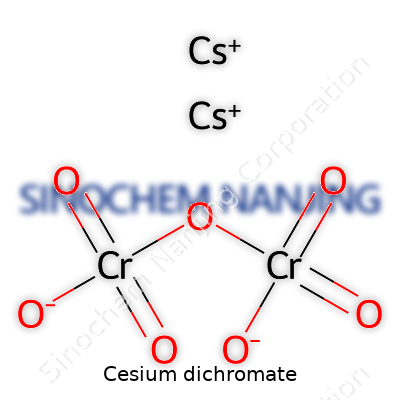
| Names | |
| Preferred IUPAC name | Dicesium dichromate |
| Other names |
Chromic acid disodium salt Sodium bichromate Dichromic acid disodium salt Sodium dichromate(VI) |
| Pronunciation | /ˈsiːziəm daɪˈkroʊmeɪt/ |
| Identifiers | |
| CAS Number | 13454-98-7 |
| Beilstein Reference | 878726 |
| ChEBI | CHEBI:132679 |
| ChEMBL | CHEMBL3983481 |
| ChemSpider | 57503 |
| DrugBank | DB14565 |
| ECHA InfoCard | ECHA InfoCard: 03e4b61e-a1d3-423a-8b86-59771f35d12e |
| EC Number | **1313-61-9** |
| Gmelin Reference | Gmelin Reference: **1529** |
| KEGG | C19154 |
| MeSH | D007568 |
| PubChem CID | 25157 |
| RTECS number | IK8925000 |
| UNII | 67T1J0B7F7 |
| UN number | UN1439 |
| Properties | |
| Chemical formula | Cs2Cr2O7 |
| Molar mass | 613.804 g/mol |
| Appearance | Orange-red crystals |
| Odor | Odorless |
| Density | 4.24 g/cm³ |
| Solubility in water | Soluble |
| log P | 0.59 |
| Vapor pressure | Negligible |
| Magnetic susceptibility (χ) | +1100.0e-6 cm³/mol |
| Refractive index (nD) | 1.74 |
| Dipole moment | 0 D |
| Thermochemistry | |
| Std molar entropy (S⦵298) | 204.5 J·K⁻¹·mol⁻¹ |
| Std enthalpy of formation (ΔfH⦵298) | -1636 kJ/mol |
| Std enthalpy of combustion (ΔcH⦵298) | -1750 kJ/mol |
| Hazards | |
| Main hazards | Oxidizing, toxic if swallowed, causes severe skin burns and eye damage, may cause cancer, may cause genetic defects, very toxic to aquatic life with long lasting effects |
| GHS labelling | GHS07, GHS08, GHS09, GHS06 |
| Pictograms | GHS05,GHS06,GHS08 |
| Signal word | Danger |
| Hazard statements | H301 + H311 + H331, H314, H350, H341, H372, H410 |
| Precautionary statements | P201, P202, P220, P221, P261, P264, P270, P273, P280, P283, P301+P310, P301+P330+P331, P302+P352, P303+P361+P353, P304+P340, P305+P351+P338, P306+P360, P308+P313, P310, P314, P321, P330, P337+P313, P362, P363, P370+P378, P391, P403+P233, P405, P501 |
| NFPA 704 (fire diamond) | 3-0-3-OX |
| Lethal dose or concentration | LD50 oral rat 180 mg/kg |
| LD50 (median dose) | LD50 (median dose): Oral-rat LD50: 180 mg/kg |
| NIOSH | TTJ59770 |
| PEL (Permissible) | PEL (Permissible Exposure Limit) for Cesium Dichromate: "0.05 mg/m³ (as Cr(VI)) |
| REL (Recommended) | 50 µg/m³ |
| IDLH (Immediate danger) | IDLH: 15 mg Cr(VI)/m³ |
| Related compounds | |
| Related compounds |
Potassium dichromate Sodium dichromate Ammonium dichromate Cesium chromate Cesium sulfate |



