Carbazole: An In-Depth Commentary
Historical Development
The path of carbazole started in coal tar during the 19th century, showing the classic arc of scientific curiosity meeting tough industrial need. Early chemists, working under sooty lamps and glass tubes, hunted for what lay inside coal tar. Their discovery of carbazole was less about glamour and more about persistence. They extracted it, purified it, and gradually understood what they held: a solid with promise stretching beyond the dye industry. Over time, carbazole’s role shifted from a mere curiosity to a backbone in research for optical materials and organic electronics. In my early days in the lab, the musty tales of old chemists hovered around the flasks—Carbazole stood as proof that real progress often comes from sticky, overlooked sources like coal tar.
Product Overview
Carbazole looks like an off-white to pale-yellow powder with a faint characteristic odor. This compound doesn’t just crop up in textbooks; it shows up in specialty LEDs, OLED displays, and high-performance plastics. As a member of the heterocyclic aromatic family, its three-ring structure catches the eye of anyone interested in advanced materials. Though niche, its applications have steadily grown because of the compound’s mix of stability and reactivity. I’ve watched manufacturers and researchers scurry after pure carbazole for late-stage pharmaceuticals and high-spec polymers, all searching for the same, reliable backbone in their formulas.
Physical & Chemical Properties
Carbazole displays a melting point near 245°C, with a boiling point rising around 354°C. Its density clocks in about 1.18 g/cm³. The structure offers impressive resistance to acids and many bases, lending it appeal where degradation under tough conditions can ruin a process. Carbazole’s aromatic system absorbs light strongly in the UV region, making the compound useful for optical research. It dissolves slowly in alcohols, chloroform, and benzene, but shuns water almost completely. From my own bench work, carbazole resists oxidation far better than most ringed hydrocarbons, a fact that keeps it in favor among those pushing synthesis to its limits.
Technical Specifications & Labeling
Industrial suppliers label carbazole with product grade, purity percentage, batch number, and storage recommendations. Most of the time, purity reaches above 99%. The label warns of the hazardous nature of the powder, listing its recommended chemical storage temperature: cool, dry, out of sunlight. Material Safety Data Sheets accompany each shipment, flagging potential health risks and proper handling procedures. I consistently check the labeling, especially on older samples, since degradation from exposure or poor storage can disrupt an entire line of pigment production or chemical synthesis.
Preparation Method
Old-timers stuck with distillation from coal tar, using fractionation and solvent extraction. Modern processes shifted to cyclization of biphenylamine derivatives, which streamlines purity and yield. There’s still an art to the process—choosing catalysts, tuning reaction times, controlling temperature ramps all make a difference. In small-scale runs, I’d tried both the classics and the newer shortcuts; the traditional approach gave broader impurity spectrums, which can be useful if the end use doesn’t demand chromatographically pure carbazole. Contemporary green chemists experiment with enzymatic or electrochemical approaches, hungry to divorce the process from coal-based feedstocks.
Chemical Reactions & Modifications
Carbazole undergoes substitution at the nitrogen atom and the aromatic rings. N-alkylation transforms its electronic nature, a trick often used in electronic device research. Halogenation or nitration modifies its color and reactivity, producing intermediates for pigments or pharmaceuticals. Carbazole’s three rings crave functionalization, and its derivatives show up in ligands for metal-organic complexes and in advanced polymer chemistry. I’ve followed the fate of these derivatives in various experiment campaigns, where the position of a methyl group or a halogen atom changes the way a final product lights up, or survives under test conditions.
Synonyms & Product Names
Chemists have tagged carbazole with names such as 9H-Carbazole and Diphenylenimine. Trade and lab catalogs scatter with these alternatives. Some older literature refers to it as carbazol or phenylindole, further muddling the researcher’s desk. Tracking down the correct product often means scrolling through synonyms, making sure the supplier’s batch matches the desired isomer and purity.
Safety & Operational Standards
Handling carbazole means donning gloves, eye protection, and working in a well-ventilated fume hood. The substance may irritate skin or respiratory tract, so honestly, I never take shortcuts. Complying with REACH, OSHA, and GHS labeling is not about bureaucracy—it’s about keeping yourself and your coworkers safe. Storage mandates sealed containers in a dry spot, away from hot equipment and moisture. Emergency protocols call for spill kits, eye wash stations, and clear evacuation routes. Knowing these standards has prevented more than one accident in the labs I’ve called home.
Application Area
The real draw of carbazole shows up in OLED screens, solar cells, antiparasitic drugs, and purple dyes. Its three-ring system, tough and aromatic, has made a substantial mark on the way flexible screens light up, as well as on the way lab teams attack the design of new genetic probes. Some engine fuels even contain traces due to carbazole’s natural occurrence in fossil tar. Research labs, pharmaceutical plants, electronic fabricators all keep it on hand because its backbone fits so many modern needs. In my experience, every push for thinner, more energy-efficient displays owes something to the chemistry of this compound.
Research & Development
Scientists keep probing for new carbazole derivatives. Their aim: organic photovoltaic devices with higher efficiency, light emitters with purer spectra, anticancer drugs that exploit the structure’s bioactivity. Grants chase the promise of carbazole-based materials in energy storage, battery separators, and environmental sensing. Journals in chemistry and materials science regularly publish breakthroughs tied to this core structure. Some labs use advanced computational chemistry to guide synthetic efforts, cutting time and materials wasted on dead ends. My own research tracked N-alkyl carbazoles as promising antifungal agents—one small tweak and the biological activity leaps.
Toxicity Research
Carbazole interests toxicologists as well as materials scientists. Animal studies show moderate acute toxicity. Chronic exposure, especially through inhalation or ingestion, may pose a carcinogenic risk. The compound tends to persist in soil and sediment, leading to concerns about buildup in food chains. Disposal requires care—incineration under controlled conditions, not landfill, to limit environmental impact. As a former safety officer, I insisted on strict monitoring and recording of exposures in every facility handling carbazole or its close relatives.
Future Prospects
Demand for carbazole grows, pulled upward by new display technologies, medical research, and push for greener, durable materials. Researchers develop biosynthetic and recyclable pathways, eager to trim resource use and reduce pollution. Carbazole-based OLEDs are mainstay candidates in rollable and wearable electronics, which will soon migrate from luxury items to everyday products. On the pharma front, scientists pursue carbazole derivatives for applications in antimicrobial, antiviral, and anticancer treatments. The journey of this compound—from coal tar sideline to modern science darling—shows how chemistry continues to shape and empower technology, medicine, and daily life.
What is Carbazole used for?
Everyday Chemistry at Work
Carbazole sounds like something buried deep in a chemistry textbook, but its impact stretches far beyond the lab. The molecule itself comes from coal tar, discovered over a century ago. Since then, researchers have found creative ways to take this simple structure and put it to use in things most of us interact with every day—even if we don’t notice.
The Color in Everyday Life
Walk through any hardware store and scan the paint aisle. The bright, persistent pigments in many products come from carbazole derivatives. Paints and inks based on this compound hold their color, even when sunlight beats down for years. This kind of stability results from the molecular backbone carbazole provides—no magic, just tough chemistry.
Those who work in printing or manufacture textiles value reliable shades. If you’ve ever worn a vivid purple shirt that didn’t fade after a summer’s worth of washing, there’s a good chance carbazole made that possible. Market analysts report that global pigment production often leans on carbazole because of its color-fast properties.
Lighting Up the World—Literally
City nightscapes shine thanks in part to organic electronics. Carbazole stands as a core building block for certain organic light-emitting diodes (OLEDs), which now power modern smartphone, television, and digital display screens. OLED technology relies on organic molecules that can emit light when charged—carbazole-based compounds do this with efficiency.
Back in college, I remember chemistry classmates tinkering with homemade OLED lamps using carbazole derivatives. The lab would glow blue, proof that you don’t need rare minerals or heavy metals to make a light source work.
Market research from 2022 shows the OLED industry growing at double-digit rates each year. As engineers keep searching for stronger, more durable screens, compounds built on the carbazole framework keep drawing interest. The quest for thinner, bendable displays has only made carbazole more valuable.
Beyond the Obvious: Medicine and Research
Chemists have known for decades that carbazole isn’t just a pigment or an electronic material. Its structure allows for easy modification, which means pharmaceutical researchers see it as a flexible starting point for new drugs.
Several carbazole derivatives have turned up in experimental cancer drugs. Scientists at places like the National Institutes of Health have synthesized hundreds of different molecules based on carbazole, hunting for ones that can disrupt harmful cell growth. Some have made it to clinical trials for leukemia and other cancers. Researchers think these compounds block enzymes that cancer cells need to multiply.
The search for better antibiotics and antiviral drugs also takes inspiration from natural molecules built on the carbazole core. Certain rare plants, common in parts of Southeast Asia, produce carbazole alkaloids as natural defenses. Laboratory studies have shown they can fight bacteria and viruses—an encouraging sign, especially as antibiotic resistance rises.
Sustainability and the Road Ahead
Chemists today face tough choices about where to source raw materials. While carbazole came from coal tar for years, concerns about pollution and fossil fuels have driven a hunt for greener alternatives. Some labs now produce carbazole using plant-based feedstocks and cleaner synthesis methods.
As society pushes for sustainable chemistry, carbazole’s simple backbone gives scientists a sturdy starting point. Whether lighting up rooms, holding color fast in fabrics, or forming medicine, carbazole’s quiet influence can’t be overstated. Beyond historical uses, breakthroughs in sustainable production and biomedical applications could keep carbazole relevant for decades.
What is the chemical structure of Carbazole?
Carbazole Under the Lens
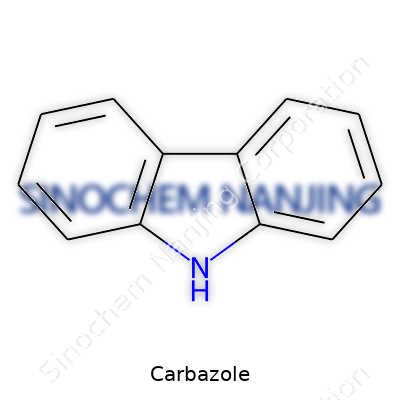
Carbazole grabs attention for both its simple beauty and its big impact. Chemically, it’s an aromatic heterocycle with the formula C12H9N. Picture a structure with two fused benzene rings, not unlike naphthalene, but sliced by a nitrogen atom tucked into a five-membered ring sandwiched between them. This unique placement gives carbazole character, raising its value in research labs and industries chasing new materials.
Understanding the Structure
Looking at carbazole reminds me of putting together a puzzle where each piece matters. Two benzene rings fuse on either side of a smaller ring. That middle slice isn't carbon—it's nitrogen. This nitrogen breaks up the classic carbon lineup in a way that ramps up electron sharing. As someone who has spent hours peering at molecular models, I see how the nitrogen's lone pair of electrons changes the molecule’s reactivity and gives it useful quirks. This nitrogen is not just passing by; it plays a starring role in everything carbazole touches, from shaping pharmaceuticals to feeding plastics and dyes.
Carbazole’s Real-World Presence
This compound has carved out space in practical science. Carbazole derivatives find themselves shaping OLED screens, modern solar panels, and even high-performance plastics. That nitrogen’s electron-sharing prowess shows up brightest here, enhancing stability and charge transport. Scientists prize carbazole units because they help organic molecules tolerate charge slinging, which is gold when building thin, efficient screens.
Chemists don’t just stumble on carbazole in a lab. It pops up in coal tar and can be locked away from crude oil fractions. When I see research teams and companies gravitating toward carbazole-based compounds, I remember how innovations like this move quickly from obscure chemical catalogues to our daily lives—think of cleaner energy harvesting or better cancer-fighting drugs.
Why Carbazole Matters Now
The world continues banking on smarter, lighter material science and cleaner electronics. Carbazole stands as a core framework for innovation because of the way its aromatic rings and nitrogen partner together. For those of us watching the organic electronics field grow, carbazole signals future shifts: greener devices, faster-charging batteries, and flexible displays.
But challenges pop up around sourcing and synthesis. Traditional methods can be slow and energy-hungry. Plenty of debate swirls around making production greener. Some researchers started swapping classic solvents for eco-friendlier options; others are cutting down waste by streamlining synthesis pathways. My own experience with green chemistry research showed just how far routine practices can get pushed toward less waste and more efficiency, given the right push.
Moving Forward
Building a better future often hinges on understanding small details—like the nitrogen sitting quietly in carbazole’s heart. Investments in cleaner, renewable ways to make compounds like this pay dividends over time. If research, industry, and policymakers pull together, carbazole could drive new advances not only in tech but in sustainability. After all, a small change in a molecule can end up making a big mark everywhere from labs to living rooms.
Is Carbazole hazardous or toxic?
Carbazole in Everyday Use
Carbazole pops up more often than people realize. This chemical forms the core of certain dyes, pharmaceuticals, and even some plastic products. Factories manufacture it in bulk, especially where colorants or electronic materials matter for production. I remember scrolling through technical forums and finding surprising mentions of carbazole-based OLED screens—a technology present in many smartphones and high-end TVs.
Yet, for anyone handling carbazole in research labs or factories, safety talks always bring a strong warning. This substance is far from harmless, even if the average person never touches it outright.
What Makes Carbazole Risky?
I’ve got vivid memories from my university laboratory days, and carbazole always demanded extra attention. Its molecular structure lets it slip past some typical safeguards. Peer-reviewed sources highlight that exposure—either through inhalation, skin absorption, or swallowing—can irritate the eyes, skin, and lining of the nose and throat. Shortness of breath, headache, and dizziness appear quickly if someone spends too long in an unventilated space with this chemical.
Outside the immediate effects, there’s a bigger issue. Cancer risk lingers over prolonged carbazole exposure, especially during industrial work. Research published in environmental health journals pointed out increased tumor rates in lab animals exposed for extended periods. The U.S. EPA calls carbazole a “possible human carcinogen.” While regulatory bodies haven’t demanded a ban, the warning is loud enough for health-conscious workplaces to take all sorts of precautions.
Environmental and Community Concerns
Factories sometimes release leftover carbazole into air or water by mistake. In a neighborhood near a chemical plant, I once saw flyers urging locals to drink only filtered water after a minor chemical leak. Carbazole doesn’t break down fast in soil or groundwater. Fish and wildlife in the affected area often carry high levels in their bodies months after a spill. Studies show carbazole resists natural decay, persisting and accumulating in the food chain.
Worry spreads quickly in communities when odd odors or taste changes hint at a chemical leak. Even if the risk for an individual family seems low, I know firsthand that heated local government meetings follow just about every chemical incident. Rarely do people feel reassured, even with detailed safety data.
Solutions for Safer Handling
Minimizing harm from carbazole means investment in solid containment and detection. In my time consulting for a chemical plant, I saw practical fixes save the day: better storage drums, real-time gas hoods, rigorous employee training, and regular leak checks. Require personal protective equipment—serious gloves, goggles, and high-grade respirators, not just thin masks and aprons.
For governments, regular inspection and harsh penalties for sloppy disposal change the company culture around hazardous chemicals. Local communities benefit when reporting channels stay open and water or air gets tested often. Knowledge is key; nothing beats accessible factsheets and honest updates from regulators. As a researcher, I learned early on to respect any substance flagged as possibly carcinogenic. Taking those warnings lightly hasn’t helped anyone, whether in a lab or a neighborhood.
Whatever economic benefits carbazole brings, public health takes priority. Risk doesn’t disappear through good intentions. Only steady vigilance—backed by smart policies and community action—keeps the dangers in check.
What are common applications of Carbazole in industry?
Lighting Up the World with Pigments and Dyes
Walk into any hardware store and you’ll see paints stacked in all shades. Dig into what gives many of these colors their sharpness, and you’ll find carbazole making a quiet appearance. Since the early 20th century, chemists found carbazole’s backbone forms the core of violet pigments, such as Pigment Violet 23. Industries rely on this colorant for its staying power in plastics, inks, coatings, and even automotive finishes. With carbazole, those traffic signs don’t fade in the sun, billboards hold their color in rain, and high-end cars gleam with a lasting finish.
Pushing the Limits of Electronics
Today’s gadgets keep shrinking, yet screens keep getting sharper. That’s partly because carbazole-based compounds help make organic light-emitting diodes, or OLEDs. OLEDs have become popular in smartphones and TVs. Carbazole-based materials help channel electric current efficiently in these tiny devices. They also boost the brightness and lifespan of the screen. Researchers keep tuning carbazole derivatives, searching for even more stable and energy-efficient displays.
Guarding the Power Grid
Anyone working at a power company knows the fight against electrical failure. Insulation keeps electricity flowing safely, and here again, carbazole steps in. Its stable ring structure resists heat and doesn’t break down easily. Many manufacturers use carbazole-based compounds in transformer oils and insulating materials, trying to keep lines running even under heavy loads. I once met an electrical engineer who said the addition of carbazole derivatives helped reduce unexpected trips in a local grid—fewer blackouts and more reliable service.
From Laboratories to Pharmacies
Drug discovery leans heavily on building blocks like carbazole. Medicinal chemists often turn to carbazole when piecing together antiviral, antibacterial, or anticancer agents. Its structure allows tweaks at many points, giving scientists flexibility to design molecules that fit precise targets in the body. For example, some carbazole derivatives have shown promise in early studies against neurodegenerative diseases, and others form the backbone of drugs in clinical trials for cancer therapy.
Protecting Crops and Harvests
Agriculture has its own stake in carbazole chemistry. Plant-care products and certain pesticides use carbazole-based molecules, chosen for their resistance to sunlight and rainfall. Farmers aim for consistent yields, so using substances that won’t break down in the field makes a big difference. There’s ongoing research to find carbazole compounds that target pests without harming beneficial insects, promising safer solutions for soil and pollinators alike.
Looking Forward: Safer, Greener Alternatives
Not every carbazole application comes easy. Production often starts from coal tar or crude oil derivatives, raising concerns over sustainability. Some environmental studies have linked certain carbazole compounds to long-term pollution. The chemical industry is starting to address that, developing greener ways to make and recycle carbazole derivatives. Researchers keep searching for paths that cut toxic byproducts and reduce reliance on petroleum.
Building on a Versatile Foundation
Experience shows that carbazole’s story is about flexibility. Whether it shines in new TVs, colors our lives, or helps power grids keep the lights on, its impact spreads across sectors. Scientists, farmers, and factory foremen all depend on its unique chemistry, even as they watch closely for safer methods and tighter regulations. Carbazole remains a workhorse for modern industry, driven by both innovation and responsibility.
How should Carbazole be stored and handled?
The Real Risks of Carbazole
Carbazole isn’t exactly something you find on your average household shelf. It’s a chemical used in everything from dyes and pharmaceuticals to plastics. Its real danger comes from both its potential toxicity and its tendency to ignite under the right conditions. It’s a solid, sometimes found as white or pale yellow crystals, but don’t let that clean look fool you. Breathing carbazole dust, letting it touch bare skin, or accidentally swallowing even a small amount could affect your health. There’s also an environmental angle, as some carbazole byproducts have shown links to water pollution.
Getting Storage Right
Small mistakes can lead to big consequences here. Carbazole needs a cool, dry spot. High humidity or sunlight can increase the odds of decomposition, and nobody wants to deal with the breakdown products. Glass containers with tight-fitting lids or chemical-resistant drums do the job. Polyethylene or polypropylene drums work better than regular steel, because carbazole can react with some metals if moisture sneaks in. The idea is simple: keep it sealed, keep it dry, and keep it away from open flames or sparks. A dedicated chemical storage room—away from acids and oxidizing agents—helps keep accidents from turning serious. Keep a clear aisle and never stack other heavy containers on top. The less movement, the less risk.
How to Handle Carbazole Without Stress
People sometimes skip gloves “just this once” or leave caps off “because I’m coming right back.” Complacency creeps in, but carbazole punishes carelessness. Thick chemical-resistant gloves, goggles, and a lab coat or apron make up the basic protective kit. If you’ve ever taken a deep breath after dropping a powder, you know how fast fine stuff spreads—so work in a fume hood or a well-ventilated area. Closed-toe shoes, face shields for big jobs, and washing your hands before any break cut down your risks.
Disposal and Leaks: Acting Fast Counts
Some workplaces don’t think through disposal. Dumping carbazole down the drain or tossing it in regular trash just sends it into the environment. That decision sticks around, because these chemicals don’t break down quickly. Local hazardous waste rules always win out; most chemistry labs store waste solids in labeled, sealed containers and contact certified disposal companies. For leaks or spills, don’t just scoop it up with your bare hands. Use a specialized absorbent or shovel the powder into a sealed bucket. Ventilate the area, remove people without gear, and call in people who know the protocols.
Why This All Matters
You can’t outsmart physics or toxicology. Complacency, cramped spaces, and shortcuts add up when you work with anything hazardous. In many places, chemical accidents caused by poor storage and handling aren’t rare stories. Hospitals treat regular workers—not just specialists—for chemical burns, poisonings, and respiratory problems. Carbazole demands a bit of respect, not just because regulations say so, but because accidents cost time, money, and sometimes more. Better training, clear safety labels, regular inspections, and plenty of personal protective gear help protect people and the communities surrounding them. For companies, smart practices keep workers and brands safe. For individuals, a little extra care saves a lot of regret down the line.
| Names | |
| Preferred IUPAC name | 9H-carbazole |
| Other names |
N-vinylcarbazole 9H-Carbazole Dibenzopyrrole Carbazol Carbazole base |
| Pronunciation | /kɑːrˈbæz.oʊl/ |
| Identifiers | |
| CAS Number | 86-74-8 |
| Beilstein Reference | 120744 |
| ChEBI | CHEBI:27515 |
| ChEMBL | CHEMBL1545 |
| ChemSpider | 5266 |
| DrugBank | DB11478 |
| ECHA InfoCard | 100.007.246 |
| EC Number | 204-371-1 |
| Gmelin Reference | 10872 |
| KEGG | C06587 |
| MeSH | D002244 |
| PubChem CID | 6127 |
| RTECS number | GF8970000 |
| UNII | N9CVD5F73U |
| UN number | UN3077 |
| Properties | |
| Chemical formula | C12H9N |
| Molar mass | 167.21 g/mol |
| Appearance | White to pale yellow crystals |
| Odor | aromatic |
| Density | 1.182 g/cm³ |
| Solubility in water | Insoluble |
| log P | 2.98 |
| Vapor pressure | 0.000016 hPa (25 °C) |
| Acidity (pKa) | 19.9 |
| Basicity (pKb) | 4.18 |
| Magnetic susceptibility (χ) | -81.0 × 10⁻⁶ cm³/mol |
| Refractive index (nD) | 1.663 |
| Viscosity | 1.65 mPa·s (at 130 °C) |
| Dipole moment | 2.42 D |
| Thermochemistry | |
| Std molar entropy (S⦵298) | 179.7 J·mol⁻¹·K⁻¹ |
| Std enthalpy of formation (ΔfH⦵298) | 62.63 kJ/mol |
| Std enthalpy of combustion (ΔcH⦵298) | -5313 kJ·mol⁻¹ |
| Pharmacology | |
| ATC code | No ATC code |
| Hazards | |
| GHS labelling | GHS02, GHS07 |
| Pictograms | GHS07", "GHS08", "GHS09 |
| Signal word | Warning |
| Hazard statements | H302, H315, H319, H351 |
| Precautionary statements | P210, P261, P280, P301+P312, P305+P351+P338, P337+P313 |
| NFPA 704 (fire diamond) | 2-2-0-健康 |
| Flash point | 127°C |
| Autoignition temperature | 523°C |
| Lethal dose or concentration | LD50 (oral, rat): 1270 mg/kg |
| LD50 (median dose) | LD50 (median dose): 810 mg/kg (oral, rat) |
| NIOSH | LU1400000 |
| PEL (Permissible) | 0.1 mg/m³ |
| REL (Recommended) | 0.1 mg/m³ |
| Related compounds | |
| Related compounds |
Indole Dibenzofuran Acridine Phenoxazine |



