Bromocyclopentane: Deep Dive into a Versatile Chemical
Historical Development of Bromocyclopentane
Bromocyclopentane isn’t a chemical that draws headlines, but it has earned respect in organic chemistry circles since researchers first began exploring halogenated cycloalkanes. The path from basic halogenations in the nineteenth century to targeted modifications in modern labs shows the growing finesse of synthetic chemistry. Early on, bromine addition to simple cyclic hydrocarbons let chemists probe reactivity and structure, laying groundwork for reagents like bromocyclopentane. Its emergence as a staple intermediary owes a great deal to improvements in free radical and substitution chemistry, particularly after scientists managed safer and cleaner bromination techniques in the mid-1900s. Each discovery reflected demand from both industry and academia for new alkylating agents and building blocks.
Product Overview
Today, bromocyclopentane finds a niche in a range of organic transformations. Manufacturers generally supply it as a clear, colorless to pale yellow liquid, sometimes faintly aromatic. This material sees most of its use in research labs, where its reactivity offers chemists options for forming carbon–carbon or carbon–heteroatom bonds. In practice, laboratories depend on a consistent supply of pure compound to keep synthetic routes predictable, especially since the material can play an outsized role in stepwise assembly of larger molecules.
Physical & Chemical Properties
Bromocyclopentane’s molecular formula is C5H9Br. It weighs in at 149.03 g/mol and boils at around 132°C, which makes it easy to handle under reflux but flammable enough to require extra caution near ignition sources. Its density, about 1.38 g/cm³ at 25°C, places it heavier than water and most organic liquids, which can help in phase separations during workups. The compound is slightly soluble in water, much more so in common organic solvents like ether or dichloromethane. It’s stable under standard temperatures and pressures, but strong bases or heat can lead to elimination reactions, so it shouldn’t be left lying around open.
Technical Specifications & Labeling
Reliable suppliers provide bromocyclopentane with stated purities of at least 98%. Common labels will note its CAS number (137-43-9), batch specifics, and recommended storage—cool, dry, and well-ventilated areas far from heat, flames, or incompatible agents like strong bases and oxidizers. Safety Data Sheets stay close at hand in the lab, outlining precautions, exposure controls, and necessary first aid. For transport, regulations like those from the US Department of Transportation (DOT) or international bodies classify this as a hazardous substance due to its flammability and toxicity profile, even though it doesn’t come with the same notoriety as other halides.
Preparation Method
Bromocyclopentane is typically made via free radical bromination of cyclopentane. Usually, bromine reacts with the starting hydrocarbon under controlled conditions with a catalyst or UV light to kickstart radical formation. Careful monitoring keeps overbromination in check, a lesson learned from earlier days when uncontrolled reactions wasted precious materials. Post-reaction workup involves distilling off product, followed by washing and drying to remove leftover acid or bromine. What comes out: a liquid ready for use in further synthesis.
Chemical Reactions & Modifications
Anyone who’s tackled carbon–carbon bond construction will appreciate bromocyclopentane’s role as an alkylating agent. Its bromine atom offers up a leaving group, letting nucleophiles attack and build up increasingly complex molecules. In practice, chemists often hitch this reagent to a Grignard or organolithium compound, forming cyclopentyl derivatives with relative ease. The compound is also susceptible to elimination reactions under basic conditions, generating cyclopentene. For those looking to swap out the bromine, substitutions with azide, cyanide, or other nucleophiles give access to a roster of functionalized rings.
Synonyms & Product Names
Short and to the point: bromocyclopentane, cyclopentyl bromide, and, less often, CPBr. Suppliers and chemical catalogs will use these names interchangeably. No matter the branding, all refer to the same five-membered ring sporting a single bromine atom.
Safety & Operational Standards
Anyone working with bromocyclopentane knows that brominated hydrocarbons pose real risks. I’ve seen colleagues develop skin and respiratory irritation from spills and vapors, so gloves and goggles stay standard. Good labs rely on fume hoods for handling and never skimp on proper labeling or storage. Spills call for activated carbon or sand—not water—while the waste container needs strict segregation from bases or oxidants. Long-term exposure can lead to central nervous system effects, so safety briefings and SDS training remain routine in facilities using this compound. Strict adherence to ANSI, OSHA, and local environmental rules keeps everyone out of harm’s way.
Application Area
Bromocyclopentane has a smaller commercial footprint than household chemicals, yet it carves out essential space in pharmaceuticals, agrochem, and fine chemical manufacturing. In my own work, it played a pivotal role as an intermediate in the synthesis of bioactive molecules, bridging simple rings to more complex frameworks. Pharmaceutical chemists use it to introduce cyclopentyl groups into drugs, which can modulate biological activity or metabolic stability. Synthetic routes in pesticide research sometimes rely on this compound, as do teachers designing undergraduate lab experiments on reaction mechanisms. Each application benefits from bromocyclopentane’s balance between stability and reactivity, making it a mainstay where more aggressive halides fall short.
Research & Development
Innovation in organic chemistry keeps expanding the uses for halocycloalkanes like bromocyclopentane. Researchers have been exploring catalytic conditions that lower product waste and energy use, moving away from brute-force bromination. In my own reading, enzyme mimics and photoredox methods are making fine-tuned functionalization possible, which means fewer byproducts and tighter control over reaction outcomes. Analytic advances, like high-resolution NMR and tandem MS, help chemists map side reactions and develop new derivatives more efficiently. With lab automation on the rise, researchers continue to hunt for new transformations that start from this relatively simple precursor.
Toxicity Research
Safety studies make it clear: bromocyclopentane, like many alkyl bromides, isn’t benign. Inhalation or skin absorption can cause headaches, nausea, or even nerve issues. Animal studies reveal moderate acute toxicity, though it falls well short of more notorious organohalides. Chronic exposure raises more complex questions; researchers continue to monitor for carcinogenic or mutagenic risks, but current data place it in line with similar compounds. Proper ventilation, PPE, and routine monitoring limit incidents in industrial or research contexts. Medical teams rely on up-to-date toxicological literature, underscoring the need to match new uses with fresh safety reviews.
Future Prospects
The future of bromocyclopentane depends on the world’s appetite for tailored small molecules. As green chemistry pushes for safer reagents and less hazardous byproducts, more sustainable synthesis of bromocyclopentane may soon emerge. Automated flow chemistry and bioinspired catalysis promise to shift production away from legacy batch methods. Functionalized cyclopentane rings still attract attention among drug and material scientists aiming to tweak molecular properties just so. Increased demand for specialty chemicals could push manufacturers to adopt greener methods, while digital chemistry tools map out new reaction pathways. For a once-humble alkyl bromide, the next decades look busy.
What is Bromocyclopentane used for?
The Role of Bromocyclopentane in Modern Laboratories
Bromocyclopentane sounds technical, but it’s got a straightforward story. This colorless liquid belongs to a group called alkyl halides, which means it sticks a bromine atom onto a five-sided ring carbon chain. In a laboratory stocked with flasks, pipettes, and smart folks in goggles, bromocyclopentane steps up as a building block for bigger and more complex compounds. People in organic chemistry circles use this to make molecules that show up in drugs, dyes, flavors, and agricultural chemicals.
Sparking Change in Organic Synthesis
Organic synthesis relies on picking the right pieces to mix together—and bromocyclopentane gives chemists a tool for adding a cyclopentyl group to other molecules. I spent late nights hunched over benchtop reactions, watching chemistries unfold around compounds like this. Since bromocyclopentane reacts cleanly with magnesium to make Grignard reagents, it opens up countless options. With Grignard reagents on hand, you can create new carbon-carbon bonds, which are the backbone of pharmaceuticals and specialty chemicals. Developing these new compounds isn’t just academic; they become pain relievers, pesticides, and signaling molecules in modern healthcare and food systems.
From Research to Real-World Impact
Whether crafting a new heart medicine or testing a flavor additive, researchers reach for this compound to start a chain of reactions that eventually move out of the lab and into people’s lives. That might sound dry, but I remember the moment I realized how a molecule I made with bromocyclopentane formed the skeleton of a drug candidate. I felt that connection—science on paper changes lives outside the lab. Pharmaceutical discoveries don’t happen overnight or by accident, but rely on years of careful work with compounds like bromocyclopentane. Nowadays, more chemists explore “green chemistry” to cut down on waste and hazards, so using effective starting materials makes a big difference in keeping labs safer and processes cleaner.
Risks and Responsibility
Let’s not dodge the health and safety piece. Bromocyclopentane isn’t welcome at the dinner table—it’s flammable, it releases toxic fumes if burned, and skin contact can cause irritation. Good labs keep it in vented hoods and train staff on spill response. I’ve seen accidents caused by working too fast or skipping gloves. That sticks with you. Chemical manufacturing and handling always call for respect for the material and attention to disposal rules, since many halogenated organics can build up in soil and water over time.
Looking Ahead: Smarter Choices and Safer Chemistry
Bromocyclopentane’s story reflects a bigger trend in chemistry—balancing progress with responsibility. As research budgets tighten and regulation gets stricter, labs get challenged to find alternatives or use better processes. There’s a drive to create the same results with less impact, sometimes by finding greener solvents or improved reaction conditions. I’ve worked with teams swapping in milder reagents or recycling byproducts, turning tough regulatory changes into a chance to innovate. Instead of fighting the rules, we learned more and made safer, cleaner science part of everyday lab life. Bromocyclopentane will keep showing up in the world’s research stories, helping shape the new molecules and medicines for tomorrow.
What is the chemical formula of Bromocyclopentane?
The Basics Behind Its Name
Bromocyclopentane sounds more complicated than it is. Stripped down, we're talking about a cyclopentane ring—a five-sided, closed loop of carbon atoms—where a single hydrogen gets swapped out for a bromine atom. That’s it. The formula boils down to C5H9Br. Even without a chemistry degree, this swap comes up all over organic chemistry. The tight ring structure gives it stability, and the bromine adds a reactive handle. You’ll spot this kind of thing in everything from pharmaceutical labs to plastics research.
A Closer Look: Why Composition Matters
I’ve spent hours in college labs, peering at colorless liquids in little vials. Bromocyclopentane is one of those chemicals that doesn’t draw a crowd, but it shows up quietly as a building block. Adding a single bromine changes the way cyclopentane acts—bromine’s heavy, and it brings a whole new set of reactions to the table. For example, it lets chemists turn cyclopentane into more complex compounds, often as a gateway to develop new medicines or materials. The presence of bromine on that ring simply unlocks a set of doors you don’t get with hydrocarbon alone.
So, why does this matter outside a classroom or lab? Industrial chemists rely on these little tweaks to design custom molecules. Drug makers, for example, use compounds like this to add key elements to larger frameworks. That can turn a simple ring into a cancer drug or a heart medication. Even companies producing rubber additives or flavors in food science sometimes need a brominated ring in their synthetics. If someone overlooks the small details in a formula like C5H9Br, things go wrong. Reactivity changes, safety rules shift, and whole batches can end up wasted—or worse, unsafe.
Safety and Sustainability
Brominated compounds do raise eyebrows in the context of safety. This one, in particular, can irritate skin or eyes and requires decent ventilation in the lab. The use of bromine itself hasn’t always been gentle on the environment—years back, we saw a lot of overuse and unsafe disposal. I remember cleanup days in college where sealed barrels had to be tagged and shipped off for proper disposal. Companies now get strict about controlling emissions, and push for greener alternatives continues. Education around careful use and disposal can still improve, particularly in places where resources run thin.
Room for Progress
Most of the world outside chemistry circles doesn’t spend much time on compounds like bromocyclopentane. Still, these molecules affect modern life more than we realize. Supporting research into greener catalysts and safer bromine substitutes suggests one possible solution. Investing in recycling technology and better waste handling also helps. In daily practice, it matters to read the label, follow regulations, and avoid shortcuts, especially in high school or college labs. That habit sticks as careers advance, keeping both people and the planet a little safer.
What are the safety precautions when handling Bromocyclopentane?
Respecting Chemicals Means Respecting Yourself
Working with chemicals isn’t just about ticking safety boxes. You build habits over time, and every small decision matters. Bromocyclopentane doesn’t usually come up outside of specialized labs, but I’ve spent enough time around hazardous solvents to know: slip-ups with compounds like this never end well.
What Makes Bromocyclopentane a Risk?
This compound isn’t household grade. It’s volatile, flammable, and emits irritating vapors that can sting your eyes and scratch your throat. On paper, the risks include skin absorption, inhalation, and possibly long-term effects after chronic exposure. Touching it with bare hands, breathing it, or spilling it are all real concerns. Relying only on labels or a colleague’s word about its danger always proves insufficient.
Gearing Up Means More Than Gloves
Anyone who’s dealt with organic chemicals knows PPE matters. Safety goggles are automatic — one splash can mean a trip to the hospital. I trust nitrile gloves for my own protection because latex often can’t stand up to organohalogens. Lab coats and long pants block splashes and drips, and closed shoes keep spills off your skin.
But PPE isn’t just clothes. Many forget about ventilation. Fume hoods aren’t just furniture. I once watched a colleague work outside the hood to “save time.” Within minutes, the room reeked, and the headache hit him even faster. Never shortcut here. A fume hood can save you from lingering fumes and accidental inhalation.
Storage Habits Set You Up for Safety or Trouble
The worst stories in chemistry come from bad storage decisions. Bromocyclopentane belongs in tightly sealed containers, far from heat sources and sunlight. Forget about leaving it near acids or oxidizers — that’s how unexpected reactions kick off. At my old university, labels faded from repeated spills, which led to confusion and close calls. Waterproof, clear labeling kept us out of danger.
Spills Happen; Preparation is Everything
Nobody is perfect. I’ve knocked over a bottle before lunch and learned the hard way that preparation cuts panic. Any spill requires immediate action — grab absorbent material, wear gloves, and ventilate the area. Never grab a random towel or rag; keep designated spill kits within reach. Dispose of waste properly, in sealed hazardous waste bins. Dumping down a drain isn’t just illegal, it puts everyone at risk. If you’re unsure, check protocols or ask the lab manager.
No Shame in Asking for Help
You might think you know enough after years of lab time, but every chemical, every compound, comes with its own quirks. Relying on safety data sheets keeps me grounded. I’d never hesitate to run a question by a senior tech, even after years working around solvents. Peer checks and quick refreshers save more than pride — they could save your eyesight, lungs, or career. Open questions and communication draw the line between safe labs and reckless ones.
Building a Culture of Respect and Awareness
Every student, researcher, or worker is responsible for creating a safety culture. More posters, reminder sessions, or drills help reinforce safe behavior. Supervisors play a huge role by setting the tone. I saw the safest labs run by those who encouraged open discussion about near-misses. This kind of honesty, whether you’re new to the lab or a seasoned chemist, will always beat luck. Safety with compounds like bromocyclopentane grows from daily choices and a shared sense of responsibility.
What are the physical properties of Bromocyclopentane?
Knowing Bromocyclopentane by Its Senses
Bromocyclopentane comes off as an ordinary liquid at room temperature, but there’s more beneath the surface. Having worked around chemical storage rooms in my early student years, I recognize that sharp, puzzling odor drifting from bottles marked for “halides”—Bromocyclopentane isn’t shy on that front. Colorless and clear, it often gets mistaken for water or alcohol, though a seasoned chemist’s nose catches that burning, heavy scent quickly.
Boiling and Melting Points
The most obvious and practical feature falls to the boiling point. Bromocyclopentane boils at around 142°C. In labs where solvents evaporate fast, this one hangs around a bit longer. Such a boiling point makes it tough to just “boil off” during purifications, demanding patience and well-planned procedures for removal. Toss it in the freezer and it’ll remain a liquid; melting point sits below standard freezing, down close to -64°C. These extremes mean that the bottle can handle a pretty decent range of lab temperatures without turning solid or gas on you unexpectedly.
Density and Solubility: Heavier Than Meets the Eye
Pick up a flask of this stuff and you’ll feel the difference right away. The density is about 1.36 grams per cubic centimeter—much denser than water, almost as if the molecules pull together a little tighter because of that single bromo atom clinging to the ring. It doesn’t mingle with water, thanks to the hydrophobic cyclopentane backbone. Instead, it floats under or over water, depending on the solvents around. Any scientist cleaning up a spill learns this the hard way—water just beads away, requiring a surfactant or organic solvent to get a real clean surface.
Refractive Index and Appearance
The refractive index measures at 1.491 or thereabouts, which gives it almost a glassy, shiny appearance through a test tube. That high index isn’t just a number: in industrial analysis, tools use this property to distinguish Bromocyclopentane from similar clear liquids without running complex chromatography at every turn. Light bends strangely through the compound—this can surprise anyone using old-school methods for identifying unknown chemicals.
Flammability
Flammability sneaks up on those who treat all halides as dangerous in the same way. Bromocyclopentane doesn’t ignite like naphtha or alcohol, but keep a flame around and you’ll see a steady, sooty burn. Labs need solid ventilation because burning releases noxious fumes—bromine’s presence colors the smoke, making it a tougher disposal issue. I’ve seen students dip a splint and watch the flame twist blue-purple, a trick instructors use to teach the presence of halogens.
Handling Matters
Wearing gloves, goggles, and storing the bottle in cool, dry cabinets seems like old hat, but handling Bromocyclopentane reminds you why these habits stick. Small spills can make the air stifling or irritate skin—direct contact never leads to anything good. Waste streams labeled for halides get extra checks, revisiting basic safety before anything hits the drain. Nobody wants rogue bromine compounds in the environment, and strict regulations reinforce that point daily.
Looking Ahead: Responsible Research with Halogenated Compounds
Bromocyclopentane plays an under-the-radar role in organic synthesis, especially in fields chasing new pharmaceuticals or advanced polymers. Its reliability as a precursor shines, but so do its risks. Chemists always juggle safety, efficiency, and responsibility—keeping an eye on storage and disposal just as much as the reaction flask. Relying on trusted data sheets, peer-reviewed findings, and hands-on learning, researchers strike a balance between innovation and caution every single day. That ongoing dance with every bottle on the shelf keeps the science moving safely forward.
How should Bromocyclopentane be stored?
Understanding Bromocyclopentane
Bromocyclopentane stands out in the lab or industrial setting because it delivers consistent results in organic synthesis. People depend on its reliability, so storing it correctly protects not only the chemical but everyone working around it. Rushing through storage steps brings risks, not just to health, but to project results and workplace safety records.
Risks of Improper Storage
I recall my early days in a research environment where a colleague ignored basic storage rules for solvents and reagents. One careless incident—mixing incompatible chemicals—sparked a panic and forced a safety review for the entire department. Bromocyclopentane isn’t the scariest substance out there, but its volatility and irritant effects can result in skin or eye injuries without much warning. Fires follow a moment’s neglect, especially with solvents like this.
Practical Storage Approach
Storing a solvent like Bromocyclopentane starts with good containers. Glass, some plastics, and lined metal cans block reactions with air or moisture. Clear labeling stands as a must—mix-ups spark confusion and accidents quicker than most think. In my experience, a rushed hand-written label faded away, resulting in a frantic half-hour trace for misplaced material. Keep labels legible, chemical name unmistakable, and hazard symbols obvious.
Ventilation matters. Storing flammable materials in small, unvented rooms goes against common sense. I have seen labs get shut down by inspectors simply for keeping solvents in stuffy cupboards. Flammable storage cabinets rated for chemical use reduce the chances of a small spill turning into something far more dangerous. Cabinets near sources of heat or sunlight raise temperatures inside, so keeping them in cooler, stable environments pays off every time. Fluctuating temperatures can degrade chemicals and even compromise the containers.
Don’t Overlook Chemical Compatibility
Bromocyclopentane never belongs next to acids or bases—one poorly chosen shelf can turn a forgotten spill into a lab cleanup day. Chemical storage charts hang in every lab for a reason. Storing incompatible substances side by side invites dangerous reactions, fumes, or even explosions in rare cases. I saw a warehouse evacuation once that started from an ignored incompatibility chart and a leaky bottle. Always segregate by family: solvents together, acids separate, oxidizers far away.
Protective gear saves trouble. Anyone handling or storing Bromocyclopentane needs goggles, gloves, and sometimes a lab coat—no shortcuts. Inhaling its vapors or splashing it on skin can bring more than discomfort; both can lead to medical visits that disrupt work and threaten long-term health.
Building Better Habits and Solutions
Regular inspection makes a difference. Leaks show up, containers crack, and labels peel. A brief weekly walk-through catches small problems before they turn big. Staff trained in proper storage practice reduce risk for everyone. I value teams that share responsibility, and everyone learns from peer reminders far more quickly than from top-down mandates.
For anyone handling Bromocyclopentane, smart storage comes from respect—for the chemical, for co-workers, and for the integrity of the results. Following protocols, using the right gear, and never assuming “just this once” excuses a shortcut keeps people safe and projects on track.
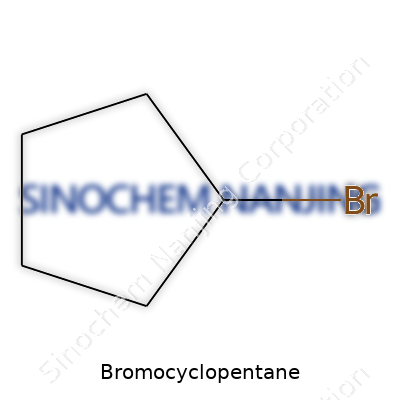
| Names | |
| Preferred IUPAC name | Bromocyclopentane |
| Other names |
Cyclopentyl bromide Bromocyclopentane |
| Pronunciation | /ˌbroʊ.moʊ.saɪ.kloʊˈpɛn.teɪn/ |
| Identifiers | |
| CAS Number | 137-43-9 |
| Beilstein Reference | 1209246 |
| ChEBI | CHEBI:82788 |
| ChEMBL | CHEMBL46377 |
| ChemSpider | 12144 |
| DrugBank | DB16453 |
| ECHA InfoCard | 100.019.102 |
| EC Number | 207-260-9 |
| Gmelin Reference | 108690 |
| KEGG | C08302 |
| MeSH | D018153 |
| PubChem CID | 79115 |
| RTECS number | GF9100000 |
| UNII | N9Y276F8G8 |
| UN number | UN2340 |
| CompTox Dashboard (EPA) | DTXSID8069433 |
| Properties | |
| Chemical formula | C5H9Br |
| Molar mass | 163.04 g/mol |
| Appearance | Colorless to pale yellow liquid |
| Odor | Aromatic |
| Density | 1.205 g/mL at 25 °C |
| Solubility in water | Insoluble |
| log P | 2.97 |
| Vapor pressure | 2.7 mmHg (25°C) |
| Acidity (pKa) | pKa ≈ 50 |
| Magnetic susceptibility (χ) | -76.5 × 10⁻⁶ cm³/mol |
| Refractive index (nD) | 1.493 |
| Viscosity | 1.37 cP (25°C) |
| Dipole moment | 1.79 D |
| Thermochemistry | |
| Std molar entropy (S⦵298) | 309.6 J·mol⁻¹·K⁻¹ |
| Std enthalpy of formation (ΔfH⦵298) | -26.6 kJ/mol |
| Std enthalpy of combustion (ΔcH⦵298) | -3277.3 kJ/mol |
| Pharmacology | |
| ATC code | B03XA01 |
| Hazards | |
| GHS labelling | GHS02, GHS07 |
| Pictograms | GHS02, GHS07 |
| Signal word | Danger |
| Precautionary statements | P210, P233, P240, P241, P242, P243, P261, P271, P301+P310, P303+P361+P353, P305+P351+P338, P331, P370+P378 |
| NFPA 704 (fire diamond) | 1-2-0 |
| Flash point | 38 °C (100 °F; 311 K) |
| Autoignition temperature | 215 °C |
| Lethal dose or concentration | LD50 (oral, rat): 2120 mg/kg |
| LD50 (median dose) | LD50 (median dose): **2,290 mg/kg (rat, oral)** |
| NIOSH | CY8575000 |
| PEL (Permissible) | No OSHA PEL established. |
| REL (Recommended) | No REL established |
| IDLH (Immediate danger) | 500 ppm |
| Related compounds | |
| Related compounds |
Chlorocyclopentane Cyclopentyl bromide Cyclopentane Cyclopentyl chloride |



