Bromochlorodifluoromethane: A Hard Look at a Chemical with a Complicated Footprint
Tracing the Roots of Bromochlorodifluoromethane
Bromochlorodifluoromethane, better known by the name Halon 1211, really took off in the mid-twentieth century. Engineers and fire safety experts saw a leap in fire suppression technology with the introduction of this compound. Folks in the aviation and military sector put a lot of faith in it for fire extinguishing, especially for high-value equipment and missions that couldn’t afford mistakes. I remember reading old documentation from the 1960s about how firefighting foam and water were no match for electrical or fuel fires, but Halon 1211 cut through those problems like a scalpel. Over time, it shaped global fire safety strategies, helped save countless valuable assets, and gave birth to an international trade network. Its road, though, wasn’t nearly as smooth once people realized the environmental and health baggage it brought along.
The Chemical’s Appeal and Physical Demeanor
This compound sits in liquid form when bottled under pressure but rapidly evaporates to vapor when released. It’s clear and odorless, and I’ve seen technicians work with it who seem almost too relaxed around it—possibly because it doesn't sting the eyes or mess with the lungs like some alternatives. Its boiling point comes low enough to allow quick transformation from liquid to gas. The defining feature, though, has always been its ability to knock out fires almost instantly, a reason it's been called a “clean agent.” It halts combustion without making a mess or damaging electronics, unlike water or powders.
Technical Details and How to Spot the Stuff
Halon 1211 comes labeled with varying detail depending on country and supplier, but most cylinders display its chemical makeup: CBrClF2. You might see descriptions like “Bromochlorodifluoromethane” or variants such as “Freon 12B1.” The product often comes with instructions to avoid skin or eye contact, but I’ve noticed that operational guidelines care a lot more about the zone of application and speed of deployment. Storage requirements lean toward cool, dry spaces, sealed from direct sunlight.
The Science Behind the Scenes
Preparation of Bromochlorodifluoromethane once centered on chemical halogenation, swapping out hydrogens in methane for halogen atoms. Laboratory processes introduce chlorine, fluorine, and bromine under tightly controlled reactions. This recipe leads to the structure that gives Halon 1211 its punch. People in chemistry circles debate the risks of residual impurities, especially if reaction controls slip and create unwanted byproducts.
Chemical Pathways and Transformations
Handling Bromochlorodifluoromethane uncovers its reactive side under specific circumstances. Sitting quietly in storage, it behaves itself, but subject it to an open flame, and it releases corrosive and toxic byproducts, including hydrogen bromide and other acids. That’s where the “clean” story gets complicated—some of its combustion products create real hazards for those unlucky enough to stand in an unventilated space during or after use. There’s still plenty of research looking for modifications that keep its firefighting ability without all the nasty leftovers.
The Alphabet Soup of Names
Across research papers and fire safety manuals, Bromochlorodifluoromethane goes by Halon 1211, Freon 12B1, or plain R12B1. All roads point to the same molecule but sometimes confuse those new to the scene. These changing names don’t change the chemistry, but they do muddle debates about regulation and phase-out deadlines.
Rules and Realities of Safe Handling
Standards for using Halon 1211 grew tighter as science caught up with experience. Safety rules insist on proper ventilation, personal protection, and regular leak checks, especially once people figured out how dangerous breakdown products can become. Guidelines from environmental agencies now shape its transportation and recycling, since its ozone-depleting profile places it squarely on international watchlists. Firefighters in my circle always stress that, convenient as it is, it never gets used casually anymore.
Where Bromochlorodifluoromethane Found Its Place
Applications spring up wherever sensitive electronics and irreplaceable hardware need guarding against fire. Server farms once stocked tanks of this stuff for emergencies. I’ve seen aviation control towers and military vehicles packed with Halon 1211 units, since water would mean ruin for computers and navigation gear. Museums and archives favoured it for much the same reason. Although sweeping bans have switched out Halon 1211 in most new installations, plenty of legacy systems around the world store it “just in case.”
The Ongoing Chase for Better Alternatives
The long shadow of ozone depletion led not just to restrictions but to a scramble for replacement chemicals. Industry and government research programs invested heavily into new “clean agents” less harmful to the environment while still controlling dangerous fires. Blends like FM-200 or Novec 1230 are now common sights in modern fire suppression setups. I’ve talked to systems engineers who grumble about the trade-offs: higher costs, the need for hardware upgrades, and doubts about real-world effectiveness compared to the quick, simple punch of Halon 1211.
What Science Says About Toxicity
Toxicology studies don’t paint a friendly picture of Halon 1211. Chronic exposure, even at low levels, raises the risk of cardiac and nervous system effects. Its decomposition products, especially in a fire, emerge even nastier—hydrogen halides corrode infrastructure and slice through lung tissue. Regulatory boards in North America, Europe, and Asia devote real energy to tracking worker exposure, and accident reports continue to push risk management protocols. I’ve known firefighters who left the job recounting headaches and breathing trouble from repeated Halon exposure, none of which sound trivial.
Looking Ahead: Where Halon 1211 Figures in Tomorrow’s World
Efforts to phase out Halon 1211 say a lot about how society rebalances safety and environmental care. As long as legacy stockpiles exist, countries work together to recycle, reclaim, and destroy the chemical without letting it leak into the atmosphere. Industry veterans say the job isn’t just about bans—it’s about convincing risk managers that new solutions won’t force them to choose between technical reliability and regulatory compliance. Continued research into less toxic, more sustainable fire suppression invites optimism, and it wouldn’t surprise me if, over the next decade, the last Halon 1211 cylinder finally retires to a museum. People owe a lot to this stubborn chemical—and the lessons it’s taught about tech progress, unintended harm, and relentless pursuit of something better.
What is Bromochlorodifluoromethane used for?
Walking Into the World of Fire Extinguishers
Bromochlorodifluoromethane goes by another name—Halon 1211. Open up a discussion about fire safety in old office buildings, on ships, or in aviation hangars, and Halon 1211 starts popping up. People have trusted this chemical to knock out fires fast, especially fires involving electronics, sensitive equipment, or flammable liquids. The thing that sets Halon 1211 apart comes from its knack for stopping flames without leaving behind gunky residue. That comes in handy where spraying water or foam would just ruin everything—think of mission-critical server rooms, aircraft cockpits, or museum archives crowded with priceless papers.
Keeping Planes, Ships, and Data Safe
Growing up around mechanics, I've seen Halon canisters strapped under the dashboards of small planes and wedged into marine engine compartments. The goals always felt pretty basic—put out any fire before it spreads. Regular water can’t touch electrical fires or some fuel-based blazes. Smaller vessels or airplanes can't risk using powder since a dusty mess might cripple steering equipment or electronics. Halon swept in as the solution—one squeeze of the trigger gives a dense, invisible shot that stifles oxygen and short-circuits flame chemistry. In a jam, crews rely on Halon to snuff danger fast and get things under control. Halon 1211 doesn't just put out burning wires. It saves hardware, documents, paintings, and sometimes even human lives.
A Chemical With a Cost
There's another side to this story. Scientists sounded the alarm on Halon 1211’s darker impact not long after it became an everyday fire suppressant. Every cylinder kept homes, offices, and planes safer, but every release sent chemicals into the atmosphere that chew holes in the ozone layer. The Montreal Protocol flagged Halon 1211 as a problem in the late 1980s. Supply lines shifted nearly overnight—production slowed, new systems turned to alternatives, and strict recycling programs started up everywhere. Now, finding “new” Halon 1211 looks almost impossible unless it’s been reclaimed from older systems. The stuff that’s left gets used for special cases, mainly on older equipment that can’t change over easily, or in places where no substitute works as well.
Health and Environmental Risks
Many people never see the big, red Halon containers behind glass until the worst happens. I once asked a fire marshal about them, and his answer was blunt: “Use it if someone’s in danger or you’ll lose the building.” He knew the tradeoffs. Breathing in Halon vapor can knock out consciousness, damage organs, or even kill if the air stays thick with it. Although rare in day-to-day life, accidental releases carry risks for both people and the wider world. The fact that Halon breaks down slowly in nature means the ozone layer keeps taking a hit long after each fire event.
Looking for Alternatives and Practical Solutions
Regulators and scientists have spent years looking for something safer. Some companies switched to “clean agents” like FM-200 or Novec 1230, which avoid ozone harm and usually break down faster in air. Water mist and foam systems work well in many settings. Still, stubborn areas—those packed with old electronics, satellites, or aircraft—keep Halon 1211 available. What works in a downtown office doesn’t always fit a jet streaking across the sky.
The best way forward means mixing strategy, old-fashioned maintenance, and a willingness to switch tech. Recycling old Halon, using alternatives where possible, and making sure first responders know both the magic and hazards packed inside those repair toolboxes gives everyone a better shot at safety—without leaving scars on our atmosphere for decades to come.
Is Bromochlorodifluoromethane dangerous to health or the environment?
What’s Behind That Name?
Bromochlorodifluoromethane, or Halon 1211, pops up a lot in fire extinguishers, particularly in aviation and some old data centers. Many folks notice these older red canisters standing by in offices and planes. I’ve walked past plenty of them, thinking they’re just another safety measure most people ignore until an emergency comes knocking.
Health Concerns
Releasing Halon 1211 in a closed room sends a chemical cocktail into the air. Breathing it in can irritate throats and lungs pretty quickly. Some people report dizziness, headaches, and nausea after accidental exposure. In my early days working in IT, I saw a Halon discharge by mistake in a crowded computer room. The confusion, alarms, and coughing told everyone right away: this stuff isn’t air. Most experts point to its effect on the central nervous system and the heart. High concentrations knock breathing out of rhythm, and there’s risk of heart irregularities if someone’s exposed long enough.
Long-Term Effects? Still Studying
Researchers still don’t have the last word on cancer or birth defect risks with Halon 1211. Animal studies suggest high exposures stress the body in alarming ways, but there’s not a lot of direct evidence in humans outside of short-term exposure events. People who install and service extinguishers take precautions for a reason—they know repeated hits from chemical releases can add up.
Environmental Impact
Outside of fire emergencies, most people don’t hear about the environmental shadow Halon 1211 casts. Each time this chemical escapes, it floats up and chips away at the ozone layer. Ozone protects us from nasty ultraviolet rays that burn skin and drive up rates of skin cancer. Decades back, the Montreal Protocol called for a halt to the production of substances like Halon 1211. Since then, many governments pushed businesses to phase out old extinguishers and pick safer alternatives.
Legacy Equipment Still Lingers
Despite the rules, older buildings and some planes hang onto Halon extinguishers because of their track record on tough fires. It’s hard for building managers to swap out hardware that worked for years, and the up-front cost of new gear sometimes slows replacement programs. In areas with limited resources or inconsistent regulations, Halon keeps showing up. There’s a mismatch between law and reality, and that’s familiar for anyone who’s worked behind the scenes in facilities or on safety committees.
Better Solutions Needed
A move toward alternatives like clean agents and new dry chemicals is rolling forward, but no one-size-fits-all solution has arrived. Some of the new firefighting formulas still come with their own baggage—some leak global warming gases of their own. Regulatory pressure alone won’t fix the problem overnight. In my circle, we’ve seen old extinguishers turned in for proper chemical recovery, not tossed in a scrapyard or landfill, but that depends on awareness and budget. Employers need to train staff, audit building safety equipment, and work with certified disposal teams, not just swap labels on canisters.
The Takeaway
Bromochlorodifluoromethane made a name for itself in fire protection, but the cost of using it now looks too high. For workplaces, the safest move is phasing out old Halon stock and switching to less harmful options. Conversations about chemical hazards sometimes get lost as just another compliance box to check. If more people look at the whole chain—from supplier to disposal—the legacy of Halon 1211 will fade for good, without new threats to public health or the planet.
What are the storage and handling requirements for Bromochlorodifluoromethane?
Everyday Decisions and Major Risks
Bromochlorodifluoromethane, often called Halon 1211, shows up mostly in fire suppression systems—think airports, data centers, and some government storage. The stuff does its job by interrupting chemical reactions in a fire, which helps stop things from burning. Stack a couple of cylinders in any back room and it might seem harmless, but too many folks overlook just how tricky it can be to manage this compound. Packing the wrong way, or careless handling, brings problems ranging from damage to property to danger for anyone nearby.
Why Safe Storage Isn’t Just Red Tape
Halon 1211 can leak, and since it’s colorless and slightly sweet-smelling, the warning signs never smack you in the face. Leaks turn into real risks for staff because inhaling the vapor can affect both heart and nervous system—those dangers grow worse in small or unventilated spaces. A direct lesson from years in warehouses: always keep cylinders in well-aired, dry rooms away from sunlight and any source of heat. Temperatures above 50°C can hike up the pressure in containers, bringing explosions closer to reality.
Labeling makes a difference. Jumbled or unmarked canisters confuse teams in high-stress moments. Labels help everyone know what they’re working with, especially during emergencies or inspections. I’ve watched experienced techs reach for the wrong tank just because there was no clear sign about what sat inside. It takes only one mistake like that to set back safety for months.
Simple Steps, Big Impact
Store tanks upright on flat, steady ground. Seems obvious, but too many incidents happen after someone stacks cylinders in a corner for “just a few days.” Steel chains or sturdy racks stop things from tipping over. In the rush to get things done before close, rolling cylinders across rough floors or letting them bump against walls can weaken valves—one knock can cost thousands in repairs and cause unplanned leaks.
Never stash Halon 1211 next to oxidizers or flammable materials. Mixing up storage spaces raises fire risk instead of reducing it. In lean years, I saw managers compromise on this rule to save space. The math never adds up—a fire here threatens a whole building and puts everyone inside at risk.
Training and Proper Tools
Good storage means nothing without people who know the right process. Employees need hands-on sessions, not just laminated posters on the wall. Show folks what to do if they suspect a leak: ventilate, seal the area, call trained response teams. Most leaks get worse when handled by someone improvising on the spot.
Don’t forget inspection routines. Even if canisters look undamaged, hidden flaws can build up inside. Pressure checks and valve testing should stick to a fixed calendar. Records kept on paper or digital logs matter—auditors want to see evidence, and staff remember better when checks are routine.
Room to Improve
Eventually, phase-outs for Halon 1211 will push everyone toward replacements. Until then, the best protection comes from respecting the substance, using common sense, and keeping gear and practices up to date. If you work with this compound, invest the effort on the front end. Clean storage and strict handling support everyone’s health and keep business running without incident.
Is Bromochlorodifluoromethane banned or regulated?
Why This Chemical Gets Everybody Talking
Bromochlorodifluoromethane, sometimes called Halon 1211, once filled fire extinguishers all over airports, data centers, and even airplanes. It worked fast against fires that threatened both people and billions of dollars’ worth of technology. Fire marshals saw it as a miracle formula. I remember the first time I used a Halon system during a training session—no mess, immediate suppression, and no damage to electronics. For years it seemed unmatched.
The Big Problem: Ozone Layer Damage
Science eventually showed why Halon 1211 isn’t around much anymore. It breaks down in the atmosphere and releases bromine and chlorine, chemicals that destroy the ozone layer. The ozone layer shields all life from dangerous ultraviolet rays. Without this protection, sunburn rates go up, crops fail more regularly, and cancer risk climbs. Research from NASA linked Halon 1211 and similar halons to rapid ozone depletion throughout the 1980s and 1990s.
What Lawmakers Did About It
International treaties don’t usually make headlines, but the Montreal Protocol, signed in 1987, changed things for substances like Halon 1211. Countries agreed to ban or phase out chemicals wrecking the ozone layer. By 1994, the production and import of bromochlorodifluoromethane stopped in the United States and across most developed nations. Old supplies remained for critical uses, but new manufacturing isn’t legal. Instead of a total ban overnight, authorities set deadlines, focusing first on high-risk chemicals.
Still Around, But Not For Long
This chemical keeps popping up in old systems. Some facilities, like certain airplane cabins or historic libraries, relied on it for years. Transitioning to something safer costs a lot, so some kept using Halon 1211 as long as possible. Regulations now force companies to recover, recycle, or destroy remaining stores, not simply dump them or let them leak. The Environmental Protection Agency requires technicians to meet strict handling standards and even limits who can buy it. Any time I visit older fire suppression rooms, I spot warning signs and labels everywhere. No one wants to risk a leak, both for safety and for the fines.
Better Answers on the Horizon
Modern solutions lean on cleaner agents, like FM-200 or inert gas blends. These put out fires without blowing holes in the atmosphere or endangering people. They don’t all work exactly like Halon 1211, so switching sometimes means new equipment or modifications. Keeping up with training matters too. Fire professionals need to know which extinguishers to use and how to handle emergencies where Halon 1211 might still show up.
Staying Vigilant with Old Hazards
What stands out is this: halon products proved that a lifesaving answer today might cause bigger trouble later. Regulators, scientists, and anyone overseeing fire safety must stay curious, ask questions, and refuse to settle for old habits. Laws keep up with science, but anyone handling these chemicals has to do their part—never treating yesterday’s magic bullet like a harmless tool. Choices today ripple for generations. That’s the reason why I pay close attention to chemical labels and urge my colleagues to do the same, every single time.
What are the physical and chemical properties of Bromochlorodifluoromethane?
A Closer Look at a Familiar Compound
Bromochlorodifluoromethane stands out because of its long track record in fire suppression. Most folks know it as Halon 1211, a name that might bring back memories of old-school fire extinguishers bolted to office walls or tucked behind glass panels. Its chemical formula, CBrClF2, rolls off the tongue less easily, but its impact is nothing to sneeze at. In the past, industries counted on it to knock down flames in critical spots—think aircraft, computer rooms, and museums. Its ability to put out fires without soaking the surroundings helped save expensive equipment and priceless artifacts from ruin.
Physical Properties: Far From Ordinary
At room temperature, Bromochlorodifluoromethane flows as a clear liquid, with a low boiling point sitting just below zero Celsius. That's a trait not shared by many everyday chemicals. Pop open a pressurized canister, and it flashes into a colorless gas, rushing out fast and cold. Inhaling it, though, can cause dizziness or worse, so it demands careful handling. The faintly sweet smell might lull some into a false sense of security, but safety protocols exist for good reason. A dense vapor, it hugs the floor—making confined areas dangerous in a leak scenario. It resists breaking down under normal conditions, and heat alone won’t cause it to catch fire. So, it was favored for use inside aircraft cabins, computer racks, and other expensive setups where water or foam could do more damage than the flames themselves.
Chemical Properties: The Double-Edged Sword
Bromochlorodifluoromethane does its job by snuffing out the chain reaction at the heart of a fire. Instead of just cutting off oxygen or covering the flames, it goes after the fire’s chemistry—free radicals that keep it burning. This makes Halon 1211 especially fast and effective, quenching blazes with impressive speed. It doesn’t conduct electricity either, making it a friend in electrical fires. But this effectiveness carries a heavy cost. The chemical is stable, so it can linger in the atmosphere for years. Once released, it drifts up and breaks down ozone high overhead, thinning the layer that shields us from ultraviolet radiation. That impact led to global rules phasing out its use, with technicians trained to recover and recycle every last molecule where possible.
Tough Challenges, Straightforward Solutions
Plenty of experts have called for ditching Bromochlorodifluoromethane altogether. That’s a tall order in high-stakes fire protection, where every second matters. Because of its environmental toll, stocks get tightly controlled—no more new production in most places. Firefighters and engineers keep old systems running with recycled or reclaimed supplies, wringing every bit of safety from what’s left. It’s a holding pattern, waiting for safer chemicals or high-tech alternatives. Water mist, clean agents, and carbon dioxide have stepped up in some roles, but matching the speed and reliability of Halon 1211 isn’t simple. The drive to find replacements feels personal for many in the industry; nobody wants to trade effectiveness for greenwash or false promises. In the meantime, stewardship and careful use remain the cornerstones in dealing with this remarkable yet problematic gas.
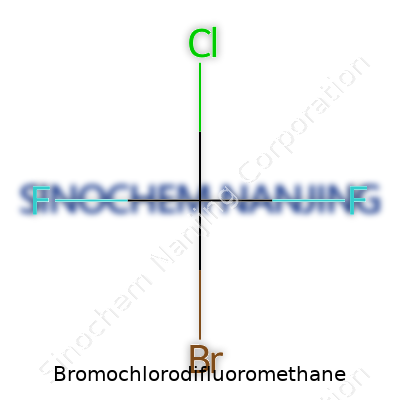
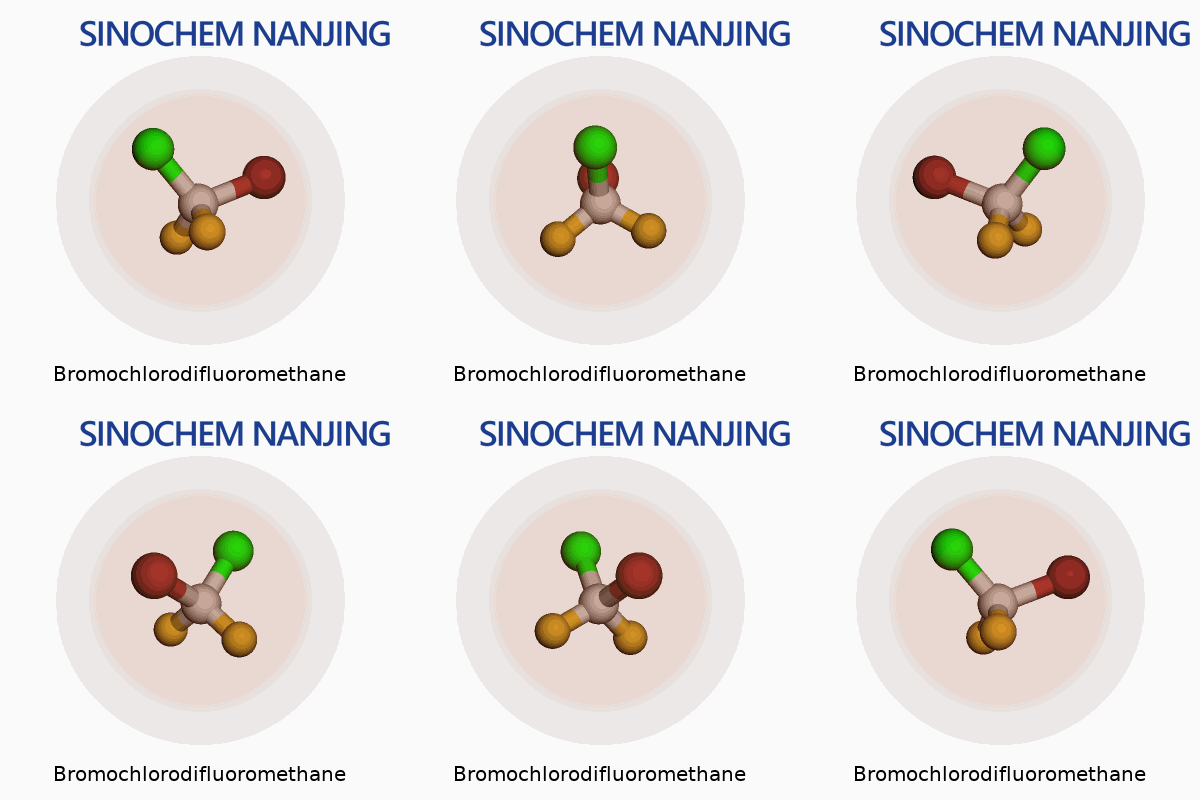
| Names | |
| Preferred IUPAC name | Bromochlorodifluoromethane |
| Other names |
Halon 1211 BCF Freon 12B1 R 12B1 UN 1009 |
| Pronunciation | /ˌbroʊ.moʊˌklɔːr.oʊˌdaɪˌfluː.rəˈmeθ.eɪn/ |
| Identifiers | |
| CAS Number | 353-59-3 |
| 3D model (JSmol) | `3D model (JSmol) string` for **Bromochlorodifluoromethane** (CBrClF2): ``` C(F)(F)(Cl)Br ``` |
| Beilstein Reference | 1200449 |
| ChEBI | CHEBI:39082 |
| ChEMBL | CHEMBL50248 |
| ChemSpider | 8811 |
| DrugBank | DB09326 |
| ECHA InfoCard | 100.011.579 |
| EC Number | 200-871-9 |
| Gmelin Reference | 8286 |
| KEGG | C14387 |
| MeSH | D001940 |
| PubChem CID | 6386 |
| RTECS number | PA8225000 |
| UNII | BBX060AN9V |
| UN number | UN1018 |
| Properties | |
| Chemical formula | CBrClF2 |
| Molar mass | 120.91 g/mol |
| Appearance | Colorless gas |
| Odor | Odorless |
| Density | 1.55 g/cm³ |
| Solubility in water | insoluble |
| log P | 2.08 |
| Vapor pressure | 3750 mmHg (20 °C) |
| Acidity (pKa) | 15.9 |
| Magnetic susceptibility (χ) | -73.0e-6 cm³/mol |
| Refractive index (nD) | 1.422 |
| Viscosity | 0.219 cP at 25°C |
| Dipole moment | 2.17 D |
| Thermochemistry | |
| Std molar entropy (S⦵298) | 282.53 J·mol⁻¹·K⁻¹ |
| Std enthalpy of formation (ΔfH⦵298) | -272.4 kJ/mol |
| Std enthalpy of combustion (ΔcH⦵298) | -243.8 kJ·mol⁻¹ |
| Pharmacology | |
| ATC code | V03AB17 |
| Hazards | |
| Main hazards | Harmful if inhaled. May cause drowsiness or dizziness. Causes skin and eye irritation. May displace oxygen and cause suffocation. |
| GHS labelling | GHS02, GHS04 |
| Pictograms | GHS04 |
| Signal word | Warning |
| Hazard statements | H220, H280 |
| Precautionary statements | Keep away from heat, hot surfaces, sparks, open flames and other ignition sources. No smoking. Protect from sunlight. Store in a well-ventilated place. Do not breathe gas. Use only outdoors or in a well-ventilated area. |
| NFPA 704 (fire diamond) | 1-0-0 |
| Autoignition temperature | 565°C |
| Lethal dose or concentration | Lethal dose or concentration: **Inhalation (rat) LC50: 320,000 ppm (4 hours)** |
| LD50 (median dose) | > 2200 mg/kg (rat, oral) |
| NIOSH | RN8400000 |
| PEL (Permissible) | PEL (Permissible Exposure Limit) of Bromochlorodifluoromethane: "1000 ppm (parts per million) as an 8-hour TWA (OSHA standard) |
| REL (Recommended) | 0.5 ppm (3.4 mg/m³) |
| IDLH (Immediate danger) | 2000 ppm |
| Related compounds | |
| Related compounds |
Chlorodifluoromethane Dichlorodifluoromethane Bromotrifluoromethane |



