Bromoacetyl Bromide: Insight, Evolution, and Direction
Historical Development
Chemistry has a way of revisiting its old friends. Bromoacetyl bromide, which made its appearance in scientific literature more than a century ago, carries a unique story. Early chemists searching for new reagents in organic syntheses started tinkering with haloacyl halides, recognizing how reactive these molecules could be. Once labs uncovered the strengths of bromoacetyl bromide—particularly as an acylating agent—it became a regular guest in synthetic schemes. Through the post-war boom of pharmaceutical innovation, industries kept reaching for this compound to craft new molecules, especially antibiotics and intermediates with special biological activity. Its role is not just a footnote; it shaped some key tools in the organic chemist’s arsenal.
Product Overview
Bromoacetyl bromide, with the formula C2H2Br2O, operates as more than just a curiosity. In the world of halogenated reagents, it stands as a strong electrophile, able to facilitate various acylation steps that would otherwise drag on for weeks or not proceed at all. Labs ranging from academic to industrial settings rely on it for modifications of amino acids, preparation of pesticides, and peptidomimetic frameworks. Not only does it act as a building block, but its strong reactivity also means it’s unforgiving. Mishandling can lead to rapid decomposition or release of toxic fumes. These properties carved a niche for it in targeted chemical transformations and made researchers respect its handling protocols.
Physical & Chemical Properties
A clear, colorless to slightly yellow liquid, bromoacetyl bromide weighs in with a density near 2 grams per cubic centimeter and boils at just under 190°C. The sharp, irritating odor tells you right away it doesn’t play nice. The molecule combines a bromomethyl group with an acyl bromide, so it packs a double punch: both the alpha-bromine and the acyl side react energetically with nucleophiles. Throw it in the presence of water or moist air, and you’ll see rapid hydrolysis, sometimes with the release of corrosive hydrogen bromide gas. These aggressive properties make it a favorite when strong activation is required, especially when milder reagents stall. Its stability at lower temperatures and volatility mean storage demands precision—packaging tightly sealed under inert atmospheres, away from humidity or open flames.
Technical Specifications & Labeling
Clear, unambiguous labeling makes or breaks safe storage for chemicals like bromoacetyl bromide. On each container, you’ll see not just the substance name, but hazard pictograms warning of severe acute toxicity and corrosiveness—reflected in the GHS classification. CAS number 540-51-2 offers traceability, as any batch has strict criteria: purity levels above 97%, maximum moisture well below one percent, and container volume tailored to lab or industrial needs. The material safety data sheet leaves no room for confusion, spelling out required personal protective equipment, first aid advice, and stability constraints. There’s no shortcut here, as even brief exposure can harm workers or students if proper guidance isn’t followed.
Preparation Method
Manufacturers have refined bromoacetyl bromide synthesis, but the central method hasn’t changed much in decades. The standard route starts with bromoacetic acid, treating it with excess phosphorus tribromide at low temperatures. The reaction is robust but demands careful temperature ramping, since exotherms can trigger dangerous fuming. Many chemists have vivid stories about their first encounters with the dense bromine vapor that creeps out if the mix’s temperature runs away. After distillation and careful purification, the product is checked by NMR and IR to confirm identity and purity. Waste streams require neutralization, as both unreacted acid and bromide pose environmental hazards if left unchecked.
Chemical Reactions & Modifications
Few other reagents introduce a bromoacetyl group as cleanly as bromoacetyl bromide. Reacting a primary or secondary amine with it gives a bromoacetamide—an intermediate that enters peptide synthesis or the production of pharmaceuticals like penicillins. Alcohols undergo acylation just as effectively, letting chemists tack on the bromoacetyl group before further chain extension or cyclization. The reactivity enables elaborate multi-step syntheses, since that bromine atom effortlessly undergoes substitution by soft nucleophiles, and the acyl group opens up opportunities for cyclocondensation. These properties place it front and center in the synthesis of biologically active heterocycles, labeling of specific amino acid residues in proteins, and preparation of fine chemicals.
Synonyms & Product Names
Bromoacetyl bromide goes by several aliases in catalogs and safety sheets. Some call it α-bromoacetyl bromide, others refer to it as 2-bromoacetyl bromide or acetyl bromide, bromo-. Trade names vary, but the structure remains the same—a two-carbon chain hung with two bromines and a carbonyl. Shifting nomenclature between vendors can confuse newcomers, yet the CAS number helps untangle ambiguity. Researchers—especially in global projects—double-check synonyms to avoid costly mix-ups and wasted time.
Safety & Operational Standards
Experience in the lab teaches respect for volatile reagents. Bromoacetyl bromide has a reputation for rapid skin absorption and severe eye and respiratory irritation. Spills quickly contaminate surfaces, and a simple cap left loose fills workspaces with harsh, choking fumes. All handling should happen in well-ventilated fume hoods, backed by full PPE: thick nitrile gloves, splash goggles, lab coat, and, in many places, a face shield. Specialized training for emergency response comes standard, as quick hydrolysis releases hydrogen bromide—a substance capable of corroding metal and tissue alike. Facilities maintain spill kits and enforce real-time inventory management, taming risks through practice and vigilance. Regulations from agencies like OSHA and REACH dictate limits around transport, waste, and exposure, with steep fines or research shutdowns for noncompliance.
Application Area
Most of the demand for bromoacetyl bromide comes not from shelf chemistry but from the pharmaceutical and agrochemical sectors. Synthesis of bromoacetamides gives rise to critical antibiotics and enzyme inhibitors. Academic labs rely on its reactivity for chemical probes, protein modification, and fine-tuning the properties of polymers. Specialty industries apply it in the development of new crop protection agents and as a key intermediate for dyes and fluorescent tags. Its ability to modify essential building blocks translates to real-world impact, touching everything from cancer therapeutics to soil nutrient management. The reach extends into peptide synthesis, where site-selective modification fine-tunes biological activity—a capability not achievable through softer reagents.
Research & Development
Continuous improvement fuels R&D around bromoacetyl bromide. Laboratories dig into synthesis tweaks, looking to enhance yield and cut down generation of side products. The last decade saw efforts to replace phosphorus-based reagents with greener, more manageable alternatives, targeting sustainable chemistry goals. Analytical advances bring sharper NMR and mass spectrometry, offering better characterization at lower sample volumes. Peptide chemists push the boundaries, developing linkages and modifications that only a halogenated acylating agent allows. Studies look at how best to scavenge residual reagent and neutralize waste, tying basic research directly to environmental impact. Each innovation cuts costs, improves worker safety, or delivers new compounds with activity against disease targets once left untouched.
Toxicity Research
Toxicologists don’t view bromoacetyl bromide lightly. Animal studies and cell models show corrosive and cytotoxic effects both through inhalation and skin contact. Chronic low-dose effects target respiratory and digestive systems. Results led to tight exposure limits in the workplace—0.1 ppm recommended for air concentrations, significantly lower than for many organic solvents. Unexpected spills require immediate evacuation, as the compound acts swiftly on mucous membranes and lung tissue. Long-term research examines breakdown products and environmental fate, with findings supporting strict separation of workspaces and controlled disposal procedures. Companies funnel money into toxicity research not just to satisfy regulators, but to protect workers, neighbors, and the wider environment from harm.
Future Prospects
Green chemistry shapes the future for bromoacetyl bromide. Researchers aim to limit hazards by developing alternative reaction schemes that skip traditional halogenated intermediates, yet few agents replicate the reactivity and selectivity seen here. Industry weighs new packaging technologies—safer ampoules, push-to-open containers, integrated neutralizers—each pushing down accident rates and environmental load. Computational chemistry offers hope for alternative pathways, predicting new reactions that balance selectivity with lower hazard. In biological research, tailored modifications unlock fresh peptide therapeutics or bioconjugates used in cell imaging or targeted therapy. Ongoing work in enzyme labeling and chemical biology keeps demand steady. The challenge is finding ways to capture the benefits while shrinking the health and environmental cost. Experience tells us that with every step forward in safety and efficiency, innovation finds room to grow.
What is Bromoacetyl Bromide used for?
Chemistry’s Swiss Army Knife
Bromoacetyl bromide falls into a family of chemicals that get plenty of respect, and a healthy dose of caution, from anyone who’s ever spent time in a chemistry lab. It’s a colorless liquid with a sharp, biting odor—a warning you don’t ignore. Its main use happens in the lab, and specifically in organic synthesis. You'll find students and researchers using it to make other chemicals, especially those where a bromoacetyl group transforms a simple molecule into something entirely new. With it, chemists create intermediates for pharmaceuticals, agrochemicals, and sometimes dyes. Many important painkillers and antibiotics wouldn’t appear without these quirky, stubborn building blocks.
Risks in the Real World
Bromoacetyl bromide won’t win any popularity contests outside the lab. It’s aggressive, attacking eyes and lungs if it escapes in vapor or gets splashed around. That’s not just scientist lore. Breathing in just a whiff can burn airways and trigger panic. It doesn’t take much for a spill to shut down a whole research building for a day, maybe longer. These practical dangers underline something that gets overlooked: chemicals don’t just solve problems; they often come bundled with new ones.
Fires and explosions from poor handling have made headlines before. People get careless, or machinery fails, and suddenly everyone’s grabbing for the emergency shower. The cost to businesses and even public safety is real. Safety training isn’t optional here, it’s a lifeline—goggles, gloves, fume hoods, even the way you store and dispose of the stuff radically changes the risk.
Why Anyone Uses It
Despite all the hazards, researchers keep reaching for bromoacetyl bromide because it works where other reagents stumble. Chemists pull off tricky transformations by choosing the right reagents for each reaction, and sometimes nothing else delivers the same level of precision. For example, companies chasing new pharmaceuticals or crop protection chemicals have to create massive libraries of candidate molecules. Fast, reliable reactions driven by bromoacetyl bromide can make the difference between success and failure for a whole research project. Even today, breakthroughs in cancer, epilepsy, and infection treatments sometimes trace their roots back to months of tinkering with molecules built using this reactive liquid.
What Could Change
Safer alternatives spring up in chemistry journals every year. Sometimes these new compounds manage the same chemical tricks with gentler reagents. A few universities and companies push for “green chemistry”—a movement built around safety and environmental responsibility. This approach rewards innovations that keep workers safe and reduce toxic waste. It’s not just about moral points, either—regulations are tightening, especially in Europe and the US. Companies that drag their feet risk fines or losing the right to use certain chemicals altogether.
I’ve seen both ends of this process. Slow adoption isn’t always about laziness; sometimes, proven alternatives just can’t match the efficiency or cost-effectiveness that older, rougher reagents have. But as more voices demand safer workplaces, and more young chemists are trained with hazard reduction in mind, the tide can shift. Investment in new methods, strong safety standards, and serious ongoing training offer a practical path forward.
The Bottom Line
Bromoacetyl bromide brings valuable utility to labs, but its risks never take a day off. Smart choices, strong safety habits, and steady investment in friendlier chemistry are the way forward. Lab chemistry may always have a little danger built in, but with the right knowledge and commitment, the tools we reach for can do their job without leaving disaster in their wake.
What is the chemical formula of Bromoacetyl Bromide?
Understanding the Formula
Bromoacetyl bromide stands out in the lab because it pulls together two bromine atoms, a two-carbon backbone, and an oxygen. The chemical formula for bromoacetyl bromide is C2H2Br2O. Each letter and number in this formula matters. Two carbons join with two hydrogens, and bromine makes its presence known in two spots. A lone oxygen atom completes the formula. That’s not just chemistry trivia. It shapes the way the compound works and also the rules for handling it safely.
Relevance in Organic Synthesis
Bromoacetyl bromide gets more attention than plenty of chemicals I’ve seen come and go in the lab. Anyone working in pharma, agrochemical research, or specialty chemicals runs into this compound. Its chemical structure gives it powerful reactivity. That reactivity comes from the two bromine atoms—one sitting as part of an acyl group, the other attached directly to the methyl group. Chemists like me rely on its structure because reactions with bromoacetyl bromide usually move fast and predictably. Nucleophilic substitution often produces building blocks you can plug into everything from drug scaffolds to crop protection agents.
Facts Behind the Hazards
Preparation always starts from the chemical formula. C2H2Br2O tells you the key. The pair of bromine atoms means a double threat. These bromines make the compound more reactive, so mishandling can cause problems. The molecule can trigger respiratory irritation or severe burns. Many people hear “bromide” and think of sleeping tablets or sedatives. This one couldn’t be farther from that gentle reputation. The chemical fits under those tightly watched lists—controlled for production, storage, even transport. Getting the formula right is the first step in building safety around this compound.
Improving Laboratory Safety
Too many times, I’ve seen newcomers miss the danger just because the formula looks close to acetyl bromide or bromoacetic acid. All it takes is a single wrong turn—wrong glove type, sloppy storage, or an open bottle in the fume hood. Spills bring instant headaches and worse. C2H2Br2O sticks in my mind because each element in the formula calls for careful setup. Unbroken bottles, tight seals, and everybody trained in spill response. Having SDS sheets on hand and checking them against that formula each time keeps the lab running without accidents. That isn’t overkill; it’s smart.
Less Pollution, More Responsibility
Anyone dealing with this chemical outside a lab—folks disposing of waste, for example—should never guess at the formula or where bromide groups end up. Getting the formula right allows clean separation and incineration of hazardous byproducts instead of dumped wastes leaching toxins. C2H2Br2O means strict tracking from purchase to disposal. Reducing environmental harm starts with this basic knowledge and good habits. Chemists won’t see progress on green chemistry just from theory; they’ll see it from zeroing in on formulas and handling methods for each compound, bromoacetyl bromide included.
What are the safety precautions when handling Bromoacetyl Bromide?
Why Care Matters with This Chemical
Bromoacetyl bromide has a way of demanding respect, not because it wants to be difficult, but because it packs risks for skin, lungs, and the environment. It won’t politely suggest you put on gloves; even a moment of carelessness can leave you with burns or a trip to the ER. Some chemicals, you spill and curse; with this one, you can’t outpace the consequences. I’ve learned over the years that the lessons from a single bad experience—like a colleague who coughed so hard he saw stars—beat all the posters and protocols in the world.
Personal Protective Equipment Isn’t Optional
If someone thinks a white coat and hope stand between them and bromoacetyl bromide, they're wrong. Thick nitrile gloves, impact-resistant goggles, and a face shield are the standard. You need a sturdy lab coat, something chemical-resistant, that covers you right down to your wrists—and a pair of closed-toe shoes that can take some punishment. The fumes burn eyes and lungs even at low levels, so a certified respirator or access to a well-functioning fume hood makes all the difference.
Safe Spaces Make Safer Labs
A fume hood in solid condition goes from upgrade to absolute must. Bromoacetyl bromide’s vapors come fast and strong. Keeping it trapped in negative-pressure ventilation, away from where you breathe, stops more problems than any other step. Spills in the open turn a routine experiment into an evacuation. I’ve stood in a room, lights glaring, alarm howling, wishing someone had doubled-checked a fume hood before starting work.
Slow Handling Means Fewer Accidents
There’s no bonus for speed with bromoacetyl bromide. Pouring, transferring, measuring—all of it calls for a steady hand, clear mind, and patience. Rushed jobs lead to splashes and splatters. The safest way often turns out to be the slowest way, with every move deliberate. Working alone with this chemical doesn’t sit right either. If something goes wrong, having another set of eyes and hands keeps it from escalating.
Storage That Doesn't Cut Corners
Storing bromoacetyl bromide away from moisture—and especially from anything with amines or bases—means less worry about unwanted reactions. I keep it in tightly sealed glass containers, out of sunlight, inside a corrosion-resistant cabinet with clear labeling. Mixing up containers isn’t just a headache; it’s an invitation for a chemical accident. I’ve seen what happens when poor labeling leads to a rush of confusion during cleanup—emergencies get a lot messier, fast.
Spill Response Plans: More Than Paperwork
No one loves spill drills, but the one time you really need it, five extra minutes on protocol can save much bigger headaches. Absorbent materials designed for corrosive spills, containers for contaminated gear, clear exit routes: the basics become lifelines. Washing skin with plenty of water right away buys time for more serious medical treatment. Responding before chemical exposure spreads is one of the few true ways to undo a mistake, so all this practice pays off.
Respecting Bromoacetyl Bromide, Every Time
People who treat bromoacetyl bromide as just another reagent end up with preventable injuries. Safety comes from habits, not heroics—suiting up, working in the hood, never rushing, and keeping backup close. Professionals trust the proven steps because too many have seen the mess when corners are cut. If you count yourself as a conscientious chemist, this chemical will never catch you off guard.
How should Bromoacetyl Bromide be stored?
A Hard Look at a Notoriously Unstable Chemical
Bromoacetyl bromide doesn’t ask for much, but give it too little respect and it pushes back hard. I’ve seen labs treat this chemical like any other bottle on the bench. Huge mistake. Vapor leaks out, the sharp smell tells you something went sideways, and if that isn’t enough, a splash promises chemical burns you’ll remember for life. I learned quickly: storing this stuff correctly isn’t just paperwork, it’s personal safety — and that goes double for the people stuck dealing with cleanups.
Facts: The Science That Dictates Storage
Bromoacetyl bromide’s a heavy hitter: corrosive, fouls up your air with toxic fumes, and tears into organic tissue. Even a small spill can set off alarms across a whole building. What makes it risky? It reacts fast with water in the air, popping out hydrogen bromide gas. That goes straight for lungs and eyes. There’s no sense taking unnecessary risks.
The chemical industry and health agencies agree on some basics. Bromoacetyl bromide does best in a cool spot, out of direct light. No sunlight blazing in from a window. Ordinary room temperatures push the limits — lower settings on a chemical refrigerator or a flammable storage cooler fit the bill better. Keep that cap tight. Even the tiniest whiff signals a leaky closure. I once saw an amber bottle left loose on a benchtop; by morning the label was half-eaten and half the lab needed to relocate for a day. Lesson learned — worn stoppers or broken seals cause problems fast.
Personal Experience: Beyond the Rulebook
Most advice skips over real-world mistakes: never store your bottle near acids, bases, or organics, because if it meets the wrong neighbor, it acts unpredictably. Nobody forgets the time bromoacetyl bromide dripped into a waste jug full of acetone. That fire was fast, bright, and ugly. Grouping chemicals only for convenience almost cost us an entire vent system. I’ve seen solid protocols save jobs and even lives. Lock up chemicals like this behind a fume hood sash or in ventilated cabinets meant for corrosives. Double containment makes sense: a sealed glass bottle inside a secondary, rigid plastic tub. Both cut the odds of a broken container spreading disaster.
If you can’t smell it, don’t assume the air is safe: forced-air local ventilation pulls fumes away before they drift out. Fume hoods aren’t a luxury, they’re standard for a reason. Good sensors and alarms give peace of mind but, honestly, most safety still comes down to training. Shortcuts with bromoacetyl bromide are a recipe for accidents that never make it onto a safety data sheet.
Finding Solutions for Safer Labs
Cheaper lab layouts tempt shortcuts, but investment in secure storage pays off. Label everything, note every transfer, and keep clear logs. Rotating stock turns cans faster, so you never end up with aging leftovers threatening a shelf. Old bottles should get flagged early — don’t wait for a surprise pop and hiss. Even in teaching labs, “use smaller quantities” should mean more than frugality; it’s a direct line to safety. Each bottle stored properly means one less near-miss, which builds trust and confidence in everyone working nearby.
The right approach isn’t optional, it’s the backbone of safe, responsible science. Proper storage isn’t about rules. It’s about respect for chemicals, equipment, and especially the people working with them every single day.
What are the potential hazards of Bromoacetyl Bromide exposure?
What Is Bromoacetyl Bromide?
People who work in research or specialty chemical manufacturing sometimes hear about bromoacetyl bromide. This compound serves a role in organic synthesis, especially for making pharmaceuticals or pesticides. Even seasoned scientists take a step back before opening a bottle of this stuff. The liquid gives off heavy, choking fumes and burns right through gloves or lab coats if spilled.
Why Safety Matters with Bromoacetyl Bromide
Anyone who’s spent time in a chemistry lab has stories about sharp smells or mysterious blisters after accidents. Bromoacetyl bromide turns caution into a survival skill, not just a good habit. Breathing in its vapors causes immediate nose and throat irritation, coughing, and trouble breathing. These aren’t small annoyances. Even a single breath may trigger lung inflammation or pulmonary edema, both medical emergencies. People with asthma fare worse.
The stuff doesn’t spare your eyes or skin. A splash near the face turns into immediate pain, clouded vision, or permanent eye damage if untreated. Bare hands expose skin to chemical burns, blistering, and—since molecules absorb quickly—potential organ poisoning. Not many products can boast that sort of harm within seconds.
The Facts Behind Chemical Poisoning
Modern safety data reveals that bromoacetyl bromide can damage the liver and kidneys if exposure isn’t stopped and treated fast. The chemical’s bromine atom helps it sneak deep into tissues, causing headaches, dizziness, and confusion by attacking the nervous system. You don’t need a direct splash to get sick—a broken container in a workspace fills the air with fumes that sink into clothes, hair, even the small pores in your phone case.
Inhaled, ingested, or absorbed, its toxic effects keep growing. There are confirmed reports in scientific literature where uncontrolled exposure led to disability, expensive hospitalization, and sometimes death. Even short-term exposure loads up on lasting health costs.
Hazard Control Starts Outside the Bottle
Years of working with strong acids and similar chemicals taught me that overconfidence leads to pain. Chemical-resistant gloves, full face shields, and local exhaust ventilation set the baseline for handling. Rushing, skipping steps, or working in a cramped space increases the odds of a mistake. Some people think a splash zone only extends as far as they can reach. In reality, invisible droplets hang in the air or settle across a desk, setting up booby traps for colleagues.
Emergency showers and eyewash stations nearby usually collect dust—until the day someone desperately needs them. Regular drills and walk-throughs keep response skills sharp for staff in high-risk labs.
Creating a Safer Workplace
Governing bodies like OSHA and the CDC publish clear exposure limits and personal protective equipment guides. Institutions invest in chemical fume hoods, spill kits, and detailed protocols because the alternative involves ambulances and litigation. Safer substitutes work for some reactions, and strict inventory control reduces temptation to “just finish a quick job.”
Risk doesn’t vanish, but good systems and personal vigilance make a world of difference. Respect for bromoacetyl bromide means more than just wearing gloves. It means watching out for the person next to you—and listening when that sharp, acrid smell hits the air.
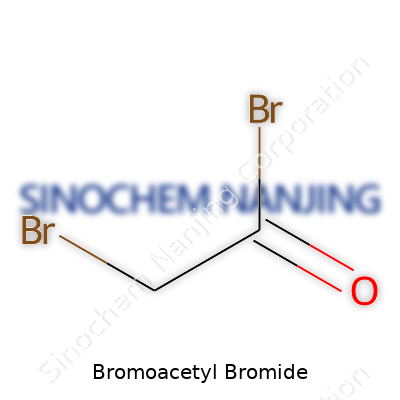
| Names | |
| Preferred IUPAC name | 2-bromoacetyl bromide |
| Other names |
Acetyl bromide, bromo- Bromoacetic acid bromide Bromacetyl bromide Monobromoacetyl bromide Bromoethanoyl bromide |
| Pronunciation | /ˌbroʊ.moʊ.əˈsiː.tɪl ˈbroʊ.maɪd/ |
| Identifiers | |
| CAS Number | 598-21-0 |
| Beilstein Reference | 1209224 |
| ChEBI | CHEBI:51775 |
| ChEMBL | CHEMBL143201 |
| ChemSpider | 86513 |
| DrugBank | DB08761 |
| ECHA InfoCard | 100.007.890 |
| EC Number | 203-788-6 |
| Gmelin Reference | 8416 |
| KEGG | C14236 |
| MeSH | D001943 |
| PubChem CID | 8576 |
| RTECS number | AG9625000 |
| UNII | LO49U0301N |
| UN number | UN1737 |
| Properties | |
| Chemical formula | C2H2Br2O |
| Molar mass | 230.824 g/mol |
| Appearance | Colorless to light yellow liquid |
| Odor | pungent |
| Density | 1.977 g/mL at 25 °C |
| Solubility in water | Reacts violently |
| log P | 0.9 |
| Vapor pressure | 13 mmHg (20°C) |
| Acidity (pKa) | −6.0 |
| Magnetic susceptibility (χ) | -5.81 × 10⁻⁶ cm³/mol |
| Refractive index (nD) | 1.556 |
| Viscosity | 1.653 cP (20 °C) |
| Dipole moment | 2.60 D |
| Thermochemistry | |
| Std molar entropy (S⦵298) | 309.2 J·mol⁻¹·K⁻¹ |
| Std enthalpy of formation (ΔfH⦵298) | –125.8 kJ·mol⁻¹ |
| Std enthalpy of combustion (ΔcH⦵298) | -509 kJ/mol |
| Hazards | |
| Main hazards | Toxic if swallowed, causes severe skin burns and eye damage, causes serious eye irritation, may cause respiratory irritation, reacts violently with water. |
| GHS labelling | GHS02, GHS05, GHS06 |
| Pictograms | GHS05,GHS06 |
| Signal word | Danger |
| Hazard statements | H301, H314, H331, H351 |
| Precautionary statements | P261, P280, P301+P330+P331, P303+P361+P353, P304+P340, P305+P351+P338, P308+P311, P405, P501 |
| NFPA 704 (fire diamond) | 3-4-2-W |
| Flash point | 56 °F |
| Autoignition temperature | 170°C |
| Lethal dose or concentration | LD50 (oral, rat): 155 mg/kg |
| LD50 (median dose) | LD50 (median dose): 620 mg/kg (rat, oral) |
| NIOSH | AC3850000 |
| PEL (Permissible) | 0.1 ppm |
| REL (Recommended) | Fume Hood |
| IDLH (Immediate danger) | IDLH: 1 ppm |
| Related compounds | |
| Related compounds |
Acetyl bromide Acetyl chloride Bromoacetic acid Chloroacetyl chloride Iodoacetyl iodide |



