Boron Tribromide: Substance With Deep Industrial Significance
The Roots and Historical Development
Boron tribromide doesn’t spring to mind for most people unless you work in a lab or a chemical plant. Its story stretches back to days when chemists discovered the power and potential in halogenated boron compounds. My first introduction to boron tribromide took place during a research project probing halogen exchange reactions. Early in the twentieth century, researchers picked it apart for its ability to cleave ethers, but also for what it could make possible in the field of organic synthesis. As the chemical industry expanded and the world started churning out more complex molecules, boron tribromide found a spot as an essential tool in the synthetic chemist’s toolkit.
Breaking Down Boron Tribromide
In its pure state, boron tribromide stands as a colorless liquid, though storage conditions tend to give it a slightly yellow or brown tint. It’s a fuming, heavy liquid, and if you’ve ever uncapped a bottle, you won’t forget how it attacks moisture in the air with impressive speed. The formula BBr3 may look simple, but the story behind it is more layered. The substance boils just over 90 degrees Celsius and solidifies around -46 degrees. The chemical’s eager reactivity with water releases clouds of acidic vapor, so forget about conducting experiments with wet glassware. Boron tribromide reacts violently with moisture, separating into hydrogen bromide gas and boric acid — a lesson etched into my memory from a poorly dried batch of glassware in graduate school.
Labeling, Handling, and Specification Realities
Every bottle I’ve seen sits tightly capped, sporting hazard diamonds and required labeling: corrosive, moisture sensitive, harmful upon inhalation. The smell cuts through a lab like an alarm: sharp, acidic, instantly recognizable if you’ve spent enough time at the bench. That labeling isn’t just a regulatory hassle. It comes from real safety needs. The substance eats through skin and eyes and wreaks havoc on respiratory tissue. Container material plays a critical role — glass or suitable metal, always tightly sealed, with secure secondary containment.
Preparation Methods Reflecting Industrial Progress
Commercial production runs on the reaction of elemental boron with bromine vapor—a violent process to handle at large scale. Smaller batches sometimes start with boron carbide or boric oxide, again with bromine as the reagent. My experience in synthetic labs often leaned toward starting with boron oxide, given better availability and control. The methods tie back directly to the end use — for instance, the electronics industry prefers high purity routes and crystalline boron sources. Attention to trace impurities isn’t bureaucratic nitpicking; it comes from brutal lessons in failed reactions and ruined batches downstream.
Chemical Reactions and Practical Uses
Boron tribromide earned its reputation in organic chemistry primarily as a potent demethylating and dealkylating agent. In my years working on new drug syntheses, I repeatedly saw its use in removing methyl groups from aromatic ethers, something milder acids or bases couldn’t touch. That ability to break stubborn bonds opened many doors, whether making natural products, designing pharmaceuticals, or building high-tech polymers. Boron tribromide also finds use in the preparation of other boron compounds — chemists value it as a source for making superacids, catalysts, and boron-based semiconductors. Its reaction with water always serves as the main limiting factor, both in terms of safety and in practical application.
Alternative Names and Industrial Recognition
Boron tribromide goes by a few aliases, most notably with its formula, BBr3. In some global regions, trade aliases include tribromoborane or boron(3+) tribromide. These names may seem trivial, but confusion can introduce costly errors in ordering and usage—something any worker in industrial settings dreads.
Safety, Lab Practice, and Real-World Hurdles
Every researcher with scars from a splash or a whiff of boron tribromide preaches respect for this substance. The safety protocols aren’t procedural red tape; they come from experience. Full-face shields, double-layer gloves, fume hoods—these aren’t overkill. I remember the day a careless student cracked open a bottle in a warm, humid storeroom and everyone left the building for hours. Boron tribromide’s tendency to attack tissues and generate acidic fumes shapes every storage and handling rule. Neutralizing spills with dry sand rather than water is standard. Respirators, first-aid for exposure, and constant vigilance remain the best defense. Behind each rule lies a near-miss or an outright accident that shaped those practices.
Industries and Application Areas: From Labs to Factories
Pharmaceutical laboratories value boron tribromide for its rate and precision in cleaving ethers. When synthesizing prolific antibiotics, the substance appears as a go-to option where selectivity and reactivity matter most. The electronics industry leans on its ability to produce ultra-pure boron compounds, which contribute to high-performance semiconductors and advanced materials. Companies building new display screens, solar cells, and niche polymers recognize the edge that comes from getting boron chemistry right. Even in small-scale specialty chemical production, having boron tribromide on hand can turn a challenging series of reactions into a straightforward process. The compound even appears in the construction of specialty catalysts and in manufacturing certain flame-retardant chemicals.
Research and Tinkering for New Uses
Research into boron tribromide connects to broader efforts to unlock new reactions and streamline old ones. My own research group once pushed the molecule in attempts to build unusual boron frameworks, hunting for new electronic and material properties. Work continues globally to apply BBr3 in making boron-doped graphene and carbon nanotubes, crucial for next-generation batteries and sensors. Analytical chemists push the chemical as a reagent for stripping away stubborn sidechains that block analysis of delicate molecules. There’s no sign of this compound fading in importance as modern materials science leans hard on boron chemistry.
Toxicity Research: The Health Toll of Mishandling
Toxicology studies of boron tribromide trace out the risks that keep safety rules strict. Acute exposure burns the skin, eyes, and membranes, especially at the high concentrations sometimes found in processing streams. Animal tests back up warnings: prolonged inhalation burns sensitive tissue, repeated exposure damages organs. For everyone from chemical workers to first responders, these aren't theoretical risks—real injuries fill case studies, pushing ongoing research for better neutralization methods and more effective protective gear. Advances in toxicity tracking, wearable sensors for acid gases, and occupational exposure limits come from those working daily with these hazards.
Where the Future Leads: Prospects and Developments Ahead
Looking ahead, boron tribromide seems unlikely to lose ground in organic chemistry, electronics, or advanced materials. Efforts now focus on lowering risk in handling and developing less toxic alternatives where possible. Automation and closed reactor systems cut down worker exposure. Engineers and chemists chase "greener" reaction pathways; there’s hope in the push toward handling the reagent in microreactors, trimming risk while keeping its reactivity. Material scientists eye the boron atom for quantum computing and innovative battery materials, and boron tribromide remains a logical starting point for much of this work. Creative synthetic routes, better safety systems, and deeper understanding of both acute and chronic effects drive development forward, reflecting not just where industry is today but where it needs to grow tomorrow.
What is Boron Tribromide used for?
The Power Behind a Strong Chemical
Boron tribromide looks unassuming in the lab, usually as a colorless to yellow liquid, but this chemical carries serious punch. Chemists see it as a tool that unlocks doors to big changes in the structure of other molecules. You find it in bottles marked BBr3, and it often comes with a string of warning labels since it reacts aggressively with water and releases toxic fumes. This might seem intimidating, but boron tribromide earns its keep in chemistry labs and factories around the world. I've worked with it in graduate school, and trust me, nobody forgets to check their gloves or goggles when handling this stuff.
A Tool for Breaking Bonds
Boron tribromide gets most of its attention for one main task: removing methyl or ethyl groups from oxygen atoms, especially in protected ethers. If you’re making medicines or creating a new material, those protective groups keep things steady through the wild ride of early chemical reactions. At the end, they have to go. Boron tribromide steps in, slices those groups away, and clears the path for the chemist to finish the job. I remember seeing how a reaction could stall because a protective group stuck around too long, until just a few drops of boron tribromide turned the mix into exactly what the team needed.
Making Pharmaceuticals Possible
This chemical doesn’t land in your medicine cabinet. Still, boron tribromide quietly helps during the creation of many drugs. For instance, some cancer medications and antibiotics rely on it during their multi-step synthetic routes. Cutting-edge labs use boron tribromide to strip down molecules into a form that fights infection or disease. It also has a role in making cholesterol-lowering agents. When you see news of a new drug hitting the market, odds are good that boron tribromide played a supporting part in at least one of those long, complicated chemical steps. Each year, conferences and papers highlight breakthroughs that wouldn’t have happened without clever boron chemistry.
Electronics and Organic Materials
Beyond the world of pills and potions, boron tribromide shows up in electronics. The tech industry relies on tricks to make purer silicon for chips and circuits. During manufacturing, boron tribromide can act as a cleaning agent, whisking away stubborn impurities before the next wafer layer gets built. Some companies also use it to help produce boron-doped materials, which have special properties needed in transistors and semiconductors. When your phone runs faster, chemicals like this have shaped that speed behind the scenes.
Safety and Moving Forward
There’s no getting around it. Boron tribromide demands serious care. It reacts violently with moisture and can cause major injuries. I learned early on never to rush when preparing solutions with it, since a moment’s mistake leads to toxic gas or burns. Companies should train staff well, invest in good ventilation, and build modern safety monitoring. Scientists continue to hunt for ways to handle or replace boron tribromide when possible, aiming for chemistry that gets results with less hazard. Green chemistry catches headlines for ditching risky reagents, but not every substitute matches boron tribromide’s effectiveness in certain jobs. Progress will mean balancing better safety with keeping science moving forward.
What are the safety precautions when handling Boron Tribromide?
Why Experience Teaches Caution
I remember the first time I encountered Boron Tribromide in a lab. The material came in a heavy glass bottle, and everyone around seemed extra tense. Back then, I didn't fully understand why this clear-red liquid made the whole room hold its breath. After years in chemistry work, I know no one lets their guard down around this stuff for good reason.
Boron Tribromide reacts fiercely with water, which means just the sweat from your hands or a few drops in the wrong place can set off clouds of toxic hydrogen bromide gas. It doesn’t just sting the nose either—it can eat through skin and cause severe burns. A splash near your eyes or breathing in the fumes can have life-altering consequences. I’ve seen mishaps that ended up requiring urgent medical help. Every chemical has risks, but some, like Boron Tribromide, demand a whole other level of respect.
Personal Protective Equipment Always Comes First
I never work with Boron Tribromide without putting on heavy-duty nitrile gloves over a pair of inner gloves, a full-length lab coat, chemical splash goggles, and a face shield. Ordinary safety glasses don't block splashback or vapor. A fume hood stays open and running all the time. Even the smallest procedure happens behind glass.
If any splashing feels likely, disposable sleeve covers and a chemical apron add another protective layer. I pick gloves rated specifically for acids and alkyl halides, since the liquid can eat through rubber and latex. Going cheap on gear or skipping an item has led to burns and hospital trips for people I’ve known. These rules don’t waver, no matter how rushed the day gets.
Handling and Storage Calls for Precision
Boron Tribromide can’t just sit on a shelf next to the window or on a cart in a busy hallway. The container lives in a ventilated corrosives cabinet, away from acids, water, alcohols, and flammable compounds. Combining the wrong chemicals in one cabinet turns it into a bomb waiting for a trigger. In my lab, only those trained and trusted by senior staff get near the storage area.
Transferring Boron Tribromide involves grounded glass syringes and tight-seal adapters. Pouring by hand always risks spills or reactions from unexpected humidity. I double-check that caps are screwed on, and I label everything with date, ownership, and warnings. Accidental mix-ups send folks straight to the emergency room, so labeling stops a bad surprise before it starts.
What To Do If Something Goes Wrong
I’ve worked through spills where a few drops hit a benchtop. Grabbing the spill kit right away keeps the problem from spreading. I mop up with absorbent pads meant for corrosive liquids, and I never use water—this only speeds up the poisonous gas. Afterwards, lab ventilation runs on full while I seal waste for proper disposal.
For skin exposure, it’s straight to the emergency shower—no hesitation. Minutes matter. I keep the affected area under running water for at least 15 minutes, then call medical help. The lab phone has all the emergency contacts taped to it for this reason. Inhalation means getting to fresh air immediately, alerting coworkers, and heading straight for medical care. Delays make things worse.
Training And Communication Make Everyone Safer
People new to Boron Tribromide work under close supervision in my lab. We run through mock drills, practice using safety gear, and review chemical safety sheets together. Sharing lessons from incidents, both big and small, builds a team that knows danger isn’t just theoretical. The more experienced folks model good habits, so others pick them up by example.
Safety comes down to taking these rules seriously every time. Even with decades of experience, I never underestimate Boron Tribromide. Being over-prepared has saved lives before—and continues to do so in labs like mine every day.
How should Boron Tribromide be stored?
Chemicals Carry Real Risks
Boron tribromide isn’t some harmless powder you just toss on a shelf. If you’ve worked in a lab, you know the sting of carelessness. I recall seeing glass vials cloud at the faintest whiff of moisture. This isn’t just a mess, it could ignite a full-blown incident. We’re dealing with a chemical that reacts with water to produce hydrogen bromide, a toxic and corrosive gas. Let’s talk real safety, because lives and careers ride on these choices.
Solid Containers, Real Shields
A shelf in a home garage can’t protect against what boron tribromide throws at you. Forget plastic jugs. Strong, airtight glass containers (or metal ones lined with Teflon) serve as the bare minimum. These containers keep fumes locked in and block air seepage. Don’t just snap on a lid—tighten those seals. If the container isn’t designed for reactive chemicals, look elsewhere.
Cool, Dry, Dark—No Room for Flexibility
Every hurried lab tech knows shortcuts tempt fate. Boron tribromide craves dry and cool surroundings. Even a sliver of humidity finds its way in, you risk toxic gas. I once watched an entire storeroom get evacuated because a single bottle sweated on a rainy afternoon. Skip sunlight. Storing in a closet near a window means heat spikes and UV, which trigger decomposition. Walk into any good chemical storeroom; you’ll find temperature logs, humidity detectors, backup ventilation. It’s not overkill—it’s protection.
No Sharing with Water-Loving Chemicals
Pop open a chemical fridge and the placement matters. Boron tribromide can’t bunk next to alcohols, acids, or anything holding water. So many accidents happen from one cracked bottle. In a shared space, labels mean survival. I color-code my bottles, train every new staffer to double-check everything, and keep a strict roster. After five years managing a teaching lab, I’ve never regretted an extra step of caution.
Fume Hoods Aren’t Just for Show
I watched students pour off boron tribromide beneath open air. The smell hit, and three started coughing. Fume hoods exist for a reason. Transfer, open, or decant this stuff with proper extraction overhead. Splashes and vapor mean fast medical attention. Have gloves, goggles, and a face shield on hand—no exceptions.
Training: A Lab’s Best Defense
Procedures look great on paper. In practice, new team members fumble bottles and rush setups. Solid safety sinks in with repetition, walkthroughs, mock drills. I keep a running list of “close calls.” Sharing those stories in training helps it stick. Industry best practice says, review every single incident and adapt. The best storage setup in the world won’t save someone from ignorance.
Disposal Matters as Much as Storage
Runoff and leaky garbage bags kill more labs than fire. Unused boron tribromide gets tagged for hazardous waste. I watched one intern nearly pour leftovers down a sink—one quick shout saved a major code violation. Every bottle should have clear disposal steps. If in doubt, call your waste team.
Build a Safety Culture
Any lab or chemical storage spot must run on vigilance and teamwork. I take pride checking those storage logs every week. Peer accountability isn’t harsh; it means eating lunch together after a safe day. Boron tribromide punishes carelessness, but reward comes in security and trust. That’s what keeps workers coming home safe, every shift.
What is the chemical formula and molar mass of Boron Tribromide?
Insights From the Lab: What Boron Tribromide Really Is
Boron tribromide doesn’t catch the average person’s eye unless you work in a chemistry lab or the world of industrial synthesis. Its chemical formula is BBr3, a simple way to show that each molecule brings together one boron atom and three bromine atoms.
Crunching the Numbers: Molar Mass of BBr3
Calculating molar mass sometimes feels like putting together puzzle pieces. Boron measures up at about 10.81 grams per mole, while bromine carries much more weight with a value of 79.90 grams per mole. Three bromine atoms push the number higher. Add them up: 10.81 + (3 x 79.90) means you get 250.51 grams per mole for boron tribromide. That’s the number you reach for in stoichiometry problems or whenever measuring out an exact amount for a reaction.
Why Formula and Molar Mass Still Matter in the Real World
Talking with folks who’ve handled BBr3 in the lab, you often hear stories about its role in organic chemistry classes—especially those memorable times it helped strip away methyl groups from molecules. The right chemical formula and an accurate molar mass guide every safe step. Get either wrong, and results go haywire.
Mistakes in calculation or misunderstanding the numbers behind BBr3 can create runaway reactions or leave you staring at a result that’s just wrong. In my own lab days, one slip on those decimals nearly led to glassware shattering. Working with such reactive chemicals, nothing replaces double-checking numbers before pouring or weighing.
From Industrial Synthesis to Environmental Safety
Boron tribromide pops up often in industrial settings. Companies use it for making pharmaceuticals or in the production of semiconductors. In both cases, weights and formulas can’t get fudged. Semiconductor manufacturing relies on exact ratios for doping silicon wafers. Pharmaceutical companies must avoid contamination or inaccurate dosages.
Downplaying the risk, BBr3 releases hydrogen bromide when reacting with water, which makes careful calculation (and well-maintained protective gear) a must. I’ve seen labs that run tight ships, where spills are rare and protocols spare everyone major headaches. In one startup lab, a missed calculation led to a sudden release of fumes. Evacuation alarms went off—not a memory anyone wants to repeat.
Building Skills and Safer Labs
Schools and chemical companies do well teaching not only the periodic table but what numbers mean once things get messy. The chemical formula isn’t trivia—it’s direction. The molar mass isn’t just a figure in a textbook—it controls every shipment, every mix, every safety protocol.
One useful solution involves digital lab notebooks that flag calculation errors in real time. They’ve become tools for reducing human error, catching slip-ups before things get dangerous. Regular refresher courses on chemical math can keep those numbers front-of-mind too. In labs I’ve worked with, good training prevented accidents, kept reactions smooth, and built real trust between teams.
Knowing the formula BBr3 and the molar mass 250.51 grams per mole means less risk, smarter decisions, and, ultimately, fewer chemical mishaps. That makes all the difference between success and trouble in the field of chemistry.
How should Boron Tribromide spills or exposure be managed?
A Wake-Up Call for Lab Safety
Labs often rely on chemicals that serve essential roles, and boron tribromide lands on that list. This stuff slices through ethers and rearranges molecules like magic. As I’ve seen in busy lab environments, handling this reagent demands real respect. Unplanned spills or accidental exposure don't just threaten one person but can disrupt an entire workspace. I’ve watched seasoned chemists freeze for a second after knocking over a flask, then jump into action — and for good reason. Boron tribromide reacts fiercely with water, creating clouds of toxic hydrogen bromide gas. That’s no minor inconvenience: the fumes sting skin, burn eyes, and create risks that escalate quickly.
Why Preparation Matters
Emergency protocols for boron tribromide belong in every handbook for good reason. Ready access to spill kits and a fully stocked safety shower turns panic into procedure. Spill kits should feature absorbent material that stands up to corrosive liquids, neutralizers designed for acidic contaminants, and containers for secure disposal. In my experience, grabbing the right absorbent beats trying to improvise with torn-up lab coats or paper towels. Time counts — the quicker you can contain a spill, the less chance fumes have to spread.
Lab ventilation saves more than headaches. I recall a time a fume hood fan failed during a routine transfer. Alarms followed, chemicals went back into storage, and the repair became a top priority. Modern labs often install sensors to sniff out dangerous gases, but not every facility keeps up. This is the difference between a minor event and a health emergency. Good airflow pulls vapors away from anyone nearby, giving precious minutes to evacuate or suit up in chemical-resistant gear.
Human Factor Can Make or Break Safety
Even the best protocols collapse without training. Overconfidence breeds shortcuts. In my early years, I watched a colleague ignore gloves for “just a quick measure.” The outcome was a chemical burn — easily avoided with simple protection. Gloves must withstand bromides, and eye shields help prevent splashes that ruin a whole week (or worse). Long sleeves, lab coats, and face shields round out the armor.
Reporting near-misses takes courage in a prideful environment, but sharing those stories makes everyone smarter. Building a culture that encourages alerts, without shaming honest mistakes, lifts standards for all. Nobody learns in silence.
What Happens After a Spill
Spills call for action. Clear the area — don’t risk breathing toxic gas. Call the on-duty safety contact, pull fire alarms if ventilation lags, and never try to handle a big spill alone. Neutralizing agents might slow the spread, but grabbing a lab phone for help matters most. Once the danger passes, air out the space for hours, not minutes. Waste needs labeling and expert disposal, never dumping in the sink.
Real Solutions Start with Ownership
Training refreshers work better than warnings stapled to the wall. I’ve sat through sessions where real-life scenarios challenge everyone, even the most experienced. Leadership sets the tone — if supervisors walk the walk, so will others. Regular equipment checks, signage that spells out hazards, and visible emergency gear aren’t about box-ticking but keeping real people safe.
Managing boron tribromide exposure and spills means learning from mistakes, picking up forgotten gear, and prioritizing people over paperwork. The risks feel real when you’ve witnessed that snap of panic. Doing the right thing in the toughest moment depends on habits set every day.
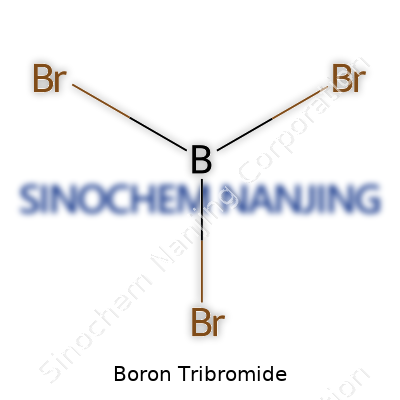
| Names | |
| Preferred IUPAC name | tribromoborane |
| Other names |
Boron bromide Tribromoborane |
| Pronunciation | /ˈbɔːrɒn traɪˈbrəʊmaɪd/ |
| Identifiers | |
| CAS Number | 10294-33-4 |
| Beilstein Reference | 3586693 |
| ChEBI | CHEBI:30161 |
| ChEMBL | CHEMBL1230736 |
| ChemSpider | 7445-42-3 |
| DrugBank | DB11367 |
| ECHA InfoCard | 100.950.113 |
| EC Number | 231-778-1 |
| Gmelin Reference | 7879 |
| KEGG | C01383 |
| MeSH | D001911 |
| PubChem CID | 24592 |
| RTECS number | ED3325000 |
| UNII | “R8P7U8A53F” |
| UN number | UN2506 |
| Properties | |
| Chemical formula | BBr3 |
| Molar mass | 250.52 g/mol |
| Appearance | White to yellow crystals |
| Odor | Pungent |
| Density | 2.89 g/mL at 25 °C |
| Solubility in water | Decomposes in water |
| log P | -1.20 |
| Vapor pressure | 13 mmHg (20 °C) |
| Acidity (pKa) | -0.2 |
| Basicity (pKb) | pKb ≈ 15 |
| Magnetic susceptibility (χ) | -62.0·10⁻⁶ cm³/mol |
| Refractive index (nD) | 1.427 |
| Viscosity | 0.53 cP (25 °C) |
| Dipole moment | 0 D |
| Thermochemistry | |
| Std molar entropy (S⦵298) | 247.6 J⋅mol⁻¹⋅K⁻¹ |
| Std enthalpy of formation (ΔfH⦵298) | −295 kJ/mol |
| Std enthalpy of combustion (ΔcH⦵298) | -2785.9 kJ/mol |
| Pharmacology | |
| ATC code | V03AB33 |
| Hazards | |
| Main hazards | Toxic if swallowed, causes severe skin burns and eye damage, reacts violently with water. |
| GHS labelling | GHS02, GHS05, GHS06 |
| Pictograms | GHS05,GHS06 |
| Signal word | Danger |
| Hazard statements | H301 + H314 + H331 |
| Precautionary statements | P220, P234, P260, P280, P303+P361+P353, P305+P351+P338, P310, P405, P501 |
| NFPA 704 (fire diamond) | 3-0-3-W |
| Flash point | -1 °C |
| Autoignition temperature | 160 °C (320 °F; 433 K) |
| Explosive limits | Not explosive |
| Lethal dose or concentration | LD₅₀ (oral, rat): 205 mg/kg |
| LD50 (median dose) | LD50 (median dose): Oral (rat) 2,800 mg/kg |
| NIOSH | ED3325000 |
| PEL (Permissible) | PEL: 1 ppm (10 mg/m3) as TWA |
| REL (Recommended) | Inside fume hood |
| IDLH (Immediate danger) | 250 ppm |
| Related compounds | |
| Related compounds |
Aluminium tribromide Boron trichloride Boron trifluoride Phosphorus tribromide |



