Bismuth Nitrate: A Look Across Science, Application, and Safety
Historical Development
Bismuth nitrate stands as a result of nearly three centuries of chemical curiosity and industrial pivots. Chemists in Europe laid the early foundation, trialing methods to transform the brittle, pink-hued bismuth metal—often mistaken for lead—into a range of salts, including the crystalline bismuth nitrate. The first significant outline of bismuth nitrate dates to the 1700s, with experimenters using nitric acid to work the heavy metal into a soluble form. New methods spread with the rise of analytical chemistry, and bismuth nitrate found a highlight in both scientific curiosity and emerging medicine. As the industrial revolution drove forward, industries ignored superstition around heavy metals and adopted bismuth compounds into pharmaceutical, pigment, and analytical chemistry routines, where bismuth nitrate's specific reactivity started demonstrating value.
Product Overview
Modern markets know bismuth nitrate as a white, crystalline solid with a faint nitric odor. In bulk, the crystals resemble coarse table salt. Commercial supplies focus on the pentahydrate form, which holds five water molecules per formula unit, and this version offers greater stability for storage and shipping. Labs and chemical suppliers list it under technical, pure, and analytical grades, with clear distinctions in trace heavy metals and moisture content. Its ability to dissolve in water but not in alcohol shaped its niche—easily separated from alcohol-soluble substances during preparations. A wider push for unconventional heavy metal alternatives has bumped up attention and efforts to deliver pure, certified batches that avoid lead, arsenic, and cadmium content.
Physical & Chemical Properties
Bismuth nitrate (Bi(NO3)3·5H2O) surfaces as dense and crystalline, tipping the scale at about 4.35 grams per cubic centimeter. It melts easily, breaking down into clouds of nitrogen oxides at around 75°C—well before the boiling point of water. That low thermal stability makes bismuth nitrate sensitive in the lab, especially under heating or during reactions with organic substances. The crystals dissolve in water, giving a clear, acidic solution, a feature that carries practical and safety implications. In air, exposed crystals slowly lose water, shifting from pentahydrate toward the anhydrous form, which carries more risk of decomposition. Mixed in acids, the nitrate remains quite stable, but when tossed in basic solutions, bismuth oxy-nitrate forms, precipitating out as a white powder. The chemical’s high atomic weight and solubility push certain analytical reactions—for instance, detecting and separating rare or valuable metal ions—and its mild oxidizing power shows up in organic synthesis.
Technical Specifications & Labeling
Technical sheets for bismuth nitrate call for strong documentation. Each container in a research or industrial setting gets a clear breakdown: purity (commonly at 98% or above for research use), water content matching the pentahydrate expectation, and a report on common heavy metal impurities. Labels also show hazard pictograms (oxidizer, corrosive), Harmonized System chemical codes, lot numbers for traceability, and basic safety signals. For businesses working across borders, alignment with the Globally Harmonized System for Classification and Labeling of Chemicals (GHS) ensures all users get consistent warning and handling data. Certificates of analysis and material safety data sheets (MSDS) stay attached to every shipment, following industry norms rooted in lessons from earlier mishaps around toxic metal handling.
Preparation Method
A classic route for creating bismuth nitrate involves reacting metallic bismuth, freshly cleaned, with concentrated nitric acid. The exothermic reaction releases brown nitrogen dioxide fumes and yields a transparent solution, which, upon slow cooling and evaporation, gifts out the pale crystals of bismuth nitrate pentahydrate. Laboratory methods replicate this on a small scale, using glass or PTFE containers to resist the acid’s attack. Commercial production focuses on controlling the reaction environment to limit side products, with particular vigilance over venting nitrogen oxides. Since nitric acid can introduce extra metallic impurities if reagents aren’t top-grade, modern suppliers purify their acids and run the reactions under filtered airflow in enclosed systems, reducing the chance of unintended inhalation or emissions.
Chemical Reactions & Modifications
Bismuth nitrate shows an appetite for reaction with many substances. Acids keep it dissolved, but add alkali, and you watch a white bismuth oxy-nitrate solid drop out. This predictable shift shapes the chemistry used in certain spot tests and in the controlled separation of metal ions from solution. Heat the nitrate, and it sheds water and releases nitrogen oxides, leaving behind a yellowish bismuth oxide. Chemists lean on that easy decomposition when preparing high-purity oxide catalysts or pigments. Certain organic reactions benefit from bismuth nitrate as an oxidant, especially in ring opening or the aromatization of specific organic frameworks. Organic synthesis teams design protocols around its mildness: enough push to get the job done, but less damaging to delicate molecules than classic chromium or iron salts.
Synonyms & Product Names
In catalogs and lab books, one runs into a mix of synonyms for bismuth nitrate. Its official name, bismuth(III) nitrate pentahydrate, sits next to older terms like nitric acid bismuth(3+) salt or bismuth trinitrate. Some texts call it simply BiN, though that risks mixing up formulas, so clarity matters in documentation. CAS numbers and EC identifiers appear alongside trade names—manufacturers sometimes stamp their own branding for traceable product lines. Across languages, the essence holds: the salt of bismuth with three nitrate groups and embedded water molecules, as close to a universal chemical name as chemistry gets.
Safety & Operational Standards
Safety matters whether you’re weighing bismuth nitrate in a teaching lab or transferring barrels on a shipping dock. Direct skin or eye contact delivers irritation, as the material’s acidic nature interacts with tissues. Use of gloves, safety goggles, and, ideally, working within a fume hood stands as standard protocol. Spilled crystals or solutions need wet cleanup, as the dust can irritate airways or react with base residues in the work area. Storage calls for cool, dry conditions locked away from alkalis, reducing materials, and sources of heat. Regulatory networks set exposure ceiling limits, signal required personal protective equipment (PPE), and enforce emergency wash stations nearby. Waste neutralization and disposal stick close to environmental rules, tied to local and international guidelines for handling water-soluble heavy metal salts.
Application Area
Bismuth nitrate draws interest well beyond just lab shelves. In medicine, its compounds act as antiseptics and astringents; the mild toxicity—far gentler than lead or mercury—offers a degree of safety for wound powders and topical treatments. In chemical analysis, bismuth nitrate stands out as a “reagent’s reagent,” picking out phosphates or sulfides in routine spot tests. Its solubility difference from other heavy nitrate salts makes it a favorite for developing separation protocols in environmental water and soil labs. Pigment and ceramic manufacturers prize the nitrate for preparing soft bismuth oxide layers with high brightness and thermal stability; these tiles, frits, and glazes get use in everything from safety signage to dental ceramics. On the research edge, the salt sets up catalysts for organic synthesis, finding new fits every year as bismuth’s low toxicity aligns with the green chemistry movement. Analytical device firms work to pack bismuth salts into electrodes for trace metal detection, using the compound’s unique electrochemical fingerprints.
Research & Development
Across the research world, teams run studies on everything from bismuth nitrate’s coordination chemistry to its environmental pathways. In pharmaceutical science, the drive picks up speed toward antimicrobial formulations that place bismuth at the center, learning from history but updating delivery for modern pathogens. Analytical chemistry groups peer into how bismuth nitrate pairs with nanoporous supports or molecular sieves, aiming for reusable, selective catalysts that push reaction yields and selectivity. In battery research, bismuth-based oxides from nitrate decomposition turn into electrodes in experimental lithium and sodium storage systems, seeking performance and safety advances over traditional lead or cobalt systems. Public and private research money supports work into more efficient production, cleaner decomposition, and recycling, with shared focus on scaling methods to replace high-toxicity alternatives.
Toxicity Research
Toxicological studies continue to bring bismuth nitrate into sharper focus. Compared to heavy metals like lead or cadmium, bismuth salts show lower systemic absorption and milder biological impact at equivalent doses, which gave them early appeal for medicinal use. At the same time, inhalation or ingestion at high levels can irritate mucosal surfaces, affect kidney function, and disturb electrolyte balances in animal models. Chronic exposure risks drove agencies to cap allowable concentrations in industrial and consumer products. Environmental persistence counts less for bismuth nitrate than for some long-lived organo-metallics, but risk assessments call for responsible containment and spill management. Hospitals and labs face routine audits to avoid accidental discharge. In my years working in chemical distribution, proper training, PPE compliance, and up-to-date labeling included the key lines of defense against incidents.
Future Prospects
Looking ahead, bismuth nitrate has room to grow as both research and regulatory landscapes shift. With global health concerns steering away from classic toxic heavy metals, bismuth-based compounds stand poised to fill gaps in both analytical and pharmaceutical fields. Organometallic chemistry points to new roles for bismuth nitrate in greener oxidation reactions and catalyst systems where other metals fall short either by expense or environmental burden. Electronic and materials science keeps exploring how bismuth nitrate-derived oxide layers enhance sensor function, battery life, or specialized glass properties. On the safety front, ongoing studies look to nail down chronic effects and set new exposure norms, making clear the need for robust worker safety training and proper waste pathways. As more industries search for sustainable, low-toxicity alternatives, bismuth nitrate sits ready for scrutiny, risk-balanced innovation, and practical adoption across both old and emerging markets.
What is Bismuth Nitrate used for?
An Old Salt With Modern Stories
Bismuth nitrate doesn’t sound like something you’d see outside a chemistry lab, but this compound has quietly found its way into places most of us don’t expect. As someone who’s spent more than a few late nights reading up on the chemicals that shape everyday life, bismuth nitrate keeps popping up in the most unexpected corners—from the wooden desk in a carpenter’s workshop to the beakers and burners in a pharmaceutical laboratory.
Bringing Color to Everyday Materials
Start with pigments. The furniture polish at your grandmother’s house—the kind that gave old oak tables that deep, burnished finish—probably owes its staying power in part to bismuth nitrate. Craftspeople mix it with other ingredients to create rich, stable colors for woods and leathers. It resists fading, so it’s popular among artisans who care about durability as much as looks.
Many consumers don’t spend time thinking about what’s inside a well-glossed wooden chair or the vibrant handles on kitchen knives. Yet, bismuth nitrate makes a difference there too. It helps give some plastics their toughness and shine, especially items you handle every day.
Answering the Call in Medicine
In pharmaceuticals, bismuth nitrate serves as a starting material for several medicines, particularly those used to treat digestive system problems. There’s a long tradition of using bismuth to deal with ulcers and infections linked to the gut. Bismuth nitrate ultimately gets converted to compounds that kill harmful bacteria and soothe the lining of the stomach. Studies show that such compounds can help fight Helicobacter pylori, which contributes to some ulcer types.
One thing that matters here is safety. Heavy metals often set off alarm bells, but bismuth shows a much friendlier face in medicine compared to others like mercury or lead. Proper handling during manufacturing keeps risks in check, and doctors keep dosing low and targeted.
Doing the Heavy Lifting in the Lab
Out in the academic world, bismuth nitrate has earned a place in organic chemistry as an oxidizing agent. Researchers use it to help turn alcohols into aldehydes or ketones—a process that builds everything from flavors to specialized plastics. Some labs pick bismuth nitrate for its reliability; it works without creating too much hazardous waste. Green chemistry favors gentle solutions, and bismuth fits the bill better than harsher, more toxic alternatives.
Fixing the Hurdles
With so much potential, you’d think bismuth nitrate would be more widely used. But cost and supply can get in the way. Bismuth mostly comes as a byproduct of mining other metals. Price swings and mining disruptions make it tough for manufacturers to rely on. Rampant illegal mining, especially in countries with few environmental safeguards, also raises concerns about pollution and supply chain ethics.
How can these issues get resolved? Recycling bismuth from scrap electronics and old alloys could ease pressure on mines. Greater transparency around sourcing would help buyers pick suppliers who treat workers and the environment better. On the production end, companies have pushed to reduce waste—both to save money and meet tighter regulations.
Looking Forward
It’s easy for niche compounds like bismuth nitrate to go unnoticed, but their roles keep expanding as safer, greener choices gain ground in manufacturing and medicine. Anyone serious about building a healthier, more sustainable future needs to make space for unlikely players like this one—right alongside the more glamorous elements that grab headlines.
What is the chemical formula of Bismuth Nitrate?
Understanding Bismuth Nitrate
Bismuth nitrate stands out in the chemistry crowd, known for both its unique properties and how it’s used in real labs. Its chemical formula is Bi(NO3)3. This formula packs some real punch—one atom of bismuth, teamed with three nitrate groups. Anyone spending time in a lab with glassware and safety goggles will recognize that string of letters and numbers. It’s not just textbook talk; it spells out how the molecule behaves and reacts, directly shaping what scientists can do with it.
Why This Compound Matters
I remember handling bottles of bismuth nitrate as an undergrad. The compound itself is a stark white, crystalline solid—almost elegant, until you drop a bit in water and watch the show. In water, especially if it’s not pure, it forms a cloudy layer due to hydrolysis. This simple trick actually reveals a lot about why scientists reach for it. In organic chemistry, bismuth nitrate can turn otherwise stubborn molecules into more useful products, nudging along oxidation or nitration reactions that stall out with gentler chemicals.
Practical Uses in the Real World
It’s one thing to see Bismuth nitrate written on a label, but real innovation happens at the bench. Factories use it to prepare other bismuth salts. Artisans—believe it or not—have relied on it in ceramics and stains, where the lightweight touch of bismuth chemistry produces specific colors and finishes. Sometimes, you even run across people talking about its role in medicine, especially before safer alternatives came along, since its ancestors were used to treat infections and ulcers. These days that’s pretty rare, but it’s a good example of how older compounds still influence thinking today.
Safety and Environmental Concerns
Any compound, no matter how useful, needs a close look at how it behaves outside the flask. Bismuth nitrate contains heavy metal and nitrate groups, so safe storage and disposal is a must. Laboratory rules require storing it away from heat and moisture to prevent those unpredictable cloud reactions. Flushing it down the sink spells trouble for water systems, since nitrates can encourage the growth of algae in lakes and rivers, choking out other life. Strict guidelines help prevent contamination—something that sticks with any chemist after working with reactive materials around campus or in industry.
Learning Through Lab Work
Getting hands-on with bismuth nitrate builds more than chemical knowledge. It drives home how formulas connect to the world outside class. We didn’t just pour and mix—we tracked reactions, managed waste, and reported on what went well and what didn’t. Those lessons turned “Bi(NO3)3” from just another formula into something meaningful. You never forget the sharp smell, the way it fizzes when things go wrong, and the constant balancing act between getting results and staying safe.
Looking Ahead
Innovation keeps old compounds like bismuth nitrate in the game. Science always asks for safer, smarter ways to solve problems. Finding new methods of recycling bismuth and safer ways to dispose of waste can cut down on the risks. At the same time, chemists keep searching for novel reactions—using bismuth nitrate’s unique structure to do more with less impact, both in labs and in industry. That’s the kind of challenge that keeps people excited about chemistry, long after the first-hand experience fades.
How should Bismuth Nitrate be stored?
Looking at Chemical Storage with Common Sense
Storing bismuth nitrate might not sound like headline news, but safety around chemicals matters in workplaces and homes. Anyone who's handled bismuth nitrate will tell you—this white, crystalline solid carries some risks. It picks up moisture and starts reacting if left out, so it never deserves to gather dust in a random drawer.
Keeping It Cool and Dry Matters
Experience shows bismuth nitrate asks for a cool, dry location, away from sunlight. Those clear jars near a window may look pretty, but this stuff clumps fast when it gets damp, and its reactivity goes up. Humidity turns many chemicals unreliable or hazardous. Labs with top safety records never store chemicals like this on high, unstable shelves or anywhere that gets big temperature swings.
People sometimes assume because bismuth nitrate doesn’t explode on contact, conditions don’t matter. That assumption causes problems. Even a little moisture causes decomposition, and the results include the release of toxic nitrogen oxides. No one wants to breathe that stuff. So, a well-sealed container keeps bismuth nitrate safe, and if the vessel shows a broken seal, best to discard what's in it.
Separation Prevents Accidents
Getting complacent about where chemicals stay has led to close calls. Strong acids, bases, or organic material don’t belong near bismuth nitrate. People sometimes grab anything empty for storage, but old jars with acid residue or organic traces can trigger reactions. Hazardous material safety rules suggest dedicated chemical containers—preferably glass or certain plastics. Clear labeling in bold marker avoids mistakes.
Fact-Checked Storage Strategies
Evidence from industrial safety guidelines and chemical suppliers keeps stress on clear protocols. Facility audits often find mislabeled or poorly stored bottles, which risks harm to workers and the environment. Occupational Safety and Health Administration (OSHA) in the United States sets out storage rules that aren’t red tape—they come from experience with accidents. Following these guidelines, people who store bismuth nitrate keep it in airtight containers, away from incompatible substances, and always in a dry secondary containment tray to catch spills.
Some workers learn best from real incidents. Mixing bismuth nitrate with combustible substances like paper or rags led to small fires in cases where safety got ignored. The chemical’s oxidizing nature demands respect—if mishandled, it becomes a fire hazard even without flammable solvents nearby.
Helpful Solutions From Hard Lessons
Training plays a big role. Too often, new staff don’t get hands-on instruction, or shortcuts save a few seconds at the start and cost hours later. Building a culture where people talk openly about chemical handling stops accidents before they start. Updating standard operating procedures creates long-term safety. Electronic logs tracking expiration dates and regular inspection of chemical stores keep everything above board.
Some workplaces now use humidity sensors inside cabinets, giving an alert before moisture creeps in. These small investments prevent big problems. Good practice around bismuth nitrate storage protects not just the user but everyone sharing the lab or classroom. Every time someone sets up proper containment and checks labels, injuries and environmental incidents become a lot less likely.
Is Bismuth Nitrate hazardous or toxic?
Looking Closer at Bismuth Nitrate
Bismuth nitrate pops up in labs, industrial settings, and even in research on advanced materials. A lot of folks might think of bismuth as pretty benign, given its use in over-the-counter stomach remedies. Bismuth nitrate, though, carries its own mix of risks. Unlike the pink medicine in your cabinet, this compound can cause problems if handled carelessly. Some news outlets sound alarms about chemical dangers, sometimes glossing over details that matter. Getting the facts straight and using them to guide safe habits deserves attention.
Real Hazards, Real Experiences
During my own years working in labs, nobody took bismuth nitrate lightly. A white, crystalline solid, it dissolves in water and releases fumes that sting the eyes and nose. I remember a friend’s small spill during routine research. He coughed, rubbed his eyes, and regretted skipping the goggles that day. Skin contact often translates to irritation, and inhaling dust or vapors can spark headaches or throat pain. This isn’t a mystery to anyone who’s spent time with concentrated nitrates. Beyond these immediate effects, long-term exposure research remains thin. That’s sometimes the scariest part—uncertainty combined with what we know about related chemicals.
Comparing Risks with Other Chemicals
Bismuth itself generally gets a safe label. Its nitrate, though, includes strong oxidizing properties. Mixing it with organic materials—think: paper, wood, or some solvents—can kick off rapid, even explosive, reactions. It’s a stark contrast with standard white powders like salt or sugar. The oxidizing punch turns routine handling into something that calls for sturdy gloves, tight-lidded containers, and serious attention to spills or mistakes. The thing is, most chemical safety rules don’t make a fuss about nitrates until an accident happens. Chemicals get safer when folks on the ground respect what they can do. Facts back this up: nitrate compounds, left open to air, can generate toxic nitrogen oxides. These gases damage lungs and aggravate asthma, especially in poorly ventilated spaces.
Managing Risks Responsibly
Regulations in the US and Europe put bismuth nitrate on the list of substances that require hazard labeling and controlled storage. Each bottle comes stamped with warnings for a reason. At home, you won’t likely run into it by accident, but university students and science teachers need clear instructions. Safe handling starts with well-fitted gloves, goggles, and fume hoods. Cleanup kits should sit within arm’s reach. Clear, simple labels avoid confusion in busy spaces, especially for young scientists or workers in training. More than once, I saw near-misses when a label faded or a container looked too much like something else. Label fatigue kills clarity in a hurry.
Searching for Safer Practices
Bismuth nitrate won’t vanish from shelves or research labs—its chemistry makes it useful in making catalysts, pigments, and other valuable materials. Progress in workplace safety calls for honest training, real protective gear, and attention to details that could become overlooked over time. Fire drills for chemical spills may sound like a headache, but they make a difference if someone drops a container. Digital records help too. If something goes missing or a bottle gets old, knowing what’s in storage matters more than ever. The safer option is always to treat chemicals as potentially dangerous, and to foster a learning culture around the real-world risks they bring. That helps protect both health and hard-earned scientific progress.
What are the common applications of Bismuth Nitrate in industry or laboratory settings?
Bismuth Nitrate: Straightforward Chemistry With Surprising Reach
Bismuth nitrate isn’t famous outside specialty circles, but people working in chemical labs or making cosmetics know its value. The first time I handled it, the pearly crystals felt ordinary. Then I realized their reach. If you step into a synthetic organic chemistry lab, you might spot a jar of it on the reagents shelf. Chemists lean on this compound to spark oxidation reactions or rearrange stubborn molecules. It's safer than some heavier metals and sidesteps the toxic mess left by mercury or lead-based options. In my experience, researchers favor these sorts of materials—ones that won’t set off an environmental health panic after cleanup.
Helping Cosmetics Firms Succeed
Many folks don’t realize how much basic science goes into safe makeup and personal care products. Bismuth nitrate acts as a starter for other bismuth compounds. This matters for everything from pearlescent powders to antacids, both needing ingredients with minimal toxicity and gentle effects on people. Bismuth salts absorb into skin less than some metals, so formulators feel comfortable using them. It’s easier to trust a powder or cream when you know nothing nasty lingers inside after application.
Catalysis: Getting Chemical Reactions to Move
Industrial chemists keep a close eye on costs and results. They want a reaction to finish on time, every time, without costly waste. Bismuth nitrate steps up in that world, acting as a catalyst. I’ve watched colleagues try to transform one functional group to another—the kinds of tiny changes that yield medicines or coatings—and found that bismuth nitrate gives the right push. It doesn’t create a residue that gums up reactors or tanks. That alone saves hours of downtime, and over hundreds of batches, those savings add up. The smaller environmental footprint also helps companies meet the growing pressure from regulators and investors to clean up manufacturing lines.
Laboratory Testing and Educational Use
Undergraduate chemistry labs sometimes feature bismuth nitrate in classic qualitative analysis exercises. Students use it to spot particular anions (like iodide) or test out precipitation and color changes—important steps in teaching hands-on skills. These simple experiments show why chemists bother with observational science in the first place. It's also less nerve-wracking than working with riskier heavy metals or explosive organics, especially for new learners. Instructors prefer giving students tools that pose less risk, and bismuth nitrate fits right in.
Where Safety Outshines Tradition
Roughly twenty years ago, environmental rules hammered down on mercury-based reagents in labs and industry. That pushed more people toward “greener” alternatives. I remember discussions around our lab meetings about how much better it felt not to worry about spills. Bismuth nitrate, by nature, takes the stress out of storage and disposal while still getting the job done.
Opportunities for Better Practice
Bismuth nitrate shows up less in splashy headlines, but the push for less hazardous chemicals makes it a solid alternative. Chemists and producers would benefit from increasing transparency around sourcing and purity. Firms might team up with academic labs to push for even safer uses and disposal practices—maybe developing better recycling loops for reagents. People new to industrial chemistry could learn a lot by seeing why replacing riskier substances helps both the bottom line and community health.
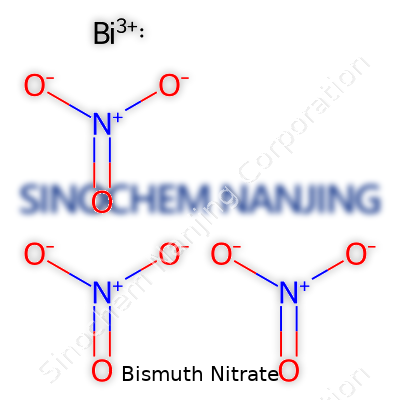
| Names | |
| Preferred IUPAC name | bismuth trinitrate |
| Other names |
Bismuth(III) nitrate Bismuth trinitrate Bismutrate Nitric acid bismuth(3+) salt Bismuth nitrate pentahydrate |
| Pronunciation | /ˈbɪz.məθ ˈnaɪ.treɪt/ |
| Identifiers | |
| CAS Number | 10361-44-1 |
| Beilstein Reference | 358961 |
| ChEBI | CHEBI:35214 |
| ChEMBL | CHEMBL1201541 |
| ChemSpider | 21569054 |
| DrugBank | DB09461 |
| ECHA InfoCard | 100.028.275 |
| EC Number | 233-118-8 |
| Gmelin Reference | 624 |
| KEGG | C18744 |
| MeSH | D001622 |
| PubChem CID | 24866054 |
| RTECS number | EB2625000 |
| UNII | A1X6MHLU5A |
| UN number | UN2726 |
| Properties | |
| Chemical formula | Bi(NO3)3 |
| Molar mass | 394.01 g/mol |
| Appearance | White to faint yellow crystalline solid |
| Odor | Odorless |
| Density | 2.83 g/cm3 |
| Solubility in water | Soluble |
| log P | -0.6 |
| Vapor pressure | Negligible |
| Acidity (pKa) | -2.69 |
| Basicity (pKb) | -3.06 |
| Magnetic susceptibility (χ) | -1.67×10⁻⁴ |
| Refractive index (nD) | 2.15 |
| Dipole moment | 0 D |
| Thermochemistry | |
| Std molar entropy (S⦵298) | 254.0 J·mol⁻¹·K⁻¹ |
| Std enthalpy of formation (ΔfH⦵298) | −755.4 kJ/mol |
| Pharmacology | |
| ATC code | A01AB10 |
| Hazards | |
| Main hazards | Oxidizing, harmful if swallowed, causes skin and eye irritation. |
| GHS labelling | GHS02, GHS05, GHS07 |
| Pictograms | GHS05,GHS07,GHS09 |
| Signal word | Danger |
| Hazard statements | H272, H315, H319, H335 |
| Precautionary statements | P210, P220, P221, P280, P305+P351+P338, P370+P378, P422 |
| NFPA 704 (fire diamond) | 3-0-0-OX |
| Lethal dose or concentration | LD50 oral rat 5340 mg/kg |
| LD50 (median dose) | LD50 (median dose): Oral rat LD50 = 1320 mg/kg |
| NIOSH | Not listed |
| PEL (Permissible) | PEL (Permissible Exposure Limit) for Bismuth Nitrate: Not established. |
| REL (Recommended) | 1 g |
| IDLH (Immediate danger) | Not listed. |
| Related compounds | |
| Related compounds |
Bismuth(III) oxide Bismuth(III) chloride Bismuth(III) acetate |



