Bis(Chloromethyl) Ether: Navigating a Hazardous Legacy
The Road to Discovery and Development
Looking back at the story of Bis(Chloromethyl) Ether, or BCME as some call it, you see a mix of scientific discovery and real regret. Chemists first drew BCME out of methylal and hydrogen chloride in the early 20th century, during a time when few paused to think about toxicity or long-term exposure. Labs needed agents that could crosslink polymers and add new structures to organic molecules, so BCME found its way onto the benches. It’s easy to look at this and think, “why didn’t they stop sooner?” But the understanding of what this compound could do to the body lagged behind its industrial uses. By the time the health impacts came into focus, warehouses and workers had already set a pattern of exposure that’s hard to shake off.
Properties That Cut Both Ways
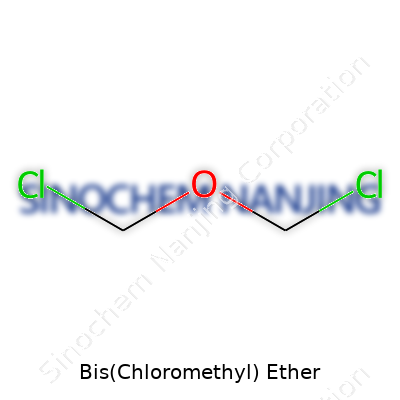
BCME doesn’t hide its volatility. At room temperature, it forms a clear liquid with a sharp, suffocating odor that makes you want to step back before you even know what you’re dealing with. In a chemical sense, it’s strong and reactive, thanks to those two chloromethyl groups clinging to the oxygen atom. Under most conditions, it moves into the air quickly; if you spill some, the sickly-sweet vapor fills a room in minutes. This volatility brings risk when storing or handling, especially near water or acids. One drop can cause trouble because the fumes irritate skin, lungs, and eyes. It’s not just discomfort: repeated exposure triggers much more serious things, including cancer.
A Closer Look at the Technical Side
Chemists have always kept careful notes on what they make, but with BCME those margins list alarm bells about purity and contamination. Any splash of water starts hydrolysis, while the presence of strong bases tears the molecule down even faster. In practical labs, chemists track concentrations by gas chromatography, making sure no lingering byproducts slip through. Safe packaging for BCME always means thick glass or certain metals; it eats through plastics and can breach thin containers over time. Every bottle needs clear hazard symbols, and everyone around it should know about the lung risks up front. Open containers never sit long—just being around the vapor can mean the need for medical monitoring.
Methods and Modifications—How It’s Made
Manufacturing BCME does not take much: methylal reacts with hydrogen chloride gas in the presence of antimony trichloride or zinc chloride, squeezing out BCME and a splash of water. The chemistry isn’t complicated, but scale magnifies hazards. Even in closed systems, unpredictable releases cause real worry for both workers and the environment. Most chemical companies have moved to ban or tightly restrict bulk production, since the finished product escapes controls so easily. Attempts to modify BCME, such as stabilizing with inhibitors or blending with less volatile solvents, see some use at lab scale, but few users trust it further than necessary.
Chemical Reactions—Bridge to Bigger Molecules
Chemists once prized BCME for how fast it reacts. It turns simple aromatics into crosslinked polymers or toughens plastics in ways other chemicals struggle to match. In the laboratory, BCME functions as a powerful methylating and chloromethylating agent. These reactions helped grow synthetic textiles, specialty resins, and advanced coatings, particularly in the pre-regulation decades. The same quick action that made the molecule useful also magnifies risk during handling. BCME’s radical-based reactions move fast and need expert control; a misstep clouds the room with vapor or leaves lasting contamination on surfaces.
Aliases Around the World
In different scientific texts, BCME goes by more than one name. Old manuals call it sym-dichlorodimethyl ether, others abbreviate to CMME, or list it as bis(chloromethyl) ether. Some safety data sheets still mention “chloromethyl ether” in a broader sense, but anyone working with chemicals learns to double-check and verify by CAS number due to the confusion over names. Mixing up names in a factory or laboratory can lead to storage errors or paper trails that miss the real hazard waiting inside the container.
Staying Safe—A Hard Lesson
Exposure to BCME does not leave much room for error. Health authorities worldwide list it as one of the strongest known human carcinogens, especially for lung cancer. In my experience, safety protocols around BCME are among the strictest you’ll see—full-face respirators, enclosed hoods, continuous air monitoring, medical surveillance, and strict access control. The Environmental Protection Agency, European authorities, and other regulators do not tolerate loose handling. The only way to manage the risk involves stopping exposure before it starts. Some chemical plants use “locked rooms” or glovebox isolators, while others have abandoned the molecule altogether.
Where BCME Made Its Mark
BCME had its heyday decades ago, in polymer chemistry labs and facilities focused on high-performance resins for coatings, adhesives, and commercial plastics. It helped build specialty phenolic resins and toughen chemical-resistant coatings. In research, it played a part in structure-activity relationship studies and development of new pharmaceutical intermediates. But as word spread about its high toxicity, many companies pulled back or found substitutes. Most modern applications focus on legacy research or forensic analysis, not industrial-scale manufacturing.
Ongoing Research and the Turning Point
A lot of curiosity drove early investigation into BCME’s reactivity and uses. But most recent research pivots to toxicity, detection, decontamination, and long-term environmental fate. Efforts include real-time detection sensors and strategies for rapid decontamination. Epidemiologists follow workers long after exposure, while analytical chemists build new lab methods to track tiny amounts in air or on surfaces. The challenge shifts from using BCME to keeping people away from it altogether, or lowering the threshold of what gets flagged as dangerous.
The Toll of Toxicity—Hard Numbers and Real Impact
Toxicology studies show BCME ranks in the top tier of occupational carcinogens. Just a whiff—levels hard to measure without high-end detectors—triggers a risk for small cell lung cancer. Early studies missed the mark on just how serious this risk turned out to be. Later tracking of workers exposed during the 1950s and ‘60s revealed tragically high cancer rates. Regulatory agencies now keep exposure limits near zero, recognizing that safe handling amounts to exclusion. Cleanup and remediation of sites that handled BCME now cost millions, and former workers fight for recognition of health claims.
Looking Forward—Learning from a Toxic Legacy
There’s little doubt that the chapter of broad BCME use in industry has closed. The key lesson here speaks to the need for early, honest study of chemical risks, and transparent communication between labs, regulators, and public health teams. Future research aims to build better substitutes that keep industrial chemistry moving without poisoning the next generation of workers. Scientists turn their sights to green chemistry, favoring molecules that break down cleanly or stay locked away unless actively needed. For those who still study BCME, the message rings clear: work at the smallest scale possible, contain every step, and always put health and safety before convenience or cost.
What is Bis(Chloromethyl) Ether used for?
What Is Bis(Chloromethyl) Ether?
Bis(Chloromethyl) ether goes by the abbreviation BCME. This chemical compound appears as a colorless liquid with a sweet, chloroform-like smell. Industry insiders sometimes call it a “BCME” risk, not for production convenience, but because of the health hazards tied to it. It has drawn attention for its link to severe lung diseases, including cancer.
Why People Use BCME
Factories have leaned on BCME mainly to make specialty resins and polymers. Its popularity grew in the 20th century, especially for those building durable plastics. BCME acts as a so-called cross-linking agent. It can encourage molecules in a resin to bond, which then makes the final plastic tougher and more heat-resistant. In certain industrial environments, that kind of performance holds a lot of value.
Some chemical processes pull BCME into the picture for producing ion-exchange resins. These resins find their way into water filters and chemical separation processes. Years ago, folks in manufacturing saw BCME as a shortcut to certain high-performing coatings and tough adhesives. It has also stepped in as a chemical intermediate—meaning it helps create other compounds, including some pesticides, pharmaceuticals, and specialty polymers.
Health Risks and Worker Safety
Anyone who has spent time in a facility using BCME knows it’s dangerous. Even a whiff of its vapors can irritate the eyes, nose, and lungs. Occupational health experts have listed BCME as a strong lung carcinogen. According to the U.S. National Institute for Occupational Safety and Health (NIOSH), even short-term exposure could trigger long-lasting effects. Deaths from lung cancer have shown up in workers exposed to BCME, even with only brief contacts decades earlier.
I've spoken with veteran machinists who said BCME demanded triple-layer gloves and full-face respirators. Old manufacturing guides sometimes mention “open vats” of BCME in the 1950s and '60s—an almost unthinkable practice, given what we know now about its risks.
Government bodies have pushed back hard against BCME use. The U.S. Environmental Protection Agency (EPA), along with the Occupational Safety and Health Administration (OSHA), considers it a hazardous air pollutant and a regulated substance. Each extra layer of regulation put more pressure on companies to shift away from BCME toward safer options.
Ethics, Alternatives, and Solutions
Even though BCME can still pop up in old process formulas, most modern chemists and engineers seek alternatives. Some companies replaced BCME-dependent steps with cleaner, low-toxicity chemicals. For instance, newer epoxy and phenolic resins can be made using safer cross-linkers without the same cancer risk.
Looking back at the legacy of BCME in industry, the story serves as a case study in why chemical safety matters. It isn’t just about obeying the rules: nobody wants to see coworkers or family members deal with health issues that proper safety and updated production methods could prevent. Many manufacturers now treat substances with possible cancer risks with sharp scrutiny, extra personal protective equipment, real-time air monitoring, and detailed hazard training.
Wider awareness of chemicals like BCME makes a difference. Sharing information—especially with new workers and in trade schools—could help prevent tragedies. Once a hazardous chemical becomes common knowledge, its era in standard practice often comes to a close, replaced by less hazardous and more sustainable choices.
What are the health hazards associated with Bis(Chloromethyl) Ether?
Recognizing a Serious Chemical Hazard
Stepping into any industrial setting, you quickly develop respect for the hazards hiding in plain sight. Bis(Chloromethyl) Ether—or BCME, as most safety manuals abbreviate it—reminds me why gloves, goggles, and dated training sessions matter. BCME doesn’t apologize for its presence. It crooks at health, especially in facilities that produce or use chlorinated solvents, resins, or ion-exchange materials.
Health Threats: Far Beyond a Simple Irritant
Cracking open the science, BCME carries a bad rap for a reason. It acts as a “probable human carcinogen,” a term that, stripped of jargon, spells long-term pain for those exposed. Research from the National Institute for Occupational Safety and Health (NIOSH) lays out a bleak picture. Once BCME comes into contact with the respiratory tract, it can damage tissue at even low concentrations. Breathing in BCME doesn’t just irritate the lungs—it wrecks them. Exposure links to lung cancer—fast-moving, hard-to-treat small cell carcinoma. The people who worked with the chemical during old resin manufacturing runs face cancer rates higher than the general working population.
This compound hits fast and hard. Short-term exposure can cause coughing, burning in the eyes, shortness of breath, and fluid building in the lungs. At higher exposures—even if it’s only for a few minutes—fatal pulmonary edema turns into a real possibility. Many chemicals cause harm by accumulating or requiring repeated exposure. BCME doesn’t play that game; a bad moment is all it takes.
A Devastating Legacy in the Workplace
Old chemical plants contain stories of workers developing severe breathing problems. OSHA’s job hazard stats highlight BCME’s hand in worker illness. People with chronic exposure, often before strict regulation, sometimes noticed symptoms too late. Current exposure limits stand at 0.001 ppm—beyond strict for a reason. Inhaling even a vapor for a short time brings lasting harm. I remember a retired plant supervisor describing the hush that fell in workers’ break rooms when the topic of “the ether” came up—BCME hung over their heads like a specter they barely understood.
Controlling an Invisible, Yet Present, Danger
Mitigation sits on the shoulders of knowledge, vigilance, and mechanical control. Consistent air monitoring and active ventilation systems breathe life into safety protocols. It takes regular training and open conversations to break the chain of exposure. Companies swap out older processes for methods that drop BCME production. Chemical fume hoods, positive pressure respirators, and sealed tube reactors have become standard practice in labs that once used open benches.
Communities around old industrial zones and waste sites also need protection: groundwater checks, soil testing, information campaigns, and legal action push clean-up forward. Many people affected never set foot in a factory but live downstream from yesterday’s decisions. Public health agencies like the CDC and EPA keep pushing to track contamination and support families exposed outside the workplace.
Moving Forward: Education Makes a Difference
Education and strict regulation work. Young engineers, chemists, and workers stepping into hazardous trades learn hard lessons from scarred lungs of the past. They engage with new protocols, understand the value of reporting leaks immediately, and look to health surveillance as routine, not burdensome. Sharing firsthand accounts does more than lectures ever could. Tools exist to prevent suffering—they start with awareness, not simply policy.
Staying vigilant keeps people healthy. BCME earns its infamy—so knowledge, experience, and open eyes keep it in check.How should Bis(Chloromethyl) Ether be stored and handled safely?
Why Proper Storage and Handling Matter
I’ve spent years around labs and chemical storerooms. Every time Bis(Chloromethyl) Ether (often called BCME) came up in safety meetings, seasoned chemists grew serious. This stuff isn’t just intimidating on paper; it has a dark reputation for harming lungs even with tiny exposures. Awareness isn’t enough—you need habits grounded in real caution.
BCME Facts You Can’t Ignore
This chemical ranks high among dangerous substances. Even a whiff can cause lung cancer. Breathing it, skin contact, or even letting vapors drift outdoors gets people sick. In simple terms, don’t trust it, don’t touch it without gear, don’t store it lightly, and don’t let anyone near it except trained professionals.
How I’ve Handled It Safely
Anytime BCME came through the door, only the most experienced workers touched it. We used gloves, face shields, full suits, and always a strong respirator. I never felt safe knowing it was nearby without a working fume hood. I’ve seen neighbors keep logs and buddy systems in place just for opening bottles. If you’re sweating a little, that’s a good sign—it keeps you sharp.
Keeping the Chemical Contained
No one stores BCME in casual conditions. Heavy, sealed glass bottles work best, with tight metal caps that won’t corrode. Every bottle gets a chunky label with "CARCINOGEN" in red. Don’t stop at the label—log every movement in a written register, even within the same room. Flimsy or old seals don’t belong anywhere near this chemical. If a bottle looks off, better to get rid of it with a professional’s help.
The cool, steady air of a ventilated storage cabinet (that resists chemicals well) helps keep things safer. BCME needs a dry, cool place away from acids, open flames, sunlight, and oxidizers. A concrete bunker sounds extreme, but for this substance, it makes sense. Storage rooms should have emergency showers, eyewash stations, and quick escape routes. I’ve seen places where the walls have extra-heavy joints just so nothing leaks out in a worst-case spill.
The Right Way to Move and Use BCME
Opening BCME happens slowly—no rushing, no multi-tasking. You tackle it inside chemical hoods or glove boxes with high airflow constantly pulling vapors away. If the lab doesn’t have real-time air monitors, you’re not prepared. I always kept a spill kit within arm’s reach, and every container opened got triple-checked before return to storage.
Any used wipes, gloves, or vials holding BCME never go in regular trash. Regulated, locked hazardous waste bins keep workers out of harm’s way. Trained teams pick up this waste fast, with routes mapped out so nobody crosses paths by accident. I’ve seen cleanup drills before anyone gets sign-off to even think about handling BCME directly.
Improvement Starts with Training
No shortcut replaces practice. Refresher courses, hands-on drills, and honest talk about past incidents keep everyone alert. Posters and written guidance reinforce what’s at stake without softening the truth. BCME’s dangers mean cutting corners costs more than time—it costs health.
If your facility stores or uses this ether, review your protocol before you ever touch it. Ask for the latest respirators, check the vent systems yearly, and run worst-case scenario drills. Specialists know: with BCME, thorough beats quick every time.
What personal protective equipment is required when working with Bis(Chloromethyl) Ether?
The Real Risks Behind Bis(Chloromethyl) Ether
If you’ve spent any time around chemicals, you know some substances deserve extra respect. Bis(Chloromethyl) Ether makes the list for all the wrong reasons. This chemical hasn't just earned its reputation out of nowhere—exposure can lead to severe lung issues and even cancer over time. Even a quick mistake hurts. Years back, I visited a research facility with a colleague who suffered a splash accident; watching their urgent dash to the safety shower drove home how little margin for error exists. Having spent years in industrial labs, I’ve seen the difference between “just getting by” and staying safe. Knowing what gear to wear really separates the seasoned workers from those rolling the dice.
What Actually Keeps You Safe?
Goggles can’t be an afterthought. Regular safety glasses stop short. Full-seal chemical splash goggles stand between your eyes and this chemical’s fumes or splashes. If you value your sight, choose goggles that actually contact your face all around and vent indirectly to keep vapors out. Face shields work as an added barrier, never alone. People who rely only on shields for splash protection have enough stories about close calls; the eyes need their own protected zone.
Gloves take some thought. Thin latex doesn't make the cut. Nitrile, butyl rubber, or neoprene get recommended by folks who have read the test data and handled the material. I’ve watched gloves dissolve in minutes from a poorly matched solvent, leaving hands exposed. Before starting, check the chemical compatibility charts from trusted manufacturers—don’t guess here. If a glove starts getting soft or sticky, swap it out before it lets danger slip through.
It goes beyond hands. Lab coats help, but coated chemical-resistant aprons, sleeves, and even full-body suits make the difference in real-world spills. Some choose Tyvek suits; others opt for heavy-duty PVC. Look for gear rated for organic vapor and acid protection. Sometimes I saw colleagues wear multiple layers—they preferred sweating to risking their future health.
Respiratory gear can’t be skipped, even if the task seems routine or the substance smells faint. This chemical’s vapors do their worst damage in silence. The National Institute for Occupational Safety and Health recommends full-face, supplied-air respirators. Air-purifying respirators rarely block enough of this highly toxic gas. Through a respirator’s lens, you start to see your breath in a new light, but it means walking out of that lab at the end of the day. If supplied-air gear isn’t available, work should stop. No short cuts here.
The Value of Protection and Vigilance
Standing between you and Bis(Chloromethyl) Ether isn’t just a checklist of equipment—it’s knowing the risks before stepping in. PPE sits at the final layer, after all else has been done to limit exposure. It doesn’t forgive poor ventilation or overlooked leaks. Today, news about lax safety standards or under-protected workers in chemical plants jumps out for good reason—hazards don’t wait for anyone to gear up properly.
Supervisors and employees need real training, not just a once-a-year meeting. I’ve learned the best labs pair regular review with hands-on drills. Always store PPE away from contaminated areas, and inspect it before every use. Disposal matters just as much as what you wear—contaminated gloves and suits don’t belong in open trash bins. If you’re unsure about your PPE, ask questions until you’re sure. Silence has injured enough workers already. When every shift ends without an accident, you realize the right equipment doesn’t slow the job down—it lets you keep coming back.
Is Bis(Chloromethyl) Ether regulated or restricted for use?
The Real Danger Behind the Chemical
Bis(Chloromethyl) Ether doesn’t pop up in public discussion much, yet its impact reaches deep and hits hard. People who work with chemicals know this substance for all the wrong reasons. The chemical stings the lungs, tears at the breathing passages, and, over time, makes cancer far more likely. Prolonged exposure can end in lasting lung damage or even death. Inhaling it may feel harmless at the moment, but the danger lingers for years. Once it enters the body, there's no going back, no easy way to make things right.
A Short Journey From Factory Floor to Law Books
Decades ago, some industries used bis(chloromethyl) ether as a building block for making specialty resins and other chemicals. Production shortcuts and lack of oversight handed workers a poison-laced job description. Then came waves of reports from the field describing rare but aggressive lung cancers tied directly to short stints around this chemical. These weren’t vague connections or speculative links—researchers tracked health impacts and found that those with even small, repeated exposures faced dangers out of proportion to other risks in a chemical plant.
The Laws and Limits
No developed country ignores bis(chloromethyl) ether’s threat. The United States has locked it down with laws from agencies that do more than set guidelines—they lay down the law. The Occupational Safety and Health Administration (OSHA) set workplace exposure limits at a level so low that everyday measurement technology barely picks it up. The Environmental Protection Agency (EPA) stamped it as a hazardous air pollutant and made it subject to strict release reporting rules under the Clean Air Act. The European Union marked it as both a carcinogen and a restricted substance under initiatives like REACH. Japan and Australia treat occupational exposure just as seriously.
Regulation doesn’t stop with a sign or a label. Facilities that still handle the chemical—usually only for research or narrow industrial use—run constant air monitoring, strict personal protective gear, closed handling processes, and special ventilation. Governments demand training, complete documentation, and ongoing proof that workplace levels never climb above an almost unimaginable minimum.
Looking for Alternatives and Safer Work
Why keep using a substance so tightly controlled? Some specialty processes rely on its particular features, and switching means retooling production lines or changing product recipes. Safer alternatives now exist for most applications; some countries have phased out use completely. For those stuck with legacy systems, the push to adopt substitute chemicals has grown stronger as more people speak up about exposure stories and long-term insults to worker health. This push works, though slowly, and those who have seen the human cost up close want much faster change.
Rethinking Chemical Policy From Experience
It’s easy to talk about regulation in the abstract, but to anyone who’s seen colleagues taken down by late-diagnosed illnesses, the story changes. You learn quickly that a slow bureaucracy or gaps in enforcement don’t just cost dollars—they cost people’s lives, livelihoods, and futures. There’s always a tradeoff in industrial progress, but few trades cut so deeply as the silent risks of chemicals like bis(chloromethyl) ether. Simple rules matter little unless someone checks, tests, and demands proof that companies do more than tick boxes.
The science on this chemical isn’t in doubt, nor is the burden of proof. Strict regulation does make a difference. Keeping these standards high, pushing for replacement, and listening to those who work closest to the danger—all these steps protect real people. It’s not just good policy—it's common sense.
| Names | |
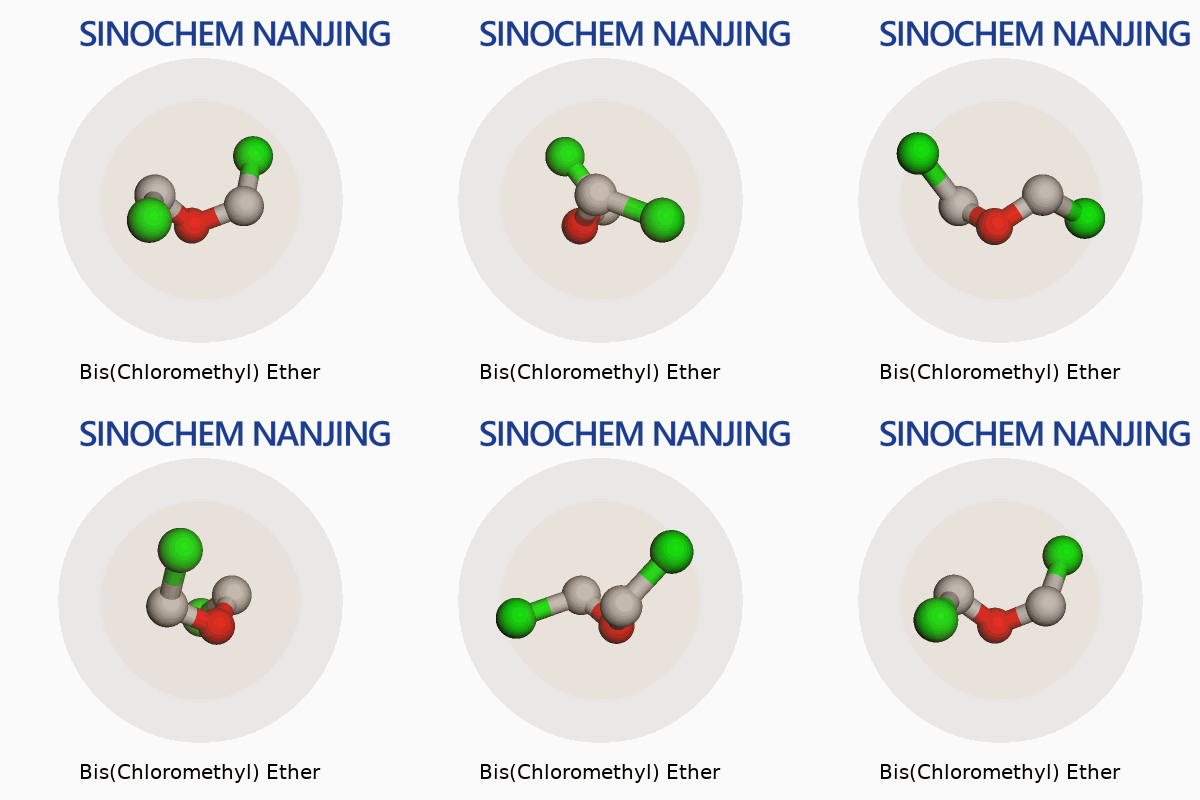
| Preferred IUPAC name | Bis(chloromethyl) ether |
| Other names |
BCME Bis(chloromethyl) ether Chloromethyl ether Dichlorodimethylether |
| Pronunciation | /ˌbɪsˌklɔːrəˈmɛθɪl ˈiːθər/ |
| Identifiers | |
| CAS Number | 107-30-2 |
| Beilstein Reference | 4 IV 444 |
| ChEBI | CHEBI:39485 |
| ChEMBL | CHEMBL43044 |
| ChemSpider | 21148 |
| DrugBank | DB14642 |
| ECHA InfoCard | 100.004.175 |
| EC Number | 207-802-5 |
| Gmelin Reference | 80511 |
| KEGG | C19161 |
| MeSH | D001672 |
| PubChem CID | 8054 |
| RTECS number | KN0350000 |
| UNII | WB8FW0DX9P |
| UN number | UN1887 |
| CompTox Dashboard (EPA) | DTXSID2020733 |
| Properties | |
| Chemical formula | C2H4Cl2O |
| Molar mass | 109.98 g/mol |
| Appearance | Colorless liquid |
| Odor | Unpleasant, suffocating odor |
| Density | 1.188 g/mL at 25 °C |
| Solubility in water | Decomposes |
| log P | 1.11 |
| Vapor pressure | 1 mmHg (20 °C) |
| Acidity (pKa) | pKa ≈ -4.21 |
| Magnetic susceptibility (χ) | -9.2×10^-6 cm³/mol |
| Refractive index (nD) | 1.4485 |
| Viscosity | 2.15 mPa·s (25 °C) |
| Dipole moment | 1.37 D |
| Thermochemistry | |
| Std molar entropy (S⦵298) | 333.6 J·mol⁻¹·K⁻¹ |
| Std enthalpy of formation (ΔfH⦵298) | -85.6 kJ/mol |
| Std enthalpy of combustion (ΔcH⦵298) | -684.6 kJ/mol |
| Pharmacology | |
| ATC code | R60 |
| Hazards | |
| Main hazards | Cancer hazard. May cause cancer. Causes severe respiratory tract, skin, and eye burns. Toxic if inhaled. |
| GHS labelling | GHS02, GHS05, GHS06, GHS08 |
| Pictograms | GHS06,GHS08 |
| Signal word | Danger |
| Hazard statements | H300 + H310 + H330: Fatal if swallowed, in contact with skin or if inhaled. H350: May cause cancer. H314: Causes severe skin burns and eye damage. |
| Precautionary statements | P260, P261, P262, P264, P271, P280, P285, P301+P310, P303+P361+P353, P304+P340, P305+P351+P338, P308+P313, P320, P330, P361+P364, P363, P405, P501 |
| NFPA 704 (fire diamond) | 4-3-2-W |
| Flash point | 10 °C |
| Autoignition temperature | 500°C |
| Explosive limits | 3.5–14% (in air) |
| Lethal dose or concentration | LD50 oral rat 20 mg/kg |
| LD50 (median dose) | LD50 (median dose): 12 mg/kg (rat, oral) |
| NIOSH | KN0350000 |
| PEL (Permissible) | PEL = "0.001 ppm (2.7 µg/m³) as an 8-hour TWA |
| IDLH (Immediate danger) | 1 ppm |
| Related compounds | |
| Related compounds |
Dimethoxyethane Bis(chloromethyl) sulfone Bis(chloromethyl) ketone Bis(bromomethyl) ether |



