Bis(2-Ethylhexyl) Phosphate: An Editorial Look at Its Journey, Use, and Where It’s Headed
Historical Development
People who work with chemicals know that many substances stick around for decades without much attention. Bis(2-Ethylhexyl) Phosphate, often called BEHP, landed on the scene a little after World War II. Industrial chemists were searching for solutions in lubricants and metalworking fluids, and BEHP brought a set of properties that were hard to ignore. The molecule’s backbone, based on phosphoric acid esterified with 2-ethylhexanol, proved versatile in a world that was opening up to mass production, plastics, and specialty additives. Over time, its use spread from Europe to North America and then Asia, tagging along with the expansion of plastics, metal treatment, and extractive metallurgies.
Product Overview
BEHP’s story is tied to the evolution of specialty chemicals in the twentieth century. Unlike straight-chain esters or other simple phosphate derivatives, the branched structure of BEHP offers a blend of solubility and thermal stability. Many industry workers have relied on it in applications as varied as lubricative additives, flame retardants, and plasticizers. That “utility glue” character helped it withstand the constant pressure from regulatory agencies and push for greener, less persistent chemicals. Its broad adoption can be traced back to its reliability in industrial settings and the relatively lower volatility compared to alternatives.
Physical & Chemical Properties
BEHP appears as a colorless to pale yellow, oily liquid, carrying a mild odor you’d expect from long-chain organophosphates. It’s denser than water and doesn’t dissolve in it, sitting instead in non-polar solvents where it moves through mixtures without fuss. The phosphate group lends it a degree of flame resistance, and its thermal stability opens the door to use in high-temperature applications where stability counts for more than convenience. From my time in industrial labs, the slick and persistent nature of BEHP makes it popular in environments where evaporation or degradation is a constant headache. Its boiling point sits high while its vapor pressure runs low, a dream for anyone trying to manage volatile losses or control long-run processes without constant top-offs.
Technical Specifications & Labeling
Chemists and supply managers have long had to navigate the regulatory patchwork that surrounds industrial chemicals. BEHP’s label typically includes CAS number 298-07-7, and a variety of hazard warnings linked to skin or eye irritation. Good labeling gives process teams clear directions about compatible materials, storage temperatures, and safety equipment. Labels also draw attention to purity – even small shifts in acid content or water levels can change how BEHP performs in processes. That’s no small thing in sectors like metal finishing or extractive industries where consistent quality is non-negotiable. Over the years, regulations have forced updates to hazard statements and pictograms, especially for shipment across borders.
Preparation Method
Most processes rely on esterification, a simple-sounding reaction of phosphoric acid with 2-ethylhexanol under controlled conditions. The branching on the alcohol side helps with flexibility, making the process a balancing act between heat, catalysts, and water removal. Every plant I’ve seen that makes these esters leans hard on dehydrators and reactors that can reach and hold precise temperatures for hours. The byproduct, water, needs to be removed or managed, or the reaction stalls. Some producers stick with batch processing, others push for continuous reactors, but the basics remain the same: careful measurement, precise heat, and lots of distillation.
Chemical Reactions & Modifications
BEHP doesn’t tend to react rapidly unless pushed. That makes it valuable in scenarios where stability matters. Still, strong bases and acids will break it down, cleaving off the ester groups and releasing the alcohol. Modified forms exist, many tailored for compatibility with specific polymers or to change the viscosity profile in lubricants. You won’t find many chemical plants swapping in BEHP for high-reactivity jobs – instead, it acts as a reliable, steady performer, sometimes serving as a backbone for further modification to build more complex organophosphate mixtures.
Synonyms & Product Names
BEHP has cycled through several synonyms during its industrial lifespan. Chemists look for “Di(2-ethylhexyl) phosphate,” “Phosphoric acid, bis(2-ethylhexyl) ester,” or other name variants in technical catalogs and import-export documents. Older literature sometimes lumps it in with other phosphate esters, a source of confusion for newcomers. Real-world teams learn to scan for CAS numbers and cross-reference synonyms, especially when spec sheets or drum labels use region-specific trade names.
Safety & Operational Standards
Working with BEHP calls for more than gloves and goggles. The liquid’s tendency to linger on surfaces means plant managers have to stay vigilant about spill containment and clean-up. BEHP can irritate skin and eyes, so safe handling means investing in decent training and personal protective equipment. Companies operating in Europe face REACH regulations, with North American plants turning to OSHA guidance for workplace controls. Air monitoring can come up for debate, but the real frontline is keeping eyes and skin clear of undiluted product. Years ago, we set up controlled storage that involved everything from secondary containment to regular spill drills. These precautions cost time and money, but they set a baseline for any chemical that can pose health risks over long jobs and repeated contact.
Application Area
BEHP finds work almost everywhere heavy industry and specialty chemistry cross paths. The oil and gas sector puts it to use in extraction chemistry, thanks to its ability to modify phase behavior and help separate valuable metals. Metalworking fluids get a boost in lubrication, where BEHP helps extend machine life and reduce tool wear. Polyvinyl chloride (PVC) production benefits from BEHP’s role as a flame retardant and plasticizer, shaping everything from cable coatings to flooring. It even sneaks into fire-resistant hydraulic fluids, chosen for properties that outlast simple mineral oils. Over the years, demand has flowed and ebbed as regulations, raw material pricing, and new alternatives have entered the market, but BEHP doesn’t vanish completely – it adapts to changing technical requirements and regulatory environments.
Research & Development
R&D teams have explored BEHP’s potential far outside its founding uses. Work continues on ways to fine-tune its chemical structure for better compatibility with biopolymers and to increase its environmental breakdown rate. Some university labs keep looking at blends that mix BEHP with other phosphate esters, searching for combinations that offer the best friction reduction or fire suppression without increasing toxicity. Academic attention often zeroes in on substitution mechanisms, replacement options, and the environmental fate of BEHP in industrial effluents. Industry R&D pushes for safer, more sustainable production paths, aiming to reduce energy and water usage. The race between regulatory restrictions and demand for robust additives keeps the research active and, at times, contentious.
Toxicity Research
Long-term studies around BEHP have produced conflicting results. Toxicology work shows that acute exposure brings mostly mild skin and eye irritation, though ingestion or chronic inhalation raises more serious questions. Animal studies point to organ impacts at very high doses, sparking calls for more thorough review of workplace exposure levels. As with many organophosphates, the concern doesn’t stop at the factory gate – there’s ongoing debate about persistence in soil and water, plus risks to aquatic life. Regulatory filings often pull data from animal studies and worker health surveys, giving a patchwork view of the overall risks. In my experience, the smart play is to err on the side of caution, especially when new evidence or process changes tip the balance toward tighter safety margins.
Future Prospects
BEHP doesn’t look likely to fade out any time soon. Global demand trends keep shifting, particularly as Asia’s manufacturing footprint grows. The regulatory landscape keeps nudging companies toward greener, more biodegradable alternatives, but BEHP’s core performance makes it tough to fully replace in certain industries. Expect ongoing debates about lowering exposure limits and expanding research on breakdown products. Companies seeking to keep BEHP in their toolkit must invest in cleaner production routes, better containment, and robust employee training. Research into less persistent, less toxic analogs is likely to ramp up, spurred on by both policy shifts and pressure from industry clients seeking to future-proof their processes.
What is Bis(2-Ethylhexyl) Phosphate used for?
What Bis(2-Ethylhexyl) Phosphate Actually Does
Bis(2-Ethylhexyl) phosphate, known by its short name DEHP, shows up in a bunch of industrial workplaces and labs. Most folks never hear about it unless they spend time around technical or chemical environments. DEHP isn’t the same as the much-debated phthalate plasticizer; this phosphate compound pops up in places that need chemical stability and special separation processes.
Where Factories Use It
Metalworking facilities rely on DEHP. Workers there see it as a separating agent in the production of rare earth metals like uranium and thorium. Extracting those metals from ores and scrap takes careful chemistry, and DEHP acts as a solvent in the liquid-liquid extraction method. Without it, pulling out certain metals would take longer and burn more resources. The product also helps keep equipment running smooth by preventing buildup from harsh chemical residues. Chemists in the know trust DEHP for these steady, repeatable results.
Role in Fire Protection
Another side of DEHP shows up in hydraulic fluids and lubricants, especially those rated for use around open flames or high temperatures. DEHP gives these fluids much better fire resistance. In aviation, mining, and heavy manufacturing, a fire-resistant lubricant or fluid means fewer disasters down the line. My father spent years servicing mining equipment and often pointed out which fluids were safer because of additives like this.
Use in Laboratory Science
The world of chemistry research often finds a place for DEHP. Analysts rely on its ability to bind with metal ions and remove them from complex samples. Environmental testing labs test rivers for heavy metals, while material scientists break down alloys to see their parts. I interned at a university lab that measured radioactive waste in water, and their standard process leaned heavily on DEHP. It cut through guesswork and made certain toxic elements stand out in samples.
Health and Safety Questions
Almost every industrial substance comes with warnings, and DEHP fits the bill. It can cause skin and eye irritation. Prolonged exposure isn’t something to brush off, according to information from health and safety organizations. Workers stick to gloves and goggles and keep good ventilation. Companies obey strict usage limits set by agencies like OSHA and the EPA, so exposure levels in American plants stays low. Europe and Asia follow their own guidelines. Even a small splash or sniff could leave someone feeling rough, so safety rules earn respect.
Finding a Balance
The tough part comes with weighing DEHP’s usefulness against potential risks. Factories and labs that count on this compound often explore substitutes, but not all alternatives meet the same standards for safety, price, or performance. Some newer extraction agents offer a safer profile, yet may cost more or act slower. Decision-makers in science and industry keep eyes open for the next breakthrough, while training people to stay safe around older, reliable options like DEHP.
Better Awareness, Smarter Choices
Information on chemicals like DEHP matters outside just technical fields. Shoppers concerned about environmental impacts want companies to use less hazardous chemicals across the board. Continued research into safer extraction agents and lubricants gives hope for a cleaner, less toxic world. In the meantime, transparency and clear labeling allow everyone—from plant workers to concerned residents living downwind—to understand what chemicals are present in their environment. Choices made in the lab and factory can ripple outward in ways you don’t always see at first glance.
Is Bis(2-Ethylhexyl) Phosphate hazardous to health?
It Helps to Know What's in the Drum
Workplaces from metal processing plants to fertilizer warehouses sometimes store large blue drums with labels mysterious to most people who pass them. Bis(2-Ethylhexyl) Phosphate, or DEHPA, is one of those mouthfuls that pops up in chemical supply rooms or production lines. Used as a solvent, plasticizer, and extractant, it helps industries separate metals or soften plastics. Most folks outside of chemistry class don't bump into DEHPA at the corner store, but workers in factories that handle paints or mining reagents might see it up close.
What Science Says About Its Risks
Start by looking at studies and safety sheets. Animal research gives some hints. Rats exposed to DEHPA by skin or mouth showed organ irritation after heavy, repeated doses. In one study, high doses gave rats liver and kidney damage. Human data stay limited, but handling DEHPA in a poorly ventilated workspace could mean breathing in vapors or skin contact. The U.S. National Library of Medicine classifies it as hazardous: it can irritate eyes, lungs, and skin. Chronic exposure may tangle with organ function over time. The German MAK Commission rated it as possibly damaging to fertility in animal testing.
Several countries lump DEHPA with other strong acids and heavy solvents: not quite as extreme as the famous bad actor chemicals but far from benign. Factory workers hosing out tanks or mixing batteries need to keep gloves on and eyes protected. No one wants a chemical burn or to start coughing from an invisible vapor in the air. Without proper gear, spills and splashes add up, creating unexpected health headaches later.
Why Regulation and Care Matter
Years spent around chemical plants teach lessons the hard way. Not all clear liquids that smell a bit odd are equally risky, but ignoring chemical safety can lead to bitter stories. Young workers who figure they’re tough sometimes skip gloves cleaning a line. Then their hands start itching, or they rub their eyes and get a rude surprise. Supervisors who’ve been through enough chemical safety walkthroughs know to reach for extra goggles and check that fans hum the whole shift.
Regulators do set limits for exposure and require clear labeling. The EPA and similar groups track spills and push for closed systems or better ventilation. Research, though, lags behind with many industrial chemicals, so it pays to lean on the cautious side, not only for your own health, but for the crew working years after you. I remember more than one old-timer warning new hires that the health issues showing up in their forties often traced back to the days before “PPE” was more than advice. Smart companies run regular training, enforce protective clothing, and monitor air quality near DEHPA tanks.
Potential Solutions and Steps Forward
Companies handling DEHPA have several options. Cutting down open handling, improving fume extraction, and steady training all play their part. Swapping DEHPA for safer substitutes works for some processes, but not all. Workers with up-to-date gloves, aprons, and splash-proof goggles cut their risk dramatically. Medical checkups look for early signs of overexposure so things don’t get worse.
People outside industry probably cross paths with DEHPA less often than they worry about. Anyone working where it's found, though, deserves straight talk about how to keep out of trouble. It’s not panic time, but it’s not the stuff to treat carelessly either.
References
- National Institute for Occupational Safety and Health (NIOSH). “Bis(2-ethylhexyl) phosphate: Chemical Database.”
- U.S. Environmental Protection Agency (EPA): Risk assessment documents and guidelines for workplace safety.
- German MAK Commission. “List of MAK and BAT Values.”
What is the chemical formula of Bis(2-Ethylhexyl) Phosphate?
Understanding Its Chemical Formula
Bis(2-Ethylhexyl) Phosphate, known to many folks working with specialty chemicals, comes with the formula C16H35O4P. You’ll find the core of this molecule centers on a phosphate group, holding onto two 2-ethylhexyl chains. Each of those chains gives extra length and flexibility, which means the molecule steers clear of water but feels right at home mixing into oils and plasticizers.
Why This Compound Matters
I’ve worked in a lab handling hundreds of industrial materials, and Bis(2-Ethylhexyl) Phosphate stands out for good reason. People use it as a plasticizer, softening stiff plastics like PVC, and as a flame retardant. It also helps process metals, thanks to its strong chelating action. Its use stretches into areas like agriculture, metal extraction, and even electronics manufacturing, so its presence goes far beyond just test tubes and safety goggles.
Health and Environmental Considerations
Reality sets in quickly with chemicals that move through so many industries. I remember colleagues handling Bis(2-Ethylhexyl) Phosphate in a poorly ventilated room. That led to headaches, skin irritation, and worries about long-term exposure. A study by the European Chemicals Agency points to moderate toxicity, especially with chronic or repeated exposure. There’s also an environmental footprint to keep an eye on. When washed into rivers, its low solubility in water means it tends to linger in sediments, influencing aquatic life and water quality over time.
Industry Shifts and Safer Practices
Facts shape better habits. Regulations have tightened over the years, and both seasoned chemists and new technicians must follow strict labeling and personal protection measures. Gloves and fume hoods aren’t negotiable anymore. There’s also a push to swap out Bis(2-Ethylhexyl) Phosphate with less persistent alternatives, especially in consumer products that could wind up in the hands of children or vulnerable populations.
Possible Ways Forward
Real change takes both practical adjustments and broader public awareness. Research into more biodegradable phosphate esters promises some relief. Some companies already test new blends that keep performance but shed the toxic baggage. Wastewater treatment facilities have also started tailored processes to capture and break down organic phosphates before they reach local streams or groundwater. In my experience, the most progress comes from companies working directly with suppliers and regulators to set higher safety standards instead of waiting for incidents to spark action.
The Value of Sharing Chemical Knowledge
For anyone working with industrial compounds, memorizing a formula like C16H35O4P tells only part of the story. Learning about how it shapes workplace routines, environmental health, and product safety carries equal weight. Openness among scientists, plant managers, and regulators goes a long way toward safer practices and smarter policy. When people see chemical information in day-to-day context, the conversations move from abstract risks to real solutions everyone can support.
How should Bis(2-Ethylhexyl) Phosphate be stored?
Understanding the Stakes
Storing chemicals always carries a bit of risk, especially when those chemicals show up in industry as often as Bis(2-Ethylhexyl) Phosphate. Plenty of folks in manufacturing, labs, and even some universities work with this compound. Getting storage wrong can turn a simple day on the job into a real problem. A leaky drum or accidental exposure can endanger people, harm equipment, and spark regulatory headaches.
Common Mistakes
Years of working around different labs and plants have revealed the same careless patterns. People leave containers uncapped, or store them next to heat sources. Some rely on aging drums with damaged seals. Fumes escape, the liquid degrades, labels fade. One time I watched a drum left in a hallway beneath a hot vent; the whole area filled with a weird smell, and we spent half a shift scrambling to clean it up and air things out.
Simple Rules That Work
Keep it cool, keep it dry. This chemical shows more stability when temperatures stay in the lower range — think between 15°C and 25°C. I remember a colleague who forgot this in an old storeroom with broken AC. By late summer, the material had discolored. It didn’t just look bad; analysis found signs of breakdown. Storing Bis(2-Ethylhexyl) Phosphate away from direct sunlight or active machinery keeps quality up, and accidents down.
Containers matter more than most think. Often, folks pour the liquid into whatever is around. This stuff calls for sealed, corrosion-resistant drums or bottles, made from materials like HDPE or stainless steel. Poor choices, like thin metal, can corrode over time and leak. Using good containers with intact lids makes spills and vapor escape less likely. Inspect containers for cracks, dents, and especially for dry, cracked seals.
Label everything, every time. Chemical names fade or smudge on old labels, so use permanent markers and proper labeling tape. Include hazard information with clear symbols. I have seen emergency teams waste precious minutes deciphering a smudged label. In a real crisis, those few minutes count.
Keep It Out of Reach and Separate
This chemical needs distance from strong acids, bases, and oxidizers. In shared spaces, poor segregation can bring nasty reactions. Once, at a busy warehouse, someone stacked heavy acid drums next to Bis(2-Ethylhexyl) Phosphate — the leak corroded shelving and ruined thousands in supplies. Simple shelving with dividers and clear signage cuts down on careless mixing, protecting gear and people alike.
Access control also plays a role. Staff with proper training handle chemicals more carefully. Locking up chemicals with a logbook keeps track of who opens each drum and when. Inventory tracking also helps spot missing containers or leaks before problems grow.
Ventilation Isn’t Optional
Poor airflow leads to fumes, which cause irritation or worse. I saw an old storeroom closed up for a long weekend; returning staff got headaches from the stench. Ventilated cabinets or rooms with exhaust fans change the game. A small investment in fans pays back by protecting lungs, eyes, and everyone’s peace of mind.
Staying Compliant and Safe
Regulations back up all these points. The law gears its strict rules toward keeping people out of trouble, and inspectors still find the same storage mistakes over and over. Reading safety data sheets, providing eyewash stations, and running regular training can cut risk to nearly zero.
What are the safety precautions when handling Bis(2-Ethylhexyl) Phosphate?
Why Safety Precautions Matter With Chemicals
Working with industrial chemicals brings responsibility. Bis(2-Ethylhexyl) phosphate, used in processes such as metal extraction and as a plasticizer, deserves attention. I spent a few years in a community where a small plant dealt with this substance. Stories about minor spills and carelessness weren’t rare, and every incident served as a reality check. Even routine handling tasks carry risk if proper safety steps get skipped.
Recognizing The Risks
This liquid can irritate eyes and skin. Some people shrug off warnings, thinking minor irritation means little. Over time, repeated exposure brings more than a rash—it can trigger allergic reactions and, in some cases, breathing problems. Inhalation of vapors or skin contact over long shifts puts workers at risk for chronic issues.
No one wants to end up in the emergency room because of assumptions or shortcuts. Data from the CDC and EPA highlight that industrial chemicals like this can be absorbed through skin and do not always have immediate symptoms. Years back, a friend dismissed a minor spill. By lunchtime, itching and swelling started. He needed medical help for chemical burns. Stories like that underscore the importance of respecting these warnings.
Personal Protective Equipment: The First Line of Defense
Goggles, gloves—nitrile or neoprene, not just simple ones—plus long-sleeve clothing give a strong barrier. Face shields work when there’s splash risk. In my experience, comfort and availability of gear make a difference. Cracked goggles or cheap gloves are not worth cutting costs for. Employers have a legal obligation, but individual workers take the real risk home with them.
A friend once got away with thin latex gloves until he noticed a tingling feeling. That was the last time he risked it. It pays to check that gear before starting a shift. Make sure to change gloves if there’s any sign of degradation or tears.
Ventilation and Safe Work Practices
Breathing in chemical vapors day after day leads to long-term health problems. Good ventilation, such as local exhaust systems, helps keep air safe. Just cracking a window doesn’t cut it. In facilities I’ve visited, air monitoring and regular system checks make a measurable difference. If vapor concentrations climb, masks with appropriate chemical cartridges add an extra layer of protection.
Labeling containers clearly and storing them away from incompatible chemicals helps avoid dangerous reactions. Don’t forget about spill control: every workplace should store spill kits nearby and keep emergency showers and eyewash stations accessible—not locked away or blocked by boxes.
Training and Culture Go Further Than Warnings
People respond best to hands-on training and clear guidance from experienced coworkers. Posters and guides may help, but mentorship turns rules into habits. In places where safety culture runs deep, incidents drop. Workers who feel comfortable speaking up about unsafe practices protect everyone.
Regular drills, open communication, and a willingness to learn from small mistakes prevent bigger accidents down the line. Safety does not belong to managers alone—everyone shares the responsibility.
Real Solutions for a Safer Workplace
Switching to less hazardous substances where possible limits exposure from the start. Automated handling and enclosed systems mean fewer spills and less chance for direct contact. Management support for up-to-date PPE, regular air monitoring, and faster response to reported problems all make a noticeable difference.
Taking safety seriously with Bis(2-Ethylhexyl) phosphate has real benefits: fewer health scares, more trust between workers and supervisors, and a stronger sense of security that reaches home at the end of the day.
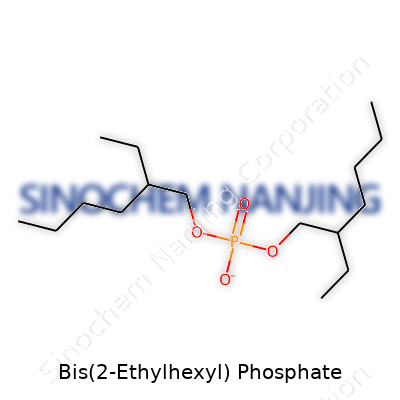
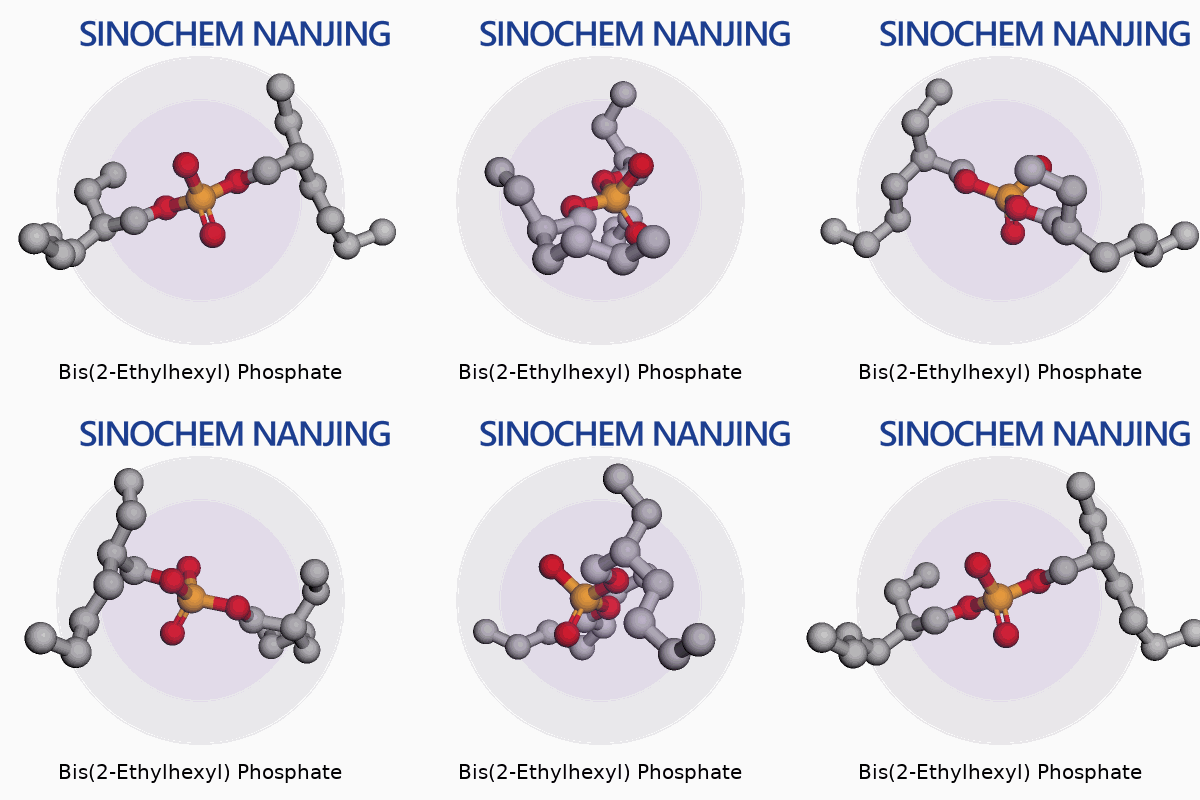
| Names | |
| Preferred IUPAC name | bis(2-ethylhexyl) hydrogen phosphate |
| Other names |
Phosphoric acid bis(2-ethylhexyl) ester Di(2-ethylhexyl) phosphate DEHPA Bis(2-ethylhexyl) hydrogen phosphate Bis(2-ethylhexyl)phosphoric acid |
| Pronunciation | /ˌbɪs.tuːˌiːθ.ɪlˈhɛk.sɪl fəˈsfeɪt/ |
| Identifiers | |
| CAS Number | 298-07-7 |
| Beilstein Reference | 2943685 |
| ChEBI | CHEBI:74955 |
| ChEMBL | CHEMBL1545674 |
| ChemSpider | 23245 |
| DrugBank | DB14005 |
| ECHA InfoCard | 100.013.231 |
| EC Number | 204-214-7 |
| Gmelin Reference | 79035 |
| KEGG | C14422 |
| MeSH | D004209 |
| PubChem CID | 3034715 |
| RTECS number | TB6125000 |
| UNII | P9RQ4DPY6D |
| UN number | UN3082 |
| CompTox Dashboard (EPA) | DTXSID2020708 |
| Properties | |
| Chemical formula | C16H35O4P |
| Molar mass | 410.6 g/mol |
| Appearance | Colorless to pale yellow oily liquid |
| Odor | Slight ester odor |
| Density | 0.97 g/cm3 |
| Solubility in water | Insoluble |
| log P | 6.4 |
| Vapor pressure | <0.01 mmHg (20°C) |
| Acidity (pKa) | 1.5 |
| Basicity (pKb) | 12.1 |
| Magnetic susceptibility (χ) | -6.15 × 10⁻⁶ cm³/mol |
| Refractive index (nD) | 1.444 |
| Viscosity | 65 – 85 cP (25 °C) |
| Dipole moment | 2.95 D |
| Thermochemistry | |
| Std molar entropy (S⦵298) | 870.6 J·mol⁻¹·K⁻¹ |
| Std enthalpy of formation (ΔfH⦵298) | -1467.2 kJ/mol |
| Std enthalpy of combustion (ΔcH⦵298) | -12425.6 kJ/mol |
| Hazards | |
| Main hazards | Harmful if swallowed, causes skin irritation, causes serious eye irritation. |
| GHS labelling | GHS07, GHS09 |
| Pictograms | GHS05,GHS07 |
| Signal word | Warning |
| Hazard statements | H302, H315, H319 |
| Precautionary statements | P280, P305+P351+P338, P310, P501 |
| Flash point | Flash point: 204 °C (399.2 °F) (Closed cup) |
| Autoignition temperature | 355 °C |
| Lethal dose or concentration | LD50 (oral, rat): 3000 mg/kg |
| LD50 (median dose) | LD50 (median dose) = 3000 mg/kg (Rat, oral) |
| NIOSH | TC8750000 |
| PEL (Permissible) | PEL (Permissible): Not established |
| REL (Recommended) | 0.3 mg/m³ |
| Related compounds | |
| Related compounds |
Bis(2-Ethylhexyl) Phthalate Tris(2-Ethylhexyl) Phosphate Mono(2-Ethylhexyl) Phosphate Dioctyl Phosphate Bis(2-Ethylhexyl) Adipate |



