Beryllium Sulfate: Looking at an Overlooked Compound
Historical Development
Stories of chemicals often follow a predictable path. A scientist in a dim lab, glassware clinking, tries something new and, through a mix of luck, patience, and curiosity, a new substance shows up. Beryllium sulfate did not spring from a single discovery but grew out of the nineteenth-century hunt for new elements and compounds. Friedrich Wöhler, during his broader studies of beryllium salts, paved the way for the early synthesis of this compound. In university chemistry lectures, beryllium always seemed less glamorous compared to gold or platinum, but the effort over generations to better understand its compounds, driven by curiosity and, frankly, commercial demand for niche uses, illustrates a deeper human urge to explore the unknown corners of chemistry. This compound traveled from a period of mere scientific curiosity into roles underpinning modern industrial processes and research.
Product Overview
Beryllium sulfate usually appears in its tetrahydrate form, a white, crystalline solid. Folks who work in analytical labs or prepare standards for specialized reactions have probably handled it at least once. In practice, the material lies in a dusty corner of the vast world of inorganic chemicals. Most people won't find it on a shelf at the hardware store. Instead, its applications mainly attract professionals working with specialty ceramics, nuclear technology, and occasional analytical chemistry. Its commercial routes rarely brush against mainstream demand, so supply chains remain small and, at times, unpredictable.
Physical and Chemical Properties
This compound dissolves easily in water, setting it apart from beryllium oxide, which isn't so cooperative with solubility. Its crystalline structure, colorless or faintly white, betrays little about its real character. Like other beryllium compounds, it brings an unpleasant kick—both toxicologically and in its tendency toward hydrolysis. Chemical reactivity rides on its acid-base character, shifting into more complex ions depending on the pH of the local environment. In the lab, the compound will not announce itself through smell or dramatic color change, so careful handling becomes a rule not just for good practice but for personal safety.
Technical Specifications and Labeling
Chemicals in this class typically aren’t sold off the shelf with bright labels or consumer-friendly slogans. Regulatory guidelines for labeling stress hazard communication. The United States, under OSHA’s HazCom standard, demands that beryllium compounds carry clear warnings about health risks, particularly respiratory and dermal exposure dangers. Specifications often include purity (usually above 98 percent for research-grade product), water content, and minimal presence of other metal ions. These requirements tie directly into real-world safety. If you've ever worked with beryllium sulfate, you know its dust spreads easily and inhalation simply isn't an option for anyone with respect for their lungs.
Preparation Method
Creating beryllium sulfate looks straightforward on paper but deserves respect for its occupational hazards. Laboratory production often begins with beryllium oxide or hydroxide. Treating these with sulfuric acid under controlled temperatures yields the desired sulfate. Scaling this up involves similar chemistry but invites risk at every stage, especially given beryllium's notorious toxicity. I've watched teams suit up like they were handling radioactive waste, all to run a synthesis that, to an outsider, might seem mundane. Such levels of protection aren't an overreaction; they're a practical answer to the harsh lessons learned from earlier, careless approaches to beryllium.
Chemical Reactions and Modifications
Chemists familiar with group 2 elements expect some standard behaviors, like forming sulfate salts. But beryllium, with its smaller ionic radius and unique electronic structure, refuses to behave predictably. Far from being just another ionic compound, beryllium sulfate displays coordination diversity—taking up water molecules and creating discrete tetrahedral complexes. It also participates in hydrolysis reactions to produce acidic solutions. Mixes with alkaline agents can create insoluble beryllium hydroxide, which further emphasizes the need to understand not just how the chemical works in isolation, but what it does when spilled, mixed, or released under odd conditions. I’ve seen more than one experiment go sideways because someone underestimated the rigors of controlling pH with beryllium salts.
Synonyms and Product Names
Researchers, safety officials, and suppliers may use a handful of names for beryllium sulfate, depending on regional, regulatory, or technical circumstances. From a scientific perspective, most people just call it "beryllium sulfate," sometimes specifying the hydrate—tetrahydrate being the most common. Other designations include "beryllium(II) sulfate" or references to its formula: BeSO4 or BeSO4 · 4H2O. Confusion sometimes slips in when suppliers list legacy names or misspellings. The importance of consistency in terminology may not bother a casual reader, but precision matters when communicating in labs or ordering critical chemicals for high-stakes research.
Safety and Operational Standards
Few substances raise flags in a laboratory quite like beryllium compounds. Chronic exposure can trigger sensitization, leading to berylliosis—a debilitating lung disease I've heard about from colleagues working in advanced aerospace settings. Even minuscule levels in dust or fumes can introduce risk, leading to tough safety protocols—local exhaust, full respirators, gloves, and meticulous decontamination. Facilities using beryllium sulfate train staff regularly, and disposal routes remain closely managed to avoid contamination of waste streams. In many places, legal exposure limits hover in the nanogram range. The need for airtight procedures serves as a reminder that in chemistry, the most dangerous substances do not always come with a warning smell or color.
Application Area
Practical uses for beryllium sulfate remain pretty limited compared to mega-ton commodities like sodium chloride or potassium nitrate. It pops up in specialty chemical synthesis, serving as a precursor for beryllium oxide ceramics—valued for their thermal and electrical properties. Nuclear reactors and advanced electronics sometimes rely on beryllium compounds for specific engineering challenges, such as neutron moderation or high-stability insulation. Occasionally, it sneaks into the analytical chemistry world, helping to calibrate or standardize measurements of other beryllium species. Researchers working on rare earth separations and high-efficiency materials engineering also show an uneven but persistent interest in beryllium sulfate.
Research and Development
Academic papers steady themselves around the question of how beryllium compounds interact with biological environments, materials, and industrial processes. Research in coordination chemistry, for example, uses beryllium sulfate as a model to understand metal–ligand interactions, which ripple out into fields as far-flung as bioinorganic chemistry and environmental science. I've watched teams at conferences seriously debate the compound’s relevance in nuclear materials safety, especially since regulatory agencies keep tightening exposure rules to protect workers. Material scientists check what happens when beryllium sulfate interacts with advanced polymers or new ceramic blends. This tireless curiosity reflects a larger drive—always asking, “Can we turn this obscure, dangerous salt into a new solution?”
Toxicity Research
No responsible commentary dodges the elephant in the room. Beryllium’s legacy in industrial health tells a tale of silent harm. Chronic beryllium disease, a lung-damaging immune reaction, has haunted workplaces since the 1940s. Modern studies still probe the mechanisms behind sensitization. Lab researchers now run regular screenings if exposure risk exists. Animal testing and in vitro assays consistently show beryllium sulfate can spark inflammatory responses, giving regulators plenty of reason to hold the line on exposure. I've seen well-designed toxicity studies steer both law and lab practice. The point is always the same: risk outweighs convenience, and only institutions willing to invest in airtight controls should ever put this chemical to work.
Future Prospects
Innovators rarely walk away from difficult chemicals. Interest in beryllium sulfate now leans toward niche material science and advanced electronics, where its unique properties make a difference. Some teams try to work out safer handling technologies or engineer less toxic analogues that can do the same job with lower health costs. Environmental stewardship sits at the table now too, with researchers pushing for greener synthesis routes and smarter waste management. As regulations grow stricter, some foresee broader movement toward alternatives, but until a true substitute shows up, beryllium sulfate stays in the arsenal of those who can manage its hazards. In my view, its story reminds us that curiosity and responsibility must walk side by side—innovation never excuses inattention to human risk.
What are the main uses of Beryllium Sulfate?
Why Beryllium Sulfate Draws Attention
Beryllium sulfate isn’t the sort of chemical most folks hear about unless they’ve spent time in a lab or an industrial plant. It shows up in specialized circles, but its impact reaches farther than it gets credit for. The basic fact is, this compound serves as a building block in a handful of industries that depend on high-performance materials. As someone who has spent time researching specialty chemicals and their environmental impact, I’ve seen both the necessity and the risks tied up in using beryllium sulfate.
The Chemical’s Strongest Card: Creating Beryllium Metal and Alloys
One of the most important jobs for beryllium sulfate starts in the production of pure beryllium metal. Chemists convert beryllium sulfate into other forms—like beryllium hydroxide—so they can ultimately get strong, lightweight beryllium metal. This metal goes into aerospace tech, window parts for X-ray machines, and parts for nuclear reactors. Beryllium’s almost unbeatable strength for its weight makes it useful in satellites and aircraft guidance systems. You aren’t likely to touch this metal every day, but the planes in the sky and satellites above depend on materials that start with beryllium sulfate.
Electronics and the Push for Miniaturization
Beryllium compounds support the electronics world as well. Think of cell phones, computers, radar, and advanced sensors. Because beryllium solutions resist heat, engineers can depend on parts that won’t warp or crack under pressure. As the world keeps shrinking electronics, companies look for metals and chemicals that keep up with the demand. Beryllium sulfate plays its part quietly behind the scenes, giving the tech industry more options and better materials than they’d have without it.
Tough Lessons on Safety and Health
Beryllium brings risks along with benefits. Exposure to dust or fumes containing beryllium compounds can cause health trouble—especially if workers breathe it in over time. Chronic beryllium disease isn’t just a far-off worry. As regulatory agencies like OSHA and NIOSH outline, even modern manufacturing plants need strict controls. Habits like wet processing, good ventilation, and regular medical screening offer the most effective protection. In my experience, the companies that take these steps seriously usually avoid the worst outcomes.
Laboratory and Analytical Chemistry
Beryllium sulfate shows up in labs as a source of beryllium ions for chemical analysis and research. Lab scientists choose it for its solubility and reliable behavior in solution. While research work uses only small batches, strict safety rules matter just as much in academic labs as in big factories. My old chemistry professor drilled into us the need for careful handling and complete respect for every compound, no matter how familiar it might seem.
Managing the Environmental Side
Like all industrial chemicals, beryllium sulfate pushes people to think about waste and pollution. Effluent containing beryllium creates a risk for soil and water if companies don’t treat it right. Regulatory bodies demand close monitoring and responsible disposal, but rules only go so far. Building a safety-focused culture that values transparency often delivers better results. Consistent training, investment in modern filtration, and open reporting all reduce harm over time.
The Path Forward
Beryllium sulfate’s value comes with strings attached. Taking safety and stewardship seriously allows us to gain the benefits that high-tech industries need while keeping people and the environment protected. That kind of balance comes down to facts, not shortcuts or wishful thinking. As new tech demands smarter and safer approaches, there’s no room left for business as usual in the handling of compounds like beryllium sulfate.
Is Beryllium Sulfate toxic or hazardous?
Tricky Nature of Beryllium Compounds
It’s easy to overlook materials unless you’ve seen what they can do up close. In many labs and manufacturing setups, beryllium sulfate gets used for its unique properties in ceramics, electronics, and even some x-ray windows. Not much thought goes into the risks until you hear about someone developing a cough that never goes away or a rash that doesn’t heal. Beryllium isn’t some mysterious substance tucked away in obscure industries—it’s around and its hazards are real.
Beryllium Sulfate and the Human Body
Once beryllium sulfate touches skin, lungs, or even gets swallowed by mistake, it doesn’t play nice. The body recognizes beryllium as a threat, setting off an immune response that can go into overdrive. Inhaling dust or mist can trigger chronic beryllium disease—a slow, relentless respiratory illness. Some people only need brief exposure to develop problems, thanks to genetic sensitivity. Others might take years of low-contact before noticing symptoms. There’s no reliable threshold below which beryllium sulfate becomes completely safe; even tiny amounts can cause harm for someone with the wrong genetics.
What the Science Says
Teams at health agencies haven’t taken these risks lightly. The CDC and OSHA mark beryllium compounds as highly toxic, placing workplace limits far lower than what’s set for many metals. Animal studies confirm what doctors see in exposed workers—persistent inflammation, lung scarring, and immune-related breakdowns. Beryllium sulfate is often called a confirmed carcinogen, not because it’s expected to cause cancer in everyone, but because there’s enough human evidence that it can. Companies working with it must follow some of the most rigid respiratory and containment protocols in industry.
Where Problems Show Up
Hazards don’t only sit in factories with massive production lines. Machinists, researchers, and recycling workers all face exposure risks. Once, I visited a ceramics facility where workers wore disposable suits and full-face respirators, but one slip-up—a spill, a bag torn the wrong way—put the whole shift at risk. Cleanup crews didn’t always realize lingering dust could be as dangerous as direct handling. Downstream, contaminated work clothes have led to family members facing illness at home. No one expects to bring trouble back to their own kitchen, but it happens.
Minimizing Risk and Facing Reality
Strict regulations make a difference if enforced, but rules only go so far. Clear information about handling, personal protective gear, and medical monitoring shorten the path between exposure and treatment. Community outreach matters, not only for workers but for people living near plants that use or dump beryllium waste.
Finding safer substitutes won’t solve everything, but investment in alternative materials can cut future risks. Where beryllium’s unique traits prove hard to replace, companies need to invest as much in air filtration and good training as they do in new technology.
It’s not paranoia to ask if dust is properly controlled or if the emergency procedure gets a real drill more than once a year. Workers deserve straight answers and a workplace free from silent threats. Regulators and employers should keep conversations direct, not buried in technical jargon. Genuine transparency protects families and keeps confidence intact. Beryllium sulfate isn’t evil in itself—but its danger is real. Respecting it saves lives.
What is the chemical formula of Beryllium Sulfate?
Understanding What Makes Up Beryllium Sulfate
Beryllium sulfate doesn’t show up in most conversations or even chemistry classes unless someone is really peeling back the curtain on chemical compounds. For people working in research, industry, or in advanced science classes, it’s a little detail that keeps things moving forward. If you look at the atoms, beryllium (Be) pairs with a sulfate group (SO4), and balancing the charges gets you BeSO4. This isn’t just trivia for a test — it’s the starting line for handling the compound safely or using it for something that matters.
Why the Formula Matters
In a world where laboratory mistakes send ripples through research projects and industrial accidents cause safety nightmares, knowing what something is, starts with its formula. BeSO4 means one part beryllium, one part sulfate. Getting those proportions wrong doesn’t just change the paperwork; it changes the properties, the hazards, and the way the chemical plays with others. That kind of mistake can derail an experiment, waste money, or put workers in harm’s way.
Health and Safety Concerns
I spent a summer working with engineers who handled chemicals daily, and the first thing drilled into our heads was respect for every substance on the bench. Beryllium compounds can be especially tricky. Tiny amounts of beryllium dust can trigger breathing problems because some people develop a chronic immune reaction to even minimal exposure. With BeSO4, that risk remains. The formula is more than a scientific label—it flags a material that needs thoughtful storage, handling with gloves, and quick clean-up after any spill. Skipping those steps, injuries follow. I’ve seen a veteran technician pause before pouring anything unfamiliar, double-check the label, and then glance at the safety data — just in case.
Where Beryllium Sulfate Turns Up
Outside the bench or the blackboard, BeSO4 doesn’t show up in a bottle at your hardware store. It carries real weight in the electronics world. People rely on its properties for manufacturing specific ceramics and specialty glass, often for high-tech equipment or sensors. That’s where precision pays off. One off-kilter batch throws out the whole process, because the formula shapes what the final material can do. Here, accuracy in the recipe isn’t a formality; it’s the difference between a tool that works and a product that fails.
Responsible Chemistry and Looking Forward
Making sure every chemist, student, and manufacturer knows the right formula isn’t just about passing exams. It cuts down on mistakes, protects health, and saves time. In the labs I’ve visited, the best teams keep cheat-sheets at eye level and swap notes on tricky substances. Digital databases, clear labels, and simple protocols help, but they start with understanding the basics — like knowing that beryllium pairs with sulfate as BeSO4. That level of attention sticks with you, from the first lesson through every real-world application that follows. Keeping the right formula etched into memory pays off, again and again.
How should Beryllium Sulfate be stored and handled?
Understanding Beryllium Sulfate Risks
Beryllium sulfate comes with a reputation for danger, and not without reason. Inhaling dust or fumes puts workers at risk for serious health problems. Beryllium, in any form, links to chronic beryllium disease—a lung sickness both irreversible and life-changing. Cancer risk also shadows long-term, repeated exposure. Many people I’ve met who handle chemicals day-in, day-out trust labels and data sheets more than any casual advice. But sometimes, the real-world reminders stick: you look at a colleague in a mask, double-gloved, and realize shortcuts just don’t make sense. Respecting the hazard always pays off in the end.
Choosing the Right Storage Space
Storing beryllium sulfate doesn’t get fancy. Go with cool, dry, well-ventilated spots. Shelves ought to stay strong and stable, far from where folks eat or take breaks. Glass, plastic, or high-grade steel containers hold up best. I always avoid anything corroded or rusting. Moisture spells trouble, since even a little water ramps up the risk for accidental reactions. I can picture one old supply closet with leaky pipes—bad news for any chemical shelf, disastrous for this compound. Keep containers shut tight, labeled in no-nonsense print, away from anything even slightly acidic.
Protecting Workers and Bystanders
Fancy gear doesn’t make the chemist, but proper protection does. Nitrile gloves, full goggles, and a fitted mask matter every time. In shared spaces, use a chemical fume hood or exhaust fan that pushes air outside. Don’t shake or drop the jars, never use them near open flames, and keep all containers upright. Managers owe it to their staff to run safety drills and go over what a spill cleanup should look like. Even seasoned hands can forget steps if they haven’t practiced.
Cleaning Up and Managing Waste
Once, I heard about a rushed, careless spill response—one quick mistake sent dust clouding through the shop. Hazardous material teams responded, suiting up before even taking a broom from the closet. With beryllium sulfate, reach for wet wipes, not dusters or brooms. Never sweep dry powder. Collected residues belong in sealed hazardous waste drums. Mark everything bold and clear for the disposal crew. Every local area has its own rules, so double-check the right people get called when something goes wrong.
Supporting Safer Workplaces
Laws and regulations around beryllium chemicals draw from ugly real-world history—workers got sick before protections went mainstream. Careful training and open, honest conversations about risks keep today’s workers safer. Eye-wash stations, emergency showers, and simple signage make a difference. Whenever I see extra soap by a sink or a quick training video queued up, I know a team has chosen diligence over luck. Real safety doesn’t wait for an accident to teach a lesson—the right habits come first, every shift.
What are the physical properties of Beryllium Sulfate?
Introduction to Beryllium Sulfate
Beryllium sulfate stands out in the world of inorganic compounds. Even from early chemistry lessons, one gets the sense that this isn’t just another white powder on a lab shelf. Chemically expressed as BeSO4, this compound often prompts questions about safety, structure, and what it actually looks and feels like in real-world settings. Anyone who works in labs dealing with metallurgy or electronics quickly learns to respect it, given beryllium’s reputation for both innovation and hazard.
Appearance and Structure
In its typical hydrated form, beryllium sulfate appears as a colorless or white crystal. This almost glassy finish makes it deceptively simple—there’s no hint from appearance alone that you’re dealing with a substance linked to serious industrial uses and health risks. Its most common form, beryllium sulfate tetrahydrate (BeSO4·4H2O), falls apart in water with surprising ease, leaving a clear, neutral liquid behind.
If you leave it in dry air, these crystals may lose water and start looking chalkier. Some folks in chemical storage facilities wrongly assume that once the powder loses its shine, it loses potency, but that’s never the case here.
Solubility and Handling
Beryllium sulfate dissolves readily in water, especially if you stir a bit or raise the temperature. Many laboratory pros have learned the hard way that using tap water can cloud the solution, especially where carbonate minerals creep in. Solubility comes out to about 26.3 grams per 100 milliliters of water at room temperature—so there’s no stubborn residue if you measure and mix properly. That’s significant in processes where beryllium gets separated or purified, like in some niche electronics or X-ray device manufacturing.
Unlike some metal salts, beryllium sulfate doesn’t smell, and it doesn’t taste—though no one should ever try tasting it, not least because of its toxicity. It’s stable enough to handle with dry hands and basic plastic containers, although most labs recommend gloves, goggles, and good ventilation. One time, while overseeing an undergrad lab, a spill led to instant panic because everyone understood how easily soluble dust could enter the air. Lessons like that anchor safety protocols deep.
Melting and Boiling Points
This compound won’t melt until temperatures hit above 550°C, especially in its anhydrous form. At these extremes, you’re talking about conditions most regular labs never approach—these numbers matter more for industrial calcining or rare metallurgy jobs. Anhydrous beryllium sulfate’s resilience to heat explains why some engineers push its limits in temperature-resistant ceramics and specialty glasses.
Density and Crystal System
With a density around 2.43 g/cm3 (for the tetrahydrate), beryllium sulfate feels light in the palm compared to its industrial peers. Crystallographers will point out the orthorhombic system, which helps in X-ray crystallography and mineral identification, but for most workers, it just behaves like a dry, easy-to-measure solid in the bottle.
Health and Environmental Considerations
Let’s not downplay the elephant in the room: beryllium sulfate can be dangerous, especially if dust gets airborne. My own caution deepened after learning of chronic beryllium disease cases reported by decades-old plant workers; inhaling even a whisper of dust can lead to lifelong health struggles. Proper storage, handling, and disposal aren’t just policy—they build trust and safety in workspaces that depend on these tricky chemistry tools.
What Could Improve
One way forward would be more widespread availability of real-time air monitoring in labs and factories. Stronger labeling practices also help. In teaching settings, frequent reminders about personal protective equipment (PPE) and careful training on handling hazardous powders turn abstract risks into lived caution. Researchers continue to look for less toxic alternatives for some applications, though so far, beryllium’s unique properties keep it on the list for certain advanced electronics and optical materials.
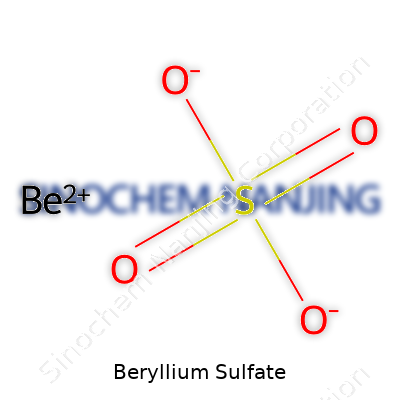
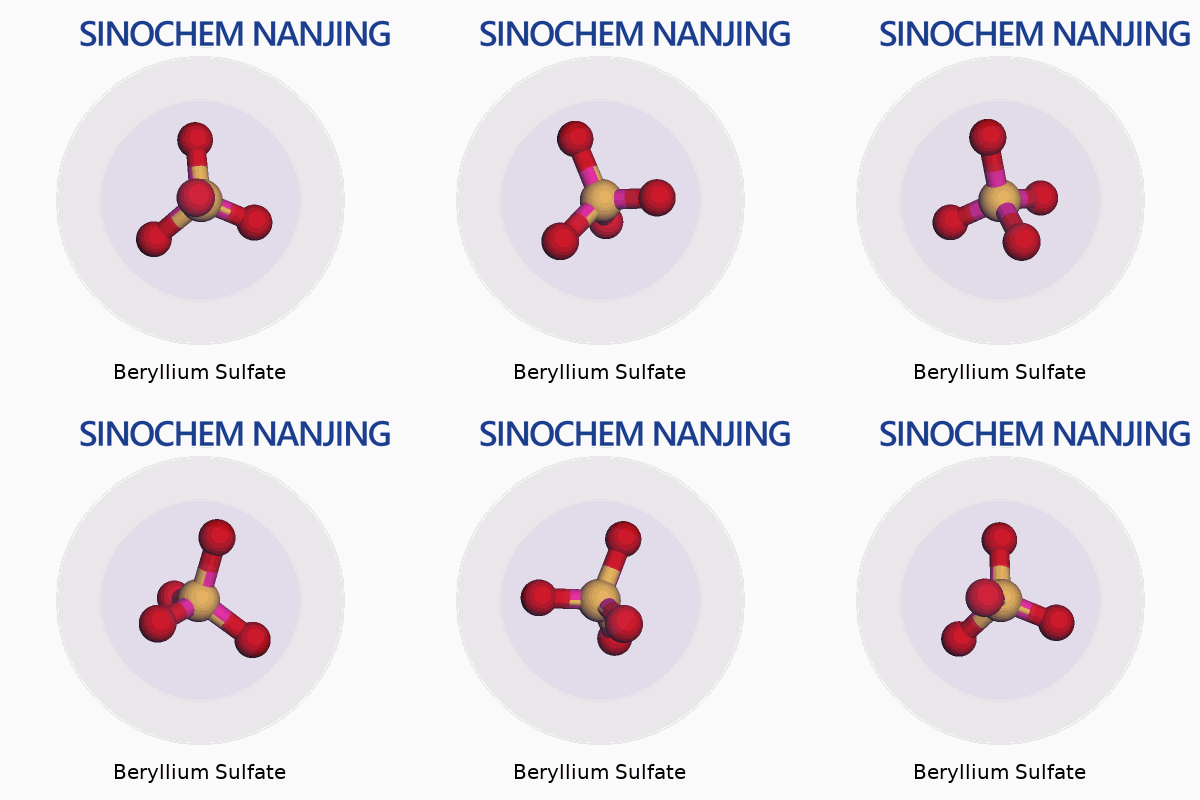
| Names | |
| Preferred IUPAC name | beryllium sulfate |
| Other names |
Sulfuric acid, beryllium salt Beryllium sulphate |
| Pronunciation | /bəˈrɪliəm ˈsʌlfeɪt/ |
| Identifiers | |
| CAS Number | 13510-49-1 |
| 3D model (JSmol) | `JSmol.loadInline("data:image/png;base64,iVBORw0KGgoAAAANSUhEUgAAA...")` |
| Beilstein Reference | 3139600 |
| ChEBI | CHEBI:32584 |
| ChEMBL | CHEMBL1201597 |
| ChemSpider | 20582 |
| DrugBank | DB11454 |
| ECHA InfoCard | 03c22b5d-6914-44b5-8dd2-9ef5ef0183d6 |
| EC Number | 231-570-9 |
| Gmelin Reference | 17720 |
| KEGG | C14045 |
| MeSH | D001583 |
| PubChem CID | 24585 |
| RTECS number | DS9625000 |
| UNII | K27N09L8U4 |
| UN number | UN1566 |
| CompTox Dashboard (EPA) | DTXSID6020172 |
| Properties | |
| Chemical formula | BeSO4 |
| Molar mass | 169.11 g/mol |
| Appearance | White solid |
| Odor | Odorless |
| Density | 2.44 g/cm³ |
| Solubility in water | soluble |
| log P | -2.10 |
| Vapor pressure | 1 mmHg (25°C) |
| Acidity (pKa) | 3.6 |
| Basicity (pKb) | 1.70 |
| Magnetic susceptibility (χ) | -9.3 x 10^-6 cm³/mol |
| Refractive index (nD) | 1.564 |
| Dipole moment | 0 D |
| Thermochemistry | |
| Std molar entropy (S⦵298) | 82.1 J·mol⁻¹·K⁻¹ |
| Std enthalpy of formation (ΔfH⦵298) | -1202.0 kJ/mol |
| Pharmacology | |
| ATC code | V10BX02 |
| Hazards | |
| Main hazards | Toxic if swallowed, inhaled, or in contact with skin; causes severe skin burns and eye damage; may cause cancer; may cause allergic skin reaction. |
| GHS labelling | GHS labelling: "Danger; H350, H372, H373, H302, H315, H319, P201, P202, P260, P264, P270, P280, P308+P313, P314, P405, P501 |
| Pictograms | GHS06,GHS08 |
| Signal word | Danger |
| Hazard statements | H301 + H331: Toxic if swallowed or if inhaled. H350: May cause cancer. H372: Causes damage to organs through prolonged or repeated exposure. |
| Precautionary statements | P201, P202, P260, P264, P270, P272, P280, P302+P352, P308+P313, P314, P321, P362+P364, P405, P501 |
| NFPA 704 (fire diamond) | 2-3-0 |
| Lethal dose or concentration | LD50 oral rat 132 mg/kg |
| LD50 (median dose) | LD50 (median dose): Oral-rat 94 mg/kg |
| NIOSH | DS8375000 |
| PEL (Permissible) | PEL (Permissible Exposure Limit) of Beryllium Sulfate: "0.002 mg/m³ |
| REL (Recommended) | 0.02 mg/m³ |
| IDLH (Immediate danger) | 4 mg Be/m³ |
| Related compounds | |
| Related compounds |
Beryllium hydroxide Beryllium nitrate Beryllium phosphate Beryllium carbonate |



