Antimony Pentafluoride: A Deep Dive Into Its Science, Industry, and Future
Historical Development of Antimony Pentafluoride
Antimony pentafluoride stepped onto the chemical stage over a century ago, first appearing in early fluorine chemistry labs that tackled the challenge of stable, high-oxidation-state materials. Working with this compound hasn’t always been smooth sailing, though. In those early days, experimenters faced tough obstacles like hazardous reactions and difficult synthesis methods. Over the decades, research teams began shaping new methods for separating, storing, and handling this formidable substance, gradually improving both yield and safety. The progression from small, curiosity-driven laboratory samples to ton-scale industrial synthesis speaks as much to human ingenuity as it does to our sometimes stubborn fascination with extreme chemistry. This curiosity has paid off, opening up routes to many critical chemical techniques used today across materials science and manufacturing.
Product Overview
Antimony pentafluoride, with its pungent fumes and aggressive reactivity, finds itself on the shelves of chemical suppliers serving specialized customers in electronics, fluorine chemistry, metallurgy, and even rocket propulsion. Demand rarely comes from large consumer brands—instead, this is the domain of technical research teams and niche industries. What keeps people coming back to this harsh chemical, despite the risks, is its ability to do what few others can: coaxing reactivity out of some of the most stubborn molecules encountered in chemistry. It shows up in labs as a nearly colorless to pale yellow, fuming liquid. Packaging standards stick to thick-walled, corrosion-resistant metal containers or special Teflon-lined vessels, an approach developed after plenty of mishaps in early years.
Physical and Chemical Properties
Pouring antimony pentafluoride, you’ll notice a dense, oily liquid. Its molecular formula—SbF5—marks it out as an intensely aggressive Lewis acid. The liquid boils at about 149°C, well above room temperature, which helps with storage but adds to the risks when handled. The liquid, far from safe, eats away at glass, aluminum, most plastics, and organic material with equal enthusiasm. Exposure to air draws water vapor; antimony pentafluoride then decomposes, releasing corrosive hydrofluoric acid fumes. That means dedicated, dry environments for use and storage, and strict protocols for cleanroom and glovebox work. Color shifts and changes in viscosity mark contamination, so regular quality checks factor into any routine handling.
Technical Specifications & Labeling
Inspecting the technical datasheets for antimony pentafluoride tells a story of hazard symbols, purity percentages, and trace contaminant levels. Purity levels typically need to sit above 99%, with water content pushed as low as possible—fractions of a percent—since any moisture invites violent reaction. Good suppliers provide test methods verifying the absence of particulates that could set off runaway reactions on contact with the pentafluoride. Labels never shy away from luminescent hazard warnings, including corrosive, toxic, oxidizer, and environmental impact icons. The shipping paperwork tracks every container in detail, ensuring nothing goes missing or winds up somewhere unsafe.
Preparation Method
All commercial antimony pentafluoride starts from elemental antimony or antimony trioxide, reacted directly with elemental fluorine or strong fluorinating agents. No artifice or shortcut exists for this synthesis. Specialists station antimony metal or its oxide inside nickel or Monel alloy reactors, then introduce dry fluorine gas at controlled rates, usually under carefully monitored pressure and temperature. Unskilled handling invites disaster here. Protective apparel, local ventilation, trained technicians—rules etched in experience. The process generates significant heat, with the product requiring cooling and careful containment. Post-synthesis, the liquid undergoes distillation in corrosion-resistant apparatus to reach the desired purity, taking pains to exclude moisture and traces of contaminants that may compromise later reactions.
Chemical Reactions & Modifications
Antimony pentafluoride stands out as a heavyweight in the arena of acid chemistry. It's a platinum-standard Lewis acid, so much that it makes up part of so-called superacids, especially when mixed with hydrofluoric acid to form “magic acid,” a liquid that protonates even the most stable organic molecules. This reactivity lets it activate alkanes, sulfonate aromatic rings, and trigger fluorination reactions impossible with lesser acids. When exposed to even trace water, rapid hydrolysis generates a cocktail of antimony oxides and hydrofluoric acid, both hazardous. Modifications with alkali fluorides, like potassium fluoride, yield hexafluoroantimonate salts, important as supporting electrolytes in specialty electrochemistry. Only a handful of substances display compatibility for safe reaction with antimony pentafluoride, driving chemists to invent totally new procedures over conventional ones.
Synonyms & Product Names
Across catalogs and languages, antimony pentafluoride travels under several names, usually tailored to specific regulatory or linguistic environments. Chemists refer to it as SbF5, antimony(V) fluoride, or simply pentafluoroantimonic acid precursor. In France, the phrase “Pentafluorure d’antimoine” appears in safety data sheets, while German sources call it “Antimonpentafluorid.” Its CAS number—7783-70-2—ties all these synonyms together, especially for customs and hazard regulations. Trade names don't show the same variation seen in broader commodity chemicals; technical buyers almost always request it by its canonical inorganic name.
Safety & Operational Standards
Lax safety doesn’t just invite trouble when dealing with antimony pentafluoride; it all but guarantees it. Even experienced chemists speak with respect about the burns and lung damage possible from a careless splash or unauthorized experiment. Modern facilities use robust local exhaust ventilation, mandatory full coverage PPE, face shields, and respiratory protection. Emergency showers and eye-wash stations lie no more than a few paces from every bench. Spills demand immediate neutralization with calcium compounds and evacuation of non-essential personnel. Shipment requires full compliance with hazardous materials protocols, including double-walled cylinders, secondary containment, and regular integrity inspections. Failures in labeling, storage, or training have cost companies dearly—both financially and in reputation—as regulators inspect every aspect of antimony pentafluoride logistics with particular scrutiny.
Application Area
Antimony pentafluoride rarely appears in consumer products, but its indirect impact is broad. It finds strong demand in the synthesis of high-energy fluorinated organics, from refrigerants to advanced batteries. The world’s handful of commercial-scale superacid plants lean on antimony pentafluoride as a catalyst for cracking reactions, fuel additive processing, and high-octane fuel development. In the semiconductor industry, the compound matters for tailored etching processes and creation of specialty dopants used in small, high-performance devices. Military research occasionally draws on its ability to generate reactive fluorine species for propulsion or energetic material synthesis. Customers from these fields push for ever-higher purity and ever-lower contaminant loads, driving suppliers to adopt better quality assurance over the years.
Research & Development
Labs around the world continue hunting for less hazardous analogs or derivatives that can offer the reactivity of antimony pentafluoride without its legacy health and environmental risks. A wave of research now explores safer fluorination pathways, leveraging computational chemistry to predict alternatives to superacids. While some teams test bulkier antimony complexes with different ligands, others probe encapsulation and controlled-release techniques to keep human exposure to a minimum. Strong interest from green chemistry advocates pressures the industry to reduce waste and develop lower-impact disposal methods for spent antimony materials. Universities with advanced inorganic divisions keep the spirit of discovery alive, producing new catalytic cycles, hybrid materials, and computational tools to model fluorine reactivity more safely and effectively.
Toxicity Research
Toxicologists examining antimony pentafluoride find few redeeming qualities for safety. Acute inhalation and dermal exposure invite rapid, severe burns and systemic antimony poisoning. At a molecular level, both antimony and fluoride ions cause cell disruption, interfere with enzyme systems, and lead to organ failure in high doses. Long-term studies link chronic exposure to increased cancer rates, respiratory complications, and even genetic mutations. Animal studies underline the dramatic impacts at low dosage, reinforcing tight occupational exposure limits and medical surveillance for any workers handling the substance even briefly. Environmental fate research explores the breakdown products—mainly antimony oxides and soluble fluoride salts—that pose additional risks to groundwater around disposal sites. Regulators propose ever-stricter emission caps, with researchers seeking both real-time detection systems and alternative bench-scale methods to reduce operator risk.
Future Prospects
Outlook around antimony pentafluoride continues evolving. Industrial users weigh its unique catalytic power against its entrenched hazards, balancing proven performance with mounting regulations and liability pressures. Environmental and health advocates keep driving innovations in handling, containment, and recovery. Advances in computational chemistry might soon deliver less reactive but still effective alternatives for specialized workflows. For now, antimony pentafluoride retains a foothold as a tool of last resort—when process requirements leave no other option. I’ve watched the field move from blind risk-taking toward a steady march of risk management and scientific restraint, fueled by a clearer picture of what these strong reagents cost in human terms. If the industry manages to pivot to higher safety margins and closer regulatory partnerships, we might see this compound yield its position at the top of the reactivity ladder to safer, smarter options that meet tomorrow’s environmental and ethical standards.
What is Antimony Pentafluoride used for?
Tough Chemistry in Action
Antimony pentafluoride lives in a difficult corner of chemistry. This substance plays a major role in research and industry, but most people never hear its name outside a textbook. It’s not something you keep under the sink. This stuff will corrode almost anything it touches. That power has lured chemists for nearly a century.
Why Scientists Keep Reaching for It
Take a walk into a lab that tries to make new compounds. Nobody grabs antimony pentafluoride without a plan. Even small amounts can whip up chemical reactions that nothing else can. Fluorine is one of the most reactive elements known, and antimony pentafluoride brings five fluorine atoms to the table. This means it acts as an incredibly strong Lewis acid. It yanks away electrons from other chemicals without breaking a sweat.
Back in college, I saw chemists use it to make “superacids.” These are acids that put sulfuric acid to shame. Mix antimony pentafluoride with hydrofluoric acid, and now you have a fluid so harsh you need Teflon gear just to handle it. Superacids find use in research that pushes the boundaries of what’s possible in organic and inorganic chemistry. Some pharmaceuticals only exist because this mix made unique chemical structures possible.
Industrial Roles That Matter
Most antimony pentafluoride ends up in industrial settings. Petrochemical makers use it to produce special fuels and lubricants. Without it, some of the clean-burning fuels for jet engines and rockets don’t get off the ground. Fluorination reactions shape feedstocks and isolate materials for plastics, fuel additives, and performance chemicals.
Companies hunting for new refrigerants and fire suppressants turn to antimony pentafluoride’s ability to shove fluorine atoms onto otherwise stubborn molecules. That makes more stable fluorinated products, which often work better for cooling or fire protection. It’s hardly a mainstream additive; more of a tool for when nothing else can finish the job.
Risks and Real-World Problems
Antimony pentafluoride’s dangers set a high bar for safe use. This is not a "green chemistry" poster child. It reacts with water, it releases toxic fumes of antimony and hydrogen fluoride, and it sears skin to the bone. Everybody who handles it trains extensively, and only specialty labs or factories bring it out from the vault. Workers need more than basic gloves; they suit up in full protective gear, with air handling set up in case of leaks. Mistakes can harm not just workers, but the environment.
Disposal matters. Companies can’t just dump wastes down the drain. Every drop scrapes together with absorbents and ends up in high-security incinerators. Any slip-up runs the risk of contaminating groundwater or harming the downstream communities. Some regulatory agencies, including the EPA and ECHA, keep a close watch on where it’s stored and how it gets used.
Towards a Safer Future
Nobody expects antimony pentafluoride to vanish. Its unique chemical strength sets it apart. But people are looking for ways to cut down on its use. New catalysts show promise, and some firms focus on containing the harsh chemistry better, using robotics or closed-process vessels. Better sensors watch storage areas for leaks and help industrial teams act before problems spiral.
Teaching new chemists about the risks, and building better safety culture, helps prevent accidents. That knowledge and forward thinking keep the benefits of this fearsome tool available, without putting people or the earth in harm’s way.
Is Antimony Pentafluoride hazardous or toxic?
Unpacking the Hazard
Antimony pentafluoride grabs attention even among chemists who deal with hazardous chemicals every day. This compound stands out not just for its tongue-twisting name but for the very real dangers packed inside each bottle. Most folks have never seen it up close, and that’s probably for the best. Anyone who has cracked open a chemistry textbook or spent time in a lab knows the sharp, almost metallic smell that comes with handling such substances. If you’ve ever worked near antimony pentafluoride, you don’t need scientific papers to tell you how quickly it can tear through containers—or flesh.
Toxicity and the Human Angle
This compound doesn’t waste time. It reacts fiercely with water, releasing toxic fumes of hydrofluoric acid. A whiff of that gas, even for a few seconds, sears the respiratory system. Some seasoned chemists will keep calcium gluconate gel close by, their hands trembling a bit whenever they handle anything fluorinated. That’s not paranoia; that’s learned caution borne from seeing first-hand how skin can blister or lungs can seize up if exposed.
Research points to its acute toxicity. If it spills, it can corrode not just containers—it can chew through skin, bone, and organs. The Material Safety Data Sheet (MSDS) calls it highly corrosive and toxic, noting the substance can cause burns, systemic toxicity, and even death if inhaled or ingested. It’s not just theoretical. Incidents over the years, especially in industrial settings, have led to trips to the hospital or worse. The difference between a near-miss and a disaster often comes down to luck, good protective gear, and emergency protocols that everyone takes seriously—no shortcuts allowed.
Environmental Worries That Don’t Disappear
Spills don’t just vanish with a mop and water. Any chemical strong enough to brutalize flesh won’t show mercy to rivers, soil, or wildlife. Antimony compounds have a way of sticking around, entering water sources, and harming aquatic life. This draws tighter regulations, especially around disposal and spill control.
Governments have issued strong warnings and clear restrictions on its sale and use. Between the danger to workers and the risk to the environment, handling and storage guidelines read more like a checklist for bomb disposal than regular chemical management.
Facing the Danger
I’ve seen safety nerds roll their eyes at overprotective measures, but there’s wisdom in the extra layers. In my own days spent working with hazardous lab materials, gloves, face shields, and proper training gave me the confidence to focus on the task instead of the risk. Stories circulate about labs losing thousands in damaged equipment or ruined experiments from one careless moment around substances like antimony pentafluoride.
Some folks look for safer alternatives. In some cases, nobody has found a comparable substitute for its extreme reactivity, especially in research or some industrial processes. So training becomes the frontline defense—clear instruction, regular drills, and a culture where no one is embarrassed to voice safety concerns. Insisting on proper ventilated hoods, handling only the required minimum, and keeping antidotes and first-aid tools on hand makes a difference not just in regulations but in real outcomes.
Stepping Up Industry Responsibility
Shifting toward better containment and smarter emergency planning lowers the risk. Cutting-edge labs invest in reinforced storage containers, leak-detection systems, and comprehensive response plans. Sharing those improvements across industries and borders turns individual caution into broader protection.
Ultimately, knowing what you’re dealing with and respecting the hazards isn’t just a rule from a manual—it’s a lesson learned from experience. Whether you’re coming at this as a chemist, a safety manager, or someone living near a plant, respecting antimony pentafluoride means keeping both eyes open, not just for your own safety but for everyone downwind.
How should Antimony Pentafluoride be stored and handled?
What Makes Antimony Pentafluoride So Tough to Handle?
Antimony pentafluoride is not the sort of chemical you store in a dusty supply closet. It eats through glass, reacts fast with water, and fumes heavily in humid air. I’ve seen acids and bases that demand respect, but this compound commands its own level of caution. The liquid packs enough punch to corrode metal on contact, and it releases dangerous fumes. No one I’ve met forgets the sharp smell and the panic it causes during spills. It’s not a stretch to say it can destroy lab equipment and threaten anyone nearby if handled without care.
The Bare Essentials: Storage Solutions
You won’t get away with standard lab bottles here. Only containers made of specific metals, like nickel or stainless steel with special linings, block reactions. Some experts pick PTFE or Kel-F for the job. Those plastics don’t melt in its presence and hold up against long-term exposure. Forget glass—one accidental mix with moisture brings shattered storage and urgent cleanups. Store it in tightly sealed, pressure-resistant vessels. Antimony pentafluoride fumes expand in heat, building up pressure that cheaper containers can’t take.
The Location Game: Where to Keep It
Keep the container away from sun, damp spots, and anything with glass or concrete shelves. I’ve walked into storerooms where a leaky bottle left behind a corroded mess—the wrong location costs more than repairs. Set it up in a dry, well-ventilated spot. Chemical vent hoods aren’t just useful, they’re mandatory for anything with these fumes. Industrial fridges or cabinets, built to neutralize acid spills, offer solid insurance. Place it on a spill tray with absorbent material that stands up to strong acids—no paper towels, or they’ll just add to the problem.
The Human Side of Handling
Everyone working with antimony pentafluoride should run drills, not just read SDS sheets. I learned early on that gloves and goggles aren’t enough—full faceshields and chemical-resistant aprons are standard for a reason. Accidents stink of neglect, not bad luck. You need a protocol that spells out double-checking containers, neutralization supplies within reach, and clear walkways. Training should focus on what happens during an emergency, not just theory. Eyewash stations and safety showers nearby make all the difference if splashes hit skin or eyes.
The Right Attitude: Documentation and Accountability
Good record-keeping prevents small errors from snowballing. I’ve heard stories of mislabeled containers leading to panic, confusion, and lost productivity. Precise labels, inventory logs, and strict sign-outs guarantee no one stumbles into a surprise. Laboratories with high safety standards keep regular checks, not just yearly audits. Supervisors encourage team members to speak up when something looks off instead of brushing off concerns. The culture shapes outcomes—where shortcuts get called out, mishaps drop off fast.
Smart Solutions for Long-Term Safety
Investing in better training and equipment sounds expensive until you tally the costs of clean-up or health emergencies. Some labs rotate their staff, so only those certified for high-risk chemicals touch antimony pentafluoride. Rapid spill kits with correct neutralizers—like powdered calcium carbonate—unlock quick action. Regular updated hazard assessments adapt to new research, ensuring practices never fall behind. A little vigilance backed by strong management keeps everyone safer, and the chemistry on track.
What are the physical and chemical properties of Antimony Pentafluoride?
What Stands Out Physically
Antimony pentafluoride pours out as a colorless or sometimes slightly yellowish oily liquid. I’ve seen it in the lab, and you learn quickly to treat it with respect. Its boiling point lands high, around 149°C, and it stays liquid well below freezing. That means you can carry out reactions across a range of temperatures—but you want good safety protocols at every stage. The fumes sting, so proper ventilation becomes vital. If it touches skin, you’ll feel it burn. Safety goggles and gloves aren’t optional; you need them the moment you open the bottle.
Density sits at roughly 2.99 g/cm³. Mix that with its aggressive nature and you get a substance that doesn’t sit still or play nice. It eats through glass and reacts with nearly every organic material it touches. The stuff smokes when you expose it to moisture in air, forming a cloud of hydrogen fluoride. As an experimenter, you feel the need to measure and handle it with extra caution.
Chemical Behavior: Potent, Unyielding, and Essential
Antimony pentafluoride gets a reputation for being one of the strongest Lewis acids out there. That classification hits home during advanced synthesis or in superacid chemistry, where a need exists to push molecules into new shapes or boost reactivity. Drop it into the same room as hydrogen fluoride, a new compound forms: fluoroantimonic acid, which ranks among the most corrosive substances on the planet.
It doesn’t just attract electrons—it yanks them out of hand, destabilizing anything nearby. This quality sits at the center of powerful reactions: for chemists aiming to synthesize tough compounds or rearrange molecules in ways that more familiar acids can’t manage, this property makes antimony pentafluoride a choice tool. Take the world of organic chemistry, where activating hydrocarbons isn’t simple. Antimony pentafluoride helps, making it possible to study reactions you wouldn’t see otherwise.
Risks in the Lab and Beyond
Its dangers aren’t just talk. Breathing in the fumes irritates lungs badly, and exposure to skin causes deep burns. Stories of glassware dissolving show how unrelenting the chemical stays, especially when someone learns the hard way not to store it in glass bottles. Containers need fluorinated plastics, or else you get leaks and accidents.
Handling the waste brings another challenge. Antimony compounds persist in the environment and could poison water or soil if labs handle disposal poorly. Authorities keep a close eye on its use, and researchers need extensive training before anyone even considers opening a bottle. Spills spell trouble, not just for the person handling it, but for everyone nearby. You want teams using fume hoods, splash barriers, and training rooted in real experience.
Room for Smarter Use and Better Protection
Seeing what antimony pentafluoride can do, it’s clear why it stays essential in specialty industries and research. The risk doesn’t mean it lacks purpose. Technologies that depend on strong acids—think specialty chemical production or fluorination reactions—rely on substances like this. Improvements in lab safety gear, stricter regulation on disposal, and smarter containment systems give everyone a better shot at staying safe while still exploring the chemistry.
Using these resources well demands more than a good manual. In-house knowledge transfer, regular safety drills, and commitment to safe storage can cut down on the worry. Safer substitutes might come someday, but for now, vigilance and respect for its power keep everyone out of harm’s way.
What safety precautions are necessary when working with Antimony Pentafluoride?
Why This Stuff Warrants Extra Respect
Antimony pentafluoride hits a special level of hazard even for experienced chemists. Known for its strong corrosive nature and intense reactivity, it’s not something anyone should take lightly. I remember my own first exposure during advanced inorganic labs, where protective gear felt less like a suggestion and more like a lifeline. Accidents can happen before you realize it, so setting habits that make safety automatic counts the most.
Personal Protective Equipment Makes All the Difference
Gloves, face shields, and acid-resistant lab coats come out as minimum uniforms when working with this chemical. It eats through skin and damages eyes almost instantly, leaving real, permanent damage behind. Splashing isn’t rare, especially when pouring or cleaning. Disposable nitrile gloves don’t last—fluorinated chemicals cut through most rubbers, so the right glove material, like heavy-duty neoprene, matters. Layering gloves, using gloves under sleeves, and taping down openings all decrease risk.
I’ve seen even senior researchers trip up by skipping goggles or underestimating a reaction’s force. Full-face shields beat safety glasses every time. Forces in play with antimony pentafluoride often turn small spills into real emergencies. Face protection, boots with chemical-resistant soles, and always tying back loose hair become more than formalities—they truly cut accident rates.
Ventilation and Containment
Fume hoods shine in this job. No amount of room ventilation keeps these fumes in check, as gases like hydrogen fluoride get released easily and attack lungs. Setting up reactions in a certified hood, with constant airflow and proper sash position, helps keep exposure low. I’ve worked in workshops where air monitoring systems tracked leaks—staying aware of levels means quick reactions to trouble.
Antimony pentafluoride reacts with just about any water, so keeping all equipment bone-dry really matters. Using vacuum lines, drying ovens, and desiccators before any setup makes a real difference. Even a trace of moisture causes violent reactions. Taping all seams, checking all flask connections, and never cutting corners on sealing keeps things safe.
Storage, Cleanup, and Disposal
Never store antimony pentafluoride near water, alcohols, or oxidizers. I’ve seen close calls where simple storage mistakes created dangerous clouds or heat buildups. Acid-proof cabinets, vented containers, and sturdy secondary containment trays prevent spreading if a spill happens. Every bottle or ampoule deserves a tight-fitting lid and a clear label, so even during rush cleanup, there’s no confusion.
Spills must get neutralized with compatible agents (like dry sodium carbonate), but never water, since that causes violent reactions. Solid absorbent pads soaked in a dry state pick up liquid leftovers. Hazardous waste teams know to handle and remove containers without exposure to air or moisture. Everyone in the lab should know where emergency showers and eyewash stations sit, and practicing spill drills pays off far more than hoping for the best.
Moving Forward: Training and Transparency Matter
People new to antimony pentafluoride benefit from real hands-on training, not just reading the safety data sheet. Watching a demo, practicing emergency shutdowns, and double-checking another person’s gear create a safer culture. Leaving nothing to chance pays dividends—not just for individual safety, but for everyone sharing the workspace.
Lab leaders and companies score higher safety marks by encouraging reporting, making sure everyone has access to up-to-date procedures, and supporting upgrades to protective equipment. With chemicals this aggressive, a little extra caution goes much further than most realize.
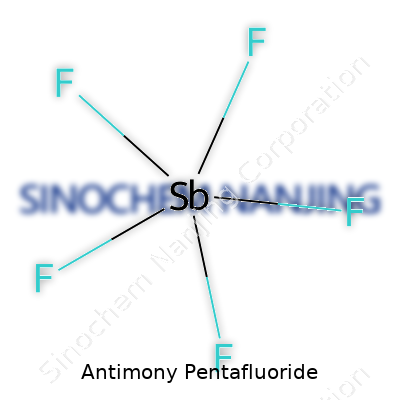
| Names | |
| Preferred IUPAC name | antimony pentafluoride |
| Other names |
Antimony(V) fluoride Antimony pentafluoride Antimony fluoride (SbF5) |
| Pronunciation | /ænˈtɪm.ə.ni ˌpɛntəˈfluːəˌraɪd/ |
| Identifiers | |
| CAS Number | 7783-70-2 |
| Beilstein Reference | 1905319 |
| ChEBI | CHEBI:30413 |
| ChEMBL | CHEMBL1201868 |
| ChemSpider | 67106 |
| DrugBank | DB11542 |
| ECHA InfoCard | 100.030.281 |
| EC Number | 232-222-0 |
| Gmelin Reference | 548 |
| KEGG | C14468 |
| MeSH | D000950 |
| PubChem CID | 24816 |
| RTECS number | BQ6300000 |
| UNII | Q70EPR7B8H |
| UN number | UN1733 |
| Properties | |
| Chemical formula | SbF5 |
| Molar mass | 291.8 g/mol |
| Appearance | Colorless, oily, fuming liquid |
| Odor | pungent |
| Density | 3.25 g/cm³ |
| Solubility in water | Reacts violently |
| log P | -4.1 |
| Vapor pressure | 5.1 kPa (at 25 °C) |
| Acidity (pKa) | -25 |
| Basicity (pKb) | -12.3 |
| Magnetic susceptibility (χ) | −53.0×10⁻⁶ cm³/mol |
| Refractive index (nD) | 1.4 (20 °C) |
| Viscosity | 2.54 cP (20°C) |
| Dipole moment | zero |
| Thermochemistry | |
| Std molar entropy (S⦵298) | 228.0 J K⁻¹ mol⁻¹ |
| Std enthalpy of formation (ΔfH⦵298) | −1218 kJ·mol⁻¹ |
| Std enthalpy of combustion (ΔcH⦵298) | -3227.0 kJ/mol |
| Pharmacology | |
| ATC code | V09AX03 |
| Hazards | |
| Main hazards | Causes severe burns to skin and eyes; highly toxic by inhalation; reacts violently with water; releases toxic and corrosive fumes. |
| GHS labelling | GHS02, GHS05, GHS06 |
| Pictograms | GHS05,GHS06,GHS08 |
| Signal word | Danger |
| Hazard statements | Hazard statements: "Fatal if swallowed. Causes severe skin burns and eye damage. Causes serious eye damage. May cause respiratory irritation. |
| Precautionary statements | P260, P262, P264, P271, P280, P301+P330+P331, P303+P361+P353, P304+P340, P305+P351+P338, P310, P321, P363, P405, P501 |
| NFPA 704 (fire diamond) | 4-0-3-W |
| Autoignition temperature | 450 °C |
| Lethal dose or concentration | LD50 oral rat 110 mg/kg |
| NIOSH | SA2585000 |
| PEL (Permissible) | 0.5 mg/m3 |
| REL (Recommended) | 0.5 mg/m³ |
| IDLH (Immediate danger) | 50 mg/m3 |
| Related compounds | |
| Related compounds |
Antimony trifluoride Antimony trichloride Antimony pentachloride Phosphorus pentafluoride |



