Ammonium Zinc Nitrite: A Deep Dive into Science, Safety, and Industry
Historical Development
People began to take an interest in ammonium zinc nitrite in the early-to-mid twentieth century as chemists searched for corrosion inhibitors to protect steel structures and industrial tools. Work in Europe, especially in Germany and the UK, showed zinc compounds held promise for more durable anti-corrosion coatings. As factories, bridges, and vehicles aged, paint manufacturers realized the classic options—often heavy lead-based chemicals—posed big health problems and didn’t last long in aggressive environments. Zinc nitrite mixed with ammonium opened a new avenue, and companies started to use it more widely in the coatings industry through the 1980s and 1990s. Manufacturers found it reduced rust, performed better in marine weather, and was less toxic than many chromium-based alternatives. Patents trace tweaks in composition and process through the decades as industrial standards, regulations, and environmental expectations kept evolving.
Product Overview
Ammonium zinc nitrite is best known as a white or slightly yellowish powder, mainly used to stop rust in paints and coatings. It’s a dual salt, pairing zinc’s stabilizing qualities with the nitrite group’s strong corrosion resistance. You’ll see it blended into primers covering everything from ship hulls and railcars to electrical towers and farm tools. The chemical stands out by creating a compact protective film, shielding underlying metals from humidity and salts. Companies often sell ammonium zinc nitrite in heavy-duty lined bags, with clear warnings about moisture sensitivity and storage temperatures. Though its main commercial footprint lies in the coatings world, some lab research branches into chemical sensors and even controlled release fertilizers, but those uses remain rare.
Physical & Chemical Properties
Look at a pile of ammonium zinc nitrite and you see a fine crystalline solid, not much odor, and a melting point that ranges depending on moisture content but typically decomposes before reaching liquid state. It dissolves moderately in water, and the solution shows a near-neutral to slightly basic pH due to ammonia’s influence. Under heat or sunlight, it slowly decomposes to release nitrogen oxides, so companies often remind workers to keep storage spaces cool, shaded, and as dry as possible. The powder feels dense but not sticky, kicking up easily in low humidity environments—an issue for workers handling big volumes. Safe handling guides often mention its tendency to break down unexpectedly if it comes into contact with strong acids or oxidizers.
Technical Specifications & Labeling
Buyers usually demand a tightly controlled particle size distribution, catalogue numbers, and batch traceability from their suppliers. Technical data sheets mark out ratios like Zn:NH4:NO2 within ranges, often citing 22–25% zinc, 8–10% nitrogen content, and controlled moisture under 3%. Labels on drums and bags list UN numbers for hazardous materials—because nitrites can feed fire risk even though the zinc content dampens that risk compared to pure nitrites or nitrates. Material Safety Data Sheets highlight the need for waterproof bulk packaging, clear hazard pictograms, and precautions for those with respiratory concerns. Some manufacturers stamp their product as “conforms to ISO 12944:2018” or similar corrosion-resistance standards, knowing end-users rely on documentation for insurance and legal compliance.
Preparation Method
Factories produce ammonium zinc nitrite by reacting a solution of zinc oxide or basic zinc carbonate with ammonium nitrite in controlled reactors. Temperature controls prevent runaway exothermic reaction, while carefully metered ammonia levels keep the nitrite group stable during crystallization. Operators filter out excess moisture, run the material through drying beds or rotating kilns, then mill and sieve the finished powder. Some plants finish off with an inert gas treatment or use enclosed conveyor belts to avoid dust explosions. Everything runs batch by batch, since trace contaminants—even small amounts of heavy metals—can kick the product off-spec for high-grade paint companies.
Chemical Reactions & Modifications
Chemists still debate the best way to tweak ammonium zinc nitrite for new applications. Some add phosphates or silica for broader corrosion protection, while others look at double-layer coatings with organic additives grafted to the nitrite core. Exposing ammonium zinc nitrite to acids produces zinc salts and releases toxic NO gas, so plant operators avoid acid lines or vapor-laden zones. Add a strong base, and ammonium ions can swap out, releasing ammonia and precipitating zinc hydroxide. Under heat or UV radiation, the nitrite decomposes with visible yellow-brown gas—so tanker spills or fire situations require rapid evacuation and nitrate-absorbing foams. Research groups aim to stabilize the compound on nano-structured carriers for controlled release, though real-world take-up remains slow compared to straight powder use.
Synonyms & Product Names
Market listings swap between terms: “Ammonium zinc nitrite,” “Zinc ammonium nitrite,” and variants mixing in CAS numbers (often 28985-14-2) or supplier codes. Brand names might read “Zincnitram,” “NitroZam,” or “AZN-Guard,” depending on the country and manufacturer. Sometimes distributors use local language adaptations or emphasize low-lead formulations, especially for export. In technical shorthand on TDS and SDS files, professionals use AZN or ZAN. For export to North America, suppliers re-label with clear GHS pictograms given rising shipping checks post-2010.
Safety & Operational Standards
Safety managers know ammonium zinc nitrite isn’t as lethal as many industrial toxins, but it isn't gentle. Eating it or inhaling dust irritates lungs and can trigger blue-tinged skin (methemoglobinemia) if enough nitrite is absorbed. Chronic exposure dries out hands and stings eyes. The compound doesn’t tend to explode, but with strong acids or thermal runaway, it releases gases that quickly choke small spaces. Workplaces demand sealed clothing, nitrile gloves, P100-level respirators, and strict limits on fire sources. OSHA and EU-REACH rules carve out exposure limits, and environmental agencies require spill kits with clay absorbents. Regular training, tight SOPs for transport, and double-checks of fume hoods keep factory floors safe—protocols learned through decades of accidents in older plants.
Application Area
Most of ammonium zinc nitrite used anywhere ends up in protective paint for steel that faces harsh conditions—bridges over saltwater, the hulls of ships, fuel storage tanks, and public infrastructure. Some auto body primers and heating unit shells use it for rust-resistant undercoating. Construction crews spraying apartments and tunnels appreciate its ability to give strong protection without the heavy toxicity or cleanup headaches linked with old-school chromium paints. Once in place, the paint resists rain, salt, and UV for years. Manufacturers test new blends for wind turbines, steel pylons, or even garden equipment where longer service life cuts replacement cost. Inside research labs, people look at ammonium zinc nitrite for sensor prototype work, but right now that remains a tiny market compared to paint and coatings.
Research & Development
Modern labs focus on finding additives and new dispersion techniques to make ammonium zinc nitrite coatings more rugged under extreme weather. Some groups use electron microscopy to map how nitrite ions migrate in the paint film, looking for faster healing of scratches. Others embed nanoparticles or pair with silicate binders, chasing longer wear or lower zinc leaching. Studies measure how different application methods—brushing, high-pressure spraying—affect performance in the field. Meanwhile, there’s a push to develop benign substitutes to keep up with tightening EU REACH controls on nitrites, aiming to keep environmental load low without losing the corrosion magic. So far, ammonium zinc nitrite holds its place, but every regulatory cycle inspires fresh research on organic and hybrid alternatives as well.
Toxicity Research
Think about ammonium zinc nitrite’s health effects and the evidence points to two main risks: acute nitrite poisoning and chronic zinc overload. Animal studies show moderate doses raise methemoglobin in blood, cutting oxygen flow. Downwind of major plants, environmental monitoring checks rivers and soils for excess nitrite, as these ions can promote algal blooms and kill off aquatic life. OSHA dose-response studies guided the time-weighted average (TWA) limits, aiming to protect workers from both short-and long-term exposure. The compound doesn’t accumulate much in common food chains, as both nitrite and ammonium break down fast outside the plant, but medical scientists note rare spillover into drinking water near storage yards, especially after major fires. Ongoing workplace trials keep tabs on inhalation exposure, dermal absorption, and the effectiveness of barrier creams.
Future Prospects
Tougher environmental laws, rising steel prices, and global infrastructure needs drive interest in evolving ammonium zinc nitrite. Paint chemists expect stricter caps on soluble nitrites, so industries seek blends that hold up longer on aging bridges and don’t leach contaminants into soil. Some see hope for microencapsulation, locking the nitrite within resins that activate only once the topcoat scratches. Governments eye alternatives for critical sectors—rail, shipyards, energy—without compromising corrosion resistance or worker safety. Startups in the EU push for “next-gen” anti-rust agents using zinc complexes and organic inhibitors, but reliability still leans on the old ammonium zinc nitrite recipes. The push continues for better recycling, top-down regulations to phase out older leaded or chromate paints, and pilot projects using renewable materials. Industry partnerships could speed the trade-off between robust performance and smaller environmental footprints. As infrastructure in both mature and developing economies ages, the need for affordable, effective rust prevention will only increase. The compound’s future hinges on the pace of innovation, regulation, and the willingness of industries to invest in cleaner, smarter chemistry.
What is Ammonium Zinc Nitrite used for?
Shielding Steel From Rust
Walk around an industrial site or take a closer look at the bones of a bridge, and you notice a problem that’s plagued us for centuries—rust. Corrosion eats away at metal, especially steel, threatening safety and driving costs up. Ammonium zinc nitrite steps into the picture as a guardian against that slow, stealthy damage. This compound ends up in many types of industrial primers, acting as a shield for steel surfaces. Over and over, I’ve seen maintenance teams reach for coatings with this ingredient because it simply works. The combination of zinc and nitrite stymies the electrochemical process that causes rust. If a pipe or beam stays coated, companies dodge constant repairs and extend equipment life. Fewer breakdowns mean smoother operations and fewer emergency replacement bills.
Keeping the Paint Job Strong
A good paint job does more than look clean—it preserves the infrastructure beneath. Factories and utilities use primers with ammonium zinc nitrite before they add any decorative layer. Zinc offers a physical and chemical shield, while nitrite slows the reaction that sparks corrosion. This dual-action approach keeps coatings from bubbling or flaking after a season of rain or a steamy summer afternoon. In my experience, contractors look for reliability; nothing sours a day on site like scraping expensive primer off peeling steel because something reacted the wrong way. This compound takes some stress out of the job since it helps paints stick tight and last through punishing conditions.
Boosting Safety and Reducing Hazards
Older primers often leaned on lead and chromium, two solutions with a dangerous legacy. Their effectiveness came with a heavy health and environment cost. Ammonium zinc nitrite offers strong protection without the toxic baggage. This doesn’t make it completely risk-free—no industrial chemical should be handled with bare hands or without care—but it provides an alternative that steers clear of the worst toxins. These days, responsible managers watch regulations and workplace risks with sharp eyes. Switching to compounds like this means plant workers breathe easier and companies dodge regulatory headaches. From what I’ve seen, the switch is usually painless, and everyone benefits from a safer work environment.
Supporting Critical Infrastructure
It’s tempting to take for granted the bridges, water pipelines, and transmission towers that keep our society running. I’ve watched engineers walk miles of pipes, searching for weak spots. The right protective coatings, armed with compounds like ammonium zinc nitrite, let those pipes survive years underground or exposed to harsh climates. With budgets always stretched, public works departments search for every way to cut future repairs. There’s real value in prevention, especially in times of tight funding and stretched crews.
Looking for Better Answers Down the Road
Some researchers still look for the next step—a primer that outperforms even the best combinations of zinc and nitrite. Companies and universities keep testing new additives, exploring different metals or renewable solutions, but in the meantime, ammonium zinc nitrite gets the job done. It brings together solid corrosion resistance with lower health risks than its old-school predecessors. As pressure mounts to deliver safer and longer-lasting infrastructure, relying on proven solutions paves the way for new ideas to grow. Working with this chemical, I’ve seen it buy valuable time for equipment and teams—the kind of help that pays off every year, not just the first season.
Is Ammonium Zinc Nitrite hazardous to health?
Reality on the Shop Floor and in the Lab
People working in industries like paint formulation, corrosion prevention, or advanced materials science often come across chemicals such as ammonium zinc nitrite. It’s not something the average person will have in the cabinet next to the salt and pepper, but anyone around manufacturing or research settings has probably seen barrels marked with caution tape and this compound’s name. Hands-on experience reminds you: mistakes happen fast, and with chemicals, one lapse carries real risk.
What the Science Community Knows
Ammonium zinc nitrite brings together ammonium, zinc, and nitrite ions. Few question its usefulness for stopping rust on steel or as a pigment. Still, nitrite compounds deserve respect, and so does zinc in concentrated forms. Breathing nitrite dust, or letting it land on unprotected skin, isn’t just unpleasant—it’s dangerous. Nitrite exposure can interfere with blood’s oxygen-carrying capacity, which medical professionals recognize as methemoglobinemia. It’s rare in the general public, but not in environments with repeated chemical handling.
Zinc gives trouble in its own way. Nausea, stomach cramps, and even neurological effects hit workers who inhale zinc fumes or dust. Some might remember “metal fume fever,” a condition that leaves welders bed-ridden with flu symptoms after a long day without the right mask. Mix these hazards, and ammonium zinc nitrite makes for a risky mix whenever protocols don’t get followed or protective gear gets left behind.
What Happens if It Spills or Gets Loose?
Spills in labs or on factory floors are not just slips that can be swept away. If powder clouds make it into the air, folks close by risk sore throats, headaches, or worse. Eyes and skin sting from direct exposure. Swallowing a pinch—or even ingesting tiny dust particles—means a trip to the emergency room, not just a glass of water and a good night’s sleep. These are facts collected over years of incident reports and real-world accidents. Workplace visits to local clinics trace back to lax enforcement of safety rules and skipping gloves or respirators because someone got “used to it.”
Why This Conversation Matters
Labs, manufacturers, and anyone else storing or using ammonium zinc nitrite have legal responsibility for safety. Regulations in much of the world demand locked storage, documented protocols, and training for every employee who even walks by the drums. I’ve seen companies do weekly walkarounds just to check signage and spill kits are in the right place. Staff briefings help keep everyone awake to the fact that this is not a “set it and forget it” material living quietly in a cabinet.
The story doesn’t end with workers. Once chemicals go out the door as part of finished products, proper labelling and consumer education take over. The world watched after several high-profile chemical spills in the last decade. Too often, it came down to someone cutting costs on storage or not updating paperwork on what was in which barrel.
Practical Risk Reduction
Gloves, goggles, respirators, and lab coats are non-negotiable. Emergency showers and eyewash stations need to work—no excuses. I’ve watched seasoned professionals run drills, teaching newcomers to recognize warning signs of overexposure long before symptoms start. Chemical safety needs fresh eyes too; audits by outside experts pick up risks that everyone working there might overlook because they see the space every day.
Beyond hardware, clear lines of accountability and honest reporting drive real safety improvements. Workers should never hesitate to step back from a process that feels wrong. Their confidence in reporting unsafe situations without fear of punishment shapes a workplace that values health over speed or profit.
What are the storage requirements for Ammonium Zinc Nitrite?
Understanding the Risks
Ammonium zinc nitrite shows up in industry as a corrosion inhibitor, commonly in pigment or metal treatment products. The big concern is its potential to break down or react if storage conditions drift out of a safe range. Safety data backs up the view that poor storage can lead to health hazards and product instability. Heat, moisture, and contamination are serious threats, and anyone working with this compound needs to know how those risks play out in real life.
Key Storage Practices
From my time in a coatings lab, it's clear that the right storage setup cuts down on accidents and wasted material. Ammonium zinc nitrite fits in the same category as other nitrites — keep moisture far away. Exposure to damp air can start reactions that cause clumping, gas release, or even fire risk in rare cases. Over the years, simple airtight containers have saved many a shipment from ruin, so skipping a cheap lid or robust seal doesn’t make any sense.
It pays to store this compound in a cool, dry spot that's out of direct sunlight. Heat doesn’t just risk breaking down the chemical, it can build pressure inside containers. Even in well-built labs, temperature spikes have set off alarm bells. When trucks deliver drums of pigment in summer, someone must watch indoor temps. Without that vigilance, product can spoil in days.
Why Cleanliness Counts
Another key piece to storage: avoiding contamination. If iron, acids, or strong bases sneak into a drum, dangerous byproducts might form. I’ve seen this play out firsthand, and clean scoops, gloves, and proper labeling can dodge many of these headaches. It might sound like overkill, but folks forget tools in the rush of daily production.
Labeling, Segregation, and Legal Backing
Having clear labels on stock avoids confusion, and keeps ammonium zinc nitrite out of the wrong process lines. Proper signage helps workers recognize risk since not everyone handles chemicals every day. Any company ignoring labeling jumps straight into regulatory trouble, especially as chemical safety violations often come with big fines and public scrutiny.
Segregating storage areas is just as crucial. A few years ago, a neighboring business kept oxidizers near solvents—an event nobody forgot after the fire department blocked off the block. Putting ammonium zinc nitrite away from fuels, reducing agents, or acids shrinks that kind of nightmare. Industry regulations reflect this wisdom, and sticking to those standards isn’t just red tape; it saves lives and property.
Solutions Moving Forward
Based on recent reports and personal experience, investing in dedicated storage rooms with climate control brings peace of mind. Portable humidity monitors aren’t fancy, but they do the job for both big factories and small shops. Safety training remains a core solution, especially rotating new staff through hands-on sessions and not just handing them printed protocols.
None of these steps require much high-tech gear. Lightweight storage bins, checklists, and a few eyes checking for leaks or spills keep ammonium zinc nitrite safe for long stretches. Facilities that take these precautions usually see fewer product downgrades, avoid evacuations, and set a high bar for chemical responsibility. Taking storage seriously goes further than any insurance policy.
How should Ammonium Zinc Nitrite be handled safely?
Understanding the Material
Ammonium zinc nitrite pops up in paints, coatings, and other specialty uses, but talk to anyone who’s handled it and you’ll hear the same warning: don’t take risks with your health. This compound packs both oxidizing and toxic properties. One spill or whiff can send you straight to the emergency room. OSHA and NIOSH both flag it for careful control, and their guidance reflects hard-earned lessons from real-world accidents.
Simple Habits Make a Difference
Old-school painters used to scoop powder straight from fifty-pound bags. Nobody wore gloves. Respirators gathered dust on shelves. Over time, many got rashes, headaches, and worse. As science caught up, those habits changed. Nowadays, anyone working with this substance needs heavy-duty gloves, eye protection, and, ideally, a cartridge respirator. One overlooked cut or splash can break skin or irritate lungs. Inspect your PPE before every shift—the best gloves or goggles don’t do any good if cracked or fogged up.
Keep Dust and Vapors Out of the Air
A lot of industrial work creates dust. With ammonium zinc nitrite, dust isn’t just a housekeeping problem. Inhaled particles get deep in your lungs, and the health risks can stack up fast. Switch over to enclosed systems and use local exhaust wherever possible. Even dumping old powder in the trash can release fine particles. Seal spent containers tightly. Wash them before tossing out. Good air circulation beats running an air purifier after people start coughing.
Don’t Go It Alone
Companies can talk for hours about safety training. In reality, no policy works unless people watch out for each other. Everyone needs to learn the basic signs of overexposure: nausea, dizziness, throat burning. If you’re the new hand on the crew, ask the veterans how they handle the stuff. Emergencies move quickly, and muscle memory can keep someone out of trouble. Report even small spills and mistakes. Shrugging it off or hiding near-misses only sets up more dangerous situations for the future.
Storage Isn’t Just About Convenience
Store ammonium zinc nitrite far from flammable solvents, acids, or organic materials. Mixing these chemicals by mistake can start a fire or cause a toxic release. Keep it dry and cool. Moisture triggers unwanted reactions, and sunny spots speed up chemical breakdown. Label every container, even down to temporary sample jars—nobody likes surprises. Keep spill kits, neutralizers, and emergency showers within reach. In my time on a factory floor, I’ve seen more chaos from poor labeling than nearly any other cause.
Continuous Learning Drives Safety
New machines, new vendors, and new blends hit warehouses every year, but safety basics never change. Stay on top of Safety Data Sheet updates and watch for reforms in national standards. Light housekeeping, strong supervision, and a dose of common sense shield workers better than new tech ever could. It comes down to respecting the risks, looking out for your coworkers, and paying attention every single shift. That’s how lives get protected—and how people make it home after a long day.
What is the chemical composition of Ammonium Zinc Nitrite?
Breaking Down the Ingredients
Many folks in industry or lab spaces see ammonium zinc nitrite as just another powder or additive, but things start to get interesting under the microscope. It’s made of ammonium ions (NH4+), zinc ions (Zn2+), and nitrite ions (NO2-). Mix these at the right ratios, and you get a compound with the formula Zn(NH4)2(NO2)4. The result: a pale yellow, water-soluble salt that's made its mark in corrosion protection.
Understanding Each Part
Take ammonium for starters. I’ve handled plenty of fertilizers and household cleaners in my life, so ammonium’s no stranger. Here, ammonium doesn’t just hang back; it plays a key role helping the compound dissolve in water, making it useful in paints and primers. That quality matters when workers apply a protective coating and want even coverage.
Now, zinc brings muscle to the composition. Zinc ions have a track record for staving off rust when steel and iron meet moisture. Drive past a construction site near the ocean—if that rebar survives salty air, thank zinc’s talent for passivation. Adding zinc nitrite to paint supplies another layer of protection by blocking the chain reaction that leads to corrosion.
Don’t overlook nitrite. Nitrite ions act as corrosion inhibitors, essentially teaming up with zinc to form a thin, passivating shield right on metal surfaces. I’ve scraped my fair share of rusted railings, and it’s clear why preventing that first flake makes all the difference. Small amounts of nitrite, paired carefully, add real, measurable value to industrial coatings.
Why It Matters for Safety and Sustainability
Handling a compound like ammonium zinc nitrite keeps me on my toes. Nitrites in general pose risks if handled recklessly; nobody needs chemical burns or unexpected reactions. It pays to keep well-ventilated spaces and gloves handy. Industry insiders report that improper storage—damp basements, open containers—can turn a good product into a hazard.
The environmental side raises tough questions. Zinc outlasts other corrosion inhibitors in many settings, and it’s notably less toxic than some lead-based rivals. Still, overuse or poor disposal means zinc and nitrite can find their way into groundwater. Once, a recycling facility wastewater test showed higher nitrite readings than legal limits—the direct result of leftover corrosion inhibitor rinsed down a floor drain. The lesson? Track disposal closely, stick to safe limits, and opt for recovery or neutralization measures.
Closing the Gaps
I’ve seen strict labeling and chemical safety training make a real difference on worksites big and small. Teaching teams exactly what goes into something like ammonium zinc nitrite lets them spot odd smells, sudden color changes, or spilled product before trouble escalates. That real-world knowledge, reinforced by clear communication, helps prevent accidents and unnecessary waste in the first place.
If chemists and users work closer together, it’s possible to find safer substitutes or tweak dosages so that nothing extra ends up in the mix. The key lies in understanding each component’s role and using that information to safeguard both people and the environment.
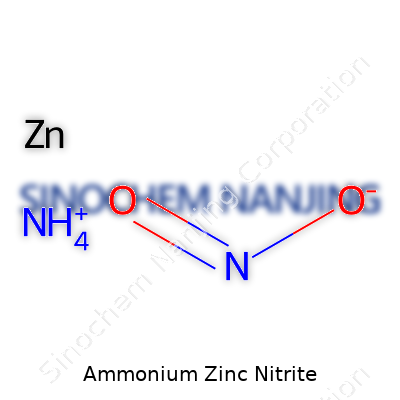
| Names | |
| Preferred IUPAC name | Ammonium dioxidoazanidoylzincate(2-) |
| Other names |
Zinc ammonium nitrite Ammonium zincate nitrate Zinc nitrite ammonium salt Ammonium zinc nitrite hydrate |
| Pronunciation | /əˈmoʊniəm zɪŋk ˈnɪtraɪt/ |
| Identifiers | |
| CAS Number | 10024-97-2 |
| Beilstein Reference | 1867183 |
| ChEBI | CHEBI:82273 |
| ChEMBL | CHEMBL4290198 |
| ChemSpider | 21585925 |
| DrugBank | DB11444 |
| ECHA InfoCard | 03a9c9f4-498b-3bb4-ae17-6a5c7a7fc10c |
| EC Number | 238-896-7 |
| Gmelin Reference | 62142 |
| KEGG | C18645 |
| MeSH | D000687 |
| PubChem CID | 16211287 |
| RTECS number | ZK2975000 |
| UNII | 38WM70V4UF |
| UN number | UN1436 |
| CompTox Dashboard (EPA) | CompTox Dashboard (EPA) of product 'Ammonium Zinc Nitrite': **DTXSID6022233** |
| Properties | |
| Chemical formula | (NH4)2Zn(NO2)4 |
| Molar mass | 181.43 g/mol |
| Appearance | Light yellow powder |
| Odor | Odorless |
| Density | D=2.06 g/cm3 |
| Solubility in water | Soluble in water |
| log P | -2.4 |
| Acidity (pKa) | ~9.35 |
| Basicity (pKb) | 4.6 |
| Magnetic susceptibility (χ) | -0.8·10⁻⁶ cm³/mol |
| Refractive index (nD) | 1.56 |
| Dipole moment | 0 D |
| Thermochemistry | |
| Std molar entropy (S⦵298) | 317.1 J·mol⁻¹·K⁻¹ |
| Pharmacology | |
| ATC code | V03AB55 |
| Hazards | |
| Main hazards | Harmful if swallowed, causes skin and eye irritation, may cause respiratory irritation, toxic to aquatic life. |
| GHS labelling | GHS07, GHS09 |
| Pictograms | GHS07,GHS09 |
| Signal word | Warning |
| Hazard statements | H317, H319, H410 |
| Precautionary statements | P261, P264, P271, P272, P273, P280, P302+P352, P305+P351+P338, P312, P321, P333+P313, P362+P364, P337+P313, P501 |
| NFPA 704 (fire diamond) | 2-0-1-OX |
| Lethal dose or concentration | LD50 orally (rat): 100 mg/kg |
| NIOSH | GR2800000 |
| PEL (Permissible) | PEL (Permissible Exposure Limit) of Ammonium Zinc Nitrite: "5 mg/m³ (as Zn, TWA) |
| REL (Recommended) | 1.5 mg/m³ |
| IDLH (Immediate danger) | Not listed |
| Related compounds | |
| Related compounds |
Zinc oxide Ammonium nitrite Zinc nitrate Ammonium nitrate Ammonium chloride |



