Ammonium Perfluorooctanesulfonate: A Persistent Problem in Industry and Environment
Tracing the Origins: How We Got Here
Nobody really planned for Ammonium Perfluorooctanesulfonate (APFOS) to end up in drinking water, rivers, or even human blood. Yet the path from a groundbreaking industrial chemical to a global contaminant winds back to the mid-twentieth century, during a time of technological optimism. The greater chemical industry prized compounds like APFOS for their resilience and ability to repel grease, water, and stains. This quality drove heavy adoption in firefighting foam, textiles, and cleaning products. At the time, few people considered the environmental aftermath. It often strikes me how lessons from these eras stay replayed: many cautionary tales about trusting chemistry’s promise ignore how slow-moving consequences unravel over decades, not months.
What Sets APFOS Apart: Chemistry That Refuses to Budge
One look at APFOS and the reason for its persistence stands out. Chains of carbon atoms, each linked to fluorine, form a chemical backbone that shrugs off nearly every natural breakdown process. The belief in “unbreakable” molecules made for great industrial reliability. That same reputation leads to problems—what doesn’t degrade also doesn’t disappear. APFOS keeps its identity through heat, strong acids, alkalis, and microbial attacks. In the lab, its off-white crystalline powder looks plain, but the story beneath shows a dramatic durability, and it’s that invincibility that now haunts ecosystems and public health. Mistakes in synthetic chemistry reverberate far, and fluorinated chains serve as a warning about ignoring nature’s limits.
Industrial Uses: The Temptation of “Forever Chemicals”
The appeal of APFOS stemmed from its utility. In fire suppression, its foam worked quickly and reliably, limiting fire spread on oil surfaces. Manufacturing processes valued its chemical stability for coating textiles, paper, and leather, leaving behind surfaces that resisted stains and water. Platers in metal finishing embraced APFOS because it reduced surface tension, making treatments more consistent. Technologies using it never set out to create pollution; efficiency and product lifespan led the drive. The aftermath—runoff into rivers, workplace exposures, and invisible residues—followed predictable patterns once the scale grew. Sometimes I think that breakthroughs often outpace wisdom, and APFOS proves how true that can be. The chemical’s name changed across continents and companies, but its spread always tracked the curve of industrialization.
Chemical Reactions and Modifications: Progress or Peril
Efforts to tweak APFOS chemically have run up against that same stubborn backbone. Attempts at degradation rarely succeed, and strong oxidants or high temperature usually just break the molecule into shorter, still-toxic relatives. Scientists searching for safe disposal learn quickly how little room exists to maneuver. Modifying the molecule to create shorter fluorinated sulfonates sometimes lessens toxicity but never offers certainty. Industry-backed research continues to work on incineration and advanced chemical destruction. Yet I remain skeptical—breaking apart such robust structures almost always leads to partial, not total, clean-up. My experiences discussing these matters with environmental engineers leave the feeling that current techniques often push the problem around rather than solve it.
Labeling and Technical Details: Hiding in Plain Sight
Labeling for chemicals like APFOS reads like a code for the initiated. Synonyms multiply with patents and regional regulations; one can track down terms like PFOS ammonium salt, C8F17SO3NH4, and dozens of trade names. In practice, these aliases conceal as much as they reveal. Technical specifications sometimes detail purity, solution appearance, molecular weights, and solubility, but little of that helps a worker or consumer recognize risk at a glance. Industry comes up with complex terms to shield proprietary formulations, creating patchwork information and confusion for anyone outside the company. This approach hinders scientists and regulators from seeing the full scope of exposure.
Safety Standards and Worker Protections: Gaps in the System
The science around how APFOS affects health has forced governments to revisit old rules. While in workplaces the product might come with gloves or respirators, broader standards lag behind. Some countries set limits for water and air emissions, but enforcement varies wildly. Voluntary phase-outs started only after evidence mounted about cancer risk, disruption of hormones, and associations with immune disorders. In meetings with occupational health experts, stories circulate about exposure concerns missed for years. Historical use keeps legacy exposure rolling on, long after bans take effect. Cleanup work in contaminated sites requires advanced filtration, which costs a fortune, and rules about soil or water thresholds shift with every new study. It's yet another case where policy trails pollution by a generation or more.
Toxicity and Health: Questions Still Outnumber Answers
Scientists face tough questions tracking APFOS through living bodies. Early animal studies pointed to liver damage, immune impairment, developmental effects, and thyroid changes. People in communities near manufacturing plants saw blood levels spike, with results hinting at cancer risk and possible reproductive harm. As a non-scientist, seeing this steadily evolving literature makes me uneasy. The word “forever chemical” grabs headlines, but it does match the unbudging biology of APFOS. One of the toughest parts about long-lasting pollutants is the way effects surface after decades—sometimes only after generations. Communities still wait for conclusive answers, and regulators struggle to balance economic realities against mounting health evidence. Looking back, it feels less like a scientific debate and more like an overdue reckoning for hasty decisions.
Research and Development: Slow Progress for a Stubborn Problem
R&D efforts around APFOS now focus on treatment and replacement. Engineers chase ways to filter it out of water, using everything from activated carbon to advanced membranes. Laboratory groups test high-temperature destruction, electrochemical breakdown, and even bacteria engineered for unusual persistence. Some developments seem promising on paper but falter at industrial scale. Product designers work to develop coatings and surfactants without fluorine or with much shorter chains, betting that lower persistence will translate to less harm. Yet product testing and regulatory review stretch for years. Meanwhile, environmental contamination doesn’t pause. Progress lingers behind the pace of growing contamination and is rarely quick enough for those living in affected regions.
Paths Forward: Better Choices and Hard Lessons
The future for APFOS and related substances involves tough questions that science alone cannot answer. Substitutes come with their own unknowns, especially with smaller, still-fluorinated molecules. Stricter rules about disclosure and labeling would help, but industry often pushes back. National bans, cleanup mandates, and adoption of best-available treatment are gaining ground, especially in places already hit hardest. Continued research, open data, and lasting cooperation between scientists, regulators, and communities represent the best hope. Looking at the arc of APFOS, I see a reminder that technological optimism always needs checks. What seems safe or essential today brings different risks over time. APFOS challenges us to respect complexity, question easy answers, and hold ourselves accountable for unintended consequences long after the product’s shine fades.
What is Ammonium Perfluorooctanesulfonate used for?
Where You Find Ammonium Perfluorooctanesulfonate
Ammonium Perfluorooctanesulfonate, often called PFOS ammonium salt, crops up in some surprising places. For decades, manufacturers used it in things like firefighting foams, stain-resistant fabrics, non-stick coatings, and even in the chrome plating business. Some folks might walk through airports or work in big factories and not realize a little bit of PFOS probably helped keep carpets less grimy or protected parts from corrosion.
How Industry Put It To Work
Factories reached for this stuff because it’s tough—practically nothing sticks to it, not grease, not water, not oil. In firefighting, it saved lives by knocking down jet fuel blazes faster than anything else at the time. Furniture and carpets got a dose to keep stains from sinking in, making cleanup easier and helping keep homes looking neat. Electronics makers used PFOS compounds to etch precise patterns on circuit boards, a step that keeps those smartphones and laptops humming.
The Flip Side: PFOS in the World
Fits and starts in chemical regulation don’t hide the fact that these chemicals don’t disappear. I once saw how runoff from industrial areas made its way into creeks that fed neighborhood lakes. That water didn’t just carry mud; it sometimes held a cocktail of chemicals, including PFOS. The stuff doesn’t break down easily. Scientists found it in well water, polar bears, and even the umbilical cords of babies.
Health experts started worrying after linking PFOS to immune system changes, hormone problems, liver effects, and possible cancer in animal tests. Some workers who handled a lot of it over the years ended up with higher cholesterol or thyroid issues, according to long-term studies. When regulators found out drinking water in some places had more PFOS than what’s considered safe, towns had to buy expensive new filters.
Tighter Laws, New Challenges
Once governments looked closer, they clamped down hard. Many countries banned new uses and told businesses to shift to alternatives. That sounds on paper like a win, but substitutes can have their own risks, and older buildings or factories usually hang onto materials for decades. I worked near an old airbase where the firefighting foam was still stored in rusting tanks, and everyone argued over who would pay to haul it off.
No amount of searching turns up a perfect solution yet. Good intentions can clash with real-world needs, like making sure firefighters have reliable tools or affordable ways to keep homes safe. Cleanups run into stubborn soil and water problems. People with well water next to old factories want guarantees about their health, not fine print.
Where Things Go From Here
We all share a stake in tracking what happens to chemicals like PFOS once they enter the world. Heavy investment in research could turn up safer materials—some startups already try to make surfactants from plants, though scaling up takes time. Companies have to take responsibility for their old waste. Community pressure often speeds things up more than rules alone, especially when folks test their water and demand action.
The story of ammonium perfluorooctanesulfonate speaks to bigger choices about risk, convenience, and the promises of progress. Looking beyond just the chemical name, it’s all about how we balance needs today with health and the environment tomorrow.
Is Ammonium Perfluorooctanesulfonate hazardous to health?
Facing Down Real Risks
Many people haven’t heard of ammonium perfluorooctanesulfonate. It goes by a tougher name: a PFAS chemical, a member of that now-infamous family called “forever chemicals.” Factory workers, firefighters, and even regular people who live near certain plants may end up exposed. Governments and researchers have made it clear these chemicals stick around. They don’t break down in soil or water—so they keep circling, showing up in drinking water, dust, food, and wildlife. People want to know: does exposure really cause health problems?
Red Flags from Long-Term Studies
Scientists have tracked communities near plants handling this chemical. Blood tests catch traces of PFOS chemicals years after exposure. Researchers have connected chronic exposure to changes in cholesterol, thyroid disruption, and sometimes changes in liver function. I remember talking to a small-town nurse worried about the spike in high cholesterol among her neighbors. She asked if the water could be playing a role—local ponds had been used for runoff from a firefighting foam plant. That chemical signature matched PFAS, including ammonium perfluorooctanesulfonate.
The International Agency for Research on Cancer has looked close at PFOS chemicals over the past decade. Some evidence has raised concern about links to kidney and testicular cancers, though science rarely guarantees direct cause. Workers who handle production have shown higher rates of immune system issues. Lower response to vaccines pops up in studies of children with higher PFAS exposure. The U.S. EPA and European Food Safety Authority agree even low levels in drinking water deserve attention.
Everyday Exposure is Hard to Dodge
Common products carry forms of PFAS. Water-resistant clothing, nonstick pans, carpeting—over the years, parts of the chemical have seeped out and ended up in water supplies. I’ve seen families deep in the country and in the city who filter every drop of drinking water, trying to keep contaminants out. Still, testing reveals PFAS in nearly all Americans’ blood. As a parent, that’s unsettling. It blanks out the idea of total personal control, no matter how careful we are at home.
Moving Toward Practical Solutions
Bans on some PFAS chemicals popped up in Europe and certain American states. Some manufacturers now swear off producing the most persistent forms. I talked with a water utility director who switched to new filtration systems using activated carbon and reverse osmosis. He told me they pulled PFAS levels down to almost undetectable. These fixes don’t come cheap. Smaller towns, in particular, struggle to pay for modern treatment. Policy pressure and community organizing can push companies and lawmakers to move quicker. Federal health agencies have started offering grants so local water systems can afford advanced filters.
One thing helps a lot: public awareness. When folks know what’s flowing from their tap, it’s easier to unite around demanding change. It’s powerful to see neighbors show up at a town hall with questions and insist things improve, especially for kids and pregnant women who face higher risks from toxin exposure. Better information leads to practical choices—like using water filters certified for PFAS, calling lawmakers, or picking products from companies with tougher safety promises.
Staying Aware and Proactive
Chemicals like ammonium perfluorooctanesulfonate don’t fade out of the environment or the headlines by accident. When we talk about risk, it pushes science, laws, and industry to evolve. For communities exposed to PFAS, real action—testing water, sharing data, upgrading filters—makes all the difference. The key remains honest communication and steady work so health concerns don’t slip through the cracks.
How should Ammonium Perfluorooctanesulfonate be stored?
Why Attention to Storage Matters
Chemical storage never comes down to paperwork or compliance jargon. Anyone who has worked around hazardous substances knows that treating every container with the same care as lab glassware means fewer accidents, less costly cleanup, and a safer workplace. Ammonium Perfluorooctanesulfonate, known across laboratories and manufacturing for its heat and chemical stability, brings benefits—but it also demands respect.
Growing up near a facility that specialized in industrial chemicals made safety a dinner table topic. The news stories of chemical leaks and neighborhood evacuations taught me one thing: small details in storage lead to big consequences. With PFAS compounds especially, overlooked leaks have triggered high-profile lawsuits and persistent health anxieties. So storage isn’t some afterthought; it’s the point where accountability either shines through or falls short.
Key Storage Principles That Work
Nobody likes surprises, especially the kind where chemicals react with their environment. Storing Ammonium Perfluorooctanesulfonate means blocking out whatever threatens its integrity. Room temperature sounds ideal, but these containers belong out of sunlight and away from damp spaces. Humidity speeds up the breakdown of most chemicals; it also can lead to hidden crystallization or slow container decomposition. Dry storage areas with strong ventilation prevent the buildup of vapors that nobody wants to breathe.
Compatibility makes a world of difference. Forget cardboard boxes or repurposed plastics. Use containers built for withstanding corrosives—stainless steel holds up, so do high-density polyethylene bins. Tightly sealed lids stop dust and moisture from making their way in, reducing the odds of accidental contamination.
Labeling, Segregation, and Access
Proper labeling turns out to be more than bureaucracy. If you work in a shared facility, clearly marked containers keep co-workers out of harm’s way. Details should go beyond a chemical name—date received, hazard classification, and emergency contacts sit front and center. Mixing different chemicals for the sake of saving space opens the door for dangerous interactions. Store ammonium perfluorooctanesulfonate apart from oxidizers, acids, and reactive metals. Call it common sense learned the hard way—more than one small fire has started in storage rooms from sloppy segregation.
Access deserves the same scrutiny. Trained staff should be the only folks handling transfer or opening these containers. Locks and key cards might seem extreme, until you see the injury statistics from unauthorized access.
Keep Safety Personal and Systematic
Personal protective equipment serves as the line between routine and regret. Use gloves and goggles—even in quick transfer tasks. Spill kits and neutralizers should stand within arm’s reach, not across a crowded warehouse. Responding quickly makes the mess smaller, the exposure lower, and the paperwork easier.
Audit storage areas at least once each quarter. Look for cracked lids, dusty shelving, or out-of-date inventory. This routine practice picks up on small mistakes before they snowball. Partner with local hazardous waste programs for periodic disposal of old stocks—hoarding expired chemicals counts as a shortcut that only adds risk.
Building a Smarter Future for Chemical Storage
Getting it right with ammonium perfluorooctanesulfonate isn’t just about today’s safety checklists. It ties in with building trust, protecting the environment, and keeping people out of the news. Embrace the details, invest in durable storage, and stay committed to ongoing education—these habits protect everyone, from new interns to the surrounding community.
What are the environmental impacts of Ammonium Perfluorooctanesulfonate?
Unpacking the Chemical’s Legacy
Ammonium perfluorooctanesulfonate (PFOS) comes up a lot when digging into chemical contamination that refuses to go away. It’s a synthetic compound—manufactured for firefighting foam, stain repellents, and some industrial processes. I learned about the stuff reading environmental site news after seeing odd health patterns pop up in my own community near a closed military base. Truth is, PFOS doesn’t break down easily. That’s where trouble starts.
Persistence in the Environment
In the ground and water, PFOS tends to stick around for decades. After it’s used—especially from firefighting drills or spills—it leaches into groundwater or washes into rivers. Once it settles, the molecule refuses to budge. Tests in affected areas show it building up in fish and wildlife over time. Across North America, researchers still pull up soil or fish samples loaded with the chemical, long after it stopped being used. It’s no secret among people living near airports, factories, or military bases. Those are the places most likely to see higher PFOS measurements in tap water and soil.
Effects on Wildlife and People
Wildlife doesn’t have much of a chance against PFOS. Scientists watching frogs and fish have seen these creatures grow slower and struggle to reproduce after exposure. Birds living near contaminated water have ended up with PFOS in their eggs, which causes eggshell thinning—leading to fewer chicks hatching. I remember seeing a documentary about bald eagles along a Great Lakes island. Wildlife experts explained how eggs sometimes failed to hatch after parents ate contaminated fish.
In people, the main worry revolves around long-term health problems. The Centers for Disease Control and Prevention point to PFOS showing up in the blood of almost everyone in the United States at some level. This chemical travels through water, food, and even dust. Studies now suggest links between PFOS and issues like immune system suppression, developmental delays in children, cholesterol changes, and some cancers. Hearing about this pushed communities in Michigan, New York, and even Australia to organize for more protective water quality rules.
Addressing Contamination
Cleaning up PFOS isn’t cheap or simple. Municipal water utilities have spent millions swapping out old water filters and installing new systems able to strip out these chemicals. Granular activated carbon filters catch a lot of it, but hundreds of smaller towns rely on groundwater wells that need regular testing. During a community meeting a few years back, I sat with neighbors while environmental engineers explained that treating groundwater sometimes means flushing water for months or digging up soil. People living downstream from airports or manufacturing plants worry they might never see their water fully restored.
Paths Forward—Practical Steps and Accountability
Awareness pushes change. Not long ago, local activists raised enough noise that our city council moved to update the drinking water plant. Some towns now warn residents about fish consumption from specific lakes. Regulators, after years of delay, passed new rules limiting PFOS in drinking water in several states and countries. Manufacturers have started phasing out long-chain PFAS like PFOS, but that’s after decades of use. Faster chemical phase-outs, stricter oversight, and steady public testing set a sturdy foundation for the future. Communities living with this problem understand that real solutions take public pressure and independent science working together.
The environmental impacts left by PFOS chemical products remind us that decisions in industry and policy can echo for generations. Moving forward, centering health and transparency—not just profit—will matter most for cleaning up the mess.
What safety precautions should be taken when handling Ammonium Perfluorooctanesulfonate?
Understanding the Risks
Ammonium Perfluorooctanesulfonate, often called PFOS ammonium salt, might look just like another industrial chemical at first glance. It crops up in places like the electroplating industry, firefighting foams, and even in some specialty coatings. But its legacy of persistence and toxicity runs deep. In my time working alongside industrial technicians, I’ve seen the casual attitudes disappear quickly once people realize the chemical’s long-term impacts on both human health and the environment. PFOS can stick around for ages, building up in the body and the ecosystem. So skimping on safety just isn’t an option.
Personal Protective Equipment—Not Just a Checklist
Anyone near this chemical needs more than a dust mask and rubber gloves. We’re talking full chemical-resistant gloves, goggles, and a proper respirator. Splash goggles reduce risks of eye exposure. Chemical-resistant lab coats or aprons keep skin contact to a minimum. Respirators matter because inhaling particles or aerosols can have serious health consequences. Only folks trained on donning and removing this gear should work with PFOS ammonium salt, and the training isn’t a box-ticking exercise. I’ve seen workers ignore a missing snap on a glove, ending up with chemical burns and health scares—the details make all the difference.
Ventilation and Housekeeping Matter
Poor ventilation can turn a routine task into a health emergency. Working with PFOS in a fume hood or well-ventilated area isn’t only for labs; even large industrial spaces need controlled airflow. Spills happen, and when they do, proper cleanup calls for more than paper towels. Industrial absorbents, closed containers for waste, and clear labeling prevent accidental exposure. One shop I worked with learned the hard way: a minor spill left unreported led to weeks of exposure for unsuspecting custodians and staff. Nowadays, they keep spill kits ready and every shift knows how to use them.
Training Isn’t a One-Time Event
Regulations around PFOS keep shifting as more gets uncovered about its health risks. Relying on training from a year ago could leave workers in the dark. Technology and regulations shift, so regular refreshers—practical, hands-on sessions—keep everyone alert. Real-world practice in the use of PPE, disposal protocols, and spill response goes farther than any slide deck. Companies with the best records run mock drills and make hazard communication part of daily routine, not just an HR mandate.
Waste Disposal and Environmental Risk
PFOS doesn’t break down easily, so old habits like pouring waste down the drain cause huge problems. Waste needs tightly sealed, clearly labeled containers and disposal through licensed hazardous waste handlers. Cross-contamination is a real risk: accidental mixing with regular waste leads to regulatory fines and environmental fallout. Where I’ve seen strong safety cultures, supervisors personally check waste streams and keep records to spot problems fast. Better to double-check than face a long-term groundwater cleanup project.
Looking Forward
As science digs deeper into the impacts of PFOS, safe handling routines have to keep pace. Open conversation within teams, clear labeling, and a focus on hands-on practice form the backbone of effective protection. My experience in industrial safety tells me—shortcuts with PFOS carry long shadows. Every small precaution is a step away from crisis, both for people today and for the environment tomorrow.
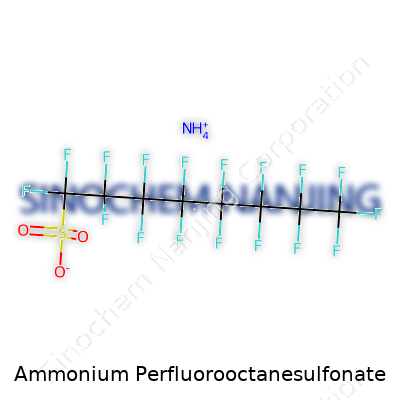
| Names | |
| Preferred IUPAC name | ammonium 2,2,3,3,4,4,5,5,6,6,7,7,8,8,8-pentadecafluorooctane-1-sulfonate |
| Other names |
APFOS Perfluorooctane sulfonic acid ammonium salt Ammonium PFOS Ammonium perfluorooctylsulfonate |
| Pronunciation | /əˈmoʊniəm pɜrˌflʊəroʊˈɒkteɪnˌsʌlˌfəʊneɪt/ |
| Identifiers | |
| CAS Number | 3825-26-1 |
| Beilstein Reference | 3920485 |
| ChEBI | CHEBI:39049 |
| ChEMBL | CHEMBL4290542 |
| ChemSpider | 55370 |
| DrugBank | DB11204 |
| ECHA InfoCard | 100.034.263 |
| EC Number | 223-320-4 |
| Gmelin Reference | 83643 |
| KEGG | C18604 |
| MeSH | D000685 |
| PubChem CID | 23665727 |
| RTECS number | OG5950000 |
| UNII | H88ZT52PBK |
| UN number | UN3316 |
| Properties | |
| Chemical formula | C8H18F17NO3S |
| Molar mass | 538.14 g/mol |
| Appearance | White powder |
| Odor | odorless |
| Density | 1.8 g/cm3 |
| Solubility in water | Soluble in water |
| log P | -4.1 |
| Vapor pressure | Negligible |
| Acidity (pKa) | −3.31 |
| Basicity (pKb) | 3.7 |
| Magnetic susceptibility (χ) | -58.0e-6 cm³/mol |
| Refractive index (nD) | 1.332 |
| Dipole moment | 2.34 D |
| Thermochemistry | |
| Std molar entropy (S⦵298) | 417 J·mol⁻¹·K⁻¹ |
| Std enthalpy of formation (ΔfH⦵298) | -1475.7 kJ/mol |
| Std enthalpy of combustion (ΔcH⦵298) | -5095 kJ/mol |
| Hazards | |
| Main hazards | May cause damage to organs through prolonged or repeated exposure. Toxic to aquatic life with long lasting effects. |
| GHS labelling | GHS07, GHS08 |
| Pictograms | GHS06,GHS08,GHS09 |
| Signal word | Danger |
| Hazard statements | H360D: May damage the unborn child. |
| Precautionary statements | P273, P280, P301+P312, P305+P351+P338, P308+P313, P501 |
| NFPA 704 (fire diamond) | 3-0-0-SPECIAL |
| Lethal dose or concentration | LD50 Oral Rat: >2000 mg/kg |
| LD50 (median dose) | LD50 (median dose): > 2000 mg/kg (rat, oral) |
| NIOSH | WA7870000 |
| PEL (Permissible) | 0.1 mg/m³ |
| REL (Recommended) | 0.1 mg/m3 |
| Related compounds | |
| Related compounds |
Perfluorooctanesulfonic acid Potassium perfluorooctanesulfonate Sodium perfluorooctanesulfonate Perfluorooctanoic acid |



