Ammonium Chlorate: An Ongoing Story of Chemistry, Use, and Caution
Looking Back: Historical Development
Ammonium chlorate didn’t become known overnight. In the days before high-energy chemistry took over, scientists spent long hours tinkering with simple salts and acids. Discovery often meant trial and error, plenty of patience, and more than a few hazardous surprises. Ammonium chlorate showed up around the same time as other notable oxidizers like potassium chlorate and sodium chlorate, at a time when labs grew concerned with the promise of new chemical reactions as much as their risks. Early chemists prized it mainly as a research curiosity because its unstable character made hands-on work a gamble. The background stories from old laboratory journals say as much about human stubbornness as they do about chemistry—because pursuing ammonium chlorate often led to new ideas about handling energetic materials in general.
Product Overview and General Applications
Nowadays, you won’t see ammonium chlorate stacked on hardware-store shelves or used in home science projects. Its main reputation comes as a strong oxidizer, a point well known among those who follow chemical safety bulletins. Over the years, researchers took this property and put it to work in a very limited number of controlled settings—mostly as a reagent in small-scale syntheses or in analytical chemistry. Nobody trusts it for industrial-scale applications, especially in areas like explosives or pyrotechnics, where other, more stable chemicals do the job better and safer. Some specialty research settings have looked at its oxidation potential for certain organic reactions, but commercial use remains rare due to its risk and handling requirements.
Physical and Chemical Properties
Ammonium chlorate comes as a colorless, crystalline solid. It dissolves easily in water and has the sharp taste and smell you find with other chlorate salts. Its chemical formula, NH4ClO3, sets the tone for its behavior: a strong supplier of oxygen, combined with a reducing agent, all in one lattice. This dual nature makes it touchy. Heat, friction, or even mild contamination can trigger its breakdown—sometimes with dangerous consequences. Temperatures above what most would call room temperature make it decompose, releasing gases like nitrogen, chlorine, and plenty of oxygen. The violent nature of this process demands careful handling and has pushed most labs toward safer oxidizers for storage and regular use.
Technical Specifications and Labeling
Handling and shipping ammonium chlorate means following strict protocol. Labels highlight its oxidizer status in bold, and shipments go under hazardous goods codes that reflect its risks. Containers need to keep out moisture and avoid exposure to heat or sunlight. As for purity, labs that work with this compound tend to order only what they need for single experiments, store remaining material in tightly sealed glass, and avoid mixing it near sources of organic matter. Anyone who’s worked in chemical supply sees how this sets ammonium chlorate apart from more routine salts.
Preparation Methods
Making ammonium chlorate involves combining an aqueous solution of ammonium chloride with sodium or potassium chlorate. Double displacement happens, and if the conditions stay right, ammonium chlorate comes out. Purity matters—a single speck of dust or a bit of stray paper can cause problems. Most seasoned chemists learn from experience that handling this step, especially drying the product, needs calm hands and solid knowledge of chemical safety. One less-obvious lesson: never forget the importance of humidity, since even a hint of dampness can speed up decomposition and sometimes cause a spontaneous reaction.
Chemical Reactions and Modifications
Ammonium chlorate’s main feature—its oxidizing strength—gives it plenty of potential, but also a long list of restrictions. Mix it with organic compounds and things may go off with little warning. Reaction with acids or reducing agents releases heat and fumes almost instantly. Chemists sometimes use it in analytical work to release active chlorine or generate oxygen. Modification attempts, like adding buffers or diluting with inert salts, usually just aim to reduce volatility for very specific laboratory tasks. Yet even with all these tricks, its reputation as too unpredictable keeps most researchers from playing with it unless absolutely necessary.
Synonyms and Product Names
The books list a handful of alternative labels. Some reports use the simple terms “ammonium chlorate” or “chloric acid, ammonium salt.” Chemists sometimes cross-reference its registry numbers, but rarely does it get a common trade name, since commercial use remains so rare. This sparseness in naming reflects the broader caution in manufacturing and sales.
Safety and Operational Standards
Every major health and safety agency treats ammonium chlorate as a high-hazard material. Personal protective equipment means more than goggles and gloves—labs mandate full face shields and strict controls on static, dust, and even footwear. Storage rules ban it from anywhere near combustible or organic materials. Safety briefings tell stories about old accidents caused by procedures that seemed safe on paper but failed in practice. The lesson always comes down to strict adherence to protocols and never improvising when storing, transferring, or using the compound. In my own work, long-time staff pass along these safety lessons as a rite of passage for newcomers.
Application Areas
Most uses of ammonium chlorate never move beyond the lab bench. A few analytical procedures require its strong oxidizing ability, mostly in testing or material analysis. Some curiosity-driven researchers explore its chemistry for generating chlorine or oxygen in small-scale reactions. These uses come with strict controls, plenty of backup safety measures, and little room for error. The world of industrial chemistry turns to safer options, making ammonium chlorate a rare sight outside advanced research centers and strictly regulated analytical labs.
Research and Development
Interest in ammonium chlorate inside modern research labs remains pointed and cautious. Scientists study its reactive profile, sometimes for the purpose of understanding broader safety issues related to energetic materials. Some work has explored ways to stabilize it or use it as a testbed for studying fast redox chemistry. These projects demand top-level lab safeguards, and even then, the work always threads the line between curiosity and risk management. Studies in decomposition kinetics and reaction pathways offer insight for handling other hazardous oxidizers. Investment into large-scale development is rare, considering the cost and safety liabilities involved.
Toxicity Research
Toxicologists know that ammonium chlorate, like other strong oxidizers, poses inhalation and ingestion hazards. Once inside the body, it can disrupt blood chemistry, oxidize hemoglobin, and harm organs. Lab studies show that its breakdown products, especially chlorine and chlorate ions, stress kidneys and liver. Accidental exposures have led to documented cases of poisoning, with symptoms ranging from gastrointestinal distress to severe systemic toxicity. Animal studies give us some picture of its effects at various doses, but the real-world cases drive home the need for education, equipment, and rapid-response protocols in environments where ammonium chlorate still sees use.
Future Prospects
The future for ammonium chlorate skews toward restriction rather than broader adoption. Twenty years ago, the conversation leaned toward finding new uses, but now safer substitutes like potassium permanganate, hydrogen peroxide, and sodium chlorate dominate research and commercial supply. Calls for tightening safety standards echo across international borders. Academic research may still explore its chemistry, since understanding riskier oxidizers helps improve safety culture across the board. Technology could offer safer ways to generate or use its oxidation strength—perhaps by micro-encapsulation or tightly controlled synthesis reactors. But as things stand, most in the chemical world see ammonium chlorate as a learning tool: a compound with lessons about respect, attention to detail, and the balance between curiosity and caution.
What is Ammonium Chlorate used for?
The Basics
Ammonium chlorate draws attention in chemistry labs not just because of how it’s made, but because of what it does. The compound forms when ammonium carbonate reacts with either hydrochloric acid or sodium chlorate. In the real world, the mere process of mixing and storing this compound means you’re handling something that can react fast and strong. The chlorate part gives it a lot of oxygen, and the ammonium part brings fuel to the equation, leaving you with a chemical that packs a punch.
Where Ammonium Chlorate Shows Up
You don’t see ammonium chlorate on store shelves. You’re more likely to find it in laboratories and certain chemical industries. Chemistry teachers sometimes use it to show students strong oxidation reactions. This demo isn’t about drama — it’s a practical way for students to understand what makes a compound reactive and why it should be treated with respect.
In analytical chemistry, it sometimes helps people test for specific ions. The reactivity of ammonium chlorate makes it useful when you need to oxidize something stubborn. On top of that, it has played a part in early research and development for explosives and pyrotechnics. Today, other, safer oxidizers have taken over those applications, but the compound is still part of the story of how people learned to harness energetic reactions.
Safety Concerns and Reality Checks
I’ve worked in labs where storing ammonium chlorate meant locking it away and labeling it with more warnings than almost anything else on the shelf. This chemical breaks down easily, especially when heated or exposed to organic materials, and the reaction can get violent. That kind of instability helps explain why most chemical suppliers refuse to sell large amounts, even for research.
The dangers don’t end with explosions. Ammonium chlorate forms toxic gases if it decomposes or burns. Once you’ve seen how it reacts on a hot plate or after mixing with just a bit of sugar, you get a sense of why rules exist for its storage and disposal. Environmental groups have also raised concerns, since any accidental spill could contaminate soil and water with both ammonia and chlorate ions, which harm plants and wildlife.
Better Ways Forward
Most modern labs and industries have moved on to safer alternatives to ammonium chlorate for oxidation. Potassium chlorate or ammonium nitrate handle many tasks just as well, and they’re less likely to trigger a dangerous accident. Teaching labs now often stick to digital simulations instead of live ammonium chlorate reactions. This respects safety concerns and helps avoid waste.
Regulators and industry watchdogs suggest regular safety training and secure chemical storage to keep ammonium chlorate where it belongs — as a teaching example or research-only compound, not in everyday use. Simple measures, like using less hazardous chemicals and staying updated on best practices, make a big difference.
Why It Still Matters
The story of ammonium chlorate runs deeper than a name in a textbook. It highlights lessons about chemical safety, responsible use, and the never-ending push for safer methods in science and industry. Anyone working with reactive compounds can learn from the way labs manage, restrict, and replace chemicals with troubled reputations. Knowing how to respect compounds like ammonium chlorate, both for their power and their dangers, can shape the way future generations handle new challenges in chemistry and manufacturing.
Is Ammonium Chlorate hazardous or explosive?
It’s More Than a Chemical Formula
Every once in a while, a topic trickles into conversation that brings back memories from high school labs or chemistry lectures. Ammonium chlorate does this for me. Beneath its simple name lies a substance that challenges safe handling, and I remember how even cautious teachers steered clear of it. This isn’t just academic caution; ammonium chlorate’s track record as a hazardous material stretches over a century.
Why Ammonium Chlorate Poses a Serious Risk
Mixing two strong forces rarely turns out fine. In this chemical, one half—a powerful oxidizer—sits side by side with a reactive ammonium group. On paper, it doesn’t take much for disaster. The molecules don’t get along in the long run, making the solid extremely unstable. Any dry pile, no matter how pure it looks, sets the stage for accidental explosions. Sharply tap it, give it a little heat, or let it rub against something rough, and you might turn a science experiment into an emergency.
Real World Incidents: Not Just Chemistry Class Warnings
Old reports tell stories of warehouses and laboratories that underestimated this chemical. One incident from Germany in the 1920s stuck with me. Someone attempted to dry ammonium chlorate in the sun—nothing fancy—and the pile went up in a flash, wrecking nearby buildings. Through the decades, similar stories keep surfacing, from lab-scale mishaps to larger stockpile disasters. The lesson doesn’t go away: there’s a difference between knowing the formula and respecting the reality.
Health Hazards Don’t Disappear
The issue goes beyond explosions. Inhalation or skin contact carries a serious risk. Exposure could mean breathing trouble, skin burns, and even damage to blood cells. Working with chlorates often requires much more than gloves and goggles. Institutions demand fume hoods, sturdy ventilation, and protocols so strict, only workers with advanced safety training get close.
Usage Declines for a Reason
Some chemicals lose relevance for good reasons. Once considered for certain explosives and lab reagents, ammonium chlorate gradually faded from mainstream use. That happened as the risks weighed heavier than the rewards, especially since safer alternatives exist. Even governments cut it out from civilian applications. A quick look at safety databases like ChemWatch or the CDC will show why: its volatility, toxicity, and history of incidents push it out of favor.
Steps Toward Real Safety
Better awareness forms the first line of defense. Instead of trusting to luck or old-school habits, companies invest in training and strict lab protocols. If a school or factory wants to keep any on hand, it comes with some of the toughest storage regulations around—small quantities, climate control, rigorous tracking. Transporting it is nearly unheard of without red tape and specialized containers. As a simple rule, anyone who can avoid working with ammonium chlorate does.
Looking Forward: Teaching and Technology
The most effective solution isn’t more rules; it’s education. Chemistry teachers discuss it as a cautionary tale, not as a viable ingredient. Digital tools and simulations offer safer ways to explore its reactions. In practice, leaving ammonium chlorate to the history books or tightly controlled labs keeps people safer. Safety wins by replacing outdated chemicals and sharing stories of close calls so the next generation learns before mistakes repeat.
What are the storage requirements for Ammonium Chlorate?
Not Your Everyday Chemical
Ammonium chlorate is one of those chemicals that makes you stop and take stock before moving forward. Anyone who has spent time in a physics or chemistry lab knows the tension that follows handling strong oxidizers. This compound doesn’t just demand respect; it insists on a higher standard of care. Stories circulate about accidental ignitions and explosions linked to improper storage—and those stories are rooted in real events, not urban legend. Just handling a bag carelessly or letting too much dust drift into the air can spell trouble.
Understanding Real Risks
The biggest risk with ammonium chlorate comes from its instability when exposed to heat, friction, organic materials, or even just pressure. Mixed with a little spark or some flammable substance, it shifts from a quiet powder into an explosive threat. Facilities pay attention to this for good reason; shops and warehouses where this compound sits on shelves stick to clear guidelines every day. The point is to never give it the chance to do what it’s capable of.
Storage Practices That Make a Difference
A safe room for ammonium chlorate means a cool, dry zone, not just anywhere away from sunlight. Humidity matters as much as temperature. Even a leaky roof or an unsealed window brings unwanted moisture that creates risk. Ventilation helps keep the air from becoming stuffy, but the movement has to be gentle. Strong drafts can whip particles into the air, turning ordinary storage into something hazardous.
In my own time on a warehouse floor, I’ve seen what zoned storage really looks like. Ammonium chlorate never shares space with anything flammable or organic—no cardboard, no wooden pallets lying nearby. Shelving stays metal, and chemical drums wear clear labels. Accident investigations tend to find shortcuts in storage behind many incidents. People used boxes that were slightly damp or left small piles of spilled powder sitting overnight.
Solid Containers and Clear Labeling
Only tightly sealed, corrosion-resistant containers hold ammonium chlorate safely. It’s tempting to just tape lids down, but tamper-evident seals go beyond that, showing if someone tried to poke around. One label per drum isn’t enough in busy stores; labels on every visible spot send the message every time someone passes by or restocks nearby chemicals. Regulations don’t just ask for these measures. They reflect what’s already prevented plenty of disasters.
Fires and accidents in chemical stores usually start with a series of small mistakes. A missing lid here, some spilled powder in a drawer there. In my experience, small investments in training make a far bigger difference than any fancy sensor system or digital management tool. If people pay attention, so do the storage practices.
Keeping People and Environment Safe
A spill of ammonium chlorate isn’t something to brush off. Teams I’ve worked with keep spill kits and evacuation plans ready, and every worker, even new hires, learns who to call and what steps shut down risk, not just contain it. Authorities remind everyone that environmental leaks spell disaster for soil and groundwater. Restoring a contaminated site costs so much more than setting up proper storage from the start.
Regulations keep evolving, sometimes after tough lessons. All the best safety plans start with a basic respect for the dangers at hand. Speaking from years watching the industry, those who cut corners do so at their own peril. Safe storage of ammonium chlorate doesn’t just protect property—it keeps people alive.
How should Ammonium Chlorate be handled safely?
Understanding the Risks
Ammonium chlorate doesn’t get much attention outside of technical circles, but anyone who’s ever spent time around chemicals knows it isn’t something to downplay. This compound ranks among the more dangerous ones you’ll find in a laboratory. Its ability to catch fire or explode, sometimes just from ordinary contact with organic matter, turns even small mistakes into potential emergencies. Some folks see white, salt-like crystals and forget what they’re dealing with. You can’t afford to get comfortable with ammonium chlorate. Accidents stem from everyday actions—storing it near paper, using metal tools, even a bit of static electricity.
Storage and Environment
Most people who work in labs know the value of storage protocols, but ammonium chlorate brings extra urgency. This chemical reacts with nearly anything that can burn, and that includes stuff you don’t expect—an old rag, lab notebook, or even wood shelves. Temperature swings add more danger since heat can kick off a runaway reaction.
Ammonium chlorate belongs in a cool, dry, isolated place, away from sunlight and humidity. Fume hoods and storage lockers marked “explosives” give an added layer of physical control. Containers must stay tightly shut, made from materials ammonium chlorate can’t corrode. I’ve walked past storerooms where loose containers got tossed with the janitorial supplies. That’s asking for trouble. Every workspace needs clear rules: dedicated shelving, clear labeling, locks, and regular checks. Skipping these steps endangers everyone nearby.
Personal Protective Gear and Procedures
Anyone who’s watched a minor spill escalate knows how quickly things spiral. Nitrile gloves, goggles, and flame-retardant lab coats belong on anyone who so much as opens a jar of ammonium chlorate. Dust masks add another barrier, since inhaling fine grains brings its own set of health problems. I remember working with another oxidizer while someone nearby handled ammonium chlorate without gloves. Their hand looked fine, but by lunch, redness and irritation took hold, all because a few crystals clung to their skin.
Spills need more attention than with less reactive chemicals. Sweep up using non-sparking, plastic tools—metal can strike a spark, and a broom made from natural fibers produces static. Ammonium chlorate doesn’t care if the mistake seems small; the reaction it triggers won’t stay contained. Any surface where a spill occurs gets cleaned thoroughly. Waste disposal must meet strict hazardous waste controls, with no tossing in ordinary trash or pouring down the drain.
Training and Planning
Constant, collective vigilance makes the difference. Training can’t stop at the basics. Regular drills, up-to-date digital checklists, and routine inventory walk-throughs keep everyone sharp. Supervisors and lab techs need to believe in these routines—not just for compliance, but for everyone’s safety. Sometimes it helps to host external safety experts to keep training grounded and current. Written protocols on every wall won’t help if no one’s reading them.
Good practice asks for more than rules on paper. Track expiration dates, rotate stock, and avoid keeping larger quantities than needed. If an emergency does happen—fire, spill, or leak—an evacuation plan and immediate communication cut down the confusion and chance of harm. Real-life experience shows: the less you assume, the safer the outcome.
Safer Alternatives and Reducing Use
Certain processes rely on ammonium chlorate, but alternative chemicals exist for many of them. Chemists and engineers keep improving ways to swap out risky substances. Before bringing any high-risk compound into the lab, review the process and look for less hazardous options. Using less hazardous materials doesn’t just cut down on risk: it keeps people learning smarter, safer methods.
What is the chemical formula of Ammonium Chlorate?
Understanding Ammonium Chlorate
Ammonium chlorate has the chemical formula NH4ClO3. You get this combination by mixing ammonium ions (NH4+) with chlorate ions (ClO3-). This chemical stands out in the world of science not just for its specific makeup but for the risks and reactions it brings along. That’s something students in chemistry class learn pretty early, but the impact carries beyond textbooks.
Why Bother Learning About NH4ClO3?
Knowledge isn’t just for passing tests. Ammonium chlorate grabs attention for a reason—it’s volatile and needs careful handling. Reactivity is a big concern. This substance can act as a strong oxidizer, which means it doesn’t mix well with flammable materials or reducing agents. If you drop even a small piece into the wrong container, disaster can strike in a flash. In real life, those dangerous reactions happen quickly and unpredictably.
While studying at university, I remember how every blown-up demonstration left a mark. The lab instructor hammered home the dire need for respect in handling chemicals, especially ammonium chlorate. He showed us news reports with accidents from people not recognizing what could go wrong. It proved that no one escapes the consequences of mistakes made around substances like NH4ClO3.
The Real-World Impact
Ammonium chlorate sees little use outside of laboratory settings. Its instability limits it. If you look for commercial applications, manufacturers often pass this one by because safer alternatives exist. The risks outweigh the rewards in most cases. Lab managers skip it unless the research can’t happen any other way, and safety protocols get beefed up whenever it enters the workspace.
Documented cases show just how fast things go wrong. For example, the International Chemical Safety Cards point to incidents where storage next to combustible materials led to explosions. Emergency workers pick up those pieces and spend years pushing for stricter regulations, not because the chemical itself is evil, but because people underestimate how dangerous it really is.
Safety: Not an Afterthought
The lesson I drew from years around chemicals is that respect comes before curiosity. Too often, people get hurt because they see a formula and forget what it stands for in practice. NH4ClO3 isn’t a friendly compound. Anyone thinking about using or storing ammonium chlorate should know proper chemical storage practices, such as keeping it away from organic material and direct sunlight, and always using explosion-proof containers if possible. Leadership in labs matters; supervisors must insist on regular inspections and emergency response drills. This isn’t paranoia—it’s good sense.
Teaching students and workers about the dangers, with real-life stories and hands-on demonstrations, drives the point home more than any lecture or reading ever will. This hands-on education saves lives when split-second decisions matter.
Moving Forward with Education and Caution
Ammonium chlorate isn’t just a chemical formula tucked away in a textbook. It’s a reminder of why details matter in science and everyday safety. By prioritizing education and reinforcing safety habits, accidents can be prevented, and future chemists can approach their work with confidence—guided by facts, real experience, and a healthy dose of respect for the risks they face in the lab.
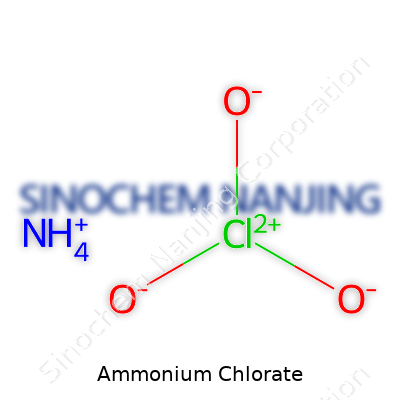
| Names | |
| Preferred IUPAC name | Ammonium chlorate |
| Other names |
Ammonium chlorate(V) Chloric acid ammonium salt |
| Pronunciation | /əˈməʊniəm ˈklɔːreɪt/ |
| Identifiers | |
| CAS Number | 10192-29-7 |
| Beilstein Reference | 358990 |
| ChEBI | CHEBI:37741 |
| ChEMBL | CHEMBL504156 |
| ChemSpider | 10719 |
| DrugBank | DB16099 |
| ECHA InfoCard | 100.030.241 |
| EC Number | 229-871-8 |
| Gmelin Reference | 13129 |
| KEGG | C25367 |
| MeSH | D000648 |
| PubChem CID | 24639 |
| RTECS number | BR6600000 |
| UNII | 9W8N5Q2176 |
| UN number | UN3363 |
| Properties | |
| Chemical formula | NH4ClO3 |
| Molar mass | 117.487 g/mol |
| Appearance | White crystalline solid |
| Odor | Odorless |
| Density | Density: 1.87 g/cm³ |
| Solubility in water | 70.1 g/100 mL (25 °C) |
| log P | -4.36 |
| Vapor pressure | Negligible |
| Acidity (pKa) | pKa ≈ 9.24 |
| Basicity (pKb) | -3.0 |
| Magnetic susceptibility (χ) | -53.0e-6 cm³/mol |
| Refractive index (nD) | 1.445 |
| Dipole moment | 0 D |
| Thermochemistry | |
| Std molar entropy (S⦵298) | 143.8 J·mol⁻¹·K⁻¹ |
| Std enthalpy of formation (ΔfH⦵298) | -230.0 kJ/mol |
| Std enthalpy of combustion (ΔcH⦵298) | -287.5 kJ/mol |
| Pharmacology | |
| ATC code | V03AB33 |
| Hazards | |
| Main hazards | Explosive, oxidizer, harmful if swallowed, causes irritation to skin, eyes, and respiratory tract |
| GHS labelling | **GHS02, GHS06, GHS09** |
| Pictograms | GHS02,GHS03,GHS07 |
| Signal word | Danger |
| Hazard statements | H271: May cause fire or explosion; strong oxidizer. H301: Toxic if swallowed. H302: Harmful if swallowed. H314: Causes severe skin burns and eye damage. H332: Harmful if inhaled. |
| Precautionary statements | P210, P220, P221, P280, P305+P351+P338, P370+P378, P501 |
| NFPA 704 (fire diamond) | 4-0-3-OX |
| Explosive limits | Not explosive as shipped. |
| Lethal dose or concentration | LD50 oral rat 165 mg/kg |
| LD50 (median dose) | LD50 (median dose): 1620 mg/kg (oral, rat) |
| NIOSH | WA0480000 |
| PEL (Permissible) | Not established |
| REL (Recommended) | Do not use the chemical |
| IDLH (Immediate danger) | Unknown |
| Related compounds | |
| Related compounds |
Sodium chlorate Potassium chlorate Ammonium perchlorate Ammonium chloride |



