Aminomethylbenzoic Acid: From Laboratory Curiosity to Practical Necessity
Historical Development
Early chemists in the mid-20th century stumbled onto aminomethylbenzoic acid (AMBA) during efforts to tweak benzoic acid derivatives. Curiosity over its hemostatic effects drove broader investigation, particularly in Japan and Germany, as postwar medicine struggled with surgical blood loss. Researchers quickly realized AMBA’s ability to tamp down excessive fibrinolysis – the process that breaks down blood clots. Papers from the 1950s and '60s started to chart its benefits in nosebleeds, gynecological bleeding, and trauma settings. By the 1970s, AMBA gained ground as a reliable antifibrinolytic agent, especially as surgeons wanted simpler alternatives to fresh plasma. Many of those old clinical questions shaped the regulatory standards and labeling found today.
Product Overview
Aminomethylbenzoic acid appears on the market as a fine, white or slightly off-white powder. Chemists will recognize its IUPAC name: 4-(aminomethyl)benzoic acid. Demand for quality control has led to the creation of several pharmaceutical and reagent grades, each with tight controls on heavy metals and organics. Factories across Asia, particularly in India and China, produce most of the world supply these days, though batch testing and import controls ensure consistency. Labels almost always indicate intended use – lab, veterinary, or human medical – along with purity, country of origin, and recommended storage conditions. Shelf life at room temperature remains robust, with little risk from humidity if sealed tightly.
Physical & Chemical Properties
Physically, AMBA takes the form of small, grainy crystals or free-flowing powder, odorless and only faintly acidic to taste. The molecular weight sits at 151.16 g/mol. It dissolves fairly well in hot water and dilute acids but resists mixing with alcohol, ether, or nonpolar solvents. The melting point hovers at 300°C, and decomposition yields pungent aromatic fumes. Under standard conditions, it handles well, remaining chemically stable for years. While the amine group at the para position draws attention from organic chemists, the compound itself resists spontaneous breakdown and oxidation.
Technical Specifications & Labeling
Manufacturers specify purity on certificates of analysis, usually above 98%. Heavy metals must remain under 10 ppm, limits on insoluble particles and color impurities require analytical confirmation, and water content rarely exceeds a few tenths of a percent. Labels indicate not only batch and expiry, but also the recommended storage — dry and at room temperature — along with hazard statements. Packaging warns of mild skin and eye irritant properties. Pharmacopeia monographs (such as JP and USP) provide chemical identification tests — melting point, IR spectrum, and titration profile — and stipulate rejection of off-spec batches.
Preparation Method
AMBA production usually starts with methyl benzoate or toluic acid. The methyl or tolyl group gets brominated to add a reactive handle, followed by reaction with ammonia or amines to introduce the aminomethyl group at the para position. Yields improve with careful control: temperature, solvent choice, and catalyst all push selectivity. Final purification utilizes crystallization and, in some setups, activated carbon to remove organics. Analytical chemists scrutinize every step for unreacted starting material or byproducts, as trace impurities affect both clinical performance and toxicological profile. Waste streams meet environmental regulations by neutralizing acidic residues and capturing volatile organics before discharge.
Chemical Reactions & Modifications
Researchers have spent years exploring ways to tweak the aminomethyl group. A handful of derivatives replace or extend the amine side chain, aiming for improved clotting effects or modified bioavailability. Classic reactions include acetylation of the amine, formation of amide bonds, and selective reduction of carboxylic acid to alcohol or ester forms. AMBA’s benzene ring—bearing both an amino and carboxyl group—offers multiple sites for functionalization, though most modifications stay on paper or in pilot studies rather than in mass production. Harsh acids, bases, and oxidizers can degrade the structure, with the primary amine especially prone to forming Schiff bases or reacting with aldehydes.
Synonyms & Product Names
Synonyms for AMBA fill reference books and pharmaceutical indexes. Names include p-aminomethylbenzoic acid, PAMBA, 4-aminomethylbenzoic acid, and, in some contexts, para-aminomethylbenzoic acid. Some regions sell it under branded names, especially in Eastern Europe and Japan, but generics dominate. Regulatory filings and clinical papers prefer the chemical name for clarity, a habit ever more important when tracking international variations in purity and excipients.
Safety & Operational Standards
AMBA demands respect in the workplace. Inhaled dust causes mild respiratory irritation. Skin contact may lead to minor itching or redness, so gloves and goggles offer a simple barrier during weighing or pouring tasks. No records exist of chronic toxicity for workers in regulated settings, but accidental ingestion, especially in large amount, can cause nausea, headache, or, rarely, allergic reactions. Safety data sheets caution against mixing with strong oxidizers or acids. Waste handling requires basic neutralization and collection of spill residues for appropriate chemical or incineration disposal. Training remains a critical step for new hires, especially those unfamiliar with antifibrinolytics. Regulators have pushed for regular reviews of packaging, especially bulk shipments, to minimize spill risk during transit.
Application Area
Hospital doctors still reach for AMBA during unexpected bleeding events, particularly when other antifibrinolytics like tranexamic acid or epsilon-aminocaproic acid fail or prove unavailable. Oral and injectable formulations appear in drug cabinets in trauma units, obstetrics, and select dental clinics. Outside medicine, textile processors and research labs use AMBA to block protease activity during protein purification, as its antifibrinolytic nature translates to stabilization of sensitive biochemical samples. Sports medicine has, at times, experimented with AMBA to control nosebleeds during competition, though regulations strictly control these uses. Its presence in veterinary clinics has grown, especially in countries without ready access to newer hemostatic agents. Food industry applications remain rare, given tight toxicological standards, but research continues into ways AMBA could preserve or recover valuable enzymes in industrial fermentation.
Research & Development
Most current research focuses on expanded medical indications and improved delivery forms. Investigators are updating dosing regimens based on genetic variation, as population-level differences in metabolism call for tailored protocols. Preclinical studies probe combinations with other antifibrinolytics, aiming for synergy in trauma and postpartum hemorrhage. Scientists also hope that chemical tweaks to the aminomethyl side chain could provide longer-lasting products or oral options less prone to breakdown in the gut. Basic science remains busy mapping AMBA’s interaction with plasmin and tPA, the proteins driving clot breakdown. In the protein chemistry world, better understanding of AMBA’s stabilizing role could enable more efficient extraction of rare proteins or enzymes, with implications for pharmaceuticals and specialty chemicals.
Toxicity Research
Animal studies set the stage: single hefty doses cause mild, reversible symptoms, while repeated exposure produces few toxic effects below gram-per-kilogram dosing. In humans, side effects usually stick to headache, gastrointestinal disturbance, or allergic flare. A rare but serious adverse event includes thrombosis, as the drug’s very mechanism can, in susceptible patients, tip the balance too far toward clot formation. This risk has shaped dosing guidelines, especially in the elderly and those with clotting disorders or artificial heart valves. Long-term studies on cancer risk or fertility have not revealed major harms, but the small sample sizes leave room for additional scrutiny. Wastewater and residue studies show AMBA breaks down rapidly in biological environments, limiting concerns about ecological persistence or bioaccumulation.
Future Prospects
Trends in personalized medicine and clotting disorder management bode well for renewed attention to AMBA. Generic drug price pressure drives researchers to optimize production, squeeze costs, and improve environmental footprints. Digital labeling and blockchain may soon track AMBA from factory to bedside, limiting counterfeit risk and enabling rapid recall in the rare event of contamination. Interest in new dosage forms — patches, long-acting pills, or stabilized solutions — continues to attract startup and academic attention. As hospitals reassess trauma protocols and military medics seek portable hemostatics, AMBA’s decades of safety and familiarity give it an edge. So long as research uncovers new tweaks and combinations, this long-serving molecule is not going anywhere soon.
What is Aminomethylbenzoic Acid used for?
What Is Aminomethylbenzoic Acid Doing In Medicine?
Aminomethylbenzoic acid shows up on the ingredient list of certain medications that doctors use to manage heavy bleeding. In practice, it goes by its shorter name, AMBA. I first heard about AMBA years ago, working in a hospital pharmacy, where people often asked if it really worked. To answer that, you have to look at what AMBA does inside the body. It slows down the breakdown of clots. This might not mean much to most people, but for those facing excessive blood loss from surgery or medical conditions, it’s a big deal.
Real-World Connections
Heavy bleeding does not always get enough attention in everyday health conversations. A person may have surgery, trauma, or a bleeding disorder, and suddenly bleeding control turns into a matter of urgency. Aminomethylbenzoic acid helps doctors keep patients safer. In my experience, it often gets used to treat bleeding following bladder or prostate surgery. Doctors also turn to it for women who have unusually heavy menstrual periods. These situations are not rare. Around one in five women struggles with heavy periods, and surgeries that produce excess bleeding can happen daily.
Why People Should Care
The ability to rely on a medication like aminomethylbenzoic acid means fewer blood transfusions. Blood transfusions always carry risk—from allergic reactions to the spread of infection. Reducing the need for extra procedures saves money and gets people home sooner. At the end of the day, most patients prefer to rest in their own beds, not hospital rooms. As someone who has watched transfusion reactions and read stacks of patient discharge notes, I know that fewer exposures to unnecessary risks always lead to better outcomes.
Understanding the Science
Aminomethylbenzoic acid acts on an enzyme called plasmin. This enzyme chews up fibrin, which is the main building block of blood clots. If fibrin disappears too quickly, bleeding restarts. By blocking plasmin, AMBA helps make clots firmer and keeps blood where it belongs. Some folks confuse it with other anti-fibrinolytic drugs, like tranexamic acid, but doctors sometimes choose AMBA for certain patients because it has a different profile or because it suits a particular case based on health history.
Side Effects And Safety
No drug comes without a downside. Using AMBA can cause nausea, diarrhea, or skin rash. Some patients feel dizzy or develop headaches. The big concern stays with people at risk of unwanted blood clots, such as those with a history of deep vein thrombosis. Doctors rarely prescribe it to anyone with that kind of problem. For most people, side effects remain mild, but every risk needs a full explanation. Transparency makes a difference: people must know not just the positives, but the trade-offs too.
Better Access, Better Health
One challenge involves access in places where resources run thin. Not every clinic can keep AMBA or alternatives in stock. Ideally, health systems could improve distribution, update medical guidelines, and invest in education so doctors use these tools wisely. As someone who has worked across both small clinics and large hospitals, I have seen how the simple availability of a medication like aminomethylbenzoic acid can change everything for emergency teams and for families who want the best care for their loved ones.
What are the side effects of Aminomethylbenzoic Acid?
Everyday Reactions That Catch People Off Guard
Aminomethylbenzoic acid steps up as a treatment for excessive bleeding, especially after surgery or during heavy periods. Doctors reach for it to tame the way blood clots, helping some people avoid more drastic interventions. Even though it plays a practical role for many, side effects draw a line between relief and more challenges.
Common Bumps in the Road
A fair number of folks report nausea and a heavy gut soon after taking the medicine. For some, the taste lingers much longer than expected, and mealtime grows unappetizing. These digestive complaints don’t always push people to quit, but they nag enough to matter. Headaches creep up too, often described as a deep ache behind the eyes or at the base of the skull—certainly unwelcome during recovery.
Rashes show up in some people. Red spots or raised patches spread over the arms and chest, often itchy enough to ruin sleep. This lands in the category of allergic reaction. Caution turns critical when hives cover larger territory or breathing gets tough. Swelling in the lips or face turns a minor rash into a full-blown emergency.
Rare Risks Raise Bigger Flags
Some reactions stay off the radar for most, but deserve mention. Taking aminomethylbenzoic acid can trigger muscle spasms, a tight chest, or even confusion. There’s talk among hematologists—clotting too much could invite blood clots that block veins or arteries. Modern research, like studies featured in the Journal of Clinical Pathology, point out this risk in people already prone to clotting problems.
There’s another side effect that sneaks up slowly: yellowing skin or eyes. That’s a sign the liver wants attention. Blood in the urine, dark stools, or sudden pain in the upper right belly also push for quick medical help, since these signs suggest the liver is under stress or a more serious issue is brewing. No one expects to land in the ER while trying to curb bleeding, so these complications demand awareness from both patients and doctors.
Why Side Effects Matter for Family, Friends, and the Doctor’s Office
These reactions break routines. Missing work, losing sleep, or cutting back on family activities becomes the real toll, not just the symptoms themselves. In my own family, we dealt with a mix of side effects when a relative used this medicine after a major surgery. The daily calls swapping stories about odd rashes, headaches, and second-guessing every bruise turned the whole home upside down for a while.
Many folks hold back from telling their provider about mild symptoms. Maybe it feels like complaining, or maybe everyone expects medications to bring some discomfort. But dismissing these signals risks missing early warnings. Honest talks with the care team lead to quick changes in medication or closer observation. That extra step can shrink recovery time and keep more people out of the hospital.
Making Treatment Safer and Smarter
Moving forward, more education helps patients set their expectations before taking aminomethylbenzoic acid. Pharmacists and nurses could give simple tips—like which warning signs to act on, or how to handle minor symptoms at home. Blood work and regular check-ins stop many problems before they grow serious. Technology, such as apps or online messaging, makes it simpler for people to log symptoms and get advice in real time, reducing the risks and supporting better outcomes.
How should Aminomethylbenzoic Acid be taken or dosed?
Understanding Purpose Beyond the Prescription
Doctors prescribe aminomethylbenzoic acid mainly to help control excessive bleeding. This isn’t one of those common over-the-counter pills. If a physician brings it up, there’s probably been an issue like heavy periods, surgery, or something else turning the body’s clotting process upside down. It works by blocking certain enzymes that break down clots too quickly. That’s why it stands out for both people recovering after operations and those dealing with hereditary bleeding disorders.
Dosage: The Real-Life Details
Many folks expect medicine use to be set in stone, but dosing often varies. For most adults, doses usually range from 500mg to 1g, split into two or three sessions a day. The exact recommendation depends not just on the bleed, but also on a person’s weight, other health issues, and how the bleeding responds.
Kids get lower doses, scaled for their size. All dosing works best when discussed openly with the prescribing doctor, not just taken as a number from the internet. Skipping that step invites risks—either not getting enough help, or taking too much and tipping into trouble.
Taking the Pill: Food or No Food?
Swallowing this medicine with a full glass of water helps keep stomach upset away. Some people run into mild side effects—nausea, cramps, or a heavy feeling. If that happens, switching to taking it with a light meal often makes things easier. Avoid mixing it with too much alcohol since that introduces extra strain for the liver and kidneys.
Don’t Change Strategy Without Asking
Life gets busy, but forgetting a dose or taking the drug at odd intervals changes how well it works. Setting reminders or pairing the schedule with daily routines (like meals) gives better results. Doubling up on doses to play catch-up brings more danger than benefit. Instead, sticking as close to the plan as possible, and talking to the clinic for late questions, puts health in a safer spot.
Long-Term Use and Watchful Eyes
Some treatments stretch out over weeks. Blood tests and kidney checks might show up in the doctor’s plan, especially for people taking other medicines or those with existing kidney issues. If symptoms like ankle swelling, shortness of breath, or unexplained bruising show up, raising the alarm with the clinic is the next smart move.
Looking Ahead: Room for Safer Choices
Aminomethylbenzoic acid plays a steady role in managing tough bleeding problems, but medicine works better with teamwork. Patients who understand why they’re taking it, ask questions during appointments, and respect how dosing fits into their bodies see better, safer results. Health systems could help by offering easier-to-follow dosing guides and regular check-ins, cutting down on confusion and mistakes.
Blood disorders and surgeries carry risk. Careful use of this drug takes some of the worry out of the equation, but there’s always room for better patient education and open communication. That partnership between nurse, doctor, and patient is the real foundation for stitching up both wounds and uncertainty.
Are there any contraindications for using Aminomethylbenzoic Acid?
Realities behind the Prescription
Aminomethylbenzoic acid, known for helping control bleeding by acting as an antifibrinolytic, has a long track record in surgical settings and for some bleeding disorders. Anyone thinking about this treatment or writing the script needs to weigh up more than just textbook information. From what I’ve seen, both as a health writer and someone supporting people with chronic conditions, safe medication use always begins with asking tough questions—who stands to benefit, and who could get hurt?
Medical Conditions That Raise Red Flags
Kidney function comes up straight away. People with kidney disease face greater risk taking aminomethylbenzoic acid because their bodies clear the drug much slower. When the drug sticks around longer, toxicity can creep up, pushing up chances for rare but serious side effects, like seizures. Folks on dialysis, or with moderate or severe chronic kidney issues, often look for other treatments.
A history of blood clots gives strong pause too. This drug slows natural breakdown of clots, which usually stops excessive bleeding but—especially for those who have had deep vein thrombosis, pulmonary embolism, or have inherited clotting issues—throws fuel on a dangerous fire. Doctors look twice at anyone with risk factors such as obesity, family history of clotting problems, hormone medications, smoking, or periods of immobility.
Drug Interactions and Overlapping Treatments
Real life isn’t tidy. Patients sometimes juggle several medications and comorbidities. Aminomethylbenzoic acid’s interaction profile isn’t the longest, but overlaps matter. People already using agents like tranexamic acid or other antifibrinolytics won’t get a double benefit—just double the risk, especially for abnormal clots. Patients with conditions like hemophilia taking replacement factor therapies need close supervision to avoid unwanted clotting if aminomethylbenzoic acid enters the mix.
Allergies and Hypersensitivity
No one wants an ER trip from a drug meant to help. Reactions to aminomethylbenzoic acid are rare but not imaginary. A known allergy to the molecule itself means searching for an alternative. Plus, people who’ve reacted badly to related drugs sometimes cross-react.
Pediatric and Pregnancy Considerations
Science moves slower in kids and pregnancy. For children, dosage adjustments require extra scrutiny, especially for kids with low body mass or organ dysfunction. Data in pregnancy isn’t robust. Healthcare providers often pause before using it outside true necessity, weighing bleeding risk against unknowns for fetal health.
Practical Solutions and Safe Pathways
Solid communication between doctor and patient avoids mistakes. Sharing full health histories—kidney status, family health, medication lists—pays off. Pharmacists help by spotting less obvious risks before dispensing. Patients unsure if a bleeding disorder needs this therapy ask their hematologist for a review. If someone needs antifibrinolytic support, regular kidney tests and follow-up check-ins reduce danger. Every extra check on a medication profile or reaction history keeps safety at the front.
Modern healthcare thrives on teamwork and honest sharing. Aminomethylbenzoic acid helps many but reminds us each prescription needs a whole-person review. Science keeps opening new info on drug safety; anyone using this treatment can benefit from keeping communication open with their clinician and asking hard questions, every single time.
Can Aminomethylbenzoic Acid be taken with other medications?
Putting Patient Safety First
Aminomethylbenzoic acid helps control bleeding caused by excess fibrinolysis. I’ve seen folks in hospitals rely on it during surgeries or emergencies, and the last thing anybody wants is a surprise side effect. Taking this medicine alongside others isn’t as simple as grabbing a glass of water and downing everything at once. Over-the-counter medications, vitamins, and herbal supplements can throw a wrench into how the body processes aminomethylbenzoic acid.
How Drug Interactions Happen in Real Life
Mixing drugs sometimes feels like entering uncharted waters. Certain medications can compete in the liver or kidneys, affecting absorption and breakdown. Aminomethylbenzoic acid works by stopping the breakdown of fibrin, and if someone’s using blood thinners, the two drugs could pull the rope in opposite directions. I’ve spoken to clinicians who say that mixing an antifibrinolytic with warfarin or heparin increases the chance of odd clotting or bleeding risks. The same risk pops up with aspirin or even some common painkillers, which also mess with the body’s ability to clot.
It goes far beyond just the obvious “blood thinners.” Antibiotics, antifungals, and some epilepsy medications can mess up the delicate balance, raising or lowering the acid’s level in the blood. One year I watched a patient take aminomethylbenzoic acid with antifungal medication. Not long after, they wound up needing emergency care because their liver just couldn’t keep up. Doctors caught it, but it drove home the need for good conversations at the pharmacy counter.
The Reality of Polypharmacy
Older adults and people with ongoing health issues juggle a handful of pills each day. Polypharmacy, or taking several medications at once, has become a familiar sight in clinics. Every pill brings a new risk for an unintended chemical mashup. I remember a neighbor who kept a list on his fridge, trying to track what mixed with what. More people should do that. Open communication helps, but all the good intentions fall flat if nobody shares their full medication list with the prescribing doctor.
Smart Choices Start with Good Information
Plenty of folks read medication leaflets half-heartedly, if at all. The more time I spend around healthcare, the more I see how valuable clear labeling is. In countries with stricter drug safety laws, people have access to online databases or pharmacist consultations to check possible clashes. Some regions lag behind. Searches for “aminomethylbenzoic acid” plus “side effects” spike after reported incidents, showing how quickly confusion spreads when something goes wrong. Better education—through simple talk at the pharmacy, at the doctor’s office, or community health events—makes all the difference.
What Can Make a Difference
Tough situations call for team effort. Pharmacies that review full medication lists catch concerns early. Doctors encourage patients to bring in all pill bottles, even supplements, at every visit. Digital apps help some keep track, but not everyone goes digital. A notebook or updated list works just as well. Keeping doctors in the loop, staying honest about new symptoms, and avoiding impulse self-medication keep surprises to a minimum. Taking charge of your health by asking questions—“Can I take this with my other pills?”—remains the best defense.
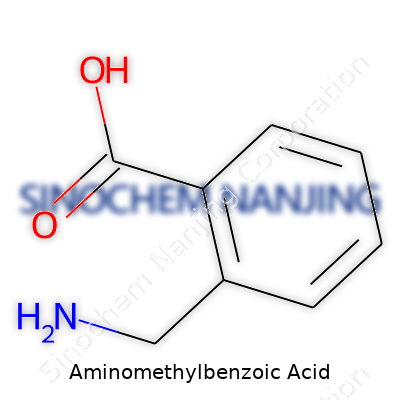
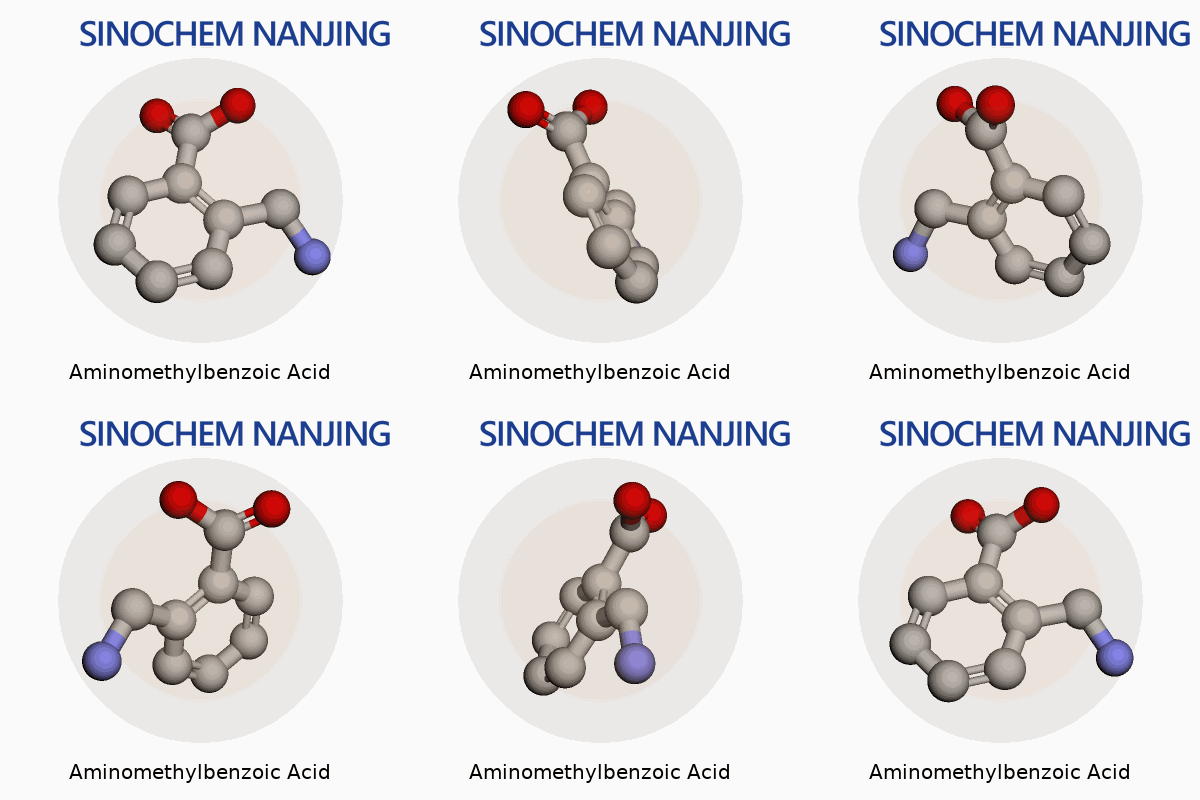
| Names | |
| Preferred IUPAC name | 4-(Aminomethyl)benzoic acid |
| Other names |
4-Aminomethylbenzoic acid PAMBA Para-aminomethylbenzoic acid |
| Pronunciation | /ˌæm.ɪ.noʊˌmɛθ.əl.bɛnˈzoʊ.ɪk ˈæs.ɪd/ |
| Identifiers | |
| CAS Number | 56-91-7 |
| Beilstein Reference | 1203862 |
| ChEBI | CHEBI:2133 |
| ChEMBL | CHEMBL1409 |
| ChemSpider | 6129 |
| DrugBank | DB07268 |
| ECHA InfoCard | echa.infocard.100.005.052 |
| EC Number | 3.5.1.24 |
| Gmelin Reference | 78695 |
| KEGG | C06691 |
| MeSH | D000645 |
| PubChem CID | 6978 |
| RTECS number | AU1575000 |
| UNII | 6Q6HH48V9Q |
| UN number | UN2811 |
| CompTox Dashboard (EPA) | DTXSID7020989 |
| Properties | |
| Chemical formula | C8H9NO2 |
| Molar mass | 137.15 g/mol |
| Appearance | White crystalline powder |
| Odor | Odorless |
| Density | 1.18 g/cm³ |
| Solubility in water | slightly soluble |
| log P | 0.8 |
| Acidity (pKa) | 3.9 |
| Basicity (pKb) | 8.66 |
| Magnetic susceptibility (χ) | -49.7e-6 cm³/mol |
| Refractive index (nD) | 1.613 |
| Viscosity | 1.21E-3 Pa.s (25 °C) |
| Dipole moment | 2.36 D |
| Thermochemistry | |
| Std molar entropy (S⦵298) | 156.8 J·mol⁻¹·K⁻¹ |
| Std enthalpy of formation (ΔfH⦵298) | -154.8 kJ/mol |
| Std enthalpy of combustion (ΔcH⦵298) | -3439 kJ/mol |
| Pharmacology | |
| ATC code | B02AA03 |
| Hazards | |
| Main hazards | Harmful if swallowed. Causes serious eye irritation. Causes skin irritation. |
| GHS labelling | GHS07, GHS08 |
| Signal word | Warning |
| Hazard statements | Hazard statements: Harmful if swallowed. Causes serious eye irritation. |
| Precautionary statements | IF IN EYES: Rinse cautiously with water for several minutes. Remove contact lenses, if present and easy to do. Continue rinsing. If eye irritation persists: Get medical advice/attention. |
| NFPA 704 (fire diamond) | 1-1-0-0 |
| Flash point | 185°C |
| Autoignition temperature | 578°C |
| Lethal dose or concentration | LD50 oral rat 1660 mg/kg |
| LD50 (median dose) | LD50 (median dose): Rat oral 2000 mg/kg |
| NIOSH | BZ9300000 |
| PEL (Permissible) | Not established |
| REL (Recommended) | Rel (Recommended): 4-(Aminomethyl)benzoic acid |
| Related compounds | |
| Related compounds |
Aminobenzoic acid Salicylic acid Antranilic acid |



