Aluminum Monostearate: A Deep Dive into Its Role and Impact
Historical Development
Aluminum monostearate entered the industrial toolkit back in the early twentieth century, long after soaps and basic metallic stearates had taken root in everything from candle-making to textiles. Chemists figured out that substituting one hydrogen in stearic acid with an aluminum atom opened the door to materials with thickening abilities that regular soaps never matched. Through the years, pharmaceutical companies, paint manufacturers, and the early cosmetics pioneers all started tinkering with this compound to see how it performed as a stabilizer and gelling agent. As demand grew for longer shelf lives and better consistency in everything from ointments to paints, the knowledge pool around aluminum monostearate deepened. Each industry left its stamp on the methods of preparing and testing this chemical, gradually shaping today’s technical standards.
Product Overview
Ask around in industrial labs and you’ll find aluminum monostearate known as a white, powdery salt that often sits in a bin next to bulk lubricants, pigments, and emulsifiers. This compound isn’t particularly glamorous to look at, but it plays a huge part in making sure consumer products, especially ointments and greases, stay thick where they’re supposed to. As a fatty acid derivative, it bridges the worlds of both organic and inorganic chemistry—a trait that lets it mix well with oils and maintain structure under tough storage conditions. Many people outside scientific or manufacturing circles rarely notice this stuff, even though it quietly shows up in plenty of household staples and medical preparations.
Physical & Chemical Properties
Aluminum monostearate carries the waxy feel and off-white look that most metal soaps share. Thanks to its molecular structure, this powder barely dissolves in water but blends smoothly into oils and nonpolar solvents. That means it remains stable even in humid environments or in long-term storage. It won’t melt at room temperature, holding up until about 150°C before breaking down. This heat resistance keeps lubricating and cosmetic products from turning runny or separating after a few months on the shelf. Chemists value it for its ability to suspend active ingredients and lock in oily bases, creating a buttery consistency in finished products.
Technical Specifications & Labeling
Quality standards for aluminum monostearate cover everything from particle size to allowable heavy metal residues. Reputable suppliers publish technical sheets with information like aluminum content (often reported near 4% by weight), acid value, saponification value, moisture content, and bulk density. Some specifications come from national pharmacopeias or international organizations, while others reflect the needs of specialty manufacturers who want reliable batch-to-batch performance. Labels often feature alternative names, reference purity (commonly 95% or greater), and include warnings about dust control and handling precautions to align with workplace safety rules.
Preparation Method
Factories produce aluminum monostearate by reacting aluminum salts—usually aluminum sulfate or aluminum chloride—with stearic acid in a controlled environment. Chemists blend the stearic acid with a sodium or potassium hydroxide solution to get stearate ions, then introduce the aluminum salt so that aluminum ions swap places with the sodium or potassium. The result is the precipitation of aluminum monostearate, filtered and washed to remove byproducts. Manufacturers often dry and grind the product to the desired powder size. Critical control points throughout this process focus on keeping out contaminants and hitting a consistent aluminum-to-stearate ratio, since that finish determines how well the final product works in various applications.
Chemical Reactions & Modifications
In the lab, aluminum monostearate stands out for the way it interacts with both acids and bases. Under the right conditions, strong acids decompose it back to stearic acid, while strong bases can convert the aluminum back to its corresponding salts. Chemists sometimes tweak its properties through partial substitution with other fatty acids, adjusting solubility and melting point. There’s a long history of research into cross-linking aluminum monostearate with other metal stearates or surfactants to fine-tune its gelling action. These modifications boost compatibility with different oils and alter how quickly ointments release their active ingredients—a trick that’s made a huge difference in developing everything from burn creams to high-viscosity lubricants.
Synonyms & Product Names
In the world’s chemical supply catalogs, aluminum monostearate might appear under several names: aluminum stearate, monoaluminum stearate, or stearic acid aluminum salt. Some technical bulletins use CAS numbers or industry codes to identify it. A handful of manufacturers brand their versions with trade names that hint at certain purity or performance tweaks, but most stick with the basic chemical nomenclature. Doing quality research on this compound sometimes means checking synonyms and related stearates such as aluminum distearate or tristearate, since each behaves a little differently in specific settings.
Safety & Operational Standards
Factories and labs that handle aluminum monostearate pay close attention to dust control, eye and respiratory protection, and skin contact. Airborne particles can irritate mucous membranes and sensitive skin if basic safety gear goes ignored. Workers check storage areas for dryness and good ventilation to keep this powder from absorbing moisture or picking up odors from other chemicals. National safety data sheets highlight long-term exposure concerns, pointing out that while aluminum monostearate hasn’t caused as much alarm as free alumina or aluminum dust, good hygiene goes a long way in preventing chronic contact problems. Some jurisdictions call for regular air sampling and strict waste disposal, keeping environmental release to a minimum.
Application Area
Aluminum monostearate fills a lot of roles behind the scenes. Drug formulators rely on it to thicken topical ointments and keep active pharmaceutical ingredients suspended evenly across a greasy base—it’s why antibiotic ointments hold their shape and spread smoothly over wounds. Food packagers and cosmetics companies use it to boost the body and stability of sticks, gels, and creamy textures. In the paint world, it helps keep pigments from settling out and adds structure to oil-based formulas. Lubricant makers turn to this compound to fight oil separation at high temperatures or under severe mechanical stress. Even the plastics and rubber industries appreciate it for how well it keeps additives mixed throughout extrusion or molding processes.
Research & Development
Over the past decade, universities and private labs have explored how to enhance the thixotropic properties of aluminum monostearate without adding harmful stabilizers. There’s a lot of interest in sustainable production, often focused on sourcing stearic acid from plant oils rather than animal fats or petrochemicals. As health and safety standards for personal care products grow tighter, researchers also keep testing for residual impurities and working to lower the overall aluminum content in end-user preparations. A handful of studies dig into blending various fatty acid chains or using nanoparticle versions to increase efficiency, especially where very high-purity antibiotics or injectable drug preparations demand consistent results.
Toxicity Research
Scientists have put aluminum monostearate through a battery of toxicity tests, looking for both acute and chronic risks. Acute oral and dermal toxicity in animals tends to show low risk at levels far above typical workplace or consumer exposures. Still, there’s ongoing debate about aluminum’s possible link to neurodegenerative disorders and bioaccumulation. Regulatory agencies scrutinize finished products, checking migration rates and breakdown in the digestive tract or bloodstream. Medical researchers keep an eye on the aluminum content of topical medications used on chronic wounds and in certain food packaging processes. Transparent reporting around residual contaminants and long-term, low-dose exposures helps keep public trust.
Future Prospects
Looking ahead, the story of aluminum monostearate seems far from over. With more industries seeking eco-friendly, stable, and cost-effective thickeners and structure agents, this compound’s basic formula likely won’t go out of style. Researchers expect new blends with plant-based sources, upcycling from industrial byproducts, or new chemical modifications to gain ground. Regulatory scrutiny about aluminum’s health impacts and the drive for lower-toxicity alternatives may push chemists to refine syntheses and invest in better purification along the supply chain. Companies willing to invest in safety testing, public reporting, and greener processes will shape the next chapter, responding both to consumer skepticism and growing technical requirements.
What is Aluminum Monostearate used for?
What Is Aluminum Monostearate?
Aluminum monostearate sounds complicated, but at its core, it's a substance created by mixing stearic acid (a fat-based ingredient) with aluminum. It ends up as a white, powdery solid, and, despite the uninviting name, it finds its way into more of our daily lives than most folks suspect.
The Ingredient Behind Smooth Creams and Ointments
Step into a pharmacy and you’ll find rows of topical medications and skin creams, many with a smooth, thick texture that spreads easily and stays put. That texture often comes from aluminum monostearate. In topical ointments, this compound thickens oils and helps suspended ingredients disburse evenly. If you’ve ever used a cream that doesn't run or separate, that stability comes partly thanks to aluminum monostearate.
Pharmaceutical Applications: Beyond Creams
Pharmacists and drug manufacturers turn to aluminum monostearate for more than just consistency. In controlled-release medications, the compound creates a matrix, slowing how fast an active ingredient leaves a capsule or tablet. I first ran into this concept while exploring the way painkillers are formulated. Instead of dumping the entire dose at once, the drug releases steadily, so people feel relief for longer. This technology can mean fewer pills, better outcomes, and less risk for side effects.
Food and Industrial Uses
Aluminum monostearate even sneaks into some foods as an anti-caking agent, mostly in small, regulated amounts. Anything from powdered drink mixes to spices can carry it, working behind the scenes to keep powders free-flowing and easy to use. In paints, inks, and cosmetics, it stabilizes oily ingredients and stops them from separating. Artists’ oil paints stay rich and creamy for months on end because of its use in the blend.
Safety, Health, and Scrutiny
Here’s where things get interesting for anyone who trusts what’s in their food or medicine. Aluminum compounds sometimes draw concern. Too much aluminum in the body can become a problem, especially for people with kidney conditions. Over the years, research has looked into links between aluminum exposure and various health conditions, including neurological disorders. So far, the small amounts used in medicines and foods stay within limits set by agencies like the U.S. Food and Drug Administration (FDA) and the European Food Safety Authority (EFSA). But studies keep going, and scientists don’t always agree on what’s completely safe in the long haul.
The Push for Clear Labeling and Alternatives
Being vigilant about what ends up in products people put on or in their bodies matters today more than ever. Transparency in labeling helps cut confusion. If you struggle with allergies or chronic conditions, checking ingredient lists ensures you avoid triggers. Some companies now search for plant-based alternatives, but for ointment texture and controlled drug delivery, replacements sometimes fall short. Improvements in research and manufacturing practices, along with clearer regulations, keep pushing the industry toward safer, more open use.
Looking Ahead
People care about the ingredients in their foods, creams, and medicines, and rightly so. Aluminum monostearate might sound like chemistry class jargon, yet it shapes everyday items in ways that matter. With more research, stronger regulation, and better communication from producers, consumers gain peace of mind—knowing what’s in the jar or bottle is there for a reason, and in a way that promotes safety as well as function.
Is Aluminum Monostearate safe for use in cosmetics?
Understanding the Role of Aluminum Monostearate
Aluminum monostearate pops up in a surprising range of everyday cosmetics. Think facial creams, foundations, lipstick, even the basics like deodorant. Its job usually centers around thickening, stabilizing, or helping oils and powders blend together. The ingredient has been around for decades; chemists have relied on it to make products smoother and more appealing.
What Science Tells Us about Safety
Several global safety groups keep an eye on cosmetic ingredients. The US Food and Drug Administration (FDA) and the European Scientific Committee on Consumer Safety (SCCS) both review new studies and issue safety recommendations. Research shows that, in the concentrations used in cosmetics, aluminum monostearate does not get absorbed deeply into the skin. This means that, for most people, using blush or sunscreen with this additive stays on the surface.
People worry about "aluminum" in product names because of reports linking some aluminum compounds to neurological diseases and breast cancer. It’s important to point out that these concerns are primarily tied to very different forms of aluminum, such as those found in some antiperspirants or food additives. No direct links have turned up between aluminum monostearate in skin applications and long-term health issues. In my own research into ingredient safety, I’ve not seen credible evidence showing harm from this specific compound if used as intended.
Real-World Experience
Like a lot of folks, I pay close attention to ingredient lists, especially because my own skin reacts quickly when a product contains something irritating. I’ve used creams that list aluminum monostearate and haven’t noticed any redness, burning, or rashes. Of course, everyone’s skin is different. For people with sensitive or allergy-prone skin, patch testing a new product makes sense, regardless of long ingredient names.
Reports of allergies or other reactions linked directly to aluminum monostearate remain extremely rare. Most problems with cosmetics actually come from fragrances or certain preservatives, not this thickener. If you check forums or reputable dermatology sources, real-life complaints about this ingredient almost never appear.
Environmental and Long-Term Considerations
Beyond personal health, questions about environmental impact keep growing louder. Aluminum in any form takes centuries to break down, but aluminum monostearate usually appears in such small quantities that it doesn’t majorly affect water or soil when washed down the drain. Regulatory boards have not flagged it as an ingredient requiring special disposal.
For those hoping to minimize their chemical exposure, the biggest move is choosing products from reputable brands that share their safety data and listen to consumer feedback. I find smaller natural brands sometimes leave out ingredients like aluminum monostearate, but not always. If avoiding synthetics matters, check labels, and get to know which words matter.
Supporting Better Choices
Consumers deserve straight answers and full ingredient labels. I look for brands that post their safety reports and explain why they use what they use. Dermatologists recommend focusing on overall skin care routines, keeping the number of additives as low as possible. Reporter investigations keep brands honest, and government reviews are public record. If new information came out that painted aluminum monostearate as risky, regulators would react and companies would swap it for safer options.
Until then, evidence points to this ingredient being low-risk for most people, especially when products are used as recommended. For those still nervous, avoiding it remains easy thanks to the big range of cosmetic choices out there.
What is the chemical composition of Aluminum Monostearate?
What’s in Aluminum Monostearate?
Aluminum monostearate often pops up in topics about pharmaceuticals, cosmetics, and industrial lubricants. A lot of people ask about its chemical makeup. In the simplest terms, it’s a compound formed by reacting stearic acid—a fatty acid that comes from natural sources like animal fat and vegetable oils—with aluminum. The result creates a salt, where each aluminum atom connects to one stearate (the ion formed from stearic acid) molecule. Its chemical formula: C18H35O2Al.
No one needs to own a chemistry set to understand its shape. Imagine a long chain of carbon and hydrogen atoms with an aluminum center. This combo gives aluminum monostearate a waxy look and feel. That structure makes it different from regular aluminum compounds, which you might find in kitchen foil or soda cans. Instead, it belongs in a group of materials known for being hydrophobic—they repel water, don’t melt easily, and help thicken or stabilize products.
Why It Matters
Pharmaceutical companies rely on aluminum monostearate for a simple reason. It thickens oils and helps turn liquid medicines into gels or ointments. Consumers might use a cream with this compound after a pharmacy visit. The reason for including it relates directly to its chemistry—its long hydrocarbon tail doesn’t dissolve in water, and the aluminum gives it enough weight to stick together in oily mixtures. Dermatology products, antiperspirants, even some candies get their texture from ingredients like this. I remember reading label after label in my own pantry, spotting the word “stearate” far more often than expected.
A big feature of aluminum monostearate comes from its ability to slow the breakdown of active ingredients. Anyone who’s used medicated creams might see the benefit—it helps the cream last longer, allowing the skin to take in medication over time, not in a sudden rush.
Supporting Facts and Transparency
The U.S. Food and Drug Administration lists aluminum monostearate as generally recognized as safe (GRAS) for specific uses. Studies in peer-reviewed journals confirm that it rarely triggers allergic reactions or significant toxicity when someone uses it in the recommended way. That gives it an edge over other thickeners. The cosmetic industry also lists it as safe, provided manufacturers stick to standard concentrations.
Despite its safety, more research always seems like a good move. Science grows fastest with transparency. A few studies suggest that in high doses, aluminum compounds might build up in the body if the kidneys aren’t working well. Experts suggest that formulators should be mindful, testing for possible long-term buildup while keeping doses within prescribed levels.
Paving a Safer Path Forward
People who work on product safety have a simple job: keep asking questions. Companies using aluminum monostearate could keep track of sourcing, since stearic acid might come from palm oil or animal fats. This matters for people with allergies, religious dietary rules, or environmental concerns. Labels could show exactly what’s inside; clear labeling helps families avoid any risk.
Scientists have a toolkit for confirming the quality and purity of this compound. Chromatography, spectroscopy, and other analytical methods catch trace metals or unwanted residue. Spot checks during production can prevent problems for users. As a general practice in my own work, cross-checking ingredients before using a new lotion or medication offers extra peace of mind. Relying on trusted sources, looking for published safety assessments, and staying current with regulatory changes—these all help build trust for consumers and patients alike.
How should Aluminum Monostearate be stored?
Getting Storage Right Matters
Anyone who’s worked around chemicals, even basic powders for the lab or plant, knows how quickly things can go wrong with storage. Aluminum monostearate, a fine white powder found in everything from pharmaceuticals to paints, is no exception. I’ve seen solid batches ruined simply because someone left the lid off a container, or shoved it in a damp storage closet. Poor storage creates waste, affects safety, and leads to expensive delays. If you handle this additive, common sense care goes a long way, and so does learning from the mistakes of others.
The Enemies: Moisture and Air
From my own experience, humidity loves to latch onto powders, and aluminum monostearate pulls in water from the air like a sponge. I once found a five-kilo drum turning lumpy after sitting by an open window for a weekend. High humidity breaks the integrity of the raw material—lumps form, measuring gets tricky, and you might fail quality tests. Keep it sealed tight in a dry spot and you reduce headaches later on.
Oxygen isn't innocent either. Over time, exposure to air changes the powder’s character. It starts to lose punch, sometimes developing odd odors or getting harder to blend. Airtight containers matter more than fancy storage rooms. Industry experience backs this up. Warehouses running dehumidifiers, or smaller labs using desiccant packs, both see longer shelf lives and fewer complaints from the production line.
Temperature: Not Too Hot, Not Too Cold
I’ve seen labs treat all chemicals the same, tossing them into fridges or leaving them under fluorescent lights. Both extremes cause issues. High heat—over 30°C—encourages clumping and can even drive small chemical reactions over time. Direct sunlight cooks the contents, warping plastic jars and creating pockets of humidity. On the flip side, freezing temperatures create condensation when the container returns to room temperature, ruining a dry powder overnight.
I found that storing aluminum monostearate at normal room temperature, away from sunlight or radiators, keeps the material stable. Set aside a cabinet or bin marked for moisture-sensitive goods, and staff follow through better than with complicated written protocols alone.
Labeling and Segregation
Labels feel boring, but they’re life savers. I've opened unmarked containers to find mystery powders more times than I care to admit. Use clear labels with batch numbers and dates. In busy spaces, powders tend to migrate where they don’t belong, so store aluminum monostearate away from acids or oxidizers. Spills or mixtures cause reactions nobody wants to see or smell in a closed lab.
Learning from Lab Mishaps
Ten years ago, I watched a junior tech sweep spilled powder with wet towels, creating slippery spots and a ruined product bin. Training sticks longer than memos. Teach everyone to clean up dry, never toss powder down drains, and treat every container as food-grade. Health authorities expect companies to log every move, and I’ve sat through enough audits to know that proper storage keeps regulators and workers happy.
Sticking to Basics
In the end, managing aluminum monostearate is not about high-tech rooms or corporate handbooks. Use airtight containers, stay dry, avoid temperature swings, keep spaces organized, and train your team. These basics work just as well from a tiny startup lab to multi-ton factories. Keeping it simple keeps product quality high and costs under control.
Is Aluminum Monostearate approved for food or pharmaceutical applications?
What Aluminum Monostearate Really Is
Aluminum monostearate comes from the combination of stearic acid—a type of fatty acid you'd spot in animal and vegetable fats—and aluminum. In powder form, it thickens and stabilizes. People often talk about it when they see it in grease, cosmetics, or ointment. Over the years, the question keeps popping up: can this compound land in our food or medicines without trouble?
Regulatory Decisions Show a Clear Divide
Regulators worldwide approach aluminum compounds with caution, since aluminum can build up in the body. The U.S. Food and Drug Administration lists aluminum monostearate on its inactive ingredients list for some drug formulations. For example, a few injectable medications use it so the drug can break down gradually. Yet, the FDA hasn't given it the green light for food, and you won’t find it approved as a food additive in the United States. The European Food Safety Authority takes a similar approach and shows even tighter restrictions for both food and pharmaceuticals.
Looking at the Safety Evidence
I’ve spent my fair share of time researching ingredient lists and regulatory reports, and with aluminum monostearate, scientists remain cautious. Too much aluminum in the body links to neurological risks, particularly for people with kidney issues or children whose bodies handle metals differently. Some people point out the metal’s long half-life in tissues. That means aluminum can stick around, and health authorities push for the lowest possible daily intake.
Why Pharmaceutical Use Stands Apart
Doctors and pharmacists sometimes rely on certain aluminum-based compounds in slow-release injectables. In small quantities, and under strict supervision, this can serve a real clinical purpose. The key comes down to control—drug makers stick to narrow limits and use only pharmaceutical-grade aluminum monostearate. Patients under supervision usually carry less risk, though the safest approach for children and those with weak kidneys often skips aluminum altogether.
Food Applications: No Stamp of Approval
Anyone reading ingredient labels on processed food won’t spot aluminum monostearate among the usual additives. No agency approves it for use in foods in either the U.S. or Europe. Given what scientists know about aluminum gathering in tissues over time, I view this as a wise move. With other food additives available for thickening or stabilizing—ones considered safe for daily consumption—there isn’t much demand from food producers either.
What Safer Alternatives Look Like
For food manufacturers, starches and gums do the trick. Pharmaceutical companies lean on safer mineral or plant-based thickeners in creams and ointments. Looking at industry trends, the push clearly leans toward ingredients with a long history of safe use and lower health risks. This makes sense to me, as safer choices reduce both liability and the need for future reformulation.
Discussion on Moving Forward
Building trust in medicine and food comes down to informed choices about ingredients. Approvals reflect science and public health, not just bureaucracy. Even as technology opens doors to new compounds, caution around ingredients like aluminum monostearate reminds us that some risks outweigh benefits when safer options exist.
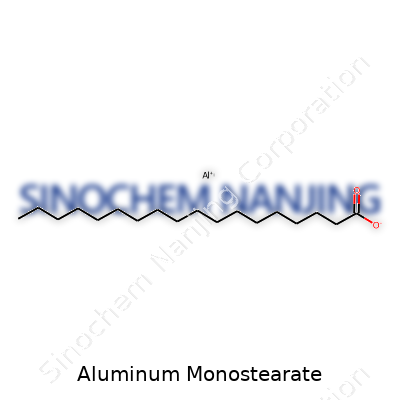
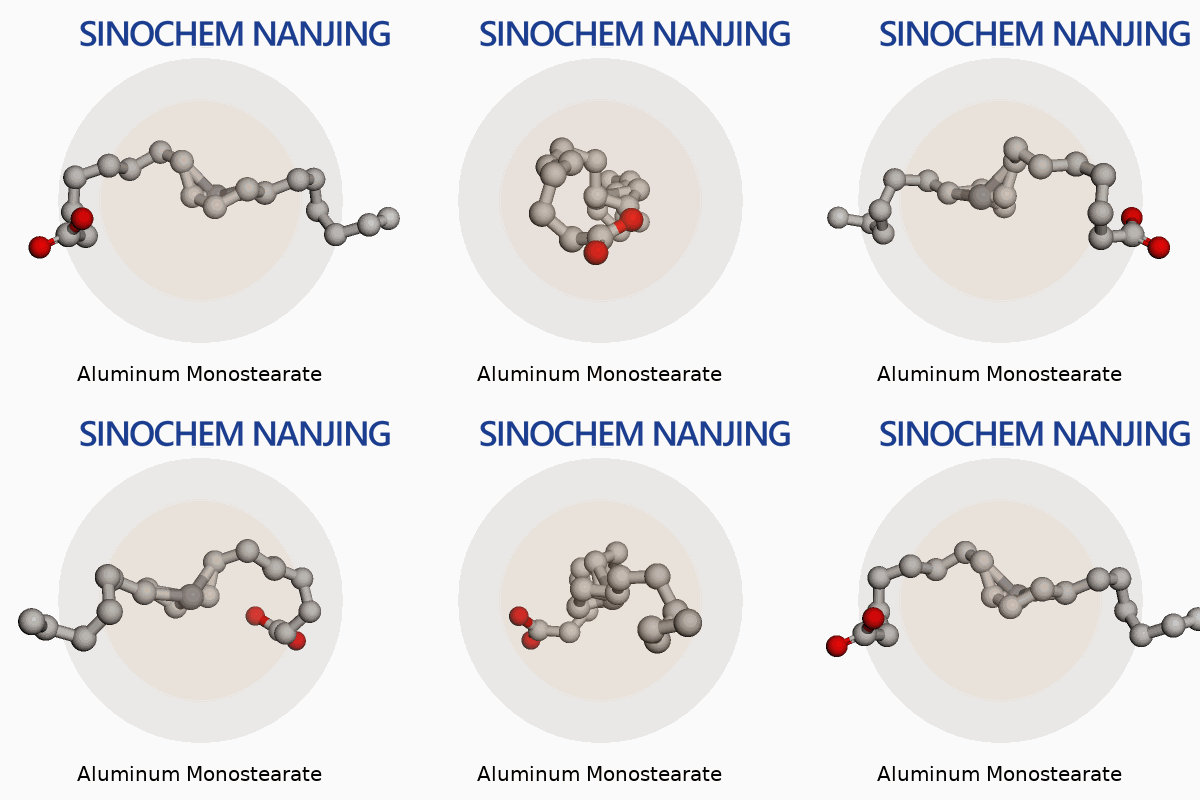
| Names | |
| Preferred IUPAC name | aluminum;octadecanoate |
| Other names |
Aluminum Stearate Stearic acid, aluminum salt Aluminum distearate Aluminum octadecanoate Octadecanoic acid, aluminum salt |
| Pronunciation | /əˌluːmɪnəm ˌmɒnəˈstiəreɪt/ |
| Identifiers | |
| CAS Number | 637-12-7 |
| 3D model (JSmol) | `AlO2C36H71` |
| Beilstein Reference | 1460711 |
| ChEBI | CHEBI:90748 |
| ChEMBL | CHEMBL4297636 |
| ChemSpider | 16213250 |
| DrugBank | DB14121 |
| ECHA InfoCard | ECHA InfoCard: 100.031.859 |
| EC Number | 215-276-9 |
| Gmelin Reference | 595798 |
| KEGG | C100251 |
| MeSH | D000574 |
| PubChem CID | 24574 |
| RTECS number | WL5900000 |
| UNII | 13TSS997T6 |
| UN number | UN3077 |
| CompTox Dashboard (EPA) | DTXSID3059156 |
| Properties | |
| Chemical formula | C54H105AlO6 |
| Molar mass | 354.56 g/mol |
| Appearance | White powder |
| Odor | Odorless |
| Density | 1.08 g/cm³ |
| Solubility in water | insoluble |
| log P | 3.7 |
| Basicity (pKb) | 7.5 (pKb) |
| Magnetic susceptibility (χ) | Diamagnetic |
| Refractive index (nD) | 1.44 |
| Viscosity | Viscous liquid |
| Dipole moment | 0.00 D |
| Thermochemistry | |
| Std molar entropy (S⦵298) | 834 J·mol⁻¹·K⁻¹ |
| Std enthalpy of combustion (ΔcH⦵298) | -2165.1 kJ/mol |
| Pharmacology | |
| ATC code | A02AB04 |
| Hazards | |
| Main hazards | May cause respiratory tract irritation. May cause eye and skin irritation. |
| GHS labelling | GHS07, GHS08 |
| Pictograms | GHS07, GHS08 |
| Signal word | Warning |
| Hazard statements | H315: Causes skin irritation. H319: Causes serious eye irritation. H335: May cause respiratory irritation. |
| Precautionary statements | P261, P264, P272, P273, P280, P302+P352, P305+P351+P338, P362+P364, P501 |
| NFPA 704 (fire diamond) | 1-1-0 |
| Lethal dose or concentration | LD50 Oral Rat > 2000 mg/kg |
| LD50 (median dose) | > LD50 (median dose): Rat oral > 36000 mg/kg |
| NIOSH | NAUGA |
| PEL (Permissible) | 15 mg/m³ |
| REL (Recommended) | Not more than 3% (calculated on the dried basis) |
| IDLH (Immediate danger) | Not listed |
| Related compounds | |
| Related compounds |
Aluminum distearate Aluminum tristearate Magnesium stearate Calcium stearate Zinc stearate |



