Aluminum Borohydride: Chemistry’s Workhorse in Transformation
Historical Development
People have chased easier, safer, and more potent ways to move hydrogen around since the birth of modern chemistry. In the 1940s, scientists shifted attention to boron compounds, stirred by the demands of the war effort and a need for powerful reducing agents beyond what old-guard metal hydrides or hydrogen gas could deliver. Aluminum borohydride, also called Al(BH4)3, took center stage in this wave of research. Not only did it open up fresh routes to complex molecules, but it became famous for its knack for releasing hydrogen cleanly. After its structure was clarified, chemists realized this was more than a niche ingredient; it was a crucial tool for both lab and industry.
Product Overview
Aluminum borohydride acts as a mobile, nearly colorless liquid ready to serve as a strong reducing agent. For those who have spent time with lithium or sodium borohydride, aluminum borohydride looks more volatile and reacts faster. That comes with perks and risks. Unlike some solid hydrides, this one demands a careful hand from the moment you uncork the bottle. It is mobile and can escape into the air, releasing vapors that cause trouble where you can’t see.
Physical & Chemical Properties
Its physical face is deceptive: a clear, colorless liquid—sometimes faintly yellow with age—that boils lower than water and carries a sharp, suffocating odor. Volatility overshadows nearly every step of its handling, as even at modest temperatures it evaporates quickly. It doesn’t play well with moisture, splitting open and decomposing at the touch of water or even humid air. The hydride is notoriously flammable and, in the presence of acids or simple proton donors, it unleashes hydrogen gas at a pace that catches unprepared scientists off guard. Run this stuff in an ill-ventilated space and the stakes jump fast.
Technical Specifications & Labeling
Laboratories that stock aluminum borohydride pay close attention to purity, often producing or storing it under inert gases to block out air or moisture. It usually arrives in sealed ampoules or under an inert gas head, with labels warning of flammability as well as the potential for toxic borane emissions. Handling calls for glass or certain coated metals, since it reacts with many common plastics or metals unless conditions are just right.
Preparation Method
Making aluminum borohydride is no sideline hobby. Chemists take sodium borohydride and react it with aluminum chloride, working within a solvent like diethyl ether. The ether keeps both starting materials and aluminum borohydride itself in solution, letting the transfer happen smoothly. The byproduct sodium chloride sinks out and can be separated with ordinary filtration. At the end, the hydride-rich solution gets reduced down, and distillation delivers a relatively pure batch. The recipe looks easy on paper, but a slip in exclusion of water or oxygen can waste hours and put a lot more on the line than just ruined chemicals. The expertise needed here means this is squarely an advanced lab technique—something you don’t practice at home, no matter how keen your curiosity.
Chemical Reactions & Modifications
This compound stands out for its knack at reducing esters, amides, and ketones to their simpler alcohol or amine versions. It can even handle tasks too harsh for milder hydrides. In skilled hands, aluminum borohydride snips double bonds, opens up rings, or helps tuck away hydrogen in fuel-cell research. Modifications to the base molecule produce derivatives with slightly tuned reactivities or different volatilities, expanding its reach a bit further. Playing with solvents, temperature, and subtle tweaks to its structure, chemists keep finding new ways to guide its fierce activity into controlled, elegant transformations. For anyone who’s ever run reductions where lithium aluminum hydride falls short, this hydride sometimes delivers, if one’s nerves can tolerate the extra risk.
Synonyms & Product Names
Chemists know this compound under a half-dozen names: aluminum borohydride, aluminum tetrahydroborate, and its chemical shorthand Al(BH4)3. Older texts might call it tris(borohydride)aluminum. In catalogs, the CAS number 16940-66-2 keeps confusion at bay regardless of how vendors phrase it.
Safety & Operational Standards
Strict safety standards grow out of its volatility, high flammability, and the way it decomposes into gases that choke and sometimes poison. Even a quick sniff near the bottle can irritate lungs and mucous membranes; a real spill in a small lab can cause panic. Proper gloves and thick goggles do not suffice unless backed by chemical fume hoods strong enough to clear out hydrogen and other gases. Storage never happens near acids, oxidizers, or strong bases, since interactions spark violent reactions or runaway decomposition. Fires involving aluminum borohydride move too fast for water-based extinguishers—dry powder or sand stands as the only sensible choice. For all the value it offers, every serious use comes after training and a hard respect for its hazards.
Application Area
Aluminum borohydride plays a role in fine chemical synthesis, where the quest to build new molecules fuels a steady demand. The pharmaceutical industry leans on its aggressive hydrogen-donating ability for transforming challenging functional groups, sometimes unlocking reactions that drag with gentler hydrides. It has been eyed as a hydrogen storage medium, especially in experimental renewable energy efforts; it packs hydrogen in a dense, fluid form that can feed power cells if you accept the risks. Aerospace research has tried it as a fuel or fuel additive, where every gram of mass and every joule of energy burned counts. Across fields, it is the power and instability of this chemical that spurs interest and caution alike.
Research & Development
Current research points to fresh variants and safer formulations. Scientists hunt for ways to tame its volatility or coax hydrogen out with less danger and lower temperatures. Some teams have explored encapsulating the compound in solid matrices, aiming for “release on demand” systems that cut down exposure. Others test blends with related borohydrides or additives that cap its wildest traits. These efforts reflect lessons learned from generations of lab mishaps and the stubborn promise still locked in this potent bottle. If changes in synthesis or stabilization come through, more industries could embrace boron-based hydrides for clean power or green chemistry.
Toxicity Research
Hard data from animal studies and accidental exposures make it clear that inhaling or touching aluminum borohydride can bring health issues quickly—eye and throat burning, difficulty breathing, skin burns, and risk of lasting lung damage at real doses. Once in the body, the compound’s breakdown releases boranes, which pound at cell membranes and upset nervous function. Because most professional users wear heavy PPE and work in ventilated hoods, severe poisoning remains rare, but reports of chronic effects or environmental toxicity remain gaps that demand more studies. One can’t ignore boron’s potential impacts on plants and animals if release to the environment occurs, so environmental chemists and toxicologists need to stay alert and ramp up research in these gray areas.
Future Prospects
Aluminum borohydride’s future hangs between risk and promise. As hydrogen storage gets more attention in climate planning, this chemical’s high energy-density and fast release make it a regular guest at conferences and in patent filings. Less hazardous cousins may someday replace it, but for now, most researchers choose it when only its particular punch suffices. As calls mount for safer, greener synthesis and energy practices, regulators may tighten how it’s shipped and used, sparking even more innovation in containment, detection, and emergency response. The old challenges of handling and health hazards are not going away, but the appetite for transformative chemistry keeps its story far from over. Anyone who measures out this compound does so with the calm caution that comes only from experience or hard-learned lessons, hoping that science finds safer ways forward before risk outpaces reward.
What are the main uses of Aluminum Borohydride?
Aluminum Borohydride in the Lab
Plenty of chemists know the scent that fills a workspace when aluminum borohydride comes off the shelf. This clear, oily liquid packs a punch as a reducing agent, and it lands a spot in many labs for a reason. Researchers mix it into their reactions when they need to turn certain chemicals into simpler forms. For instance, it breaks down esters, amides, and carboxylic acids. The classic pick for reductions used to be lithium aluminum hydride. Still, sometimes you want a reducer that acts more gently, or one that dissolves in organic solvents. That's where aluminum borohydride slides in.
I remember cracking open old bottles of aluminum borohydride during undergrad. You keep the water well away—this stuff reacts with it fast, shooting out hydrogen. Chemists like to use it because it gets the job done at lower temperatures and with less risk of explosions, as long as you keep things dry and calm. The control it offers lets researchers fine-tune reactions, which can save a lot of wasted time and money.
Supporting Rocket Fuel Research
Stepping out of the academic world, aluminum borohydride finds a role in rocket labs and defense projects. The drive for stronger propulsion systems pushes for fuels that carry extra punch in a tight space. This compound stores hydrogen densely, and that makes it a fit for propellant research. The U.S. Air Force looked into it as early as the 1950s, hoping to tap into its high energy content and get rockets off the ground with an edge.
Folks working on stratospheric balloons and future satellite launches have reason to eye new fuel ideas. As NASA and private companies dig deeper into alternate propellant chemistry, materials like aluminum borohydride come back for fresh study. Engineers want to avoid the toxicity and handling headaches that come with hydrazine-based fuels, and they look for compounds that spit out a higher thrust-to-mass ratio. There's promise here, though the handling risks keep it on the sidelines for now. Safer storage tech and better process controls could tip that balance.
Powering Hydrogen Generation
Hydrogen energy stands among the favorite topics for clean tech. Here, aluminum borohydride holds interest for workers on the hydrogen economy. As it breaks down, it releases hydrogen gas on demand. Portable fuel cells have started picking up steam, and that's drawn attention to chemical hydrogen storage materials. Carrying around compressed hydrogen tanks isn't always practical or safe, and the search for alternatives never slows.
Companies and researchers are testing ways to use aluminum borohydride in compact hydrogen generators, giving small robots, drones, and backup power devices a shot at hours of clean energy. It's not perfect—refueling, cost, and safety still present solid obstacles. Yet, with increasing attention to lightweight and reliable hydrogen sources, the push to make these compounds work continues.
Risks and a Path Forward
Plenty of the barriers facing aluminum borohydride tie back to how you store and handle it. It burns easily, and its reactions with water can turn a fine day into an emergency, fast. Engineers take these risks seriously. Improved packaging, use in controlled environments, and ongoing staff training all help, but no magic solution has made it hassle-free. If researchers find ways to tame its volatility, this compound could make deeper inroads across labs and industry.
Progress often comes from testing boundaries and learning from past mistakes. The world needs advanced materials to drive energy, chemistry, and new technology. Aluminum borohydride, for all its hazards, shows how practical chemistry can lead somewhere—if we put in the effort to do it wisely and safely.
How should Aluminum Borohydride be safely stored and handled?
Real Hazards Call for Real Attention
Aluminum borohydride turns heads for its power as a reducing agent and a hydrogen source, but it isn’t all that friendly behind the scenes. Anyone who’s used it in a lab—or loaded it into a glove box—knows it reacts harshly with air and moisture. It doesn’t just fizzle; it produces hydrogen gas, heats up, and can burn or explode. Those risks keep most reasonable chemists on their toes. This compound demands respect, not just a few precautionary notes scribbled in a lab manual.
How to Keep It Contained
Direct exposure to air never ends well. Sealed containers, usually made of glass or compatible plastics, protect both workers and the material itself. Those containers always close tight, with lids or stoppers that won’t slip open by accident. You keep them under an inert gas atmosphere—argon or nitrogen works well—because even a whiff of humidity can kick off a violent reaction.
I once saw a new researcher open a container outside the glove box out of impatience. The smell alone sent a warning, but the fizz and visible reaction reminded everyone that safety protocols aren’t optional. Everybody in the lab learned the lesson that day, not just the person holding the jar.
Setting up Proper Storage
Think about temperature control. Aluminum borohydride breaks down faster at higher temperatures, so room-temperature storage never makes sense. Dedicated chemical refrigerators or temperature-controlled cabinets keep things cooler and steadier. Using a desiccator adds another layer of insurance, drying out any stray moisture that sneaks past the seals.
Forget the bottom shelf or the corner of a crowded cabinet. This chemical sits in a designated zone, away from acids, oxidizers, and any compounds that could set off a chain reaction. Labels matter. Clear, bold labels with hazard warnings signal danger before the container is even touched.
Personal Protection Saves Skin—and Lives
Lab coats, heavy gloves, and splash goggles are the everyday armor for handling this powder or liquid. Full face shields and long sleeves keep skin and eyes away from accidents, splashes, or unexpected sprays. People working with it use dedicated tools—no one borrows a spatula or a funnel someone else just dunked in water. Tools dry completely before use, with no question marks or wishful thinking.
Local ventilation, such as a fume hood, cuts the risk from hydrogen buildup. Explosive gas doesn’t belong in closed spaces. Hydrogen leaks demand quick, sometimes frantic, response: turn off heat sources, bring in ventilation, and clear the area. Practices like using gas monitors and spark-proof equipment keep the environment safer for everyone who walks into the room.
Training Bridges Knowledge Gaps
No single document replaces hands-on training. New lab members need direct supervision until they show they understand each step—unboxing, transferring, sealing, cleaning up. That’s not bureaucratic nitpicking; accidents spike when training shortcuts get taken. Using real-world test runs, with mentors showing proper technique and troubleshooting, builds confidence and skills.
Regular safety meetings run through emergency procedures. Fire extinguishers, spill kits, and emergency showers become familiar sights. Contacts for poison centers and medical help stay posted, not buried in a forgotten binder.
Building a Culture of Respect
Aluminum borohydride sends a clear message: caution comes before convenience. People learn from others’ experiences, honest mistakes, and shared stories. Talking through near-misses and reviewing protocols as a group builds a lab culture where safe handling becomes second nature.
Focusing on real risks, best gear, and solid teamwork helps everyone walk out the door whole at the end of the day, with all ten fingers and a healthy dose of respect for what a simple bottle can do.
What is the chemical formula of Aluminum Borohydride?
A Closer Look at a Storied Compound
Aluminum borohydride, written as Al(BH4)3, plays an important part in the world of chemistry. This clear, sometimes volatile liquid comes with a unique way of storing and transporting hydrogen. Growing up around a family that ran a small electronics lab, I learned about these niche compounds not from textbooks, but by watching curiosity turn to research in a cluttered garage. Every bottle and label seemed to hide a deeper story. Aluminum borohydride quickly became one of those talking points for science fans who want to find safe and effective ways to use tricky chemicals.
The Formula Behind the Reaction
The formula Al(BH4)3 breaks down quite simply. One aluminum atom links with three borohydride groups, each made of a boron atom with four hydrogens hanging on. That “borohydride” tag means the hydrogen sits there ready to participate in different kinds of chemical reactions. What matters most here is just how much hydrogen the structure can release under the right conditions—chemistry geeks call this “hydrogen storage density.”
Back in college, some friends tried to set up a small lab project exploring alternative hydrogen storage methods. They kept bumping into the same wall: many compounds leaked or burst into flames too easily. Aluminum borohydride looked promising. Its hydrogen sticks around until you coax it out with heat or a catalyst, and that reliability counts for real-world uses. Plus, the chemistry stays manageable compared to cousins like lithium borohydride, which needs more careful handling or special solvents.
Uses and Hazards Tied to Al(BH4)3
Most work involving this chemical happens in specialty labs and the aerospace industry. Propellant developers like its high hydrogen content. Small satellites sometimes need a burst of energy with the least possible weight, so a material like aluminum borohydride gets the nod over bulkier fuels. Chemists also found ways to use it as a reducing agent, especially during the early days of transistor development—those little microchips that make our modern phones run faster than ever before.
All that potential doesn’t come without risk. Al(BH4)3 releases flammable gases if it touches water or even moist air. I remember the smell of a singed lab glove when a mentor let a drop get too close to a beaker of water. Safety gloves, face shields, and fresh air—all non-negotiable. It surprises many people that in the race to store hydrogen, we still work with materials that react in such bold, unpredictable ways. Finding better options, or at least redesigning how we handle these chemicals, takes time, research funds, and plenty of problem-solving trial.
Room for Safer Alternatives
Plenty of scientists push for lithium, sodium, or even magnesium versions of borohydride. Each tweak in the formula tilts the benefits and drawbacks in a different direction. Real progress shows up slowly—it takes more than clever chemistry to turn these discoveries into everyday products or power. My experience says the public rarely sees this tough balancing act. It’s easy to get excited about a new energy solution, but nothing beats careful, evidence-backed choices. Earning trust means showing your work: solid data, risk assessments, real conversations about hazards.
Looking at Al(BH4)3, researchers have the chance to rethink our strategies for hydrogen storage and chemical safety. Sometimes that means a return to the basics, using sound chemical knowledge to make each experiment safer than the last. As the world looks for cleaner, more portable energy, these building blocks still hold a place at the table.
What precautions are necessary for working with Aluminum Borohydride?
The Reality of Handling a Tricky Chemical
Years in the lab have shown me that some chemicals demand unwavering respect, and aluminum borohydride ranks high on that list. Its reputation for being unpredictable under the wrong conditions keeps most chemists cautious. Anyone who’s worked with this compound knows the sharp, sweet odor as a warning, but not the kind you take lightly—this stuff catches fire with moisture, sends out hydrogen gas, and reacts in ways that can endanger your health.
Practical Steps for Safe Handling
The main risk with aluminum borohydride starts as soon as you open the container. Exposure to air or water means a serious fire hazard, plus toxic fumes. A fume hood isn’t optional here. That vented sash and glass shield aren’t for show. Rely on them, keep the sash low to your work, and never underestimate the danger if your setup feels "good enough" for weaker reagents.
Decent gloves don’t cut it. Only heavy-duty nitrile or neoprene have a fighting chance against spills. Splash-proof goggles beat standard specs every time, too. I’ve watched new students learn the hard way—regular gloves, eyes stinging from a stray drop, scrambling to get to the eyewash. That memory sticks.
Don’t even open the bottle outside an inert atmosphere. Moisture from air turns it into a runaway reaction. Use a glove box or Schlenk line. Any shortcuts, and you risk an uncontrolled situation that forces an evacuation or a call to the hazmat team. The right tools matter: glass syringes with tight Teflon tips and seamless seals. Metal tools spark, and the margin for error shrinks.
Storage That Works in Real Labs
Putting aluminum borohydride on a regular shelf spells trouble for everyone. Cold storage, like a dedicated explosion-proof fridge, provides a buffer. Clear labeling stops mistakes during late-night sessions when even pros get tired. Double-seal bags and secondary containers sound excessive, but you don’t want a slow leak eating through the shelf.
Never forget the paperwork. Simple, up-to-date material safety data sheets give everyone in the building instant answers. They also prove to inspectors that a real safety culture exists, not just some posters on the wall. I’ve seen situations calm down when people knew exactly where the protocol sat and what the symptoms of exposure looked like.
The Bigger Picture: Team Training and Building Good Habits
No one works with compounds like this alone. Regular drills, walkthroughs, and honest talks about near-misses set a tone. Leadership means telling stories from past mistakes, not keeping quiet about them. New hires need to feel comfortable speaking up if something looks off, even if they’re the least experienced person in the room.
Over the years, I’ve found it makes all the difference to keep fire blankets, extinguishers, and spill kits at arm’s reach. Don’t tuck them away—set them out in the open, checked weekly, with everyone knowing how to use them. Small investments like dedicated containers for waste disposal prevent accidental mixing with incompatible chemicals. Avoiding shortcuts creates a work environment where everyone heads home safely at the end of each day.
Is Aluminum Borohydride compatible with other chemicals or solvents?
Experience Meets Chemistry
Aluminum borohydride sparks serious interest in labs and industrial settings because of its role as a strong reducing agent and hydrogen source. Its combination of boron, aluminum, and hydrides brings powerful reactivity, but that same spark sets it apart from common chemicals. Mixing it isn’t straightforward. Years of handling reactive compounds show that one misstep can shut down a project or, worse, put people in danger.
Unforgiving Nature: The Reactivity Question
Aluminum borohydride doesn’t play well with water. Even a hint of moisture triggers violent decomposition, kicking out hydrogen gas and heat. Anyone who’s smelled burning insulation knows why this matters: the compound releases toxic boron-based fumes. Experience in humid climates means even prepping glassware calls for extra caution. Forgetting a single desiccant packet can spell trouble. Solvent bottles need to stay bone dry – no room for shortcuts.
Solvent Choices: Only the Brave (and Dry)
Not every solvent on the shelf works with this compound. Diethyl ether and tetrahydrofuran (THF) stay popular because they don’t attack it directly, and they help tamp down its wild side by dissolving it with minimal reaction. But open either in a stuffy storeroom, and the risks pile up. Ether vapors ignite easily, and any stray water brings back the danger. As someone who’s watched THF become more expensive and harder to secure, safer substitutes look tempting—but most don’t cut it. Polar protic solvents like methanol or ethanol don’t just clash with aluminum borohydride—they destroy it. Alcohols grab the hydride ions, sending hydrogen fizzing out in a flash.
Incompatibility List: More Than Just Water
Acids go on the no-go list right next to water. The reaction takes off immediately, leaving very little time to intervene. Even some polar aprotic solvents, such as dimethylformamide, can degrade its stability. That experience with a stubborn reaction that stalled for days only sped up once the solvent changed back to ether rings true with chemists worldwide. Don’t try to store it with oxidizers – sparks, fumes, and pressure buildup come fast, leading to leaks and damaged storage rooms.
Who Handles It, and How?
Industrial settings have started automating more processes to handle dangerous compounds, cutting down on spills or exposure. But, for many labs, real people handle each step. Employee training isn’t just common sense; it’s lifesaving. OSHA records still show recognizable names affected by overlooked risks. Safety data sheets recommend working inside gloveboxes or under inert gases, such as nitrogen or argon, for a reason. Even seasoned professionals know accidents happen fast.
Safer Alternatives and Solutions
Demand for safer hydrogen sources keeps rising. Researchers continue to look for replacements that offer the power of aluminum borohydride without its hazards. Some turn to less volatile borohydrides, like sodium borohydride, for less energetic but steadier performance. Introducing stricter control measures, updated storage protocols, and real-time moisture monitors can prevent costly incidents and keep teams safer.
The Takeaway: Respect Over Routine
Aluminum borohydride’s efficiency tempts chemists and engineers, but real-world use means treating it with the respect it demands. Ignoring chemical compatibility risks doesn’t just ruin experiments; it can send emergency teams running. Choosing the right solvent and never letting safety gear collect dust makes all the difference. The best experiments start with clear minds and dry hands.
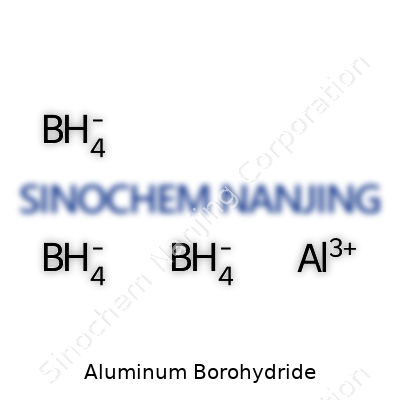
| Names | |
| Preferred IUPAC name | trihydridoboranium;alumanuide |
| Other names |
Aluminum tetrahydroborate Aluminium borohydride Aluminium tetrahydridoborate Alane borohydride |
| Pronunciation | /əˈluːmɪnəm ˌbɔːrəˈhaɪdraɪd/ |
| Identifiers | |
| CAS Number | [16962-07-5] |
| 3D model (JSmol) | `Al(BH4)3` |
| Beilstein Reference | 3589886 |
| ChEBI | CHEBI:30085 |
| ChEMBL | CHEMBL1200984 |
| ChemSpider | 72633 |
| DrugBank | DB11268 |
| ECHA InfoCard | 100.027.239 |
| EC Number | 262-185-4 |
| Gmelin Reference | Gmelin 1132 |
| KEGG | C17772 |
| MeSH | D000579 |
| PubChem CID | 166829 |
| RTECS number | ED3325000 |
| UNII | N84F3T53YJ |
| UN number | UN1420 |
| Properties | |
| Chemical formula | Al(BH4)3 |
| Molar mass | 53.79 g/mol |
| Appearance | White crystalline solid |
| Odor | Pungent odor |
| Density | 0.91 g/cm³ |
| Solubility in water | reacts |
| log P | -0.67 |
| Vapor pressure | 0.75 mmHg (20 °C) |
| Acidity (pKa) | 25.0 |
| Basicity (pKb) | 3.27 |
| Magnetic susceptibility (χ) | −45.0·10⁻⁶ cm³/mol |
| Refractive index (nD) | 1.390 |
| Viscosity | 0.7 cP |
| Dipole moment | 2.63 D |
| Thermochemistry | |
| Std molar entropy (S⦵298) | 216.2 J∙mol⁻¹∙K⁻¹ |
| Std enthalpy of formation (ΔfH⦵298) | –132 kJ/mol |
| Std enthalpy of combustion (ΔcH⦵298) | -5098 kJ/mol |
| Pharmacology | |
| ATC code | V03AB43 |
| Hazards | |
| GHS labelling | GHS02, GHS05, GHS06, GHS08 |
| Pictograms | GHS02,GHS05,GHS06 |
| Signal word | Danger |
| Hazard statements | H260, H301, H311, H314, H331 |
| Precautionary statements | P210, P222, P231+P232, P280, P370+P378, P402+P404, P403+P233, P501 |
| NFPA 704 (fire diamond) | 3-4-2-W |
| Flash point | -34 °C |
| Autoignition temperature | 120 °C |
| Explosive limits | 7.5–18% (Alkyl borohydrides) |
| Lethal dose or concentration | LD50 (oral, rat): 46 mg/kg |
| LD50 (median dose) | LD50 (median dose): 46 mg/kg (mouse, intravenous) |
| NIOSH | UY6230000 |
| PEL (Permissible) | PEL (Permissible Exposure Limit) for Aluminum Borohydride: Not established |
| REL (Recommended) | REL (Recommended): 2 mg/m³ |
| Related compounds | |
| Related compounds |
Lithium borohydride Sodium borohydride Potassium borohydride Calcium borohydride |



