5-Nitro-2-Aminophenol: Commentary and Insights
Historical Development
People have tinkered with aromatic amine chemistry for generations, starting from the late nineteenth century when organic dyes began changing textile production forever. 5-Nitro-2-aminophenol stepped onto this stage as new synthetic methods drove deeper chemical exploration. The rise of azo dyes in the 1800s made ortho-aminophenols like this one valuable, especially once nitration methods progressed past dangerous early days. Chemists quickly realized this compound's practical roles, and improvements in purification and industrial scale-up put it on the shelf of bigger dye houses and fine chemical makers by the mid-twentieth century. Laboratories relied on it as a stepping stone in crafting other active chemicals, building a history of practical discovery alongside regulatory learning. In this way, decades of trial and error with aminophenol chemistry have carried 5-Nitro-2-aminophenol along the timeline of research, industry, and application, each generation broadening its place and shaping better ways to use and understand it.
Product Overview
5-Nitro-2-aminophenol sits among the functionalized aromatic amines, bearing both a nitro group and an amino group attached to a phenolic ring. This layout makes it reactive and useful across several fields. The combination means the molecule holds properties attractive for dye production, specialty intermediates, and analytical reagents. It comes up in everything from textile coloring to the creation of pharmaceutical precursors. The versatility lies in its core structure, where electron-withdrawing and electron-donating groups fine-tune reactivity. Chemists who handle the compound quickly spot its practical value where transformations or targeted reactions are called for, whether in small vials or large batches.
Physical & Chemical Properties
5-Nitro-2-aminophenol looks like a yellowish to light orange crystalline solid. Water dissolves it only sparingly, but organic solvents—such as ethanol or chloroform—draw it in more readily. Melting point ranges often stretch from 160°C to 170°C, depending on purity. The nitro and amino groups set up a dance of resonance effects across the molecule, impacting things like UV absorbance and acidity. Chemists notice that, compared to plain aminophenol, inserting a nitro group ups the oxidative potential. One noseful of the powdered solid hints at its aromatic roots, but it’s the reactivity profile—oxidation, diazotization, and coupling reactions—that matter most at the bench. Both nitro and hydroxy groups force special handling considerations, a sign that the molecule offers more than just simple dye chemistry.
Technical Specifications & Labeling
Every batch of 5-Nitro-2-aminophenol heads out with a certificate spelling out the essentials: chemical formula C6H6N2O3, molecular weight 154.13 g/mol, purity (often 98 percent or above for lab-grade use), and melting point. Labels demand hazard recognition for things like serious eye irritation or skin sensitization. Most drums or bottles carry UN numbers and rely on GHS pictograms to reinforce careful storage—cool, dry, away from strong oxidizers—and proper transport. Paperwork avoids jargon, spelling out specific risks and recommended personal protective equipment. Anyone using it must respect the labeling, since the health and chemical safety rules reflect decades of R&D missteps and incremental improvements.
Preparation Method
Manufacturers synthesize 5-Nitro-2-aminophenol by harnessing classical aromatic chemistry. The typical approach nitrates 2-aminophenol with nitric acid under careful temperature control, since uncontrolled reactions can lead to over-nitration or side products. The reaction creates a mix of nitro isomers, but purification techniques—such as recrystallization or chromatography—zero in on the desired product. Stepwise process optimizations keep yields improving each decade. I remember seeing old plant manuals where the cooling baths and extraction washes got updated as environmental and safety expectations tightened. Modern refinements prioritize both consistency and environmental control, squeezing waste streams and minimizing operator risk while still managing a potent nitration exotherm.
Chemical Reactions & Modifications
The nitro and amino positions set this compound up for multiple transformations. Nitro reduction flips it into various aminophenol forms, plugging it into paths leading to dyes or pharmaceuticals. Chemists coax diazotization from the amino group, spawning a set of color reactions useful in analytical chemistry. The phenolic oxygen acts as a site for etherification or acylation, unlocking new derivatives. Under basic or acidic conditions, the electron flow changes in ways that let researchers tune reactivity for specific projects. Labs have published hundreds of papers exploring both routine and exotic reactions here, giving graduate students piles of data to pick through. Every synthesis run teaches a little more about reactivity, green chemistry adaption, and unanticipated byproducts.
Synonyms & Product Names
5-Nitro-2-aminophenol shows up in the literature and trade under plenty of names, reflecting both tradition and marketing. Outside the textbook, you might see terms like "m-Nitro-p-aminophenol," "2-Hydroxy-5-nitroaniline," or simply code numbers. Dyes businesses often spin synonyms depending on region or catalog history. Anyone ordering needs to double-check registry numbers and supplier sheets, because naming can get tangled fast when translation or outdated conventions enter the mix. For the seasoned chemist, cross-referencing product codes and synonyms becomes standard routine, ensuring that what lands on the lab bench matches what’s needed for the next synthesis step.
Safety & Operational Standards
This molecule pulls in strict attention on health and safety, shaped by regulatory evolution and real laboratory experience. The nitro group flags certain toxic risks, both acutely and over longer exposure periods. Companies adopt clear rules: lab coats, gloves, splash goggles, good ventilation. Waste runs into specific collection lines, separating it from household trash or general lab slop. Spill response kits sit close to bench or warehouse, since even small dust clouds can irritate lungs or skin. Training covers both personal exposure and chemical fire response, since aromatic nitro compounds sometimes behave unpredictably with heat or incompatible chemicals. I’ve seen safety protocols change drastically after incidents elsewhere reminded operators how complex these compounds can get once they leave the bottle.
Application Area
Major uses center on dye and pigment manufacture, where 5-Nitro-2-aminophenol acts as a building block for shades with deep lasting color on fibers like wool and silk. Pharmaceutical labs lean on it as an intermediate for making more complex molecules, sometimes pushing it through multi-step syntheses. Analytical chemists appreciate its role in sensitive colorimetric detections, where predictable reactions help measure trace metals or specific ions. Certain specialty plastics researchers employ it for modifying polymers with desired mechanical or optical traits. Every use case leverages both the electron-rich ring and functional groups to trigger just the right chemical pathways, drawn from a long tradition of practical bench work.
Research & Development
Labs worldwide continue hunting for new derivatives and more sustainable synthetic routines. Green chemistry pushes encourage moves toward solvent reduction, better yields, and alternative catalysts that sidestep harsh conditions. Research presentations now include analytics on energy usage and lifecycle impacts, trying for safer work and greener output. In pharmaceutical R&D settings, attention falls on transforming 5-Nitro-2-aminophenol into more targeted drugs, or as a diagnostic pre-cursor. Scientists tag their work with emerging data on toxicity and degradation under environmental conditions, building a more complete picture of every stage this molecule travels. I’ve watched young researchers challenge old reaction methods with biosynthetic or microreactor routes, forcing change one experiment at a time.
Toxicity Research
Toxicology teams have measured the risks of 5-Nitro-2-aminophenol in rodents, cell lines, and environmental contexts, seeking patterns that inform workplace and environmental controls. Evidence points out risks of skin, eye, and respiratory tract irritation, with metabolites showing up in urine or blood after repeated contact. Some breakdown products prompt studies on mutagenicity or carcinogenicity, driving regulatory agencies to revisit workplace limits. Ongoing study balances between real-world worker exposure, environmental breakdown, and in vitro tests. Transparent sharing of findings has slowly improved regulatory guidelines, influencing storage, manufacturing, and waste handling practices both in production facilities and research benches.
Future Prospects
The next chapters for 5-Nitro-2-aminophenol likely revolve around deeper integration of sustainability and precision chemistry. Energy-efficient synthesis, solvent cycling, and safer transformations draw increased focus in both academic and industry labs. More predictive toxicology aims to clarify long-term exposure risks, shaping both production protocols and environmental law. Pharmaceutical projects trickle new uses into the literature, while dye chemistry stirs debate over colorfastness versus ecological risks. Every tweak in manufacturing or purification nudges the molecule into new hands—sometimes chemists in established fields, other times in clean-tech startups hunting alternatives to legacy intermediates. The lessons of earlier generations—care with nitro groups, ongoing safety updates, flexibility amid changing regulations—still echo. Upcoming breakthroughs might hinge on cross-disciplinary teamwork and the stubborn creativity seen in laboratories since this molecule first took shape.
What are the main applications of 5-Nitro-2-Aminophenol?
Color That Shapes Daily Life
5-Nitro-2-aminophenol does a lot for our everyday world, though most people never see it by name. In the dye industry, this compound supplies a vibrant element to a wide range of colors. Textile factories use it in the creation of direct dyes, particularly for cotton and other cellulose-based fibers. These dyes give deep reds, rich oranges, and warm browns that last through many wash cycles. Chemical formulas might sound distant, but if you own a brightly dyed cotton shirt or see colorful upholstery fabrics, chances are good you’ve seen this molecule at work.
Paving the Way for Better Hair Coloring
Personal care products rely on 5-Nitro-2-aminophenol, particularly in permanent hair dyes. It acts as an intermediate, helping synthetic colorants penetrate hair strands more effectively. I’ve seen stylists choose dyes with this component for its ability to create stable, long-lasting colors that resist fading under sunlight or after repeated washing. The cosmetic ingredient database (CosIng) lists it among other ingredients with established safety profiles after thorough assessment by European regulators. Trust matters: people want vibrant color without extra risks, and historical data offers reassurance when this compound is used within guidelines.
Research and the Promise of New Applications
Chemists use 5-Nitro-2-aminophenol as a starting point in the laboratory. They synthesize more complex organic molecules from it, which act as building blocks for pharmaceuticals and specialty materials. During some of my work with organic synthesis, intermediates like this one offered a cost-efficient, reliable way to reach more elaborate targets. The flexibility of this molecule comes from both its nitro and amino groups, letting researchers alter structures quickly and test new ideas. Recent scientific papers point to new derivatives as promising agents in medicinal chemistry, including work on anti-cancer drugs and antimicrobial agents. The journey from curiosity-driven research to product development often starts with molecules like this.
Challenges in Use and Safer Handling
Even with these benefits, there are safety and environmental concerns in large-scale factory settings. 5-Nitro-2-aminophenol can irritate skin and eyes; labs require gloves and good ventilation when handling powders or solutions. Runoff from manufacturing relies on water treatment systems to reduce the presence of aromatic amines, known to be persistent in the environment. Regulatory agencies around the globe have tightened reporting standards so wastewater doesn’t compromise local streams. Investments in green chemistry might lead to more biodegradable alternatives in the future, but for now, factory managers must keep safety high on the agenda and limit releases using proven filtration methods.
The Balance Between Innovation and Responsibility
Consumer goods, fashion, pharmaceuticals, and scientific research all benefit from this colorant. At the same time, responsibility falls on manufacturers to keep risks low through modern practices. Open data sharing on toxicity studies supports this effort, as does government oversight. Researchers continue to seek cleaner synthesis routes, while industry finds motivation in both market demand and evolving law. For anyone concerned about the chemicals that touch our lives, learning the story of 5-Nitro-2-aminophenol offers a window into the complex trade-offs involved in industrial chemistry.
What is the chemical formula and molecular weight of 5-Nitro-2-Aminophenol?
What’s Behind the Name?
For those who worked in chemistry labs or have tinkered with dye formulation, 5-Nitro-2-Aminophenol jumps out as a unique aromatic organic compound. This substance gets its punch from a balance of the nitro group and the amino group slapped onto a phenol ring. The chemical formula tells the story: C6H6N2O3.
Cracking the Numbers: Molecular Weight
Every molecule brings its own set of numbers, and molecular weight gives us the mass of a single molecule in grams per mole. For 5-Nitro-2-Aminophenol, the math goes like this:
- Carbon (C): 6 atoms × 12.01 g/mol = 72.06 g/mol
- Hydrogen (H): 6 atoms × 1.01 g/mol = 6.06 g/mol
- Nitrogen (N): 2 atoms × 14.01 g/mol = 28.02 g/mol
- Oxygen (O): 3 atoms × 16.00 g/mol = 48.00 g/mol
Add it up and you arrive at 154.14 g/mol.
Where 5-Nitro-2-Aminophenol Fits In
On paper, these numbers might look technical, but in practice, chemists rely on them to track how much of this compound to weigh out for a reaction or a batch. Lab work doesn’t forgive mistakes, and even a little slip-up in molecular weight can throw off a synthesis. I remember scaling up a reaction as a grad student. Using a similar aminophenol derivative, one decimal point in the wrong place meant redoing a whole batch, wasting time and chemicals. Accuracy matters—always.
5-Nitro-2-Aminophenol shows up most in dye chemistry. It’s tucked inside hair coloring products and textile dyes for deep reds and browns. The nitro and amino groups help the molecule deliver rich colors and stick around even after multiple washes. Anyone who’s watched hair dye fade knows the frustration. This compound’s stability keeps that color looking fresh.
Health and Environmental Awareness
The story doesn’t stop at the workbench. Handling chemicals like 5-Nitro-2-Aminophenol raises safety flags. Skin exposure or inhalation can irritate, and there’s an ongoing look at possible toxic effects. Responsible use, gloves, and fume hoods all play their part. Researchers and product developers monitor the latest data on health impacts. I’ve seen manufacturers push for more precise labeling and personal protective equipment guidelines to cut down on incidents in both factories and small labs.
There’s a bigger picture in play, too. Disposal can’t be an afterthought. The chemical’s byproducts may find their way into waterways if dumps aren’t managed properly. Regulatory bodies, such as the Environmental Protection Agency and similar organizations worldwide, track compounds like this one closely. They require waste plans and limit exposure to keep both workers and local wildlife safe.
What’s Next? Better Chemistry for Safer Living
Innovation doesn’t rest. Companies search for dye alternatives that keep quality high and health risks low. Researchers have doubled down on green chemistry approaches, aiming for molecules that degrade faster or come from renewable resources instead of fossil fuels. I’ve seen promising progress in labs moving away from nitro-based dyes toward new solutions using plant-based intermediates or enzymes.
Knowledge about 5-Nitro-2-Aminophenol’s chemical makeup and weight powers safer labs, smarter product design, and more responsible disposal laws. The work goes on, driven by chemists, engineers, and watchdogs who want to keep color in our world—without adding risk.
How should 5-Nitro-2-Aminophenol be stored and handled safely?
Understanding the Risks
Working with chemicals like 5-Nitro-2-Aminophenol does not leave much room for error. Many of us have heard about factory incidents or seen the effects of small leaks. This compound, showing up in hair dyes and chemical research, can turn hazardous fast. Skin irritation, respiratory trouble, and environmental harm all count among the risks. Years in the lab show that even small amounts, mishandled, can cause a mess—think ruined experiments or bigger problems down the line.
Storing the Chemical Safely
Start by using a sturdy, sealed container. Metal reacts with many chemicals, so skip it—go with glass or special plastic instead. The space itself needs to stay cool, dry, and well ventilated. Humidity accelerates spoilage and triggers reactions. Leave the chemical away from direct sunlight. Over time, light breaks down molecules in ways you cannot see until there’s a bigger issue. No food or drink should ever enter the storage area.
Label everything clearly. Every jar and bottle should have both the full name and hazard warnings. Accidents occur when people cut corners on labeling. Nobody wants to play a guessing game during a spill. Keep absorbent material and spill kits nearby. In my own work, a quick response kept a minor spill from becoming a panic situation because everything needed sat right within reach.
Personal Protection While Handling
No one can substitute for real, properly fitted gloves and goggles. Dispose of single-use gloves after each session. Even careful workers can touch their face or rub their eyes without thinking. Lab coats, face shields, and closed footwear round out good protection. Washing up immediately removes anything left behind. I learned early on that chemical odors sticking around after cleanup usually mean you missed something on yourself.
Work on an uncluttered bench. Limit anything unnecessary—phones, bags, even paperwork. Less mess makes any spill or splatter easier to catch. Ventilation helps a lot too. I never trusted a fan alone—use a chemical fume hood if available. It’s not about paranoia, it’s about routine protection.
Managing Spills and Waste
Every facility should develop a strict process for spill clean-up. If powder or liquid gets loose, sweep the solid up with a disposable scoop and wipe down the area with damp towels that you later discard. Always wear fresh gloves during cleanup because skin contact adds more trouble. Waste heads straight into a dedicated chemical disposal bin—not regular trash. Trained staff take care of it from there.
Pour any leftover liquid into a labeled hazardous waste container. Your local waste guide gives disposal rules. Never flush anything chemical-based down the drain unless regulations clearly allow it. Mixing chemicals with household disposal routes causes water pollution and hurts local habitats. Wrong disposal practices also lead to fines, which nobody wants on their record or conscience.
Building a Safety Culture
Mistakes happen when people rush or skip steps, often thinking “nothing ever goes wrong.” Routine training, a safety-first mindset, and regular reminders keep teams on their toes. Peer checks—reminding each other to double-check containers or gear—work better than solo handling. In every scenario I’ve faced, speaking up about a missed glove or a lid left off paid off in the long run.
Safe storage and careful handling of 5-Nitro-2-Aminophenol protect people, experiments, and the environment. It only takes a few minutes each day, but those minutes give you peace of mind and prevent real harm down the road.
What are the potential health hazards associated with 5-Nitro-2-Aminophenol?
The Chemistry Behind the Concern
5-Nitro-2-aminophenol shows up in the world of dyes, especially in hair coloring products and some photographic chemicals. Out of curiosity, I once dug through a Material Safety Data Sheet for this compound. That's when the real risks start to come into focus. On paper, it’s a core chemical for manufacturing, but in practice, it doesn’t just stay in its bottle—it makes its mark on skin, air, and sometimes water.
Direct Exposure and Its Risks
Take it from anyone who's handled strong chemicals: skin exposure brings trouble. 5-Nitro-2-aminophenol has a nasty streak—skin irritation crops up quickly, including redness, itching, and burning. Even those who wear gloves for years eventually miss a spot. Short contact might seem minor at first, though repeated or long-term exposure raises the risk of dermatitis, rashes, and even ulceration.
Respiratory Worries
Hair salons and small labs often lack perfect ventilation. Once 5-Nitro-2-aminophenol gets loose in the air, inhaling its dust or fumes can lead to headaches, dizziness, and irritation of the throat or lungs. Asthma attacks and difficulty breathing may follow, especially for folks already struggling with lung issues. The chemical enters deeper airways, which some studies have linked to increased risk of respiratory symptoms. Healthy lungs matter—breathing in a powdery toxin daily isn’t an experiment anyone wants to run.
Going Deeper: Toxicity and Potential Long-Term Effects
Unlike most natural dyes, 5-Nitro-2-aminophenol enters the bloodstream via skin or inhalation. The liver and kidneys tackle the cleanup job, but this process strains both organs. Laboratory tests on animals connect chronic exposure to changes in liver enzymes, kidney problems, and blood changes. Evidence exists of genotoxicity—damage to DNA that can lay the groundwork for cancer. The International Agency for Research on Cancer hasn’t classified this chemical yet, though its relatives in the nitrophenol group show mutagenic (DNA-altering) and carcinogenic potential. This opens a serious conversation about long-term low-dose risks—especially for professionals who touch the chemical almost daily.
Actions for Safer Use
Let’s talk real-world solutions: manufacturers need to design products with less hazardous substitutions where possible. Workers must have access to, and actually use, the right protective gear—think nitrile gloves, long sleeves, and face masks. Local exhaust ventilation matters just as much; it pulls dangerous particles out of the air before they hit the lungs. Regularly rotating duties and offering health screenings makes sense for employers. As a customer who cares about safety, I also lean toward dye products free of this compound and press for clearer labeling.
Strict compliance with workplace safety rules—such as those laid out by OSHA and the European Chemicals Agency—keeps the risk lower. Anyone handling this compound should never treat it like just another powder from the supply room. Real education and up-to-date safety training go far when someone’s health hangs in the balance.
What is the shelf life and recommended storage temperature for 5-Nitro-2-Aminophenol?
The Realities of Storing 5-Nitro-2-Aminophenol
Working with chemicals like 5-Nitro-2-Aminophenol reminds me how much a stable environment matters. Over the years, I’ve seen firsthand the difference careful storage makes—once had a batch change color during a hot summer, costing more than I’d like to admit. So I treat shelf life and temperature guidelines as more than red tape. They matter for quality, safety, and your bottom line.
What Shelf Life Looks Like in Practice
The standard shelf life for 5-Nitro-2-Aminophenol—assuming it’s kept in factory-sealed drums or containers—hovers around two years. That’s a figure you’ll find across most chemical suppliers. It’s based on how the compound reacts with its environment, with exposure to air and moisture ranking as the top threats to integrity. If left in sunlight, the integrity drops even faster. I learned that the hard way after a shipment sat near a skylight and lost potency months ahead of schedule.
Open packages never last as long. Laboratories and warehouses I’ve dealt with treat once-opened stock as “use soon” goods. That usually means a new countdown—often just six months—starts the moment you crack the seal. This isn’t bureaucracy, it’s experience. Moisture and air kick off small reactions that you won’t always see, but you’ll definitely notice in your yields down the line.
Temperature: Not Just a Number
The surest way to protect 5-Nitro-2-Aminophenol involves cool, dry conditions out of direct sunlight. For storage temperature, I stick to 2°C to 8°C—about the range of a reliable laboratory refrigerator. At home, this is colder than room temperature, and the main reason is to slow degradation. In places where the air’s hot or fluctuates, investment in climate-controlled storage pays for itself. I’ve known too many operations that risked only using a closet and had to clean out their entire supply after an unexpected heatwave.
At slightly higher temperatures, short periods won’t cause an instant breakdown, but the clock ticks faster. Once you feel the ambient air creeping into the twenties, that’s a red flag. Tablets, flakes, or powders don’t always feel moist to the touch, but the chemistry keeps shifting if the heat keeps climbing. Below freezing temperatures don’t offer more protection and can introduce condensation, which is almost as dangerous as constant warmth.
Best Practices Backed by Experience and Evidence
Manufacturers’ data sheets back up what hands-on work teaches: seal it tight, keep it cool, track the date. I’m relatable to the skepticism about company guidelines—yet those same guidelines often stem from a long trail of ruined batches and wasted efforts. Stability studies from pharmaceutical and chemical industries show significant loss of potency around the one-year mark if exposed to regular light or humidity. For high-purity applications, many labs toss anything past a year just to be safe even if it looks fine to the naked eye.
Solving the Real Issues
Relying on a good storage system makes all the difference. For unique climates or heavy turnover, investing in temperature alarms and humidity control is smart. A log sheet by the door—digital or paper—helps track expiration dates so nothing gets overlooked during busy stretches. For smaller outfits or schools, splitting larger containers into smaller, airtight jars on opening reduces exposure and waste.
5-Nitro-2-Aminophenol isn’t challenging if you treat it with respect. Keep it cool, keep it sealed, and keep an eye on the date stamp, and you’ll see far fewer headaches down the line. In my experience, a little precaution goes a long way in chemical storage. The compound doesn’t ask much, but it punishes shortcuts.
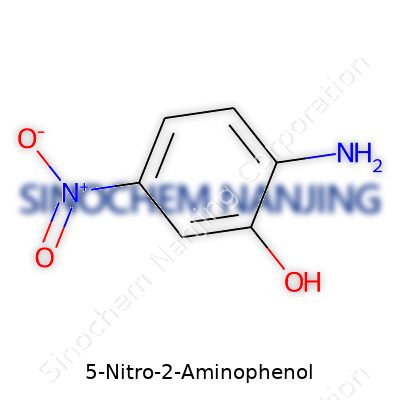
| Names | |
| Preferred IUPAC name | 5-nitro-2-aminophenol |
| Other names |
5-Nitro-2-aminophenol 2-Amino-5-nitrophenol 5-Nitro-o-aminophenol 5-Nitro-2-hydroxyaniline |
| Pronunciation | /ˈfaɪˌnaɪtroʊ tuː əˌmiːnoʊ fəˈniːɒl/ |
| Identifiers | |
| CAS Number | 99-30-9 |
| Beilstein Reference | 1718737 |
| ChEBI | CHEBI:77157 |
| ChEMBL | CHEMBL175210 |
| ChemSpider | 21883276 |
| DrugBank | DB08374 |
| ECHA InfoCard | 100.033.876 |
| EC Number | 226-338-2 |
| Gmelin Reference | 82820 |
| KEGG | C06504 |
| MeSH | D009660 |
| PubChem CID | 10462 |
| RTECS number | BY7520000 |
| UNII | 6R1V2RYJ0I |
| UN number | UN2651 |
| CompTox Dashboard (EPA) | DJ4K4PS67E |
| Properties | |
| Chemical formula | C6H6N2O3 |
| Molar mass | 138.11 g/mol |
| Appearance | Yellow crystalline powder |
| Odor | Odorless |
| Density | 1.55 g/cm³ |
| Solubility in water | Slightly soluble |
| log P | 0.21 |
| Vapor pressure | 0.000004 hPa (25 °C) |
| Acidity (pKa) | 6.46 |
| Basicity (pKb) | 10.31 |
| Magnetic susceptibility (χ) | -63.0×10⁻⁶ cm³/mol |
| Refractive index (nD) | 1.695 |
| Viscosity | Viscous liquid |
| Dipole moment | 3.7095 D |
| Thermochemistry | |
| Std molar entropy (S⦵298) | 117.2 J K⁻¹ mol⁻¹ |
| Std enthalpy of formation (ΔfH⦵298) | -63.31 kJ/mol |
| Std enthalpy of combustion (ΔcH⦵298) | -1856 kJ·mol⁻¹ |
| Pharmacology | |
| ATC code | D08AX02 |
| Hazards | |
| Main hazards | Harmful if swallowed, causes skin and eye irritation, may cause respiratory irritation |
| GHS labelling | GHS02, GHS07, GHS09 |
| Pictograms | `GHS07` |
| Signal word | Warning |
| Hazard statements | H302, H315, H319, H317, H335 |
| Precautionary statements | Precautionary statements: P261, P280, P305+P351+P338, P337+P313 |
| NFPA 704 (fire diamond) | 2-3-1-OX |
| Flash point | 146°C |
| Lethal dose or concentration | LD50 oral rat 2150 mg/kg |
| LD50 (median dose) | LD50 (median dose) = 2820 mg/kg (Oral, Rat) |
| NIOSH | RN 6057 |
| PEL (Permissible) | PEL for 5-Nitro-2-Aminophenol: Not established |
| REL (Recommended) | 0.1 mg/m³ |
| Related compounds | |
| Related compounds |
4-Nitro-2-aminophenol 2-Amino-5-nitrophenol 2-Amino-4-nitrophenol 2-Nitro-4-aminophenol 5-Nitro-o-aminophenol |



