4-Octyne: Growing Role in Chemicals and Industry
Historical Development
Chemists started hunting for new types of carbon-carbon bonds by the late nineteenth century. This hunt led to the discovery and classification of alkynes. 4-Octyne, with its unique structural arrangement (internal triple bond between the fourth and fifth carbon atoms), caught attention because it stood out from more common terminal alkynes like acetylene. The old days of chemical research were built on manual experiments and persistent curiosity, and 4-Octyne slowly made its way from obscure laboratory notes to more established chemical catalogs in the mid-twentieth century. Its synthesis became a rite of passage for organic chemists wanting to practice internal alkyne formation. Modern companies picked it up for specialized uses, but it’s always been better known in research circles than on the industrial stage.
Product Overview
4-Octyne belongs to the family of internal alkynes, holding the formula C8H14. It’s colorless, has a faint odor, and presents as a liquid under room conditions. Because the triple bond is locked inside the chain, 4-Octyne acts less like its terminal cousins when it comes to reactivity. People sometimes lump it in with other octynes, but its unique structure gives it physicochemical properties that research chemists keep coming back to. It has grown into something of a specialty chemical—commonly used as a reference compound in synthetic experiments, and for exploring organic transformations involving internal alkynes.
Physical & Chemical Properties
You can spot 4-Octyne by its boiling point, which sits higher than simple linear hydrocarbons, usually around 130°C. The melting point falls at about -54°C, and the density clocks in at 0.74–0.76 g/cm³ at 20°C. It’s hydrophobic, refusing to mix with water but dissolving in most organic solvents. The triple bond between the fourth and fifth carbons makes it more stable than terminal alkynes, so it resists addition reactions that would chew up other triple bonds. Its vapor is heavier than air. If a spill happens, heavier-than-air vapors like these stay low to the ground—a safety concern inside closed spaces. In a lab, the triple bond makes 4-Octyne an interesting substrate, because the internal location slows certain reactions, opening doors for selectivity in synthetic chemistry.
Technical Specifications & Labeling
Suppliers label 4-Octyne under several IDs. The CAS Registry Number stands at 1942-45-6. Purity often looks like 98% or higher, as even small impurities disrupt results in experimental set-ups. Bottles come with hazard warnings—flammable liquids with flashpoints close to room temperature—so closed storage cabinets and strict procedures keep users and property safe. Material Safety Data Sheets (MSDS) flag this compound for eye and skin irritation, vapor hazards, and environmental risks. Most companies ship it in dark or amber glass bottles, with dates and lot numbers for traceability. Volatile organics end up on government lists for monitoring emissions and safe transport.
Preparation Method
The most common preparation relies on coupling reactions, such as the dimerization of acetylene units or coupling of haloalkynes with organometallic reagents. Some lab-scale syntheses start with 4-octyn-1-ol, dehydrating the alcohol to the corresponding alkyne using a strong base or acid catalyst. In an academic setting, the Favorskii reaction stands out, coupling large molecular fragments using high-energy chemistry to close the gap between ordinary linear hydrocarbons and the desired alkyne structure. Cross-coupling methods, especially those using palladium or copper catalysis, often get the nod for greater purity and yield. These newer tricks cut down on unwanted side products, keeping waste streams clean and the work-up straight-forward.
Chemical Reactions & Modifications
People in synthetic chemistry often use 4-Octyne to probe the behavior of alkynes under different conditions. The triple bond gets targeted in hydrogenation experiments, cutting it down to trans- or cis-alkenes, then further to alkanes depending on how much hydrogen and what catalyst show up. Addition of halogens, acids, or other electrophiles goes slower than with terminal alkynes, because the internal location shields one end from easy attack. Ozonolysis splits the carbon chain, making it useful for mapping reaction pathways. Chemists use 4-Octyne for making larger molecular scaffolds—especially where a defined distance between key groups matters. The compound also steps into polymer chemistry, where internal alkynes introduce rigidity and block flexibility in backbone chains.
Synonyms & Product Names
Different suppliers and countries may list 4-Octyne under names like Dipropylacetylene, 4-Octin, or 4-Octyne (systematic IUPAC naming). In scientific research, it usually appears as “4-Octyne” or its molecular shorthand, C8H14. Commercial product catalogs sometimes label it as “internal octyne” to distinguish it from 1-octyne or 2-octyne. Safety paperwork draws from these synonyms to prevent mix-ups during ordering, labeling, and use.
Safety & Operational Standards
Every bottle of 4-Octyne comes with a set of safety rules that demand respect. The fire hazard presents the biggest concern, so flammable storage cabinets and explosion-proof ventilation become non-negotiable. Precaution goes beyond goggles—face shields, gloves made for organic solvents, and long-sleeved coats help prevent skin and eye contact. Users should stay alert for dizziness or headaches after inhaling vapors. Chemical spill kits and sand buckets line laboratory floors for quick action in case of leaks. Strict labeling and inventory control keep containers tightly closed and accounted for—one missing bottle in a teaching lab can upend an entire safety audit. Researchers who generate waste containing 4-Octyne follow toxic waste rules, segregating it from acids, oxidizers, and water-reactive solids. Training and ongoing drills ensure that no one fumbles with 4-Octyne on a bad day, even if emergencies take them by surprise.
Application Area
Few consumers ever bump into pure 4-Octyne outside of a laboratory textbook, but its value inside research and niche industries stays strong. Organic synthesis relies on internal alkynes as intermediates for pharmaceuticals and advanced chemicals. In specialty polymers, the rigid triple bond backbone improves resistance to heat or wear. Analytical chemists reach for 4-Octyne as a standard or model compound in chromatographic and spectroscopic methods, because its pattern of reactivity helps flesh out unknowns in new materials. Students and teaching labs use it to demonstrate the slower reactivity and selectivity of internal alkynes against their terminal counterparts. In rare cases, the fragrance and flavors sector tinkers with 4-Octyne-like structures, but the parent molecule rarely ends up in consumable form.
Research & Development
Academic journals keep turning out studies on the transformation and reactivity of internal alkynes like 4-Octyne. Newer catalysts—especially in the palladium, nickel, and gold families—open up reactions thought impossible thirty years ago. These metals coax 4-Octyne through coupling and insertion pathways, building structural complexity in fewer steps. Green chemistry research chases milder conditions, higher yields, and fewer toxic byproducts, and 4-Octyne gives these efforts a benchmark. More recently, computational chemists simulate its behavior in silico, saving physical materials and reagents for only the most promising avenues. For students, mastering the synthetic tricks and pitfalls of internal alkynes builds a solid platform for more advanced molecular design.
Toxicity Research
Evidence on health effects suggests that 4-Octyne’s biggest risks come from inhalation and skin exposure. Animal studies point to mild central nervous system depression at high vapor concentrations, with symptoms like dizziness and headaches in exposed workers or careless researchers. Slight skin irritation and redness may follow direct contact, so gloves and longer sleeves are not just suggestions—they’re an everyday necessity. The compound does not rank among the most acutely toxic alkynes, but chronic studies remain limited. Environmental impact reviews note that its slow breakdown in water and soil means proper disposal matters. Agencies tracking volatile organics include 4-Octyne among compounds that need containment to protect workers, the public, and local waterways.
Future Prospects
Ongoing demand for tailored intermediates in pharmaceutical and advanced material synthesis has kept chemists returning to 4-Octyne year after year. Future trends point to smaller batch, high-value applications—especially where the internal triple bond can direct reactivity in controlled synthetic steps. A surge in interest around sustainable organic chemistry means that safer, cleaner syntheses of 4-Octyne and its derivatives will get more attention and funding. In the long term, improvements in catalytic chemistry—especially using cheap and abundant metals—could make internal alkynes like 4-Octyne more common outside of elite specialty research labs. As computational tools expand researchers’ ability to map and predict new uses, more efficient, cost-effective, and sustainable pathways will push 4-Octyne into innovative roles not yet imagined in current textbooks.
What is 4-Octyne used for?
Purpose Behind 4-Octyne in Laboratories and Industry
Most people haven’t run into 4-octyne unless they’ve spent time in a chemistry lab or worked with specialty chemicals. With its carbon triple bond, this compound’s structure draws the attention of organic chemists looking to build new molecules or test unusual reactions. Sitting in the category of alkynes, 4-octyne’s shape gives it practical muscle where some other organics fall short.
Organic Synthesis and Beyond
In organic synthesis, 4-octyne often gets used as a building block. Its triple bond lets chemists bolt on extra groups and craft more complex molecules. For example, making alcohols, acids, or longer carbon chains starts with inputs like 4-octyne. The “oct” in the name points to its eight carbon atoms, useful for scaling up reactions when a longer backbone matters.
Folks making flavors, fragrances, or pharmaceutical starting points sometimes reach for 4-octyne. Chemists have made use of it in studies involving coupling reactions—known as “cross-coupling.” Procedures like the Sonogashira or Glaser coupling turn this molecule into pieces for things that eventually help people: imagine pain relievers or specialty plastics. Data from synthesis journals back up a strong record of 4-octyne as a reaction partner, where predictable behavior lets researchers build up targets efficiently.
Material Science: Connecting 4-Octyne’s Properties
Material scientists seeking new molecules for coatings or electronics sometimes rely on alkynes. 4-Octyne’s triple bond carries a rigidity and reactivity not always found in the chemical world. This makes it valuable when someone wants to lock atoms in place within a larger material or test how well thin films hold together in harsh conditions. Alkynes form the backbone for certain polymers used in research for flexible electronics and specialty adhesives. While 4-octyne isn’t mass-marketed for plastics, its presence in experimental work shows up in publication after publication.
Why Purity and Handling Matter
Working with 4-octyne calls for caution. As with many alkynes, the liquid form can release vapors that irritate eyes and skin. I’ve known colleagues who learned quickly to keep it in fume hoods and wear gloves. Even storing the material brings special instructions. Its purity determines how well a reaction works. Any water or oxygen sneaking in can spoil reactions or give chemists unpredictable results. Reliable suppliers focus on keeping the product clean, which ties into safety guidance from health agencies.
Potential Avenues for Smoother and Safer Use
In my own lab time, minimizing spills and exposure meant training from day one. Good ventilation and labeling help prevent accidents. As green chemistry picks up steam, some researchers have started to replace traditional solvents or design new routes that generate less waste when using 4-octyne. Academic and startup teams keep tinkering with alternative building blocks for similar applications. Better access to handling and disposal information would help smaller labs keep up with safety standards.
From Research Bench to Real Products
Even though few consumers ever think about it, molecules like 4-octyne underpin plenty of everyday advances. Drug developers, material scientists, and specialty manufacturers use it as a tool for innovation. Its main value shows up where precision and creativity matter—whether that’s assembling the next pharmaceutical compound or testing electronics of tomorrow. Every new pathway builds on fundamentals like 4-octyne, linking old-school chemistry to real progress.
What is the molecular formula of 4-Octyne?
Understanding 4-Octyne
4-Octyne belongs to a class of hydrocarbons called alkynes. Its structure means you’re dealing with a straight chain of eight carbon atoms, with a triple bond starting at the fourth carbon. This arrangement sounds technical, but the pattern actually becomes clear once you break it down with basic chemistry logic.
In organic chemistry, figuring out a molecule’s formula starts with a peek at its backbone. Octynes have eight carbons. The suffix “-yne” tells you there’s one triple bond somewhere in that chain. Every time you add a triple bond, the molecule drops two hydrogens from its fully saturated form—octane, in this case.
Simple Breakdown of the Formula
Start with octane, which sits at C8H18. A single triple bond replaces two pairs of hydrogens, tossing out a total of four hydrogens. That brings you to C8H14. Chemists have checked and rechecked it for years, so it’s not a guess—C8H14 describes the mix of eight carbons and fourteen hydrogens found in any straight chain 4-octyne.
Why Knowing the Formula Matters
Getting this answer right isn’t just about passing an exam or satisfying curiosity. Really, the formula matters in real-world settings like chemical manufacturing, laboratory analysis, or even in the creation of new materials. Mistakes at this step can wreck a chemical synthesis or result in industrial accidents. Years back, I worked with a team checking the output from a pilot reactor. One error in the molecular weight calculation, and suddenly you’ve got a very expensive cleanup on your hands. We spent an entire day tracing a runaway byproduct, only to find someone misread the alkynes’ formula in the original plan. Details like these end up driving home how the basics, like molecular formulas, still anchor everything in the lab or plant.
Connections to Everyday Products
Most folks never see 4-octyne itself in household products, but the logic used to figure out its formula shapes everything from plastics to pharmaceuticals. Hydrocarbons like this often turn up in larger molecules that build the foundation of fuels or specialty chemicals. A solid understanding of something as fundamental as the formula makes for fewer surprises in development cycles. That foundation helps chemists predict reactivity, manage storage safely, and handle new substances with confidence.
Facts Backing Its Importance
Major chemical manufacturers base process safety protocols on formulas. Tracking emissions, controlling hazards, and setting up purification all depend on understanding molecule counts. Given the escalation in regulations around chemical transparency, nailing down the right molecular details avoids accidental non-compliance. For smaller research outfits, accuracy on a molecular level keeps budgets in check and reputations solid. Errors aren’t just embarrassing—they create delays and raise costs.
Finding Solutions Through Education
One way to sidestep mix-ups is by honing chemistry education. Students need clear explanations and lots of practice before calculations like these become second nature. In my own classes, practical examples like “work out the formula for 4-octyne and explain the steps” give learners reasons to remember these rules. Real stories about process failures due to small mistakes also help the message land: double-checking the basics saves time, money, and sometimes safety. Technology can lend a hand with molecular modeling tools, but nothing beats a confident grasp of the fundamentals.
What are the safety precautions when handling 4-Octyne?
Real Hazards with 4-Octyne
4-Octyne sounds like a name only a chemistry student or a chemical plant worker needs to know, but its risks show up any time someone works with alkynes. I remember the first time I heard about it during organic lab training—what caught my eye was its tendency to ignite or release dangerous vapors. Most folks do not realize that 4-Octyne can sneak up in reactions or storage containers. Take spills, for instance: the liquid moves fast and evaporates quickly, which means toxic fumes can hang around, especially if you ignore proper ventilation.
Personal Protective Equipment: Not Just for Show
Every experienced lab worker can recall that moment goggles saved their eyesight. Splashing 4-Octyne is not the same as knocking over water. Even short exposure can lead to burns or rashes. I always put on chemical-resistant gloves and a lab coat made from flame-retardant material. Regular gloves do not last long against organic solvents, so nitrile or neoprene work better. Open-toed shoes or short sleeves? Never an option—ankle-to-wrist coverage matters.
Air Circulation Saves Lives
Opening a window won’t cut it. Most university and industry labs insist on using a chemical fume hood. If you have to work with 4-Octyne in a small space, fumes build up in minutes. Even a brief headache or dizziness could signal you’re inhaling vapor. Chemical hoods should run before you even uncap a bottle—never skip that step. A portable respirator with an organic vapor cartridge helps during clean-up or unexpected releases.
Fire Safety Must be a Habit, Not a Reaction
Many ignore the fire hazard. 4-Octyne catches fire from a spark or a warm surface. Open flames, exposed light bulbs, and static electricity tighten that risk. A simple static spark from clothing can start a disaster. Grounding conductive surfaces, avoiding polyester or wool in the lab, and keeping flammable materials away help lower the risk. Fire blankets and extinguishers belong right by the exit; no one wants to waste seconds searching during an emergency.
Storage and Labeling: Planning Ahead Makes Trouble Rare
Storing 4-Octyne next to strong acids or bases can trigger dangerous reactions. I keep such reactive chemicals away from others, in a ventilated, locked cabinet designed for flammables. Leaky lids, cracked bottles, and faded labels all raise flags—replace them as soon as you notice. Log every entry and removal from storage. Labs that write up a proper chemical hygiene plan catch mistakes early.
Handling Spills and Accidents
No one enjoys spill drills, yet the real thing hits hard. I always have a spill kit within reach, including absorbent pads, gloves, and temporary containment socks. Alert everyone around before starting a cleanup and evacuate if the air feels thick or smells sharp. Avoid mixing cleaning agents; leave that to professionals if it gets out of hand. Fill out the incident report right after, while details stay fresh.
Training and Community Knowledge
Newcomers often assume well-ventilated labs and basic gloves give enough protection. Most veterans learn by watching mistakes or listening to others who made them. Lock in those safety briefings before handling 4-Octyne. Regular refreshers—once, twice a year—give teams a better shot at spotting trouble before it starts.
An Ounce of Caution Means Fewer Regrets
No one walks into the lab aiming for trouble. Careful handling, steady training, and practical respect for 4-Octyne’s hazards form habits that avoid injuries, lost time, and costly cleanups. For anyone tempted to cut corners: one close call often changes a whole career’s attitude about safety.
How should 4-Octyne be stored?
Why 4-Octyne Demands Careful Attention
Even those who rarely step into a laboratory have heard stories about chemical mishaps. 4-Octyne isn’t as famous as some hazardous substances, but its flammable nature makes it a quiet but real risk. Years ago, I watched an entire set of glassware melt during a training exercise when someone ignored a basic flammables rule. Fortunately, quick action avoided injury. But mistakes with chemicals like 4-Octyne rarely offer do-overs. Flammable solvents, including alkynes, show little patience for complacency. 4-Octyne boils at roughly 140°C, but even at room temperature, vapors can ignite if allowed to drift near an open flame or spark.
Labeling plays a huge role here. I’ve seen grad students transfer chemicals into unlabeled containers – a shortcut that can backfire. Labels fade, or someone new assumes that “clear liquid in beaker three” is just water. Then they find out differently. If you’re storing 4-Octyne, every container deserves a proper, permanent label including hazard pictograms. Use tools designed for chemical handling — permanent markers, chemical-resistant tape, and preprinted hazard labels are cheap insurance.
Storage Choices Matter – Don’t Cut Corners
Many labs keep their flammables in dedicated cabinets. There’s good reason for that extra step. 4-Octyne belongs nowhere near oxidizers, acids, or open sources of ignition. Mixing even a drop with hydrogen peroxide or similar agents has triggered more than a few bad lab fires. Flammable cabinets don’t just protect contents from accidental ignition — they buy precious minutes during emergencies.
People sometimes ask if a fridge can double as a flammables safe. Not every refrigerator fits the bill. Standard models house electrical relays and lights that can spark. Only explosion-proof or “flammable-safe” refrigerators keep 4-Octyne chill without courting disaster. If you find yourself in a crowded lab with various users, make sure everyone knows which fridge is which. I once watched a colleague spot a regular mini fridge crammed with volatile solvents. That oversight could have meant a building evacuation.
Ventilation, PPE, and Clear Communication Cannot Be Ignored
Good air flow means lower risk. Fume hoods clear away stray vapors before they drift to noses or, worse, ignition sources. Solid PPE — splash goggles, nitrile gloves, and closed lab coats — protects skin and eyes from accidental splashes. You might feel silly putting on the full kit for a “quick pour,” but donning gloves has saved my hands more than once. Janitors, visitors, and junior staff also need warnings about what’s in stock — so posted storage signs help everyone steer clear of trouble.
Disposal and Emergency Planning Builds Real Resilience
Don’t keep more 4-Octyne than projects demand. Extra bottles lying around make spills likelier and raise cleanup costs. Out-of-date chemicals tend to degrade, sometimes producing more reactive or toxic byproducts. Follow local hazardous waste regulations for disposal. Rinsing down the drain or tossing surplus into trash isn’t just illegal in most countries — it contributes to a culture of carelessness. Keep spill kits handy and review fire extinguisher access often. Small investments here pay big dividends when seconds matter.
Solid preparation stands between an ordinary day and a serious accident. Whether running a professional lab or just getting started in chemistry, careful storage strategies for chemicals like 4-Octyne protect health, equipment, and peace of mind.
What is the purity and grade of the 4-Octyne product?
What Matters in Chemical Purity
Purity means everything in the chemistry world. You deal with one small contaminant in a product like 4-Octyne, and the results spiral. Labs chase that “>98%” stamp, and for good reason. Purity at this level turns the bolt of organic synthesis, especially for pharmaceutical or material science work. Anything less — even a percent or two — bakes in mistakes that don’t show up until late in the process, wasting precious resources and time.
When I helped my college research group work up a batch of alkyne for a cross-coupling project, every step depended on GC-MS printouts staying clean. Impurities forced us back to square one. A pure 4-Octyne isn’t just about getting a clean result under the hood — it ensures every reaction downstream, every mechanism you puzzle out, plays fair. Without it, nobody trusts the data. Every hour prepping, quenching, or extracting gets thrown off over one low-grade bottle.
Why Labs Choose Different Grades
Most of the 4-Octyne on offer meets the “analytical standard” or “high purity” grade. Anything lower usually lands in high school classrooms or for demonstrations. But for a synthesis engineer, “high purity” means a max of 1% by-products, or your columns clog up and your TLC plates turn into abstract art. Across drug discovery, chemical manufacturing, and advanced research, this high standard means less troubleshooting, less guesswork, and solid reproducibility with every order.
Suppliers stamp these grades for a reason. Scientists rely on certifications — certificates of analysis might list not just the main assay (usually 98% or 99% or higher) but also individual impurities by GC and NMR. It’s wise to ask for the breakdown. Trace metals, halides, and other alkynes sometimes sneak into “reagent grade” bottles, nudging reactions into unexpected territory. If your last order jammed up the process, tracing it back to purity gaps often tells the whole story.
Testing and Verification
Every purchase brings a new opportunity or a fresh headache, depending on quality control. A lot of smaller labs now run their own purity checks right when shipments arrive. That’s especially true if the batch gets split between projects. GC, NMR, sometimes even a simple melting point check if the product is solid at room temperature — all this can save weeks of cleanup. If your budget’s tight or you’re scaling up for pilot production, it pays to double check the purity before chaining your whole workflow to that batch.
Stories of surprises from an impure bottle pop up everywhere in the literature. One research colleague thought he’d isolated a breakthrough, then the spectra said otherwise. Contaminants misled the synthetic pathway and ate days of effort. Documentation matters. Knowing exactly what grade you’re getting, and staying on top of verification, saves reputation and resources.
Improving Purity Assurance
More suppliers put effort into publishing detailed COAs and making spectra available. Labs demand transparency and sometimes build relationships with trusted vendors or purchase from those who have better documentation. The push from regulators and scientific journals for reproducible data keeps the standard rising. Keeping these practices consistent means stronger research, safer products, and less wasted time.
Better communication between buyer and supplier solves a lot. Asking about purification methods, impurity profiles, and handling protocols raises the bar, driving the industry to tighten quality even further.
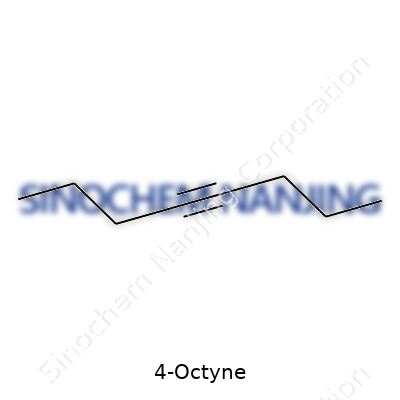
| Names | |
| Preferred IUPAC name | oct-4-yne |
| Other names |
Butyl ethyl acetylene Dibutylacetylene |
| Pronunciation | /ˈfɔːrˈɒk.taɪn/ |
| Identifiers | |
| CAS Number | 629-05-0 |
| Beilstein Reference | 1209245 |
| ChEBI | CHEBI:51789 |
| ChEMBL | CHEMBL15818 |
| ChemSpider | 532015 |
| DrugBank | DB01981 |
| ECHA InfoCard | 100.080.090 |
| EC Number | 211-004-9 |
| Gmelin Reference | 740714 |
| KEGG | C08349 |
| MeSH | D017929 |
| PubChem CID | 11538 |
| RTECS number | RT3320000 |
| UNII | MU3B68W6CU |
| UN number | UN3295 |
| Properties | |
| Chemical formula | C8H14 |
| Molar mass | 114.19 g/mol |
| Appearance | Colorless liquid |
| Odor | pleasant |
| Density | D 0.751 g/mL at 25 °C(lit.) |
| Solubility in water | Insoluble |
| log P | 1.93 |
| Vapor pressure | 1.53 mmHg (at 25 °C) |
| Acidity (pKa) | 25 |
| Basicity (pKb) | pKb ≈ 25 |
| Magnetic susceptibility (χ) | -33.8 × 10⁻⁶ cm³/mol |
| Refractive index (nD) | 1.424 |
| Viscosity | 0.727 mPa·s (20 °C) |
| Dipole moment | 0.11 D |
| Thermochemistry | |
| Std molar entropy (S⦵298) | 322.7 J·mol⁻¹·K⁻¹ |
| Std enthalpy of formation (ΔfH⦵298) | 66.3 kJ/mol |
| Std enthalpy of combustion (ΔcH⦵298) | -4735.7 kJ/mol |
| Hazards | |
| GHS labelling | GHS02, GHS07 |
| Pictograms | GHS02,GHS07 |
| Signal word | Danger |
| Precautionary statements | P210, P261, P280, P304+P340, P312 |
| NFPA 704 (fire diamond) | 3-3-2 |
| Flash point | 40 °C (104 °F; 313 K) |
| Autoignition temperature | 615 °C |
| Explosive limits | Explosive limits: 1.1–7.1% |
| Lethal dose or concentration | LD50 (oral, rat): 8250 mg/kg |
| LD50 (median dose) | LD50 (median dose) of 4-Octyne: **rat oral 4700 mg/kg** |
| NIOSH | LMGV800600 |
| PEL (Permissible) | Not established |
| REL (Recommended) | 5 ppm |
| Related compounds | |
| Related compounds |
2-Octyne 3-Octyne 1-Octyne Octene Octane |



