4-Nitroiodobenzene: A Deep Dive into Its Development, Properties, and Impact
Historical Development of 4-Nitroiodobenzene
Chemists began exploring the chemistry of nitro and iodo-substituted aromatics before the rise of plastics or computers. 4-Nitroiodobenzene stands out from a crowded field of nitroaromatic compounds, first appearing in late 19th-century journals as researchers toyed with selective nitrations on halobenzenes. Labs kept basic glassware, some sturdy hotplates, and the drive to predict the unpredictable. Pioneers discovered that by treating iodobenzene with concentrated nitric and sulfuric acids, dense yellow crystals of this compound could be harvested after careful cooling and filtration. From this moment, its journey intertwined with the expanding frontiers of organic synthesis. The practicality and efficiency of introducing both the heavy iodine and the reactive nitro group onto the benzene ring opened new opportunities in molecular design, and by the early 20th century, synthetic chemists relied on this substance to anchor further research into halogenated nitro products.
Product Overview
4-Nitroiodobenzene, known for its bright yellow color and crystalline structure, belongs to the group of nitroaromatic chemicals where both an iodine atom and a nitro group sit at opposite ends of a benzene ring. The structure grants a unique reactivity profile: easy access to further functionalization, a large iodine atom perfect for cross-coupling reactions, and the electron-withdrawing punch of the nitro group. Labs from Asia and Europe now offer this compound in various grades, targeting anything from undergraduate labs to industrial-scale transformations. In each scenario, suppliers vie for a balance between high purity, stable handling, and cost-effective packaging.
Physical & Chemical Properties
You notice a solid with a sharp melting point around 178–182°C, a clear yellow hue, and an unmistakable bitter odor—these physical markers tell an experienced hand that this is no run-of-the-mill aromatic. The molecular formula, C6H4INO2, defines both the potential and limitations in reactivity. Chemists often exploit its moderate solubility in organic solvents such as acetone, ethanol, and dichloromethane, while water remains incompatible for most applications. Its dense weight, a signature of the heavy iodine content, makes it a favorite for those seeking halogen exchange or oxidative coupling. Add to this a respectable shelf-life under basic storage conditions, and it stands up nicely to the everyday stresses of laboratory workflows.
Technical Specifications & Labeling
On any credible bottle of 4-Nitroiodobenzene, the label draws the eye with the CAS number 636-98-6, followed by clear hazard warnings for oxidizers and skin/eye irritants. As a solid, it finds itself packaged under nitrogen or dry air, tightly sealed to fend off atmospheric moisture and light. Purity levels generally clock in above 98 percent for research-grade lots, with residues of moisture or lesser halogenated byproducts strictly limited by high-performance liquid chromatography and NMR. The European REACH regulations, as well as American OSHA requirements, dictate standardized pictograms, safety phrases, and transport class assignments to keep everything above board. Children of the information age expect digital Safety Data Sheets with up-to-date warnings and spill management.
Preparation Method
Textbooks describe the classic route as the nitration of iodobenzene, but real-world chemists note plenty of variables. Crude iodobenzene gets stirred into a mixture of concentrated nitric and sulfuric acid, often at temperatures barely above freezing, to keep the energetic nitronium ion from causing side reactions. Patience is required while the yellow 4-nitro product precipitates. Simple filtration methods work, but some labs invest in chilled continuous-flow reactors to push yields higher and sidestep thermal runaways. Washing, neutralization, and—but never forgotten—thorough drying finish the job before researchers judge color, melting point, and spectral purity. Years of trial and error convinced even seasoned chemists that while the synthesis reads straightforward, real wins come from steady hands and a sharp eye for detail.
Chemical Reactions & Modifications
4-Nitroiodobenzene serves as a versatile springboard for further transformations. One notable reaction uses palladium-catalyzed cross-coupling; the sturdy C–I bond breaks to join with organostannanes, boronic acids, or terminal alkynes. The nitro group, under hydrogenation or reduction, morphs into an amine, paving the way to p-iodoaniline—a building block for dyes and pharmaceuticals. Occasionally, both groups remain untouched through gentle substitution, allowing for triazine formation or etherification. Chemical tinkerers appreciate that steric and electronic effects dance in delicate balance here, so optimization runs gather as much wisdom as published procedures. In academic settings, students chart out reactivity patterns to learn how leaving groups and activating substituents trade control in complex organic mosaics.
Synonyms & Product Names
Depending on the catalog, you come across names like p-Nitroiodobenzene, 1-Iodo-4-nitrobenzene, and para-nitroiodobenzene. For regulatory paperwork, only the preferred IUPAC name saves headaches. Certain CAS registries list this compound as 636-98-6, and the more commercial-minded supplier tacks on abbreviations or trade codes. Chemists sometimes shorthand it as 4-NIB in lab notebooks, which helps during long reaction sequences. International businesses insist on harmonized identifiers for shipping, purchasing, and inventory management—small bureaucratic details but major players in global sourcing.
Safety & Operational Standards
Handling 4-Nitroiodobenzene takes more than gloves and goggles. The nitro group signals oxidative risk and the iodine brings environmental persistence. It irritates skin and eyes, and dust can become a respiratory hazard if left unchecked. Waste management for nitroaromatics draws scrutiny from environmental agencies, with disposal routes mapped to ensure deactivation or incineration. Personal experience shows the need for chemical fume hoods during weighing, and never storing material near reducing agents or open flames. Laboratories train staff on spill protocols and emergency eyewash procedures, ensuring a safety culture grounded in respect for both compound and co-worker. Labeling, regular risk reviews, and incident drills build a barrier between routine and disaster.
Application Area
4-Nitroiodobenzene’s real value emerges on the bench and in the factory. Medicinal chemists reach for it during the synthesis of heterocyclic drug candidates. Agrochemical designers, chasing new pesticide scaffolds, depend on its flexible chemistry for attaching functional groups. Materials scientists exploit the halogen and nitro group to anchor polymers or prepare high-performance dyes. Educational labs fit it into teaching modules that highlight multi-step synthesis and the interplay of electrophilic aromatic substitution. My own work in coupling reactions found 4-Nitroiodobenzene indispensable for forging aryl-aryl bonds without the fuss of elaborate protecting groups or tedious purification. Its structural versatility continues to open doors for innovation across scientific frontiers.
Research & Development
Innovation shapes the unfolding story of 4-Nitroiodobenzene. Chemists chase greener, safer nitration methods to minimize waste acid and boost atom economy. Automation and microreactor platforms promise to bring precise temperature control to hectic batch processes, reducing emissions and scaling yields. Academic groups dig into structure-activity relationships, especially for pharmaceutical intermediates, while others seek derivatives fit for organic electronics or responsive pigments. Open-access data sets and machine-learning algorithms now comb through reaction variables, searching for outlier conditions that light up previously dark corners of this compound’s reactivity. Conversations at scientific meetings grow increasingly focused on sustainability—renewable starting materials, energy-efficient protocols, and digital tracking of compliance metrics.
Toxicity Research
The nitro group and iodine atom promise reactivity but require respect due to biological impact. Animal studies indicate that, compared to polynitro compounds, 4-Nitroiodobenzene shows moderate toxicity; exposure through inhalation or skin prompts irritation, with chronic exposure linked to dysfunction in blood and liver enzymes. Environmental scientists caution that halogenated nitroaromatics can persist in soil and water, posing long-term risks to aquatic life and food chains. Standard toxicity screens, along with regular monitoring of air and wastewater, help regulate workplace and environmental exposure. Experience shows regulations lag behind new uses, so ongoing research keeps safety data ahead of the curve and reassures buyers and users.
Future Prospects
Looking ahead, 4-Nitroiodobenzene holds plenty of promise and fresh challenges. Synthetic chemists see its iodo-nitro pattern as a launchpad for bolder cross-coupling chemistry and more selective C–H activation. Environmental priorities press industry to adopt recycling methods for iodine recovery and more effective breakdown of end-of-life products. Regulatory trends drive demand for less toxic, more biodegradable alternates, but the unique coupling chemistry guarantees its niche will persist. As AI and automation gain ground in reaction planning, decisions once made by hunch migrate towards data-driven models—optimizing yields, shortening development timelines, and predicting toxicity before scale-up. While new tools may change how chemists wield 4-Nitroiodobenzene, the foundational lessons in safety, precision, and adaptation continue to hold weight in labs and factories worldwide.
What is the chemical formula of 4-Nitroiodobenzene?
Digging Into the Structure
4-Nitroiodobenzene sounds complicated at first glance, but its formula lays things out plainly: C6H4INO2. This structure sports a benzene ring—a familiar, six-carbon ring seen everywhere from aspirin to detergents. On position 1, an iodine atom takes its spot, and on position 4, a nitro group (NO2) settles in. Everything else remains hydrogen, filling out the rest of the benzene's positions. This arrangement spells out why its formula reads as it does, with each atom a piece of the puzzle.
Clear Chemistry, Big Implications
It’s easy to brush off a chemical name as one more bit of trivia for chemistry majors, but the truth is, these formulas guide the way real-world needs get solved. In pharmaceutical labs and diagnostics, 4-nitroiodobenzene provides a backbone for developing new molecules. I remember walking through an undergrad lab session, my fingers stained with iodine from a related experiment, realizing just how quickly you can go from a stable benzene ring to something reactive and rich with possibilities thanks to these substitutions.
The iodine atom’s presence stands out. It doesn’t just add weight—its large size and reactivity make the molecule a solid starting block for plenty of synthetic chemistry. Medical imaging depends on iodine-rich compounds because the element’s atomic heft helps in X-ray contrast agents. The nitro group, on the opposite side of the ring, tends to pull electrons, cranking up the molecule’s tendency to take part in even more reactions. This mix of electron-pushing and electron-withdrawing groups opens the door for all kinds of clever chemistry.
From Basic Research to New Solutions
Take pharmaceutical research. Chemists often seek to tweak aromatic rings like this one, exploring how different groups affect properties—from absorbability to toxicity. 4-Nitroiodobenzene serves as a launching point because scientists can swap out the iodine for other groups using techniques like the Suzuki reaction. That means this single compound plays a role in medicines, agrochemicals, and advanced materials. Without simple, clear formulas, these experiments grind to a halt. Knowing what each part can do, and how they connect, keeps innovation moving forward.
Safety and Environmental Responsibility
Chemicals with nitro and iodo groups carry risks. Both can be hazardous if handled carelessly. I remember training new lab assistants to respect not just the formula on paper, but the real risks attached to these molecules. Proper ventilation, gloves, and knowledge of reactivity save headaches and, more importantly, people’s health. Regulatory systems worldwide demand strict recordkeeping, storage, and disposal—hard lessons learned from mishaps of the past. Researchers now fold environmental impact right into how they plan their experiments, always aiming to reduce waste and find safer alternatives where possible.
Fact-Driven Progress in Modern Chemistry
Accuracy matters. A formula isn’t just a jumble of letters and numbers. It’s a practical signpost guiding synthesis, regulation, and safety. Without attention to detail, supply chains slow, labs lose efficiency, and even small errors lead to costly setbacks. I’ve seen firsthand, both as a student and later as a mentor, how paying attention to substance at the formula level turns unpredictable situations into smart, controlled outcomes. It all starts with understanding what those symbols actually mean, and where they can take you.
What are the main applications of 4-Nitroiodobenzene?
Chemistry Drives the World Forward
Every day, chemists bring new compounds to life, each with its own story. 4-Nitroiodobenzene is one of those compounds that often goes unnoticed outside specialty chemical circles, but its impact runs deep. A quick look at its structure — a benzene ring sporting both nitro and iodine groups — hints at the many roles it plays in labs and factories. Its value leans heavily on those two functional groups that open doors for further chemical changes, helping build more complex structures.
Organic Synthesis: From Building Block to Final Forms
Organic chemists need reliable starting points to build up pharmaceuticals, dyes, or advanced plastics. 4-Nitroiodobenzene fits into this work as a versatile intermediate. Its iodine atom is easy to swap, using reactions like Suzuki or Sonogashira couplings. I've spent hours at the bench watching these transformations, mixing 4-nitroiodobenzene with palladium catalysts and boronic acids, and seeing new carbon–carbon bonds come to life — a core part of making active ingredients for medicines and fine chemicals. The nitro group on the ring often paves the way for making aromatic amines, which then open up even more synthesis routes. The point? Chemists keep coming back to 4-nitroiodobenzene because it gives them leverage when they’re building complex targets on tight timelines.
Pharmaceutical Discovery and Development
Drug discovery keeps evolving, but many of the tools stay the same. Medicinal chemists have leaned on 4-nitroiodobenzene when they need fast access to various substituted benzenes for lead optimization. It’s widely used to craft kinase inhibitors, antibiotics, or anti-inflammatory drugs. The ability to attach different groups precisely to the aromatic ring makes a big difference. Years ago, we tried other starting materials for these transformations, but fewer provided the same range of options. This compound acts as a workhorse for structure-activity relationship studies, which often means the difference between a promising drug candidate and a failed one.
Advanced Materials: Beyond the Lab Bench
Beyond small molecule chemistry, 4-nitroiodobenzene also helps drive innovation in materials science. I know researchers who use it to prepare custom polymers or liquid crystals. Once the nitro group gets reduced to an amine, there’s a launchpad for further chemical modification — handy when crafting specialty coatings or electronics. One example is the preparation of high-performance polymers for OLED displays. Material scientists need tight control over the building blocks, and this compound makes it easier to fine-tune electronic properties or improve mechanical strength.
Environmental and Safety Aspects
Handling nitro and iodo compounds always brings some baggage. Factories that scale up production need to watch exposure risks, prevent contamination, and treat waste streams carefully. The nitro group can impact both health and the environment. Safe lab practices mean not skimping on gloves, goggles, and hoods, but it also means looking for alternative pathways that produce less hazardous byproducts. Industrial processes have improved: many companies now treat waste on-site and recover solvents for reuse. For all the promise of 4-nitroiodobenzene, best practices in manufacturing and disposal matter just as much as quick chemical wins in the lab. Regulators push for improved synthesis routes and new safety protocols — positive trends that protect workers and the environment alike.
Rethinking How We Use Chemical Tools
From a chemist’s perspective, the value of 4-nitroiodobenzene comes from being a practical, reactive, and proven tool. It helps speed up the innovation chain in healthcare, materials, and even electronics. The next big step means safer production, smarter waste handling, and exploring green chemistry approaches. R&D teams, working closely with safety engineers and regulators, can keep finding new ground — making new products that have lasting impact without carrying old risks forward.
How should 4-Nitroiodobenzene be stored and handled?
Understanding the Risks
4-Nitroiodobenzene rarely attracts attention outside chemistry circles, yet it illustrates why good lab discipline matters. With a pale-yellow crystalline appearance, it often lulls new researchers into forgetting the severe risks tied to iodo-aromatics. Its iodine atom paired with a nitro group creates a substance with real bite—a single misstep can lead to toxic exposure or, worse, an accident from shock or heat sensitivity.
Why Safety Starts with Storage
Chemicals like 4-nitroiodobenzene demand more than a casual spot on a stockroom shelf. Temperature swings tend to set off substances with nitro groups. I’ve watched a bottle turn clumpy near a radiator—enough of a scare to understand the wisdom in keeping bottles sealed and stored in a dedicated flammable chemicals cabinet that stays cool and dry, away from sunlight or moisture. Labs using old wooden cabinets or crowding bottles together set themselves up for trouble. Small labs sometimes try to save space, but overcrowding risks knockover, cross-contamination, or even chain reactions if one substance leaks or fumes out.
Personal Protective Equipment Shouldn’t Be Optional
PPE stops being just another checklist item once you’ve seen what direct skin contact or inhaled dust from aromatic compounds can do. Laboratory coats, fitted gloves (nitrile works well here), and high-quality goggles become non-negotiable. I started as a grad student who used cheap vinyl gloves. A few pinpricks and a faint chemical taste reminded me that some shortcuts aren’t worth the risk. Respirators might seem overkill for solids, but when weighing or transferring the compound, I always want that option. Accidental spills or puffs can happen fast, and some iodo compounds will irritate the nose, throat, or worse.
Preparation Goes Beyond Labels
Clear labeling often gets overlooked. No one should handle a jar with a smeared label or faded pen ink. I always double-check that the hazard info and acquisition date are visible—fresh labels prevent confusion. Insider tip: keep a secondary containment tray under the bottle, especially during transfer, so any dropped powder lands in a manageable spot.
Disposal warrants just as much attention. You can’t dump leftover nitroiodobenzene down the drain or toss it with standard waste. Specialized hazardous waste containers—with regular pick-up schedules—let facilities avoid accidents and stay compliant with local regulations. A friend of mine left a vial on a shelf for several years at a university lab. Eventually, the bottle degraded, and the cleanup required a special chemical hazard team. Leaving containers uninspected isn’t just sloppy; it actively raises danger for everyone nearby.
Create a Culture of Caution
Handling chemicals like 4-nitroiodobenzene grows safer once everyone understands the real risks, not just the textbook do’s and don’ts. Safety drills, checklists for chemical handling, and sharing real-life stories from mishaps drive the lessons home far more than poster reminders. No one benefits from ignoring a twinge of caution—sometimes a quick double-check makes all the difference between a safe shift and a trip to the emergency room.
Treat each bottle with respect, keep the workspace organized, and never shrug off procedures. The small steps taken every day—like changing gloves, keeping containers clean, and updating logs—build up a buffer that protects both people and the lab investment. With enough shared vigilance and pride in a safe lab, accidents turn from inevitability to rarity.
What are the hazards and safety precautions for 4-Nitroiodobenzene?
Recognizing the Hazards
4-Nitroiodobenzene grabs attention in the lab for its versatility in organic synthesis, but a closer look at its safety profile matters to anyone using it. This compound brings together a nitro group and an iodine atom on a benzene ring. That combination means it’s not just another routine chemical. On the one hand, nitro groups can make compounds more sensitive to shock, friction, or heat. On the other, iodine brings its own set of health risks. From experience, complacency with even the less reactive substances results in close calls, but 4-Nitroiodobenzene requires specific focus.
I’ve learned labs treat all nitroaromatics with care because some can explode under heat or mechanical shock. 4-Nitroiodobenzene’s documented dangers include harmful vapors and a risk of skin and eye irritation. Breathing in dust or fumes inflames airways. Extended exposure may cause nausea, headache, and dizziness. On skin, this compound can sting and even lead to allergic reactions for some. Standard glove-and-goggle routines don’t feel like overkill; they go a long way in keeping these risks at bay.
Potential for Environmental Harm
Chemicals like 4-Nitroiodobenzene do not stick around just in the workspace. Any spill can seep into soil or drains, affecting water and wildlife, especially because its components persist in the environment. I’ve seen strict protocols on waste disposal because authorities watch these chemicals closely; a mishap never stays limited to the four walls of a lab.
Proven Safety Steps
Using chemical fume hoods matters every time you weigh or transfer 4-Nitroiodobenzene. Good ventilation isn’t a suggestion; it’s the shield that keeps dangerous fumes out of your lungs. Consistent experience with fume hood failures or blocked airflow shows just how fast problems escalate when they’re ignored.
Quality gloves, goggles, and lab coats protect hands, eyes, and skin. Not all gloves are equal—nitrile gives much better protection than latex against organoiodine compounds. Wearing gloves without checking for damage defeats the purpose, as I’ve learned during unexpected chemical splashes. Once the experiment is over, careful handwashing has to follow. It’s easy to underestimate how much residue can stick around.
Spill kits and fire extinguishers should stay close. A dry, inert, and tightly closed container is key for storage. Keeping combustibles and strong acids nearby raises the scale of hazard, something beginners sometimes overlook. Safety data sheets recommend segregating 4-Nitroiodobenzene from oxidizers and reducing agents. Lab walkthroughs routinely show how easy it is to forget this rule, especially as shelves get cluttered.
Training and Emergency Prep
Every chemist benefits from repeated practice on how to handle spills and exposure. Running through evacuation or first-aid drills makes reactions automatic when an incident happens. Eye wash stations and emergency showers need to stay unobstructed; I’ve seen learning curves get much steeper when clutter makes rescue tools hard to reach.
Building a Culture of Vigilance
Safe handling grows out of daily routines and attitude, beyond one-time instructions. Sharing stories of near-misses at safety meetings does more to keep everyone alert than any checklist. Respect for chemicals like 4-Nitroiodobenzene means treating every experiment and cleanup as an opportunity to reinforce what works and to watch for where shortcuts creep in. When everyone owns the process, the risk shrinks for all.
What is the purity and available packaging of 4-Nitroiodobenzene?
Digging Into Purity Standards
Purity isn’t just another checkbox for lab managers or chemists—it's the backbone of every batch and experiment. For 4-Nitroiodobenzene, labs and researchers usually look for purity near or above 98%. This figure means more than just a percentage on a certificate: it means less cleanup after a reaction, fewer headaches from unexpected byproducts, and clearer analytical results. Imagine putting effort into an organic synthesis only to have your final step botched because contaminants crept in where they didn’t belong. It’s no surprise many companies go the extra mile and even offer lots in the 99% region for those relying on consistent reactivity.
Sourcing lower purity might save a bit of money, but the yield can drop and impurity peaks grow during analysis. Years ago, during one internship, I watched a project stall because an off-the-shelf batch with “97% min” purity hid chlorinated residues that threw the whole mass spectrum off. Chasing cheap material ended up doubling the cost and halving the trust in our supplier. Once you get bit by a bad batch, you never want to gamble with lower grades again. Reputable suppliers use methods like HPLC and NMR for batch verification, and this rigorous approach gives a clear picture of what’s in the bottle. If you’re running critical reactions or scaling up for pharmaceutical intermediates, even fractions of a percent can change the outcome, so purity needs careful attention from both buyer and seller.
Packing for Practicality and Safety
Moving 4-Nitroiodobenzene from factory shelf to research bench isn’t as simple as stuffing it in a bag and shipping it out. The substance doesn’t play nice with water, sunlight, or high temperatures. Suppliers lean toward sealed amber glass bottles for small-scale shipments—anything from 5 grams up to 250 grams. That choice ticks multiple boxes: it shields the compound from photodegradation, blocks moisture, and wins points with researchers who worry about trace leaching that sometimes creeps in through plastic. In my own work, having a secure glass screw-cap container limited the “surprise” crystallization that sometimes plagues lesser packaging options.
Larger lots, moving into kilogram territory, end up in fluoropolymer-lined metal drums or high-density polyethylene containers. This might not seem exciting, but a leak or crack can wreak havoc; a few grams of nitroaromatic powder exposed to air can trigger regulatory headaches and workplace accusations. The move toward tamper-evident seals has helped allay fears of contamination and keeps labs safe from cross-contamination risks. Over the years, I’ve seen shipments that cut corners on packaging quickly earn a black mark—unsealed caps or brittle containers can waste resources faster than any lab mishap.
What Transparency Brings
Every respectable supplier now hands over a certificate of analysis (COA) showing purity, where impurities fall, and sometimes even specific storage tips. It’s more than paperwork. This transparency allows research teams to plan reactions with the facts in front of them and avoid nasty surprises. For anyone new to the compound, don’t skip comparing the COA to test results. A mismatch might look minor until a whole month's budget gets sunk by impurities hiding in broad daylight.
Simple Improvements Add Big Value
Improving the availability and reliability of 4-Nitroiodobenzene can start with stronger supplier communications. Buyers should ask for full testing profiles—not just the headline purity figure. More detailed labeling on each bottle, such as exact batch traceability and recommended shelf life, can save labs from shelf-mixups and wasted effort. I’ve had good results dealing with suppliers who post test data online and offer lot samples for evaluation. Trust grows fast once you can double-check every claim.
Rigid safety in packaging and full disclosure of analytical data set apart the best suppliers. If you ask the right questions before buying, you’re more likely to sidestep problems once the work begins.
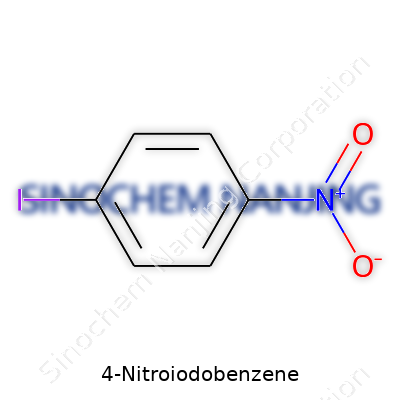
| Names | |
| Preferred IUPAC name | 1-iodo-4-nitrobenzene |
| Other names |
1-Iodo-4-nitrobenzene p-Iodonitrobenzene para-Iodonitrobenzene |
| Pronunciation | /ˈfɔːr ˌnaɪtroʊ aɪˌɒdoʊ bɛnˈziːn/ |
| Identifiers | |
| CAS Number | 636-98-6 |
| Beilstein Reference | 1207937 |
| ChEBI | CHEBI:52229 |
| ChEMBL | CHEMBL3222642 |
| ChemSpider | 15392 |
| DrugBank | DB07216 |
| ECHA InfoCard | The ECHA InfoCard of product 4-Nitroiodobenzene is "03b3e4d8-4e7b-452b-b6b3-4417e5c6e646". |
| EC Number | 210-792-6 |
| Gmelin Reference | Gmelin 145993 |
| KEGG | C19273 |
| MeSH | D018096 |
| PubChem CID | 74146 |
| RTECS number | UX8575000 |
| UNII | Z4BO4FW0LU |
| UN number | UN1663 |
| Properties | |
| Chemical formula | C6H4INO2 |
| Molar mass | 233.01 g/mol |
| Appearance | Light yellow crystals |
| Odor | Odorless |
| Density | 1.936 g/cm³ |
| Solubility in water | Insoluble |
| log P | 2.8 |
| Vapor pressure | 0.0000227 mmHg (25 °C) |
| Acidity (pKa) | 8.0 |
| Basicity (pKb) | 9.39 |
| Magnetic susceptibility (χ) | -62.0 × 10⁻⁶ cm³/mol |
| Refractive index (nD) | 1.673 |
| Dipole moment | 2.68 D |
| Thermochemistry | |
| Std molar entropy (S⦵298) | 317.6 J·mol⁻¹·K⁻¹ |
| Std enthalpy of formation (ΔfH⦵298) | 72.2 kJ·mol⁻¹ |
| Std enthalpy of combustion (ΔcH⦵298) | -20.70 kJ/g |
| Pharmacology | |
| ATC code | |
| Hazards | |
| Main hazards | Harmful if swallowed, causes skin and eye irritation, may cause respiratory irritation, toxic to aquatic life |
| GHS labelling | GHS02, GHS07 |
| Pictograms | GHS07,GHS09 |
| Signal word | Danger |
| Hazard statements | H302, H315, H319, H335 |
| Precautionary statements | P264, P270, P273, P280, P301+P312, P305+P351+P338, P308+P313, P330, P501 |
| NFPA 704 (fire diamond) | 3-2-0 |
| Flash point | 130°C |
| Autoignition temperature | 140°C |
| Lethal dose or concentration | LD50 oral rat 640 mg/kg |
| LD50 (median dose) | LD50 (median dose): Oral rat 1340 mg/kg |
| NIOSH | Not established |
| PEL (Permissible) | Not established |
| REL (Recommended) | 6-10℃ |
| IDLH (Immediate danger) | Unknown |
| Related compounds | |
| Related compounds |
Nitrobenzene Iodobenzene 4-Nitroaniline 4-Nitrobromobenzene 4-Nitrochlorobenzene |



