4-Nitrobromobenzene: A Comprehensive Commentary
Historical Development
Chemical progress usually starts with simple molecules. 4-Nitrobromobenzene entered the laboratory scene in the late nineteenth century, catching attention quickly in the era where aromatic chemistry took bold leaps forward. Researchers wanted to harness benzene’s core, tweaking it with functional groups to serve industry and medicine. For someone who spent years piecing together aromatic chemistry’s century-old jigsaw, it’s clear the wave of interest in nitro- and halogen-substituted benzenes didn’t happen by coincidence. Early dye chemists and pharmaceutical pioneers sought intermediates like 4-Nitrobromobenzene for processes that helped establish synthetic colorants and the first wave of modern drugs. It carved out a space in the story of synthetic chemistry—proof that scientific evolution often happens in small, crucial steps, guided by persistent curiosity and the need for reliable building blocks.
Product Overview
The world sees 4-Nitrobromobenzene as both a laboratory staple and an industrial intermediate. It joins together a nitro group and a bromine atom, each locked onto a benzene ring but separated by chemical distance. That structural quirk unlocks a library of reactions, making it ideal for further substitutions. Many chemists recall their first encounter with this compound when learning aromatic nucleophilic substitution. Its commercial forms usually take the shape of pale yellow crystals, packed up and shipped to research labs, production plants, and custom synthesis companies all over the globe. Decades of handling 4-Nitrobromobenzene have forged a certain respect for its reliability—whether for making biaryl scaffolds, coupling reactions, or simply teaching spotting techniques on chromatography plates.
Physical & Chemical Properties
The molecule stands out for its solid character at room temperature, melting around 125–128°C. Its bromine and nitro groups introduce heft—molecular weight clocks in at 202.01 g/mol—and a distinct, faint odor. Water refuses to blend with it, so crystallization, filtration, and purification often use organic solvents. The bromine atom, dense and eager for substitution, signals halogen chemistry’s heavier side. The nitro group pulls electron density, making the ring less reactive toward electrophilic attack, but cracks the door wide open for nucleophilic aromatic substitution. Chemists who measure melting points to gauge purity usually count on that robust crystalline form. Its physical stability supports meticulous handling, even as its chemical reactivity paves the way for inventive transformations.
Technical Specifications & Labeling
4-Nitrobromobenzene arrives with clear labeling—typically the compound name, CAS number 586-73-6, and a grade (lab, technical, or pure). Purity, often greater than 98%, matters for reproducible results. Container labels feature hazard pictograms, as dictated by GHS, plus batch numbers, manufacturing date, and handling instructions. Walk into any regulated laboratory, and you’ll spot these clear markings. Years of managing chemical storerooms underscore how important consistent labeling is when tracking inventory, maintaining compliance during audits, and preventing confusion in tight-deadline situations.
Preparation Method
The synthesis of 4-Nitrobromobenzene usually happens through bromination of nitrobenzene or nitration of bromobenzene. In industry, most opt for monosubstitution via an electrophilic aromatic substitution, controlling conditions tightly to prevent di- or polysubstitution. Strong acid and heat supply the reaction force, and the placement of the nitro group steers the bromine to the para position. From my experience, lab-scale synthesis emphasizes careful temperature control and efficient extraction—mistakes often lead to overreaction or poor yield. Industrial plants, driven by cost and throughput, heavily monitor reagent ratios to optimize both yield and purity.
Chemical Reactions & Modifications
4-Nitrobromobenzene features as a fork in the road for many syntheses. The bromine atom, primed for cross-coupling, makes Suzuki, Heck, and Ullmann reactions straightforward. The nitro group resists hydrolysis but transforms smoothly in reduction steps, offering a convenient route to 4-bromoaniline. From building heterocyclic systems to synthesizing pharmaceuticals, the reactivity delivered by these two functional groups stands out. In many projects, I’ve seen students marvel at how a simple catalytic cycle swaps out bromine for a functionalized aryl group, or how a selective reduction opens up fresh pathways when a project seemed to hit a dead end.
Synonyms & Product Names
Vendors and chemists often use variations like p-Bromonitrobenzene, 4-Bromonitrobenzene, or para-Nitrobromobenzene. Catalogs reflect these names interchangeably, but the molecular identity never changes—one benzene ring, one para-positioned bromine, and one nitro group. Names demonstrate how tradition and practicality often blend in chemistry. Years of catalog consulting have shown that synonyms usually point back to a single chemical reality, helping connect publications, certificates, and regulatory documents across languages and borders.
Safety & Operational Standards
4-Nitrobromobenzene doesn’t play well with skin or lungs. Standard lab protocols require gloves, eye protection, and good ventilation, since both nitro and bromo derivatives pose irritation risks. The compound sits on various chemical safety lists—OSHA, REACH, and the like—so spill response and waste disposal follow detailed scripts. In labs I’ve worked in, every new bottle triggers a review of safety data sheets; direct contact with powders, even trace amounts, means an immediate stop to reassess personal protection. Fume hoods and dedicated spill kits, not optional, become everyday habits for anyone working regularly with this class of substance.
Application Area
4-Nitrobromobenzene finds work mostly as an intermediate, helping researchers and manufacturers reach their targets with fewer steps. The pharmaceutical sector draws on its ability to swing easily between substitution and reduction chemistry, with many analgesics, antibacterials, and crop protection agents connected at some level to its structure. Dye and pigment industries also rely on it, coaxing color out of basic molecules by clever coupling. Recent years have even seen the compound used as a probe for new organic electronics and advanced materials. In training the next generation, I’ve used it as a teaching example to illustrate reactivity differences introduced by nitro and bromo substituents. Its impact ripples beyond the bench, touching healthcare, agriculture, advanced sensor technologies, and specialty materials.
Research & Development
Current research explores greener bromination routes, aiming to reduce hazardous byproducts and simplify purification. Catalysis innovations target lower temperatures and milder conditions, boosting both yield and safety profiles. My own work in a multidisciplinary setting highlighted how new catalysts—both enzymatic and metallic—reshape efficiency. Chemists push hard to link 4-Nitrobromobenzene with advanced organometallic transformations, hoping to fast-track synthesis of complex pharmaceuticals that would otherwise take ten or twenty steps. Analytical breakthroughs, using real-time reaction monitoring, now deliver data-driven optimizations that were pure fantasy years ago. Conversations with research teams in both academia and industry echo a persistent theme: this compound’s core still holds new tricks as we chase cleaner, smarter manufacturing.
Toxicity Research
Toxicological studies trace the compound’s fate through skin, lungs, and the environment. Data from animal and cellular testing show moderate acute toxicity—prolonged exposure damages tissue and may affect organ systems. Most labs treat brominated nitrobenzenes with the same caution as classic industrial intermediates: robust containment, documented disposal, and real medical monitoring for long-term handlers. As more data surface, regulatory bodies revise recommended exposure limits. Environmental studies flag persistence and raise questions about breakdown products. In my time managing waste streams, rigorous solvent segregation and incineration protocols became routine, driven by updated risk assessments and growing awareness of downstream contamination.
Future Prospects
The future for 4-Nitrobromobenzene looks active, as both green chemistry initiatives and high-value synthesis place fresh demands on established intermediates. Advanced coupling techniques, especially those harnessing less toxic metals, offer hope for more resource-conscious manufacturing. As precision medicine and specialty materials call for tailored molecules, demand for robust, versatile building blocks won’t fade. There’s a surge of interest in recycling strategies and degradable derivatives that limit environmental footprints. Newer generations of chemists don’t just use 4-Nitrobromobenzene for rote synthesis—they pilot sustainability, aiming to upgrade what came before with less waste and sharper efficiency. In my experience, collaborative efforts bridging synthetic method development with environmental science stand the best chance of keeping this molecule both useful and responsible in tomorrow’s labs and factories.
What is 4-Nitrobromobenzene used for?
Why 4-Nitrobromobenzene Catches Attention
4-Nitrobromobenzene often pops up in the lab for a reason: it offers chemists a clear path to more complex organic compounds. Working with this compound gives you a sense of how modern chemistry manages to link small building blocks into much larger and useful molecules. The nitro group and the bromine atom on the same benzene ring make it a reliable choice in reactions that demand selective activity — something anyone in the lab quickly notices during synthesis and testing.
Finding Practical Value in Pharmaceuticals
Medicinal chemistry depends on good starting materials. I’ve spent enough time around pharmacists and research chemists to see how key intermediates, like 4-Nitrobromobenzene, unlock possibilities in drug design. This chemical helps create molecules that push medicine forward. For example, you will see it in the synthesis routes toward painkillers, antibiotics, and compounds with anti-inflammatory effects. The combination of nitro and bromo groups lets scientists attach other functional parts — the kind that can target receptors in the body or control how quickly a medicine breaks down. That versatility means breakthroughs in labs often trace back to basic compounds like this one.
Pushed by the Needs of the Dye and Agrochemical Fields
The textile world also feels the impact of 4-Nitrobromobenzene. Color chemists select this chemical because it enables production of azo and nitro dyes. These dyes brighten fabrics and give us a range of shades that last through wash after wash. In agriculture, what’s sprayed on fields comes from far upstream in chemical processes. 4-Nitrobromobenzene often acts as a stepping-stone towards herbicides and pesticides designed to break down once they’ve done their job, cutting down on the environmental impact.
Risks and Handling in the Real World
No one who’s dealt with this compound overlooks safety. That sharp chemical smell lingers, and you learn quickly in the lab that gloves, fume hoods, and eye shields aren’t optional. The nitro group makes reactions energetic, and those stories about boils and eruptions in old lab notebooks usually involve nitro chemicals. Safe storage and transport matter just as much in industry. Oversights or shortcuts could mean accidents, contaminated products, or unexpected residues.
Solutions Pushed by Regulation and Ingenuity
Regulatory oversight pushes every handler and producer to log, trace, and minimize waste. Governments want to track what happens to precursors like this, especially since similar compounds have ended up linked to unauthorized drug making. From an environmental perspective, new processes lean on greener solvents and reactions designed to avoid harmful byproducts. Research continues on biodegradable alternatives and recycling streams for reaction wastes. Looking at eco-friendly process choices or pilot studies into enzyme-catalyzed routes often feels slower and more expensive, but pressure builds as environmental rules tighten.
Final Thoughts on Its Role Today
Experience shows that 4-Nitrobromobenzene sits at a crossroad in modern synthesis. Its value shines most where scientists need reliable building blocks for medicines, dyes, and agrichemicals. At the same time, responsibility sits squarely on the shoulders of producers and laboratory workers — not just to keep processes safe, but to keep creating cleaner routes moving forward. Real progress follows from a mix of smart regulation, practical lab skills, and a willingness to shift methods as new challenges emerge.
What are the safety precautions for handling 4-Nitrobromobenzene?
Why Careful Handling Matters
Working with chemicals like 4-nitrobromobenzene calls for respect and attention. This compound doesn’t mess around. It brings hazards to the table—contact can irritate the skin, eyes, and lungs. Anyone who has worked a late shift in a college lab or in industry knows accidents have a way of happening just when focus drops. It’s not about paranoia. It’s about practical steps that help everyone go home in one piece.
Personal Gear: Your First Line of Defense
Lab coats and gloves set the standard for a reason. For organic solids like this, ordinary nitrile gloves often do the trick, but check the integrity of your gloves before starting. Splash goggles give better protection than glasses against unexpected sprays. I’ve seen folks get complacent around crystalline compounds, thinking dust won’t bounce up. Take that bet too many times and someone pays for it with their eyes or skin.
Most forget that inhalation matters as much as skin contact. Dust masks rated for chemicals—or a proper fume hood—stop inhalation risks from turning routine measurements into breathing trouble. I remember the relief of stepping away from a hood after a spill, feeling the airflow tug away the worst of it. It’s a key backup you shouldn’t skip.
Setting Up for Safety
A good bench setup keeps exposure low. Weighing and transferring 4-nitrobromobenzene straight under a fume hood proves smarter than wishing for the best in open air. It’s not about fancy equipment. Simple things like keeping containers closed, using spill trays, and having chemical waste bottles within arm’s reach save time and prevent incidents before they start.
I learned quickly that labeling beats memory every time. Mark bottles with contents, hazards, and date—no exceptions. Getting lazy with labeling invites mix-ups, especially when shifts change or if new faces join the team.
Spill Response: Make It Second Nature
Minor spills should stay minor if you know your cleanup gear: absorbent pads, pH-neutral solutions, and scoop tools belong in the spill kit. I’ve watched cleanup drills keep folks calm when powder scatters onto the bench. If the chemical hits skin, rinse with running water for at least 15 minutes. Never underestimate the need to call medical help for any real exposure, no matter how small it looks at first.
Have Material Safety Data Sheets (MSDS) printed and visible. The worst time to search for hazard information is after a spill. From personal experience, having quick access to instructions saves valuable seconds and prevents guesswork from turning mistakes into emergencies.
Storage and Waste: Keep Risks Low
Store 4-nitrobromobenzene dry, away from sunlight and sources of ignition. Locking cabinets with good ventilation help prevent unwanted chemical reactions or leaks. I prefer putting reactive solids on a lower shelf to cut the risk of drops and spills. Don’t overcrowd shelves or mix incompatible chemicals nearby—disasters have started that way, even in tightly-run setups.
Waste goes in clearly labeled, sealed containers meant for hazardous chemical disposal. Don’t pour leftovers down the drain—nothing ruins a good day at work faster than contaminating water supplies or risking fines.
Training and Common Sense
Handling chemicals safely isn’t just a lesson from textbooks. Real trust comes from practice, refreshers, and peer checks. I’ve witnessed how a few minutes reviewing safety steps as a group before major tasks can save hours in the ER later. Trust the process, respect the compound, back each other up, and everyone benefits.
What is the chemical formula of 4-Nitrobromobenzene?
Understanding 4-Nitrobromobenzene
4-Nitrobromobenzene stands out among aromatic compounds for its unique structure and uses, especially in research and industrial applications. With a formula of C6H4BrNO2, it brings together a nitro group and a bromine atom, both attached to a benzene ring at the para positions. This placement changes how the molecule behaves in chemical reactions, making it an important intermediate in organic synthesis. That formula might look simple, but the meaning behind those letters and numbers touches everything from lab work to manufacturing.
Structure and Significance
Breaking down the formula gives a clear picture. The C6H4 shows a benzene ring with two hydrogens missing since those positions are taken by substituents. The Br and NO2 groups define the "4-nitrobromo" in the name—one spot has a bromine atom, another across the ring has a nitro group. These positions aren’t chosen by chance; their particular placement leads to properties that attract chemists. My experience working with aromatic compounds tells me, changing the position of a group changes how the molecule reacts. One misplaced atom, and you wind up with a substance that doesn’t quite do the job.
The nitro group (NO2) is quite electron-withdrawing, which influences reactions like nucleophilic aromatic substitution. Bromine, being a good leaving group, allows the molecule to undergo further transformations, especially in the creation of more complex organic materials. These features explain why experts keep a close eye on structure. You won’t see people guessing with such molecules—precision here has consequences down the line, both for scientific progress and commercial success.
Why C6H4BrNO2 Matters in Real Life
Chemical formulas act as a universal language. In my own hands-on work, a single slip in notation can throw off a whole sequence of reactions, wasting both time and expensive reagents. Lab safety also ties back to knowing your formulas—bromine-containing compounds need careful handling, and the nitro group adds fire risk. A proper understanding of what you’re dealing with saves a lot of headaches, not just in personal safety but in regulatory compliance.
The importance doesn’t stop at the bench. Pharmaceutical firms use 4-nitrobromobenzene as a building block for developing drugs. Material science teams turn to it when designing functional dyes and specialty chemicals. The C6H4BrNO2 formula might seem simple, but every letter and digit guides careful choices about solvents, reaction conditions, and lead times. Clarity here can mean the difference between a successful experiment and one headed for the waste bin.
Room for Improvement and Solutions
One challenge in chemistry education comes from an overemphasis on rote memorization rather than conceptual understanding. It’s easy to forget the details if all you know is the sequence of atoms. Better teaching tools—using molecular models, immersive visualization, and case studies—would make formulas like C6H4BrNO2 less intimidating. Personally, seeing molecular models helped bring these combinations to life in my early studies. Bringing this into more classrooms and labs could help the next wave of chemists feel more confident and safer in their work.
Labeling in the laboratory also needs sharper focus. Proper labeling supports traceability and reduces the chance of mixing up compounds, especially when dealing with substances like 4-nitrobromobenzene that require special care. Integrating digital inventories and barcoding helps manage supplies more accurately and ensures everyone knows exactly what’s in a bottle before any work begins.
Moving Forward with Knowledge
4-Nitrobromobenzene’s formula, C6H4BrNO2, is more than a collection of symbols. It’s a tool, a safety warning, and a ticket to new discoveries. By learning the reasons behind that formula and respecting the properties it describes, we set ourselves up for smarter, safer, and more productive work in science and industry.
How should 4-Nitrobromobenzene be stored?
Understanding the Compound
4-Nitrobromobenzene looks like a typical crystalline organic chemical. It shows up as a pale-yellow solid, giving little warning of its reactive nature just by sight. Plenty of research institutions and manufacturing labs rely on it for synthetic chemistry work, especially when building more complex molecules. That's why the way we store it isn't something to brush off or leave to chance—I've seen corners cut in chemical storage, but that's only courting accidents.
Addressing Hazards Through Smart Storage
The compound packs risk in two directions: physical reactivity and human health. On the physical side, you get flammability and decomposition concerns, especially where heat or light creeps in. Health-wise, inhalation and skin contact don’t do anyone any favors—4-Nitrobromobenzene irritates the respiratory tract and can trigger more severe toxic effects with enough exposure. Once, while working as a lab tech, I watched a colleague develop a nasty rash after handling a leaky container that wasn’t sealed tightly. That lesson stuck with me.
Environment Choices Matter
Storage starts with the right surroundings. Cool, dry, and dark conditions slow down any unwanted reactions. High temperatures—think above 25°C—aren’t welcome here. Moisture can creep in and spark hydrolysis over time, so humidity control adds another layer of protection. Inside most research labs, you’ll find desiccators and temperature-controlled cabinets pulling double duty for chemicals like this. Every bottle I’ve handled went straight into a locked chemical storage cabinet away from sources of heat, flame, and even direct sunlight through the windows.
Container Decisions
Glass bottles with strong, tight-fitting lids stop contamination and leaks. I’ve seen plastic containers used in some storerooms, but they risk chemical interaction and static buildup, both of which spell trouble for reactive organics. Labels should stay crisp and chemical-resistant—blurred text leads to confusion, and mistakes happen quickly when chemicals get mixed up.
Segregation Practices
Segregation quickly lets hazards drop off. Oxidizers, acids, bases, and combustible organic materials don’t mix with 4-Nitrobromobenzene. If incompatible materials share a shelf, chemical reactions can pop up with just a tipped bottle. Labs I’ve worked in usually keep brominated aromatics on a separate shelf, always with a spill tray underneath to contain drips or cracked bottles.
Regular Inspection
No storage plan works unless checks happen often. I make it part of my routine: Inspect seals, look for any changes in the powder’s color or form, and double-check the label. Problems caught early prevent real harm. Safety data sheets and local regulations aren’t paperwork for the shelf—they should guide every check, and it's worth the time to read the latest updates from sources like the National Institute for Occupational Safety and Health (NIOSH).
Handling Spills and Waste
Accidents follow chemicals that aren’t respected. Lab policy should require spill kits nearby and clear instructions on cleanup. If a container breaks, isolate the area, use gloves and protective eyewear, and ventilate the space. Clean up spills with absorbent materials and handle waste as hazardous—not just regular lab trash. Waste disposal laws differ by location, and regulatory fines hurt, but a health emergency hits harder.
Fostering Responsible Storage Habits
Storage only works when everyone in the lab or storage area carries the same attitude of respect for the hazards. New staff and students should work through formal training, and refresher sessions shouldn’t be skipped. In my own work, I make time for refresher drills and hands-on demonstrations—the details fade fast if they only show up in a handbook. Each person who stores or handles 4-Nitrobromobenzene becomes a link in the lab safety chain, and broken links put the whole operation at risk.
What is the appearance and physical properties of 4-Nitrobromobenzene?
The Look and Feel
4-Nitrobromobenzene stands out with its pale yellow, crystalline form. This color catches the eye, not in a vivid way, but more as a subtle signal that the material isn’t your everyday organic compound. People working in labs recognize yellow-tinged chemicals as potential nitro derivatives, and the presence of bromine attached to the benzene ring strengthens this impression. Grains of 4-Nitrobromobenzene look a lot like granulated sugar, though a shade yellower. It doesn’t clump like some other chemicals and pours easily from a bottle, though its fine dust clings slightly to glassware. Based on my experience in an organic lab, once spilled, those yellow specks can linger around the workspace until swabbed away.
Physical Properties That Matter in the Lab
The molecular weight comes in at about 202.99 g/mol, so the solid feels a bit heavier in a sample vial compared to typical unhalogenated benzenes. You won’t find it dissolving well in water—a common trait for halogenated aromatics—but it moves to organic solvents like ether, benzene, or acetone without protest. Melting happens near 125°C, and it boils up at around 305°C, giving it decent stability through most lab manipulations. You won’t notice much odor, at least not in ambient conditions, which keeps it less intrusive to the nose than many other aromatic compounds. The lack of strong aroma often gives chemists a false sense of security, so it's essential to remember that this doesn’t mean it’s harmless.
Handling and Safety
Despite its benign outward appearance, handling requires respect. 4-Nitrobromobenzene doesn’t waft up in dense fumes, but working under a fume hood remains non-negotiable. The nitro group lends toxicity—exposure can cause headaches, dizziness, or respiratory irritation if inhaled or if it contacts skin. People sometimes forget gloves, maybe thinking a solid is less risky than a liquid spill, but experience has shown those assumptions don’t end well. Cleanup takes more than just a wipe; the fine dust works into cracks and sticks to surfaces, making thorough cleaning important to prevent contamination of other reactions or bench areas.
Why Physical Properties Matter
Understanding the look, texture, and properties of a substance like 4-Nitrobromobenzene does more than inform safe handling. Chemists rely on details like melting point and solubility to design successful syntheses and purifications. For example, its relatively high melting point allows for easier recrystallization—an essential purification technique—since impurities often stay in the solution while the pale yellow product solidifies out. In my own research, selecting a suitable solvent for crystallization meant balancing solubility differences; getting it wrong wasted time and materials. Knowledge of physical traits made the process less of a guessing game.
Addressing Storage and Disposal Challenges
Storing this compound in airtight glass containers keeps moisture and air away, preventing unwanted chemical changes over time. You won’t see it degrade quickly under standard lab conditions, but improper storage can still invite decomposition and eventual hazards. For those disposing of the material, strict adherence to hazardous waste protocols is non-negotiable. Regulatory agencies classify halogenated nitro compounds as hazardous, both because of their toxicity and their slow breakdown in the environment. Waste management teams need clear labeling, secondary containment, and written documentation before hauling away spent material.
Learning and Safer Practice
Familiarity with a compound’s appearance and behavior grants a level of comfort, but routine without precaution sows risk. Anyone handling 4-Nitrobromobenzene learns quickly that routine tasks—opening a bottle, measuring a dose—set the stage for either safe, efficient work or for avoidable incidents. Experience shapes habits, and accurate information helps hone those habits further, reducing the risk to people and the surrounding environment.
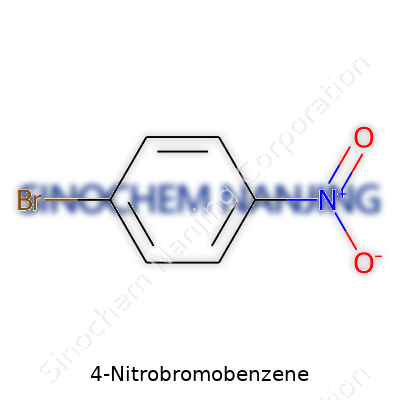
| Names | |
| Preferred IUPAC name | 1-bromo-4-nitrobenzene |
| Other names |
p-Bromonitrobenzene 4-Bromonitrobenzene 1-Bromo-4-nitrobenzene p-Nitrobromobenzene para-Nitrobromobenzene |
| Pronunciation | /ˌfɔːrˌnaɪ.trəʊˌbrəʊ.məˈbɛn.ziːn/ |
| Identifiers | |
| CAS Number | 586-78-7 |
| Beilstein Reference | 1209238 |
| ChEBI | CHEBI:52043 |
| ChEMBL | CHEMBL16815 |
| ChemSpider | 118506 |
| DrugBank | DB08275 |
| ECHA InfoCard | 03bb5303-5e53-40b9-9be2-71215b6eda57 |
| EC Number | 209-023-9 |
| Gmelin Reference | 80613 |
| KEGG | C19246 |
| MeSH | D000073612 |
| PubChem CID | 7419 |
| RTECS number | HH8225000 |
| UNII | B97B8P9Y7L |
| UN number | UN1578 |
| Properties | |
| Chemical formula | C6H4BrNO2 |
| Molar mass | 202.01 g/mol |
| Appearance | pale yellow crystalline powder |
| Odor | Odorless |
| Density | 1.66 g/cm³ |
| Solubility in water | insoluble |
| log P | 2.80 |
| Vapor pressure | 0.01 mmHg (25°C) |
| Acidity (pKa) | 7.47 |
| Basicity (pKb) | pKb = 9.89 |
| Magnetic susceptibility (χ) | -68.3 × 10⁻⁶ cm³/mol |
| Refractive index (nD) | 1.6100 |
| Viscosity | 1.587 cP (20°C) |
| Dipole moment | 3.77 D |
| Thermochemistry | |
| Std molar entropy (S⦵298) | 325.4 J·mol⁻¹·K⁻¹ |
| Std enthalpy of formation (ΔfH⦵298) | +64.2 kJ/mol |
| Std enthalpy of combustion (ΔcH⦵298) | -2860 kJ·mol⁻¹ |
| Pharmacology | |
| ATC code | Not assigned |
| Hazards | |
| Main hazards | Harmful if swallowed, causes skin and eye irritation, may cause respiratory irritation. |
| GHS labelling | GHS02, GHS07 |
| Pictograms | ["GHS07", "GHS09"] |
| Signal word | Danger |
| Hazard statements | H302, H315, H319, H332, H335, H412 |
| Precautionary statements | P280, P261, P305+P351+P338, P302+P352, P312 |
| NFPA 704 (fire diamond) | 2-2-0-OX |
| Flash point | 95°C |
| Autoignition temperature | Autoignition temperature of 4-Nitrobromobenzene is 550°C |
| Lethal dose or concentration | LD50 oral rat 1800 mg/kg |
| LD50 (median dose) | LD50 (median dose): Oral rat LD50 = 1130 mg/kg |
| NIOSH | CN8575000 |
| PEL (Permissible) | PEL (Permissible Exposure Limit) of 4-Nitrobromobenzene: "1 ppm (skin) |
| REL (Recommended) | 5g |
| IDLH (Immediate danger) | IDLH: 100 mg/m³ |
| Related compounds | |
| Related compounds |
4-Nitroiodobenzene 4-Nitroaniline 4-Nitrochlorobenzene Nitrobenzene 4-Bromoaniline |



