4-Nitrobiphenyl: A Deep Dive into Its Development, Properties, and Future
Historical Development
Chemistry has a long memory, and among the many aromatic compounds that surfaced through the Industrial Revolution, 4-Nitrobiphenyl tells a story closely tied to both innovation and caution. In the late 19th and early 20th centuries, laboratories in Europe and North America sought new intermediates for dyes, solvents, and pharmaceuticals. The nitration of biphenyl grabbed attention, as it created a gateway molecule for many synthetic transformations. Early researchers looked at 4-Nitrobiphenyl for its strong electron-withdrawing nitro group, recognizing how it could influence reactivity and open pathways for further modification. Decades later, industry scaled up production for use in dye manufacturing and research institutions expanded the body of knowledge about its side effects, with a focus on occupational safety. This journey from chemical curiosity to industrial building block and then to subject of regulatory scrutiny offers a window into the balance of utility and responsibility that defines many stories in modern organic chemistry.
Product Overview
4-Nitrobiphenyl stands as a pale-yellow crystalline compound, unmistakable once you’ve worked with it. Most often, it comes in a powder or crystalline solid form, recognizable by its musty odor, reminding anyone in the lab to handle it with care. Used as an intermediate, it finds its way into specialty chemicals, pigments, and research reagents. The structure consists of two benzene rings with a nitro group attached to the para position, granting it a unique place among substituted biphenyls. Chemists lean on 4-Nitrobiphenyl for its stable aromatic backbone, which allows modifications without breaking down the compound under normal conditions. This stability and the electron-withdrawing effect of the nitro group provide distinct reactivity, desirable for a range of synthetic applications.
Physical & Chemical Properties
Familiarity with the physical and chemical properties is essential for safe use and effective application. 4-Nitrobiphenyl has a melting point of about 122°C and a boiling point near 340°C. It doesn’t dissolve well in water, but it dissolves in organic solvents like benzene, acetone, and chloroform. Its molecular formula is C12H9NO2, with a molar mass just over 199 grams per mole. The nitro group makes the molecule more electrophilic, easing certain substitution reactions. Its crystalline nature can fool those less experienced, as it appears inert at first glance but demands careful handling due to its potential toxicity. Many chemists recall handling it with double gloves and working well within the fume hood, a practice reinforced not only by regulation but from learned experience in the lab.
Technical Specifications & Labeling
Each bottle or package of 4-Nitrobiphenyl should come with a clear indication of its purity, usually above 98% for research-grade material. The bottle will also list the batch number, lot, date of manufacture, recommended storage conditions, and hazard statements according to international guidelines. Labels highlight its toxicity, with hazard pictograms emphasizing potential health risks. Most suppliers offer it in containers designed to minimize light and moisture exposure, typically glass with secure caps. This level of detail serves more than regulatory compliance; it represents an expectation of full disclosure in hazardous material handling, learned from decades of industrial and academic experience.
Preparation Method
The most common synthesis begins with biphenyl, followed by nitration using a mixture of concentrated nitric and sulfuric acids. This method yields a mixture of nitrobiphenyl isomers, but the para isomer—4-Nitrobiphenyl—can be isolated by careful temperature control and subsequent crystallization or chromatography. This synthesis offers insight into practical lab chemistry—once the reaction mixture cools, the crude product solidifies and requires repeated washing and purification to achieve research- or industrial-grade quality. Lab veterans appreciate the subtlety of controlling reaction rates and temperatures, as exotherms can lead to undesired byproducts or safety incidents.
Chemical Reactions & Modifications
4-Nitrobiphenyl offers several routes for further chemical manipulation. The nitro group can reduce to an amino group, giving 4-aminobiphenyl, a precursor for dyes, polymers, and pharmaceuticals. Its aromatic rings welcome electrophilic substitutions, though the nitro group draws electron density away, influencing reaction rates and product distribution. Chemists have explored halogenation, sulfonation, and acylation reactions on this scaffold, finding that the structure’s resilience grants access to an impressive palette of derivatives. This compound becomes a test case for anyone learning the art of precision in organic synthesis, where minor changes in conditions lead to dramatically different outcomes.
Synonyms & Product Names
Over the decades, 4-Nitrobiphenyl appeared in journals, patents, and chemical catalogs under a variety of names. Common synonyms include para-Nitrobiphenyl, 4-Nitro-1,1'-biphenyl, p-Nitrobiphenyl, and NSC 6174. These alternate names point toward a long history of use across borders and industries, reminding researchers to double-check product labels and literature references before starting any work. Sometimes, confusion can arise between isomers, which underscores the importance of precise nomenclature and CAS registry numbers in chemical safety data sheets.
Safety & Operational Standards
4-Nitrobiphenyl’s toxicity calls for a set of strict handling guidelines. The compound is a recognized human carcinogen. Agencies such as OSHA, NIOSH, and the European Chemicals Agency set exposure limits and recommend closed-system handling, appropriate ventilation, and full personal protective equipment. From my own lab experience, routine use of respirators, chemically resistant gloves, lab coats, and face shields has become non-negotiable. Any spills demand immediate cleanup with absorbent materials, and all contaminated waste heads straight to a hazardous waste facility. Training in the use of safety showers and eyewash stations gets renewed at every onboarding, because nothing cements respect for a chemical like firsthand stories of exposure incidents.
Application Area
Historically, the primary uses of 4-Nitrobiphenyl centered around dye manufacturing and as a research standard for toxicological studies. Its role as an intermediate in synthesizing azobenzene dyes led to vivid colors for textiles and inks, especially before safer alternatives emerged. Certain specialty applications call for this compound in the preparation of chemical sensors, ligands, or as a substrate in mechanistic studies of aromatic nitro reductions. Laboratories with a focus on analytical or method validation sometimes use 4-Nitrobiphenyl as a reference or internal standard, drawing from decades-old protocols. My colleagues in environmental science keep a close eye on its presence as a legacy pollutant, which demonstrates the long-term impact of industrial chemical use.
Research & Development
Ongoing research explores the limits of nitroaromatic chemistry and how modifications of the 4-Nitrobiphenyl scaffold influence material properties or biological activity. Medicinal chemists have investigated derivatives in the hunt for new therapies, while polymer scientists probe its influence in conductive materials. At the same time, analytical labs test for trace amounts in workplace or environmental samples, refining detection methods for greater speed and accuracy. The research community keeps pushing for better understanding of its mechanisms of action, both in synthetic transformations and biological interactions. Collaborative projects often link academia and industry, with funding directed at risk reduction and green chemistry routes for making and disposing of nitroaromatic compounds.
Toxicity Research
The dangers of 4-Nitrobiphenyl have drawn significant attention. It serves as a case study in chemical carcinogenicity, having been shown to cause bladder cancer in workers exposed during dye manufacture and processing. Animal studies confirm mutagenic and carcinogenic effects, and longitudinal studies in occupational health underscore the imperative for protective measures. Regulators base safety standards on these findings, adding it to lists of substances subject to strict reporting and tracking requirements. Lessons learned from its legacy shape modern approaches to chemical risk assessment and highlight the need for substitutes wherever possible. This legacy influences lab practices today, encouraging a culture where safety considerations drive experimental planning.
Future Prospects
Modern chemistry faces a crossroads with compounds like 4-Nitrobiphenyl. As society calls for cleaner technologies and safer workplaces, demand for alternative compounds with similar functionality but safer profiles pushes research in new directions. Advances in computational chemistry and high-throughput screening help uncover less hazardous analogs. Stringent regulation and ongoing monitoring ensure continued vigilance wherever these substances persist in industrial cycles. The field shifts resources toward green chemistry, biotransformations, and non-toxic intermediates. Through all this, scientists keep building on the past to drive innovation that balances utility and human well-being, knowing that every generation can learn from the lessons embedded in the story of 4-Nitrobiphenyl.
What is 4-Nitrobiphenyl used for?
Understanding the Chemical
4-Nitrobiphenyl comes up often in chemical manufacturing circles and pops up in discussions about safety in industrial settings. This compound, made by swapping one of the hydrogen atoms with a nitro group on the biphenyl structure, isn’t just a random oddity on a chemist's shelf—it carries a long legacy linked to its use and its risks.
Industrial Applications and Challenges
Factories once tapped into 4-nitrobiphenyl for several reasons. Its primary use lands in the field of dye manufacturing. It acts as a building block in the creation of certain azo dyes. The colorants made from this route light up textiles, leather goods, and sometimes ink. Anyone who has worked with these production lines can tell you that achieving deep, lasting colors depends heavily on specific starting chemicals, and this nitro derivative helped create shades that resist fading.
The compound also plays a part in research labs. Organic chemists often study molecules like 4-nitrobiphenyl for their role in synthesis experiments and studies on aromatic substitution reactions. Its structure gives students and scientists a chance to investigate how nitro groups affect the behavior of biphenyls—knowledge that adds to broader advances in materials and pharmaceuticals.
Health Risks
Tough conversations about 4-nitrobiphenyl start with its health hazards. Decades ago, factory workers began reporting an uptick in cases of bladder cancer, and studies linked the problem to chemicals like this one. Regulatory agencies, including the U.S. Environmental Protection Agency and OSHA, flagged 4-nitrobiphenyl as a known human carcinogen. Exposure routes include inhalation or skin contact in places where dust or fumes escape into the work area.
The risks stretch into the community if waste isn’t managed. It's not about scaring people—it's a reality backed by numerous epidemiological investigations. I remember reading about clusters of illness tied to industrial run-off near old dye plants. Locals noticed unusual health patterns, prompting clean-up campaigns and class-action lawsuits. These stories laid bare the dangers of ignoring chemical safety standards.
Why Proper Handling Matters
I’ve seen up close how companies address these risks. Strict air filtration, personal protective gear, and closed systems aren't optional—they’re required for anyone working with—or even near—4-nitrobiphenyl. Responsible employers now offer routine health screenings for staff and push educational programs about chemical safety. Failures in these areas cost people their livelihoods and sometimes their lives.
Solutions and Alternatives
Chemical engineering has shifted away from 4-nitrobiphenyl in many modern applications. Alternatives have started to replace it in dye synthesis to cut down on workplace and environmental hazards. Water-based dyes, newer pigments, and green chemistry innovations take the pressure off both people and the planet. Research investments now pour into non-toxic organic compounds that still deliver quality color without the legacy of cancer risk.
Regulation drives change, but it also falls to industry leaders and researchers. They need to keep the pressure on—fostering safer workplaces and exploring cleaner chemistry. Progress never happens all at once, but I’ve seen change from advocacy, new laws, and a willingness among scientists to question the old ways.
More Than a Chemical Formula
4-Nitrobiphenyl carries a weighty history. Its story shows how innovation can sometimes outpace caution. It’s a reminder for everyone—from lab workers to local residents—to ask tough questions about what goes into our products and what comes out of our factories. Community health depends on vigilance, transparency, and a continuous search for safer ways to get the job done.
Is 4-Nitrobiphenyl hazardous to health?
Digging Into the Facts
4-Nitrobiphenyl rarely makes headlines, yet it plays a role in some heavy industries. If you’ve worked near rubber or dyes, the name may ring a bell. You won’t see it sold on store shelves or used in food products, which already sets off some alarms.
Scientific reports and medical papers agree: this chemical causes real health problems. After World War II, factories that made colorants or rubber used compounds like 4-nitrobiphenyl often. Medical professionals found a pattern—they saw more bladder cancer in workers handling this compound. The National Institute for Occupational Safety and Health (NIOSH) and the International Agency for Research on Cancer (IARC) classify this stuff as a human carcinogen. That’s backed by research on people, not just mice or cell cultures.
Everyday Risks, Unseen Exposure
For most people, this compound doesn’t show up in daily life. Folks working in chemical plants might face real risks, especially if safety steps slack off. It doesn’t evaporate quickly, so it won’t spread far in the air, but dust or direct contact bring danger. Once it touches skin or gets inhaled, it can sneak into the body. No real need to panic if you live near an old factory, but double-check the clean-up history.
Many will wonder if you can spot it by smell or color. The truth is, you can’t. There’s no strong warning sign before it gets absorbed. In the past, I visited a shoe factory site that switched over to safer chemicals decades ago, but the soil tests still brought up trace concerns. It taught me how slow some chemicals move and how long they linger.
Bladder Cancer and Real-World Figures
The biggest danger lies with long-term workplace exposure. The science points to 4-nitrobiphenyl changing cell DNA in the bladder. Some workers have developed cancer after just a few years of high exposure. Regulatory action in the United States and Europe has forced companies to ditch or limit the chemical since the late '70s.
Even so, old factory buildings sometimes hold residue. If no one cleans up, the chemical can slowly seep into water or dust. A few well-known lawsuits involved people exposed during demolition jobs thirty years after factories closed. These stories show how long the risk lasts if ignored.
Keeping People Safe: Action Over Words
Masks, gloves, and modern exhaust systems step in as frontline defenders in today’s workplaces. The law now says employers must provide training and supplies. Inspection agencies still make surprise visits, and fines grow bigger every year. In my time volunteering for a hazardous waste group, I saw quick action work best. Spot a leak, lock down the area, haul away any bad soil, and you cut down the fallout.
Testing land before building homes—or schools—keeps families out of harm’s way. Community groups can press city officials for better records before approving factories or housing. When it comes to chemicals able to warp DNA, relying only on paperwork means rolling the dice.
Better Substitutes, Brighter Future
Most industries stopped using 4-nitrobiphenyl once new rules landed. Alternatives cost more, but they don’t carry the same long-term health price. Chemists have pushed hard for compounds less likely to turn up in cancer wards. Still, companies trading in old equipment or property need constant reminders: invisible risks deserve attention, even if the danger feels distant.
What is the molecular formula of 4-Nitrobiphenyl?
What 4-Nitrobiphenyl Looks Like on a Molecular Level
Look at the name 4-Nitrobiphenyl, and right away, a few details stand out. “Nitro” means there’s a nitro group, and “biphenyl” tells us the backbone includes two benzene rings joined together. For these sorts of compounds, the molecular structure isn't just a label—it plays a huge part in their properties and how chemists or workers in labs treat and handle them.
Break the formula down: two benzene rings together give you biphenyl, with a nitro group (-NO2) attached at the fourth position on one ring. Each benzene ring on its own brings six carbons and five hydrogens; link two rings together and you trim a couple of hydrogens. Add in the nitro group, and things start adding up. The full molecular formula can be written as C12H9NO2.
Why Details Like “C12H9NO2” Aren’t Just Numbers
I’ve seen more than a few people think that molecular formulas are just for R&D or students cramming chemistry. Actually, a formula is a fingerprint—useful on the shop floor, in environmental work, even in a courtroom. A clear, accurate formula helps professionals track toxicity, determine suitable protective gear, judge how a material breaks down, or consider possible environmental damage. It can make or break decisions about storage, transport, and waste disposal, too.
For 4-Nitrobiphenyl, its formula leads to another concern: safety. Agencies like OSHA and IARC note this compound has potential links to cancer in humans. That makes accuracy even more vital—mistakes with identification or handling could be dangerous not only for researchers, but for anyone downstream exposed to waste, residues, or contaminated waterways.
The Real-World Use of Precise Chemical Knowledge
Think about the old days, when blue-collar factories sometimes cut corners simply from not knowing the ins and outs of their chemicals. Or remember the confusion caused by old ledgers using outdated names or formulas—tragedy and frustration for anyone uncovering barrels in forgotten basements. Reliable science relies on clear communication, which means getting the numbers right every time. Mistakes here can ripple out, causing health, legal, and reputational headaches.
Getting this one right means everyone along the chain—laboratory workers, regulatory agents, waste processors—can act with certainty. Regulators trace exposure limits based on solid formulas. Waste handlers check the MSDS sheets for safe cleanup. Medical responders use formulas to know how a spill interacts with the body. Even environmental advocates can flag risky compounds more quickly when details are correct.
Solutions for Avoiding Chemical Formula Confusion
There’s no shortcut for chemistry education, especially as it moves outside labs and into the real world. Training workers to double-check formulas, stay alert to synonyms, and review documentation keeps accidents at bay. Industry-wide agreement on naming and data-sharing standards helps prevent tragic miscommunications. Digital tools have made it easier to verify a formula instantly—no need to trust half-remembered textbook snippets. Open data sources, like PubChem and ChemSpider, put authoritative chemical information within reach for anyone with a phone or laptop.
Errors still slip through, but firm habits—always confirm, never assume—change the odds for the better. Chemistry has gotten safer, not by shortcuts, but by taking the time to learn, share, and verify the basics, formula by formula, molecule by molecule.
How should 4-Nitrobiphenyl be stored?
What Is 4-Nitrobiphenyl Doing in the Lab?
I’ve seen 4-Nitrobiphenyl listed in chemical stockrooms, mainly at pharmaceutical and research outfits. Folks know it by its yellowish tint, but what jumps out isn’t the color. It’s the label: “Possible human carcinogen.” Anyone who handles lab chemicals learns early that some compounds just don’t play nice. This one fits that bill. The way people store toxic chemicals matters, not just for personal safety, but for the environment and the people nearby.
The Problem with Poor Storage
On a warm afternoon, a poorly sealed bottle of 4-Nitrobiphenyl can quickly become more than a shelf hazard. Inhalation or skin contact over time carries a cancer risk. The molecules are stubborn—they find their way onto hands, equipment, sometimes even paperwork if bottles aren’t tightly stashed. That’s not just bad for health; it gums up cleaning protocols, creates paperwork headaches, and puts organizations at legal risk. In a shared lab, one person’s sloppiness becomes everyone’s problem. The stakes rise further if containers leak or break, spilling powder or liquid into disposable gloves, linings, or absorbent pads. In that moment, a minor incident spirals into a costly cleanup and exposure event. Once saw this happen—it shook everyone into upgrading our storage practices.
Best Practices Backed by Experience and Evidence
Many safety teams rely on guidance from OSHA, the National Institutes of Health, and chemical suppliers. Their consensus, plus what I’ve learned in handling similar compounds, lines up in a few straightforward rules:
- Use sealed glass containers: 4-Nitrobiphenyl doesn’t react well with cheap plastics. Glass stops vapor diffusion and blocks leaks.
- Store each container in secondary containment: A simple plastic tray or bin prevents accidents from spreading. Any spill gets trapped, easing cleanup and saving time.
- Keep it in designated chemical cabinets: Separate from food, acids, and other incompatibles. Metal storage cabinets with lockable doors work best in practice—kids, unauthorized folks, and pets can’t get in.
- Control the temperature: Heat ramps up volatility. A cool, dry space slows down release of fumes into the room.
- Maintain clear, up-to-date labels: Staff come and go in busy environments. Fresh hazard signs keep everyone tuned to the risks. Faded labels mean lost time in emergencies.
Problems arise when shortcuts sneak in
The urge to cut corners hits every bustling lab. Sometimes, someone stacks bottles too tightly or keeps stock next to strong bases for convenience. Once, I found a bottle stuck behind cleaning supplies, far from its proper place. Not only did this raise the risk of cross-contamination, it gave everyone a scare during inventory. One missing bottle—a hundred questions, days wasted backtracking, and new safety checks added for all staff.
Simple Solutions, Big Impact
I’ve learned that solid routines trump fancy tech. Keep a logbook of chemical stocks, assign staff to regular checks, and install spill kits near storage points. Personal protective equipment matters—always wear gloves and eye protection even just to move bottles around. If someone finds a crack or spill, no waiting: treat it, clean up following safety data sheet steps, and replace containers immediately. Familiar routines prevent costly accidents and paperwork nightmares.
Why Getting Storage Right Matters
No one working with 4-Nitrobiphenyl can afford half-measures. Protection isn’t just about avoiding fines or ticking boxes on a checklist. It’s about keeping people healthy and work moving forward. Because risks don’t just exist in theory—they show up in the everyday details of how we store and respect hazardous materials.
What are the safety precautions when handling 4-Nitrobiphenyl?
A Chemical With a Reputation
4-Nitrobiphenyl doesn’t show up in every research project, but when it does, everyone in the lab feels the weight of its reputation. Years ago, as a junior technician, I watched a teammate double-check their gloves before pouring even half a gram. There's good reason for all this caution. Studies link 4-Nitrobiphenyl to increased risks of cancer, especially bladder cancer. The toxicology reports are clear. Minimal exposure, repeated over time, takes a big toll on human health. I remember reading NIOSH bulletins warning about its carcinogenic nature and thinking—they’re not exaggerating.
Practical Precautions Matter
People sometimes underestimate the importance of gear. The minimum for 4-Nitrobiphenyl involves nitrile gloves, a snug lab coat, and protective eyewear. I once saw cheap gloves dissolve and a colleague had to scrub their hands for twenty minutes under the safety shower. Ever since, I keep two glove brands at my desk and always check the chemical compatibility charts before choosing PPE. Masking up with a proper cartridge respirator always beats hunting for excuses afterwards. Working with this compound in an open lab space isn’t an option—fume hoods with a strong airflow do the heavy lifting, capturing volatile dust and vapor before they can find your airway.
Hygiene Isn’t Optional
I remember a time another lab tech skipped the post-experiment hand wash and ended up tracking residue across three benches. That led to a big clean-up, and a lab ban on food and drinks anywhere near the work area. It sounds obvious, but I always change out of work clothes before going home and keep a spare set in my locker for emergencies. Cross-contamination hides in the smallest places: pen grips, keyboard keys, glasses frames. Every surface gets wiped with a strong detergent solution at the end of each shift.
Storage and Disposal
Shortcuts in storage turn small problems into disasters. 4-Nitrobiphenyl sits best in sealed, clearly labeled glass bottles, away from heat and light. I check inventory logs each week, making sure the container seals stay tight and no crystals cling to the neck. I’ve seen what happens when someone pours waste into the wrong drum—cue a messy scramble while everyone dons respirators. Waste from 4-Nitrobiphenyl deserves a dedicated, lockable drum, and only trained personnel touch the stuff. Instead of improvising, we always stick to a written hazardous waste protocol and never pour anything down the sink.
Training: The Human Element
Seasoned chemists sometimes get too comfortable, skipping small steps because nothing’s gone wrong yet. Training keeps those habits from forming. In my lab, we do hands-on refreshers every six months and practice emergency spills on a mock-up. Manuals only go so far. Watching a new hire navigate a spill drill shows what works and what doesn’t. Real confidence with handling toxic chemicals grows from muscle memory—not just reading the safety data sheets, but living them out, every shift.
Building a Safer Culture
Trust grows when managers listen to safety concerns, and co-workers step in without judgement if they spot a shortcut. In my experience, simple changes like visible, easy-to-use PPE storage and clear signage for hazardous waste boost compliance far more than lectures. Fewer accidents mean more time for actual science, and that’s what keeps everyone coming back to the bench, day after day, with all their fingers intact.
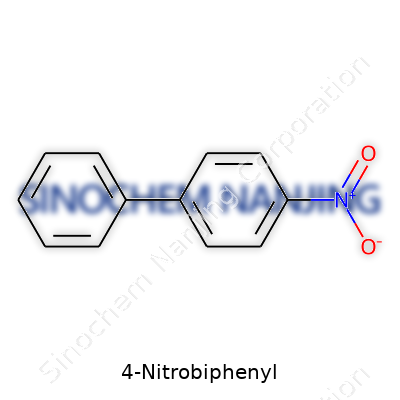
| Names | |
| Preferred IUPAC name | 4-nitro-1,1'-biphenyl |
| Other names |
4-Nitrobiphenyl p-Nitrobiphenyl 4-Phenyl-1-nitrobenzene p-Phenyl-nitrobenzene |
| Pronunciation | /ˈfɔːr ˌnaɪtroʊ baɪˈfiːnəl/ |
| Identifiers | |
| CAS Number | 92-93-3 |
| Beilstein Reference | 1206059 |
| ChEBI | CHEBI:52043 |
| ChEMBL | CHEMBL3242786 |
| ChemSpider | 8483 |
| DrugBank | DB13160 |
| ECHA InfoCard | DTXSID6035307 |
| EC Number | 210-324-9 |
| Gmelin Reference | 87558 |
| KEGG | C06565 |
| MeSH | D009634 |
| PubChem CID | 7093 |
| RTECS number | DJ3325000 |
| UNII | 76J6J1J1U8 |
| UN number | UN2540 |
| Properties | |
| Chemical formula | C12H9NO2 |
| Molar mass | 213.21 g/mol |
| Appearance | light yellow crystalline powder |
| Odor | Odorless |
| Density | 1.235 g/cm3 |
| Solubility in water | Insoluble |
| log P | 3.77 |
| Vapor pressure | 1.33E-4 mmHg at 25°C |
| Acidity (pKa) | 4.92 |
| Basicity (pKb) | 6.27 |
| Magnetic susceptibility (χ) | -74.0e-6 cm³/mol |
| Refractive index (nD) | 1.6400 |
| Viscosity | Viscous liquid |
| Dipole moment | 3.94 D |
| Thermochemistry | |
| Std molar entropy (S⦵298) | 324.6 J·mol⁻¹·K⁻¹ |
| Std enthalpy of formation (ΔfH⦵298) | 126.3 kJ/mol |
| Std enthalpy of combustion (ΔcH⦵298) | -4683 kJ/mol |
| Hazards | |
| Main hazards | Suspected human carcinogen, harmful if inhaled or swallowed, causes skin and eye irritation. |
| GHS labelling | GHS02, GHS06, GHS08 |
| Pictograms | GHS06, GHS08 |
| Signal word | Danger |
| Hazard statements | H302, H315, H319, H335, H341, H351, H373 |
| Precautionary statements | P210, P261, P264, P270, P280, P301+P310, P302+P352, P308+P313, P405, P501 |
| Flash point | 113°C |
| Autoignition temperature | 522°C |
| Lethal dose or concentration | LD50 oral rat 1130 mg/kg |
| LD50 (median dose) | LD50 (median dose): 163 mg/kg (oral, rat) |
| NIOSH | NIOSH = "T202 |
| PEL (Permissible) | 0.1 mg/m³ |
| REL (Recommended) | 1 mg/m³ |
| IDLH (Immediate danger) | IDLH: 5 mg/m3 |
| Related compounds | |
| Related compounds |
Azobiphenyl 3-Nitrobiphenyl 4-Aminobiphenyl |



