4-Chlorobenzyl Chloride: Beyond the Molecule
A Chemical Story Through Time
Once anyone steps into the world of organic chemistry, it’s hard to skip over the chapter dealing with benzyl derivatives, and 4-chlorobenzyl chloride finds its way into discussions sooner or later. The compound arrived on the industrial stage as research into chlorinated benzenes picked up steam across the mid-20th century. Chlorosubstituted aromatics, which lit the path for advances in pharmaceuticals, crop protection, and even dye production, gave chemists new tools. The birth of 4-chlorobenzyl chloride didn’t feel accidental, but more like a direct answer to the demand for molecular building blocks that could unlock new classes of functional products—and with each year, more people, from polymer engineers to pharmaceutical scientists, relied on it for something essential.
Product Profile Through a Practical Lens
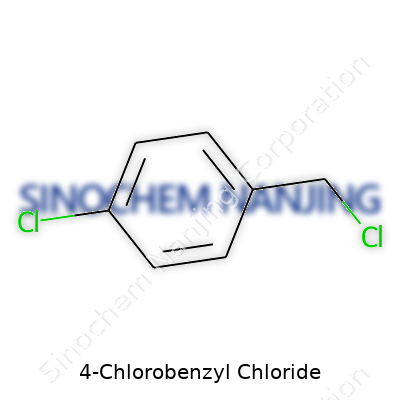
4-Chlorobenzyl chloride is all about utility. Structurally, the molecule features a benzene ring with a chlorine atom tagging the fourth position, plus a reactive chloromethyl group. Someone unfamiliar may dismiss this as academic, but that reactive carbon-chlorine bond keeps things interesting for lab chemists and plant operators alike. Years ago, while helping analyze a batch at scale, I found its stability in storage mixed with its reactivity during synthesis gave us the flexibility hard to find in other intermediates. Technical standards—purity levels above 98%, color checks, trace impurity controls—exist because margins are thin when the compound bends toward both opportunity and risk in the same breath.
Physical and Chemical Character
There’s no mystery to its appearance: a clear to pale yellow liquid, strong odor, not something anyone yearns to breathe. Densities hover around 1.2 grams per cubic centimeter. This seemingly simple liquid boils in the neighborhood of 235°C, melting at just under room temperature. It dissolves sparingly in water but loves organic solvents like ether or chloroform. Speaking from past experiences handling drums in a lab, its volatility and low water solubility force you to pay attention to ventilation and containment—chemical features find their way into the real, practical concerns of working environments.
Preparation: Putting Reactivity to Work
Preparation routes reflect typical organic strategies. The classical method relies on chloromethylation of chlorobenzene, using a formaldehyde source with concentrated hydrochloric acid, maybe a Lewis acid like zinc chloride for good measure. This approach looks simple on paper, but I’ve watched batch yields swing with catalyst tuning or temperature shifts. Careful control becomes more than scientific pride—it’s a matter of consistency, process safety, and financial sense. Unwanted chlorinated byproducts wait if shortcuts tempt any operator or chemist to rush.
Chemical Reactions and Modification Journeys
Ask anyone in pharmaceutical or agrochemical research: 4-chlorobenzyl chloride is more than a stop on the synthesis road. Its reactivity lets it form bonds with amines to create 4-chlorobenzylamines, staple structures in fungicide and pesticide chemistries. Alkali hydrolysis or nucleophilic substitutions can swap that reactive chloride for a variety of groups, enabling access to ethers, thioethers, or nitriles. In the hands of a skilled chemist, this molecule barely resembles a dead-end—rather, its transformation possibilities offer a whole palette of products just from that single site.
The Many Names and Synonyms
Chemistry rarely offers a one-name-fits-all approach. On a single shipment or report, you might see “p-chlorobenzyl chloride,” “para-chlorobenzyl chloride,” or systematic tags like “1-chloro-4-(chloromethyl)benzene.” Depending on which database a researcher uses or which supplier an industry player orders from, the synonyms shift. It’s less confusing in practice if you keep your eye on the molecular structure and understand the context. I’ve caught mislabeled batches more than a few times just by sticking to that, regardless of the name the paperwork used.
Safety and Operational Experience
Anyone approaching chlorinated organics learns quickly: respect is non-negotiable. 4-Chlorobenzyl chloride can burn the skin, aggravate the respiratory system, and won’t hesitate to react dangerously if mishandled. Even with fume hoods running and gloves double-checked, the sharp odor warns you there’s no room for carelessness. Reading incident reports from poorly ventilated facilities underlines why safety standards—air monitoring, spill containment, eyewash stations—cannot be afterthoughts. Everyone in the value chain, from warehouse workers to lab techs, shares responsibility for translating chemical properties into daily practice. Skipping a step, ignoring a warning, leads to more than lost time.
Application Area: Chemicals at Work
Behind the scenes in industrial chemistry, this compound matters because it bridges precursor and product. Often, you’ll find it at the start of pathways toward active ingredients in crop protection. Manufacturers target its structural motif in development of fungicides and insecticides, tweaking downstream substituents for broader biological activity. Pharmaceutical developers use it for intermediates that eventually become antihistamines or antibiotics. Over the years, I’ve watched formulation scientists chase purer grades for better yields and fewer cleaning steps, championing tighter upstream controls to satisfy downstream efficacy and regulatory audits. Even in the dye and pigment industries, where subtle shade adjustments shape product claims, the ability to fine-tune aromatic building blocks like 4-chlorobenzyl chloride makes business sense as much as technical sense.
Research, Development, and Frontiers
Curiosity brings progress. Academic and private research both circle around halogenated aromatics. Recent years have seen growth in sustainable, less toxic reagents and methods that avoid harsh acids or heavy metals. It’s not simply about green chemistry checklists either; cost reduction and regulatory compliance drive this shift as much as concern for downstream residue levels. While working alongside research teams, I’ve seen the hunt for catalysts and modified solvents that cut waste without sacrificing yield. Every new synthesis route offers a glimpse at the industry’s future: safer production, more accessible products, and perhaps a narrowed environmental footprint.
Toxicity and Human Impact
No one with experience in industrial chemical settings shrugs off toxicity research. Data keep rolling in on the effects of persistent halosubstituted compounds—short-term exposures mean respiratory and skin irritation, but animal studies point at longer-term risks, including potential carcinogenicity with repeated, unprotected contact. Regulations demand strict exposure limits, employee training, and periodic air quality checks. While I’ve seen improvements in personal protective equipment and engineering controls, the broader question lingers: what happens once these byproducts sneak out of contained spaces and into water or soil? Here, continued research informs policy, drives remediation efforts, and keeps public health at the center of innovation.
Prospects for Tomorrow
Looking to the future, I see both risk and opportunity in every bottle of 4-chlorobenzyl chloride manufactured. Demand charts still carry upward slopes as new classes of agrochemicals or pharmaceuticals hit the market. Yet the stories of environmental persistence, worker safety, and regulatory scrutiny spell out the need for upgraded manufacturing standards and cleaner transformation chemistries. In community discussions, process engineers call for better automation and containment; academic researchers share new photochemical or enzymatic approaches for greener synthesis. The next steps won’t sacrifice reactivity or usefulness—progress will mean striking a new balance among innovation, safety, and responsibility to both people and environment. As technology keeps shifting the landscape, this old standby of the chemical world will keep writing new chapters for years to come.
What is 4-Chlorobenzyl Chloride used for?
A Closer Look at 4-Chlorobenzyl Chloride
Whenever talk turns to chemicals in manufacturing or pharma, some compounds stand out for being practical workhorses. 4-Chlorobenzyl chloride is one of those under-the-radar chemicals doing heavy lifting behind the scenes. With its distinct aroma and reactive nature, this compound sticks in the mind of anyone who’s worked in a lab or a chemical plant. Its core structure—a benzene ring with chlorine in the right spot—makes it a handy starting point for several important reactions.
Manufacturing and Pharmacy
In my own experience at a specialty chemicals facility, the mention of 4-chlorobenzyl chloride usually meant something’s about to become something more useful. This compound serves as a key intermediate in synthesizing pharmaceuticals and agrochemicals. Manufacturers use it to build antihistamines, antidepressants, and antifungal medications. Some well-known drugs start with this molecule before heading off on their transformation journey. Medications treating allergies or fungal infections have benefited from these chemical routes for decades.
Out of the countless chemicals I’ve seen pass through drum and pipe, this one holds an important place. The pharmaceutical world leans on these building blocks to produce molecules with more complicated structures. A lot of drug discovery work would stall at the starting line without reliable intermediates like 4-chlorobenzyl chloride.
Pesticides and Crop Protection
Step outside the world of human health, and you'll find 4-chlorobenzyl chloride popping up in the agricultural sector. Farmers rely on pesticides to protect crops and keep food supplies stable, and this compound sits just a step away from several active ingredients in herbicides and insecticides. Each growing season, the unseen chemistry behind pesticides enables fields to thrive under pressure from insects and weeds.
Food security remains a global issue, and knowing that molecules like this support efforts in the background matters. No one enjoys exposing workers or the environment to higher toxicity levels, so it’s also crucial for companies to innovate safer options. As demand grows for sustainable food production, exploring greener chemical routes remains a top priority.
Risks and Responsibility
Handling reactive chemicals takes experience; 4-chlorobenzyl chloride stands out for its strong odor and its ability to cause burns. People working with this chemical wear protective gear, handle spills quickly, and work inside ventilated systems. Even so, accidents can and do happen. Adhering to standards from groups like OSHA and REACH offers a layer of protection for workers and the environment.
Improved handling practices reflect lessons learned from years of mistakes and near-misses. Safer packaging, closed-system transfers, air filtration—all these measures lower risks that never go away completely. Companies that invest in worker training see far better safety records.
Looking Forward
Chemistry underpins most modern progress, but not all chemical routes age well. The next steps center around greener synthesis and tighter controls. Replacing harsh conditions with milder, more selective alternatives delivers less waste and safer workplaces. Chemists keep searching for catalysts or biocatalysts that can do what the older methods managed, just with fewer downsides.
Progress tends to arrive in fits and starts, but the balance between utility and safety keeps shifting. As research delivers better options, I expect to see safer and less polluting processes become the norm in making key intermediates like 4-chlorobenzyl chloride.
What is the molecular formula of 4-Chlorobenzyl Chloride?
Understanding the Basics of Chemical Structure
Chemistry has never been a subject I could ignore, especially during years spent working in a college lab. Every day, the walls lined with glass bottles told stories about molecular structure, and the little details mattered more than some might guess. One question I get every so often from students and folks working in pharmaceuticals centers on 4-chlorobenzyl chloride. It's a fairly simple aromatic compound—and yet, misunderstanding its formula leads to real headaches in both research and manufacturing.
Diving straight in, the molecular formula for 4-chlorobenzyl chloride is C7H6Cl2. This means you’re looking at a benzene ring—six carbons in a ring shape, five hydrogens, and a chlorine dangling off what’s called the ‘para’ (4-) position. On the same ring, a single carbon stretches out as a “benzyl” group, where that extra hydrogen gets swapped again for a chlorine atom, adding up to the two Cl atoms total.
Why the Molecular Formula Matters in Industry and Research
This particular chemical finds its way into laboratories and factories alike. Its structure isn’t just a trivia question—it controls everything about how this molecule reacts. C7H6Cl2 sounds straightforward, but anyone who’s ever tried to source chemicals or analyze purity knows that even a misplaced hydrogen or chlorine can wreck a whole synthesis. That’s not something you want if you’re making medicines, polymers, or dyes. Research into safer manufacturing or greener chemistry leans heavily on getting those fundamentals solid from the start. Quite a few chemical mishaps boil down to someone grabbing the wrong isomer or misreading a label.
4-chlorobenzyl chloride serves as a building block. Pharmaceutical companies use it as a starting point for antihistamines, some anti-cancer drugs, and other specialty molecules. It also acts as an intermediate for making agricultural chemicals and dyes. If you play loose with the formula, you’re rolling the dice on whether downstream products will behave as expected. The U.S. Pharmacopeia and similar regulatory bodies count accuracy in chemical identity as a pillar in consumer safety. Misidentification leads not just to inefficiency, but to real risks for both workers and end-users.
Preventing Errors: Solutions from Firsthand Experience
My time spent as a teaching assistant taught me a few tricks to keep things on track. Start by always drawing out the chemical structure before ordering or using any reagent. Modern software makes it hard to make errors, but nothing beats a manual sketch for clarity. Double-check labels against suppliers’ official specifications. In larger operations, investing in barcode tracking for chemical containers has cut down on supply mistakes and accidents. Quality control relies on not just correct formulas, but the habit of checking and re-checking molecular identity throughout a process.
For students and professionals aiming to make or handle 4-chlorobenzyl chloride: never treat the formula like background noise. C7H6Cl2 isn’t some random code. Each number tells a story about purity, safety, and success in chemical reactions. As I’ve seen, that level of detail and care often spells the difference between strong research results and expensive cleanups.
What are the storage requirements for 4-Chlorobenzyl Chloride?
Why Safe Storage Matters
Some chemicals hardly ever sit quietly on a shelf, and 4-Chlorobenzyl Chloride belongs to that list. This compound brings both industrial benefits and risks. Anyone working with it learns fast: careless handling can lead to serious trouble, from harsh fumes to fire hazards. I once helped set up a storage area for chemicals like this in a small lab, and the first lesson was pretty clear—ignoring the details means inviting accidents.
Environmental Factors
4-Chlorobenzyl Chloride reacts to its surroundings, especially to moisture and heat. The substance reacts with water, producing corrosive hydrochloric acid. This matters because even damp air, not just liquid spills, can trigger this reaction. Storing it dry isn’t just a precaution; it’s essential. Any signs of leaky pipes or humid corners mean moving the chemical somewhere safer.
Temperature control helps reduce the risk of vapor buildup, which can hit your lungs with a strong, throat-burning odor. A ventilated storage spot reduces that risk, and I’ve seen basic exhaust fans make all the difference.
Physical Security and Container Choice
A strong, sealed container acts as the first line of defense. Glass often works, but coated metals or specific plastics can also hold up against the chemical’s bite. During one shipment, I saw poorly sealed drums—corroded in just a week. Not only did this create a disposal headache, the fumes were almost unbearable.
Keep those containers labeled and in clear sight. Labels matter to everyone, not just the chemists. During inspections, quick identification keeps accidents at bay, especially when newcomers or visiting contractors walk in.
Separation from Other Chemicals
Many labs keep 4-Chlorobenzyl Chloride separate from common bases, alcohols, and oxidizers. If it spills or leaks, mixing with these can cause more danger—think violent reactions instead of simple spills. Once, a nearby shelf held a strong base, and a few careless hands nearly set off a chain reaction. After that, company policy demanded at least a cabinet or two’s distance.
Personal Protection and Spill Response
Everyone dealing with this chemical wears proper gloves, goggles, and face shields. It only takes a tiny splash to see why. Once, even with a small amount, a labmate wound up with a nasty skin burn. Emergency eyewash and showers need to be within reach, not locked in a back room.
If a spill happens, absorbent materials and neutralizers should be close by. Fast cleanup keeps fumes and hazard levels in check. I’ve learned that people don’t panic if spill protocols and cleanup kits are obvious and within arm’s reach.
Regulatory Oversight
OSHA and the EPA have clear-cut rules about storing hazardous chemicals like this one. Fire codes require keeping this and similar compounds in flammable storage cabinets. Even on a tight budget, investing in certified storage means fewer headaches from inspectors and safer teams.
Putting all this together, the balance relies on vigilance, regular checks, and some common sense. Talking with team members about unusual smells, replacing damaged seals fast, and never skipping basic labeling—all of these steps matter more than fancy equipment or expensive alarms. It’s the day-to-day care that makes hazardous chemicals manageable.
Is 4-Chlorobenzyl Chloride hazardous or toxic?
Looking Closer at a Chemical You Might Not Know
Most people won’t encounter 4-chlorobenzyl chloride outside of a lab or factory. This chemical helps manufacturers create dyes, pharmaceuticals, and agrochemicals. The trouble starts when safety slips, and a clear understanding of toxicity falls by the wayside.
How Exposure Happens
My first brush with chemicals like this came during a summer job in a small specialty plant. No one wanted to talk about the risks—until a leaky valve sent fumes through the warehouse. Workers scattered, some coughing, some with red eyes and sore throats. That day, I learned to respect substances with complicated names, even when the job felt routine.
4-chlorobenzyl chloride rarely shows up in consumer products. Still, it gets handled in bulk by people with varying levels of training. A spill on a glove or accident with a pipe fitting packs a punch: burning, irritation, and sometimes more serious consequences if the residue lingers. Even a slight whiff in an unventilated space can leave your nose and lungs burning. The chemical acts as an irritant, especially for your skin, mucous membranes, and airways.
Toxicity Concerns
A closer look at toxicity reveals trouble for more than just skin or eyes. Animal studies show toxic effects when inhaled or swallowed. Lab rats exposed to vapor or dust have developed lung problems and liver damage. The U.S. National Library of Medicine lists skin and eye burns as well as potential harm to your nervous system. At high enough doses, animals stopped breathing or died.
Long-term exposure or careless handling sets people up for repeated bouts of skin inflammation, chemical burns, and sometimes chronic bronchitis. The fumes can trigger dizziness or headache, too. Safety Data Sheets rate the chemical as “harmful” and highlight the importance of gloves, goggles, splash aprons, and reliable ventilation. The International Agency for Research on Cancer looked hard but hasn’t called it cancer-causing—lack of evidence isn’t the same as a clean bill of health.
Why Safety Standards Matter
This isn’t just a story about one chemical; it’s about workplace culture, the willingness to advocate for safety, and the expectations that shape decisions day to day. Lax standards, loose gloves, and barebones training guarantee problems down the line. Once inhaled or spilled, the clean-up lands on everyone’s shoulders, not just management or the safety officer.
During my years on the factory floor, the best safeguards weren’t hidden in thick binders—they came from people calling out unsafe shortcuts and refusing to cut corners. Factories that invest in training, transparent procedures, and routine inspections report fewer injuries. Good ventilation, easy access to eyewash stations, quick action for spills, and unannounced safety drills change the game.
Simple Ways Forward
The chemical’s hazards don’t call for rocket science but do demand respect. Companies need to label every drum, keep up training for all staff, not just managers, and stick to clear checklists for storage and handling. Air quality monitors and personal protective equipment can’t be an afterthought. Doctors and clinics near chemical plants should stay updated on what symptoms to watch for and how to respond.
Workers and supervisors all play a part in pushing for smart rules and real enforcement, not just paperwork. Companies that listen before trouble hits end up protecting people, property, and reputation. Sometimes, the right step is swapping a hazardous ingredient for something safer while keeping the operation running.
What is the purity and available packaging of 4-Chlorobenzyl Chloride?
Why Purity Changes the Game
Working in chemical manufacturing, you get used to checking purity as a top priority. Anyone who has handled 4-Chlorobenzyl Chloride knows how critical it is to keep things clean, both for safety and efficiency. This compound, used in making key pharmaceuticals and specialty chemicals, comes with a purity benchmark that really isn’t up for debate. Reliable suppliers usually offer it from 98% up to 99.5%. Even a small shift in purity can show up in the final product, sometimes costing more than it saves. Impurities can cause unwanted side reactions or change the entire outcome of a process.
Not all jobs need the highest tier. Labs running early-stage research may choose grades around 98%, balancing costs and convenience. Producers focused on scaling up demand closer to 99.5%, sometimes higher. A few years ago, our team struggled for weeks troubleshooting a synthesis, only to discover contamination in a batch sitting at just below the threshold. Full traceability and verified lab reports became must-haves, not extras. Most companies now hand over a detailed certificate of analysis with every package, giving folks downstream tools to double-check before committing batches. Even seasoned chemists trust but verify.
Packaging: More Than Just a Container
Anyone expecting universal sizing will get a quick reality check. 4-Chlorobenzyl Chloride ships in UN-approved containers since it’s both corrosive and moisture-sensitive. Small labs often order in 500-gram bottles or one-liter glass containers. Larger outfits—think specialty plants and custom manufacturers—look for five-liter jerrycans, steel drums from 25 kilograms up, or even IBC totes for bulk. The packaging protects both the people on the receiving end and the chemical from air, sunlight, or accidental spills.
In the middle of summer, we once received a shipment in a thin-walled container. The results weren’t pretty: Leaking, wasted product, and exposure risks for everyone unloading. That experience sealed the deal on only working with suppliers who double-and triple-pack, use proper seals, and guarantee tamper-evidence. Companies that dial in the right mix of size and material not only cut down waste but also keep dangerous mistakes off the dock.
Safety and Quality Still Rule
Health and safety teams at plants or universities never treat these chemicals lightly. People handling 4-Chlorobenzyl Chloride gear up with full protection: goggles, nitrile gloves, chemical aprons, and quality ventilation. Any supplier skipping details around purity or packaging raises instant concern. Strict regulations back up these concerns, too—the EPA and OSHA publish clear guidelines for both handling and storage. This goes beyond following the rules; recent incidents have shown what happens when handlers get complacent or suppliers cut corners.
How Buyers Can Stay Ahead
Choosing where to buy means asking for proof: up-to-date certificates, real batch numbers, references from past clients. Visiting supplier facilities or talking with logistics teams can reveal a lot about actual quality control. In my experience, checking for packaging compliance is the fastest way to spot a fly-by-night operation. Open communication with suppliers, tight storage protocols, and regular training for staff help keep accidents rare.
The market keeps changing, with regulators, industry groups, and scientists all pushing for safer, cleaner production every year. As purity and packaging keep moving forward, those who stay vigilant won’t just avoid headaches—they’ll build trust with every shipment.
| Names | |
| Preferred IUPAC name | (4-chlorophenyl)methanoyl chloride |
| Other names |
p-Chlorobenzyl chloride 4-Chlorobenzenemethanamine 4-Chlorobenzylchloride p-Chlorobenzylchloride 1-Chloro-4-(chloromethyl)benzene |
| Pronunciation | /ˈklɔːr.oʊ.bɛn.zɪl ˈklɔːr.aɪd/ |
| Identifiers | |
| CAS Number | 104-83-6 |
| 3D model (JSmol) | `3D model (JSmol)` string for **4-Chlorobenzyl Chloride**: ``` Clc1ccc(cc1)CcCl ``` |
| Beilstein Reference | 1721397 |
| ChEBI | CHEBI:81837 |
| ChEMBL | CHEMBL26538 |
| ChemSpider | 7136 |
| DrugBank | DB14006 |
| ECHA InfoCard | 100.018.804 |
| EC Number | 202-922-1 |
| Gmelin Reference | 8039 |
| KEGG | C19239 |
| MeSH | D021197 |
| PubChem CID | 8711 |
| RTECS number | CZ9625000 |
| UNII | E37I1MJO3B |
| UN number | UN2238 |
| Properties | |
| Chemical formula | C7H6Cl2 |
| Molar mass | 175.03 g/mol |
| Appearance | White to pale yellow crystalline solid |
| Odor | Aromatic odor |
| Density | 1.19 g/cm³ |
| Solubility in water | Slightly soluble |
| log P | 2.8 |
| Vapor pressure | 0.4 mmHg (at 25 °C) |
| Acidity (pKa) | 14.0 |
| Magnetic susceptibility (χ) | -79.5 × 10⁻⁶ cm³/mol |
| Refractive index (nD) | 1.5660 |
| Viscosity | 1.47 mPa·s (20 °C) |
| Dipole moment | 2.12 D |
| Thermochemistry | |
| Std molar entropy (S⦵298) | 353.2 J·mol⁻¹·K⁻¹ |
| Std enthalpy of formation (ΔfH⦵298) | –52.7 kJ/mol |
| Std enthalpy of combustion (ΔcH⦵298) | -6240 kJ/mol |
| Hazards | |
| GHS labelling | GHS02, GHS05, GHS07 |
| Pictograms | GHS05,GHS07 |
| Signal word | Danger |
| Hazard statements | H302, H314, H317, H411 |
| Precautionary statements | P210, P261, P264, P271, P280, P301+P312, P301+P330+P331, P303+P361+P353, P304+P340, P305+P351+P338, P311, P312, P330, P337+P313, P363, P405, P501 |
| NFPA 704 (fire diamond) | 3-2-0-☢️ |
| Flash point | > 112 °C |
| Autoignition temperature | 260 °C (500 °F) |
| Lethal dose or concentration | LD50 oral rat 1950 mg/kg |
| LD50 (median dose) | LD50 (median dose): Oral rat LD50 = 1060 mg/kg |
| NIOSH | CN 8400000 |
| PEL (Permissible) | PEL: 1 ppm (5 mg/m³) |
| REL (Recommended) | 0.01 ppm |
| IDLH (Immediate danger) | IDLH: 10 ppm |
| Related compounds | |
| Related compounds |
Benzyl chloride 4-Chlorobenzyl alcohol 4-Chlorophenylacetic acid 4-Chlorotoluene |



