4-Chloroaniline: Science, Industry, and Responsibility
Historical Development
Back in the late 1800s, scientists started digging into the world of aniline derivatives, opening the door to synthetic dyes and much of the modern chemical industry. 4-Chloroaniline showed up as a byproduct of that early exploration. German chemists, known for their obsession with coal tar chemistry, saw promise in chlorinated anilines—not just for colors, but as stepping stones for more purpose-driven molecules. Factories scaled up during the age of explosive growth in textiles and pharmaceuticals; suddenly, an aromatic amine with a chlorine atom found itself essential to progress. Researchers learned quickly that chlorination patterns on the aniline ring could push a product toward dye, medicine, or agricultural chemical, depending on how they managed the chemistry along the way.
Product Overview
4-Chloroaniline stands out among aromatic amines. Scientists and industry folks reach for it as a core intermediate, meaning it doesn’t usually end up in finished goods but acts as a crucial building block. You’ll find it in the workflow for creating pesticides, herbicides, and rubber chemicals. Where I’ve seen it referenced most is in the synthesis of various pharmaceuticals, where precise, reproducible building blocks bring reliability to both discovery and mass production. Major companies use it to anchor their fine chemicals lines, helping drive advances in everything from crop protection to medicine.
Physical & Chemical Properties
Open a container of 4-chloroaniline and you face a pale yellow solid, easily mistaken for a benign powder. Its mild, medicinal odor gives away its aromatic character. At room temperature, it doesn’t quite melt in your hand, sitting just above 70°C for its melting point, and it boils near 232°C. That means, in most lab or plant environments, people handle it as a solid—a practical choice for weighing and transferring, but care matters because the fine dust can disperse easily. The chloride sits at the para position on the benzene ring, altering its reactivity compared to plain aniline. Water solubility stays low, but watch for increased solubility in organic solvents like alcohol and ether. This changes waste and exposure handling from start to finish.
Technical Specifications & Labeling
In chemical supply, buyers look for clear standards. Most material comes labeled with purity, usually north of 98%, with impurity profiles for aniline, 2-chloroaniline, and moisture content. Labels call out the melting range, sometimes color or particle size, critical for high-throughput synthesis. Beyond that, hazardous symbol labeling dominates: toxic, harmful on contact, hazardous to aquatic life, and so on. These warnings keep front-line workers alert, and warehouses track this data—and I know from experience, no shipment gets unloaded unless the paperwork checks out. Quality departments draw hard lines here, not just to meet regulations, but because a minor slip-up can ripple through downstream products.
Preparation Method
A typical large-scale route starts by nitrate formation from chlorobenzene, using mixed acid, followed by reduction to get the chloroaniline. Industry shifted from old-school tin reductions, which created mountains of metal waste, toward catalytic hydrogenation—palladium on carbon, for example—that streamlines cleanup. Some manufacturers also use iron/acid steps for cost reasons, balancing environmental and price pressures. As each step can create mixed isomers, purification—usually distillation and crystallization—pulls 4-chloroaniline away from less-desirable side products. Waste stream treatment stays a big concern, as chlorinated aromatics don’t break down easily and can trigger environmental headaches. Countries with stricter regulations on effluents push companies to close loops wherever they can.
Chemical Reactions & Modifications
Chemists don’t stop with 4-chloroaniline; they push it further to produce new compounds with added functionality. The amino group can react to make azo dyes by coupling with diazonium salts, while the chloro group opens up possibilities for nucleophilic substitution, letting teams bolt on whole new groups across the aromatic ring. I’ve seen synthetic routes that swap chlorine for cyano, nitro, or even transform it through Grignard reactions or palladium-catalyzed arylations. Medicinal chemists often start from this core, modifying it in several steps to reach anti-infective agents or specialized intermediates. Agricultural chemists spin off herbicides or fungicides in similar fashion. As new catalysis methods pop up in the literature, more sustainable and selective modifications inch closer to reality.
Synonyms & Product Names
4-Chloroaniline goes by a handful of aliases. Parachloroaniline, PCA, and 1-amino-4-chlorobenzene show up on shipping manifests and journal articles. The nomenclature overlap sometimes causes confusion, especially since industrial shorthand doesn’t always follow IUPAC strictness. Careful double-checking during ordering and handling avoids mix-ups with other chloroaniline isomers—particularly the ortho and meta variants, which bring their own quirks.
Safety & Operational Standards
Most facilities handling 4-chloroaniline operate under strict risk management. The compound can be absorbed through the skin and breaks down in the bloodstream into substances that damage red blood cells. Acute symptoms can range from headaches and dizziness to more severe effects like methemoglobinemia, an oxygen-sapping condition. Workers in chemical plants receive regular training, don full gloves and respirators, and use ventilation systems designed with this specific risk in mind. Spills get special containment, and medical teams keep antidotes like methylene blue nearby in high-risk sites. I’ve seen protocol audits flag even minor PPE lapses, with supervisors focused on long-term health outcomes, not just immediate injury. Waste disposal aligns with hazardous waste standards, reflecting the compound’s aquatic toxicity and persistence.
Application Area
The biggest use by volume sits in the synthesis of pesticides and herbicides. Modern agrochemical products use 4-chloroaniline as a starting material for compounds targeting insects and weeds, with careful controls to avoid accidental contamination of the environment. Dye production demands a steady stream of this intermediate, especially for green and blue pigments in industrial textiles and inks. Rubber processing chemicals, including vulcanization accelerators, also source it, boosting performance and lifespan for tires and seals. Pharmaceutical firms value it as a scaffold, using it to build drugs where a para position chlorine helps control activity or metabolism. In research settings, analytical chemists reach for it as a reference standard or a probe in molecular studies, attracted by its regular structure and straightforward reactivity.
Research & Development
Ongoing research searches for safer, greener methods to produce and convert 4-chloroaniline. Green chemistry pushes innovation—enzymatic routes, flow reactors, even photochemical steps get tested for lower waste and improved worker safety. Toxicity research sees advances in analytical techniques, tracking breakdown products in soil and water with more sensitivity every year. Some teams investigate alternative intermediates, targeting similar end-use performance without the same level of risk, but replacing a trusted workhorse like 4-chloroaniline needs a lot of data and validation. Meanwhile, machine learning predicts new analogs for pharma and agrochemical needs, speeding the discovery process and pointing toward molecules that might avoid the drawbacks of traditional structures.
Toxicity Research
After decades of industrial use, researchers know that 4-chloroaniline and its byproducts do not just vanish without a trace. Studies document both acute and chronic toxicity—animal trials show effects on the liver and blood cells; aquatic species demonstrate sensitivity with relatively low exposure. More troubling, metabolites and environmental breakdown products sometimes produce effects different from the parent compound, making risk assessment complex. Regulatory bodies, especially in Europe and North America, keep tightening exposure levels for workers and discharge limits for wastewater. Researchers now focus on biomonitoring—not only tracking emissions at factories, but testing the blood and urine of exposed workers to catch problems before illness develops. Safer engineering controls, better containment, and process redesign help minimize transfer from factory floor to the outside world, but elimination of risk proves elusive.
Future Prospects
I see the future for 4-chloroaniline shaped by a tug-of-war between its economic value and mounting regulatory scrutiny. Demand remains steady for now, thanks to its central role in key chemical industries. Still, societal pressure grows—communities near production sites push back against pollution, and global supply chains face tighter scrutiny. Some companies hedge bets with research into renewable feedstocks or alternative chemistry, pitching these changes as both responsible and innovative. Academic labs compete to design degradation pathways, hoping to close the loop on environmental impact. The push toward “benign by design” chemistry influences new product development, with regulatory approval now tangled up with environmental metrics. If breakthrough synthesis or superior substitutes emerge, 4-chloroaniline might become less dominant, but the years of investment and infrastructure behind it suggest a long tail before any true shift takes hold.
What is 4-Chloroaniline used for?
4-Chloroaniline might seem like just another industrial chemical tucked away in the pages of a safety manual, but its reach extends into the corners of everyday life. Having worked in laboratory settings for a stint, I got a real look at how compounds like this become links in the chain that keeps shelves stocked with essentials and industries humming along.
The Pulse of the Dye Industry
Step into any clothing store—bright reds, deep blues, earthy greens owe their hues partly to 4-chloroaniline. This substance gets put to work as an intermediate in synthesizing azo dyes and pigments. Dyes colored with 4-chloroaniline derivatives land on everyday items, from T-shirts to upholstery. Makers favor it because it allows them to create stable dyes, withstanding repeated washings and long days under summer sun. The textile and leather industries put trust in it for coloring processes, making colorfastness less of a gamble.
Farming and the Everyday Plate
Conversations about food safety hardly mention chemical intermediates, yet 4-chloroaniline stands at the core of agrochemical synthesis. Herbicides, like monuron and diuron, emerge from chemical routes involving this compound. Crops get protection against persistent weeds through these herbicides, leading to steadier harvests and less wasted effort in the field. At the same time, the use of such chemicals sparks debate about environmental safety. Those who work in agriculture know it is a constant struggle to balance weed suppression with care for local water sources and pollinator health. The experience of watching neighboring pollinator populations decline opened my own eyes to how these inputs ripple outward.
Medicine’s Hidden Building Block
Pharmaceutical labs use 4-chloroaniline as a starting point for making painkillers, antimalarials, and antibiotics. Take paracetamol (acetaminophen), for example. The synthesis of this everyday pain reliever often starts with derivatives of 4-chloroaniline. The fact that something used for industrial-scale weed control also forms the rootstock for headache pills is a puzzle modern chemistry solves by splitting and rebuilding molecules on demand. This work goes mostly unnoticed outside the laboratory, but the products touch millions daily.
Risks Lurking in Production and Use
As with any chemical handled in large volumes, safety becomes a non-negotiable part of the process with 4-chloroaniline. Inhaling or handling it without proper equipment can lead to dizziness, headache, and in some cases, more severe blood problems like methemoglobinemia. I recall responding to a minor lab spill once. The smell lingered, and we found ourselves reviewing glove protocols to ensure no one skipped steps. In factories or smaller shops, lapses in procedure can lead to real harm, not just theoretical risks.
Moving Forward with Caution and New Ideas
Communities living near chemical plants sometimes express concern over leaks or improper waste disposal. Regulators must keep tabs on facilities, enforce compliance, and push for better waste management solutions. Newer, greener routes for producing desired end products could use less hazardous intermediates or recycle waste streams. I’ve watched teams pilot new syntheses in hopes of leaving smaller environmental footprints. The work takes investment, both financial and intellectual, but keeps the risks in check.
4-Chloroaniline is no celebrity—it works behind the scenes. Yet what happens in labs and plants eventually lands on store shelves, in medicine cabinets, and onto farmland. Its footprint makes it important to treat safety and sustainability as a shared responsibility, not a distant concern.
What are the safety precautions for handling 4-Chloroaniline?
What You Should Know About 4-Chloroaniline
4-Chloroaniline shows up in many labs and factories as a starting material for dyes, pharmaceuticals, and other chemicals. Many workers, including myself years ago, remember the biting, sharp smell and the real caution everyone feels around it. Once you know its risks, you understand why being careful goes far beyond wearing a pair of gloves.
Health Hazards on the Job
This compound absorbs easily through the skin, causing everything from rashes to much worse effects like blood disorders, including methemoglobinemia – a condition starves cells of oxygen and becomes life-threatening in high exposures. Inhaling dust or vapors irritates the lungs and eyes. Swallowing even tiny amounts brings stomach pain and nausea. Doctors and scientists agree: there’s no safe room for carelessness here.
PPE: More than a Simple Layer
Goggles, chemical-resistant gloves, and lab coats count as your bare minimum. Normal latex gloves don’t keep out 4-Chloroaniline; nitrile gloves last longer, but you still need to swap them out the moment you spot any spill or tear. A proper face shield becomes just as important if there’s splash risk during transfer or mixing. Respirators with organic vapor cartridges will protect you in case ventilation looks questionable or in emergency cleanups. Contaminated clothes have to come off right away.
Keen Ventilation and Spill Control
Anyone handling this material indoors needs solid airflow. Fume hoods or well-maintained local exhaust setups suck away vapors before anyone breathes them in. Outdoor use shifts wind direction, so keep the workup downwind and watch the breeze. Ready access to eye wash stations and safety showers matters in every area. Spills should never get wiped up with paper towels and tossed in the trash – that invites disaster. Absorbent pads designed for hazardous chemicals, plus correct drum storage, prevent bigger issues. I saw a well-meaning coworker rush and wipe up a leak with a rag. Within minutes, he landed in the emergency room. Nobody wanted to see that repeated.
Storage: Control Means Safety
Small mistakes in storage create huge problems before you even realize it. Airtight containers stand between your team and toxic dust, and chemical-grade cabinets keep the whole batch in one secure place. Make sure the cabinet stays locked and flame-proof. Store away from oxidizers or acids because their reactions bring fire and toxic gas. Clear, unmistakable labels save lives when seconds count, especially during emergencies or shift changes. Workers find it easier to spot danger with a red warning sign than with a faded label hidden on a messy shelf.
Training and Waste Disposal: Keeping the Chain Unbroken
Every person who handles 4-Chloroaniline deserves regular, practical training, not just a forgotten safety video. Hands-on drills prepare teams for spills, accidental contact, or confusion in the rush of a long shift. Supervisors owe their crew clear instructions on reporting exposures without fear or delay. Disposal works only one way: as hazardous waste, collected in dedicated, leakproof drums. Licensed contractors carry out the next steps. Pouring leftovers down drains or tossing contaminated gear in trashcans exposes everyone to risk.
Solutions for a Safer Workplace
Companies looking out for their people invest in regular health monitoring, including blood tests for those exposed frequently to 4-Chloroaniline. Engineers pitch in with better containment and detection systems. Digital recordkeeping tracks incidents and keeps patterns from slipping by unnoticed. Strong culture, built on trust and transparency, encourages workers to speak up at the first sign of trouble. Every job involving toxic chemicals, especially ones like 4-Chloroaniline, works better with input from those on the ground. A culture of feedback, not blame, tightens safety all around.
What is the chemical formula of 4-Chloroaniline?
The Facts About 4-Chloroaniline
4-Chloroaniline lines up with the chemical formula C6H6ClN. For people outside of chemicals and labs, that string of characters might look like a Wi-Fi password or a code hidden in a school quiz. Behind the formula, there sits a simple benzene ring, four hydrogens, a chlorine atom tacked onto the fourth spot, and a single amine group. The arrangement seems small, but it pulls a lot of weight in the world of industrial chemistry and pharmaceuticals.
Practical Importance in Everyday Life
My own experiences in the research setting have shown how compounds like 4-Chloroaniline show up in unexpected corners. This chemical pops up in the synthesis of dyes, pesticides, and even some pharmaceuticals. Factory workers and chemists rely on a precise grasp of its formula to keep procedures safe and product quality high. Every time someone stretches their jeans and the dye sticks through washing after washing, there’s likely a connection back to an aniline derivative like this one.
Risks Tied to 4-Chloroaniline
Not every story about this compound reads like a triumph of science. Chlorinated anilines carry serious safety risks. Prolonged exposure can lead to headaches, drowsiness, and even methemoglobinemia, a blood disorder where oxygen delivery gets disrupted. My time in a teaching lab made safety drills around such chemicals a little less like box-checking and more like a daily necessity. Mislabel a bottle or mishandle the substance, and toxicity jumps out of textbooks straight into the workplace. It really drives home the importance of not just knowing the formula, but respecting the safety data and using proper protective gear.
The Role in Research and Manufacturing
Understanding the exact chemical makeup isn’t just about passing a test. Chemists need that formula to map out reaction pathways. Manufacturers refer to it for process controls that keep waste and byproducts in check. Product recalls or contamination cases often trace back to a moment where someone mixed up compounds with only a small tweak in their formulas. Keeping C6H6ClN straight from its cousins in the aromatic amine family can make or break a batch of medicine or colorant.
Improving Health and Environmental Practices
Concerns about environmental impact link back to chemicals like 4-Chloroaniline. It doesn’t break down easily in soil or water, which means contamination can stick around. Factories and waste processors carry the responsibility of treating effluents with real precision. The chemical formula reminds us that even a small compound leaves a big footprint if mishandled. Investing in improved filtration, safer work protocols, and routine monitoring reduces risks for nearby communities. I have watched organizations that foster a safety culture see fewer accidents and stronger local relationships, especially among workers who handle these chemicals daily.
The Next Step for Sharing Knowledge
Teaching or explaining formula basics doesn’t just rest on memorization. It calls for concrete examples and stories rooted in real practice. Whether mentoring students in a lab or training new hires on the shop floor, sharing the applications, the risks, and the real-world outcomes of C6H6ClN lays down a foundation for safer, smarter work. That’s where learning clicks and a chemical name becomes more than just a formula on a label.
How should 4-Chloroaniline be stored?
Why Proper Storage Matters
4-Chloroaniline doesn't get much attention outside of labs and chemical plants, but its risks run deep. Exposure can trigger skin irritation, headaches, and more serious health effects, and accidental spills lead to real headaches for workers and the environment. The rules of chemical safety aren't just fine print—they represent hard-won scientific knowledge and keep labs running on trust, not luck. Years in research have shown me that assumptions cut corners where safety expects discipline.
Picking the Right Container
Most people working with 4-Chloroaniline rely on airtight glass or high-density polyethylene (HDPE) bottles. Avoiding metal is key, since certain metals react with this compound, producing hazardous byproducts or leaks. Any compromise in the container, even a tiny crack, brings risk—often ignored until it’s trapped in the ventilation or clothing of a worker. Dating and labeling every bottle, every time, stops confusion before it starts. More than once, I've seen old habits take priority over clear labels, causing scares that lead straight to the safety shower or worse, a scramble to the ER.
Temperature and Light
Heat breaks chemicals down or creates pressure inside a bottle, especially in the summer months when HVAC systems can’t keep up. 4-Chloroaniline prefers a steady, cool space, below 30°C, well out of sunlight. UV rays put stress on the chemical bonds, which means that chemicals stored in direct light can change before you notice. A simple, shaded corner of a temperature-controlled storeroom protects both workers and inventory.
Controlling Vapor and Avoiding Contamination
A faintly sweet or musty smell in storage usually means fungal growth or chemical off-gassing. Inhalation is a top risk, so keeping storage tight and using dedicated fume hoods during transfer creates that extra measure of safety. Cross-contamination causes near-misses far too often in multi-use spaces. Segregating 4-Chloroaniline from oxidizing agents, acids, or bases prevents runaway reactions. Experiences from academic facilities and pharmaceutical firms confirm that separate cabinets and clear signage stop accidents at the door, not after cleanup crews are called.
Spill Kits and Planning
No system is flawless. Even well-sealed bottles can break, especially during inventory reshuffling or careless stacking. Absorbent pads, protective gloves, and chemical goggles should always be stocked close to where 4-Chloroaniline gets stored or used. Quick access to an eyewash station or a safety shower can mean the difference between a scary moment and a lasting injury. Workers with hands-on training handle emergencies with calm, not by reflex. Rehearsed protocols build that confidence over time.
Responsibility Beyond Compliance
Over the years, small lapses become big stories. A single mislabeled bottle or casual shortcut can force evacuations, panic, or long investigations. Large organizations learn fastest from these incidents. Routine audits, color-coded racks, and double-checks help prevent shortcuts from sneaking in when deadlines mount. Standard operating procedures written by chemists, not administrators, ensure everyone understands why the rules exist, not just that rules exist.
Room for Improvement
Better safety starts with clear communication and strong habits. Regular refreshers, incentives for responsible storage, and encouraging questions about safety keep everyone sharp. Feedback from workers—those with daily hands-on experience—often spot risks missed by distant supervisors. Trust grows with each safe day, mutual accountability, and a refusal to brush off “minor” lapses. Safety culture goes well beyond regulatory checklists; it lives in the choices made every day by everyone using and storing 4-Chloroaniline.
What are the hazards associated with 4-Chloroaniline exposure?
The Real Dangers Behind the Chemical
4-Chloroaniline pops up in many workplaces—factories making dyes, pharmaceuticals, or pesticides all lean on this compound. Days on these job sites can put employees face-to-face with chemicals most people never even hear about. The trouble starts with skin contact or breathing in vapors because 4-Chloroaniline doesn’t need much to start causing trouble.
A lot of folks think gloves and goggles mean you’re safe, but this chemical finds ways in. Even a stray splash or a moment without a mask can leave you feeling dizzy, weak, or short of breath. These aren’t simple annoyances. What’s really happening inside is the chemical taking aim at the blood’s ability to carry oxygen. Methemoglobinemia is the name for this mess—a problem where your body’s red blood cells can’t deliver oxygen right. People look pale, feel exhausted, and sometimes end up in the hospital. For workers without quick access to proper medical care, the risk increases tenfold.
Health Impacts Get Overlooked
Spending years around 4-Chloroaniline brings up tough questions—how much does it take for lasting damage? Some studies point to repeated, low-level contact leading to headaches, confusion, or kidney stress. Over time, kidneys and liver deal with the brunt, working overtime to clean out this chemical. Occupational studies have found links between repeated exposure and liver enlargement, as well as dark urine and odd blue-tinted skin—a clear sign something’s gone wrong inside.
Workers run into this issue without much warning. Symptoms creep in, sometimes chalked up to tiredness or a skipped meal. More stories are surfacing about people brushed off by supervisors or told to “walk it off.” That sort of workplace culture, one I’ve witnessed myself, pushes people to ignore real danger.
Hidden Hazards Outside the Factory Floor
It doesn’t just live at work. Spills or bad disposal habits leak 4-Chloroaniline into the ground and waterways. Fish and wild animals suffer, too—there have been documented cases where local ecosystems take a hit, leaving local health officials scrambling to trace new cases of sickness back to chemical contamination. Improper handling means neighbors, families, even kids at play nearby can get exposed unintentionally. Experience has taught me how easily a forgotten drum or leaking pipeline can turn into a community issue.
Pushing for Real Solutions
Protecting people starts with training and gear that actually gets used. Some companies still gamble on old equipment or skip fit checks on respirators. Regular air monitoring, skin checks, and solid protocols go a long way. Automation for high-risk steps lowers the danger for everyone. Workers themselves know what’s practical—they spot leaks, notice broken fans, and recognize smells that others miss.
Medical teams need clear guidelines for rapid treatment. Methylene blue can save lives, but it only helps if staff recognize methemoglobinemia early. Health records for chemical workers should flag any unusual symptoms over time, so subtle problems don’t become big ones.
More transparency helps communities trust local factories. Companies should share reports about air and water monitoring—bad news shouldn’t hide behind jargon. Friends, families, and neighbors will speak up if they’re kept in the loop.
Ending these hazards takes stubborn commitment to safety on both sides of the factory gates. I've seen progress where everyone, from managers to new hires, has the facts and feels the risks are taken seriously—and communities watch out for each other, too.
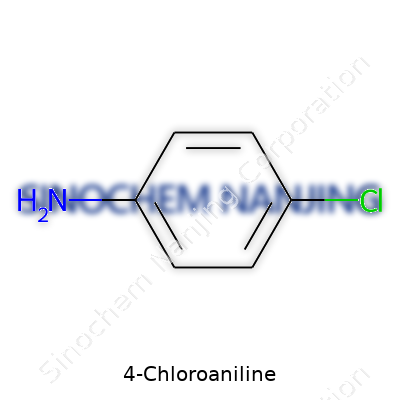
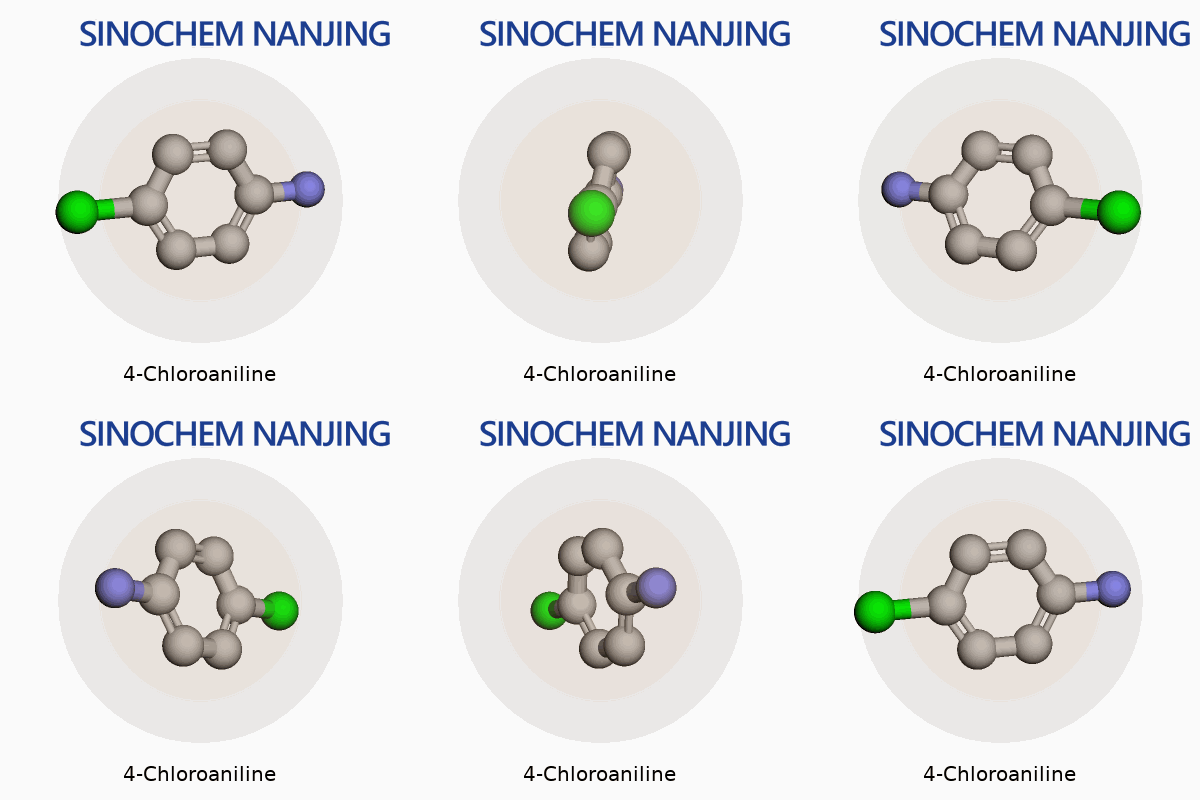
| Names | |
| Preferred IUPAC name | 4-chloroaniline |
| Other names |
4-Aminochlorobenzene p-Chloroaniline 1-Amino-4-chlorobenzene p-Chlorophenylamine 4-Chlorophenylamine |
| Pronunciation | /ˈklɔːr.oʊ.əˌnɪl.iːn/ |
| Identifiers | |
| CAS Number | 106-47-8 |
| Beilstein Reference | 1362460 |
| ChEBI | CHEBI:17243 |
| ChEMBL | CHEMBL1581 |
| ChemSpider | 803 |
| DrugBank | DB14056 |
| ECHA InfoCard | ECHA InfoCard: 100.003.170 |
| EC Number | 202-374-2 |
| Gmelin Reference | 82187 |
| KEGG | C01444 |
| MeSH | D002695 |
| PubChem CID | 7710 |
| RTECS number | BX8575000 |
| UNII | 9AWH5C058G |
| UN number | 2018 |
| Properties | |
| Chemical formula | C6H6ClN |
| Molar mass | 127.57 g/mol |
| Appearance | Colorless to pale yellow crystalline solid |
| Odor | amine-like odor |
| Density | 1.24 g/cm³ |
| Solubility in water | slightly soluble |
| log P | 0.99 |
| Vapor pressure | 0.015 mmHg (25°C) |
| Acidity (pKa) | 5.43 |
| Basicity (pKb) | 9.4 |
| Magnetic susceptibility (χ) | -73.0×10⁻⁶ cm³/mol |
| Refractive index (nD) | 1.583 |
| Viscosity | 2.17 mPa·s (20 °C) |
| Dipole moment | 1.64 D |
| Thermochemistry | |
| Std molar entropy (S⦵298) | 121.7 J·mol⁻¹·K⁻¹ |
| Std enthalpy of formation (ΔfH⦵298) | –47.2 kJ/mol |
| Std enthalpy of combustion (ΔcH⦵298) | -3741 kJ/mol |
| Hazards | |
| Main hazards | Harmful if swallowed, toxic in contact with skin, causes serious eye damage, may cause an allergic skin reaction, suspected of causing cancer, very toxic to aquatic life with long lasting effects |
| GHS labelling | GHS02, GHS06, GHS08 |
| Pictograms | ["GHS07", "GHS05", "GHS08"] |
| Signal word | Danger |
| Hazard statements | Harmful if swallowed. Toxic in contact with skin. Harmful if inhaled. Causes serious eye irritation. Causes skin irritation. May cause an allergic skin reaction. Suspected of causing cancer. |
| Precautionary statements | P261, P280, P302+P352, P305+P351+P338, P310, P405, P501 |
| NFPA 704 (fire diamond) | 2-2-2 |
| Flash point | 138°C |
| Autoignition temperature | 630 °C |
| Explosive limits | Explosive limits: 5–14% |
| Lethal dose or concentration | LD50 oral rat 262 mg/kg |
| LD50 (median dose) | LD50 (median dose): 262 mg/kg (oral, rat) |
| NIOSH | DJ8575000 |
| PEL (Permissible) | 5 ppm |
| REL (Recommended) | 2 mg/m³ |
| IDLH (Immediate danger) | 50 ppm |
| Related compounds | |
| Related compounds |
Aniline 2-Chloroaniline 3-Chloroaniline 4-Bromoaniline 4-Iodoaniline 4-Fluoroaniline p-Nitroaniline p-Toluidine |



