Looking Beyond the Basics: The Story and Significance of 4-Chloro-2-Nitroaniline
Historical Development
The chemical world often thrives on the backbone of simple molecules with wide-reaching influence, and 4-Chloro-2-nitroaniline serves as a prime case. This molecule started appearing in lab notebooks by the mid-20th century, after improvements in aromatic substitution chemistry led to new synthetic strategies. Much of the early interest in this compound came from dye synthesis. Chemical research in the late 1900s, especially in Central Europe and India, pushed manufacturing methods from crude blends to cleaner, more reproducible routes. Synthetic dyes in textiles pulled this compound from academic catalogs into industrial tanks. Over time, regulatory shifts, such as those from the European Union’s REACH framework and later international safety standards, changed the way chemists and manufacturers handled both the product itself and its by-products.
Product Overview
4-Chloro-2-nitroaniline sits among the workhorses of intermediate chemicals. It shows up as a solid, usually yellow with a rusty tinge, mild enough to recognize but not strong enough to stand out in a crowded storage room. In practical terms, chemists use this compound for producing azo dyes, pesticides, and rare pharmaceutical ingredients. There’s regular demand for 4-Chloro-2-nitroaniline because of its role in creating vivid yellows, oranges, and reds for synthetic fibers, leather, and plastics. Small-scale researchers and multinational plants both rely on its predictable performance in color development, giving it a presence beyond mere laboratory standards.
Physical & Chemical Properties
With a molecular formula of C6H5ClN2O2 and a molecular weight just over 172, this compound dissolves moderately in organic solvents and resists water—just enough to keep spill control simple but important. The melting point stands close to 145°C, making it easy to ship under normal conditions unless handled in large heated lots. Speaking from years of bench work, you come to respect chlorinated aromatics for their stubbornness—this molecule keeps its nitro group largely intact under regular storage, though strong reducing agents or oxidative conditions produce a host of related products. The combination of electronegative chlorine and nitro groups sets up a platform for many subsequent modifications, which explains its popularity in custom synthesis.
Technical Specifications & Labeling
On the shelf, you’ll find this compound labeled with standard hazard warnings related to skin and eye irritation, sensitivities to heat, and toxicity if swallowed or inhaled. Researchers expect certain minimum purities, usually 98% or higher, especially for dye manufacturing or pharmaceutical work, where impurities risk spoiling sensitive downstream reactions. Batches often bear lot numbers for traceability to match modern regulatory demands. In my own experience, suppliers who pay proper attention to handling—and don’t skimp on honest paperwork—quickly become favorites for labs trying to uphold both safety and accuracy. Small details, such as clear stickers showing expiry dates or storage advisories, help avoid accidental contamination or outdated stock.
Preparation Method
The production of 4-Chloro-2-nitroaniline spins off from classic aromatic chemistry, specifically through the nitration of 4-chloroaniline. Nitric and sulfuric acids, strong and unforgiving, drive the reaction, while temperature control and consistent mixing keep unwanted by-products at bay. At industrial scale, plant managers focus on process yield, the control of exotherms, and safe scrubbers to handle acidic gases. There’s no romance in watching a reactor churn, but automation and batch controls now keep the process safer and more reliable than it was decades ago. For labs with fewer resources, small-batch synthesis still follows textbook procedures, though these bring headaches with scale and waste disposal that only experience seems to manage well.
Chemical Reactions & Modifications
Chemists who work with nitroanilines grow used to their stability—yet also value how these molecules act as springboards for further transformations. For 4-Chloro-2-nitroaniline, coupling reactions with diazonium salts stand out, especially in the manufacture of azo dyes. Under reductive conditions, transformations to 4-chloro-2-phenylenediamine provide key intermediates for more complex substances. Palladium or nickel catalysts bring dechlorination into play when needed, while the nitro to amine reduction enables a library of downstream targets. In my own projects, this flexibility lets you patch together tailor-made molecules, and across the broader synthetic community, the molecule frequently morphs into dozens of derivatives that power next-generation pigments, photosensitizers, and even certain agrochemicals.
Synonyms & Product Names
Chemicals rarely keep one name. In research circles, both “4-chloro-2-nitroaniline” and “2-nitro-4-chloroaniline” show up, often written as “p-chloro-o-nitroaniline.” International catalogs sometimes tag it with registry numbers like CAS 89-63-4, smoothing out confusion from language and spelling differences. Some older dye houses still refer to it by legacy trade names, especially in Asia, where translation quirks occasionally throw newcomers for a loop. Yet the core identity remains recognizable, even as commercial branding continues to shift with mergers, acquisitions, and regulatory hurdles.
Safety & Operational Standards
Practical experience colors every chemist’s approach to compounds with a nitro group. Toxicity concerns, potential carcinogenicity, and persistent rumors of delayed effects shape every handling guideline. The European Chemicals Agency notes clear restrictions for both workplace exposure and wider environmental release. In the United States, OSHA’s standards press for decent ventilation, personal protective gear, and regular training for those who work with chlorinated anilines. Ignoring labeling updates or shortcutting storage conditions amounts to gambling with both legal and health consequences. It isn’t just about having a fume hood—it’s about making sure the hood gets checked, and that everyone from cleaning staff to supervisors knows why those cans carry specific hazard symbols. Mistakes tend to be rare, but they haunt those who remember them.
Application Area
Textile dye manufacturing remains the largest market, though recent years have seen slow growth in specialty pigment and organic electronics sectors. Dye manufacturers prefer the compound for its ability to anchor diverse colors, especially under harsh processing conditions that would degrade more fragile molecules. Leather finishing and some polymeric coatings firms pick it for shade control and lightfastness, shoring up quality in markets where brand reputation hinges on color durability. Some agrochemical researchers use it to create precursors to selective herbicides and antifungals. Though pharmaceuticals represent a smaller slice, their technical demand for pure intermediates gives small specialty firms room to charge premium prices. The product’s reach continues to expand as new uses in photochemical and sensor fields emerge, stretching its legacy far from early dye vats.
Research & Development
Ongoing R&D circles back to process efficiency, greener chemistry, and extended application. Green manufacturing trends see chemists tweaking catalysts or shifting from harsh acids to milder, recyclable systems to cut waste and boost yield. Advances in detection methods, such as real-time monitoring of intermediates, help drive both productivity and workplace safety. Recent academic work investigates alternative synthetic methods using ionic liquids or solvent-free approaches. Environmental chemists continue to scrutinize waste by-products, exploring effective destruction methods to curb pollution. Some institutions experiment with the molecule in organic photodetectors or sensor arrays, demonstrating that what started as a dye intermediate can stretch into the cutting edge of electronics research.
Toxicity Research
Neither manufacturers nor regulators take potential toxicity lightly here. Laboratory studies show effects on blood, liver, and kidneys in animal models, confirming both acute and chronic risks from prolonged exposure. Reports suggest certain nitroaromatics can trigger methemoglobinemia, a kind of internal “smothering” of hemoglobin that can present serious health risks. Researchers track metabolites to chart routes of biotransformation and excretion, since environmental persistence complicates long-term risk assessments. Real-world incidents—a small number, yet sobering—have driven pushback from environmental activists and stricter industrial hygiene standards. Many chemists feel the weight of these lessons, pushing for closed systems, responsible disposal, and more transparent reporting of both expected and unexpected incidents.
Future Prospects
Looking ahead, the trajectory for 4-Chloro-2-nitroaniline depends on a blend of regulatory pressure, technical innovation, and shifting market demand. Sustainable chemistry could reshape both production and downstream processing, favoring those companies that adapt quickly to new environmental standards. As textile dye sectors grapple with competition and tighter emissions caps, specialty uses in electronics, sensors, and high-value pigments could open doors for innovative chemists. Researchers challenge themselves to develop analogues that keep the chemical’s strengths while tamping down toxicity and environmental impact. The future promises a slow transformation, as workshops and factories retool equipment, retrain staff, and build tighter bonds with both suppliers and watchdogs. No single molecule shapes an industry, but 4-Chloro-2-nitroaniline reminds us how the smallest details in chemical manufacturing ripple out through technology, health, and global trade.
What are the primary uses of 4-Chloro-2-Nitroaniline?
Connecting Chemistry to Daily Life
Anyone who has stood in front of a pharmacy or marveled at colorful fabrics has probably felt the impact of chemical inputs like 4-Chloro-2-Nitroaniline, even without realizing it. This compound might look intimidating with its long name, but it plays a practical part across industries people depend on every day.
Driving Color in the Textile World
Textile mills have relied on 4-Chloro-2-Nitroaniline to synthesize azo dyes for decades. Walk through any market, and those vibrant yellows and reds owe their shades, in part, to derivatives of this compound. Its stability and strong color properties help those dyes resist fading, whether exposed to the sun or frequent washes. The industry demands high colorfastness, and experience with dye lots has shown how additives like this secure that lasting effect. Market research points to dye application as the largest segment for this intermediate — that accounts for a sizable percentage of its use globally.
Building Blocks for Pharmaceuticals
The pharmaceutical sector leans on 4-Chloro-2-Nitroaniline as a starting material for more complex molecules. Medicinal chemists use it to develop compounds that end up in antibacterial and antifungal agents. Its nitro and chloro groups offer unique reactivity, making it easier to introduce new structures aimed at fighting infections. As someone with a background in drug development, I’ve seen how time and resources get saved by selecting versatile building blocks, especially when searching for novel treatments for persistent bacterial diseases.
Essential Role in Agriculture
Modern farming depends on active ingredients synthesized from precursors like 4-Chloro-2-Nitroaniline. Pesticides and herbicides formulated with its help target weeds or crop pests without harming yields. Chemists favor this precursor because it provides a shortcut in generating molecules effective against specific agricultural threats. Reliable supply also means steadier prices for the end farmer, who must weigh input costs against shrinking margins. Looking at reports on the crop protection market, compounds linked to this segment make up an important chunk of global demand, especially across Asia and South America.
Safety and Environmental Awareness
Chemical manufacturing comes with safety and environmental challenges. 4-Chloro-2-Nitroaniline, if handled without care, poses risks through dust inhalation or accidental spills. Workers on the production line need personal protective gear and robust ventilation, lessons hard-earned in older factories where lax safety standards hurt more people than they helped. Waste handling and water treatment now require oversight and clear procedures, reflecting a bigger shift toward responsibility. As regulatory bodies urge stricter exposure limits, the industry invests in greener processing and new waste-treatment technologies. These steps not only protect the people making the intermediates but also those in nearby communities.
Looking Forward
Shoppers rarely look at a finished product and see the chemical steps behind it, but chemicals like 4-Chloro-2-Nitroaniline keep product shelves stocked and industries running. As the world’s needs shift—toward safer drugs, tougher dyes, and more resilient crops—the conversation on safe handling and sustainable practices grows louder. Encouraging investment in green chemistry, transparent supply chains, and better safety training carries as much value as the chemical itself.
What are the physical and chemical properties of 4-Chloro-2-Nitroaniline?
The Heart of the Matter: What Makes 4-Chloro-2-Nitroaniline Special?
Every so often, a chemical compound comes along that sparks curiosity, and 4-Chloro-2-Nitroaniline has done just that for many who work with dyes, pigments, and research labs. The thing about this compound isn’t just how it looks or how it's used—it's how its structure shapes its story. Picture a yellow to orange crystalline powder; you touch it once, and the vibrant color stains your gloves. That’s chloronitroaniline—solid, gritty, unmistakable. It doesn’t dissolve much in water but mixes better with organic solvents. That solubility issue shapes how companies and chemists approach storage, transportation, and disposal, and makes water-based cleanups a challenge.
Its Chemical Personality: Why Structure Matters
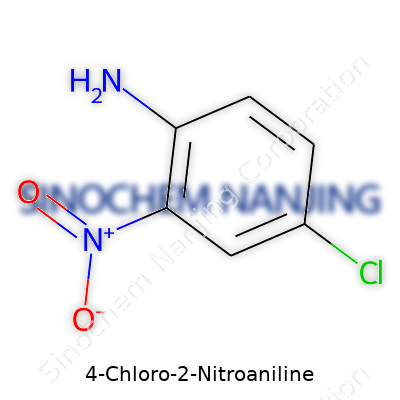
The magic often lies in the details—the arrangement of atoms and the functional groups attached to its ring. Here, a nitro group sits next to a chlorine atom on the aniline ring. That simple change tweaks not just the color but also the behavior. This chemical balance means the compound reacts in certain ways. For instance, the nitro group pulls electronic charge, making the molecule less basic and more stable against light and heat than plain aniline. The chlorine throws in some extra resistance, meaning the molecule doesn’t easily break down. This robust structure contributes to longer shelf life but also asks for stronger strategies during manufacturing and waste management. It’s not easy to get rid of, and that shouldn’t be taken lightly.
Working With 4-Chloro-2-Nitroaniline: Real Risks and Responsibility
Anyone handling it quickly learns the importance of protection. Exposure can cause skin and eye irritation, and the powder shouldn’t be inhaled. The nitro group hints at some toxicity, a reality that users in chemical plants and academic settings don’t overlook. Personal experience tells me there’s no such thing as too much caution—stories circulate among colleagues about hasty students landing up in the clinic over a careless spill. Strong gloves, good ventilation, and careful cleanup routines turn into daily rituals in labs where this compound shows up.
Challenges in Waste and Environmental Impact
We can’t talk about a chemical without discussing its legacy. 4-Chloro-2-Nitroaniline can linger in soil and water. This isn’t a matter for complacency. The compound resists breakdown by bacteria, meaning it can build up in places where it shouldn’t be. Experiences in wastewater treatment highlight the struggle—once this material escapes into water, it takes proper chemical treatment or incineration to deal with it. Incineration comes with costs and environmental considerations, so prevention turns out to be better than cleanup. Tracking all steps from production to disposal creates a safety net for both people and the planet.
A Look Toward Safer Chemistry
Industries using 4-Chloro-2-Nitroaniline for dyes and pigments face steady pressure to cut risks and find greener substitutes. Chemists hunt for ways to tweak its structure or swap it out for molecules that break down more easily in the environment. Meanwhile, regulations continue to evolve as evidence rolls in from long-term studies. Sticking to best practices, smart design, and science-backed policies, workplaces keep everyone safer.
Fact-Driven Choices Make a Difference
The story of 4-Chloro-2-Nitroaniline boils down to a familiar lesson in chemistry: smart handling, honest risk assessment, and open conversations create better outcomes. Using knowledge, not just caution, shapes safer labs and healthier environments. Personal experience blends with hard facts to steer the conversation away from speculation and toward practical action. That’s how the community pushes forward, learning from each challenge, and using each lesson to build a safer future.
Is 4-Chloro-2-Nitroaniline hazardous or toxic?
The Realities of Handling 4-Chloro-2-Nitroaniline
4-Chloro-2-nitroaniline sounds like just another name in the long roster of chemicals on an industrial plant floor, but it's one that raises eyebrows in both the lab and factory. People who work with dyes or pigments have probably run across this yellowish powder and, after checking the safety datasheets, wondered just how risky it is. The answer is, for anyone who cares about the health of workers, very.
Getting Up Close: Exposure Risks
This compound can get into your system in more ways than one. It can seep through the skin, especially if hands aren't properly protected. Breathing in the dust during weighing or mixing sends the particles straight to the lungs. Spills or a stray gust can make eyes sting and water instantly. I remember a shift from my early job in a plant—someone skimped on gloves and spent hours with angry, irritated skin. Sometimes people don't take a yellow powder seriously until it hits home.
Why the Worry?
4-Chloro-2-nitroaniline belongs to the nitroanilines, a group of chemicals known for their toxicity. Research backs this up: skin contact or inhaling dust leads to a range of health issues. According to the National Institute for Occupational Safety and Health, repeated or high exposure can result in methemoglobinemia, a condition where the blood loses its ability to carry oxygen. That turns lips and skin blue and can leave someone gasping for air, not just for a few minutes but sometimes much longer. In the worst cases, it sends people to the hospital.
Beyond that, animal studies have linked certain nitroanilines to organ damage over time. The Environmental Protection Agency recognizes this class for its risks. In my time overseeing safety audits, I saw real-world signs of this: liver function tests edging upwards, more complaints of headaches, fatigue, and even confusion. These symptoms don't seem dramatic at first, but over months they point to trouble piling up inside the body.
What Makes the Chemical So Tricky?
It flies under the radar. 4-Chloro-2-nitroaniline doesn’t smell strong or irritate the throat at low concentrations, so people think they’re in the clear. A dust mask may not cut it—N95 masks can help, but half-face respirators work better. Keeping the powder from spreading means good ventilation and using closed systems, things that seem expensive until someone gets sick.
Simple skin contact can lead to absorption, and that's often overlooked. Synthetic gloves rated for organic chemicals aren’t optional. Proper labeling and handling instructions at every workstation are crucial. Just hoping hazard signs sink in is a dangerous game.
How Can We Stay Safe?
Continuous training helps. Telling stories drives the point home—a supervisor talking about the real risks sticks more than a poster. Keeping good incident records, making sure everyone understands the symptoms of exposure and the real effects of slipping on safety, keeps the issue grounded in reality. Regular blood tests for employees working with nitroanilines make sense because early detection leads to treatment before serious harm.
Looking Ahead
Industry can’t pretend chemicals like 4-chloro-2-nitroaniline are harmless. Switching to less toxic alternatives where possible reduces the danger for everyone. Regular audits, investment in better gear, and putting worker health ahead of “just getting the job done” has to be the baseline. A little caution and respect for these compounds saves more than just an afternoon off the line—it protects the lives and futures of everyone on site.
How should 4-Chloro-2-Nitroaniline be safely stored and handled?
Looking Past Labels: Why Extra Caution Makes Sense
4-Chloro-2-nitroaniline pops up in labs and some specialty industries, and while it doesn’t come with an arsenal of skull-and-crossbones stickers, it still packs hazards. That yellow to orange powder isn’t just another chemical in the storeroom. One flake on bare skin or a whiff of its dust can stir up skin irritation, red eyes, or breathing trouble. I grew up around a workshop filled with labeled containers, and learned early that paying respect to those labels spared a lot of pain.
Small Mistakes, Big Problems: Proper Storage
Stash this compound in a cool, dry corner, out of sunlight’s way. I remember a neighbor whose shed became a chemistry experiment after sunlight turned a shelf of forgotten bottles into leaky projectiles. Heat, direct light, or moisture inch the risk higher—product decomposes, fumes build, fire or nasty reactions become possible. Tightly sealed glass or chemical-grade plastic keeps out water and air, stopping the powder from clumping or breaking down. The right location always matters: a metal cabinet away from flammable piles or corrosive acids, never left where a careless hand or a curious kid could grab it. From my own days organizing a bench, a locked secondary container proved easiest for controlling access and stopping spills before they grew into headaches.
Gear and Good Habits: Handling Techniques from Experience
I’ve watched people shrug off goggles or gloves, only to regret it. Nitrile gloves fit well and stop powder from drilling into skin, and wrap-around goggles keep sneaky dust away from eyes. Cotton lab coats might trap flammable dust or chemicals, so switching to flame-resistant synthetic coats helps. Forced air, not hand-swept motion, should clear dust—leaving behind less chance for sparks or static. I once set off a tiny puff of powder messing with a jar and learned the sting of irritation in my lungs. Always work under a fume hood, never just an open bench. Check your local rules, too; some places ask for ducted venting or even spark-proof switches near reactive powders.
The Devil in the Details: Labeling and Housekeeping
Labels should spell out the chemical name, hazards, and the date they went on the shelf. I lived through one mix-up at a summer job—an unlabeled jar cost us hours as we tried to puzzle out what was inside. Good housekeeping avoids dust clouds or accidental mixing. Clean up right after you’re done—waste straight into a marked, dedicated container. Paper towels and ordinary trash cans just set the stage for future fires or spills. If you find powder outside the jar, treat it like it’s just been freshly spilled. Wet wipes pick it up better than dry brushing, which just swirls up particles into the air.
Better Training, Safer Labs
Shortcuts look tempting, especially when you’re in a rush, but all the gear and fancy storage means little without solid training. Mixing up chemicals by sight or scent never works. Newcomers at any bench should run drills for spills, eye washes, and escape routes, not just file away a safety data sheet. A habit for checking the container twice and moving slow often saves a lot of panicked calls and health scares. My best mentors taught me that no task in the lab was routine enough to skip these steps.
Solutions for Safer Workspaces
Better venting, locked storage, visible labels, and peer-to-peer training keep 4-chloro-2-nitroaniline where it belongs—inside the experiment, not as part of a bad story. Those steps build a stronger culture where nobody just assumes the last person left things safe.
Are there any specific regulations or restrictions concerning 4-Chloro-2-Nitroaniline?
Why 4-Chloro-2-Nitroaniline Draws Attention
4-Chloro-2-Nitroaniline plays a big part in making dyes and pigments. Factories turn to it for its chemical properties, and it often leaves research benches for factories in bulk quantities. Every so often, chemicals like this grab headlines not simply for their usefulness, but for their risks and the way governments react.
Health and Environmental Risks from Experience
Many chemists remember handling 4-Chloro-2-Nitroaniline with gloves, goggles, and plenty of caution—it stains, and it can burn if you aren’t careful. Breathing its dust feels dangerous. Questions about long-term effects never feel fully answered. Studies show that skin contact, swallowing, or breathing fumes causes health problems and even damage to organs if not handled right. For the environment, small spills during transport have led to water contamination in rivers close to production zones, especially in parts of India and China.
How Regulators Respond Worldwide
Not all countries act the same way when chemicals like this show up in manufacturing. In the United States, the Environmental Protection Agency (EPA) tracks workplace exposure. OSHA assigns exposure limits for similar compounds and expects companies to follow strict workplace safety plans. 4-Chloro-2-Nitroaniline appears on chemical inventories like the Toxic Substances Control Act (TSCA) list, which covers how it crosses borders and how it can be sold.
European rules draw a hard line. The Registration, Evaluation, Authorisation and Restriction of Chemicals (REACH) program puts the onus on manufacturers and importers to show their chemicals are safe. They take records—health data, supply figures, and any pollution reports—very seriously. Factories in Germany or France log every ton they make and every drop they spill.
Failures Rooted in Lack of Oversight
I’ve seen news stories from places with weak enforcement. Rivers turn brown, fish die, and people living downstream get rashes or worse. In those places, rules exist, but nobody’s checking up on the paperwork. Plants can hide leaks or dump untreated water if they expect no consequences. Cities end up paying for cleanup. Honest companies spend more to follow the law, but less careful players undercut them and cut corners.
Long-Term Solutions Come from Shared Responsibility
No law can change safety culture unless leaders enforce it. Warnings on labels and paperwork only matter if factories teach workers what protective gear to put on, and why it matters. Cameras in warehouses and smart sensors in water systems help catch signals early, but someone must read the data and act. Reporting near-misses and accidents builds a trail, letting public health departments step in before small problems become big ones.
Governments rely on chemical registries, customs controls, and audits, but the best watchdogs come from inside—managers and workers who see risk not as red tape, but as part of what keeps work running for the long run. If a chemical poses dangers, good faith action always comes down to real training, real checks, and a culture that prizes honesty over shortcuts. That’s the piece missing in places where 4-Chloro-2-Nitroaniline still finds its way into headlines for the wrong reasons.
| Names | |
| Preferred IUPAC name | 4-chloro-2-nitrobenzenamine |
| Other names |
2-Nitro-4-chloroaniline 4-Chloro-o-nitroaniline 4-Chloro-2-nitrobenzenamine 2-Amino-5-chloronitrobenzene p-Chloro-o-nitroaniline |
| Pronunciation | /ˈfɔːr ˈklɔːr.oʊ ˈtuː ˈnaɪ.troʊ əˈnɪl.iːn/ |
| Identifiers | |
| CAS Number | 89-63-4 |
| Beilstein Reference | 821080 |
| ChEBI | CHEBI:54380 |
| ChEMBL | CHEMBL18714 |
| ChemSpider | 20518 |
| DrugBank | DB08276 |
| ECHA InfoCard | 100.018.698 |
| EC Number | 202-430-6 |
| Gmelin Reference | 7794 |
| KEGG | C14382 |
| MeSH | D016661 |
| PubChem CID | 6928 |
| RTECS number | BY8575000 |
| UNII | E273VN371P |
| UN number | UN3446 |
| Properties | |
| Chemical formula | C6H5ClN2O2 |
| Molar mass | 172.57 g/mol |
| Appearance | Yellow to brown crystalline powder |
| Odor | Odorless |
| Density | 1.44 g/cm³ |
| Solubility in water | slightly soluble |
| log P | 1.98 |
| Vapor pressure | 1.18 x 10⁻⁵ mmHg (25°C) |
| Acidity (pKa) | 2.41 |
| Basicity (pKb) | 12.85 |
| Magnetic susceptibility (χ) | -58.1·10⁻⁶ cm³/mol |
| Refractive index (nD) | 1.688 |
| Dipole moment | 3.71 D |
| Thermochemistry | |
| Std molar entropy (S⦵298) | 163.2 J·mol⁻¹·K⁻¹ |
| Std enthalpy of formation (ΔfH⦵298) | −72.1 kJ/mol |
| Std enthalpy of combustion (ΔcH⦵298) | -1717 kJ mol⁻¹ |
| Hazards | |
| Main hazards | Harmful if swallowed, causes skin irritation, causes serious eye irritation, may cause respiratory irritation. |
| GHS labelling | GHS02, GHS07, GHS09 |
| Pictograms | GHS07,GHS09 |
| Signal word | Warning |
| Hazard statements | H302, H315, H319, H332, H335, H341, H351 |
| Precautionary statements | P261, P264, P270, P271, P272, P273, P280, P302+P352, P304+P340, P305+P351+P338, P312, P321, P330, P332+P313, P333+P313, P362+P364, P405, P501 |
| NFPA 704 (fire diamond) | 2 (Health), 2 (Flammability), 1 (Reactivity), - (Special) |
| Flash point | 138°C (280°F) |
| Autoignition temperature | 450 °C |
| Lethal dose or concentration | LD50 oral rat 2540 mg/kg |
| LD50 (median dose) | LD50 (median dose): 283 mg/kg (oral, rat) |
| NIOSH | CN 9450000 |
| PEL (Permissible) | Not established |
| REL (Recommended) | 0.1 mg/m³ |
| Related compounds | |
| Related compounds |
2-Chloro-4-nitroaniline 2-Nitroaniline 4-Chloroaniline 2,4-Dichloroaniline 4-Nitroaniline 2-Chloroaniline |



