4-Bromotoluene: Evolution, Properties, Applications, and Research Directions
Historical Development
Long before 4-bromotoluene found a spot on the chemical marketplace, early chemists focused on halogenated aromatics for their promise in dyes, pharmaceuticals, and materials. The bromination of toluene, creating mono-substituted derivatives, caught attention in the late 19th century when laboratory glassware and acumen were the main tools. Researchers isolated the para-isomer for the first time as they improved selective halogenation methods, mainly to answer the demand for more efficient intermediates in the blossoming organic chemistry industry. Over the decades, the industry learned to manage scale and purity, keeping para-selectivity high, refining the synthesis to handle hundreds of kilograms for both research and manufacturing.
Product Overview
Known by its chemical nomenclature as 1-bromo-4-methylbenzene, 4-bromotoluene has become a staple intermediate in organic synthesis. Its use reaches into pharmaceutical development, agrochemical research, dyes, and materials science. Chemists favor this compound for the unique pattern that the bromine and methyl substituents set up on the benzene ring, which unlocks a broad spectrum of further reactions, making it an irreplaceable building block when another, less conveniently substituted aromatic compound just won’t do the job.
Physical & Chemical Properties
At room temperature, 4-bromotoluene appears as a clear, colorless to pale yellow liquid with a noticeably sweet, aromatic odor sharp enough to indicate just how volatile it can be. Its molecular formula is C7H7Br, tipping the scales at a molecular weight of about 171.04 g/mol. The substance boils at 184–186°C and melts at a sliver below room temperature, making it easy to handle as a liquid under standard lab conditions. It resists dissolving in water but mixes well with most organic solvents. This combination of volatility and low water solubility often requires extra effort during handling and storage to prevent atmospheric release and waste.
Technical Specifications & Labeling
Bottles of 4-bromotoluene carry detailed information on purity, often quoted at 98% or higher for research-grade material, making lab work more predictable. Labels note the CAS Number 106-38-7, molecular structure, hazardous nature, and producer information. Reputable vendors add batch numbers and an analysis certificate, giving end-users confidence in reproducibility, essential for fine chemical work. Storage instructions on labels warn to keep the product cool, dry, and tightly sealed, away from strong oxidizing agents, reducing surprises during inventory or use.
Preparation Method
Bromination of toluene sits at the core of 4-bromotoluene production. Industrial chemists typically select para-selective bromination by using iron or iron(III) bromide as a catalyst, promoting the reaction in the presence of elemental bromine. This approach prioritizes the para position due to the electron-donating methyl group’s directing effects, resulting in a good yield of the target product. Once the reaction completes and crude product forms, purification through fractional distillation or recrystallization removes unwanted isomers and unreacted starting material. Waste bromine and acidic byproducts get treated with sodium thiosulfate and neutralized before disposal, preventing environmental harm.
Chemical Reactions & Modifications
Aromatic bromides like 4-bromotoluene stand out for their activated aromatic ring, making them perfect substrates in transition metal-catalyzed cross-coupling reactions. Suzuki, Heck, and Sonogashira couplings all count on 4-bromotoluene to introduce the methylphenyl motif into heavier molecules, often for drug discovery or new material design. Nucleophilic aromatic substitution is tough due to the electron-rich ring, but the methyl group’s presence sometimes allows for interesting reactivity under harsh conditions. Oxidation of the toluene moiety yields p-bromobenzoic acid, a handy intermediate itself. Stepwise synthetic modifications keep chemists coming back to 4-bromotoluene, whether building a simple ligand or something that ends up in an advanced therapeutic.
Synonyms & Product Names
Browsing catalogues, one might find 4-bromotoluene listed under names like p-bromotoluene, 1-bromo-4-methylbenzene, or para-bromotoluene, reflecting historical roots and regional naming conventions. The CAS number remains the industry’s anchor for clarity. Certain suppliers create proprietary blends or stabilized formulations for specialized use but the core compound retains its straightforward structure and identity, remaining dependable for synthetic planning.
Safety & Operational Standards
Every chemist learns to treat halogenated aromatics with respect, and 4-bromotoluene is no different. Its fumes can irritate eyes, nose, and throat, so proper ventilation is a must. Handling practices mandate gloves, safety goggles, and either a lab coat or protective apron. In case of skin contact, immediate washing with plenty of water reduces risk. Accidental inhalation or ingestion, although rare in experienced labs, requires prompt medical attention due to concerns about respiratory distress or central nervous system impact. Storage away from heat sources and incompatible reagents prevents unwanted incidents. Emergency spill kits and clear labeling make all the difference if something goes wrong during everyday tasks in the lab.
Application Area
4-Bromotoluene consistently delivers in pharmaceutical research, where it seeds the backbone of antifungal, antihypertensive, or anti-inflammatory compounds. Agrochemical companies use it for synthesizing herbicides or growth regulators. Material scientists leverage its aromatic structure in designing dyes and new light-emitting polymers, often hunting for stronger, longer-lasting products. Industrial chemists count on it for manufacturing specialty plastics or adhesives. From bench to plant, its para-substitution opens avenues that other bromoarenes can’t match, guiding molecular evolution at every scale.
Research & Development
Current R&D circles keep circling back to 4-bromotoluene thanks to its versatility in molecular building. As new catalytic systems evolve, especially in the world of green chemistry, researchers push for more atom-efficient and selective transformations, minimizing waste while extracting higher value from this feedstock. Academic groups and pharmaceutical scouts collaborate closely, designing advanced molecules by tweaking the toluene scaffold, inspired by biological activity screens. Emerging studies look at photoredox catalysis and electrochemical activation, shrinking reaction footprints and keeping one eye on sustainability.
Toxicity Research
Nobody makes safety decisions based on guesswork, and 4-bromotoluene’s toxicity demands close scrutiny. Studies on rodents show moderate acute toxicity, with effects including skin and respiratory irritation, CNS depression, and, on rare long-term exposure, possible liver or kidney impacts. Inhalation poses the highest risk, mainly because of volatile aromatic hydrocarbons. Regulatory agencies like OSHA and the European Chemicals Agency set occupational exposure limits to prevent chronic harm, reflecting findings from repeated-dose animal studies and workplace monitoring. Handling guidelines build on this body of evidence, balancing industrial needs and responsible stewardship.
Future Prospects
As demand for new pharmaceuticals and advanced materials climbs, 4-bromotoluene stays firmly in play as a starting material that keeps delivering value. Researchers with an eye toward sustainable chemistry keep searching for greener bromination methods and more efficient catalytic pathways, hoping to reduce side products and energy costs. Next-generation catalysts, particularly those using earth-abundant metals or enzymatic routes, promise to make these processes cleaner and even more selective. Regulatory scrutiny pushes for safer operational standards and improved waste treatment, keeping pace with the growth in applications. The simple backbone of 4-bromotoluene, along with ongoing innovation in organic synthesis, secures its role in the chemical and life sciences industries for years to come.
What is the chemical formula of 4-Bromotoluene?
Chemical Formula: C7H7Br
Take a stroll through just about any industrial chemical catalog, and there’s a good chance you will come across 4-Bromotoluene. Some might know it as para-bromotoluene, but both names point to the same structure. You start with toluene, that familiar solvent with its methyl group attached to the benzene ring. Replace one of the hydrogen atoms with bromine at the para position, and you get 4-Bromotoluene. Its formula comes out to C7H7Br, a simple string of letters and numbers capturing a real-world material with real-life uses.
Why C7H7Br Matters
This molecule pops up in research labs and production lines worldwide. You might not notice it blending into daily life, but its fingerprint shows up in everything from medicine to materials science. In practice, synthetic chemists use it as a stepping stone to create new things. That bromine atom presents a spot where you can swap in or hook up different chemical groups. Such flexibility turns 4-Bromotoluene into a building block for pharmaceutical agents and specialty materials. Even small ingredients like this one shape big results, as I’ve seen in projects tinkering with organic synthesis back in university days. Efficiency in a reaction often hinges on such tailored compounds.
Safety Talks and Environmental Impact
Any discussion of industrial chemicals needs a look at how people handle them. 4-Bromotoluene carries health hazards. Exposure can bring on skin or eye irritation. In larger doses, vapor inhalation might make breathing tough for workers or turn up headaches. Like with many organohalides, care counts more than ever on the plant floor. Investing in proper ventilation and firm safety training makes a noticeable difference. Simple steps go a long way: gloves, goggles, and real protocols, not just signs on a wall. Even small spills turn serious fast if left unchecked. After seeing rushed or careless lab work cause problems, I know firsthand that prevention saves money, time, and health.
Environmental agencies keep a close eye on brominated compounds, including 4-Bromotoluene. Without proper disposal, these chemicals risk leaching into waterways or soil. That introduces risks downstream—for ecosystems and drinking water. Factories need to treat waste streams through approved methods, focusing on minimization and clean recycling where possible. I remember handling chemical waste drums as a student worker and the process worked: proper labeling and quick transfer to hazardous waste storage made sure nothing ended up in the wrong place. Industry players can borrow a page from the teaching labs on routine training drills.
Solutions Driving Real Improvement
One major improvement comes from moving to greener chemistry. Researchers keep looking for alternative routes that trim down on hazardous reagents, energy use, and byproducts. Companies that invest in continuous process monitoring spot leaks or inefficiencies faster, reducing waste and improving worker safety. More open data sharing between manufacturers, labs, and regulatory offices could help set clearer guidelines for what works and what risks need attention. Workshops that bring together academics and industry engineers make a difference, bridging the gap between promising lab methods and real-world scale.
Knowledge about something as basic as a formula—C7H7Br—can transform how we think about safety, sustainability, and innovation. It’s another reminder that chemistry doesn’t just live in a bottle on a shelf; it shapes what people use, build, and protect every day.
What are the common uses of 4-Bromotoluene?
A Closer Look at a Little-Discussed Chemical
4-Bromotoluene doesn't jump off the page for most people, but across chemistry labs and factory floors, it shows up in some important places. Start with its roots — this compound has a simple structure, just a toluene ring with a bromine atom hanging off the fourth carbon. What sounds basic allows for some clever applications.
Pharmaceutical Building Block
Drug chemistry runs on building blocks. 4-Bromotoluene stands out as a starter piece for making more complicated molecules, especially in the search for new medicines. Medicinal chemists use it to help assemble rings and frameworks that turn up in antihistamines, antipsychotics, and other compounds targeting the central nervous system. These scientists take advantage of the bromine atom, swapping it out or reacting it to explore new combinations. It’s often the foundation for Suzuki and Heck reactions—classic ways to link up pieces in pharmaceutical research. These methods bring new medicines from test tube to medicine cabinet.
A Key Ingredient in Agrochemicals
Farmers see the results of chemical research in the form of crop protection. 4-Bromotoluene plays a quiet but important role here. Labs use it to make substances that fight off pests and weeds. Its strong reactivity lets chemists add different groups to the ring, making new herbicides and insecticides possible. Some of these end up as part of formulas sprayed over fields, ensuring crops reach stores instead of being lost to blight. Food supply chains depend on these early-stage chemicals, even if their names never leave the factory floor.
Raw Material for Advanced Materials
Plastics, dyes, and electronics owe a lot to the careful design of their smallest pieces. 4-Bromotoluene is often one of those pieces. Dye makers start with it to produce shades that last through many washes and harsh sunlight. Electronics companies build on its structure to make specialized polymers used in displays and thin films. Its chemical properties, especially the bromine site, give manufacturers the flexibility to tune the end product for color fastness, flexibility, or conductivity. Without such compounds, we wouldn’t see the range of colors in fabrics or get the same clarity from modern screens.
Environmental Caution and Future Directions
Working with any brominated compound means paying attention to safety. Bromine atoms help chemists do some amazing transformations, but they also raise the toxicological stakes. Factories and research labs use closed systems and monitor waste streams so these substances don’t wind up in rivers or local air. Regulations in the U.S. and Europe keep an eye on how much is released. Responsible disposal and greener chemistry approaches matter here — scientists have started using catalysts and developing new processes to reduce the creation of byproducts, lowering the overall impact.
I’ve spent time in a lab where brominated chemicals were routine. Extra safety training became part of daily work, not just for the folks mixing but for everyone in the building. Handling 4-Bromotoluene isn’t just about skill — it’s a reminder that even useful molecules carry responsibility. Smart safeguards and new research will shape how the next generation of chemists builds on this unassuming but essential compound.
What are the safety precautions for handling 4-Bromotoluene?
Why Safety Around 4-Bromotoluene Really Matters
Anyone working in a lab eventually comes across chemicals like 4-bromotoluene. I’ve spent enough time at the bench to know this compound’s appearance—usually a clear liquid, sometimes a whitish solid—masks its risks. Breathing in its vapors or letting it soak through your skin can leave someone feeling dizzy, maybe even cause long-term issues. It’s easy to underestimate, but one unguarded moment can land somebody in the emergency room.
Data from the National Institute for Occupational Safety and Health show that exposure to aromatic solvents, including halogenated compounds like 4-bromotoluene, can harm the liver, trigger skin inflammation, and irritate the lungs. Nobody wants to trade research progress for a health scare.
Personal Protection: Gear That Actually Works
I’ve watched students grab thin latex gloves for chemical work, not knowing these fall short against organic solvents. Lab-grade nitrile gloves do a better job blocking penetration. Splash goggles are essential since regular glasses don’t seal out vapors. It doesn’t take a large splash to damage vision, so wraparound protection makes a difference. Long sleeves and lab coats, buttoned up, shield skin from accidental drips. I’d never use sandals in the lab; covered shoes always lower the risk of contact in case a beaker goes over.
Managing Fumes and Spills
Chemical vapors hang in the air, and 4-bromotoluene definitely has a smell that catches your attention. Fume hoods pull these fumes away before they build up. The best labs I’ve worked in always run the ventilation, even for seemingly minor procedures. This habit stops exposure from stacking up over time.
Spills almost always happen when you’re in a rush. I’ve learned not to trust open containers—every time, use bottles with secure caps. For extra safety, carry chemicals in secondary containers when moving between areas. If a spill does occur, people reach for inert absorbents like vermiculite or sand. Never use sawdust around brominated organics, since fire is a real risk. Once it’s cleaned up, dispose of everything according to hazardous waste protocols. Skipping this step invites unnecessary accidents and fines.
Storage and Labeling: Getting it Right
Too often, someone throws a bottle on a shelf and forgets it. 4-Bromotoluene should never sit next to oxidizers or acids. I always keep it with other halogenated organics, away from sunlight and heat sources. It’s basic, but tight-fitting lids go a long way in preventing evaporation and contamination.
Labels matter more than people realize. I’ve seen bottles without dates or the wrong chemical name—that’s a close call waiting to happen. A label with the full compound name, date received, and hazard details helps everyone stay on the same page and avoid confusion after a shift change or during busy experiments.
A Culture of Vigilance
Following the rules means more than checking a box. I’ve watched safety shortcuts lead to injured hands or sick coworkers. If someone on your team seems unsure about procedures, stepping in with advice can prevent real harm. Training shouldn’t be a one-time event. Stay sharp, look out for each other, and build routines that keep everyone safe, no matter how busy the schedule gets. That’s something years in a lab have taught me—good science depends on working together to avoid unnecessary risks and build trust as much as results.
What is the physical appearance of 4-Bromotoluene?
Getting a Real-World Glimpse at 4-Bromotoluene
4-Bromotoluene shows up in synthesis jobs where sharp accuracy matters. Take it out of a chemical storeroom, and you see a colorless liquid—clear like water, not murky, not crystalline, but smooth and almost invisible to the eye if you’re pouring it into a glass beaker. That transparency tells you right away that it isn’t full of impurities or debris. When I opened a bottle of 4-Bromotoluene the first time, I noticed a faintly sweet, almost medicinal odor—nothing overpowering, but it does remind you to work under a fume hood. Don’t mistake a lack of color for harmlessness. This liquid can be tough on the skin and lungs if you get careless, something I learned from a colleague who had skipped gloves once.
Why Appearance Alone Won’t Tell You Everything
Bottle labels and data sheets say “colorless liquid” for a reason, but that phrase only scratches the surface. If contamination sneaks into the bottle, you may start to see a yellowish tint—an easy clue that something’s up. In well-run labs, a fresh container of 4-Bromotoluene looks as clear as vodka. If it gets exposed to air for too long, or if someone double-dips contaminated tools into the supply, that sharp clarity turns dull, and the liquid can even start to give off a harsher smell. Once when we left a bottle on the bench over a long lunch, humidity made its way in, and the next day the solution looked just the slightest bit cloudy—a sure sign to replace it instead of risking a failed reaction.
Handling and the Bigger Picture of Lab Safety
4-Bromotoluene isn’t something you buy at a hardware store. Chemists use it for making ingredients that wind up in pharmaceuticals or materials science projects. You might never see it outside a controlled environment, but safety rules treat every bottle as a potential hazard. Even as a liquid, it isn’t sticky or greasy, so it doesn’t cling to the skin the way something like oil would. But it still can burn or irritate if it sits too long on tissue. Wearing gloves, safety glasses, and using a chemical fume hood became second nature for me after a single accidental splash—no lasting harm done, but a good reminder of why protocols exist.
What Else Should We Watch For?
The mechanics of the bottle cap matter more than most people think. If a container doesn’t seal perfectly, the slightest leak can let humidity in, which leads not just to cloudiness but also to chemical breakdown over time. The bottle should also store out of direct sunlight, since light can trigger reactions that slowly discolor the liquid or alter its effectiveness. My own habit involves marking the date each bottle gets opened. Once, we caught a gradual color shift just weeks into use; we backtracked and pinpointed a storage shelf that caught more daylight than expected. Fixing that shelf light avoided further losses, which conserved budget and kept projects rolling as expected.
Pushing for Stronger Knowledge and Safer Practice
Recognizing what a good sample looks and smells like—colorless, clear, mild odor—sets a solid foundation for every chemist and student. Many accidents happen when someone assumes all clear liquids behave the same or skips the background check on their reagents. Handwritten notebook notes, regular checks of open bottles, and conversations with others in the lab can head off problems before they start. Real experience, not just textbook memorization, makes the difference between a smooth run and a setback in research. The physical appearance of 4-Bromotoluene tells only part of its story, but noticing changes and responding quickly protects health, preserves research, and keeps chemical work up to the level consumers expect from modern science.
How should 4-Bromotoluene be stored?
Why it Matters
A lot of folks in labs treat chemical storage as a checklist task—just another box to tick before getting on with the research. That kind of thinking can turn dangerous, fast. I remember my early days, watching a senior technician organize bottles not by hazard class, but by the color of the cap for “quick finds.” One near-miss later, the team learned: some chemicals don’t forgive shortcuts. 4-Bromotoluene is one of those. Set aside its unassuming name; it brings fire risk, vapor hazards, and environmental questions.
Understanding the Risks
4-Bromotoluene often shows up in organic synthesis routines. As a flammable liquid, it likes to give off vapors that can ignite with a modest spark. Eye and skin contact also brings irritation. Once, I saw a careless wipe of a gloved hand across the forehead after handling aromatic solvents. The irritation lasted for days. Add in the fact that its breakdown products create further messes, tackling storage carelessly invites both short- and long-term trouble.
Setting Up Safe Storage
Stashing bottles on any empty shelf never cuts it. Real safety means giving 4-Bromotoluene a space far from direct sunlight and away from sources of heat. Fire codes everywhere back up this approach. Store it in a cool, dry spot—ideally, locked cabinets made for flammable materials. I’ve found metal cabinets with clear hazard labels and self-closing doors do the job. Not just for show: these cabinets keep splash risks low and stop a small spill from spreading.
Ventilation turns out to be the unsung hero here. Years ago, I saw a storage cabinet turn into a miniature oven mid-summer, the air inside thick with solvent fumes. Regulated airflow, along with tight-sealing container caps, stops those vapors from pooling. Good practice means inspecting containers every month. Dried-out seals or a warped cap can go bad in a hurry.
Preparation Today Beats Regret Tomorrow
Safe storage plans start with a proper inventory. Nobody should unpack a shelf and find mystery bottles or old, brittle glass. In my career, I’ve helped teams implement real-time digital logging, so every bottle gets tracked as soon as it arrives, and nothing falls through the cracks. Accurate record-keeping supports hazard communication and makes life easier for inspectors—not to mention emergency responders if something goes sideways.
Label every bottle clearly. Use the full chemical name, stock number, and the date received. Over the years, the most avoidable spills I’ve witnessed always followed a label that faded or peeled off. Weather-resistant pens and stickers keep things readable even in humid storage rooms.
Solutions Worth Investing In
Relying on tradition costs more than updating gear. Managers should provide spill kits and fire extinguishers designed for chemical fires, positioned near storage but not inside cabinets. Workers respond much faster when safety gear sits within arm’s reach. Training pays off in calm reactions—a quick run-through of safe storage steps beats out an “I’ll remember if something goes wrong” attitude.
Finally, chemical suppliers work with customers to offer containers that cut evaporation and withstand a knock. It’s tempting to reuse old bottles, but fresh packaging protects both the contents and those handling them. If a bottle is ever damaged, move the chemical to a new container right away. That lesson, learned after a slow leak left pitting on a steel shelf, sticks with me every time I walk past a solvent cabinet.
Building Smarter Habits
4-Bromotoluene storage isn’t only about following the rules or looking good during surprise audits. It’s about real people returning home safe, research unhindered by unnecessary scares, and budgets spared from preventable mishaps. Safe storage means fewer late-night calls, skipped hospital trips, and conversations that begin, “You won’t believe what happened.”
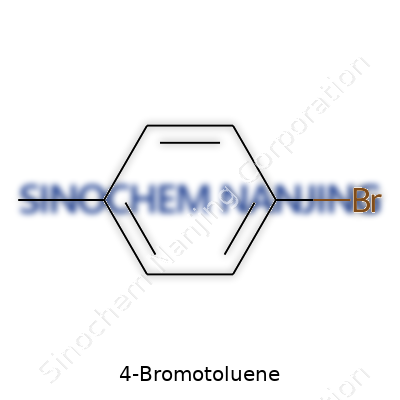
| Names | |
| Preferred IUPAC name | 1-Bromo-4-methylbenzene |
| Other names |
p-Bromotoluene para-Bromotoluene 1-Bromo-4-methylbenzene 4-Methylbromobenzene |
| Pronunciation | /ˈbrəʊ.məʊ.tɒl.juː.iːn/ |
| Identifiers | |
| CAS Number | 106-38-7 |
| Beilstein Reference | 1309243 |
| ChEBI | CHEBI:28426 |
| ChEMBL | CHEMBL15797 |
| ChemSpider | 6928 |
| DrugBank | DB07848 |
| ECHA InfoCard | ECHA InfoCard: 100.007.284 |
| EC Number | 202-877-5 |
| Gmelin Reference | 14241 |
| KEGG | C14357 |
| MeSH | D017908 |
| PubChem CID | 7236 |
| RTECS number | XS9625000 |
| UNII | 73A20A13OS |
| UN number | UN1993 |
| Properties | |
| Chemical formula | C7H7Br |
| Molar mass | 185.04 g/mol |
| Appearance | Colorless to pale yellow liquid |
| Odor | Aromatic |
| Density | 1.397 g/mL at 25 °C (lit.) |
| Solubility in water | Insoluble |
| log P | 3.6 |
| Vapor pressure | 0.4 mmHg (25 °C) |
| Acidity (pKa) | pKa ≈ 43 |
| Basicity (pKb) | 17.67 |
| Magnetic susceptibility (χ) | -62.0e-6 cm³/mol |
| Refractive index (nD) | 1.543 |
| Viscosity | 0.827 cP (20°C) |
| Dipole moment | 2.61 D |
| Thermochemistry | |
| Std molar entropy (S⦵298) | 331.9 J·mol⁻¹·K⁻¹ |
| Std enthalpy of formation (ΔfH⦵298) | 17.8 kJ/mol |
| Std enthalpy of combustion (ΔcH⦵298) | -4647.9 kJ/mol |
| Hazards | |
| GHS labelling | GHS02, GHS07 |
| Pictograms | GHS07 |
| Signal word | Warning |
| Hazard statements | H315, H319, H335 |
| Precautionary statements | P210, P240, P241, P261, P280, P301+P312, P304+P340, P305+P351+P338 |
| NFPA 704 (fire diamond) | 2-2-0 |
| Flash point | 72 °C |
| Autoignition temperature | 490°C |
| Lethal dose or concentration | LD50 (oral, rat): > 2000 mg/kg |
| LD50 (median dose) | Rat oral LD50: 6800 mg/kg |
| NIOSH | VO9450000 |
| PEL (Permissible) | Not established |
| REL (Recommended) | ACS Reagent |
| Related compounds | |
| Related compounds |
Toluene 4-Iodotoluene 4-Chlorotoluene 4-Fluorotoluene Bromobenzene 4-Bromoanisole |



