4-Bromophenol: Insight into a Core Chemical Tool
Historical Development
Chemists started using 4-Bromophenol in laboratories before the 20th century hit its stride. In those days, researchers exploring bromination reactions looked for molecules with a combination of reactivity and practical use in synthesis. Over time, its track record in organic chemistry grew, finding utility in both academic research and commercial manufacturing. By the 1950s, 4-Bromophenol secured a spot in many synthetic schemes, supporting the booming pharmaceutical and dye industries that called for phenolic derivatives with bromine substitution. Its utility expanded still more as the emphasis on fine chemicals and specialty organic compounds grew across Europe, North America, and Asia.
Product Overview
4-Bromophenol carries a reputation for versatility. As a white to light tan crystalline solid, it comes across as a standard lab staple but handles more complex chemistry than its appearance suggests. Chemists rely on this material to introduce bromine atoms to aromatic rings, by way of simple or multi-step syntheses. In commercial circles, manufacturers source high-purity 4-Bromophenol for drug intermediates, specialty dyes, agricultural treatments, and advanced polymers. Its availability in bulk and lab-scale packaging ensures that research and production settings both stay supplied.
Physical & Chemical Properties
The solid nature of 4-Bromophenol helps with storage and transport. Melting at around 64°C and boiling near 238°C, it keeps its stability at typical lab and plant temperatures. The molecular weight hits about 173.01 g/mol. Slightly soluble in water, this compound shows much better solvency in organic liquids such as ethanol, ether, and chloroform. The molecule itself—armed with a para-substituted bromine and a hydroxyl group—sets the stage for high reactivity during coupling reactions, electrophilic substitutions, and protective group strategies.
Technical Specifications & Labeling
Quality oversight keeps supply chains honest. Most suppliers ship 4-Bromophenol in sealed containers fitted with tamper-resistant features, labeling every container with CAS number 106-41-2, chemical purity (usually clocking in above 98%), and safety notes for handling. Batch-specific details, such as lot number and analysis certificate, drive traceability and compliance on every shipment. Lab managers and production supervisors need this data on hand to comply with regulations and support audits.
Preparation Method
Lab recipes for 4-Bromophenol stretch back through several decades. Standard practice involves brominating phenol with elemental bromine under controlled conditions—limiting temperature, solvent, and reaction time to favor para substitution. Some researchers now deploy more sustainable or less hazardous reagents: copper-catalyzed versions and approaches using N-bromosuccinimide have seen adoption, both at laboratory scale and in pilot plants. Reaction mixtures call for careful work-up, including filtration, washing, and recrystallization to ensure purity fit for downstream synthesis.
Chemical Reactions & Modifications
4-Bromophenol stands out as a flexible intermediate. Using transition metal catalysts, it joins with boronic acids in Suzuki couplings. In other contexts, strong bases facilitate ether or ester production, using 4-Bromophenol as a nucleophile. The bromine itself welcomes magnesium insertion, producing Grignard reagents that help build carbon frameworks for pharmaceutical chemistry. The phenolic -OH can be protected, methylated, acylated, or sulfonated. This array of transformations puts chemists in the driver’s seat for assembling complex molecules.
Synonyms & Product Names
4-Bromophenol often shows up under a range of alternate tags: para-Bromophenol, 4-Hydroxybromobenzene, or p-Bromophenol. International regulatory filings and suppliers may list it by its CAS number, 106-41-2, or its registry in IUPAC nomenclature: 4-Bromophenol. Trade names seldom diverge much, owing to its standardized role in chemical supply lines, though minor branding differences occasionally pop up in catalogs.
Safety & Operational Standards
Lab techs and operators handling 4-Bromophenol keep gloves and goggles in close reach. Accidental skin or eye contact may cause irritation. Ventilation prevents inhaling any dust, and proper disposal prevents environmental contamination. Adherence to workplace safety frameworks—OSHA in the US, REACH in Europe, and similar systems globally—means storing chemicals away from oxidizers, acids, and bases. Spill kits and emergency protocols matter as much as routine hazard training, since chemical exposure events have a way of catching even the experienced off guard.
Application Area
Pharmaceutical chemists regularly tap 4-Bromophenol to produce active pharmaceutical ingredients, advanced intermediates, and molar mass modifiers in drug discovery. Dye makers use it to develop colors that stick to fabrics, plastics, or leathers thanks to its aromatic scaffold. Pesticide researchers examine its role in modifying agrochemical backbones. Polymer scientists may introduce it to tweak thermal or electrical performance in specialty plastics. In analytical laboratories, it sometimes anchors derivatization reactions for GC or LC analysis, sharpening detection of related compounds.
Research & Development
University groups spend years optimizing reactions for higher selectivity and greener operations involving 4-Bromophenol. Current projects often probe its use in catalysis, synthesis of heterocycles, and design of more efficient ligands. Pharmaceutical teams chase after new bioactive compounds, using its brominated ring as both a functional handle and a pharmacophore. Regular conferences spotlight posters and talks about streamlined preparation methods and structure-activity relationship studies. Newer articles in journals reflect shifts in regulatory attitudes, sustainability, and digital chemistry modeling.
Toxicity Research
Toxicologists and regulatory scientists approach 4-Bromophenol with healthy respect. Its acute toxicity stays relatively low to moderate, but long-term or large-dose exposure presents risks. Animal studies reveal effects on the liver and kidneys, raising concerns for those making or handling the material on a daily basis. Ecotoxicity studies document slow breakdown in aquatic environments, suggesting runoff or spills could create downstream hazards for wildlife. These facts encourage responsible handling and continuing updates of Material Safety Data Sheets in workplaces.
Future Prospects
As synthetic chemistry trends shift toward greener, safer processes, 4-Bromophenol serves as both a challenge and an opportunity. Future work may deliver milder or even biomimetic methods for bromination that generate less waste, aligning with industry goals for sustainability. Computational design has begun to influence route planning, reducing byproducts and streamlining isolation steps. Regulatory momentum in Europe and North America pushes for tighter exposure limits and eco-friendly disposal, likely prompting innovations in containment and treatment technology. With demand for high-value pharmaceuticals, dyes, and niche polymers holding steady or rising, the role of 4-Bromophenol evolves alongside its users’ creativity and technical need.
What is 4-Bromophenol used for?
Inside the Lab: 4-Bromophenol’s Real Role
Spend any time in a research lab, and you’ll notice small white bottles labeled “4-Bromophenol.” The name sounds technical, but in many labs, this solid is a workhorse. 4-Bromophenol helps scientists build new molecules, especially when working on pharmaceuticals and dyes.
Backing Up Discovery
In the hunt for new medicines, chemists rarely start from scratch. They depend on compounds like 4-Bromophenol—part of a group called halogenated phenols. These molecules have a bromine atom hooked up to a benzene ring, which makes them easy to use for creating bonds with other chemicals.
I saw graduate students using 4-Bromophenol as a starter for Suzuki coupling reactions. This isn’t just inside baseball—these reactions let chemists piece together complicated ring systems needed for cancer drugs and antibiotics. One student at my university published work based on molecules built directly from this compound. Many labs reference the same material because it’s dependable and reacts in a predictable way.
Link to Manufacturing
Companies making dyes and pigments also turn to chemicals like 4-Bromophenol. Its structure gives bright, stable colors when chemists tweak it to craft new dyes. Textile plants use these derived dyes for cloth that resists fading. So, while most people never think about the base ingredients in their blue jeans or professional sports jerseys, the science tracks back to 4-Bromophenol and cousins in its family.
Making Diagnostics Possible
4-Bromophenol’s reach stretches to lab tests run in hospitals and clinics. Certain biochemical assays use it to identify proteins or other molecules in patient samples. In these scenarios, accuracy matters. Reagents built from this phenol produce reliable color changes, helping doctors catch diseases before symptoms run wild. The human element stands at the core—if the chemistry fails, the risk grows for misdiagnosis.
Environmental and Health Questions
The story doesn’t end with just the benefits. Halogenated phenols reveal some stubborn issues. Manufacturing plants that handle 4-Bromophenol produce waste that needs careful management. This compound breaks down slowly in nature, so spills or improper disposal can send it into rivers or soil, where it lingers. Exposure poses health risks for workers—skin contact or breathing dust brings irritation. Safety data guides everyone: gloves, masks, hazard labeling.
Some companies work hard to swap in less toxic chemicals, but options feel limited. Tighter rules and better waste capture systems help. Academic and industrial scientists run research aimed at greener alternatives. Maybe in the future, teams will invent similar molecules that break down quickly after use, or boast the same versatility without sticking around in the ecosystem.
Keeping an Eye on Responsible Use
As research pushes forward, 4-Bromophenol stays in heavy rotation for a reason. Its track record, versatility, and availability win trust. At the same time, the chemical's story shows where science delivers practical results and where responsibility cannot lapse. Ongoing improvements in safety, disposal, and substitutions deserve just as much attention as the molecule's ability to shape the future of medicine and technology.
What is the molecular formula of 4-Bromophenol?
Digging into Structure: More Than Just Letters and Numbers
4-Bromophenol packs a punch for such a small molecule. Its molecular formula is C6H5BrO. This little compound sits in the world of organic chemistry as a brominated phenol. The backbone features a benzene ring. Slap a hydroxyl group onto the fourth carbon and add a bromine atom right across from it. Suddenly, you’ve got a molecule with interesting reactivity, a clear identity, and real-world applications that go way beyond a chemistry textbook.
Why Molecular Formulas Shape Decisions
In a research lab, running into phenols is pretty common. Toss a bromine atom onto the ring, though, and the compound takes on a different personality. That Br atom brings heft and reactivity. Take pharmaceuticals, for example—adding bromine can open the door for a molecule to interact differently with enzymes or block a pocket that bacteria need for survival.
In my own experience, projects can grind to a halt if the formula is wrong. I remember a project back in grad school where we were screening phenolic compounds for antimicrobial properties. One mislabeled bottle turned out to contain 4-Bromophenol, not plain phenol. The difference in results was staggering—and traced right back to the presence of that bromine atom. That single atom transformed the compound’s activity and led us down a more productive path. This isn’t just a lesson for the lab—it’s a reminder that details like a single Br can change everything about what a chemical does.
Molecular Formula’s Role in Real-World Applications
Walk through a chemical warehouse, and each shelf tells a story. Those labels—C6H5BrO, C6H6O, C6H5ClO—look similar, but swap out the atom, and you swap out the hazard profile, the environmental handling, and even the price. For anyone involved with supply chains or safety, knowing exactly which atoms show up matters. Proving a batch is truly 4-Bromophenol, not another look-alike, keeps accidents at bay.
Making Chemistry Safer and Smarter
You can’t trace the path of 4-Bromophenol in the environment without its formula. Only with C6H5BrO written down do databases like PubChem or ChemSpider cough up useful safety sheets, regulatory advice, and storage tips. That’s not just helpful for scientists—it’s crucial for anyone working in industry or rescue services who might run into this compound after a spill or fire.
Students sometimes think these little formulas are just for passing a test. They’re not. Whether mixing a new batch in the lab, working with a manufacturer, or troubleshooting contamination in a water supply, the right formula spells out risk and guides the path to a solution. That’s knowledge you want in your corner, not buried in some dusty notebook.
Paths Toward Better Understanding
One lesson stands out: Take time to learn how molecular formulas link to physical properties and safety. Institutions can push for up-to-date chemical inventories and clearer labeling. Academic training would feel more connected to the real world if classrooms spent time walking through safety data sheets and regulatory requirements tied to specific formulas—like C6H5BrO. Double-checking these details pays off, whether you’re in a tiny high school lab or a bustling manufacturing plant.
Is 4-Bromophenol hazardous or toxic?
Understanding What 4-Bromophenol Is
4-Bromophenol, a chemical compound you might spot in lab supply catalogs, often shows up in research and some industrial processes. It comes as a white to light brown crystal and carries a sharp, medicinal smell. Folks working in chemistry may handle it during syntheses or as a starting point for pharmaceutical development. Seeing a name that complicated, many assume it’s either safe or extremely toxic. Reality sits in between.
Handling Risks and Exposure
Skin and eye irritation happen quickly after direct contact. Breathing in dust exposes your nose and throat to strong irritation. Symptoms might feel mild at first but can ramp up if you keep getting exposed. Swallowing the substance poses its own risks; even small amounts bring stomach pain or nausea. Personal protective gear doesn’t just tick a box, it offers real protection. I remember slogging through an organic chemistry lab where a single drop of phenolic compound on the skin led to instant stinging—and a hasty dash to a rinse station.
Looking at Toxicity Data
Toxicity studies in animals show damage to liver and kidneys with repeated doses. The main route for danger comes with chronic exposure in poorly ventilated spaces or through careless handling. Short-term, accidental splashes cause agitation but rarely put people in danger unless large amounts get involved. Reports from workplace safety groups, like OSHA, have flagged the risks around inhalation and skin contact, pushing for limits in how much anyone can handle over a shift. Here’s a fact I found useful: the substance earns classification as “harmful” rather than instantly dangerous. It still calls for respect, not complacency. Breathing protection and gloves reduce the odds of trouble.
Why Regulation Matters
Agencies weigh hazard profiles using animal testing, recorded accidents, and chemical structure. For 4-bromophenol, the evidence stacks up enough for regulators to ask for caution but stops short of bans or severe restrictions. That means its hazards rest somewhere above table salt and beneath chemicals like formaldehyde. The fact that governments set workplace exposure limits signals the need for careful monitoring, especially for regular users.
Everyday Use and Environmental Impact
Outside the lab, no reasonable consumer will bump into a household product packed with 4-bromophenol. Industrial waste suffers more scrutiny. Fish and aquatic life absorb many halogenated phenols, potentially causing disruptions, so disposal routines must follow strict rules. I once helped with a waste audit at a research institute—bleach and neutralizers, rather than drains, closed the loop on phenolic disposal. That prevents accidental exposure and keeps the larger ecosystem safer. Local water treatment plants don’t easily clear out these compounds, so chemical handling guidelines become pivotal beyond just human health.
Simple Solutions for Safer Handling
Providing regular training, good ventilation, and suitable protective equipment helps anyone working near 4-bromophenol avoid most trouble spots. Emergency showers and eyewash stations back up those efforts. Spills get cleaned right away with chemical-absorbent pads instead of paper towels, then sealed for hazardous waste pickup. Most mishaps trace back to skipped steps or broken routines, not unpredictable behavior of the compound itself.
Final Thoughts on Safety
Ask any lab worker, and they’ll say the dangers fade with a healthy respect for procedure. 4-Bromophenol sits among many industrial chemicals that hold value but demand diligence. Problems never stem from the bottle on the shelf—it’s always how people interact with it. Keeping that in mind cuts risk down to size, making the hazards manageable for workers and the world around them.
How should 4-Bromophenol be stored?
Understanding the Stuff on the Shelf
4-Bromophenol sounds technical, but in the chemistry world, it’s familiar. It's a white or pale yellow crystal that's handy in labs, showing up in organic synthesis, dyes, pharmaceuticals, and research projects. The trouble often begins outside the textbook: people treat chemicals like generic jars and forget that a single slip—from broken bottles to wrong temperatures—can ruin not just the compound, but someone's whole day.
Real-World Risks: What’s the Big Deal?
Not all lab chemicals bring out chemical burns or explode; many, like 4-Bromophenol, fly under the radar but carry hidden risks. This compound’s vapors can irritate the eyes and skin. If some spills, breathe it in long enough and nausea kicks in. Once, I saw a grad student lose a whole morning after catching a lungful from a bottle left open nearby. The bottle hadn’t been properly capped, and nobody noticed the faint, musty smell at first. That memory alone sticks—one quick mistake delivers plenty of misery.
Temperature Isn’t Just a Number
Filing away bottles on a shelf seems normal. Trouble is, temperature swings can cause degradation or leaks. 4-Bromophenol should rest in a cool, stable spot—think below 25°C—where sunlight won’t sneak in. I’ve seen storerooms where sunlight heated up stockrooms by early noon, leaving once-pure chemicals clumpy, brown, or useless within a season. Light breaks down the compound too, so leave it exposed and the research budget just went out the window.
Picking the Right Container
Glass isn’t just tradition in chemistry—it matters here. 4-Bromophenol reacts with the wrong metals, so avoid metal containers. Keeping it dry proves just as important. Moisture that sneaks in turns the fine powder sticky and ruins experiments. Always keep that container tightly closed, using proper sealing—a quick twist on a loose lid wastes product and patience alike.
Avoid the Domino Effect: Protecting the Rest of the Lab
Cross-contamination infects chemical stocks quickly. I once saw a careless hand dip a spatula from a bottle of 4-Bromophenol straight into a second compound. That second jar contaminated the next experiment, setting off a chain reaction of botched results. Chemicals like 4-Bromophenol belong on shelves far from acids, oxidizers, or bases. Store close to agents like bleach or a strong acid, things can react in ways textbooks always warn about but people still forget. It’s a real mess to clean up.
What Works Best: Habits to Build On
Storing chemicals right begins with labeling. Big, clear, permanent markings help everyone see at a glance what’s in each container. I pick up the habit of double-checking labels, dates, and lids after seeing too many mystery jars. Invest in lockable cabinets that vent fumes safely outside. These cabinets cut down on accidental exposures, especially in busy labs where a crowd of hands rush through shelves daily.
Safe Storage: It’s Not Optional
In the end, chemical storage isn’t about memorizing safety manuals but building habits people remember long after lab orientation. Store 4-Bromophenol in glass, keep it cool, seal it tight, and never stack it near incompatible chemicals. These small steps stop big problems before they start, preserving research and keeping everyone healthy.
What are the common physical properties of 4-Bromophenol?
A Closer Look at 4-Bromophenol
4-Bromophenol shows up as a solid material with a lot to say about itself before chemistry even gets started. That sharp, slightly medicinal smell hits your senses when you open a container, hinting at its connection to the phenol family. Most people working with 4-Bromophenol will tell you it forms white needles or plates, and it feels slick to the touch, almost waxy. These details matter—safe handling depends on recognizing substances by sight and smell before trusting any label.
Melting and Boiling Points
Temperature plays a big role in any lab or industrial process. 4-Bromophenol melts at around 64 to 68 degrees Celsius. For those working in a room just above freezing, that means this material can transition from a stable solid into a clearer, sticky liquid right in your palm, especially under warm lights or in an overstocked storeroom. If you plan to distill or react it, expect it to boil around 238 to 242 degrees Celsius. These numbers call for careful planning since many heating baths and flasks can push temperatures past these thresholds faster than expected.
Solubility and Handling in Everyday Lab Use
Not everything wants to dissolve easily in water, and 4-Bromophenol proves that with its modest solubility. Toss it in cold water, and it barely budges—less than 5 grams per liter. Yet it disappears into most organic solvents, especially alcohols and ethers. This behavior proves useful in organic synthesis, making it easy to separate from water-based mixtures without much fuss. Safety-wise, the low solubility in water helps limit accidental spread from spills, but it doesn't mean you should get careless—a good fume hood and gloves never hurt.
Density and Stability
With a density of about 1.77 grams per cubic centimeter, 4-Bromophenol sinks in water rather than floats. Heavy, compact crystals collect at the bottom of beakers and bottles, so it never goes airborne without force. In my own experience, this makes cleanup after weighing straightforward—no fluffy powder floating up your nose, just solid matter ready to be brushed into the waste. Stability at room temperature means storerooms rarely see bottles degrade or leak if stoppers fit snugly and light stays off the glass.
Color, Odor, and Practical Implications
White or off-white needles catch the eye and quickly differentiate 4-Bromophenol from the yellow or amber tints seen in some other brominated aromatics. The sharp, almost hospital-like scent sets it apart from common solvents and helps prompt quick reactions if a spill or vapor escape occurs—something every chemist learns to respect quickly. With experience, it's clear that this combination of color, crystalline form, and unmistakable odor helps users avoid costly confusion with other reagents that lack the same warning cues.
Addressing Safety and Disposal Concerns
Gloves, eye protection, and open airflow go a long way when handling solids with strong odors and potent chemistry like 4-Bromophenol. Since it falls in the phenol family, contact with skin or eyes burns and lingers. People working with it should double-bag waste and stick to approved disposal channels—local rules tend to treat halogenated organics with special caution. Training matters: new users gain confidence by learning to trust their senses and cross-check bottle labels. Mistakes drop when these habits get passed on.
Possible Solutions for Challenges
To manage risks, storerooms and labs benefit from strong protocols: regular bottle checks, good labeling, and shared experience among staff. Fume hoods take the edge off strong smells, and quick action on spills prevents bigger headaches. For waste, on-site treatment or specialized removal teams keep things above board. Encouraging clear communication, frequent refreshers, and respect for what one's nose and eyes reveal—these small steps add up to safer, more effective work with 4-Bromophenol and similar compounds.
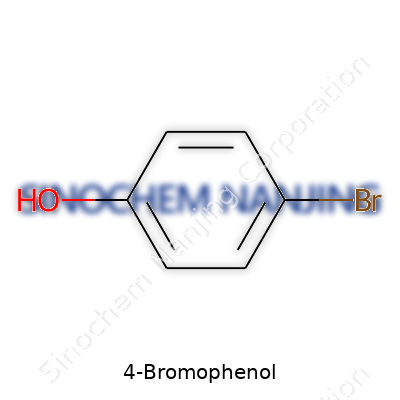
| Names | |
| Preferred IUPAC name | 4-Bromophenol |
| Other names |
p-Bromophenol 4-Hydroxybromobenzene p-Bromohydroxybenzene |
| Pronunciation | /ˌfɔːrˈbroʊməˌfiːnɒl/ |
| Identifiers | |
| CAS Number | 106-41-2 |
| Beilstein Reference | 1209227 |
| ChEBI | CHEBI:17705 |
| ChEMBL | CHEMBL458020 |
| ChemSpider | 1576 |
| DrugBank | DB03849 |
| ECHA InfoCard | ECHA InfoCard: 100.005.293 |
| EC Number | 202-161-8 |
| Gmelin Reference | 82257 |
| KEGG | C01596 |
| MeSH | D001967 |
| PubChem CID | 9163 |
| RTECS number | BX5600000 |
| UNII | Q4H4E2QE38 |
| UN number | UN2586 |
| Properties | |
| Chemical formula | C6H5BrO |
| Molar mass | 173.01 g/mol |
| Appearance | White to light yellow crystal or powder |
| Odor | phenolic |
| Density | 1.49 g/mL at 25 °C (lit.) |
| Solubility in water | slightly soluble |
| log P | 1.96 |
| Vapor pressure | 0.0025 mmHg (25°C) |
| Acidity (pKa) | 9.2 |
| Basicity (pKb) | 9.25 |
| Magnetic susceptibility (χ) | -77.0×10⁻⁶ cm³/mol |
| Refractive index (nD) | 1.595 |
| Viscosity | 0.87 mPa·s (20 °C) |
| Dipole moment | 2.61 D |
| Thermochemistry | |
| Std molar entropy (S⦵298) | 94.6 J·mol⁻¹·K⁻¹ |
| Std enthalpy of formation (ΔfH⦵298) | –36.7 kJ·mol⁻¹ |
| Std enthalpy of combustion (ΔcH⦵298) | -3440.8 kJ/mol |
| Hazards | |
| Main hazards | Harmful if swallowed, causes skin and eye irritation, may cause respiratory irritation. |
| GHS labelling | GHS02, GHS07 |
| Pictograms | GHS06 |
| Signal word | Warning |
| Hazard statements | Harmful if swallowed. Causes skin irritation. Causes serious eye irritation. Harmful to aquatic life with long lasting effects. |
| Precautionary statements | Precautionary statements: P261, P280, P305+P351+P338, P304+P340, P308+P311 |
| NFPA 704 (fire diamond) | 2-2-0-W |
| Flash point | 113°C |
| Autoignition temperature | 1120°F (604°C) |
| Lethal dose or concentration | LD50 oral rat 2850 mg/kg |
| LD50 (median dose) | LD50 (median dose): Rat oral 2050 mg/kg |
| NIOSH | BQ9625000 |
| PEL (Permissible) | Not established |
| REL (Recommended) | 0.1-1 mg/m³ |
| Related compounds | |
| Related compounds |
Phenol 4-Iodophenol 4-Chlorophenol 4-Fluorophenol |



