4-Bromobenzenesulfonyl Chloride: A Comprehensive Commentary
Historical Development
The history behind 4-bromobenzenesulfonyl chloride maps back to the broader evolution of organosulfur chemistry. In the twentieth century, chemists looking to modify aromatic rings reached out for tools crafted from both sulfonation and halogenation. Early research on sulfonyl chlorides—driven by dye and pharmaceutical industries—paved the way for this compound’s discovery. Over time, researchers fine-tuned bromination and chlorosulfonation techniques, giving rise to a reagent both reactive and versatile. These breakthroughs supported not just academic exploration but also scaled up fine chemical production, especially as interest grew in custom intermediates and new pharmaceutical syntheses.
Product Overview
4-Bromobenzenesulfonyl chloride offers a reactive option for chemists working on complex molecules. The molecule pairs a bromine atom with a sulfonyl chloride group on a single benzene structure, balancing strong electrophilicity and leaving group potential. Laboratories and specialty chemical suppliers recognize this molecule as key in assembling or modifying sulfonamides, aryl sulfones, and bioactive scaffolds. Professional circles may see other names like p-bromobenzenesulfonyl chloride, but the function remains consistent: a solid foundation for voluntary molecular architecture.
Physical & Chemical Properties
This compound stands as a light yellow crystalline solid, boasting a strong, sharp odor reminiscent of many sulfonyl chlorides. It melts between 70 and 74°C and dissolves moderately in common organic solvents such as dichloromethane and chloroform. Moisture triggers hydrolysis, which releases corrosive hydrogen chloride gas. Its bromine atom commands attention, not as decoration, but as a functional modification point. The dense structure pushes its molecular weight to 255.53 g/mol. Stability under anhydrous conditions comes with a caveat: exposure to water or base can break it down quickly, so careful storage makes a real difference during handling.
Technical Specifications & Labeling
Producers typically specify this compound for high purity—usually above 98%—to avoid complications in sensitive syntheses. Common package sizes range from glass bottles for lab use to drums for industrial needs. Labeling requires clear hazard warnings, including corrosivity and irritancy. Shipping regulations call for robust sealing and secondary containment. Quality control teams often check melting points, sulfonyl chloride content, and impurity profiles, pushing suppliers to offer certificates of analysis. These steps help users trust what goes into their work, especially when one batch can shape project outcomes for weeks or months.
Preparation Method
To produce 4-bromobenzenesulfonyl chloride, chemists usually start with bromobenzene as a raw material. Chlorosulfonic acid serves as the sulfonylating agent, reacting readily with the para position on the aromatic ring. This process, conducted under cooled and controlled conditions, draws on both rigorous stoichiometry and a keen sense for contamination. After the sulfonation step, thionyl chloride or phosphorus pentachloride often acts as the chlorinating agent, swapping out hydroxyl groups for more reactive chlorides. Final purification requires careful distillation or recrystallization, yielding a product ready for precise synthetic work downstream.
Chemical Reactions & Modifications
In organic synthesis, 4-bromobenzenesulfonyl chloride plays dual roles—as a sulfonylation agent and as a versatile building block. It reacts easily with amines to form sulfonamides, a vital motif in biological chemistry and pharmaceutical development. The bromine offers a launching pad for further functionalization: chemists frequently turn to Suzuki, Sonogashira, or Heck couplings to fuse diverse aromatic systems in a controlled, stepwise fashion. Whether introducing biaryl linkages or building complex heterocycles, the molecule stands ready for directed reactions that standard sulfonyl chlorides cannot handle.
Synonyms & Product Names
4-Bromobenzenesulfonyl chloride circulates under several names. Chemists recognize it as para-bromobenzenesulfonyl chloride, 1-bromo-4-sulfonyl chloride benzene, or by its registry number in major chemical catalogs. Across national borders and supply chains, standardized identifiers ease procurement and regulatory compliance. For anyone navigating literature or online chemical markets, learning the spectrum of names smooths the process, reducing chances for error or misordering.
Safety & Operational Standards
This chemical demands real respect in the laboratory. Direct contact causes painful burns; inhalation or ingestion provokes severe respiratory and gastrointestinal hazards. Proper practice means reaching for gloves, goggles, chemical aprons, and a well-ventilated fume hood—every use, every time. Emergency protocols urge immediate water rinses and rapid medical consultation if exposure occurs. Additionally, disposal procedures require neutralization, not simple washing down the drain. Such handling procedures don’t just protect people in the lab—they also support institutional compliance with occupational safety standards and environmental regulations.
Application Area
Researchers and industrial chemists pull this product off the shelf for drug discovery, crop protection, and material sciences. Sulfonamide antibiotics often take shape through intermediates similar to this compound. The coupling potential of its bromine group opens routes to dyes and pigments with high colorfastness, as well as polymers with tailored thermal or electronic properties. Medicinal chemistry leverages it to assemble kinase inhibitors, protease blockers, and custom molecular probes—the kind of new molecules that push the edges of pharmacotherapy and diagnostics.
Research & Development
Academic groups rely on 4-bromobenzenesulfonyl chloride for synthetic campaigns targeting novel compounds. Research publications continue to document its role in assembling functionalized aromatic frameworks, with patents linking its use to new leads in antimicrobial, anti-inflammatory, and anticancer therapies. Some R&D teams strive to improve process efficiency or substitute greener solvents, reflecting growing pressures for sustainable chemical manufacture. Innovation circles increasingly spotlight cross-coupling chemistry that starts from this reagent, frequently connecting the dots between raw creativity in synthesis and the needs of applied science.
Toxicity Research
Toxicologists describe skin, eye, and respiratory tract injury consistent with other sulfonyl chloride reagents. Short-term exposure leads to acute irritation, often escalating to deep tissue damage if unaddressed. Animal studies show adverse effects on mucous membranes, raising questions about chronic workplace exposure and environmental contamination. Agencies like OSHA and REACH include this compound on lists requiring specific precautions and reporting. While data on long-term carcinogenicity or reproductive toxicity remain limited, the compound’s aggressive reactivity flags it for continued study—responsible stewardship in laboratory and manufacturing settings will always depend on up-to-date toxicological evaluation.
Future Prospects
New frontiers in organic synthesis and pharmaceutical discovery continue to drive demand for flexible intermediates like 4-bromobenzenesulfonyl chloride. Green chemistry initiatives prompt questions about safer reagents and cleaner transformations, nudging manufacturers to revisit both process conditions and byproduct management. The compound’s role in evolving cross-coupling methodologies points toward more efficient, less wasteful syntheses in the years ahead. Down the road, advances in automated synthesis could standardize its use even further, enabling more labs to access tailored building blocks on demand. Smart stewardship and continual safety investment will help balance progress with the realities of human and environmental health.
What is the chemical formula of 4-Bromobenzenesulfonyl Chloride?
Why Chemical Formulas Matter
Chemistry can look intimidating at first glance, filled with symbols and numbers that seem to have their own secret code. That code holds a lot of power because it tells the story of every molecule—right down to how atoms bond to form something brand new. Take 4-Bromobenzenesulfonyl chloride: the name gives clues about what’s going on, but it’s the chemical formula that truly lays things out. This compound’s formula, C6H4BrSO2Cl, reveals its inner workings. There’s a benzene ring at the core, with four hydrogens, a bromine atom, a sulfonyl group, and a chlorine atom. Each of these features means something—especially if you spend time in a lab or work with organic chemicals.
Peeling Back the Name
The structure isn’t there just to please chemists. It guides how the compound behaves and what risks it carries. On the benzene ring, the “4-bromo” part means a bromine atom sits across from a sulfonyl chloride group. You learn very quickly in hands-on chemistry that changing just a single atom’s position can flip a molecule’s behavior. For example, shift bromine around the ring, and you get different reactions—sometimes more intense, sometimes milder.
Where It Shows Up and Why It’s Vital
You might think these kinds of chemicals stay locked away in academic labs, but they end up woven into real-world products. In fact, sulfonyl chlorides play a big role in pharmaceuticals and dyes. Sometimes students in university labs need 4-Bromobenzenesulfonyl chloride to build more complicated molecules. Even more practically, these compounds help chemists add sulfonyl groups onto other structures—a trick that powers a lot of new drug discoveries.
Balancing Use and Safety
From first-hand experience, it doesn’t take long working with this substance to notice the need for care. That chlorine atom links to the ring through a sulfonyl group. The result? You get a reactive molecule, eager to take part in acylation reactions. Without proper ventilation or gloves, exposure spells out trouble, ranging from skin irritation to worse. The Occupational Safety and Health Administration (OSHA) and similar agencies maintain strict guidelines based on solid, peer-reviewed research. Safety data sheets often cite both the hazards and first-aid measures, demanding that people understand not just the formula but its real-world impact.
Making Chemistry Work for Everyone
Understanding the structure and formula of molecules like 4-Bromobenzenesulfonyl chloride isn’t about memorizing names—it's about making smarter, safer decisions. In educational settings, clear instruction about chemical structure and handling doesn’t just protect students; it prepares them to think like problem-solvers. The same logic applies to industry and research: the more people know about the molecular makeup, the more innovative—and safe—the work becomes.
Moving Toward Safer and More Effective Solutions
To address the challenges these potent chemicals bring, organizations need to keep refining their training and sharing practical information. Time spent on lab demonstrations and safety drills, with an emphasis on the specifics of substances like C6H4BrSO2Cl, pays off in fewer spills, fewer injuries, and smarter experimental design. Through firsthand observation, mentors and seasoned researchers can model the level of respect that these substances deserve. Continuous feedback among team members closes knowledge gaps and advances the responsible use of these kinds of chemicals.
What are the main applications of 4-Bromobenzenesulfonyl Chloride?
Shaping Modern Organic Chemistry
Digging into the toolkit of organic synthesis, it’s hard to overlook all that 4-Bromobenzenesulfonyl chloride brings to the table. Chemists often rely on this molecule to make sulfonamides, which show up in everything from pharmaceutical research to agricultural compounds. In my days working with synthetic labs during college, I remember the deep respect folks had for reliable intermediates like this one; they bridge lab-scale trials and real-world applications.
Fueling Drug Discovery and Development
Medicinal chemists often look for ways to tailor small molecules to interact with proteins in a precise way, hoping to fight disease or reduce side effects. 4-Bromobenzenesulfonyl chloride helps create intricate structures, because its sulfonyl chloride group reacts cleanly with amines, building sulfonamides with high yield. According to several peer-reviewed articles, sulfonamide drugs remain critical for undermining bacterial resistance or managing chronic illnesses, such as diabetes. The bromine group offers a handle for further modifications, letting chemists swap in other atoms or groups to probe therapeutic possibilities.
Chemical Biology and Bioconjugation
As biotechnologists study how enzymes tango with drug-like molecules, they reach for reactive intermediates that offer both stability and the ability to “click” together diverse pieces. 4-Bromobenzenesulfonyl chloride enters here as a crosslinker; it reacts with proteins or peptides, helping build custom probes. These probes support imaging studies or unravel tougher diseases. Facing experimental uncertainty, researchers lean on compounds proven to keep side reactions in check.
Materials Science: Building from the Ground Up
Step into the world of high-performance polymers and specialty coatings, and the demand for tailored chemical tools grabs attention right away. 4-Bromobenzenesulfonyl chloride fits into the process for adding sulfonyl or bromo groups onto larger structures. Some academic labs have explored advanced membranes for batteries, where the exact arrangement of sulfonyl groups controls how ions slip through. Reports in journals like Macromolecules describe its role in tuning physical properties. Being able to adjust these features at the molecular level shapes the strength, flexibility, or chemical resistance of finished products.
Fine-tuning Advanced Reagents
While some specialty syntheses look daunting on paper, chemists turn to trusted reagents to cut through complexity. This sulfonyl chloride behaves as a selective electrophile, allowing researchers to add or swap in tailored molecular fragments. This quality finds value in "late-stage functionalization," where key steps happen after most of a molecule is already built. My own brief stint at a CRO showed how valuable it was to have intermediates that react predictably, since time and material cost pile up fast when troubleshooting failed reactions.
Toward Safer, More Effective Chemistry
Handling reactive chemicals like 4-Bromobenzenesulfonyl chloride does call for proper training and equipment—no way around that. Several safety manuals urge wearing gloves and goggles, since these sulfonyl chlorides can irritate skin or eyes. Many companies have shifted to closed-system manufacturing, cutting down on unnecessary exposure and waste. Smoother workflows and better training can help labs get the most from these molecules, while keeping risks down.
Moving forward, researchers keep searching for milder, greener alternatives, but so far, this compound keeps a prized spot thanks to its dependable reactivity and the sheer range of transformations it supports. Knowledge grows fastest when hands-on experience and scientific literature work hand in hand.
What are the storage and handling precautions for 4-Bromobenzenesulfonyl Chloride?
Reality of Dealing with Reactive Chemicals
4-Bromobenzenesulfonyl chloride belongs on a list of compounds that deserve respect, not just for their chemistry but for the risks they bring into a workspace. Anyone who has handled reactive chlorinated compounds in a lab knows the anxiety that creeps in when dry crystals sit next to a humid window, or containers lose their labels. The stories you hear in research—of ruined experiments or worse, lab accidents—aren’t just scare tactics. A single overlooked precaution turns a routine job into a lesson nobody wants to repeat.
Always Store in the Right Environment
Humidity and moisture cause serious problems here. 4-Bromobenzenesulfonyl chloride doesn’t just mind getting wet—it reacts, releases corrosive hydrogen chloride gas, and leaves behind a gooey mess. Dry, well-ventilated storage protects both the reagent and the people handling it. Shelves in designated chemical cabinets, away from water lines or sources of accidental splash, help keep things safe. Laboratories use dedicated desiccators or sealed containers, even tossing in silica gel or other drying agents, to create that security against airborne moisture.
Heat speeds things up for reactive chemicals. Keep it cool, and keep it out of direct sunlight. In my own research days, every refrigerator used for chemicals had a clear label—no drinks, no food, only for reagents. Simple precautions like this help avoid cross-contamination or curious hands rummaging where they shouldn’t.
Labeling and Segregation
Confusion causes more accidents than malice or carelessness. A clear, bold label with the chemical name, hazard symbol, and date of receipt cuts down the possibility of mistakes. 4-Bromobenzenesulfonyl chloride never sits next to acids, bases, or amines. It reacts with too many common reagents to risk accidental mixing. Supplies organizers who color-code or physically separate incompatible items make everything run smoother and safer—not just for the trained chemist, but for anyone who enters the space.
Simple Steps: Gloves, Goggles, and Ventilation
I can’t count how many times I heard “It’s just one scoop” right before someone regretted not gearing up. Nitrile gloves, chemical splash goggles, and lab coats aren’t negotiable. The compound stings sharply on contact, so splash protection matters. Good fume hoods pull away dust and vapors before anyone gets a whiff. Even tiny traces can cause coughing or eye irritation, so relying on open windows or fans is never enough under safety guidelines.
Spill Preparedness Makes a Difference
Even careful people have slipups. The best labs keep spill kits within arm’s reach. These include neutralizing agents that deal with acids, plenty of absorbents, and chemical-resistant trash bags. Training kicks in during a spill—back away, don the right personal protective equipment, stop the source, then clean. One time, a bottle fell from a shelf and cracked just a few feet away from me; our team handled it within minutes, avoiding injury or lost time because the right steps were second nature.
Disposal: Legal and Safe
Used or old 4-Bromobenzenesulfonyl chloride never goes down the drain or into regular trash. Most local regulations demand hazardous waste contractors for a good reason. Waste mixtures with unknowns become even trickier, so clear inventory and record-keeping help. Documentation, batch numbers, and responsible ordering all reduce leftover stock risks. In some universities, environmental health officers run safety checks and offer pickup days just for chemical waste—these programs save time and prevent unfortunate surprises.
Keeping Everyone Safe
Respecting 4-Bromobenzenesulfonyl chloride as more than just another reagent means fewer headaches and a safer lab. These practices aren’t extras or formalities—they build a culture where people watch out for themselves and each other, relying on proven steps to avoid accidents and make science possible for everyone involved.
What is the purity or available grades for 4-Bromobenzenesulfonyl Chloride?
Grades: More Than Just a Number
Pulling a jar of 4-bromobenzenesulfonyl chloride off a lab shelf, the first thing you check is the label: the purity percentage. Most chemistry majors and working chemists know that purity tells you whether you will spend the afternoon troubleshooting your reaction or actually getting the data you want. In the market, you'll often spot labels boasting values like 97%, 98%, or 99%. Sometimes suppliers use terms such as “reagent grade” or “analytical grade.” These words matter. Higher grades mean fewer byproducts, better reactivity, and often, more reliable research outcomes. In schools or resource-limited setups, technical or industrial grade floats around too, usually with purity dipping to 95% or lower.
I remember working through a multistep synthesis during grad school. The 4-bromobenzenesulfonyl chloride available was only about 96% pure. Each step, the impurities joined the ride, and midway through purification, my chromatography column turned into a sticky disaster. Starting out with 98% would have made my life easier, my yield higher, and the project less stressful. You don’t forget lessons like that.
Why Purity Difference Matters
Organosulfur compounds pick up water easily and can form tricky byproducts. Lower purity in 4-bromobenzenesulfonyl chloride sometimes means lingering residual solvents, traces of benzenesulfonic acid, or even polymerized material. In small-scale organic synthesis, those stray molecules can cause side reactions, extra work in purification, or wild deviations in yield. For pharmaceutical development and specialty chemicals, trace contamination wastes money and delays product release. Labs running analytical techniques such as NMR or mass spectrometry will spot contaminants quickly, turning what seemed like an easy synthesis into a multi-day cleanup.
The European Chemicals Agency and the US Environmental Protection Agency both urge clear reporting and consistent standards. You can find suppliers who publish full Certificates of Analysis (COAs) alongside safety data sheets. That extra information can reveal real batch-to-batch variability. For researchers chasing publishable results or products for market, that kind of transparency takes away much of the uncertainty.
Solutions That Really Help
Choosing higher grade chemicals improves consistency. Spending extra for 98–99% pure material brings less headache: fewer mystery peaks on chromatograms and cleaner reaction flasks. Reliable companies like Sigma-Aldrich, Thermo Fisher Scientific, and TCI Chemicals offer product lines that span from technical to analytical grade. Ask for a technical data sheet before placing any large order. Clarify with the supplier if the listed purity is by HPLC, GC, or titration—methods yield different numbers.
For smaller teams or cash-strapped labs, in-house purification through recrystallization or distillation can boost the purity a notch or two. Just beware—sulfonyl chlorides have a mean streak, fuming in humid air and irritating the skin. Always use gloves and a fume hood. Document your purification method with every batch, and track changes in reaction outcomes. Over time, you’ll see patterns emerge. This record can support better procurement decisions and long-term cost savings.
A Thoughtful Path Forward
Good science starts with clear information. Demanding high-purity chemicals empowers researchers to waste less time and money. Request Certificates of Analysis, push for honest labeling, and set expectations with suppliers. If you need reliable results with 4-bromobenzenesulfonyl chloride, don’t roll the dice with unknown grades. Make purity a non-negotiable—and watch your work run smoother.
What is the CAS number for 4-Bromobenzenesulfonyl Chloride?
Why Scientists Rely on CAS Numbers
In the chemical world, a substance can sport many names. Just look at 4-Bromobenzenesulfonyl chloride. Its official label might seem like a tongue-twister, but chemists know exactly what they’re working with thanks to a small yet mighty detail—the CAS number. For this compound, the unique number is 98-44-2.
People in labs use CAS numbers for a good reason. Chemical names tell part of the story, but there’s room for mix-ups, especially across different countries or industries. A CAS number speaks the same language everywhere. If you order 4-Bromobenzenesulfonyl chloride using that CAS number, you get the right stuff every time—no bad surprises upon opening the bottle.
What’s at Stake in Getting the Right Chemical
Years ago, one of my own lab mates ordered a reagent based on its common name and ended up with a similar-sounding but totally different chemical. The cost? A project delay, wasted resources, and a sense of frustration that could have been avoided. It doesn’t take much—a single digit out of place or two chemicals with near-identical names—to blow months of work.
CAS numbers don’t just protect lab work. They play a role in public health and environmental safety. Regulatory agencies track hazardous substances through these numbers. If a chemical spill takes place, responders punch that number into a database and pull up the information needed to keep people safe.
Where 4-Bromobenzenesulfonyl Chloride Fits In
This compound finds its home in organic synthesis. I have seen it show up as a building block for new drug candidates, specialty dyes, and even in research into new types of materials. Because it can be both reactive and hazardous, accuracy in ordering or handling becomes more than a paperwork issue—it’s a matter of safety.
Mistakes with the identity of this molecule can create supply chain hiccups for industries relying on precision—think pharmaceutical manufacturing or academic research groups with tight budgets. Every sector shares a need for clear and reliable product identification.
Tackling the Issue: Better Education and Technology
Getting familiar with CAS numbers early pays off in the long run. Chem students often glaze over those digits at first, focused more on learning reaction mechanisms or safety rules. But building good habits means less trouble later. I remember reviewing my orders three times before clicking submit, always double-checking against the CAS entry.
Technology helps, too. Advanced search features in supplier databases filter inventory by CAS number, cutting confusion out of procurement. Barcodes and RFID tracking on chemical bottles link back to those same identifiers, streamlining inventory checks and audits.
Taking Responsibility Beyond the Lab
Clear labeling doesn’t stop at chemical suppliers. Waste handlers, safety officers, customs officials, and even shipping companies benefit from this global standard. Tracking and documentation responsibilities don’t disappear after the bottle leaves the shelf. One wrong digit can mean a safety miss or regulatory violation, and people further down the chain pay the price.
By taking the CAS number seriously and using it every step of the way, we build a culture of accuracy. It’s a small decision that keeps laboratories, companies, and communities running smoothly.
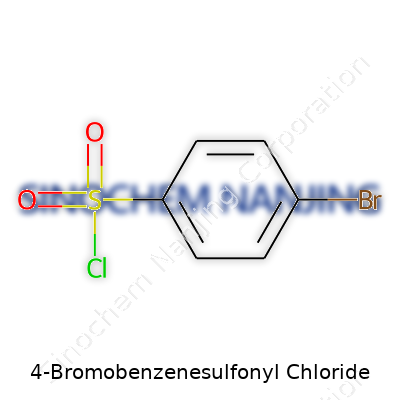
| Names | |
| Preferred IUPAC name | Benzenesulfonyl chloride |
| Other names |
Benzenesulfonyl chloride, 4-bromo- p-Bromobenzenesulfonyl chloride 4-Bromobenzenzenesulfonic acid chloride 4-Bromophenylsulfonyl chloride |
| Pronunciation | /ˈbrəʊ.moʊ.bɛnˌziːnˌsʌlˈfoʊ.nɪl ˈklɔːr.aɪd/ |
| Identifiers | |
| CAS Number | 98-07-7 |
| 3D model (JSmol) | `JSmol` string for **4-Bromobenzenesulfonyl chloride**: ``` CC1=CC(=CC=C1S(=O)(=O)Cl)Br ``` *Note: This is the SMILES string, which can be used in JSmol or other chemical viewers to generate a 3D model.* |
| Beilstein Reference | 1708813 |
| ChEBI | CHEBI:76270 |
| ChEMBL | CHEMBL1768889 |
| ChemSpider | 8810 |
| DrugBank | DB14107 |
| ECHA InfoCard | 03f4fdbe-b60c-48a1-82f0-9848408eae9d |
| EC Number | NA |
| Gmelin Reference | 122086 |
| KEGG | C14345 |
| MeSH | D015567 |
| PubChem CID | 70172 |
| RTECS number | CV8925000 |
| UNII | 2KH3678TB8 |
| UN number | UN3261 |
| Properties | |
| Chemical formula | C6H4BrClO2S |
| Molar mass | 287.54 g/mol |
| Appearance | White to light yellow powder |
| Odor | Pungent |
| Density | 1.82 g/cm³ |
| Solubility in water | Insoluble in water |
| log P | 1.3 |
| Vapor pressure | 0.0092 mmHg (25 °C) |
| Acidity (pKa) | -3.0 |
| Basicity (pKb) | 12.34 |
| Magnetic susceptibility (χ) | -63.0 × 10⁻⁶ cm³/mol |
| Refractive index (nD) | 1.615 |
| Viscosity | 1.65 cP (20°C) |
| Dipole moment | 2.61 D |
| Thermochemistry | |
| Std molar entropy (S⦵298) | 263.8 J·mol⁻¹·K⁻¹ |
| Std enthalpy of formation (ΔfH⦵298) | -83.7 kJ/mol |
| Std enthalpy of combustion (ΔcH⦵298) | -728 kJ·mol⁻¹ |
| Pharmacology | |
| ATC code | '' |
| Hazards | |
| Main hazards | Causes severe skin burns and eye damage. Harmful if swallowed, inhaled or in contact with skin. May cause respiratory irritation. |
| GHS labelling | GHS05, GHS07 |
| Pictograms | GHS05,GHS07 |
| Signal word | Danger |
| Hazard statements | H302 + H314 + H317 + H318 + H335 |
| Precautionary statements | P261, P264, P271, P280, P301+P330+P331, P303+P361+P353, P304+P340, P305+P351+P338, P310, P312, P321, P363, P405, P501 |
| NFPA 704 (fire diamond) | 3-0-1-W |
| Flash point | 72°C |
| LD50 (median dose) | LD50 (median dose): Oral rat LD50 = 820 mg/kg |
| NIOSH | BJ8925000 |
| PEL (Permissible) | Not established |
| REL (Recommended) | 0.1 mg/m³ |
| Related compounds | |
| Related compounds |
Benzenesulfonyl chloride p-Toluenesulfonyl chloride 4-Chlorobenzenesulfonyl chloride 4-Nitrobenzenesulfonyl chloride 4-Methylbenzenesulfonyl chloride |



