4-Bromoaniline: A Deep Dive
Historical Development
Chemistry has a way of revealing new directions with every decade, and the story of 4-Bromoaniline reflects this pace. Researchers started looking into bromo-substituted anilines soon after aniline’s discovery in the nineteenth century. The addition of a bromine atom in the para position promised reactivity that regular aniline couldn’t offer. The substance first came up in the literature as a building block for synthetic dyes and as an intermediate for pharmaceuticals. Early chemists wrestled with the practical aspects of selectivity and yield. At a time when reaction control felt like half guesswork, purification took center stage. By the mid-1900s, industrial processes matured, and 4-Bromoaniline appeared in catalogs for research labs. Its relevance only grew, driving further study into both its basic chemistry and applied uses.
Product Overview
4-Bromoaniline forms part of the haloaniline family—a set of substituted anilines distinguished by their reactivity and straightforward structure. The single bromine atom in the para position sets it apart for use in coupling reactions, creating links in multi-step organic syntheses. Labs use it for its versatility, whether the goal is to build up more complex aromatic compounds, create pharmaceutical precursors, or set up tailor-made catalysts. It stands out among aniline derivatives for its specific reactivity and manageable safety profile, making it a standard option for both research and industry.
Physical & Chemical Properties
This compound’s formula, C6H6BrN, gives it a mass of 172.02 g/mol. Solid at room temperature, it presents as off-white to pale tan crystals, shifting in color as the product ages or if it gets exposed to light and air. My lab experience taught me not to count on its color alone for purity; melting point—around 66 to 70 °C—offers a quick and reliable check. Solubility tells a more practical story. While it dissolves poorly in cold water, organic solvents like ethanol and ether handle it well. Structurally, the nitrogen atom on the amine group allows for hydrogen bonding, which matters in both its handling and its chemistry. That same amine group affects reactivity, paving the way for a range of modifications.
Technical Specifications & Labeling
Specifications can’t get ignored when a substance finds its way into pipelines at scale. Trusted suppliers provide detailed certificates of analysis. Purity levels typically exceed 98%, with identification tests based on infrared spectroscopy and HPLC retention times. Moisture content gets checked, as stray water impacts not only handling but also downstream synthesis steps. Labels carry storage guidelines: keep the product in cool, dry conditions and out of bright light. Safety data sheets highlight potential hazards, from skin and respiratory irritation to recommendations in the event of a spill or fire. Each lot receives a batch number for traceability, a step that research labs and regulatory bodies demand.
Preparation Method
Classic laboratory syntheses require straightforward steps but careful control. The team usually starts from aniline itself, using selective bromination to introduce the bromine in the para position. I’ve seen protocols that use dilute bromine in glacial acetic acid, favoring the formation of the para isomer. Temperature, mixing speed, and order of addition all influence the outcome. Side products like 2-bromoaniline complicate matters, so purification by crystallization becomes necessary. Some routes use copper-catalyzed couplings or other modern approaches, aiming for cleaner yields and fewer byproducts. In industrial settings, larger reactors and purification columns handle quantities beyond what a bench-top setup could manage.
Chemical Reactions & Modifications
The bromine on the aromatic ring opens plenty of doors for further functionalization. Cross-coupling reactions such as Suzuki and Buchwald-Hartwig use 4-Bromoaniline as a starting point. Palladium-catalyzed conditions enable the introduction of aryl, alkenyl, or alkynyl groups. The amino group brings in extra reactivity, allowing diazotization or subsequent Sandmeyer reactions that swap the amine for other substituents. For pharmaceutical development, these capabilities allow for scaffold modification and the creation of series for biological screening. The structure also makes it a candidate in the synthesis of specialty polymers, pigments, and fine chemicals. Each transformation shines brightest when the precise positioning of both bromine and the amine is necessary.
Synonyms & Product Names
Chemists might see this molecule listed by several names: p-Bromoaniline, 1-Bromo-4-aminobenzene, or 4-Aminobromobenzene. Each speaks to the same molecule, drawn from the IUPAC or common naming systems. In catalogs, one can expect to see "4-Bromoaniline" most prominently, but alternate names still pop up in older literature or across regulatory filings. CAS number 106-40-1 ties all these labels together and prevents confusion, especially important for shipping, storage, and compliance documentation.
Safety & Operational Standards
Like most aniline derivatives, 4-Bromoaniline has some risks. My hands-on lab days began with gloves, goggles, and a fume hood ready. The compound can irritate skin, eyes, and mucous membranes, and inhalation of dust or fumes needs to be avoided. Standard procedure has the material stored in tightly sealed containers, away from heat and incompatible substances. Spill kits—equipped with absorbent pads and nitrile gloves—hang nearby, ready for emergencies. Waste must be collected in labeled containers to keep any environmental contamination risk low. Training focuses on both safe handling and proper response if something goes wrong, as the compound can’t just be washed down the drain.
Application Area
4-Bromoaniline’s main pull lies in its status as an intermediate. Pharmaceutical industries rely on it for active ingredient production and the creation of agrochemical actives. Its reactive bromine helps anchor carbon-carbon or carbon-heteroatom bonds, a necessity for custom molecule synthesis. Colorant makers use it for dye intermediates, as the para substitution can control color properties and fastness. In research, it serves as a prototype molecule in reaction development, both as a substrate and a test case when exploring new catalysts. My colleagues in polymer science turn to it for specialty materials where both the amine and bromine groups let them tailor molecular weight or surface reactivity.
Research & Development
Research keeps pushing at the boundaries of what’s possible with aromatic amines. Work at the academic level explores reaction mechanisms and ways to improve selectivity. On the industry side, teams develop greener methods: use of less hazardous solvents, lower reaction temperatures, and fewer toxic waste streams. Scale-up complicates things—what runs clean at the gram scale often gets messy by the kilo. Instrumental analytics, like real-time NMR or HPLC, allow close monitoring. Environmental impact assessment gets built into the process. New patents show the push to engineer safer or more selective catalyst systems, which shortens synthesis time and cuts cost. Funding agencies reward proposals that show both efficiency and sensible waste reduction.
Toxicity Research
Toxicology shapes the future of any chemical’s use. 4-Bromoaniline draws concern for its potential as an irritant and because aromatic amines often carry a risk for methemoglobinemia—a blood condition that hampers oxygen delivery. Animal studies have shown high doses do lead to adverse effects, so occupational safety rules limit exposure. Human data remains limited, but protocols follow the precautionary principle. Regular monitoring and strict limits on workplace air concentrations help minimize risk. Research into safer analogs and improved detection methods for accidental exposure helps drive progress. Environmental teams check breakdown products to assess long-term risks; some studies focus on water treatment strategies to catch traces before they spread.
Future Prospects
Chemists continue to expand the toolkit with bromoanilines. Automation and flow chemistry move the field toward real-time optimization, potentially driving down cost and boosting safety. Interest continues to grow in sustainable synthesis, with biodegradable solvents and reusable catalysts emerging as practical options. AI-guided synthesis route prediction suggests ways to avoid hazardous intermediates altogether. Some researchers look at the environmental fate of substituted anilines, so new regulations or “green chemistry” certifications could shift production patterns. Market demand in pharmaceuticals remains steady, and advances in catalysis keep finding new niches for 4-Bromoaniline-based building blocks. The next era may see this simple aryl amine transformed with even less waste and higher selectivity, reshaping how both labs and industries build molecules.
What is 4-Bromoaniline used for?
A Look at Everyday Chemistry’s Hidden Players
4-Bromoaniline doesn’t show up on grocery lists or get much attention, but this strange-sounding compound shapes more daily life than most people guess. At first glance, it’s just an aromatic amine, a chemical cousin of aniline with a bromine atom attached. In real terms, it carves out a niche in labs and factories wherever new materials and molecules come to life.
The Role in Pharmaceuticals
Big and small pharmaceutical players turn to 4-bromoaniline because the bromine atom isn’t just for show. Chemists tweak this structure to produce intermediates for dyes, drugs, and research chemicals. Drug development doesn’t follow recipes—it’s a long path where every atom has a job. I’ve seen graduate students run out of patience trying to attach the right molecular piece in the right spot. Using a building block like 4-bromoaniline lets researchers test out new candidates faster.
For example, making certain antihistamines or antimicrobial drugs starts with modifying the aniline ring. Attaching bromine opens new ways to connect with other chemicals and form bonds that otherwise wouldn’t stick. Without these starting materials, the process would move much slower or not work at all. Lab-scale syntheses use it frequently, but the same chemistry gets adopted at bulk scale in pharmaceutical plants. The compound doesn’t wind up in the final pill, but its fingerprints are on plenty of tablets in pharmacy shelves.
From Dye to Display
Color comes from chemistry. Years ago, I worked in a dye chemistry lab—the building had old stains in corners, remnants of experiments testing which molecules absorbed which wavelengths. 4-Bromoaniline is prized in coloring chemistry because it lets manufacturers build unique chromophores, the chemical bits responsible for color. They pop up in industrial dyes, textiles, colored plastics, and specialty inks. Without this kind of reactive intermediate, modern textile colors and high-performance digital displays would look very different.
For engineers mixing up new electronic materials, this compound comes into play, too. Specialty polymers, liquid crystals, and conducting materials sometimes need halogenated aromatic precursors. As display screens become thinner or plastics get stronger, the trail often starts from basic molecules like this one.
Challenges and Responsible Handling
The world doesn’t need more mystery ingredients floating around—with laboratory chemicals, safety comes first. 4-Bromoaniline isn’t kid’s science kit fare. It can pose health risks, mostly through inhalation or skin contact. Smart labs follow good practice: ventilation, gloves, goggles. Factories keep a careful eye on air quality and disposal, since compounds with aromatic amines can be tough on the environment if handled carelessly.
Environmental stewardship matters. Waste containing brominated aromatics has to be neutralized or processed, not dumped. Rigorous guidelines exist in Europe, the US, and other regions. Years of mishaps taught scientists that being casual with disposal jeopardizes more than just the local water table. Every responsible chemist takes seriously what leaves the lab bench or factory wall.
Broad Impact from a Simple Molecule
Every innovation in medicine, fiber, or screen technology rests on supporting players like 4-bromoaniline. Without these intermediates, the supply chain for creative science might grind to a halt. Whisper-quiet in the background, this molecule connects research, health, and technology in ways most folks never see. Through better oversight, smarter chemistry, and real conversation about risk, these links can stay strong without tipping the world out of balance.
What are the safety precautions when handling 4-Bromoaniline?
The Real Risks in the Lab
Years of working with chemicals drive home a clear message: never underestimate what a compound can do to your body. 4-Bromoaniline might not sound as menacing as some lab staples, but it brings real risks. Direct skin contact can trigger burns and long-term exposure damages the liver and kidneys. Inhalation can lead to coughing, headaches, and even more dangerous respiratory trouble. I’ve seen someone rush to the eyewash station after a single careless splash—he never forgot his goggles again. Safety rules don’t come just from textbooks—they come from painful experience.
The Gear You Don’t Skip
Gloves matter. Nitrile gloves work best since 4-Bromoaniline seeps right through latex—those thin dentist’s gloves just don’t cut it. For me, lab coat sleeves stay snapped and tucked, and eye protection is not negotiable. You don’t want to bet your eyesight on safety glasses, so I reach for chemical splash goggles instead. In a small space, a fume hood becomes your best friend. Breathing in fumes is a gamble you can avoid, and labs never smell as clean as those glossy TV commercials suggest.
The Real Trouble: Dust, Spills, and Location
Powdery chemicals have a special way of sneaking onto your skin, clothing, and even the floor. I once brushed powder off a bench without gloves and regretted it; the skin tingled for hours. Big spills demand attention. Use spill pads and dedicated chemical cleanup gear—no paper towels from the staff kitchenette. It’s easy to want to save time or cut corners, especially late in the day, but shortcuts wake you up at 2am with regret.
Storing 4-Bromoaniline in the right spot changes everything. A cool, dry cabinet, away from acids and food, keeps bad accidents at bay. Labeling containers accurately means the whole team knows what they’re grabbing. Accidents often start when a coworker mistakes a bottle for something milder.
Emergency Plans with Teeth
Accidents happen. The only thing worse than being exposed is watching others scramble because nobody knows what to do. Eye flush stations need to be close by, and emergency showers should never be blocked by cardboard boxes or old equipment. Calling poison control or heading to urgent care becomes real, not dramatic, if exposure happens despite precautions.
Training and Team Vigilance
During my early lab years, a seasoned chemist told me, “Your memory is sharp, but fear is sharper.” Simple rules stick: never eat or drink around chemical storage, never touch your phone mid-experiment, and always warn others if work involves high-risk reagents. Regular safety briefings, even informal ones, help teams avoid complacency.
Asking for guidance beats pretending to know it all. Looking out for teammates—offering an extra glove, handing over spare goggles—builds a safer environment. Fact is, nobody handles 4-Bromoaniline or any hazardous compound alone. The best safety net is a culture of collective caution and shared responsibility.
Better Habits, Fewer Hazards
Every accident offers a lesson. Adopting strict habits—consistent PPE, dedicated cleanup, sharp labeling, smart storage—not only keeps people safe, it builds trust in the team and the workspace. Building up experience means seeing problems before they show—smell, color, a strange skin tingle—so you can stop trouble before it grows.
With chemicals like 4-Bromoaniline, real safety comes down to care, consistency, and a willingness to learn from every close call. Handling tough compounds makes you value training, vigilance, and the little steps that make all the difference.
What is the molecular formula of 4-Bromoaniline?
Why Chemistry Details Matter in Real Life
Chemistry shows up in unexpected places, even in the labels of household cleaners, prescription bottles, or do-it-yourself dye kits. Many people see long names or formulas and gloss right over them, but the information is more useful than it seems at first glance. One such example is 4-Bromoaniline, a chemical with the formula C6H6BrN. That single formula carries a story linking science, safety, and innovation.
Understanding the Structure
Chemists use these formulas not just for identification, but to predict how a substance behaves. 4-Bromoaniline starts with a benzene ring, a classic building block in organic chemistry. This ring carries two attachments—an amino group (–NH2) and a bromine atom—sitting across from each other like distant neighbors on a hexagon’s corners. Reading C6H6BrN tells you there are six carbon atoms, six hydrogens, one bromine, and a single nitrogen atom.
Learning about this in school, I remember my professor stressing that chemicals aren’t just lines and letters—they spark reactions, both in a beaker and the real world. With 4-Bromoaniline, the presence of the amino group opens the door to new bonds and other custom molecules in everything from dyes to pharmaceuticals. The bromine takes things further, bringing in the potential for targeted reactivity. Chemists care about these subtle differences because changing one atom changes the whole game.
Why the Formula C6H6BrN Carries Weight
Funding gets poured into research using compounds like 4-Bromoaniline because of their versatility. It’s common to see this structure pop up in the pharmaceutical industry, serving as a core piece in the synthesis of active drugs. Being able to pinpoint the exact formula matters because trace errors can lead to dangerous byproducts—a harsh lesson learned over decades of chemical research.
Mistakes in identifying structure have led to missteps in safety, health, and environmental protection. Even a single atom out of place changes toxicity, flammability, or environmental persistence. For example, swapping a hydrogen with another bromine makes a totally different molecule, both in name and impact. Strict attention to these formulas keeps labs safer, medicines more effective, and waste processes more predictable.
Supporting Safe and Creative Use
One big area where knowing the exact structure pays off is in safety data sheets. These documents protect workers and the environment by breaking down the right way to handle, store, and dispose of each compound. 4-Bromoaniline's formula doesn’t just float in a textbook—it tells professionals how to wear the right gloves, equip labs with ventilation, and recognize warning signs in case of a spill.
With all the press about pollution and microplastics, the nitty-gritty of chemical structure leaves a fingerprint that sticks around. Researchers track molecules like 4-Bromoaniline as they move through air, water, or living things. Understanding the formula helps design greener reactions, recycle or neutralize hazardous products, and develop regulations that actually work.
Proactive Solutions Through Chemistry
Transparency in labeling and education pays off. Teaching the meaning behind these formulas in school and on safety data sheets makes a difference beyond the lab. Teams in both research and industry should advocate for clearer chemical communication in products and waste streams. Moving forward, integrating advanced tracking of molecules and investing in safer alternatives based on well-understood core structures could head off problems before they start.
For chemists and non-chemists alike, C6H6BrN isn't just a formula for 4-Bromoaniline—it's a signal to pay attention, to double check, and to keep learning about the everyday world that chemistry builds.
How should 4-Bromoaniline be stored?
Understanding the Risks
4-Bromoaniline looks pretty routine on paper, but its hazards deserve respect. I remember my early days in the lab—one whiff of a poorly sealed amine knocked any casual attitude right out of me. This compound brings skin and respiratory threats on top of toxicity if it finds a way inside your body. It’s not just about personal exposure, either. Improperly stored, 4-Bromoaniline leaches into the air, contaminates surfaces, and sets up a chain reaction of headaches for research and facility safety.
Container Choice Makes or Breaks Safety
Many people just grab any old glass bottle. That’s risky. I learned fast that airtight, chemical-resistant containers stop the slow escape of dangerous vapors. Polyethylene bottles or amber glass work well, especially with tight-fitting caps. That amber tint isn’t just for show; it protects against light, which can degrade the chemical over time. One colleague left a clear bottle near a window—weeks later, not only did the chemical change, but the odor had creeped all over the bench. That mistake meant a full workspace decontamination and wasted material.
Location: Out of Sight, Never Out of Mind
So many accidents start because someone leaves reactive or toxic compounds on the wrong shelf. 4-Bromoaniline belongs locked in a flammables cabinet or another dedicated chemical storage area, away from heat sources, oxidizers, and acids. I’ve walked into research spaces where benches overflowed with open bottles, and that was asking for trouble. Temperature matters too—keep it cool and dry, out of direct sunlight, because excess heat speeds up chemical breakdown and fumes.
Label Everything—No Shortcuts
A sharpie scrawl isn’t enough for a hazardous solid. Every container should have the full chemical name, concentration if it’s in solution, date received, hazard warnings, and your contact information. I’ve picked up mystery jars before and felt that anxiety about what might spill out. Labels prevent confusion in an emergency and make sure that anyone (from coworkers to firefighters) can act fast and smart.
Regular Checks Save Money (and Health)
Even with careful storage, chemicals tend to outlast good habits. Schedule a routine check of inventory. Hunt for crystallization around lids, cracked containers, or label smudges. Replace anything if needed—one compromised seal, and the whole cabinet risks contamination. In my experience, neglecting checks leads to expensive disposal problems and, worse, potential exposures.
Training Sets the Tone
None of these measures stick without regular training. Every new person who sets foot in the lab should learn storage basics. I’ve seen sharp students trip up after a single rushed handoff, missing the point that safety procedures carry over to everyone who shares the space. Well-organized workspaces usually reflect consistent training, not luck or a rigid list taped to the wall.
Why It All Matters
Neglecting proper storage doesn’t hurt just the person who made the mistake. The whole work environment risks contamination, expensive fixes, and even hospital visits. Simple steps like using the correct containers, storing in safe places, checking inventories, and labeling clearly help everyone keep risks low. Once safety becomes routine, labs run smoother, with more energy spent on science and less on cleaning up avoidable problems.
Is 4-Bromoaniline hazardous to health or the environment?
Getting To Know 4-Bromoaniline
4-Bromoaniline shows up in chemistry labs and some specialty manufacturing spaces. Picture a white or pale yellow powder, not something you’ll find in the kitchen cupboard. The name alone hints at a pretty serious molecule—part of a family that can pack a punch in the wrong setting. Many folks who work around chemicals know to show some respect for compounds with both bromo- and aniline in their names. Still, sometimes, curiosity or work brings you close.
Health Risks—More Than Meets the Eye
Exposure to this chemical often happens by accident. Skin contact, breathing in dust, or even a little left on gloves can matter. Anilines as a group have a track record of causing headaches, dizziness, and an odd blue tint to the lips if things get out of hand—a sign of methemoglobinemia, which messes with the blood’s ability to move oxygen. Some research suggests 4-Bromoaniline could have similar effects, though it hasn’t landed in the public spotlight like some of its chemical cousins.
Years spent following chemical safety news and reading scientific journals made something very clear: diagnosis often comes late because symptoms don't look dramatic at first. In real life, accidents at work—especially in labs with lax safety rules—usually look boring until somebody starts feeling strange. OSHA and the CDC encourage gloves, masks, and fume hoods for precisely this class of substances. The possibility of cancer has loomed over aniline compounds for decades. Although 4-Bromoaniline itself isn’t classified as a known carcinogen, it shares enough traits to make toxicologists cautious.
The Environmental Angle—Persistent and Tricky
The environmental issue mostly comes down to what happens after use. This molecule doesn’t just break down harmlessly in the soil or water. Wastewater from factories or research facilities can carry it downstream. Fish and bugs living in the area start to feel the ripple effects—stunted growth, nervous system problems, sometimes death. Studies have shown that aromatic amines stick around for years in sediments when nobody takes the time to clean up.
A big worry comes from the compound's ability to persist and move up the food chain. Testing from environmental groups has found related anilines in rivers near chemical plants. These findings lead to calls for tighter discharge rules and better treatment plants. The message is clear: even “minor” chemicals show up later in bigger ways than anticipated.
Stronger Safety Can Make a Real Difference
Nobody expects miracle solutions, but straight talk leads to real improvements. Working with a lab team showed the power of consistent training—every new student, no exceptions. The right gloves, real lab coats, and working airflow in fume hoods kept headaches at bay and exposures rare. Education—simple, honest, no shortcuts—wins the day.
On the corporate or regulatory level, much can be learned from best-in-class plants that treat wastewater on-site. Local governments know the heartbreak of polluted rivers, so they have begun to push for stricter limits and better monitoring.
Final Thoughts—Vigilance and Openness
Asking tough questions about everyday chemicals keeps people and neighborhoods safe. No formula replaces clear rules, steady habits, and industries owning up to risks instead of hiding them.
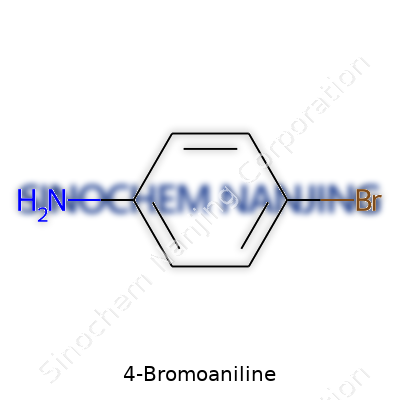
| Names | |
| Preferred IUPAC name | 4-bromoaniline |
| Other names |
p-Bromoaniline 4-Bromobenzenamine p-Bromoaminobenzene p-Bromoanilin 1-Bromo-4-aminobenzene |
| Pronunciation | /ˈbrəʊ.moʊ.əˈnɪl.iːn/ |
| Identifiers | |
| CAS Number | 106-40-1 |
| Beilstein Reference | 82252 |
| ChEBI | CHEBI:5007 |
| ChEMBL | CHEMBL14001 |
| ChemSpider | 11761 |
| DrugBank | DB04296 |
| ECHA InfoCard | 100.018.651 |
| EC Number | 205-979-6 |
| Gmelin Reference | 7782 |
| KEGG | C01747 |
| MeSH | D000665 |
| PubChem CID | 69241 |
| RTECS number | BX0700000 |
| UNII | ZQI2WF7MIW |
| UN number | UN2661 |
| Properties | |
| Chemical formula | C6H6BrN |
| Molar mass | 172.04 g/mol |
| Appearance | Off-white to light brown crystalline powder |
| Odor | ammonia-like |
| Density | 1.611 g/cm³ |
| Solubility in water | slightly soluble |
| log P | 0.99 |
| Vapor pressure | 0.00247 mmHg (25°C) |
| Acidity (pKa) | 4.59 |
| Basicity (pKb) | 8.77 |
| Magnetic susceptibility (χ) | -63.0·10⁻⁶ cm³/mol |
| Refractive index (nD) | 1.626 |
| Viscosity | Viscosity: 2.2 cP (25°C) |
| Dipole moment | 2.27 D |
| Thermochemistry | |
| Std molar entropy (S⦵298) | 117.7 J·mol⁻¹·K⁻¹ |
| Std enthalpy of formation (ΔfH⦵298) | 86.3 kJ/mol |
| Std enthalpy of combustion (ΔcH⦵298) | -3931.9 kJ/mol |
| Hazards | |
| Main hazards | Harmful if swallowed, causes skin and serious eye irritation, may cause respiratory irritation, suspected of causing cancer. |
| GHS labelling | GHS02, GHS07 |
| Pictograms | GHS07 |
| Signal word | Warning |
| Hazard statements | H302, H315, H319, H332 |
| Precautionary statements | P261, P264, P271, P280, P301+P312, P302+P352, P304+P340, P305+P351+P338, P312, P332+P313, P337+P313, P362+P364 |
| NFPA 704 (fire diamond) | 2-2-0 |
| Flash point | 113°C |
| Autoignition temperature | 300°C |
| Lethal dose or concentration | LD50 oral rat 1130 mg/kg |
| LD50 (median dose) | LD50 (median dose): Oral rat 2100 mg/kg |
| NIOSH | BQ9625000 |
| PEL (Permissible) | Not established |
| REL (Recommended) | 2–8°C |
| IDLH (Immediate danger) | IDLH: 25 mg/m³ |
| Related compounds | |
| Related compounds |
Aniline 2-Bromoaniline 3-Bromoaniline 4-Iodoaniline 4-Chloroaniline p-Phenylenediamine 4-Nitroaniline |



