4-Aminophenol Hydrochloride: From Discovery to Modern Application
Historical Development
Chemists in the nineteenth century, fascinated by the interplay between organic compounds and medicines, uncovered a trove of new molecules that continue to shape life today. 4-Aminophenol emerged in the late 1800s, developed originally as a derivative of phenol aimed at bettering pain relief and fever treatment. The hydrochloride salt made the form more soluble and easier to handle in labs, leading to broad use in industry. Before digital readouts and analytical software, early researchers described its melting point and crystalline habits as key identifiers. Decades of gradual refinement led manufacturers to optimize its form and unlock new purposes far beyond medicine. Rather than a footnote in chemical catalogs, 4-Aminophenol Hydrochloride has become a standard in quality control, harvesting lessons from past generations who valued both usefulness and safety.
Product Overview
4-Aminophenol Hydrochloride stands out in both purity and practical function. As a white to off-white crystalline powder, its value comes from both chemical versatility and consistency. Analysts rely on this grade of reagent, which proves itself in countless syntheses, especially where other phenolic compounds cannot deliver precise results. Whether serving the role of intermediate for displaying dyes, forming imaging layers in x-ray films, or catalyzing research breakthroughs, 4-Aminophenol Hydrochloride lends an edge that comes from reliable preparation. In an age where industries demand high standards, laboratories select suppliers with proven records in keeping impurities to a minimum, because even slight contamination can derail essential downstream processes.
Physical & Chemical Properties
The physical profile of 4-Aminophenol Hydrochloride shapes how scientists approach experimental protocols. It present as a crystalline solid, dissolves easily in water, and gives off a faint odor reminiscent of amines. Its molecular weight sits at 145.57 g/mol, which makes it manageable for most lab measurements. The compound remains stable at room temperature, and it resists breakdown so long as moisture and sunlight stay limited. Its hydrochloride form, in contrast to the free base, dissolves best in aqueous solutions and avoids clumping or caking in storage. These properties matter in daily lab work, because reproducibility depends on each batch behaving predictably, whether involved in chemical reactions, analytical methods, or pilot-scale production.
Technical Specifications & Labeling
Any vial or drum of 4-Aminophenol Hydrochloride that arrives in our hands must reflect rigor in both specifications and labeling. Real-world products exceed a ninety-eight percent purity threshold, with trace metals and residual solvents falling below levels harmful for scientific inquiry. Research and industrial users expect clear batch numbers, precise lot details, and standards that reflect International Electrotechnical Commission and World Health Organization guidelines. Labels outline hazard statements, precautionary language, and include certificates of analysis with chromatography data. Details matter not just to match regulatory demands, but to build trust—experiments, production runs, and even product recalls hinge on whether documentation travels with the chemical from warehouse to workbench without gap or shortcut.
Preparation Method
Synthesizing 4-Aminophenol Hydrochloride usually follows reduction of p-nitrophenol or through hydrolysis of paracetamol under controlled acidic conditions. Large-scale manufacturers often choose catalytic hydrogenation with a supported metal catalyst, with constant monitoring to prevent side reactions or incomplete reduction. Washing and recrystallization steps remove trace impurities, and transformation to the hydrochloride salt involves careful acidification under an inert atmosphere. Scientists at the bench employ scaled-down reactions, but must guard against exothermic spikes or hydrolysis byproducts that contaminate yields. Since process variation threatens product quality, experienced chemists document every step—temperature, pressure, reagent slurry speeds—to keep outcomes both reproducible and economical.
Chemical Reactions & Modifications
Few laboratory reagents offer the reaction flexibility of 4-Aminophenol Hydrochloride. The –NH2 group supports acylation and diazotization, which spin off a series of azo dyes and pharmaceutical intermediates. The phenolic oxygens can undergo etherification, forming protective groups or ready substituents for coupling. Electrochemical oxidation assigns roles in advanced sensor development and catalysis. Reactive groups on both ring positions make modification strategies almost endless, though optimum results appear only with detailed control of pH, reagent concentration, and choice of solvent. In my own projects with resin-bound sensors, this molecule’s ability to connect diverse moieties made it a favorite for surface immobilization, outperforming safer but less versatile amines or phenols.
Synonyms & Product Names
4-Aminophenol Hydrochloride appears in catalogs under an array of familiar names: Para-aminophenol hydrochloride, p-hydroxyaniline hydrochloride, and 4-hydroxybenzenamine hydrochloride all refer to the same white crystalline compound. Some product listings simply mention its CAS number—51-78-5—a nod to those who know the shorthand for chemical identification. Proprietary blends sometimes call it "Activator A" or use house trade names, especially in photographic and developer sectors. These naming conventions grow from both historical accident and market habit, so cross-checking labels and batch analyses keeps research from veering due to simple misidentification. Trust grows from transparent communication, both between manufacturers and their partners in industry or academia.
Safety & Operational Standards
Working with 4-Aminophenol Hydrochloride in a lab setting raises important safety practices grounded in first-hand experience. Even low levels of dust can irritate eyes, respiratory tract, or skin, so well-ventilated hoods and protective gear cut down on mishaps. Safety data sheets warn about allergic reactions, giving special emphasis to people handling this compound daily or at scale. Emergency protocols—eyewash stations, neutralizing spills promptly, keeping storage in tight, labeled containers away from acids or oxidizers—turn theory into routine. Training in these operational standards saves both health and time, and regulatory inspections in pharmaceutical plants or small research teams stress full compliance to meet local and global chemical safety norms. Commitment to safe handling makes a difference between smooth workflows and costly, dangerous interruptions.
Application Area
Uses for 4-Aminophenol Hydrochloride stretch far, reaching from traditional painkiller production to emerging digital imaging materials. In the pharmaceutical world, it shapes the manufacture of paracetamol and related drugs, acting both as precursor and quality control reference. Diagnostic imaging, especially for classic x-ray film, has long leaned on its reducing abilities, while dye and pigment industries explore its ring chemistry to design new hues stable to light and washing. Analytical chemists pull value from the compound’s sensitivity in certain redox assays and colorimetric measurements. Specialty plastics and smart sensors now look to its amine-phenol structure for bioactive surface modification, especially as more devices demand both sensitivity and biocompatibility. Every time a new molecule proves itself better, more efficient, or simply safer on the job, it borrows some part of its profile from molecules with this rich a practical history.
Research & Development
Research into 4-Aminophenol Hydrochloride shines a light on both legacy chemistry and future innovation. Modern labs use this compound to develop greener synthesis pathways, seeking ways to reduce waste and cut toxic byproducts from bench to factory scale. Scientists in medicinal chemistry tweak the core structure to tune biological action or lower risks—pursuing non-toxic, fast-metabolizing analogs that inherit the strengths of early painkillers without risk to kidneys or liver. Analytical chemists optimize detection methods, harnessing advances in HPLC and mass spectrometry to keep unwanted degradation or contamination in check. I’ve met colleagues who use this compound in undergraduate teaching labs, encouraging students to measure, react, and analyze under real-world quality control standards—showing that learning best occurs when chemicals meet practical problems head-on.
Toxicity Research
Toxicological work around 4-Aminophenol Hydrochloride acknowledges both past harm and safety improvements. Experiments confirm skin and respiratory irritation, along with mild nephrotoxicity at high or chronic doses. Some breakdown products stress the liver in animal models or provoke allergic reactions after repeated exposure. Toxicologists run batteries of in vitro and in vivo assays, quantifying thresholds for safe human contact and environmental release. Regulatory agencies around the globe compare findings, drawing out exposure guidelines that weigh scientific consensus over commercial pressure. Safe handling protocols, regular air monitoring, and medical surveillance contribute toward pragmatic safety. Field experience shows that risk, once managed and respected, never vanishes—but does shrink, leaving progress and prevention in place where only accidents existed before.
Future Prospects
Looking ahead, 4-Aminophenol Hydrochloride stands both as a legacy building block and a launch point for cleaner, smarter chemistry. New research explores catalytic cycles that skip heavy metals, turning to enzyme-mimicking approaches for scalability. Imaging science shifts from film to digital, yet specialty fields—the restoration of archival material, the design of high-resolution plates—still depend on tried-and-true reagents. Medicinal chemistry continues dissecting the scaffold, searching for analogs with rapid clearance and less organ toxicity. Environmental scientists work to minimize release into waterways, while process engineers strive to upcycle waste and recover pure intermediates. In my view, each lab, each production line, and each classroom benefits from keeping old compounds relevant—discoveries that travel through time both enable and demand new answers, growing with the ambition to serve science, health, and industry with less waste and greater certainty.
What is 4-Aminophenol Hydrochloride used for?
Behind the Lab Bench and Beyond
Most people bump into science through medicine or weather forecasts, never considering what it takes to make a painkiller or a hair dye. In those industrial corners where chemistry drives progress, 4-Aminophenol Hydrochloride earns its keep. This white, crystalline stuff often looks like nothing special, but it’s an essential starting material for some powerful drugs.
Pharmaceuticals Built on Chemistry
Many doctors and patients depend on paracetamol—also called acetaminophen—to ease fevers and headaches. 4-Aminophenol Hydrochloride helps make this global drug. Manufacturers rely on it to churn out huge batches of painkillers, thanks to a pathway discovered over a century ago. I remember a summer internship in a chemistry lab, where my job was to follow the process from raw material to finished tablet. Seeing how this one compound leads to an over-the-counter staple really opened my eyes to the quiet work behind common health products.
Hair Dyes and Fast Fashion
Shelf after shelf of boxed hair dyes line drugstores, promising jet black or deep brown. Few folks know that 4-Aminophenol Hydrochloride helps create some of these trendy hues. Hair dye makers count on it as an ingredient for coloring agents, which then react on hair strands to bring out intense shades. In my own family, the hair dye business kept an uncle employed for two decades, blending chemical knowledge with style trends.
Developing Film the Classic Way
In the days before digital cameras, photography needed more chemistry than Instagram filters. 4-Aminophenol Hydrochloride played a role here, too. Photo enthusiasts trusted it as a developer in black-and-white photography. The compound helped reveal captured images on film, turning a latent photo into something visible. Some people still use it today in home darkrooms, keeping a piece of old-school tradition alive.
Industrial Impact and Handling
With all these uses, safety stands out as a big concern. Chemical handlers need gloves, masks, and ventilation, not just for their own health but for the safety of those using the end products. The United States Occupational Safety and Health Administration, as well as the European Chemicals Agency, lay down rules for how to handle and transport this compound. I’ve seen first-hand how easy it is for spills or dust to cause problems in busy warehouses. Any slip-up can spell trouble, so continuous training is a must.
Challenges and Solutions
Demand for paracetamol, hair coloring, and photography highlights how dependent we are on affordable, reliable chemical precursors. Yet making and moving 4-Aminophenol Hydrochloride brings environmental headaches, too. Some manufacturers are tuning their processes to cut waste and re-use solvents. Universities and private companies invest in research for safer, less polluting methods. I’ve met industrial chemists who would rather spend months tweaking a process than deal with a soil contamination lawsuit.
Meeting Tomorrow’s Needs
Innovation in chemical manufacturing often shapes the products in your kitchen cabinet or bathroom drawer. With 4-Aminophenol Hydrochloride, a mix of safety, accountability, and smart engineering keeps the supply chain humming. Every batch that leaves a factory carries a legacy of careful science, worker experience, and society’s collective focus on both utility and safety.
What is the chemical formula of 4-Aminophenol Hydrochloride?
The Basics Behind the Name
4-Aminophenol Hydrochloride goes by the chemical formula C6H7NO·HCl. In plain terms, its base is 4-aminophenol, a molecule sitting on a benzene ring with an amine group at the 4-position and a hydroxyl group. The hydrochloride part means a hydrogen chloride molecule hooks on, giving this compound improved stability and making it easier to handle in labs and factories.
A Closer Look at What the Formula Means
Chemistry feels remote to some, but these little details steer major decisions in medical research and manufacturing. The HCl (Hydrochloride) tag means 4-aminophenol forms a salt, so it’s less volatile, stores longer, and dissolves more readily in water. For chemists like myself, the difference between a neutral compound and its salt can change project outcomes—stability, solubility, even safety measures shift. In my lab days, switching out a free base for a stable salt sometimes meant the difference between a product failing or succeeding down the road. Getting the formula right is not just about the math; it carries over to safety data sheets, shipping, and downstream product development.
Why Does 4-Aminophenol Hydrochloride Matter?
This compound does more than look good on paper. It sits at a critical step in the creation of important medicines, including paracetamol (acetaminophen). Without the correct, stable form, downstream processing gets trickier, which can lead to waste, lost batches, or even hazards in large-scale settings. The pharmaceutical world leans on consistent, well-defined inputs to keep product quality high and protect patients. In one pharmaceutical plant I visited, strict controls on material identity and purity shielded both workers and end-users from unneeded risk. With a misidentified salt or base, the entire batch can be off-spec, forcing recalls or expensive shutdowns.
Thinking About Solutions
Even small mistakes in reporting a formula can create big headaches. In factories, process operators adjust temperature and solvents based on the exact chemistry on hand. Laboratories need clear, standardized documentation so new researchers don’t trip on old notes or batch records. To make sure every batch of 4-aminophenol hydrochloride delivers as expected, more companies have dedicated chemical informatics teams. They double-check formulas and keep digital records tied to regulatory filings, making audits and inspections smoother for everyone involved.
Facts That Show Why This Stuff Matters
Pharmaceutical manufacturing isn’t just about making tablets; it’s about controls that protect lives. Incorrect formulas or unclear records have triggered medicine recalls, hospital incidents, or stockouts worldwide. Take the example from the FDA’s drug recall database—most errors come from mislabeling or confusion between salt forms and bases. Addressing this requires a mix of better chemistry education and stronger digital management tools, so teams can spot problems early and keep the supply chain safe.
Having the right approach to chemical formulas like C6H7NO·HCl helps researchers, manufacturers, and regulators trust the medicine on pharmacy shelves. Getting the structure right forms the foundation for safer, more reliable health outcomes for millions.
How should 4-Aminophenol Hydrochloride be stored?
Understanding the Risks
Storing chemicals always mixes practical caution with a respect for their risks. As someone who has spent years working in both teaching labs and chemical stockrooms, I’ve watched sloppy storage accidents create costly setbacks and unnecessary stress. 4-Aminophenol Hydrochloride, a white to off-white crystal, might seem harmless by appearance, but looks mislead. Skin and eye irritation, respiratory issues, and possible toxicity call for real care in where and how it awaits use.
Keep It Cool, Keep It Sealed
Heat stirs up trouble for organic chemicals. High or shifting temperatures can break molecules down or lead to pressure buildup inside containers. My go-to move has always been to place 4-Aminophenol Hydrochloride in a cool, dry spot, typically in secure chemical cabinets away from windows, radiators, or direct air conditioning blasts. The best results come from steady conditions—room temperature works fine, as long as there isn’t wild temperature fluctuation.
Air tightness matters as much as temperature. 4-Aminophenol Hydrochloride draws in moisture and can clump fast, making it hard to weigh and handle. I open fresh containers only in dry places and always reseal them tightly. An unused silica gel pack tucked inside the container lid, replaced every few months, goes a long way to keeping things dry.
Separate from Incompatibles
Some chemicals don’t get along well together. In labs, storing incompatible substances side-by-side can turn a routine task into an emergency. For instance, mixing oxidizing agents or strong acids with 4-Aminophenol Hydrochloride increases fire and explosion threats. Color-coded shelves and clear labels cut confusion, especially for new staff or students just getting used to the chaos of a chemical storeroom.
Always keep it a good distance away from flammable solvents. A mistake I saw years ago involved an intern placing this chemical beside acetone. One spill led to a cross-contamination nightmare—the sticky powder absorbed the solvent, damaging both supplies and the storage cabinet. After that, we labeled shelves by hazard class and ran quick storage audits each month.
Labeling and Recordkeeping Save Time
Every chemical earns its own label with date received, opened date, and hazard icons. Handwritten labels fade or wash off, and I’ve found labeling with oil-based pen or printed stickers survives even in damp storage rooms or after glove accidents. Digital logs of inventory—linked to QR codes on bottles—track lot numbers and alert us when stock expires. It might sound tedious, but catching a container past its use-by date has saved me from using decomposed material more than once.
Protecting Your Crew and Environment
Not every workplace has a fume hood near its storage shelves. Still, opening containers in a spot with good air movement keeps exposure risk low. I keep spill kits nearby—absorbent pads, gloves, goggles—all in a bright yellow bin, so everyone can find them fast. Emergency response plans and regular drills give everyone the muscle memory to act without hesitation. I’ve learned that awareness, not just posters or regulations, turns good intentions into practice.
Disposal deserves respect as much as storage. Unwanted or outdated 4-Aminophenol Hydrochloride never goes in regular trash. Our local hazardous waste collector visits monthly. Every chemist and student learns the route from storage shelf to hazardous waste box, making sure nothing slips through the cracks.
Confidence from Consistency
Proper storage habits grow from daily discipline. No single measure safeguards against every hazard, but a habit of vigilance, clear labeling, and routine checks builds trust in shared spaces. A well-kept chemical shelf isn’t about rules—it’s about keeping people healthy and the work on track.
What are the safety precautions for handling 4-Aminophenol Hydrochloride?
What You’re Dealing With
4-Aminophenol hydrochloride shows up in labs because it helps make dyes and some pharmaceuticals. It comes as a white crystalline powder but don’t let the plain appearance fool you. Like plenty of lab chemicals, simple contact can cause irritation, and long-term exposure creates bigger problems. Touching it with bare hands leads to rashes or burns, and the dust can irritate eyes and lungs. Breathing in a lot, day after day, puts stress on your system, especially on your liver and kidneys.
Personal Protective Equipment (PPE) Isn’t Just for Show
Every time I work with powered chemicals, gloves and goggles go on as a habit. Nitrile gloves keep this chemical away from skin, and chemical splash goggles seal out dust. I’ve seen folks try lab coats without rubber cuffs—inevitably, powder sneaks under the sleeve; elastic cuffs beat that problem. For big batches or any potential for spills, I reach for the full-face shield and a fitted lab apron, especially if there’s any risk of splashing.
Ventilation and Storage Matter
Good airflow takes top priority. Many labs depend on fume hoods, but even a small fan won’t cut it if you’re handling several grams. Stirring or weighing out powder in open air sets you up for a coughing fit or irritation. Sticking to the hood and keeping containers tightly closed after measuring keeps both you and your coworkers out of trouble. I always label and store materials in a cool, dry cabinet—moisture in the air clumps the powder, which only makes it more likely to get where you don’t want it.
Safe Handling Starts With Routine
My habit is to lay out tools—spatulas, weigh boats, and containers—before opening the bottle. I’ve seen the mess when folks grab supplies after a spill already started. Scooping powders gently, avoiding the urge to pour or shake, makes a big difference because it keeps airborne dust low. After each use, I wipe benches with damp paper towels instead of letting dust sit until end-of-day cleanup; this cuts down accidental exposure for everyone else too.
Know What to Do If Things Go Wrong
No one expects an accident, but preparation helps. Years ago, a coworker spilled a small amount on their arm. Because our eyewash and safety shower lacked good signage, vital seconds got wasted. Simple fixes like clear labels and making rinsing stations easy to reach prevent confusion. Immediate rinsing—fifteen minutes for skin or eyes—already makes recovery easier. If dust gets breathed in, fresh air and medical checks come next. Swallowing it calls for urgent medical help; no garden-variety stomach upset with this compound.
Good Habits Go Beyond the Individual
Training matters. At every facility where I’ve worked, newer staff picked up good habits fastest from hands-on demonstrations, not reading pamphlets. Repeating safe handling steps during meetings sharpened everyone’s recall. Reporting near-misses or strange reactions—even if nothing looks serious—helps the whole team avoid bigger trouble down the line. Waste cleanup involves sealed bags, labeled for hazardous waste pickup. Nobody wants this stuff ending up in regular trash or down a drain.
Why It’s Worth the Extra Care
You never know who walks into the lab next—students, new hires, or folks cleaning at night. Careful storage and routine cleaning keep everyone safe, not just the person doing the chemistry. Upticks in lab safety track directly to less downtime and fewer health issues. All it takes is one bad reaction or accidental exposure before the value of strict safety routines becomes clear to everyone involved.
Is 4-Aminophenol Hydrochloride soluble in water?
Getting to the Facts
Anyone who’s handled chemical substances in a lab knows solubility can make or break an experiment. 4-Aminophenol hydrochloride’s ability to dissolve in water matters, especially for those mixing it in pharmaceutical or analytical work. From experience preparing solutions for spectroscopic analysis, I’ve run into this very compound plenty of times. Its solubility profile isn’t just a textbook tidbit; it determines practical outcomes like dose accuracy and sample prep success.
Answering the Big Question
Let’s cut to it: 4-Aminophenol itself dissolves in water to a moderate degree, but the hydrochloride salt form opens up far more possibilities. Salts often boost water solubility by introducing ionic groups that interact with water’s polarity. In this case, lab sources and chemical suppliers list 4-Aminophenol hydrochloride as readily soluble in water. It mixes into clear solutions with ease at room temperature—no visible residue or sediment stays behind. Scientists can count on this property when crafting solutions for medical research, quality control, or classroom demonstrations.
Why the Solubility Matters
Water-soluble compounds speed up daily lab work. Think about making standard solutions—precision is key, and nobody wants to spend precious minutes coaxing a solid to dissolve. Reactive pharmaceutical industries, where time pressures and accuracy collide, depend on certainty. I remember needing consistent yields during synthesis of paracetamol derivatives; a water-soluble raw material streamlined every batch and cut down on errors. When ingredients refuse to dissolve, results skew, and troubleshooting eats into productivity.
Environmental impact ties into solubility, too. Substances that dissolve easily in water risk moving through wastewater streams if not managed properly. That’s a golden rule from my days working on environmental monitoring projects. Soluble chemicals can spread rapidly, so labs must use effective disposal and decontamination routines to keep waterways clean. The same trait making laboratory work simpler also demands stricter oversight as it leaves the controlled environment.
Supporting Evidence and Practical Implications
Published references back up these everyday experiences. Sigma-Aldrich and similar chemical databases show water dissolves over 100 grams of 4-Aminophenol hydrochloride per liter at room temperature. Given that many pharmaceutical actives dissolve in the single digits or even less, this places it firmly into “easy to work with” territory. Academics cite this characteristic when selecting reagents for organic synthesis training.
Lack of solubility also means trouble during drug formulation. Consistent distribution and absorption depend on the main ingredient mixing thoroughly with solvents. Those developing injectable medications or oral suspensions need reliable water solubility to ensure safety and predictable dosing. Inconsistent results from poorly dissolved substances can skew data and harm patients, which no reputable lab or manufacturer will accept.
Solutions and Best Practices
Safe handling remains important despite favorable solubility. I always stress to new lab members: weigh accurately, dissolve carefully, and monitor for cloudiness. If you’re prepping for a critical experiment, using analytical balances and freshly distilled water makes a world of difference. For disposal, neutralize any residues before rinsing tools or glassware. Follow all safety data sheet recommendations, not just for personal safety but also for community well-being.
Water solubility offers convenience. It also raises responsibility for proper use. Teams and individuals succeed by pairing this property with strong safety culture and thorough training. Every bottle of easily dissolved 4-Aminophenol hydrochloride shows how chemistry shapes both the flow of work and the footprint we leave behind.
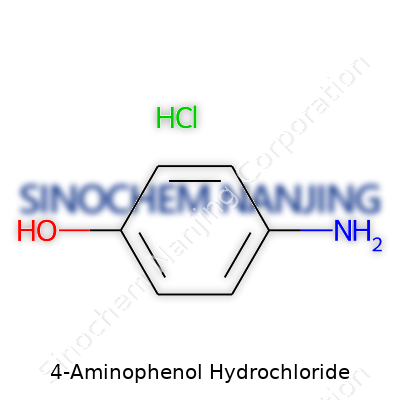
| Names | |
| Preferred IUPAC name | 4-Aminophenol hydrochloride |
| Other names |
para-Aminophenol hydrochloride p-Aminophenol hydrochloride 4-Hydroxyaniline hydrochloride |
| Pronunciation | /ˈfɔːr əˌmiːnəˈfiːnɒl haɪˌdrɒklaɪd/ |
| Identifiers | |
| CAS Number | 51-61-6 |
| 3D model (JSmol) | `/legacy/generic/3dmol.cfm?id=7426-11-9` |
| Beilstein Reference | 1159694 |
| ChEBI | CHEBI:34760 |
| ChEMBL | CHEMBL1447787 |
| ChemSpider | 16706769 |
| DrugBank | DB14007 |
| ECHA InfoCard | 03c84e20-88e0-493e-b5f4-8035bc2a7ad4 |
| EC Number | 231-421-4 |
| Gmelin Reference | 107813 |
| KEGG | C02527 |
| MeSH | D000690 |
| PubChem CID | 23665791 |
| RTECS number | SJ6300000 |
| UNII | 02E8754L97 |
| UN number | UN2811 |
| CompTox Dashboard (EPA) | DTXSID0021686 |
| Properties | |
| Chemical formula | C6H8ClNO |
| Molar mass | 153.60 g/mol |
| Appearance | White to light tan crystalline powder |
| Odor | Odorless |
| Density | 1.3 g/cm³ |
| Solubility in water | Soluble in water |
| log P | -2.2 |
| Acidity (pKa) | Acidity (pKa): 5.48 |
| Basicity (pKb) | 4.74 |
| Magnetic susceptibility (χ) | -57.0 × 10⁻⁶ cm³/mol |
| Dipole moment | 3.56 D |
| Thermochemistry | |
| Std enthalpy of formation (ΔfH⦵298) | -59.1 kJ/mol |
| Pharmacology | |
| ATC code | N02BE01 |
| Hazards | |
| Main hazards | Harmful if swallowed, causes skin and serious eye irritation, may cause respiratory irritation. |
| GHS labelling | GHS02, GHS07 |
| Pictograms | GHS05, GHS07 |
| Signal word | Danger |
| Hazard statements | H302: Harmful if swallowed. |
| Precautionary statements | P264, P280, P301+P312, P302+P352, P305+P351+P338, P332+P313, P337+P313, P362+P364 |
| NFPA 704 (fire diamond) | 2-1-0 |
| Flash point | 98 °C |
| Lethal dose or concentration | LD50 oral rat 375 mg/kg |
| LD50 (median dose) | LD50 (oral, rat): 375 mg/kg |
| NIOSH | Not listed |
| PEL (Permissible) | PEL (Permissible Exposure Limit) for 4-Aminophenol Hydrochloride: 15 mg/m³ (total dust), 5 mg/m³ (respirable fraction) |
| REL (Recommended) | 2°C to 8°C |
| Related compounds | |
| Related compounds |
Paracetamol Phenacetin p-Phenylenediamine 4-Nitrophenol Aniline Acetanilide |



